RETRACTABLE CANTILEVERED WATERCRAFT CANOPY SYSTEM
US20180251195A1
2018-09-06
15/893,231
2018-02-09
Abstract:
A retractable cantilevered watercraft whip mooring system has a retractable canopy which covers the watercraft while moored to a dock. The system includes a pair of whips secured to the dock by a pair of mounts. Each whip includes a tie-down line. Each whip includes a tie-down line. The retractable cantilevered watercraft whip mooring system protects the watercraft from rubbing or bumping against the dock. In addition, a retractable canopy slides over and is secured by the pair of whips. The retractable canopy includes a support baten. The watercraft is secured by the retractable cantilevered watercraft whip mooring system to protect the watercraft from rubbing or bumping against the dock. The canopy slides over the pair of whips. The canopy is securable relative to an exterior side of the watercraft, enabling the watercraft to be protected during severe weather conditions while the watercraft is attached to the dock.
Interested in similar patents?
Get notified when new applications in this technology area are published.
Classification:
B63B17/02 » CPC main
Vessels parts, details, or accessories, not otherwise provided for Awnings, including rigid weather protection structures, e.g. sunroofs; Tarpaulins; Accessories for awnings or tarpaulins
E04F10/02 » CPC further
Sunshades, e.g. Florentine blinds or jalousies; Outside screens ; Awnings or baldachins of flexible canopy materials, e.g. canvas ; Baldachins
Description
CROSS-REFERENCE TO RELATED APPLICATIONS
This is a Continuation-In-Part Application and claims priority to U.S. Provisional Application No. 62/466705, entitled “Cantilevered Watercraft Cover System” (Eric N. Craig), filed on Mar. 3, 2017.
FIELD OF USE
The present invention relates to a canopy for a watercraft, said watercraft being used on a waterway, and more particularly, to a retractable cantilevered canopy for use on said watercraft when secured to a docking structure, protecting said watercraft from sun, heat, pollution, dust, acid rain, sleet, hail, and flying debris that may be encountered during severe weather conditions while said watercraft is attached to said docking structure.
BACKGROUND OF THE INVENTION
A watercraft represents a significant investment. Watercraft which are moored in inland rivers, and lakes which are too shallow for a watercraft lift, or are not parked for an extended period of time, can benefit from a watercraft whip. Boat whips come in a few different configurations, but the most common comprise two long fiberglass polls affixed to a dock with lines which attach to the boat and a tension line which creates tension in the polls, preventing the watercraft from contacting with the dock during high winds, or wakes from other watercraft.
None of the approaches used comes with an integral canopy which slides over the polls and is tied to the opposite site of the boat, protecting it from any rain and sun.
-
- U.S. application Ser. No. 13/941,527 (Templeton) discloses a device for the protection of marine vessels. In one exemplary embodiment, the present invention provides a canopy assembly for a boat. The canopy assembly includes a frame assembly having a frame member that is moveable with respect to an opposing member to which the frame member is rotatably attached thereto. The canopy assembly further includes one or more support members supporting the moveable frame member. The canopy assembly further includes one or more lift assists connected to the moveable frame member for assisting in the raising of the frame member with respect to the opposing member.
- U.S. Pat. No. 9,556,640 (Levin) discloses a cantilevered watercraft canopy, a plurality of vertical supports provides support to a plurality of horizontal supports. First and second main struts are supported by the horizontal supports. First and second pluralities of arch members are affixed at a central attachment point to the first main strut and second main strut, respectively. The outer ends of the first and second pluralities of arch members support outer struts. In the first exemplary embodiment, the inner ends of the first and second pluralities of arch members are affixed to one another, and the main struts are affixed rigidly to the horizontal supports. In the second exemplary embodiment, first and second inner struts are affixed to the inner ends of the first and second pluralities of arch members, and the main struts are affixed rotatably to the horizontal supports. A canopy cover is affixed over the arch members and struts.
- U.S. Pat. No. 8,286,651 (Maffet) discloses a boat slip cover systems are provided for affixing to piers having a plurality of slips with closed and open ends, and first and second sides. Each boat slip cover includes a flexible canopy. Fixed supports for a first end of the canopy are disposed about the closed end of the slip, at least one extending upward from and perpendicular to the pier surface, and at least one extending upward from and angular to the pier surface. Rotating supports are disposed along each side of the slip and extend upward from the pier. Telescoping joints are disposed along each rotating support for their extension or retraction. A winch device is further provided for manual positioning. A convertible pier cover includes various retractable boat slip covers, valley portions extending between adjacent boat slip covers and forming an attachment on each side to an adjacent boat canopy, and a central aisle canopy. The packaging of boat lift covers and canopies currently being marketed is overly-complicated, costly and difficult to explain even with instructions. In order to communicate our assembly and disassembly, personal demonstrations are often required. If the complicated unpacking was not difficult enough, the procedure for layout and assembly of the frame was oftentimes even more complex, even with written instructions. A personal visit and demonstration are required. In some cases, multiple training sessions are needed.
- U.S. Pat. No. 7,353,769 (Unrast, et al.) discloses a cantilever cover which is suspended from one side over an article to be protected from the elements. The cover has a canopy frame and flexible, weatherproof canopy or cover secured thereover. A pair of canopy frame support arms extends from corresponding closed sleeves, which ride up and down upon the vertical support columns of a hoist assembly. Each sleeve includes a pair of diagonally opposed rollers, which bear against opposite sides of its respective column. A single winch (electric, hydraulic, pneumatic, etc.) is mounted centrally upon an upper cross member extending between the two columns, with opposed equal length cables extending to the two canopy frame support sleeves. A remote control extends down the hoist frame from the winch, for operation of the device. One or more limit switches may be installed to limit the maximum or minimum travel of the canopy frame and cover.
However, most owners of smaller watercraft do not store the watercraft in an enclosed structure but rather tie the watercraft up to an open dock for storage most of the time.
In addition, it is often impracticable for a watercraft to be tied up at a dock or slip, and the one side of the watercraft lies exposed to the open water.
Accordingly, there is a need for a whip system for watercraft in which there is a retractable canopy which slides over the whip polls and is secured to the opposite side of the watercraft, which enables the interior of the watercraft to be protected from the sun and elements. Also, what is needed is a system that promotes safer use of watercraft, enabling better protection of a wider variety and range of sizes of watercraft moored at docking structures, together with increased ease of boarding and departure.
In addition, there is a need to effectively cover the opening of the watercraft, when not in actual use, to furnish protection from rain, dust and dirt, to preserve the paint or interior finish and to provide a measure of protection from the sun, heat, pollution, dust, acid rain, sleet, hail, and flying debris that may be encountered during severe weather conditions, while securing the watercraft a relatively short distance away from a dock to protect against damaging the hull of the watercraft as a result striking said dock.
SUMMARY OF THE INVENTION
The cantilevered boat canopy system of the present invention addresses these needs.
The boat canopy ships in a box (or package) with all of the relevant component parts included. There is a multiplicity of whips included in the package depending on the size of the boat used as well as the canopy, and batons which support the canopy laterally. The canopy slides along the whips and is secured to the opposite side of the boat and resembles an arched canopy when fully extended in use.
This type of canopy is commonly used is preferably used in inland waterways in which there is not enough depth for a traditional boat lift, or in which personal watercraft are only temporarily moored. It is intended to keep watercraft from coming into contact with the dock upon which the watercraft is moored to from wakes generated by passing watercraft and wind which can push a watercraft against said dock. The canopy can be quickly removed for the winter, or in wind storms, and stored and then reinstalled during the summer or after inclement weather.
The retractable cantilevered watercraft whip mooring system of the present invention has a retractable canopy which covers the watercraft while moored to a docking structure. The system includes a pair of whips secured to the docking structure by a pair of mounts. Each whip includes a tie-down line. Each whip includes a tie-down line. The retractable cantilevered watercraft whip mooring system protects the watercraft from rubbing or bumping against the docking structure. In addition, a retractable canopy slides over and is secured by the pair of whips. The retractable canopy preferably includes a support baten for ballast. The retractable cantilevered watercraft whip mooring system of the present invention secures to the docking structure the watercraft and protect the watercraft from rubbing or bumping against the docking structure. The canopy slides over the pair of whips. The canopy is securable relative to an exterior side of the watercraft, enabling the watercraft to be protected during severe weather conditions while the watercraft is attached to the docking structure.
The term “watercraft” as used herein refers to any self-propelled vessel or craft designed for movement on the surface of or in the water. The term “waterway” as used herein is any navigable body of water. A waterway may include but is not limited to a river, a lake, a bay, a sound, a rapids, a sea, a lagoon, a strait, a passage, a sound, a canal, and an ocean.
For a complete understanding of the cantilevered watercraft canopy system of the present invention, reference is made to the accompanying drawings and description in which the presently preferred embodiments of the invention are shown by way of example. As the invention may be embodied in many forms without departing from spirit of essential characteristics thereof, it is expressly understood that the drawings are for purposes of illustration and description only, and are not intended as a definition of the limits of the invention.
BRIEF DESCRIPTION OF THE DRAWINGS
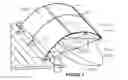
FIG. 1 depicts an assembly view of a first preferred embodiment of the cantilever watercraft canopy system of the present invention.
FIG. 2 depicts the preferred embodiment of the cantilever watercraft canopy system of FIG. 1, with the canopy removed.
FIG. 3 depicts an assembly view of a second preferred embodiment of the cantilever watercraft canopy system of the present invention.
FIG. 4 depicts the preferred embodiment of the cantilever watercraft canopy system of FIG. 3, with the canopy removed.
FIG. 5 depicts an assembly view of a third preferred embodiment of the cantilever watercraft canopy system of the present invention.
DETAILED DESCRIPTION OF THE PREFERRED EMBODIMENTS
Referring now to the drawings, FIGS. 1 and 2 depict the first preferred embodiment of the cantilever watercraft canopy system of the present invention. The watercraft canopy [1] is attached to the whips [2] and slides along the whips [2] when in use and affixed to watercraft cleats [5] via the canopy tie-down line [13] on the opposite side of the watercraft [6] to provide tension to the watercraft canopy [2] as well as keep the watercraft canopy [2] in position. The canopy tie-down line [13] is also used to secure the bottom of the watercraft canopy [1] to the dock [3] and is threaded through the grommets [14] located on the bottom of the watercraft canopy [1] material. The watercraft canopy [1] is attached to the dock [3] via a plurality of dock cleats [18] mounted on the dock [3].
The whips [2] are attached to the dock [3] by way of a plurality of dock mounts [4]. Once the whips [2] are installed, the tie-up lines [7] are then tied to the watercraft cleats [5] and the spring lines [8]. In addition, one or more breast lines [9] are tied to the watercraft cleats [5] as well and the tension adjusted. Once the desired tension is achieved, the watercraft will remain in place during wind gusts and wakes and securely positioned relative to other watercraft without impacting the dock. To provide ballast to the watercraft canopy [1] one or more support batens [10] which run the entire width of the canopy [1] and attach to the boat whips [2] may be used. A tie-down bracket [16] is used to secure an end of the line to each whip [2] via a tie-down bracket line [17].
One preferred embodiment for the boat whips [2] and dock mounts [4] are shown in U.S. Pat. No. 6,578,509, which provides a mooring whip base of simplified construction for economical manufacture and exemplary performance over an extended service life. In addition, said boat whips [2] and dock mounts [4] facilitate and simplify the selective placement and retention of a mooring whip in either a mooring position or a retracted position; places a mooring whip in a mooring position which enables a more effective biasing of a watercraft away from a docking structure, and in a retracted position which provides ready access to the watercraft for boarding and better makes way for departure of the watercraft from the docking structure; enables the use of a shorter mooring whip with increased strength positioned to provide biasing forces sufficient to perform effectively with larger watercraft, as well as with smaller watercraft; enables a positive placement of a mooring whip in a selectively adjustable mooring position or retracted position for optimum performance in a variety of installations; enhances the operation and simplifies the use of mooring whips in connection with a wider range of watercraft and docking structures; enables increased safety in the use of mooring whips, thereby promoting safer use of boats; enables better protection of a wider variety and range of sizes of watercraft moored at docking structures, together with increased ease of boarding and departure.
At the base of the watercraft canopy [1] material stops [11] are preferably deployed which prevent the material of the watercraft canopy [1] from pulling up over the whips [2] after the canopy has been secured to the watercraft cleat [5] on the side of the watercraft [6] which is opposite the dock [3]. The whips [2] are preferably made from a flexible material, a fiber reinforced plastic material being the material of choice. Watercraft whips [2] are intended to prevent the watercraft [6] from coming into contact with a dock due to the wake produced by other watercraft, or from moderate winds, causing damage to the gel coat on the hull or to the dock itself. This works via tension which is created when the watercraft whips [2] are tied to the watercraft [6] and put under tension, causing them to arc. This tension holds the watercraft [6] preferably about a couple of feet away from the dock preventing impacts with the dock when there is wake or moderate wind. Watercraft whips are not meant to be used in very high wind conditions, and are generally used for non-permanent, short-term, mooring option. The tie-up lines [7], spring lines [8] and breast lines [9] can be of any common rope material, with the most common being nylon due to its strength, superior wear characteristics, and resistance to the elements.
FIGS. 3 and 4 depict a second preferred embodiment of the cantilever watercraft canopy system of the present invention. The watercraft canopy [101] is attached to the whips [2] and slides along the whips [2] when in use and is affixed to watercraft cleats [5] via the canopy tie-down line [13] on the opposite side of the watercraft [6] to provide tension to the watercraft canopy [2] as well as keep the watercraft canopy [2] in position. The canopy tie-down line [13] is also used to secure the bottom of the watercraft canopy [101] to the dock [3] and is threaded through the grommets [14] located on the bottom of the watercraft canopy [101] material. The watercraft canopy [101] is attached to the dock [3] via a plurality of dock cleats [18] mounted on the dock [3].
The whips [2] are attached to the dock [3] by way of a plurality of dock mounts [4]. Once the whips [2] are installed, the tie-up lines [7] are then tied to the watercraft cleats [5] and the spring lines [8]. In addition, one or more breast lines [9] are tied to the watercraft cleats [5] as well and the tension adjusted. Once the desired tension is achieved, the watercraft will remain in place during wind gusts and wakes and securely positioned relative to other watercraft without impacting the dock. To support the watercraft canopy [101] one or more support batens [10] which run the entire width of the canopy [101] and attach to the boat whips [2] may be used. A tie-down bracket [16] is used to secure an end of the line to each whip [2].
At the base of the watercraft canopy material stops [11] are preferably deployed which prevent the material of the watercraft canopy [101] from pulling up over the whips [2] after the canopy has been secured to the watercraft cleat [5] on the side of the watercraft [6] which is opposite the dock [3]. The whips [2] are made from a flexible material, a fiber reinforced plastic material being the material of choice. Watercraft whips [2] are intended to prevent the watercraft [6] from coming into contact with a dock due to the wake produced by other watercraft, or from moderate winds, causing damage to the gel coat on the hull or to the dock itself. This works via tension which is created when the watercraft whips [2] are tied to the watercraft [6] and put under tension, causing them to arc. This tension holds the watercraft [6] preferably about a couple of feet away from the dock preventing impacts with the dock when there is wake or moderate wind. Watercraft whips are not meant to be used in very high wind conditions, and are generally used for non-permanent, short-term, mooring option. The tie-up lines [7], spring lines [8] and breast lines [9] can be of any common rope material, with the most common being nylon due to its strength, superior wear characteristics, and resistance to the elements.
FIG. 5 depicts an assembly view of a third preferred embodiment of the cantilever watercraft canopy system of the present invention [210]. This third embodiment has the mounts [4] for the whips [2] located underneath the dock [3]. This third embodiment also does not have material stops [11] and relies on the canopy tie-down line [12] to hold the watercraft canopy [201] in place. The cantilevered watercraft canopy [201] is tailored to the shape and size of the watercraft [6].
The watercraft canopy may be made of a wide variety of suitable materials including laminated polyester-based fabric or some other weather-resistant flexible material, cloth, nylon, vinyl, or any marine grade fabric. However, the watercraft canopy is preferably made of a flexible sheet material, such as conventional plastic tarp material, woven or non-woven fabrics in automobile covers, heavier canvas or synthetic fabric material, or the like. The use of flexible sheet material combined with flexible whips [2] combine to provide maximum protection for the exposed side of the watercraft [6] away from the dock [3].
The protective canopy [1] has been used to protect parked or stored vehicles from damage caused by environmental and weather conditions such as the sun, heat, pollution, dust, acid rain, sleet, hail, and flying debris that may be encountered during severe weather conditions.
Throughout this application, various Patents and Applications are referenced by number and inventor. The disclosures of these documents in their entireties are hereby incorporated by reference into this specification in order to more fully describe the state of the art to which this invention pertains. It is evident that many alternatives, modifications, and variations of the cantilevered watercraft canopy system of the present invention will be apparent to those skilled in the art in light of the disclosure herein. It is intended that the metes and bounds of the present invention be determined by the appended claims rather than by the language of the above specification, and that all such alternatives, modifications, and variations which form a conjointly cooperative equivalent are intended to be included within the spirit and scope of these claims.
PARTS LIST
- 1. Watercraft Canopy—1st Embodiment
- 2. Whip
- 3. Dock
- 4. Mount
- 5. Watercraft Cleat
- 6. Watercraft
- 7. Tie-up Line
- 8. Spring Line
- 9. Breast Line
- 10. Cantilevered Watercraft Canopy System—1st Embodiment
- 11. Material Stop
- 12. Tie-Down Line
- 13. Canopy Tie-Down Line
- 14. Grommet
- 15. Support Baten
- 16. Tie-Down Bracket
- 17. Tie-Down Bracket Line
- 18. Dock Cleat
- 21. Exterior Surface of Watercraft
- 22. Interior Surface of Watercraft
- 101. Watercraft Canopy—2nd Embodiment
- 110. Cantilevered Watercraft Canopy System—2nd Embodiment
- 201. Watercraft Canopy—3rd Embodiment
- 210. Cantilevered Watercraft Canopy System—3rd Embodiment
Claims
1. A cantilevered watercraft canopy system for securing a watercraft to a dock, said cantilevered watercraft canopy system comprising:
a. a first whip secured to said dock by a first dock mount, said first whip being affixed to said retractable canopy along said first edge of said retractable canopy, said first whip including a first tie down line, said first whip secured to said watercraft at a first watercraft attachment point;
b. a second whip secured to said dock by a second dock mount, said second whip being affixed to said retractable canopy along said second edge of said retractable canopy, said second whip including a second tie down line, said second whip secured to said watercraft at a second watercraft attachment point;
c. a first retractable canopy tie-down line, said first retractable canopy tie-down line further securing said retractable canopy to said dock;
d. a retractable canopy having a first and a second edge, said first whip being affixed to said retractable canopy along said first edge, said second whip being affixed to said retractable canopy along said second edge; and
e. a second retractable canopy tie-down line, said second retractable canopy tie down line further securing said retractable canopy to said watercraft;
whereby said retractable canopy slides over said first and second whips, said retractable canopy being securable relative to an exterior side of said watercraft, enabling said watercraft to be protected from sun, heat, pollution, dust, acid rain, sleet, hail, and flying debris that may be encountered during severe weather conditions while said watercraft is attached to said dock.
2. The cantilevered watercraft canopy system for securing a watercraft to a dock of claim 1, whereby said watercraft is secured to said dock by said cantilevered watercraft canopy system to protect said watercraft from rubbing or bumping against the dock during severe weather conditions while said watercraft is attached to said dock.
3. The cantilevered watercraft canopy system for securing a watercraft to a dock of claim 1, wherein said retractable canopy is made of a flexible material, and said first and second whips are made of fiber reinforced plastic.
4. The cantilevered watercraft canopy system for securing a watercraft to a dock of claim 1, wherein said retractable canopy is stretchable, stretching over said first and second whips.
5. The cantilevered watercraft canopy system for securing a watercraft to a dock of claim 1, further comprising at least one support baten.
6. The cantilevered watercraft canopy system for securing a watercraft to a dock of claim 1, wherein said retractable canopy is secured directly to said dock.
7. The cantilevered watercraft canopy system for securing a watercraft to a dock of claim 1, further comprising a third whip secured to said dock by a third dock mount, said third whip being affixed to said retractable canopy, said third whip including a third tie down line, said third whip secured to said watercraft at a third watercraft attachment point.
8. A cantilevered watercraft canopy system for securing a watercraft to a dock, said cantilevered watercraft canopy system comprising:
a. a first and a second whip secured to said dock, said first whip secured to said dock by a first dock mount, said second whip secured to said dock by a second dock mount, said first whip including a first tie down line, said first whip secured to said watercraft at a first watercraft attachment point, said second whip including a second tie down line, said second whip secured to said watercraft at a second watercraft attachment point;
b. a first retractable canopy tie-down line, said first retractable canopy tie-down line further securing said retractable canopy to said dock, and a second retractable canopy tie-down line, said second retractable canopy tie down line further securing said retractable canopy to said watercraft;
c. a retractable canopy having a first and a second edge, said first whip being affixed to said retractable canopy along said first edge, said second whip being affixed to said retractable canopy along said second edge; and
d. at least one support baten extending along a width of said retractable canopy;
whereby said watercraft is secured by said cantilevered watercraft canopy system to protect said watercraft from rubbing or bumping against said dock.
9. The cantilevered watercraft canopy system for securing a watercraft to a dock of claim 8, further comprising a third whip secured to said dock by a third dock mount, said third whip being affixed to said retractable canopy, said third whip including a third tie down line, said third whip secured to said watercraft at a third watercraft attachment point.
10. The cantilevered watercraft canopy system for securing a watercraft to a dock of claim 8, wherein said retractable canopy is made of a flexible material, and said first and second whips are made of fiber reinforced plastic.
11. The cantilevered watercraft canopy system for securing a watercraft to a dock of claim 8, wherein said canopy is retractable, stretching over said plurality of whips and attached to boat cleats on the opposite side of said watercraft from said dock.
12. The cantilevered watercraft canopy system for securing a watercraft to a dock of claim 8, wherein said retractable canopy is secured directly to said dock.
13. The cantilevered watercraft canopy system for securing a watercraft to a dock of claim 8, wherein said retractable canopy is stretchable, stretching over said first and second whips.
14. The cantilevered watercraft canopy system for securing a watercraft to a dock of claim 8, wherein said retractable canopy is secured directly to said dock.
15. A cantilevered watercraft canopy system for securing a watercraft to a dock, said cantilevered watercraft canopy system comprising:
a. a first and a second whip secured to said dock, said first whip secured to said dock by a first dock mount, said second whip secured to said dock by a second dock mount, said first whip including a first tie down line, said first whip secured to said watercraft at a first watercraft attachment point, said second whip including a second tie down line, said second whip secured to said watercraft at a second watercraft attachment point;
b. a first retractable canopy tie-down line, said first retractable canopy tie-down line further securing said retractable canopy to said dock, and a second retractable canopy tie-down line, said second retractable canopy tie down line further securing said retractable canopy to said watercraft;
c. a retractable canopy having a first and a second edge, said first whip being affixed to said retractable canopy along said first edge, said second whip being affixed to said retractable canopy along said second edge; and
d. at least one support baten extending along a width of said retractable canopy;
whereby said watercraft is secured by said cantilevered watercraft canopy system to protect said watercraft from rubbing or bumping against said dock; and
whereby said retractable canopy slides over said first and second whips, said retractable canopy being securable relative to an exterior side of said watercraft, enabling said watercraft to be protected from sun, heat, pollution, dust, acid rain, sleet, hail, and flying debris that may be encountered during severe weather conditions while said watercraft is attached to said dock.
16. The cantilevered watercraft canopy system for securing a watercraft to a dock of claim 15, further comprising a third whip secured to said dock by a third dock mount, said third whip being affixed to said retractable canopy, said third whip including a third tie down line, said third whip secured to said watercraft at a third watercraft attachment point.
17. The cantilevered watercraft canopy system for securing a watercraft to a dock of claim 15, wherein said retractable canopy is made of a flexible material, and said first and second whips are made of fiber reinforced plastic.
18. The cantilevered watercraft canopy system for securing a watercraft to a dock of claim 15, wherein said retractable canopy is stretchable, stretching over said first and second whips and attachable to boat cleats on the opposite side of said watercraft from said dock.
19. The cantilevered watercraft canopy system for securing a watercraft to a dock of claim 15, wherein said retractable canopy is secured directly to said dock.
20. The cantilevered watercraft canopy system for securing a watercraft to a dock of claim 15, wherein said retractable canopy is secured directly to said dock.
Images & Drawings included:



Sources:
- United States Patent and Trademark Office - verify current appl. status at the USPTO↗
Similar patent applications:
- » 20180251196
RETRACTABLE CANTILEVERED WATERCRAFT CANOPY SYSTEM
Recent applications in this class:
- » 20250162690 2025-05-22
NON-SLIP COVER - » 20250153812 2025-05-15
PORTABLE AND INFLATABLE SHADE ASSEMBLY - » 20250136248 2025-05-01
Boating Accessory - » 20250074549 2025-03-06
STRUT ACTUATED BIMINI TOP - » 20250058852 2025-02-20
Horizontally and Vertically Expanding Bimini Frame - » 20250042512 2025-02-06
WATERCRAFT WITH ADJUSTABLE TOWER ASSEMBLY - » 20250042511 2025-02-06
WINDSHIELD ASSEMBLY FOR A VEHICLE - » 20250026448 2025-01-23
FORWARD FACING BIMINI - » 20250019043 2025-01-16
OVER-THE-DECK SUPPORT FRAME ASSEMBLY, BIMINI AND WATERCRAFT HAVING SAME - » 20250019042 2025-01-16
LASHING DEVICE FOR BOAT COVER SUSPENSION SYSTEM