Formulation of polymeric mixtures for the production of cross-linked expanded PVC foams and process for producing said foams
US20180273716A1
2018-09-27
15/765,257
2016-10-27
✅ Patent granted
US 10,723,854 B2
2020-07-28
WO; PCT/EP2016/075921; 20161027
WO; WO2017/084852; 20170526
Irina S Zemel
Themis Law
2037-03-01
Abstract:
A formulation of polymeric mixtures for the production of cross-linked expanded PVC foams, of the type comprising PVC, isocyanates, anhydrides and one or more nucleating agents, wherein the nucleating agents are composed of nucleating materials having a porosity of 1-100 nm, preferably 2-50 nm. With respect to known formulations for the production of cross-linked PVC foams, a formulation according to the invention offers the advantage of obtaining the desired degrees of stabilization, nucleation and expansion, even without the use of diazocompounds.
Inventors:
- Raffaela Bressan 4 🇮🇹 Oderzo (TV), Italy
- Fabiano Nart 1 🇮🇹 Sedico (BL), Italy
- Marco Renon 1 🇮🇹 Agordo (BL), Italy
- Ulf Torgerssen 1 🇸🇪 Laholm, Sweden
- Raffaela Bressan 3 🇮🇹 Oderzo, Italy
- Fabiano Nart 1 🇮🇹 Sedico, Italy
- Marco Renon 1 🇮🇹 Agordo, Italy
Applicant:
Interested in similar patents?
Get notified when new applications in this technology area are published.
Classification:
C08J2201/026 » CPC further
Foams characterised by the foaming process characterised by mechanical pre- or post-treatments Crosslinking before of after foaming
C08J2203/02 » CPC further
Foams characterized by the expanding agent CO-releasing, e.g. NaHCO and citric acid
C08J2205/052 » CPC further
Foams characterised by their properties characterised by the foam pores Closed cells, i.e. more than 50% of the pores are closed
C08J2300/208 » CPC further
Characterised by the use of unspecified polymers; Polymers characterized by their physical structure Interpenetrating networks [IPN]
C08J2327/06 » CPC further
Characterised by the use of homopolymers or copolymers of compounds having one or more unsaturated aliphatic radicals, each having only one carbon-to-carbon double bond, and at least one being terminated by a halogen; Derivatives of such polymers not modified by chemical after-treatment containing chlorine atoms Homopolymers or copolymers of vinyl chloride
C08J9/08 » CPC further
Working-up of macromolecular substances to porous or cellular articles or materials; After-treatment thereof using blowing gases generated by a previously added blowing agent by a chemical blowing agent developing carbon dioxide
C08J2479/08 » CPC further
Characterised by the use of macromolecular compounds obtained by reactions forming in the main chain of the macromolecule a linkage containing nitrogen with or without oxygen, or carbon only, not provided for in groups - ; Polycondensates having nitrogen-containing heterocyclic rings in the main chain; Polyhydrazides; Polyamide acids or similar polyimide precursors Polyimides; Polyester-imides; Polyamide-imides; Polyamide acids or similar polyimide precursors
C08J9/00 IPC
Working-up of macromolecular substances to porous or cellular articles or materials; After-treatment thereof
C08J9/02 » CPC further
Working-up of macromolecular substances to porous or cellular articles or materials; After-treatment thereof using blowing gases generated by the reacting monomers or modifying agents during the preparation or modification of macromolecules
C08J9/0066 » CPC further
Working-up of macromolecular substances to porous or cellular articles or materials; After-treatment thereof Use of inorganic compounding ingredients
C08J9/0061 » CPC main
Working-up of macromolecular substances to porous or cellular articles or materials; After-treatment thereof characterized by the use of several polymeric components
Description
The present invention relates to a formulation of polymeric mixtures for the production of cross-linked expanded PVC foams. The same invention is also extended to the process used for producing said cross-linked expanded PVC foam.
The field of the invention relates to that of cross-linked expanded PVC foams used for the production of expanded materials such as PVC panels and the like, adopted as a core in the field of composite materials.
Cross-linked expanded PVC foams are traditionally prepared starting from a mixture comprising PVC, isocyanates with a cross-linking function, anhydrides destined for reacting with water and isocyanate for the formation of amides during the expansion and cross-linking phase, an expanding agent based on diazocompounds for the formation of gas (azobisisobutyronitrile AZDN) and a nucleating and stabilizing agent, also based on diazo-compounds (azodicarbonamide ADC).
In particular, in the field of the production of cross-linked PVC foams, traditional ADC exerts a nucleating function, providing an expanded material having small closed cells (diameter of 0.4-0.6 mm), which serve for conferring a homogeneous structure to the expanded product, and with good mechanical properties. ADC also has a stabilizing function, inhibiting decomposition reactions of PVC during the moulding process of said mixture in a press.
The traditional mixtures described above, however, have the disadvantage of using diazo-compounds, such as ADC and AZDN, which are undesired as they are dangerous. ADC is in fact in the black list of REACH, as it is classified as being a Very High Concerned (VHC) substance. AZDN is, in turn, a material in powder form classified as being explosive and susceptible of releasing toxic substances.
US 2007/200266 A1 relates to a method for producing a cross-linked PVC foam body from a starting mixture containing PVC, an isocyanate or polyisocianate, an organic anhydride and a chemical expanding agent.
WO 2014/106867 A1 discloses a process for the production of rigid foamed objects, wherein organic diazocompounds are employed in the manufacturing of said objects.
The main objective of the present invention is to provide a formulation of a polymeric mixture for the production of expanded PVC foams which, unlike traditional formulations, allows the desired stabilization, nucleation and expansion degree to be obtained, even in the absence of azo-derivatives.
A further objective of the invention is to provide a process suitable for producing expanded PVC foams with the use of the above-mentioned formulation of a polymeric mixture.
These and other objectives are achieved with the formulation of a polymeric mixture, the cross-linked expanded PVC foams and the process of claims 1, 8 and 10, respectively. Preferred embodiments of the invention are specified in the remaining claims.
With respect to known formulations for the production of cross-linked PVC foams, the formulation according to the invention offers the advantage of obtaining the desired stabilization, nucleation and expansion degree to be obtained, even in the absence of azo-derivatives.
Furthermore, with the use of anhydrides liquid at room temperature of the formulation of the invention, the advantage is obtained that, in the heating phase in the press, heat does not have to be provided for melting the traditional anhydrides in the solid state. In this way, the liquid anhydride and isocyanate are reacted, with the formation of the necessary quantities of CO2 for the expansion of the PVC foam, without removing the heat from the reaction environment for melting the starting PVC.
The above reaction between anhydride and isocyanate advantageously allows a basic imide structure to be obtained, which, with the subsequent completion of the reactions, leads to a cross-linked structure which is formed around the PVC chains. In this way, a final structure is created, called “Inter Penetrating Network” (IPN), with the presence of a high imide structure, suitable for conferring higher thermal properties than the traditional properties, to the PVC foam.
It has also been surprisingly found that, with the use of zeolites and sodium bicarbonate in the quantities according to the invention (less than 3% by weight), alone or combined with each other, the HCl formed by thermal effect in the reaction environment, coming from the PVC and responsible for the degradation of the same polymer, is sequestered and neutralized by these substances, thus generating an expanded product which is thermally stabilized and free of degradation defects.
These and other objectives, advantages and characteristics appear evident from the following description of some preferred embodiments of the formulation and process of the invention, illustrated, for purely exemplificative and non-limiting purposes, in the figures of the enclosed drawings.
In these:
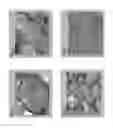
FIGS. 1 to 4 illustrate, by means of an optical microscope, the cellular structure of a cross-linked expanded PVC foam, according to the known art and according to three examples of the invention, respectively;
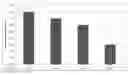
FIG. 5 illustrates the trend of the thermal conductivity values of the foams of the previous figures;
FIG. 6 illustrates the trend of the resin absorption values of the foams of FIGS. 1 to 4;
FIG. 7 illustrates the graph of the trend of the Storage Modulus in the Dynamic Mechanical Analysis (DMA) as a function of the temperature, in the foams of FIGS. 1 to 4;
FIGS. 8 and 9 illustrate microscope magnifications of the porous structure, of a zeolite and sodium carbonate of the invention, respectively;
FIGS. 10 and 11 schematically illustrate a nucleation example of a nucleation agent with a non-porous surface and porous surface, respectively.
The polymeric mixture of the invention for the production of cross-linked expanded PVC foams has the objective of providing an expanded material without diazo-compounds, characterized by the presence of closed cells having a diameter smaller than or equal to 0.6 mm, i.e. sufficiently small to confer a homogeneous structure to the expanded product, having a low thermal conductivity, a reduced resin absorption and a higher glass transition temperature.
To enable the gas to generate a stable core, capable of forming closed cells having a small diameter, a certain energy threshold must be exceeded, which, for this reason, must be as low as possible. This energy threshold depends, in particular, on the critical radius of said core, which in turn depends on the interfacial tension between the gas bubbles and the polymeric mass. In the system of the polymeric mixture of the invention, which has become heterogeneous due to the presence of nucleating agents, the free energy ΔGet to be exceeded is expressed by the formula:
ΔGet=ΔGom·f(∂)
wherein:
ΔGet=heterogeneous free energy, i.e. in the presence of nucleating agents
ΔGom=homogeneous free energy, i.e. in the absence of nucleating agents
f(∂)=¼ (2+cos ∂)·(1−cos ∂)2 wherein ∂ is the wettability angle.
Furthermore, as 0<f(∂)<1, in order to obtain a low ΔGet value, f(∂) must approach zero, i.e. the angle ∂ must be high. For this reason, according to the invention, materials characterized by having a porous surface are used as nucleating agents for the production of cross-linked expanded PVC foams.
In this case, in fact, and as better illustrated in FIGS. 10 and 11, the angle ∂1 formed between the tangent t1 at the surface of the gas bubble 1 and the corresponding wall 2 of the porous nucleation site 3, is greater than the angle ∂2 formed between the tangent t2 at the surface of the gas bubble 4 and the corresponding wall 5 of the non-porous nucleation site 6.
Nucleating agents suitable for the purposes of the invention are, for example, the zeolite of FIG. 8, with pores ranging from 2-50 nm, and the sodium bicarbonate of FIG. 9, with pores of about 100 nm. The porosity of the nucleating agent for the purposes of the invention is 1-100 nm, more preferably 2-50 nm. Furthermore, the desired porosity degree of the sodium bicarbonate is advantageously obtained, according to the invention, in the hot pressing phase of the formation process of cross-linked PVC foams.
According to the invention, the CO2 gas phase is given by the following reaction between isocyanate and anhydride:
wherein
R1=C6H12; C9H18; C12H24; C10H18; C13H10; C6H4; C7H5; C10H6; C16H11; C7H6
R2=C6H6; C7H6; C6H8; C6H10; C14H26; C3H4; C3H6; C5H10; C10H18; C4H8; C7H10; C7H8; C4H402; C6H12; C7H12.
According to a preferred variant of the invention, the CO2 gas phase is given by the following reaction between isocyanate and anhydride:
wherein:
R1=C6H4, C7H6
R2=C6H12; C9H18; C12H24; C10H18; C13H10; C6H4; C7H5; C10H6; C16H11; C7H6;
R3=C6H6; C7H6; C6H8; C6H10; C14H26; C3H4; C3H6; C5H10; C10H18; C4H8; C7H10; C7H8; C4H402; C6H12; C7H12.
As can be observed, in these reactions, use is no longer made of the traditional diazo-compounds, with the function of expanding agents for the production of N2.
The zeolites suitable for the invention are of the aluminosilicate type:
xMO.ySiO2.zAl2O3
wherein:
x=0-0.5
y=0-0.5
z=0.5-1
M=Na, K, Ca, NH4, Fe.
Furthermore, whereas the zeolites act exclusively as stabilizing and nucleating agents, the sodium bicarbonate of the invention also adds the effect of contributing to the cell expansion, producing CO2 through the following reaction with hydrochloric acid coming from PVC:
NaHCO3+HCl→NaCl+CO2+H2O
In order to not subtract heat from the PVC melting process, the quantities of bicarbonate used are advantageously and preferably lower than 3% by weight. Furthermore, again with the same objective, the anhydrides used are those that are in the liquid state at room temperature, in particular anhydrides having formula:
wherein
R3=C6H6; C7H6; C6H8; C6H10; C14H26; C3H4; C3H6; C5H10; C10H18; C4H8; C7H10; C7H8; C4H402; C6H12; C7H12.
In this way, it is no longer necessary to have heat that serves for melting the traditional solid anhydrides. In addition, the use of the liquid anhydrides of the invention introduces imide structures into the reaction environment, necessary for the formation of an IPN-Inter Penetrating Network, having better thermal properties.
The following formulations containing, by weight:
| PVC | 30-60% | |
| Isocyanate | 20-60% | |
| Liquid anhydrides | 3-40% | |
said formulations further comprising:
| Zeolites | less than 3% | |
| Sodium bicarbonate | less than 3% | |
are preferred for the invention.
In the table, the following formulations are compared:
- A formulations of the known art, in which diazo-derivatives are used, with both a nucleating and stabilizing function (ADC), and also with the function of blowing agent (AZDN) (FIG. 1);
- B formulation of the invention, with sodium bicarbonate alone (FIG. 2);
- C formulation of the invention, with sodium bicarbonate and zeolite (FIG. 3);
- D formulation of the invention, with zeolite alone (FIG. 4).
The foams obtained with these formulations were tested with respect to thermal conductivity, which must be as low as possible, the resin absorption quantity, which must also have minimum values, and the glass transition temperature, preferably high. The results of these tests are indicated in the following table, in which the quantities of compounds in the mixture are expressed as weight percentages:
| A | B | C | D | |
| PVC | 40 | 40 | 40 | 40 |
| Isocyanate | 51 | 51 | 51 | 51 |
| Anhydride | Phthalic | Hexahydro- | Hexahydro- | Hexahydro- |
| (solid) | phthalic | phthalic | phthalic | |
| (liquid) | (liquid) | (liquid) | ||
| 5 | 8 | 8 | 8 | |
| ADC | 0.5 | / | / | / |
| AZDN | 3.5 | / | / | / |
| Zeolite | / | / | 0.5 | 3 |
| Sodium- | / | 2 | 2 | / |
| bicarbonate | ||||
| Cell diameter | 0.52 | 0.41 | 0.3 | 0.08 |
| (mm) | ||||
| Thermal | 0.031 | 0.03 | 0.029 | 0.026 |
| conductivity | ||||
| (W/m · ° K) | ||||
| Resinabsorption | 389 | 280 | 199 | 0 |
| (g/m2) | ||||
| Glass transition | 91 | 101 | 105 | 109 |
| temperature | ||||
| Tg(° C.) | ||||
From this table, it can be observed that the cross-linked expanded PVC foams have closed cells with a diameter smaller than or equal to 0.6 mm, i.e. sufficiently small to confer a homogeneous structure to the expanded product, with a thermal conductivity lower than 0.030 W/m° K, a resin absorption lower than 300 g/m2 and a glass transition temperature higher than 100° C.
The surface of the cross-linked expanded PVC foams of the previous table has the appearance illustrated in FIGS. 1 to 4, in which a decrease in the cell diameter in the foams of the invention, can be observed. The best results are obtained with formulation D of FIG. 4, which comprises high quantities of zeolite.
In the process of the invention, the polymeric mixture is prepared by first introducing the liquid components (isocyanate and anhydride) into the mixer, followed by the powders of porous stabilizing and nucleating agents, and finally PVC. The mixing is effected under vacuum for stripping the air and the mixture thus obtained is poured into moulds which are heated under pressure in a press (80-180 bar) to a temperature of 160-180° C. for the time necessary for melting the PVC and for the isocyanate-anhydride cross-linking reactions and formation of the gas phase. It is during this hot compression that the sodium bicarbonate possibly present acquires the porous structure of the invention.
The material obtained from the hot pressing, in which the cross-linking reactions between isocyanate and anhydride have partially taken place, and with the formation of imide and CO2, is then subjected to the expansion and cross-linking process in the presence of water vapour, at temperatures of 80-99° C. and 45-70° C., respectively. In this phase, the water reacts with the remaining isocyanate and anhydride reagents, thus completing the cross-linking reactions and producing additional quantities of CO2. The cross-linked expanded PVC foams of the invention (known as “Inter Penetrating Network”-IPN) are thus obtained, whose properties in terms of thermal conductivity, resin absorption and glass transition temperature, with the same cell diameter, are higher with respect to the foams of the known art.
Claims
The invention claimed is:1. A formulation of polymeric mixtures for production of cross-linked expanded PVC foams, comprising:
PVC, isocyanates, anhydrides and one or more nucleating agents,
wherein said anhydrides are liquid at room temperature;
wherein said nucleating agents consist of porous nucleating materials; and
wherein diazocompounds are absent.
2. The formulation according to claim 1, wherein a porosity of said one or more nucleating agents is 1-100 nm.
3. The formulation according to claim 2, wherein said one or more nucleating agents comprise a nucleating agent consisting of a porous zeolite, composed of aluminosilicates having a formulation:
xMO.ySiO2.zAl2O3
wherein:
×=0-0.5;
y=0-0.5;
z=0.5-1; and
M=Na, K, Ca, NH4, Fe.
4. The formulation according to claim 2, wherein said one or more nucleating agents comprise a nucleating agent consisting of porous sodium bicarbonate.
5. The formulation according to claim 4, wherein said porous sodium bicarbonate is present in a polymeric mixture in quantities lower than 3% by weight.
6. The formulation according to claim 5, wherein said anhydrides have a formula:
wherein
R3=C6H6; C7H6; C6H8; C6H10; C14H26; C3H4; C3H6; C5H10; C10H18; C4H8; C7H10; C7H8; C4H4O2; C6H12; or C7H12.
7. The formulation according to claim 1, wherein the formulation comprises:
PVC 30-60%,
Isocyanate 20-60%, and
Liquid anhydrides 3-40%,
in presence of
Zeolites less than 3%, and
Sodium bicarbonate less than 3%.
8. A cross-linked expanded PVC foam obtained with a formulation according to claim 1, wherein said foam has closed cells with a diameter smaller than or equal to 0.6 mm, a thermal conductivity lower than 0.030 W/m° K, a resin absorption lower than 300 g/m2, and a glass transition temperature higher than 100° C.
9. The cross-linked expanded PVC foam according to claim 8, wherein said foam has an Inter Penetrating Network”-IPN structure.
10. A process for the production of cross-linked expanded PVC foams according to claim 8, comprising:
a CO2 gas step characterized by a reaction between an isocyanate and a liquid anhydride:
wherein
R1=C6H12; C9H18; C12H24; C10H18; C13H10; C6H4; C7H5; C10H6; C16H11; or C7H6;
R2=C6H6; C7H6; C6H8; C6H10; C14H26; C3H4; C3H6; C5H10; C10H18; C4H8; C7H10; C7H8; C4H4O2; C6H12; or C7H12,
said process further comprising a nucleation step given by a presence of nucleating agents made of porous nucleating materials, and
said CO2 gas step and nucleation are conducted in absence of diazocompounds.
11. The process according to claim 10, wherein said reaction between said isocyanate and said liquid anhydride is as follows:
wherein:
R1=C6H4, or C7H6;
R2=C6H12; C9H18; C12H24; C10H18; C13H10; C6H4; C7H5; C10H6; C16H11; or C7H6; and
R3=C6H6; C7H6; C6H8; C6H10; C14H26; C3H4; C3H6; C5H10; C10H18; C4H8; C7H10; C7H8; C4H4O2; C6H12; or C7H12.
12. The process according to claim 10, further comprising:
preparing a polymeric mixture, obtained by first introducing the isocyanate in liquid form and the liquid anhydride into a mixer, followed by powders of porous stabilizing agents and the nucleating agents, and finally PVC, a mixing thereof being performed under vacuum for stripping air;
transferring the polymeric mixture thus obtained into a mold heated under pressure in a press, at a temperature and for a time necessary for melting the PVC and for isocyanate-anhydride cross-linking reactions and formation of the CO2 gas step; and
completing the isocyanate-anhydride cross-linking reactions in the presence of water vapor.
13. The formulation according to claim 2, wherein a porosity of said one or more nucleating agents is 2-50 nm.
Images & Drawings included:



Sources:
- United States Patent and Trademark Office - verify current appl. status at the USPTO↗
Recent applications in this class:
- » 20250270378 2025-08-28
STABILIZERS FOR POLYURETHANE FOAMS CONTAINING RECYCLED POLYOL - » 20250243335 2025-07-31
RECYCLABLE POLYMER FOAMS - » 20250136775 2025-05-01
MANUFACTURING METHOD OF FOAM SHEET FOR SHOES WITH TPU POWDER AND RECYCLED PU SCRAP POWDER - » 20250129225 2025-04-24
FOAM PRECURSOR AND FOAM WITH BIODEGRADABLE COPOLYMER AND METHODS THEREOF - » 20250109268 2025-04-03
AROMATIC POLYESTER-BASED RESIN FOAM PARTICLE AND METHOD FOR PRODUCING SAME, FOAM MOLDED ARTICLE, COMPOSITE STRUCTURAL MEMBER, AND VEHICLE MEMBER - » 20250066571 2025-02-27
THERMOPLASTIC FOAMS AND USES IN APPLICATIONS REQUIRING STRENGTH AND LIGHTWEIGHT - » 20250026901 2025-01-23
METHOD OF MAKING A CROSSLINKED SILICONE FOAM, CROSSLINKED SILICONE FOAMS PREPARABLE THEREBY, AND ADHESIVE ARTICLE INCLUDING THE SAME - » 20250002664 2025-01-02
POLYETHYLENE COMPOSITION AND USE THEREOF, AND POLYOLEFIN MICROPOROUS BREATHABLE FILM PREPARED THEREFROM - » 20240384051 2024-11-21
FOAM STABILIZERS FOR PHENOLIC FOAM - » 20240352210 2024-10-24
FOAM STABILIZERS FOR PHENOLIC FOAM