Solution based post-processing methods for mycological biopolymer material and mycological product made thereby
US20180282529A1
2018-10-04
15/940,514
2018-03-29
✅ Patent granted
US 11,359,074 B2
2022-06-14
-
-
Lynn Y Fan
Knobbe Martens Olson & Bear, LLP
2038-08-12
Abstract:
A mycological biopolymer material is subjected to treatment in one or more solutions that work to enhance and/or retain the inherent material properties of the material. In one embodiment, the solution is an organic solution; in another embodiment, the solution is an organic solvent with a salt; in another embodiment, the solution is an organic solvent phenol and/or polyphenol; and in another embodiment, a series of such solutions is used.
Inventors:
- Eben Bayer 35 🇺🇸 Troy, NY, United States
- Gavin R. McIntyre 10 🇺🇸 Troy, NY, United States
- Alex Carlton 12 🇺🇸 Troy, NY, United States
- Jessie Hannah Kaplan-Bie 4 🇺🇸 Troy, NY, United States
- Jessica Kaplan-Bie 1 🇺🇸 Troy, NY, United States
- Lucy Greetham 1 🇺🇸 South Burlington, VT, United States
- Ian Bonesteel 1 🇺🇸 Wynantskill, NY, United States
Assignee:
- Ecovative Design LLC 40 🇺🇸 Green Island, NY, United States
Applicant:
Interested in similar patents?
Get notified when new applications in this technology area are published.
Classification:
C08K3/16 » CPC further
Use of inorganic substances as compounding ingredients Halogen-containing compounds
C08K5/05 » CPC further
Use of organic ingredients; Oxygen-containing compounds Alcohols; Metal alcoholates
B29C2043/3422 » CPC further
Compression moulding, i.e. applying external pressure to flow the moulding material; Apparatus therefor; Component parts, details or accessories; Auxiliary operations; Feeding the material to the mould or the compression means using carrying means rollers
B29C43/32 » CPC further
Compression moulding, i.e. applying external pressure to flow the moulding material; Apparatus therefor Component parts, details or accessories; Auxiliary operations
C08K2003/162 » CPC further
Use of inorganic substances as compounding ingredients; Halogen-containing compounds Calcium, strontium or barium halides, e.g. calcium, strontium or barium chloride
C08L97/00 IPC
Compositions of lignin-containing materials
C08L97/005 » CPC further
Compositions of lignin-containing materials Lignin
B29C43/34 IPC
Compression moulding, i.e. applying external pressure to flow the moulding material; Apparatus therefor; Component parts, details or accessories; Auxiliary operations Feeding the material to the mould or the compression means
C08L2201/06 » CPC further
Properties Biodegradable
C08L5/08 » CPC main
Compositions of polysaccharides or of their derivatives not provided for in groups or Chitin; Chondroitin sulfate; Hyaluronic acid; Derivatives thereof
Description
This application claims the benefit of Provisional Patent Application 62/479,521, filed Mar. 31, 2017.
This invention relates to a processed mycological biopolymer material and a method of making the same. More particularly, this invention relates to a processed mycological biopolymer material made entirely of fungal mycelium. Still more particularly, this invention relates to a method of enhancing the material properties of a mycological biopolymer product
As described in US Patent Application Publication 2015/0033620, published Feb. 5, 2015, a mycological biopolymer for use in making functional products may be made entirely of mycelium without producing a stipe, cap or spores. As described, the produced mycological biopolymer may be used in structural composite cores, athletic workout mats, apparel such as handbags, shoe soles and the like.
It is an object of this invention to provide a mycological biopolymer of increased elasticity, strength and density as compared to previously known mycological biopolymers.
It is another object of the invention to provide a processed mycological biopolymer material that is a tough pliable material that can be used to replace textiles, leather and leather-like materials, such as, polyurethane, silicone, and poly vinyl acetate coated scrims.
It is another object of the invention to provide a processed mycological biopolymer material that provides a high density foam-like material for use in upholstery, apparel, military gear, athletic gear and footwear.
Briefly, the invention provides a processed mycological biopolymer material characterized in being entirely composed of fungal mycelium free of any stipe, cap or spores and in having a Young's Modulus of elasticity of 2000-8000 psi and a density of from 15 pcf to 50 pcf.
In addition, the invention provides a method of making an improved processed mycological biopolymer material that resides in treating a known mycological biopolymer material (“tissue”) with one or more solutions that function to enhance the inherent material properties of the material. In this instance, the treatment fixes the tissue, making the tissue more durable to repeated stress, resistant to microbial decay, and resistant to shear stress (tearing). This treatment retains the properties of the extracted mycelium (wet) over tissue that has been actively dried which has been shown to embrittle the material.
In one embodiment, the method comprises the steps of obtaining a panel of a mycological biopolymer material (“tissue”) as a precursor material and treating the panel with an organic solvent solution for a period of time, e.g. of from 5 seconds up to 6 months, sufficient to permit permeability into the tissue which is inherently hydrophobic. This latter step slowly desiccates the precursor tissue replacing water with the solvent and any inorganics in the solvent solution.
This is rinsing away of soluble extra cellular matrix components (carbohydrates, proteins), and could denature proteins in the tissue. Further, this method could deacetylate the structural chitin matrix, which would mediate crosslinking between polymers. As is known, chitin is a primary component of cell walls in fungi and is composed of a long-chain polymer of N-acetylglucosamine, a derivative of glucose.
A byproduct of this method is the bleaching of the mycelium and elimination of odor.
After treating the precursor tissue with the organic solvent solution, for example a bath of 100% alcohol, the tissue is removed from the bath and immediately pressed to a minor fractional thickness of the original thickness and thereafter dried to a moisture content between 15-30% by dry mass.
The precursor tissue of mycological biopolymer material (as well as the processed tissue) is characterized in being entirely composed of fungal mycelium free of any stipe, cap or spores. For example, the material may be made as described in US Patent Application Publication 2015/0033620 or as described in U.S. Provisional Patent Applications 62/707,704, filed Nov. 14, 2017, the disclosures of which are incorporated herein. For example, the precursor tissue may be grown as described and then removed as a one-piece panel to be post-processed or the precursor tissue may be left in place on the substrate from which the tissue is grown and post-processed.
A precursor tissue of mycological biopolymer material made as described in US Patent Application Publication 2015/0033620 that has dimensions of 18 inches by 11 inches and a thickness of 2.5 inches typically has a density of 0.8 pcf to 3.0 pcf and a Young's Modulus of elasticity of 95 psi. After treatment, the thickness of this highly lofted tissue is reduced, for example, by 20 times to 0.125 inch and the density increased proportionately. In addition, the porosity of the tissue is an average of 3.4 micrometers with a range of from 0.9 to 25 micrometers.
The post-processed mycological biopolymer material is distinguished from one that is not processed in being denser, and in having a native moisture content greater that 15%, while the native precursor tissue is less than 12%.
In a second embodiment, the t precursor issue of mycological biopolymer material is treated with a solution of an organic solvent combined with a salt, such as calcium chloride, for up to six months. The use of salt imparts antimicrobial properties and can ionically bond to functional groups.
In a third embodiment, the precursor tissue of mycological biopolymer material is treated with a solution of an organic solvent combined with a phenol and/or polyphenol substance for up to six months' time.
In a fourth embodiment, the precursor tissue of mycological biopolymer material is treated with a solution of an organic solvent combined with a phenol and/or polyphenol substance as well as with a solution of an organic solvent combined with a salt for up to six months' time.
Treating the mycological biopolymer with one or a combination of organic solvent solutions, calcium chloride solutions, and phenol/polyphenol solutions greatly enhances the material's inherent strength characteristics. These treatments increase the density, ultimate tensile strength, and strength to weight ratio of the precursor mycological biopolymer material. These treatments also impact the material's elastic modulus, resulting in increased elasticity, reduction in stiffness as compared to the weight and tensile strength of the mycelium. With the application of such post-processing treatments, the ability to produce a processed tissue of mycological biopolymer material with a wider range of densities (15-50 pcf) is readily achievable. The result of these enhanced material properties (increased density, strength, and elasticity) is the ability for the processed mycological biopolymer material to be competitive in industries and applications where high density foams, leather, and durable plastic textiles are currently used.
There is a variety of literature and research on the treatment of mycelial tissue with calcium chloride solutions, alcohols, and tannins. The treatment of mycelial tissue post-growth with calcium chloride solutions is common, and has been successfully used for a variety of purposes such as increasing the material strength of the commercially valuable Agaricus bisporus. See, Zivanovic, S., and R. Buescher. “Changes in Mushroom Texture and Cell Wall Composition Affected by Thermal Processing.” Journal of Food Science 69 (2004): 44-49; as well as in the packaging and preserving of edible mushrooms. See U.S. Pat. Nos. 6,500,476 and 5,919,507.
Unlike previous applications of calcium chloride solutions to mycelium tissue post growth, the treatment processes described herein are intended for use on mycological biopolymer materials and not for the purpose of producing, altering or preserving a food item or medicinal substance.
Alcohols, polyphenols, and calcium chloride are used on mycelium for extracting, synthesizing, and the like, a variety of substances. See U.S. Pat. Nos. 6,726,911; 3,268,606 and 6,482,942.
The use of alcohols, polyphenols, and calcium in the post-processing methods applied to mycological biopolymer in accordance with the invention differ from the prior art as there is no the extraction or synthesizing of molecular substances intended for medicinal, pharmaceutical, cosmetic, or other such applications
These and other objects and advantages of the invention will become more apparent from the following, detailed description taken in conjunction with the accompanying drawings wherein:
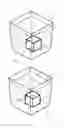
FIG. 1 schematically illustrates a tissue of mycological biopolymer material submerged in a salt/solvent solution in accordance with the invention;
FIG. 2 schematically illustrates a tissue of mycological biopolymer material submerged in a tannic acid/water solution in accordance with the invention;
FIG. 3 illustrates a processed tissue being pressed in accordance with the invention;
FIG. 4 illustrates a processed mycological biopolymer material made in accordance with the invention being twisted; and
FIG. 5 illustrates a flow diagram of a process in accordance with the invention.
In the embodiment employing an organic solvent solution, the following steps are performed:
-
- 1. A panel of wet live tissue or dried tissue, i.e. a precursor tissue, with or without the growing substrate can be used.
- 2. The tissue can be treated with lipids and/or moisturizing/hydrating agent once or repeatedly, or left untreated at any point throughout this process.
- 3. The tissue can be sectioned or left intact to allow for a variety of manufacturing sizes.
- 4. The tissue can be treated (via submersion, vacuum infusion, and/or injection) once or repeatedly. For each treatment, for every 1 g of panel, 5 to 50 mL of organic solvent solution is applied for 5 seconds to 6 months. In this respect, the tissue could also be treated while still growing from a substrate and, as such, would be tethered to the substrate.
- Treatment of the tissue with an organic solvent solution is for a period of time sufficient to permit permeability into the tissue while desiccating the tissue replacing native water with the solvent solution.
- Increasing time permits more homogenous infiltration of the solution which, in turn, bolsters the chemical treatments.
- 5. The tissue is thereafter compressed to a minor fraction (i.e. less than ½) of the original thickness, for example to about 1/20 of the original thickness, using a manual press, hydraulic press or rollers. If treated to this point while still tethered to the substrate, the tissue is removed from the substrate for pressing. Pressing can be a hot (140° F.) or cold process. This is a means of mechanically expelling any of the residual fluid and setting the thickness, since the mycelium can plump during treatment. It is important to set the thickness immediately following the treatment in the organic solution to reduce rebound and shrinkage (e.g., fixation)
- 6. After compression, the tissue can be dried using a convection oven, can be freeze dried, air dried, or conductively dried
- 7. The tissue can be treated with a plasticizer which could include glycerine, sorbitol, or another humectant in order to assist in retaining the final desired moisture content.
- 8. The tissue can be stretched, staked, and/or tumbled once or repeatedly or left untreated
- 9. The tissue can be treated with a pigment or left untreated
- 10. The tissue is dried using a convection oven, is freeze dried, air dried, or conductively dried
A specific example of the method employing a mycological biopolymer made in accordance with a method described in US 2015/0033620 and an organic solvent solution is as follows:
EXAMPLE 1
-
- 1. An 18-inch by 11-inch by 2.5-inch panel of a mycological biopolymer (“precursor tissue”) is grown and extracted from a substrate composed of 15% crude protein, 33% non-fiber carbohydrates, 28% lignin and 14% crude fat. The remaining 2% includes mineral content, and the 8% is native moisture content.
- 2. The wet live tissue is cut into 5-inch by 5-inch by 2.5-inch sections.
- 3. Each tissue section is placed in a container and submerged in an organic solvent, such as a 1500 mL bath of 100% alcohol such as isopropyl, ethanol, methanol, and the like. Each section is left in this solution for 7 days. The sections are then removed from the baths and the same process is repeated once for each panel section.
- 4. The tissue sections are removed from the alcohol baths and immediately pressed between a pair of rollers to 0.125-inches.
- 5. The tissue sections are left on drying racks in a fume hood or well ventilated area to air dry.
In the embodiment employing an organic solvent and salt solution, the following steps are performed:
-
- 1. A panel of wet live tissue or dried tissue, i.e. a precursor tissue, with or without the substrate can be used.
- 2. The tissue can be treated with lipids and/or moisturizing/hydrating agent once or repeatedly, or left untreated at any point throughout this process.
- 3. The tissue can be sectioned or left intact to allow for a variety of manufacturing sizes.
- 4. The tissue can be treated (via submersion, vacuum infusion, and/or injection) once or repeatedly with organic solvent solutions for 5 seconds to 6 months prior to and/or after process step 5, or left untreated. 5-50 mL of solution per 1 g of panel should be used for each treatment.
- 5. The tissue is treated (via submersion, vacuum infusion, injection, etc.) once or repeatedly with 20 to 300 g/L salt and organic solvent solutions for 5 seconds to 6 months. 5-50 mL of solution per 1 g of panel should be used for each treatment.
- 6. The tissue, after removal from the substrate if still tethered to the substrate, is compressed using a manual press, hydraulic press or rollers. Pressing can be a hot or cold process. This is a means of mechanically expelling any of the residual fluid and setting the thickness, since the mycelium can plump during treatment. It is important to set the thickness immediately following the treatment to reduce rebound and shrinkage (e.g., fixation)
- 7. The tissue can be dried using a convection oven, can be freeze dried, air dried, or conductively dried
- 8. The tissue can be treated with a plasticizer which could include glycerine, sorbitol, or another humectant in order to assist in retaining the final desired moisture content.
- 9. The tissue can be stretched, staked, and/or tumbled once or repeatedly or left untreated
- 10. The tissue can be treated with a pigment or left untreated. Should the tissue be dyed, steps 10 and 8 would be swapped.
- 11. The tissue is dried using a convection oven, is freeze dried, air dried, or conductively dried
A specific example of the method employing a panel of mycological biopolymer made in accordance with a method described in US 2015/0033620 and an organic solvent and salt solution 13 in a container 14 as shown in FIG. 1 is as follows:
EXAMPLE 2
-
- 1. An 18-inch by 11-inch by 2.5-inch panel of precursor mycological biopolymer is grown and extracted from the substrate composed of 15% crude protein, 33% non-fiber carbohydrates, 28% lignin and 14% crude fat. The remaining 2% includes mineral content, and the 8% is native moisture content.
- 2. The wet live tissue is cut into 5-inch by 5-inch by 2.5-inch sections.
- 3. An organic solvent and salt solution 13 of 150 g/L CaCl2 in 100% alcohol (isopropyl, ethanol, methanol, and the like) is prepared and placed in the container 14 (FIG. 1) and each section 15 is submerged in 1500 mL bath of this solution. The container 14 is then sealed and each section 15 is left in this solution for 7 days. The sections 15 are then removed from the baths and the same process is repeated twice for each panel section for a total of 3 consecutive solution baths over 21 days. Alternatively, the solution could be agitated to accelerate the process time. These agitation methods include stirring, wave motions, tumbling in a drum, and the like. Mild heat could be applied, not to exceed 40° C.
- 4. Sections 15 are removed from the CaCl2 and alcohol solution and pressed to 0.5 inches using two pairs of spaced apart rollers 11 as in FIG. 3. The rollers 11 may be operated manually in the manner of a wringer.
- 5. A solution of 100% alcohol (isopropyl, ethanol, methanol, etc.) (not shown) is prepared and each tissue section 15 is submerged in 1500 mL of this solution. Each tissue section 15 is left in this solution for 3 days.
- 6. The sections 15 are removed from the alcohol baths and immediately pressed, for example, using the rollers 11 of FIG. 3 adjusted to reduce the thickness of the sections to 0.125 inches.
- 7. The sections 15 are left on drying racks (not shown) in a fume hood or well ventilated area to air dry.
FIG. 5 illustrates a flow diagram of the entire treatment process of Example 2 for organic solvent and salt solutions.
In the embodiment employing an organic solvent and a phenol and/or polyphenol substance solution, the following steps are performed:
-
- 1. A panel of wet live tissue or dried tissue, i.e. a precursor tissue, can be used.
- 2. The tissue can be treated with lipids and/or moisturizing/hydrating agent once or repeatedly, or left untreated at any point throughout this process.
- 3. The tissue can be sectioned or left intact to allow for a variety of manufacturing sizes.
- 4. The tissue with/without substrate can be treated (via submersion, vacuum infusion, injection, and the like) once or repeatedly with organic solvent solutions for 5 seconds to 6 months prior to and/or after process step 5, or left untreated. 5-50 mL of solution per 1 g of panel should be used for each treatment.
- 5. The tissue is treated (via submersion, vacuum infusion, injection, etc.) once or repeatedly with organic solvent and phenol and/or polyphenol solutions for 5 seconds to 6 months. 5-50 mL of solution per 1 g of panel should be used for each treatment.
- 6. The tissue (without substrate) is compressed using a manual press, hydraulic press or rollers. Pressing can be a hot (temperature of 140° F.) or cold process. This is a means of mechanically expelling any of the residual fluid and setting the thickness, since the mycelium can plump during treatment. It is important to set the thickness immediately following the treatment to reduce rebound and shrinkage (e.g., fixation).
- 7. The tissue can be dried using a convection oven, can be freeze dried, air dried, or conductively dried.
- 8. The tissue can be treated with a plasticizer which could include glycerine, sorbitol, or another humectant in order to assist in retaining the final desired moisture content.
- 9. The tissue can be stretched, staked, and/or tumbled once or repeatedly or is left untreated.
- 10. The tissue can be treated with a pigment or left untreated.
- 11. The tissue is dried using a convection oven, is freeze dried, air dried, or conductively dried.
A specific example of the method employing a panel of mycological biopolymer made in accordance with a method described in US 2015/0033620 and an organic solvent and phenol and/or polyphenol solution 16 in a container 17 as shown in FIG. 2 wherein tannic acid, a polyphenolic compound, is used is as follows:
EXAMPLE 3
-
- 1. An 18-inch by 11-inch by 2.5-inch panel of mycological biopolymer is grown and extracted from the substrate composed of 15% crude protein, 33% non-fiber carbohydrates, 28% lignin and 14% crude fat. The remaining 2% includes mineral content, and the 8% is native moisture content.
- 2. The wet live tissue is cut to 5-inch by 5-inch by 2.5-inch sections 18.
- 3. The tissue is compressed to 0.125-inches via a hydraulic press.
- 4. A solution of 5% acetic acid, such as vinegar, is prepared and each tissue section 18 is submerged in 10,000 mL of this solution. Each tissue section 18 is left in this solution for 24 hrs. to bring the pH of said tissue section to a neutral to acidic pH of 5 to 7 to support dying and crosslinking;
- 5. The sections are then removed from the acid baths, rinsed in 10,000 mL of water for 1 minute, and manually pressed via wringing of the tissue.
- 6. A solution 16 of 10 g/L Tannic acid powder and water is prepared and each tissue section 16 is submerged in 10,000 mL of this solution 16. Each section 18 is left in this solution for 7 days. (See FIG. 2)
- 7. The sections 18 are then removed from the tannic acid baths, rinsed in 10,000 mL of water for 1 minute, and manually pressed via wringing of the tissue.
- 8. A solution of 20 g/L Tannic acid powder and water is prepared and each tissue section 18 is submerged in 10,000 mL of this solution. Each section 18 is left in this solution for 14 days.
- 9. The sections 18 are then removed from the tannic acid baths, rinsed in 10,000 mL of water for 1 minute, and manually pressed via wringing of the tissue, e.g. as indicated in FIG. 3.
- 10. A solution of 20 (g/L) vegetable glycerin and water is prepared and each tissue section 18 is coated in 100 mL of this solution.
- 11. The tissue sections 18 are mechanically agitated via stretching and/or tumbling of material until the sections 18 are between 20-30% moisture
- 12. The tissue sections 18 are each coated in 50 mL of 20 g/L vegetable glycerin and water solution and mechanically agitated until the sections are between 20-30% moisture. This process is repeated until the sections 18 reach a desirable flexibility determined through bend radius, i.e. the material's ability to wrap around a 1″ outer diameter rigid tube forming a 180° bend about the tube without cracking.
FIG. 4 illustrates a coated tissue section 18 with dimensions of 5 inches by 5 inches by 0.125 inches being twisted longitudinally over an angle of 360°.
-
- 13. The tissue sections 18 are tumbled and air dried. The sections 18 can be draped or pressed with a match mold over a buck to provide a geometry during the drying process.
In the embodiment employing a solution of an organic solvent combined with a phenol and/or polyphenol substance as well as with a solution of an organic solvent combined with a salt, such as calcium chloride, the following steps are performed:
-
- 1. A panel of wet live tissue or dried tissue, i.e. a precursor tissue, can be used
- 2. The tissue can be treated with lipids and/or moisturizing/hydrating agent once or repeatedly, or left untreated at any point throughout this process
- 3. The tissue can be sectioned or left intact to allow for a variety of manufacturing sizes.
- 4. The tissue with/without substrate can be treated (via submersion, vacuum infusion, injection, etc.) once or repeatedly with organic solvent solutions for 5 seconds to 6 months prior to and/or after process step 5 and 6, or left untreated. 5-50 mL of solution per 1 g of panel should be used for each treatment.
- 5. The tissue with/without substrate is treated (via submersion, vacuum infusion, injection, etc.) once or repeatedly with organic solvent and phenol and/or polyphenol solutions for 5 seconds to 6 months prior to and/or after process step 6. 5-50 mL of solution per 1 g of panel should be used for each treatment.
- 6. The tissue with/without substrate is treated (via submersion, vacuum infusion, injection, etc.) once or repeatedly with 20 to 300 g/L salt and organic solvent solutions for 5 seconds to 6 months. 5-50 mL of solution per 1 g of panel should be used for each treatment.
- 7. The tissue (without substrate) is compressed using a manual press, hydraulic press or rollers. Pressing can be a hot or cold process.
- 8. The tissue can be dried using a convection oven, can be freeze dried, air dried, or conductively dried
- 9. The tissue can be treated with a plasticizer which could include glycerine, sorbitol, or another humectant in order to assist in retaining the final desired moisture content.
- 10. The tissue can be stretched, staked, and/or tumbled once or repeatedly or is left untreated
- 11. The tissue can be treated with a pigment, or left untreated
- 12. The tissue is dried using a convection oven, is freeze dried, air dried, or conductively dried
A specific example of the method employing a panel of mycological biopolymer made in accordance with a method described in US 2015/0033620 and an organic solvent and calcium chloride solution and an organic solvent and phenol and/or polyphenol solution is as follows:
EXAMPLE 4
-
- 1. An 18-inch by 11-inch by 2.5-inch panel of mycological biopolymer is grown and extracted from the substrate composed of 15% crude protein, 33% non-fiber carbohydrates, 28% lignin and 14% crude fat. The remaining 2% includes mineral content, and the 8% is native moisture content.
- 2. The wet live tissue is cut to 18-inch by 5-inch by 2.5 inch sections.
- 3. The tissue sections are compressed to a thickness of 0.5 inches via hydraulic press
- 4. A solution of 10 g/L Tannic acid powder and water is prepared and each section is submerged in 5,500 mL of this solution. Each section is left in this solution for 7 days (FIG. 2).
- 5. A solution of 150 g/L CaCl2 in 100% alcohol (isopropyl, ethanol, methanol, and the like) is prepared and each tissue section is submerged in 5,500 mL of this solution. Each section is left in this solution for 7 days. The sections are then removed from the baths and the same process is repeated once for each panel section for a total of 2 consecutive solution baths over 14 days. (FIG. 1).
- 6. Tissue sections are removed from the CaCl2 and alcohol solution and pressed to 0.5-inches using a roller. (FIG. 3).
- 7. A solution of 100% alcohol (isopropyl, ethanol, methanol, etc.) is prepared and each pressed tissue section is submerged in 5,500 mL of this solution. Each section is left in this solution for 1 day.
- 8. The tissue sections are removed from the alcohol baths and immediately pressed using a pair of rollers to 0.125-inches (FIG. 3).
- 9. The tissue sections are left on drying racks in a fume hood or well ventilated area to air dry.
- 10. A solution of 20 (g/L) vegetable glycerin and water is prepared and each tissue section is coated in 100 mL of this solution
- 11. The tissue sections are mechanically agitated via stretching and/or tumbling of material until the sections have reached a desired softness and flexibility.
- 12. The tissue sections are tumbled and air dried. Tumbling will loosen the mycelium fibers and assist with achieving the desired hand.
A specific example of the method employing a panel of mycological biopolymer made in accordance with a method described in US 2015/0033620 and a solution of tannins is as follows:
EXAMPLE 5
-
- Steps 1-9 as cited in Example 4
- Process in which the precursor tissue is then placed in a solution of tannins, in which the tannins are applied at 5% of the dry tissue mass with a 1:100 ratio with municipal tap water.
- The processed tissue is then dried using forced convection at 180 F.
- The processed tissue is then dyed with the dye being applied at 5% of the dry tissue mass with a 1:100 ratio with municipal tap water.
- The processed tissue is then rinsed with an acetic acid solution at a pH of 3 to fix the dye.
- The processed tissue is then rinsed with municipal tap water to remove any unfixed dye.
- The processed tissue is then dried using forced convection at 180 F.
- The processed tissue is embossed to provide a surface pattern.
- The processed tissue is spray coated with a film of wax to prevent water penetration.
The solution of tannins (i.e. an organic solvent solution) may be composed of any of various soluble astringent complex phenolic substances of plant origin used especially in tanning leather and dyeing textiles.
The above described post-processing treatments of a known mycological biopolymer material as a precursor tissue serve to enhance the inherent material properties of the material.
In this instance, the treatment fixes the precursor tissue, making the tissue more durable to repeat stress, resistant to microbial decay, and resistance shear stress (tearing). This retains the properties of the extracted mycelium (wet) over tissue that has been actively dried which has been shown to embrittle the material, specifically retaining elasticity and toughness.
The treatment of the tissue with solvent will enable penetration, rinse extracellular materials away, denature proteins, and deacetylate. The latter two post treatments open sites for crosslinking and fixation.
The treatment of the tissue with phenol provides crosslinking agents, and specifically provides covalent bonds between the primary amine of chitin and the amines and hydroxyl of amino acid residues.
The salt is a humectant and antimicrobial agent. Coupled with methanol, calcium chloride deacetylates chitin which mediates bond formation. In water, the salt can form ionic bonds with the same functional groups.
The pre-processed precursor mycological biopolymer material may be made as described in US 2015/0033620 or may be obtained from any suitable source so long as the material is made of undifferentiated fungal mycelium, specifically a chitin-polymer where extracellular matrix has been rinsed away.
Further, the pre-processed precursor mycological biopolymer material provided for post-processing treatment may have other materials incorporated therein depending upon the ultimate use of the post-processed material, for example, the pre-processed material may have heat insulating particles or elements incorporated therein where the ultimate use of the post-processed material is for heat insulation purposes. There could be embedded materials, such as particles that provide a thermal conductivity benefit, or a structural member, such as a scrim.
The invention thus provides a processed mycological biopolymer material of increased elasticity, strength and density as compared to previously known mycological biopolymers.
The invention also provides a mycological biopolymer that is a tough pliable material that can be used to replace, textiles, leather and leather-like materials, such as, polyurethane, silicone, and poly vinyl acetate coated scrims and that provides a high density foam like material for use in upholstery, apparel, military gear, athletic gear and footwear.
Claims
What is claimed is:1. A processed mycological biopolymer material characterized in being entirely composed of fungal mycelium free of any stipe, cap or spores and in having an elasticity of from 2000 to 8000 psi.
2. A processed mycological biopolymer material as set forth in claim 1 having a density of from 15 pcf to 50 pcf.
3. A processed mycological biopolymer material as set forth in claim 2 having a thickness of 0.125 inches.
4. A method comprising the steps of
obtaining a tissue of a mycological biopolymer material characterized in being entirely composed of fungal mycelium free of any stipe, cap or spores and containing native water;
treating said tissue with an organic solvent solution for a period of time sufficient to permit permeability into the tissue while desiccating the tissue replacing said native water with said solvent solution; and
removing said tissue from said solution and pressing said removed tissue to a minor thickness thereof; and
thereafter drying said tissue to a moisture content of 10 to 12% of dry mass.
5. A method as set forth in claim 4 wherein said tissue is treated with said organic solvent solution in an amount of 5 to 50 ml of organic solvent solution to 1 gram of tissue.
6. A method as set forth in claim 5 wherein said tissue is treated with said organic solvent solution for a period of time of from 5 seconds to 6 months.
7. A method as set forth in claim 4 wherein said tissue has dimensions of 5 inch by 5 inch and a thickness 2.5 inch and is pressed to a thickness of 0.125 inches.
8. A method as set forth in claim 4 wherein said organic solvent solution is a 1500 ml bath of 100% alcohol.
9. A method as set forth in claim 8 wherein said tissue is submerged at least once in said solution for seven days.
10. A method as set forth in claim 4 wherein said organic solvent solution is a 1500 ml solution containing salt at a content of 20 to 300 g of salt to one liter of organic solvent.
11. A method as set forth in claim 10 wherein said tissue is submerged at least once in said solution for seven days.
12. A method as set forth in claim 11 further comprising the steps of removing said tissue from said solution and pressing said removed tissue to a thickness of 0.50 inches.
13. A method as set forth in claim 12 further comprising the step of submerging said pressed tissue of 0.50 inches in a 1500 ml solution of 100% alcohol for three days.
14. A method as set forth in claim 13 further comprising the steps of removing said tissue from said solution of 100% alcohol, immediately pressing said removed tissue to a thickness of 0.125 inches and drying said tissue.
15. A method as set forth in claim 4 further comprising the step of treating said tissue with a solution of organic solvent and at least one of a phenol and polyphenol for a period of time sufficient to effect cross-linking of chitin therein and fixation thereof.
16. A method as set forth in claim 15 further comprising the step of treating said tissue with a solution of organic solvent and salt containing salt at a content of 20 to 300 g of salt to one liter of organic solvent for a period of time sufficient to impart antimicrobial properties thereto.
17. A method comprising the steps of
obtaining a tissue of a mycological biopolymer material characterized in being entirely composed of fungal mycelium free of any stipe, cap or spores;
submerging said tissue in a 10000 ml solution of 5% acetic acid for 24 hours to bring the pH of said tissue to a neutral to acidic pH of 5 to 7 to support dying and crosslinking;
removing said tissue from said solution and rinsing said tissue in 10000 ml of water for I minute,
thereafter submerging said tissue in a 10000 ml solution of tannic acid powder and water containing tannic acid at a content of 10 grams of tannic acid to one liter of water for a period of 7 days,
removing said tissue from said tannic acid solution and rinsing said tissue in 10000 ml of water for I minute,
thereafter submerging said tissue in a second 10000 ml solution of tannic acid powder and water containing polyphenolic compound at a content of 20 grams of tannic acid to one liter of water for a period of 14 days,
removing said tissue from said second tannic acid solution and rinsing said tissue in 10000 ml of water for I minute,
thereafter coating said tissue with a solution of vegetable glycerin and water containing 20 grams of glycerin to one liter of water, and
thereafter drying said tissue to a moisture content of from 20% to 30% by weight.
18. A method comprising the steps of
obtaining a tissue of a mycological biopolymer material characterized in being entirely composed of fungal mycelium free of any stipe, cap or spores;
submerging said tissue in a 5500 ml solution of tannic acid powder and water containing tannic acid at a content of 10 grams of tannic acid to one liter of water for a period of 7 days;
thereafter submerging said tissue three repeated times in a 5500 ml solution of calcium chloride and alcohol containing 150 grams of calcium chloride to one liter of alcohol for 7 days;
thereafter compressing said tissue to a thickness of 0.5 inches;
submerging said compressed tissue in a 5500 ml solution of 100% alcohol for a period of 1 day;
removing said tissue from said solution of alcohol and immediately pressing said removed tissue to a thickness of 0.125 inches; and
thereafter drying said tissue.
19. A method as set forth in claim 18 wherein said tissue is subsequently treated with a solution of tannins having tannins in an amount of 5% of the dry weight of said tissue with a 1:100 ratio with water; thereafter dried; dyed with the dye being applied at 5% of the dry tissue mass with a 1:100 ratio with municipal tap water; and rinsed with an acetic acid solution at a pH of 3 to fix the dye.
20. A method as set forth in claim 19 wherein said tissue is thereafter rinsed to remove any unfixed dye; then dried and embossed to provide a surface pattern.
21. A method as set forth in claim 20 wherein said embossed tissue is spray coated with a film of wax to prevent water penetration.
Images & Drawings included:



Sources:
- United States Patent and Trademark Office - verify current appl. status at the USPTO↗
Similar patent applications:
Recent applications in this class:
- » 20250270390 2025-08-28
Composite And Method For Producing Composite - » 20250270389 2025-08-28
STRETCHABLE SELF-HEALING HYDROGEL - » 20250263538 2025-08-21
Composite And Method For Producing Composite - » 20250243349 2025-07-31
POLYMER AND ITS PRODUCTION METHOD - » 20250092234 2025-03-20
MICROMOLDING-BASED FABRICATION OF CHEMICALLY FUNCTIONAL AND STIMULI-RESPONSIVE OPAL MICROPARTICLES - » 20250092233 2025-03-20
CHITOSAN-SUPPLEMENTED STARCH BIOAEROGELS AND METHODS OF MAKING AND USING THEREOF - » 20250051554 2025-02-13
Naturally Sourced Chitin Foam - » 20250011585 2025-01-09
ELECTRICALLY CONDUCTIVE HYALURONIC ACID VIA THIOPHENE CONJUGATION - » 20240409724 2024-12-12
CHITOSAN-BASED SWELLING GEL - » 20240301179 2024-09-12
POLYAMINO IODINATED COMPOUNDS AND RADIOPAQUE HYDROGELS FORMED THEREFROM
Recent applications for this Assignee:
- » 20220396052 2022-12-15
Method of Forming a Mycological Product - » 20210317433 2021-10-14
Bio-manufacturing process - » 20210127601 2021-05-06
Increased homogeneity of mycological biopolymer grown into void space - » 20200239830 2020-07-30
Methods of Mycological Biopolymer Production - » 20200157506 2020-05-21
Methods of Generating Mycelial Scaffolds and Applications Thereof - » 20200146224 2020-05-14
Increased Homogeneity of Mycological Biopolymer Grown into Void Space - » 20200102530 2020-04-02
Bioreactor paradigm for the production of secondary extra-particle hyphal matrices - » 20200055274 2020-02-20
Method of forming a mycological product - » 20200024577 2020-01-23
Method of Producing a Mycological Product and Product Made Thereby - » 20190390156 2019-12-26
Open-cell Mycelium Foam and Method of Making Same