Blueberry Cultivar Named 'Echo'
US20180288913P1
2018-10-04
15/530,947
2017-03-28
Abstract:
‘Echo’ is a new and distinct repeat flowering, ornamental blueberry (Vaccinium section Cyanococcus L.) cultivar that originated from seed produced from the cross of the female blueberry plant ‘Perpetua’ (U.S. Plant Pat. No. 24,209) and the male blueberry plant ORUS 55-1 (unpatented). ‘Echo’ is a blueberry clone distinguished by its ornamental characteristics that include a spreading bush habit with glossy leaves, repeat flowering and fruiting, and small, mild flavored dark blue fruit.
Interested in similar patents?
Get notified when new applications in this technology area are published.
Classification:
A01H6/36 IPC
Angiosperms, i.e. flowering plants, characterised by their botanic taxonomy Ericaceae, e.g. azalea, cranberry or blueberry
Description
Latin name of genus and species of the plant claimed: ‘ECHO’ is a new blueberry plant that is a genus Vaccinium spp. section Cyanococcus L.
Variety denomination: The new blueberry plant claimed is of the cultivar denomination ‘Echo’.
BACKGROUND OF THE INVENTION
The present invention relates to a new and distinct blueberry cultivar botanically known as Vaccinium section Cyanococcus L., and herein referred to as ‘Echo’, as herein described and illustrated.
‘Echo’ is a blueberry clone distinguished by its ornamental characteristics that include a spreading bush with glossy leaves, repeat flowering and fruiting, and small, mild flavored dark blue fruit. This new blueberry cultivar was developed in Corvallis, Oreg. in July 2010 and originated from the cross of the female blueberry plant Terpetua' (U.S. Plant Pat. No. 24,209) and the male blueberry plant ORUS 55-1 (unpatented) made in Corvallis, Oreg. in 2006. Both parents are repeat flowering and their ancestry can be traced in part to selections CVAC 45 (PI 296412), which was collected from the wild in 1963 in Monmouth, Me. and CVAC (296397), which was collected from the wild in 1964 in Farmington, Me., and are listed as Vaccinium corymbosum L. (highbush blueberry) by the USDA- ARS, National Genetic Resources Program, Germplasm Resources Information Network—(GRIN) (Online Database). Since the wild germplasm ancestry originated from where the ranges of V. corymbosum and V. angustifolium Aiton (lowbush blueberry) overlap and since many of the plant's characteristics for fruit size, leaf shape, and leaf size are intermediate between these two species, ‘Echo’ is presumed to contain both species in its pedigree. ‘Echo's overwintering buds break in the spring, flower and produce a crop like most blueberry plants. ‘Echo’, as with its ‘Perpetua’ (U.S. Plant Pat. No. 24,209) maternal parent, is unique in that the new growth produces flower buds that proceed to break bud without winter dormancy and then flower and ripen a late-summer into fall crop. While it is not uncommon for blueberry genotypes to produce a few fruit in the fall on 1-2 buds at the tip of the new growth, these repeat flowering genotypes will flower on up to 12-16 nodes on the new growth. The original seedling of the new cultivar was asexually propagated at a nursery in Benton County, Oreg. The new cultivar was established in vitro from a stem cutting and microcuttings have been taken and rooted from this sort of culture. The present invention has been found to be stable and reproduce true to type through successive asexual propagations.
SUMMARY OF THE INVENTION
The following are the most outstanding and distinguishing characteristics of this new cultivar when grown under normal horticultural practices in Oregon. 1. Ability to flower multiple times in the season on overwintered canes and on new growth; 2. Attractive combination of flowers and fruit in late summer and fall; 3. Green, glossy, attractive leaves; 4. Edible dark blue fruit; and 5. Vigorous, spreading plant habit.
BRIEF DESCRIPTION OF THE PHOTOGRAPHS
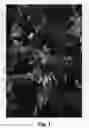
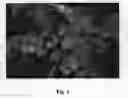
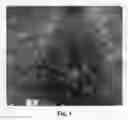
This new blueberry plant is illustrated by the accompanying color photographs that show typical specimens of the flower clusters in bloom (FIG. 1), ripe fruit on a four-year-old plant (FIG. 2), and the entire plant with a ripening crop in late August (2nd crop) (FIG. 3); the colors shown are as true as can be reasonably obtained by conventional photographic procedures.
DETAILED DESCRIPTION OF THE NEW CULTIVAR
The following detailed description of ‘Echo’ is based on observations taken from 2013 to 2016 in trials planted in 2012 in Corvallis and Aurora, Oreg. The measurements/observations for one trait always being made on samples from the same location. This description is in accordance with UPOV terminology. Color designations, color descriptions and other phenotypical descriptions may deviate from the stated values and descriptions depending upon variation in environmental, seasonal, climatic and cultural conditions. ‘Echo’ has not been observed under all possible environmental conditions. Color terminology follows The Royal Horticultural Society Colour Chart. London (R.H.S.) (5th edition, 2007).
Table 1 shows most the bush characteristics of the new cultivar. Characteristics include plant size, height of plant, canopy diameter, growth habit, plant vigor, twigginess, suckering, tendency towards evergreenness, surface texture 1 year-old-wood, surface texture 3 year-old-wood, color new wood, color rough bark 1 year-old-wood, color rough bark 3 year-old-wood, internode length and winter hardiness in Aurora, Oreg. (45° 16′ 49″ N/122° 44′ 50″ W).
| TABLE 1 | ||
| Characteristic | Echo | |
| Plant size | Small; comparable | |
| to ′Perpetua′ | ||
| Height of plant | 0.88 m | |
| Canopy diameter | 0.90 m | |
| Growth habit | Upright and | |
| spreading compared | ||
| to ′Perpetua′ | ||
| Plant vigor | Moderate vigor, | |
| comparable to | ||
| ′Perpetua′ | ||
| Twigginess | Moderate | |
| Suckering | None | |
| Tendency towards | Deciduous but holds | |
| evergreenness | leaves into winter | |
| Surface texture | Smooth, slightly | |
| new wood | pubescent | |
| Surface texture 1 | Smooth, slightly | |
| year-old-wood | pubescent | |
| Surface texture 3 | Rough | |
| year-old-wood | ||
| Color new wood | Gray-Red | |
| group 180A | ||
| Color rough bark 1 | Gray-Red | |
| year-old-wood | group 178B | |
| Color rough bark 3 | Greyed-Orange | |
| year-old-wood | group 177A | |
| Internode length | 1.84 cm | |
| Winter tolerance in | Excellent | |
| Aurora, Oregon | ||
| (45° 16′ 49″ N/ | ||
| 122° 44′ 50″ W) | ||
Table 2 shows the foliage characteristics of the new cultivar. Characteristics include leaf length, leaf width, leaf shape, leaf margin, leaf color upper leaf surface, leaf color lower leaf surface, pubescence upper leaf surface, pubescence lower leaf surface, pubescence leaf margins, and leaf venation.
| TABLE 2 | ||
| Characteristic | Echo | |
| Leaf length | 4.72 cm | |
| Leaf width | 1.89 cm | |
| Leaf shape | Elliptic | |
| Leaf margin | Entire | |
| Leaf color upper | Green group | |
| leaf surface | 139A | |
| Leaf color lower | Green group | |
| leaf surface | 138B | |
| Pubescence upper | None visible | |
| leaf surface | ||
| Pubescence lower | None visible | |
| leaf surface | ||
| Pubescence leaf | None visible | |
| margins | ||
| Leaf venation | Net | |
| Shape of leaf apex | Acuminate | |
| Shape of leaf base | Acute | |
| Petiole length | 1.84 mm | |
| Petiole diameter | 1.23 | |
| Petiole color | Yellow-Green | |
| Group (145B) | ||
Table 3 shows the flower characteristics of the new cultivar. Characteristics include fragrance, pedicel length flower—spring, peduncle length flower—spring, flower shape, pollen abundance, pollen color, flower length, corolla length, corolla diameter, style length, calyx diameter, corolla aperture, calyx surface, corolla color, corolla texture, calyx color, pistil color, pedicel color, peduncle color, flowering cluster, spring flowering period (mean date ˜5%), spring flowering period (mean date ˜50%), summer flowering period (mean date ˜5%), number flowers per cluster, Fruit set when pollinated with bulk pollen of other cultivars, Fruit set when pollinated with own pollen (selfed), stigma location (distance from corolla aperture to stigma), pollen abundance, pollen color, calyx aperture, calyx lobes, calyx depth and flower arrangement.
| TABLE 3 | ||
| Characteristic | Echo | |
| Fragrance | None | |
| Pedicel length | 4.90 mm | |
| flower-spring | ||
| Peduncle length | 7.66 mm | |
| flower-spring | ||
| Flower shape | Urceolate | |
| Pollen abundance | High | |
| Pollen color | Yellow | |
| group 10D | ||
| Flower length | 8.8 mm | |
| Corolla length | 7.6 mm | |
| Corolla diameter | 5.0 mm | |
| Style length | 7.1 mm | |
| Calyx diameter | 4.5 mm | |
| Corolla aperture | 3.4 mm | |
| Calyx surface | Smooth | |
| Corolla color | White | |
| group 155A | ||
| Corolla texture | Smooth | |
| Calyx color | Yellow-Green | |
| group 146B | ||
| Pistil color | Yellow-Green | |
| group 145A | ||
| Pedicel color | Yellow-Green | |
| group 146C | ||
| Peduncle color | Yellow-Green | |
| group 145A | ||
| Flowering cluster | Loose | |
| Spring flowering period | 18-Mar. | |
| (mean date ~5%) | ||
| Spring flowering period | 1-Apr. | |
| (mean date ~50%) | ||
| Summer flowering period | 7-Jul. | |
| (mean date ~5%) | ||
| Number flowers | 7.3 | |
| per cluster | ||
| Fruit set when | 95.4% | |
| pollinated with | ||
| bulk pollen of other | ||
| cultivars | ||
| Fruit set when pollinated | 55.2% | |
| with own pollen | ||
| Stigma location | Below corolla | |
| aperture, inside | ||
| corolla | ||
| Pollen abundance | High | |
| Pollen color | Yellow | |
| group 10D | ||
| Calyx aperture | 2.48 mm | |
| Calyx lobes | 2.26 mm | |
| Calyx depth | 1.75 mm | |
| Flower arrangement | Monopodial | |
| branching | ||
Table 4 shows the mature fruit characteristics of the new cultivar. Characteristics include berry cluster, berry peduncle length, berry pedicel length, berry detachment from pedicel, berry weight, berry height, berry width, berry height/width ratio, berry shape, berry skin color on plant, berry skin color after harvest, berry skin color after polishing, berry wax, berry flesh color, pedicel scar, berry firmness, berry flavor, berry texture, color of dried seeds, length of well-developed dried seed, width of well-developed dried seed, weight of well-developed dried seed, productivity and size of 1st (spring) vs 2nd (summer) crop.
| TABLE 4 | ||
| Characteristic | Echo | |
| Berry cluster | Loose | |
| Berry peduncle length | 26.73 mm | |
| Berry pedicel length | 5.71 mm | |
| Berry detachment from | Slight resistance | |
| pedicel | to pull | |
| Berry weight | 0.75 g | |
| Berry height | 12.21 mm | |
| Berry width | 11.94 mm | |
| Berry height/width ratio | 1.12 | |
| Berry shape | Subglobose | |
| First ripe (5%) fruit | 24-May | |
| first (spring) crop | ||
| First ripe (5%) fruit | 19-Aug. | |
| first (spring) crop | ||
| Berry skin color on plant | Violet-Blue | |
| when ripe | group N92C | |
| Berry skin color after | Violet-Blue | |
| harvest | group N92C | |
| Berry skin color after | Blue group | |
| polishing harvested fruit | 103A | |
| Berry wax | Present | |
| Berry flesh color | Green group 139D | |
| Pedicel scar | 1.59 mm | |
| Berry firmness | Moderately firm | |
| Berry flavor | Mild | |
| Berry texture | Firm, do not | |
| notice seeds | ||
| Color of dried seeds | Greyed-Orange | |
| group 177C | ||
| Length of well-developed | 1.76 mm | |
| dried seed | ||
| Width of well-developed | 0.84 mm | |
| dried seed | ||
| Weight of well-developed | 0.40 mg | |
| dried seed | ||
| Productivity | Moderate; comparable | |
| to ′Perpetua′ | ||
| Size of 1st (spring) vs | 2nd crop is larger | |
| 2nd (summer) crop | than first | |
Resistance to diseases and insects: In a minimal spray program with dormant sprays only, ‘Echo’ has had no fungal or bacterial disease symptoms and no indication of problems with gall midge. ‘Echo’ plants have not yet shown symptoms or tested positive for Blueberry shock virus; if it was an extremely susceptible (e.g. ‘Bluegold’ (unpatented)), it would be showing symptoms and testing positive after 5 years in the field, however, it is too soon to characterize it as slow to get the virus.
COMPARISON WITH PARENTAL AND COMMERCIAL CULTIVARS
‘Echo’ differs from the female parent ‘Perpetua’ (U.S. Plant Pat. No. 24,209), which is also the closest comparable commercial cultivar, in that its fruit appear longer as they have a greater length to width ratio, the fruit are a much darker violet-blue and the plants are broader and more spreading than upright with grey-red vs olive-green bark and the leaves are narrower and smaller.
‘Echo differs from the male parent ORUS 55-1 (unpatented) in that the fruit are much more blue than black and the plant is more compact with glossy leaves.
Claims
We claim:1. A new and distinct cultivar of blueberry plant, substantially as illustrated and described, characterized by its ability to flower on new growth without any chilling; attractive combination of flowers and fruit in late summer and fall; dark green, glossy, attractive leaves; edible, dark blue fruit; and vigorous and compact, spreading, plant habit.
Images & Drawings included:

Sources:
- United States Patent and Trademark Office - verify current appl. status at the USPTO↗
Recent applications in this class:
- » 20240292771 2024-08-29
Campanula plant named 'Twilight' - » 20240251691 2024-07-25
HYDRANGEA PLANT NAMED 'HYLV17520' - » 20240251690 2024-07-25
Vaccinium Plant Named 'BWPBLUE02' - » 20240251689 2024-07-25
BLUEBERRY PLANT NAMED 'FC13-113' - » 20240251688 2024-07-25
BLUEBERRY PLANT NAMED 'FCM14-057' - » 20240237567 2024-07-11
PONGAMIA VARIETIES - » 20240224827 2024-07-04
PELARGONIUM PLANT NAMED 'PEQZ0103' - » 20240215470 2024-06-27
Agapanthus plant named 'Monsapho' - » 20240215469 2024-06-27
plant named ‘LOCORA3519’ - » 20240206359 2024-06-20
CORYLUS PLANT NAMED 'BWM01'