Tree frog computer navigation system for the hierarchical visualization of data
US20180300039A1
2018-10-18
15/950,681
2018-04-11
✅ Patent granted
US 11,809,676 B2
2023-11-07
-
-
Stephen S Hong | Nicholas Hasty
Vincent J. Allen | James H. Ortega | Carstens, Allen & Gourley, LLP
2039-12-07
Abstract:
A computer navigation system that represents categories and sub-categories of material with functionally labeled objects connected in a hierarchical organization. Descending nodes represent more detailed subsets of material. Hovering the computer mouse over a node displays thumbnails of the items available under it, enabling the user to search for items without opening the respective pages, transforming a literal or verbal data filing and retrieval process into a more intuitive and easy to use visual one. Once the user hovers the computer mouse over the node with the desired item and sees its thumbnail the user clicks on the node, opening the screen from which the user can access that item (or upload a similar one), or clicks on the thumbnail to access the item directly. In addition, the system employs algorithms to group items into various categories and sub-categories and assigns them to the appropriate nodes.
Inventors:
- Scott Roloff 11 🇺🇸 Arlington, TX, United States
- William McCallum 10 🇺🇸 Fort Worth, TX, United States
- Ken Grifno 10 🇺🇸 The Colony, TX, United States
Assignee:
- Integer Health Technologies, LLC 2 🇺🇸 Fort Worth, TX, United States
- Integer Health Technologies, LLC 4 🇺🇸 Arlington, TX, United States
Applicant:
Interested in similar patents?
Get notified when new applications in this technology area are published.
Classification:
G06F3/0481 IPC
Input arrangements for transferring data to be processed into a form capable of being handled by the computer; Output arrangements for transferring data from processing unit to output unit, e.g. interface arrangements; Input arrangements or combined input and output arrangements for interaction between user and computer; Interaction techniques based on graphical user interfaces [GUI] based on specific properties of the displayed interaction object or a metaphor-based environment, e.g. interaction with desktop elements like windows or icons, or assisted by a cursor's changing behaviour or appearance
G06F3/04817 » CPC further
Input arrangements for transferring data to be processed into a form capable of being handled by the computer; Output arrangements for transferring data from processing unit to output unit, e.g. interface arrangements; Input arrangements or combined input and output arrangements for interaction between user and computer; Interaction techniques based on graphical user interfaces [GUI] based on specific properties of the displayed interaction object or a metaphor-based environment, e.g. interaction with desktop elements like windows or icons, or assisted by a cursor's changing behaviour or appearance using icons
G06F16/9027 » CPC further
Information retrieval; Database structures therefor; File system structures therefor; Details of database functions independent of the retrieved data types; Indexing; Data structures therefor; Storage structures Trees
G06F16/901 IPC
Information retrieval; Database structures therefor; File system structures therefor; Details of database functions independent of the retrieved data types Indexing; Data structures therefor; Storage structures
G06F3/04812 » CPC main
Input arrangements for transferring data to be processed into a form capable of being handled by the computer; Output arrangements for transferring data from processing unit to output unit, e.g. interface arrangements; Input arrangements or combined input and output arrangements for interaction between user and computer; Interaction techniques based on graphical user interfaces [GUI] based on specific properties of the displayed interaction object or a metaphor-based environment, e.g. interaction with desktop elements like windows or icons, or assisted by a cursor's changing behaviour or appearance Interaction techniques based on cursor appearance or behaviour, e.g. being affected by the presence of displayed objects
Description
CROSS REFERENCE TO RELATED APPLICATION
This application claims the benefit of U.S. Provisional Patent Application No. 62/486,145 filed Apr. 17, 2017, entitled “Artificial Intelligence System Predicting Qualitative Information of Reported Data with Numerical and Color Coding Enabling Improved Data Visualization,” and such application is incorporated by reference herein in its entirety.
TECHNICAL FIELD
The present disclosure is a computer navigation system employing the novel approach of representing categories and sub-categories of material with connected objects in a hierarchical organization, coupled with an algorithm that organizes the items in such categories and subcategories. Descending nodes in the hierarchy represent more detailed subsets of the material. Hovering the computer mouse over a node displays thumbnails of the items available under it, transforming a literal or verbal data filing and retrieval process into a more intuitive and easy to use visual one.
BACKGROUND
When using a computer, large quantities of data (e.g. contracts, dashboards, documents, reports, etc.) are difficult for the user to comprehend. Organizing the data to display on a computer screen using language or simple icons alone can be confusing and over-whelming.
Generally, a user searches for a desired item by continuously opening and closing screens until the user finds what he or she is looking for—draining the computer and network's resources while wasting time.
There is a need for a system that will permit a user to navigate the items on a computer or network quickly and effectively.
SUMMARY
Disclosed herein is a computer navigation system that represents categories and sub-categories of material with functionally labeled objects that are connected in a hierarchical organization. Descending nodes in the hierarchy represent more detailed subsets of the material. The invention is described using the words “tree frog” because when outlying objects are circles connected to smaller circles they resemble the footprint of a tree frog.
Hovering the computer mouse over a node displays thumbnails of the items available under it, enabling the user to search for items without opening the respective pages and viewing the actual items, transforming a literal or verbal data tiling and retrieval process into a more intuitive and easy to use visual one. Once the user hovers the computer mouse over the node with the desired item and sees its thumbnail the user clicks on the node, opening the screen from which the user can access that item (or upload a similar item), or clicks on the thumbnail to access the item directly.
To the extent that data has not been previously designated to appear at specific modes by the computer user or network administrator, the system employs algorithms to group those items into various categories and sub-categories, first by function or sub-function and then by granularity, both on a contextual and numeric basis. For example, algorithms identifying certain key words or data sets may group together all human resource records at one level, and then subdivide the payroll reports into one sub-level and the time reports into another.
This navigation system transforms the literal display of data into a visual one and improves computer and network performance by decreasing the resources used to open and close screens while searching for the right one, while increasing the effectiveness and speed of the user's search and/or filing process.
BRIEF DESCRIPTION OF THE DRAWINGS
A complete understanding of the present disclosure may be obtained by reference to the accompanying drawings in conjunction with the following detailed description.
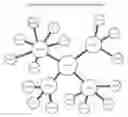
FIG. 1 depicts the computer navigation system employing ever smaller connected circles to represent the categories and sub-categories of material.
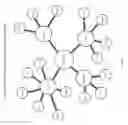
FIG. 2 depicts the computer navigation system displaying thumbnails of the items (contracts, dashboards, documents, reports, etc.) under a category level when the computer's curser is hovered over it.
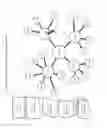
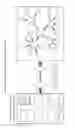
FIG. 3 depicts the algorithms sitting through items and grouping them into categories and sub-categories, and then assigning them to the appropriate nodes.
DETAILED DESCRIPTION
Various objects, features, aspects and advantages will become more apparent from the following detailed description along with the accompanying drawings. The principles are described with specificity; however, the description and drawings are not intended to limit the scope of the principles disclosed herein. Rather, the principles might also be embodied in other ways and include different steps or combinations of steps similar to the ones described herein.
Disclosed herein is a computer navigation system that represents categories and sub-categories of material with functionally labeled objects that are connected in a hierarchical organization. Descending nodes in the hierarchy represent more detailed subsets of the material. The invention is described using the words “tree frog” because when outlying objects are circles connected to smaller circles they resemble the footprint of a tree frog.
FIG. 1 depicts the computer navigation system employing ever smaller connected circles to represent the categories and sub-categories of material. Level 1 is the overall or umbrella category, which may contain high level dashboards, reports and other items. Level 2 nodes are sub-categories of Level 1. For example, in a human resource setting this level could include sub-categories for personnel, payroll, and employee benefits. Level 3 are further sub-categories of the respective Level 2 node. Far example, the Level 3 nodes under employee benefits could include health insurance, life insurance and wellness programs. FIG. 1 only depicts three levels, although the system can produce as many levels as desired.
To enhance visualization of different pods (i.e. a Level 2 node and then the Level 3 nodes branching out from it), each pod can be a different color.
Hovering the computer mouse over a node displays thumbnails of the items available under it, enabling the user to search for items without opening the respective pages and viewing the actual items, transforming a literal or verbal data filing and retrieval process into a more intuitive and easy to use visual one.
FIG. 2 depicts the computer navigation system displaying thumbnails of the items (contracts, dashboards, documents, reports, etc.) under a category level when the computer's cursor is hovered over it.
Once the user hovers the computer mouse over the node with the desired item and sees its thumbnail the user clicks on the node, opening the screen from which the user can access that item (or upload a similar item). Alternatively, the user can click on the thumbnail to access the item directly.
In addition to stream-lining the search and retrieval process, to the extent that data has not been previously designated to appear at specific nodes by the computer user or network administrator, the system employs algorithms to group items into various categories and sub-categories, first by function or sub-function and then by granularity, both on a contextual and numeric basis. For example, algorithms identifying certain key words or data sets may group together all human resource records at one level, and then subdivide the payroll reports into one sub-level and the time reports into another.
FIG. 3 depicts the system's algorithms sifting through items and grouping them by subject matter, and then assigning them to the appropriate level of granularity for display within a pod.
The system transforms the literal display of data into a visual one and improves computer and network performance by decreasing the resources used to open and close screens while searching for the right one, while increasing the effectiveness and speed of the user's search and/or filing process.
This detailed description is not intended to be limiting or represent an exhaustive enumeration of the principles disclosed herein. It will be apparent to those of skill in the art that numerous charges may be made in such details without departing from the spirit of the principles disclosed herein.
Claims
We claim:1. A system of visual navigation on a computer screen, comprising;
representing groups of items with functionally labeled objects connected in a hierarchical order;
organizing that order with a central node branching off into several nodes, and from each of those nodes several more, etc., with each node and the nodes branching out from it forming a pod (and each pod may, but is but required to, be a different color);
representing more detailed subsets or the material as the nodes descend;
displaying thumbnails of the items available under a node when the user hovers the computer mouse, over it; and
opening the screen from which the user can access such items (or upload similar items) when the user clicks the computer mouse over the node, or alternatively accessing the item directly when the user clicks on its thumbnail.
2. The system of claim 1, as well as comprising:
employing algorithms to group items into various categories and sub-categories, first by function or sub-function and then by granularity, both on a contextual and numeric basis; and
assigning each such item to the appropriate node.
Images & Drawings included:
Sources:
- United States Patent and Trademark Office - verify current appl. status at the USPTO↗
Similar patent applications:
Recent applications in this class:
- » 20250291454 2025-09-18
COLLABORATIVE WIDGET STATE SYNCHRONIZATION - » 20250278164 2025-09-04
ROLL MAP FOR ELECTRODE COATING PROCESS AND ROLL MAP CREATION METHOD AND SYSTEM - » 20250251843 2025-08-07
SYSTEMS AND METHODS FOR GENERATING ROLL MAP AND MANUFACTURING BATTERY USING ROLL MAP - » 20250251842 2025-08-07
A Portable Information Terminal Device - » 20250251841 2025-08-07
CURSOR BEHAVIOR - » 20250190087 2025-06-12
INTERACTION METHOD AND APPARATUS, STORAGE MEDIUM, DEVICE, AND PROGRAM PRODUCT - » 20250165117 2025-05-22
System and Method of Indicating the Distance or the Surface of an Image of a Geographical Object - » 20250165116 2025-05-22
COMPUTER, OPERATION METHOD, AND NON-TRANSITORY COMPUTER-READABLE STORAGE MEDIUM STORING OPERATION PROGRAM - » 20250156027 2025-05-15
MULTI-MODAL CURSOR AND SYSTEMS FOR SWITCHING MODES OF A CURSOR - » 20250156026 2025-05-15
CURSOR PROMPT INTERFACES FOR FACILITATING MULTIPLE FUNCTIONALITY
Recent applications for this Assignee:
- » 20240006046 2024-01-04
Wellness program navigation engine - » 20230123221 2023-04-20
Healthcare clinical efficiency claims per healthy day navigation engine - » 20220359067 2022-11-10
Healthcare occupational outcomes navigation engine - » 18645749 2025-08-26
High-cost medical claim prediction and navigation engine