Process for treating gaseous effluents developed in coffee roasting installation
US20180304197A1
2018-10-25
15/768,058
2016-10-14
✅ Patent granted
US 10,773,208 B2
2020-09-15
WO; PCT/IB2016/056154; 20161014
WO; WO2017/064654; 20170420
Anita Nassiri-Motlagh
Sughrue Mion, PLLC
2036-10-14
Abstract:
A process for treating gaseous effluents developed in a coffee roasting installation making it possible to treat gaseous effluents developed in a coffee roasting installation, in which the effluents are passed through an oxidative catalytic converter. Within the catalytic converter use is made of a catalyst selected from the group including: a) a catalyst including a porous faujasite support containing copper oxide nanoparticles in a quantity of between 2% and 7% of the total weight of the catalyst; b) a catalyst including a porous γ-alumina support containing copper oxide nanoparticles in a quantity of between 2% and 7% of the total weight of the catalyst; and c) a catalyst including a mesoporous zeolite or silica support containing iron nanoparticles in a quantity of between 2% and 7% of the total weight of the catalyst.
Inventors:
- Stefania FURFORI 1 🇮🇹 Torino, Italy
- Luciano ZATTARIN 1 🇮🇹 Torino, Italy
- Fabio Alessandro DEORSOLA 1 🇮🇹 Torino, Italy
- Samir BENSAID 1 🇮🇹 Torino, Italy
- Nunzio RUSSO 1 🇮🇹 Torino, Italy
- Debora FINO 1 🇮🇹 Torino, Italy
- Raffaele PIRONE 1 🇮🇹 Torino, Italy
- Marco PIUMETTI 1 🇮🇹 Cuneo, Italy
- Stefania Furfori 1 🇮🇹 Turin, Italy
- Luciano Zattarin 1 🇮🇹 Turin, Italy
- Fabio Alessandro Deorsola 1 🇮🇹 Turin, Italy
- Samir Bensaid 1 🇮🇹 Turin, Italy
- Nunzio Russo 1 🇮🇹 Turin, Italy
- Debora Fino 1 🇮🇹 Turin, Italy
- Raffaele Pirone 1 🇮🇹 Turin, Italy
Assignee:
- LUIGI LAVAZZA S.P.A. 55 🇮🇹 TORINO, Italy
- LUIGI LAVAZZA S.P.A. 65 🇮🇹 Turin, Italy
Applicant:
Interested in similar patents?
Get notified when new applications in this technology area are published.
Classification:
B01D2255/20738 » CPC further
Catalysts; Metals or compounds thereof; Transition metals Iron
B01D2255/20761 » CPC further
Catalysts; Metals or compounds thereof; Transition metals Copper
B01D2255/50 » CPC further
Catalysts Zeolites
B01D2257/70 » CPC further
Components to be removed Organic compounds not provided for in groups -
B01D53/864 » CPC main
Separation of gases or vapours; Recovering vapours of volatile solvents from gases; Chemical or biological purification of waste gases, e.g. engine exhaust gases, smoke, fumes, flue gases, aerosols,; Chemical or biological purification of waste gases; General processes for purification of waste gases; Apparatus or devices specially adapted therefor; Catalytic processes Removing carbon monoxide or hydrocarbons
A23N12/12 IPC
Machines for cleaning, blanching, drying or roasting fruits or vegetables, e.g. coffee, cocoa, nuts for drying or roasting Auxiliary devices for roasting machines
B82Y30/00 » CPC further
Nanotechnology for materials or surface science, e.g. nanocomposites
A23F5/04 » CPC further
Coffee; Coffee substitutes; Preparations thereof Methods of roasting coffee
A23N12/125 » CPC further
Machines for cleaning, blanching, drying or roasting fruits or vegetables, e.g. coffee, cocoa, nuts for drying or roasting; Auxiliary devices for roasting machines Accessories or details
B01D2257/708 » CPC further
Components to be removed; Organic compounds not provided for in groups - Volatile organic compounds V.O.C.'s
B01D2258/0275 » CPC further
Sources of waste gases; Other waste gases from food processing plants or kitchens
B01J29/14 » CPC further
Catalysts comprising molecular sieves having base-exchange properties, e.g. crystalline zeolites; Crystalline aluminosilicate zeolites; Isomorphous compounds thereof of the faujasite type, e.g. type X or Y containing iron group metals, noble metals or copper Iron group metals or copper
B01D2257/502 » CPC further
Components to be removed; Carbon oxides Carbon monoxide
B01D53/86 IPC
Separation of gases or vapours; Recovering vapours of volatile solvents from gases; Chemical or biological purification of waste gases, e.g. engine exhaust gases, smoke, fumes, flue gases, aerosols,; Chemical or biological purification of waste gases; General processes for purification of waste gases; Apparatus or devices specially adapted therefor Catalytic processes
Description
CROSS REFERENCE TO RELATED APPLICATIONS
This application is a National Stage of International Application No. PCT/M2016/056154 filed Oct. 14, 2016, claiming priority based on Italian Patent Application No. 102015000062406 filed Oct. 16, 2015.
BACKGROUND OF THE INVENTION
Field of the Invention
This invention relates to a process for treating gaseous effluents developed in a coffee roasting installation.
More specifically this invention relates to a process in which the said effluents are passed through an oxidative catalytic converter.
Background
The process of roasting raw coffee is associated with the development of volatile organic compounds (VOC) linked to the flavour of coffee. Many of these organic compounds which contain nitrogen atoms in their structure give rise to the formation of nitrogen oxides when passed through an oxidative catalytic converter typically used to comply with the regulations imposing limits on VOC and carbon monoxide (CO) emissions. These regulations require polluting compounds such as nitrogen oxides and organic compounds to be greatly reduced.
At the present time catalytic converters are an essential component of most exhaust systems, used particularly in the motor vehicle context to reduce emissions as a result of their ability to catalyse reactions that can convert the pollutants into harmless or not very harmful substances.
The post-treatment techniques for reducing NOx now established industrially are the SCR (Selective Catalytic Reduction) technique and the LNT (Lean NOx Trap) technique. In SCR the NOx molecules react with a reducing compound (generally ammonia or a precursor of it, for example urea) to form water and nitrogen in the presence of a catalyst in a temperature range between 300 and 400° C. The LNT technique on the other hand provides for trapping nitrogen oxides by adsorbing them in the form of nitrates onto a catalyst deposited on a solid support. Because the storage capacity of the adsorbent is limited, the trap has to be periodically regenerated through introducing a reducing substance for a very short time, thus giving rise to discontinuous functioning of the reduction system.
Both the techniques acting to reduce nitrogen oxides only require modifications to the layout of current installations through the addition of a further reactor and the possible addition of a reducing agent (typically ammonia), with consequent higher demands on the safety conditions for installations.
Further disadvantages associated with applying the two abovementioned techniques to the coffee roasting process lie mainly in use of the reducing agent, which may give rise to the possible release of the latter into the environment, with a consequent need to provide for an additional catalyst in order to remove it, the difficulty of correctly adding the reducing agent because of the extremely discontinuous nature of the roasting process, the presence of sulfur-containing compounds in the gaseous effluents requiring treatment, which can poison the catalyst and reduce its purifying ability, and the volumes of gaseous effluent, which can carry over appreciable volumes of catalyst thus requiring substantial modification of the layout of installations (particularly for the LNT technique).
In most cases converters comprise a ceramic substrate coated with a catalytic impregnating agent containing noble metals, nanoparticles of copper oxide, nanoparticles of iron oxide, and typically one or more metals of the platinum group (platinum, palladium, rhodium).
The extensive use of a large quantity of noble metals, nanoparticles of copper oxide and nanoparticles of iron oxide nevertheless gives rise to huge costs.
One object of this invention is to provide an improved process for treating the gaseous effluents developed in a coffee roasting installation, with the possibility of implementing the process using more economical materials having a great ability to oxidise nitrogen-containing molecules and volatile organic compounds.
SUMMARY OF THE INVENTION
These and other objects will be accomplished according to the invention through a treatment process of the type defined above, primarily characterised in that in the catalytic converter use is made of a catalyst selected from the group comprising:
a) a catalyst comprising a porous faujasite support containing copper (Cu) nanoparticles in a quantity of between 2% and 7%, and preferably around 5% of the total weight of the catalyst;
b) a catalyst comprising a porous γ-alumina (γ-Al2O3) support containing copper (Cu) nanoparticles in a quantity of between 2% and 7%, and preferably around 5% of the total weight of the catalyst; and
c) a catalyst comprising a mesoporous zeolite or silica support containing iron (Fe) nanoparticles in quantities of between 2% and 7%, and preferably around 5% of the total weight of the catalyst.
The Cu or Fe nanoparticles may conveniently be deposited on corresponding supports using the IWI (Incipient Wetting Impregnation) technique.
In the case of catalysts containing iron nanoparticles, the aforementioned mesoporous zeolite or silica is conveniently a zeolite or SBA 15 (Santa Barbara Amorphous) silica.
Conveniently, although not necessarily, before the flue gases are passed into the catalytic converter the abovementioned gaseous effluents developed during the roasting of raw coffee are heated to a temperature of between 350° C. and 500° C., preferably between 400° C. and 450° C., for example using a post-combustion unit.
BRIEF DESCRIPTION OF THE INVENTION
Further features and advantages of the invention will be apparent from the following detailed description with reference to the appended drawings provided purely by way of a non-limiting example, in which:
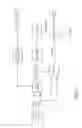
FIG. 1 is a block diagram of a coffee roasting installation associated with a gaseous effluent treatment system operating according to the process according to this invention; and
FIGS. 2 to 4 are comparative diagrams relating to the output or yield of CO2 and NOx which can indicatively be achieved using a process according to this invention.
DETAILED DESCRIPTION OF THE INVENTION
In FIG. 1, 1 indicates as a whole a roasting or torrefaction apparatus, of a type which is in itself known. In this apparatus there is a roasting chamber which receives a quantity of raw coffee that is to be roasted.
A flow of hot air at a temperature of the order of 500° C., generated for example by means of a burner 2, also of a type which is in itself known, fed with a mixture of air and methane, is also fed to the roasting chamber in apparatus 1.
When in operation gaseous effluents are produced in roasting apparatus 1 and in the embodiment illustrated in FIG. 1 they pass to a cyclone 3, at a temperature of for example between 150° C. and 250° C.
Cyclone 3 carries out preliminary processing of the gaseous effluents, separating particles of greater inertia from the flow.
On leaving cyclone 3 the gaseous effluents are passed to an oxidative catalytic converter 5 by means of a blower device 4.
On leaving blower 4 the gaseous effluents have a temperature of for example between 100° C. and 200° C.
Conveniently, although not necessarily, before reaching catalytic converter 5 the said gaseous effluents pass into an after-burner 6, advantageously fed with the same combustible mixture as used for burner 2.
When they enter oxidative catalyser 5 the gaseous effluents are therefore at a higher temperature, of for example between 350° C. and 500° C., and preferably between 400° C. and 450° C.
In accordance with this invention one of the following catalysts is advantageously used in catalytic converter 5:
a) a catalyst comprising a porous faujasite support, containing copper nanoparticles in a quantity of substantially between 2% and 7%, and preferably approximately 5% of the total weight of the catalyst;
b) a catalyst comprising a porous γ-alumina support, containing copper nanoparticles in a quantity of substantially between 2% and 7%, and preferably approximately 5% of the total weight of the catalyst; and
c) a catalyst comprising a mesoporous zeolite or silica support, containing iron nanoparticles in a quantity of substantially between 2% and 7%, and preferably approximately 5% of the total weight of the catalyst.
Conveniently the said mesoporous zeolite or silica is a SBA 15 (Santa Barbara Amorphous) zeolite.
The copper or iron nanoparticles are conveniently deposited on corresponding supports using the IWI (Incipient Wetting Impregnation) technique.
Simulations and tests performed have demonstrated that the catalysts listed above make it possible to achieve quite high selective oxidation of CO, nitrogen-containing molecules and organic compounds, while at the same time preventing or reducing the oxidation of nitrogen atoms. These catalysts have demonstrated that they produce few nitrogen oxides and virtually no emissions of carbon monoxide, providing almost complete conversion of all the molecules present in the system into CO2, N2 and H2O.
FIGS. 2 to 4 show comparative diagrams illustrating yield of CO2, yield of NOx and NOx concentration in relation to the temperature shown on the abscissa for the three catalysts described above, determined in simulation tests carried out by oxidising a “test” mixture of molecules typically developed in the roasting of coffee, and in particular a test mixture having the composition shown in the table below:
| Compound | Concentration | |
| Carbon monoxide | 450 ppm | |
| Pyridine | 280 ppm | |
| Methanol | 250 ppm | |
| Oxygen | 10% | |
| Helium | Remainder | |
The graph in FIG. 2 shows how the three catalysts described above provide a high yield in terms of carbon dioxide, more than 70%, over an extended temperature range. The catalyst having the highest performance is the catalyst comprising 5% by weight on a γ-alumina substrate, the yield from it throughout the temperature range from 375° C. to 500° C. being over 60%, reaching 100% above 435° C.
From FIG. 4 it can be seen how the concentration of NOx forming during the test with the copper-based catalyst on the faujasite support is always below 25 g/Nm3, with a NOx yield of below 5% (FIG. 3).
The iron-based catalyst on SBA-15 zeolite or silica tends asymptotically to a yield of 25% as temperature increases (FIG. 3).
With regard to the copper-based catalyst on a γ-alumina substrate, it will instead be seen that nitrogen oxides increase with increasing temperature.
Of course, without altering the principle of the invention, embodiments and details of embodiments may be varied extensively in relation to what has been described and illustrated purely by way of a non-limiting example without thereby going beyond the scope of the invention as defined in the appended claims.
Claims
1. A method for processing the gaseous effluents developed in a coffee roasting installation (1), wherein said effluents are conveyed through an oxidising catalytic converter (5),
the method being characterised in that in said catalytic converter (5) use is made of a catalyst chosen in the group formed by
a) a catalyst comprising a porous faujasite support including nanoparticles of copper oxide in an amount comprised between 2% and 7%, and preferably equal to about 5%, of the total weight of the catalyst;
b) a catalyst comprising a porous γ-alumina support including nanoparticles of copper oxide in an amount comprised between 2% and 7%, and preferably equal to about 5%, of the total weight of the catalyst; and
c) a catalyst comprising a porous zeolite or mesoporous silica support, containing iron nanoparticles in an amount comprised between 2% and 7%, and preferably equal to about 5%, of the total weight of the catalyst.
2. A method according to claim 1, wherein said mesoporous silica is an SBA-15 silica.
3. A method according to claim 1, wherein before being admitted to the catalytic converter (5) said gaseous effluents are heated to a temperature comprised between 350° C. and 500° C. and preferably comprised between 400° C. and 450° C.
4. A method according to claim 1, wherein said nanoparticles of copper oxide or iron are deposited on said supports with the Incipient Wetting Impregnation (IWI) technique.
Images & Drawings included:



Sources:
- United States Patent and Trademark Office - verify current appl. status at the USPTO↗
Recent applications in this class:
- » 20250177919 2025-06-05
METHANE REMOVAL DEVICE - » 20240189770 2024-06-13
AMBIENT TEMPERATURE CATALYST FOR TRACE CONTAMINANT CONTROL WITH IMPROVEMENTS TO CARBON MONOXIDE AND HYDROGEN CAPTURE - » 20230405522 2023-12-21
LIQUID CARBON DIOXIDE CAPTURING FILTER SYSTEM AND METHOD - » 20230302405 2023-09-28
COMPLETE OXIDATION CATALYSTS FOR DILUTE ALKANES - » 20230277985 2023-09-07
Methane destruction apparatus and method of converting fugitive methane emissions - » 20220395777 2022-12-15
Methane Oxidation Catalyst and Method of Using Same - » 20220370957 2022-11-24
Air purification system, apparatus and method - » 20220241725 2022-08-04
METHOD AND APPARATUS FOR ALKANE OXIDATION - » 20220168691 2022-06-02
CHIMNEY STARTER AND CATALYST UNIT FOR A CHIMNEY STARTER - » 20220134283 2022-05-05
Methane destruction apparatus and method of converting fugitive methane emissions
Recent applications for this Assignee:
- » 20240215755 2024-07-04
SYSTEM FOR CLEANING MILK DUCTS FOR A MACHINE FOR PREPARING BEVERAGES - » 20240188752 2024-06-13
Beverage vessel support apparatus - » 20240180358 2024-06-06
SYSTEM FOR CLEANING MILK DUCTS FOR A MACHINE FOR PREPARING BEVERAGES - » 20240049906 2024-02-15
FROTHING HEAD FOR HEATING AND WHIPPING MILK - » 20230363576 2023-11-16
DEVICE FOR HEATING AND FROTHING MILK - » 20230312230 2023-10-05
Apparatus for preparing a beverage - » 20230180960 2023-06-15
MOTORIZED BREWING UNIT - » 20220354297 2022-11-10
Beverage preparation machine - » 20220304498 2022-09-29
Motorized brewing unit - » 20220304498 2022-09-29
Motorized brewing unit