Textiles including carbon nanotubes
US20180305857A1
2018-10-25
15/496,486
2017-04-25
✅ Patent granted
US 10,370,790 B2
2019-08-06
-
-
Andrew T Piziali
F. Chau & Associates, LLC
2038-01-19
Abstract:
A textile article includes a first fabric including a plurality of first carbon nanotubes coupled to the first fabric. The first carbon nanotubes of the plurality of first carbon nanotubes are metallic carbon nanotubes. A second fabric includes a plurality of second carbon nanotubes coupled to the second fabric. The second carbon nanotubes of the plurality of second carbon nanotubes are semiconductive carbon nanotubes. The first fabric is interconnected with the second fabric.
Inventors:
- Shu-Jen Han 182 🇺🇸 Cortlandt Manor, NY, United States
- Bharat Kumar 27 🇺🇸 Tarrytown, NY, United States
- ABRAM L. FALK 31 🇺🇸 PORT CHESTER, NY, United States
Assignee:
- INTERNATIONAL BUSINESS MACHINES CORPORATION 136,239 🇺🇸 ARMONK, NY, United States
Applicant:
Interested in similar patents?
Get notified when new applications in this technology area are published.
Classification:
A41D1/002 » CPC further
Garments adapted to accommodate electronic equipment
A41D1/00 IPC
Garments
A41D31/02 » CPC further
Materials specially adapted for outerwear Layered materials
H01G4/14 » CPC further
Fixed capacitors; Processes of their manufacture; Details; Dielectrics; Solid dielectrics Organic dielectrics
H01G4/01 » CPC further
Fixed capacitors; Processes of their manufacture; Details; Electrodes Form of self-supporting electrodes
G06F3/045 » CPC further
Input arrangements for transferring data to be processed into a form capable of being handled by the computer; Output arrangements for transferring data from processing unit to output unit, e.g. interface arrangements; Input arrangements or combined input and output arrangements for interaction between user and computer; Arrangements for converting the position or the displacement of a member into a coded form; Digitisers, e.g. for touch screens or touch pads, characterised by the transducing means using resistive elements, e.g. a single continuous surface or two parallel surfaces put in contact
B32B5/02 IPC
Layered products characterised by the non- homogeneity or physical structure, i.e. comprising a fibrous, filamentary, particulate or foam layer; Layered products characterised by having a layer differing constitutionally or physically in different parts characterised by structural features of a layer
B32B5/024 » CPC further
Layered products characterised by the non- homogeneity or physical structure, i.e. comprising a fibrous, filamentary, particulate or foam layer; Layered products characterised by having a layer differing constitutionally or physically in different parts characterised by structural features of a layer Woven fabric
D06M11/83 » CPC further
Treating fibres, threads, yarns, fabrics or fibrous goods made from such materials, with inorganic substances or complexes thereof; Such treatment combined with mechanical treatment, e.g. mercerising with metals; with metal-generating compounds, e.g. metal carbonyls; Reduction of metal compounds on textiles
B32B5/06 » CPC further
Layered products characterised by the non- homogeneity or physical structure, i.e. comprising a fibrous, filamentary, particulate or foam layer; Layered products characterised by having a layer differing constitutionally or physically in different parts characterised by structural features of a layer characterised by a fibrous layer to another layer, e.g. of fibres, of paper
H01L51/00 IPC
Solid state devices using organic materials as the active part, or using a combination of organic materials with other materials as the active part; Processes or apparatus specially adapted for the manufacture or treatment of such devices, or of parts thereof
H01L51/0048 » CPC further
Solid state devices using organic materials as the active part, or using a combination of organic materials with other materials as the active part; Processes or apparatus specially adapted for the manufacture or treatment of such devices, or of parts thereof; Selection of organic semiconducting materials, e.g. organic light sensitive or organic light emitting materials; Carbon containing materials, e.g. carbon nanotubes, fullerenes Carbon nanotubes
B32B2250/02 » CPC further
Layers arrangement 2 layers
B32B2250/20 » CPC further
Layers arrangement All layers being fibrous or filamentary
B32B2262/062 » CPC further
Composition or structural features of fibres which form a fibrous or filamentary layer or are present as additives; Vegetal fibres Cellulose fibres, e.g. cotton
B32B2262/103 » CPC further
Composition or structural features of fibres which form a fibrous or filamentary layer or are present as additives; Inorganic fibres Metal fibres
B32B2262/106 » CPC further
Composition or structural features of fibres which form a fibrous or filamentary layer or are present as additives; Inorganic fibres Carbon fibres, e.g. graphite fibres
B32B2307/202 » CPC further
Properties of the layers or laminate having particular electrical or magnetic properties, e.g. piezoelectric Conductive
B32B2307/51 » CPC further
Properties of the layers or laminate having particular mechanical properties Elastic
B32B2437/00 » CPC further
Clothing
B32B2457/14 » CPC further
Electrical equipment Semiconductor wafers
B32B2457/16 » CPC further
Electrical equipment Capacitors
D06M2101/06 » CPC further
Chemical constitution of the fibres, threads, yarns, fabrics or fibrous goods made from such materials, to be treated; Natural fibres, other than mineral fibres; Vegetal fibres cellulosic
D06M11/73 » CPC main
Treating fibres, threads, yarns, fabrics or fibrous goods made from such materials, with inorganic substances or complexes thereof; Such treatment combined with mechanical treatment, e.g. mercerising with carbon or compounds thereof
B32B5/26 » CPC further
Layered products characterised by the non- homogeneity or physical structure, i.e. comprising a fibrous, filamentary, particulate or foam layer; Layered products characterised by having a layer differing constitutionally or physically in different parts characterised by the presence of two or more layers which are next to each other and are fibrous, filamentary, formed of particles or foamed one layer being a fibrous or filamentary layer another layer also being fibrous or filamentary
B32B2262/0261 » CPC further
Composition or structural features of fibres which form a fibrous or filamentary layer or are present as additives; Synthetic macromolecular fibres Polyamide fibres
D06M2101/34 » CPC further
Chemical constitution of the fibres, threads, yarns, fabrics or fibrous goods made from such materials, to be treated; Synthetic fibres, other than mineral fibres; Synthetic polymers consisting of macromolecular compounds obtained otherwise than by reactions only involving carbon-to-carbon unsaturated bonds Polyamides
D06M2101/40 » CPC further
Chemical constitution of the fibres, threads, yarns, fabrics or fibrous goods made from such materials, to be treated Fibres of carbon
H01L51/0558 » CPC further
Solid state devices using organic materials as the active part, or using a combination of organic materials with other materials as the active part; Processes or apparatus specially adapted for the manufacture or treatment of such devices, or of parts thereof specially adapted for rectifying, amplifying, oscillating or switching, or capacitors or resistors with at least one potential- jump barrier or surface barrier multistep processes for their manufacture the devices being controllable only by the electric current supplied or the electric potential applied, to an electrode which does not carry the current to be rectified, amplified or swiched, e.g. three-terminal devices; Field-effect devices, e.g. TFTs insulated gate field effect transistors characterised by the channel of the transistor
H01L51/102 » CPC further
Solid state devices using organic materials as the active part, or using a combination of organic materials with other materials as the active part; Processes or apparatus specially adapted for the manufacture or treatment of such devices, or of parts thereof specially adapted for rectifying, amplifying, oscillating or switching, or capacitors or resistors with at least one potential- jump barrier or surface barrier multistep processes for their manufacture; Details of devices Electrodes
H01L51/105 » CPC further
Solid state devices using organic materials as the active part, or using a combination of organic materials with other materials as the active part; Processes or apparatus specially adapted for the manufacture or treatment of such devices, or of parts thereof specially adapted for rectifying, amplifying, oscillating or switching, or capacitors or resistors with at least one potential- jump barrier or surface barrier multistep processes for their manufacture; Details of devices; Electrodes Ohmic contacts, e.g. source and drain electrodes
D03D15/00 IPC
Woven fabrics characterised by the material, structure or properties of the fibres, filaments, yarns, threads or other warp or weft elements used
H01G11/36 » CPC further
Hybrid capacitors, i.e. capacitors having different positive and negative electrodes; Electric double-layer [EDL] capacitors; Processes for the manufacture thereof or of parts thereof; Electrodes characterised by their material; Carbon-based Nanostructures, e.g. nanofibres, nanotubes or fullerenes
H01L51/44 IPC
Solid state devices using organic materials as the active part, or using a combination of organic materials with other materials as the active part; Processes or apparatus specially adapted for the manufacture or treatment of such devices, or of parts thereof specially adapted for sensing infra-red radiation, light, electro-magnetic radiation of shorter wavelength or corpuscular radiation and adapted for the conversion of the energy of such radiation into electrical energy or for the control of electrical energy by such radiation using organic materials as the active part, or using a combination of organic materials with other material as the active part; Multistep processes for their manufacture Details of devices
H01L51/05 IPC
Solid state devices using organic materials as the active part, or using a combination of organic materials with other materials as the active part; Processes or apparatus specially adapted for the manufacture or treatment of such devices, or of parts thereof specially adapted for rectifying, amplifying, oscillating or switching, or capacitors or resistors with at least one potential- jump barrier or surface barrier multistep processes for their manufacture
H01L51/10 IPC
Solid state devices using organic materials as the active part, or using a combination of organic materials with other materials as the active part; Processes or apparatus specially adapted for the manufacture or treatment of such devices, or of parts thereof specially adapted for rectifying, amplifying, oscillating or switching, or capacitors or resistors with at least one potential- jump barrier or surface barrier multistep processes for their manufacture Details of devices
H01L51/441 » CPC further
Solid state devices using organic materials as the active part, or using a combination of organic materials with other materials as the active part; Processes or apparatus specially adapted for the manufacture or treatment of such devices, or of parts thereof specially adapted for sensing infra-red radiation, light, electro-magnetic radiation of shorter wavelength or corpuscular radiation and adapted for the conversion of the energy of such radiation into electrical energy or for the control of electrical energy by such radiation using organic materials as the active part, or using a combination of organic materials with other material as the active part; Multistep processes for their manufacture; Details of devices Electrodes
Description
BACKGROUND
The present invention generally relates to textiles, and more particularly to textiles including carbon nanotubes.
Carbon nanotubes are tube-shaped materials including carbon and having a cylindrical structure. A diameter of a carbon nanotube may be measured, for example, on a nanometer scale. Carbon nanotubes may be used in nanotechnology, electronics, optics and other related fields. Carbon nanotubes may include metallic and semiconducting nanotubes. Semiconducting nanotubes may be distinguished from metallic nanotubes based on chirality.
Carbon nanotubes may be electrically conductive, thermally conductive and may be relatively durable materials. For example, carbon nanotubes may be structurally stable, even with relatively high length-to-diameter ratios. Semiconducting nanotubes may be relatively responsive to their environment (e.g., by a change in the number of free charges in the semiconducting nanotubes), and metallic nanotubes may have relatively high charge densities and may thus carry relatively high currents across relatively long distances.
Carbon nanotubes may be incorporated into wearable fabrics, which may be referred to as ‘smart’ fabrics.
As an example, a fabric may be exposed to a solution including carbon nanotubes. A portion of the carbon nanotubes in the solution of carbon nanotubes may be incorporated into the fabric. Thus, at least a portion of the fabric including the carbon nanotubes may become electrically conductive, and responsive to a signal applied to the fabric.
SUMMARY
A textile article according to an exemplary embodiment of the present invention includes a first fabric including a plurality of first carbon nanotubes coupled to the first fabric. The first carbon nanotubes of the plurality of first carbon nanotubes are metallic carbon nanotubes. A second fabric includes a plurality of second carbon nanotubes coupled to the second fabric. The second carbon nanotubes of the plurality of second carbon nanotubes are semiconductive carbon nanotubes. The first fabric is interconnected with the second fabric.
A textile article according to an exemplary embodiment of the present invention includes a first fabric including a plurality of first carbon nanotubes coupled to the first fabric. A second fabric includes a plurality of second carbon nanotubes coupled to the second fabric. The second carbon nanotubes have an electrical conductivity different from that of the first carbon nanotubes. The first fabric is interconnected with the second fabric.
A textile article according to an exemplary embodiment of the present invention includes a first fabric including a first yarn. The first yarn includes a plurality of first carbon nanotubes having a first electrical conductivity coupled to the first yarn through van der waals forces. A second fabric includes a second yarn. The second yarn includes a plurality of second carbon nanotubes having a second electrical conductivity coupled to the second yarn through van der waals forces. The first electrical conductivity of the first carbon nanotubes is different from the second electrical conductivity of the second carbon nanotubes. The first fabric is interconnected with the second fabric.
BRIEF DESCRIPTION OF THE DRAWINGS
The above and other features of the present invention will become more apparent by describing in detail exemplary embodiments thereof, with reference to the accompanying drawings, in which:
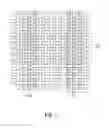
FIG. 1 illustrates a textile article including carbon nanotubes according to an exemplary embodiment of the present invention.
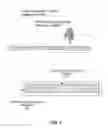
FIG. 2 is a conceptual diagram of a textile article including a photovoltaic cell formed of carbon nanotubes according to an exemplary embodiment of the present invention.
FIG. 3 is a conceptual diagram of a textile article including a sensor formed of carbon nanotubes according to an exemplary embodiment of the present invention.
FIG. 4 is a conceptual diagram of a textile article including a transistor formed of carbon nanotubes according to an exemplary embodiment of the present invention.
FIG. 5 illustrates a piezoresistive input device according to an exemplary embodiment of the present invention.
FIG. 6 illustrates a flowchart of electrical components of a wearable smart garment according to an exemplary embodiment of the present invention.
FIG. 7 illustrates an exemplary method of coupling carbon nanotubes to fabrics according to an exemplary embodiment of the present invention.
FIG. 8 illustrates an exemplary chemical attachment scheme for coupling carbon nanotubes to fabrics according to an exemplary embodiment of the present invention.
DETAILED DESCRIPTION
It will be understood that the terms “first,” “second,” “third,” etc. are used herein to distinguish one element from another, and the elements are not limited by these terms. Thus, a “first” element in an exemplary embodiment may be described as a “second” element in another exemplary embodiment.
Exemplary embodiments of the present invention will be described more fully hereinafter with reference to the accompanying drawings. Like reference numerals may refer to like elements throughout the specification and drawings.
The terms “nanotubes” and “carbon nanotubes” may be used interchangeably herein. The term “carbon nanotube” may be abbreviated as “CNT,” as desired.
FIG. 1 illustrates a textile article including carbon nanotubes according to an exemplary embodiment of the present invention. FIG. 2 is a conceptual diagram of a textile article including a photovoltaic cell formed of carbon nanotubes according to an exemplary embodiment of the present invention.
Referring to FIGS. 1 and 2, according to an exemplary embodiment of the present invention, a textile article may include a first fabric 100 including a plurality of first carbon nanotubes 101 coupled to the first fabric 100. A second fabric 200 may include a plurality of second carbon nanotubes 201 coupled to the second fabric 200. The second carbon nanotubes 201 may have an electrical conductivity different from that of the first carbon nanotubes 201. The first fabric 100 may be interconnected with the second fabric 200.
Referring to FIGS. 1 and 2, according to an exemplary embodiment of the present invention, a textile article may include a first fabric 100 including a plurality of first carbon nanotubes 101 coupled to the first fabric 100. The first carbon nanotubes of the plurality of first carbon nanotubes 101 may be metallic carbon nanotubes. A second fabric 200 may include a plurality of second carbon nanotubes 201 coupled to the second fabric 200. The second carbon nanotubes of the plurality of second carbon nanotubes 201 may be semiconductive carbon nanotubes. The first fabric 100 may be interconnected with the second fabric 200.
The first carbon nanotubes of the plurality of first carbon nanotubes 101 may be coupled to the first fabric 100 by van der waals forces. The second carbon nanotubes of the plurality of second carbon nanotubes 201 may be coupled to the second fabric 200 by van der waals forces.
As an example, the first fabric 100 may include a plurality of stands of yarn woven together with a plurality of strands of yarn of the second fabric 200. For example, the first fabric 100 and the second fabric 200 may be woven together to form a single fabric included in a textile article (e.g., the textile article described with reference to FIGS. 1 and 2).
As an example, the first and second fabrics 100 and 200 may each include at least one of cotton, silk, nylon, rayon, or polyester. The first and second interconnected fabrics 100 and 200 may form a stretchable fabric included in a wearable garment. The wearable garment may be an item of ‘smart clothing’. Non-limiting examples of the wearable garment may include a shirt, pants, a hat, a jacket or coat, a scarf, or sporting equipment. However, exemplary embodiments of the present invention are not limited to a particular textile article, and the smart fabric described herein may be used in any desired textile or any desired garment. The terms “smart clothing,” “smart garment” and “smart article” and “smart fabric” may be used interchangeably herein.
According to an exemplary embodiment of the present invention, the first fabric 100 including the plurality of first carbon nanotubes 101 coupled to the first fabric 100 may have a sheet resistivity of about 1 MΩ/□ (the symbol “□” as used herein refers to the unit “square”), and the second fabric 200 including the plurality of second carbon nanotubes 201 coupled to the second fabric 200 may have a sheet resistivity of about 12 MΩ/□ (the symbol “□” as used herein refers to the unit “square”).
According to exemplary embodiments of the present invention concept, the interconnected first and second fabrics 100 and 200 may form at least one of a photovoltaic cell, a sensor, a transistor or a capacitor (see, e.g., FIGS. 2, 3 and 4).
FIGS. 2, 3 and 4 are conceptual diagrams and the CNTs illustrated therein are not illustrated to scale. FIGS. 2, 4 and 4 illustrate conceptual diagrams illustrating the relative positions of groups of the first carbon nanotubes 101 with respect to groups of the second carbon nanotubes 201 to form the components described in more detail below (e.g., sensors, transistors and photovoltaic cells). That is, the CNTs described herein are measured on a nanometer scale and are incorporated into the first and second fabrics 100 and 200, as described herein. Further, groups of sensors, transistors and photovoltaic cells may be arranged in a single smart garment to achieve desired results. The photovoltaic cell described in more detail below, for example, may provide power to other electrical components formed using the CNTs described herein.
Referring to FIG. 2, the first fabric 100 including the first carbon nanotubes 101 may be interconnected with (e.g., by weaving) the second fabric 200 including the second carbon nanotubes 201 to form a photovoltaic cell. The photovoltaic cell may include a first plurality of the first CNTs 101 (e.g., metal nanotubes) arranged vertically in a first position, a second first plurality of the first CNTs 101 (e.g., metal nanotubes) arranged vertically in a second positions spaced apart from the first position, and a plurality of the second CNTs 201 (e.g., semiconducting nanotubes) arranged between the first plurality of the first CNTs 101 (e.g., metal nanotubes) and the second plurality of the first CNTs 101 (e.g., metal nanotubes).
The plurality of semiconducting CNTs 201 may absorb incident light and may provide electrical power to one or more sensors, or processors described herein.
According to an exemplary embodiment of the present invention the first fabric 100 including the first carbon nanotubes 101 may be interconnected with (e.g., by weaving) the second fabric 200 including the second carbon nanotubes 201 to form a capacitor or a super capacitor. The capacitor or super capacitor may store an electrical charge collected by the photovoltaic cell, which may provide electrical power to one or more sensors, or processors described herein.
FIG. 3 is a conceptual diagram of a textile article including a sensor formed of carbon nanotubes according to an exemplary embodiment of the present invention.
Referring to FIG. 3, the first fabric 100 including the first carbon nanotubes 101 may be interconnected with (e.g., by weaving) the second fabric 200 including the second carbon nanotubes 201 to form a sensor. The sensor may include a first plurality of the first CNTs 101 (e.g., metal nanotubes) arranged vertically in a first position, a second first plurality of the first CNTs 101 (e.g., metal nanotubes) arranged vertically in a second positions spaced apart from the first position, and a plurality of the second CNTs 201 (e.g., semiconducting nanotubes) arranged between the first plurality of the first CNTs 101 (e.g., metal nanotubes) and the second plurality of the first CNTs 101 (e.g., metal nanotubes). Multiple groups of horizontally arranged second CNTs 201 may be spaced apart from each other along a vertical direction, while being connected between the first and second pluralities of first CNTs 101.
According to an exemplary embodiment of the present invention, a voltage may be applied to each of the first and second pluralities of first CNTs 101.
As a non-limiting example, the sensor (or one or more different sensors) may detect chemical analytes, light, or pressure applied to the smart fabric (e.g., applied to the second fabric 200). A current or detection signal may be applied to a processing unit described below in more detail in response to the sensor detecting the desired stimulus (e.g., the chemical analyte, light or pressure).
FIG. 4 is a conceptual diagram of a textile article including a transistor formed of carbon nanotubes according to an exemplary embodiment of the present invention.
Referring to FIG. 4, the first fabric 100 including the first carbon nanotubes 101 may be interconnected with (e.g., by weaving) the second fabric 200 including the second carbon nanotubes 201 to form a transistor. The transistor may include a first plurality of the first CNTs 101 (e.g., metal nanotubes) arranged vertically in a first position, a second first plurality of the first CNTs 101 (e.g., metal nanotubes) arranged vertically in a second positions spaced apart from the first position, and a plurality of the second CNTs 201 (e.g., semiconducting nanotubes) arranged between the first plurality of the first CNTs 101 (e.g., metal nanotubes) and the second plurality of the first CNTs 101 (e.g., metal nanotubes). A gate may be formed between the between the first plurality of the first CNTs 101 (e.g., metal nanotubes) and the second plurality of the first CNTs 101 (e.g., metal nanotubes). The gate may include a third plurality of the first CNTs 101 (e.g., metal nanotubes). The gate may have a “T” shape; however a vertical portion of the “T” shape may be omitted. Thus, the gate may include the third plurality of the first CNTs 101 (e.g., metal nanotubes) arranged along the horizontal direction between the first plurality of the first CNTs 101 (e.g., metal nanotubes) and the second plurality of the first CNTs 101 (e.g., metal nanotubes).
The transistor may include a source including the first plurality of the first CNTs 101 (e.g., metal nanotubes) and a drain including the second plurality of the first CNTs 101 (e.g., metal nanotubes). A signal may be output to other transistors of the smart garment.
A layout of electrical components of a wearable smart device including one or more sensors, one or more transistors and one or more power sources (e.g., photovoltaic cells) will be described in more detail below with reference to FIG. 6.
FIG. 5 illustrates a piezoresistive input device according to an exemplary embodiment of the present invention.
According to an exemplary embodiment of the present invention, the sensor described herein may be a piezoresistive input device. For example, a plurality of the second carbon nanotubes 201 (e.g., the semiconductive nanotubes) may form a piezoresistive input device. The piezoresistive device may include a relatively sparse nanotube coating on a fabric, which acts as a pressure sensor. An electrical interlink may be formed by a plurality of the first carbon nanotubes 101. The plurality of the first carbon nanotubes 101 in the electrical interlink may be a relatively densely packed nanotube coating on a fabric. A current or detection signal may be applied to a processing unit described below in more detail in response to the piezoresistive input device detecting the desired stimulus.
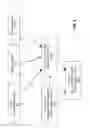
FIG. 6 illustrates a flowchart of electrical components of a wearable smart garment according to an exemplary embodiment of the present invention.
According to an exemplary embodiment of the present invention, a wearable smart device may include one or more sensors. The one or more sensors may include an input 601 (e.g., a pressure sensor), an optical sensor 602 and/or a chemical sensor 603. Each of the sensors may be connected with a power source 604 (e.g., a photovoltaic cell or a capacitor such as a super capacitor formed of a plurality of CNTs, as described herein). Each of the sensors may be connected with a processor 605 (e.g., a processor including a plurality of nanotube transistors, as described herein). Power output from the power source 604 and/or signals output from the processor 605 may be transmitted to an output module 606 (e.g., a nanotube-based light-emitting diode).
FIG. 7 illustrates an exemplary method of coupling carbon nanotubes to fabrics according to an exemplary embodiment of the present invention.
According to an exemplary embodiment of the present invention, a method of coupling carbon nanotubes to fabrics may including nanotube growth (step 701), sorting nanotubes into separate solutions (step 702) and applying the sorted nanotubes to one or more fabrics. The separate solutions, as discussed below in more detail, may be substantially purified solutions including only one type of CNT (e.g., metallic or semiconductive CNTs). For example, the sorted CNTs may be applied to yarns by dying the yarns with one of the nanotube solutions (step 703). Alternatively, the sorted CNTs may undergo a process of printing nanotube circuits directly onto fabrics (step 704), or the sorted CNTs may undergo a process to chemically bind the nanotubes to fabrics (step 705). An exemplary chemical attachment scheme for chemically bonding CNTs with fabrics is discussed below in more detail.
According to an exemplary embodiment of the present invention, the method of printing nanotube circuits directly onto fabrics (step 704) may be used to generate relatively complex patterns of CNTs in fabrics. For example, different combinations of circuits formed of groups of CNTs may be printed directly into fabrics to form the electrical components (e.g., sensors, photovoltaic cells and transistors described herein).
According to an exemplary embodiment of the present invention, the dyed yarns may undergo a process of weaving the yarns into electronic fabrics (step 706). One or more of the fabrics may be combined to form a smart garment, as described herein.
An exemplary method for sorting nanotubes and creating fabrics including nanotubes is described in more detail below.
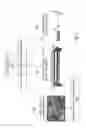
FIG. 8 illustrates an exemplary chemical attachment scheme for coupling carbon nanotubes to fabrics according to an exemplary embodiment of the present invention.
Referring to FIGS. 1, 2 and 8, according to an exemplary embodiment of the present invention, a textile article may include the first fabric 100 including a first yarn. The first yarn may include a plurality of first carbon nanotubes 101 having a first electrical conductivity coupled to the first yarn through van der waals forces. The second fabric 200 may include a second yarn. The second yarn may include a plurality of second carbon nanotubes 201 having a second electrical conductivity coupled to the second yarn through van der waals forces. The first electrical conductivity of the first carbon nanotubes 101 may be different from the second electrical conductivity of the second carbon nanotubes 201. The first fabric 100 may be interconnected with the second fabric 200. All of the features described above with reference to FIGS. 1-7 are available to the exemplary textile article described with reference to FIGS. 1, 2 and 8.
Referring to FIG. 8, chemical binding of CNTs can be achieved using synthetic chemistry. For example, NYLON-6 fiber can be functionalized with caprolactum. The end groups could be functionalized with amine and an acid. These functional groups can then be utilized to incorporate carbon fiber nanotubes in a controlled fashion. Similar approaches may be applied for other textile fibers.
For example, the method described above with reference to FIG. 8 may be applied to textile fibers such as cotton, silk, rayon, or polyester.
According to an exemplary embodiment of the present invention, the CNTs may also be functionalized with amino or carboxyl groups using known processes.
According to an exemplary embodiment of the present invention, the first yarn may be dyed with a first carbon nanotube solution including the first carbon nanotubes 101, the second yarn may be dyed with a second carbon nanotube solution including the second carbon nanotubes 201. An exemplary fabrication method applicable to, for example, coupling carbon nanotubes with yarns, fabrics or textiles described herein, is described below in more detail.
Exemplary Fabrication Method for Sorting Nanotubes and Creating Fabrics Including Nanotubes
A powder of unsorted nanotubes is purified in toluene solvent. Commercially available aromatic polymers which are selective for a specific diameter or chiral angle selectively wrap around only certain chiralities of nanotubes in the solvent (e.g., metallic vs. semiconductive carbon nanotubes). Thus, only nanotubes with these certain chiralities become suspended in the solution. This ability to select nanotubes with a certain chirality translates into the ability to select nanotubes of a certain type (metallic vs. semiconducting). Thus, separate purified solutions including only metallic or semiconducting carbon nanotubes can be generated.
Sheets (or spools) of cotton are introduced to one of the purified solutions. As the cotton soaks in the solutions, the nanotubes wrap around the cotton fibers and adhered due to the strong Van der Waals forces. After 5 minutes the sheets of cotton are removed, and dried them with a nitrogen air gun. The cotton fabrics are washed in water, and re-dried them with nitrogen. The metallic nanotube fabric may be black and the semiconducting nanotube fabric may be red, the same color as the respective solutions.
Sheet conductivity of the films is measured using a Signatone four-point probe measurement system. Electrical currents in the microamp to milliamp range are provided with a Keithley programmable current source, and the voltage across the sheets is measured with a Keithley voltmeter. A substantially linear current-voltage characteristic may be observed.
The semiconducting nanotube fabric may be observed to have a sheet resistivity of 1 Mohm/square, and the metallic nanotube fabric may be observed to have a sheet resistivity of 12 kOhm/square. The higher resistivity of the semiconducting nanotube fabric may be due to the lower free charge density in the semiconducting nanotubes. Conductance across two sides of the fabric may be observed to detect penetration of the carbon nanotubes completely through the fabric. Substantially equal conductance measurements on opposite sides of the fabric indicate that the fabric has been substantially saturated. Alternatively, conductance observed on only one surface of the fabric indicates that only a film has been formed on the fabric, without fully penetrating the fabric.
While the present invention has been particularly shown and described with reference to exemplary embodiments thereof, it will be understood by those of ordinary skill in the art that various changes in form and detail may be made therein without departing from the spirit and scope of the present invention as defined by the following claims.
Claims
1. A textile article, comprising:
a first fabric comprising a plurality of first carbon nanotubes coupled to the first fabric, wherein the first carbon nanotubes of the plurality of first carbon nanotubes are metallic carbon nanotubes; and
a second fabric comprising a plurality of second carbon nanotubes coupled to the second fabric, wherein the second carbon nanotubes of the plurality of second carbon nanotubes are semiconductive carbon nanotubes, and
wherein the first fabric is interconnected with the second fabric.
2. The textile article of claim 1, wherein the first carbon nanotubes of the plurality of first carbon nanotubes are coupled to the first fabric by van der waals forces.
3. The textile article of claim 2, wherein the second carbon nanotubes of the plurality of second carbon nanotubes are coupled to the second fabric by van der waals forces.
4. The textile article of claim 1, wherein the interconnected first and second fabrics form at least one of a photovoltaic cell, a sensor, a transistor or a capacitor.
5. The textile article of claim 4, wherein the second carbon nanotubes form a piezoresistive input device.
6. The textile article of claim 1, wherein the first and second fabrics each include at least one of cotton, silk, nylon, rayon, or polyester.
7. The textile article of claim 1, wherein the first fabric comprising the plurality of first carbon nanotubes coupled to the first fabric has a sheet resistivity of about 1 MΩ/square.
8. The textile article of claim 7, wherein the second fabric comprising the plurality of second carbon nanotubes coupled to the second fabric has a sheet resistivity of about 12 MΩ/square.
9. The textile article of claim 1, wherein the first and second interconnected fabrics form a stretchable fabric included in a wearable garment.
10. A textile article, comprising:
a first fabric comprising a plurality of first carbon nanotubes coupled to the first fabric; and
a second fabric comprising a plurality of second carbon nanotubes coupled to the second fabric, wherein the second carbon nanotubes have an electrical conductivity different from that of the first carbon nanotubes, and
wherein the first fabric is interconnected with the second fabric.
11. The textile article of 10, wherein the first carbon nanotubes are metallic carbon nanotubes, and wherein the second carbon nanotubes are semiconductive carbon nanotubes.
12. The textile article of claim 10, wherein the first carbon nanotubes of the plurality of first carbon nanotubes are coupled to the first fabric by van der waals forces.
13. The textile article of claim 12, wherein the second carbon nanotubes of the plurality of second carbon nanotubes are coupled to the second fabric by van der waals forces.
14. The textile article of claim 11, wherein the second carbon nanotubes form a piezoresistive input device.
15. The textile article of claim 10, wherein the first fabric comprising the plurality of first carbon nanotubes coupled to the first fabric has a sheet resistivity of about 1 MΩ/square, and wherein the second fabric comprising the plurality of second carbon nanotubes coupled to the second fabric has a sheet resistivity of about 12 MΩ/square.
16. The textile article of claim 10, wherein the interconnected first and second fabrics form at least one of a photovoltaic cell, a sensor, a transistor or a capacitor
17. A textile article, comprising:
a first fabric including a first yarn, wherein the first yarn includes a plurality of first carbon nanotubes having a first electrical conductivity coupled to the first yarn through van der waals forces; and
a second fabric including a second yarn, wherein the second yarn includes a plurality of second carbon nanotubes having a second electrical conductivity coupled to the second yarn through van der waals forces,
wherein the first electrical conductivity of the first carbon nanotubes is different from the second electrical conductivity of the second carbon nanotubes, and
wherein the first fabric is interconnected with the second fabric.
18. The textile article of 17, wherein the first carbon nanotubes are metallic carbon nanotubes, and wherein the second carbon nanotubes are semiconductive carbon nanotubes.
19. The textile article of claim 17, wherein the first yarn is dyed with a first carbon nanotube solution comprising the first carbon nanotube, and wherein the second yarn is dyed with a second carbon nanotube solution comprising the second carbon nanotubes.
20. The textile article of claim 17, wherein the interconnected first and second fabrics form at least one of a photovoltaic cell, a sensor, a transistor or a capacitor.
Images & Drawings included:



Sources:
- United States Patent and Trademark Office - verify current appl. status at the USPTO↗
Similar patent applications:
- » 20190259953
Textiles including carbon nanotubes
Recent applications in this class:
- » 20230059945 2023-02-23
SYNCHRONOUS BELT FIBER TREATMENT AND BELT
Recent applications for this Assignee:
- » 20250294045 2025-09-18
THREAT POLICY FINE-TUNING BASED ON THE VULNERABILITY OF A SUBNET AS A SOURCE OF A MALICIOUS ATTACK - » 20250294041 2025-09-18
DEVICE POPULATION ANOMALY DETECTION - » 20250292574 2025-09-18
SCENE PARSING - » 20250292026 2025-09-18
A GENERATIVE ARTIFICIAL INTELLIGENCE COMMENTARY - » 20250291689 2025-09-18
MACHINE LEARNING MODEL TRAINING TO ASSIST IN SYSTEM DEBUG - » 20250287215 2025-09-11
PORTABLE MEDIA GEOFENCE AND DEVICE PAIRING SECURITY - » 20250285610 2025-09-11
RECIPIENT-SPECIFIC VOICE TONE ADJUSTMENT IN TELEPHONY - » 20250284728 2025-09-11
CONTEXT LARGE LANGUAGE MODEL OUTPUT EXPLANATION - » 20250278669 2025-09-04
COUNTERFACTUALS WITH FEATURE PREFERENCES FOR CONSISTENT AND DIVERSE EXPLANATIONS - » 20250274345 2025-08-28
MULTI-LAYER EDGE ARCHITECTURE SIMULATION