Peroxyhemiacetal profragrant and proflavor compounds
US20180319745A1
2018-11-08
15/768,031
2016-10-19
✅ Patent granted
US 11,155,518 B2
2021-10-26
WO; PCT/EP2016/075078; 20161019
WO; WO2017/067975; 20170427
Nikki H. Dees
Armstrong Teasdale LLP
2038-05-06
Abstract:
Provided herein is a compound of Formula I:
wherein R represents a terpene hydroperoxyl selected from the group consisting of
wherein R′ represents a alkyl group selected from the group consisting: CH3(CH2)8—, CH3(CH2)6—, and CH3—.
Inventors:
- Michael J. CALANDRA 3 🇺🇸 Plainsboro, NJ, United States
- Ying WANG 16 🇺🇸 Plainsboro, NJ, United States
- John IMPELLIZZERI 1 🇺🇸 Plainsboro, NJ, United States
Assignee:
- FIRMENICH SA 202 🇨🇭 Geneva 8, Switzerland
- Firmenich SA 226 🇨🇭 Satigny, Switzerland
Applicant:
Interested in similar patents?
Get notified when new applications in this technology area are published.
Classification:
A23V2002/00 » CPC further
Food compositions, function of food ingredients or processes for food or foodstuffs
A23L2/56 » CPC further
Non-alcoholic beverages; Dry compositions or concentrates therefor ; Their preparation; Adding ingredients Flavouring or bittering agents
A23L27/2028 » CPC further
Spices; Flavouring agents or condiments; Artificial sweetening agents; Table salts; Dietetic salt substitutes; Preparation or treatment thereof; Synthetic spices, flavouring agents or condiments; Aliphatic compounds having oxygen as the only hetero atom Carboxy compounds
C11D3/50 IPC
Other compounding ingredients of detergent compositions covered in group Perfumes
A23L27/20 IPC
Spices; Flavouring agents or condiments; Artificial sweetening agents; Table salts; Dietetic salt substitutes; Preparation or treatment thereof Synthetic spices, flavouring agents or condiments
C11B9/0015 » CPC further
Essential oils; Perfumes; Aliphatic compounds containing oxygen as the only heteroatom
C11B9/0034 » CPC further
Essential oils; Perfumes compounds containing an alicyclic ring not condensed with another ring the ring containing six carbon atoms
C11D3/507 » CPC further
Other compounding ingredients of detergent compositions covered in group; Perfumes; Protected perfumes Compounds releasing perfumes by thermal or chemical activation
C07C2601/16 » CPC further
Systems containing only non-condensed rings with a six-membered ring the ring being unsaturated
C07C409/20 » CPC main
Peroxy compounds the —O—O— group being bound to a carbon atom further substituted by singly—bound oxygen atoms
A23L2/39 » CPC further
Non-alcoholic beverages; Dry compositions or concentrates therefor ; Their preparation; Concentrates of non-alcoholic beverages Dry compositions
C11B9/00 IPC
Essential oils; Perfumes
A23L27/203 » CPC further
Spices; Flavouring agents or condiments; Artificial sweetening agents; Table salts; Dietetic salt substitutes; Preparation or treatment thereof; Synthetic spices, flavouring agents or condiments Alicyclic compounds
A23L27/2026 » CPC further
Spices; Flavouring agents or condiments; Artificial sweetening agents; Table salts; Dietetic salt substitutes; Preparation or treatment thereof; Synthetic spices, flavouring agents or condiments; Aliphatic compounds having oxygen as the only hetero atom Hydroxy compounds
A23G3/36 » CPC further
Sweetmeats; Confectionery; Marzipan; Coated or filled products; Sweetmeats, confectionery or marzipan; Processes for the preparation thereof characterised by the composition containing organic or inorganic compounds
Description
FIELD
The present invention relates to the field of perfumery and flavors. More particularly, it concerns the use of peroxyhemiacetals as precursors for the release of a flavor or a fragrance in the form of an aldehyde.
BACKGROUND
The flavors and fragrance industry has a particular interest in compounds which are capable of being released over time and that can deliver beneficial effects such as an odoriferous effect or an enhanced flavor. Various means to control the release of flavors and fragrances from precursor compounds have been reported. It is desirable for the F&F industry to have a precursor that may release flavors and fragrances in response to various stimuli such as, but not limited to, light, water, air, heat, pH, and oxidation.
SUMMARY
Provided herein is a compound of Formula I:
wherein R represents a terpene hydroperoxyl selected from the group consisting of
wherein R′ represents an alkyl group selected from the group consisting of: CH3(CH2)8—, CH3(CH2)6—, and CH3—.
Further provided herein is a method of delivering a compound selected from the group consisting of decanal, octanal and acetaldehyde comprising adding to an aqueous solution a compound of Formula I as defined in claim 1.
Also provided herein is a use of a compound of Formula I comprising adding a compound of Formula I to an aqueous solution.
Still yet further provided is a method to improve, enhance or modify odoriferous properties of a perfuming composition or a perfumed article, which method comprises adding to said composition or article an effective amount of a compound of Formula I.
Still further provided is a method to improve, enhance or modify taste or aromatic properties of a flavoring composition or a flavored article, which method comprises adding to said composition or article an effective amount of a compound of Formula I.
BRIEF DESCRIPTION OF THE DRAWINGS
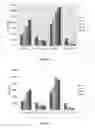
FIG. 1 shows the appearance of the limonene hydroperoxides that accompanies the appearance of the aldehyde moiety along with the loss of the peroxyhemiacetal.
FIG. 2 shows similar release but using a difference limonene hydroperoxide isomer.
FIG. 3 shows the reversible equilibrium reaction by which the claimed peroxyhemiacetals can be made in non-polar media, and how the claimed peroxyhemiacetals can dissociate to release an aldehyde in polar or aqueous media.
FIG. 4 shows the release of octanal from a peroxyhemiacetal dissolved in a 60/40 v/v isopropanol/water solution over 48 hours, as measured by headspace gas chromatography-mass spectroscopy.
DETAILED DESCRIPTION
Provided herein are the peroxyhemiacetal compounds listed below. The compounds can be made according to the procedure set forth as set below under preparation and methods.
Compounds provided herein may be used for example, but not limited to laundry detergents, fabric softeners, and hard surface cleaners. In another embodiment provided herein are compounds for use in flavors for example but not limited to beverages, powdered beverages and confectionery to provide for example freshness and/or juiciness.
Preparation and Methods
The compounds claimed herein can be made using the following procedure:
Preparation of Aldehyde Stock Solutions
Approximately 400 mg of neat aldehyde (either octanal, decanal, or acetaldehyde separately) was weighed into a 5 mL volumetric flask, and diluted to volume with purified limonene, heptane, or other non-polar solvent to make an approximately 80 mg/mL stock solution.
Preparation of Terpene Hydroperoxide Stock Solutions
Approximately 5 mg of each terpene hydroperoxide (Lim-1-HP, Lim-2-HP, Lin-6-HP, or Lin-7-HP) was weighed out into separate vials, and 1.0 mL of isopropanol or ethanol was added to each, to make a series of 5 mg/mL stock solutions.
Preparation of the Peroxyhemiacetals
The reaction was set-up with a large molar excess of aldehyde present. For each possible combination of one aldehyde (octanal, decanal, or acetaldehyde) with one terpene hydroperoxide (Lim-1-HP, Lim-2-HP, Lin-6-HP, or Lin-7-HP), the procedure below was done to prepare in situ all of the possible peroxyhemiacetals that could arise from these starting compounds.
Into a 1 mL glass vial with cap was placed 0.3 mL of aldehyde stock solution and 0.1 mL of terpene hydroperoxide stock solution. The mixture was vortexed briefly, and the capped vial was allowed to stand at room temperature overnight.
Attempts at further isolation and purification cannot be performed because the formation reaction is a reversible equilibrium, so the compounds are used “as is” in a solvent appropriate for the specific usage. For example in a flavor use, limonene and ethanol would be used to prepare the respective aldehyde and hydroperoxide stock solutions.
HPLC Analysis of terpene hydroperoxides and peroxyhemiacetals was performed as described in the published method of Calandra et al, Flavour and Fragrance Journal, 2015, 30, 121-130.
Headspace GC/MS Analysis:
The appearance of octanal by dissociation of a peroxyhemiacetal was monitored as follows.
Gc-Ms Conditions:
-
- Instrument: Agilent-GC-7890A, MS-7000B.
- GC column: StabilWax®, containing a polyethylene glycol phase, with an inner diameter of 0.25 mm, a length of 30 m and a film thickness of 0.25 μm.
- The injector temperature: 250° C.
- 1 μl sample is injected at constant flow (1.2 mL/min, carrier gas: helium).
- MS: scan m/e 29-350
- The temperature program: 40° C. (2 min) to 120° C. @ 20° C./min to 240° C. (3 min) @ 30° C./min. in a 10:1 split mode
SPME:
-
- SPME fiber: 100 um PDMS, 23 GA, dissociated at 250° C. for 2 minutes. Between uses, the fiber was cleaned by baking for 5 min at 250° C.
- Samples were placed in a 20 mL SPME vial and kept in a 25° C. thermostated block. After placement in the block, we waited for 20 minutes to allow for equilibration prior to the initial sampling. Subsequent samplings took place after another 0.33, 0.66, 1, 1.5, 2.5, 4, 24, 30, and 48 hours.
- Fiber collection time: 0.5 min.
The following Examples are illustrative only and are not meant to limit the scope of the claims, the Summary, or any invention presented herein.
EXAMPLES
Example 1
Solutions of limonene hydroperoxide isomers (lim-HP-B & lim-HP-A) were separately reacted as described in Appendix 1 with decanal (C10) and octanal (C8) respectively. Note: Lim-HP-B is the 1-position isomer, and Lim-HP-A is the 2-position isomer. These products were analyzed by HPLC as described in Appendix 2. The peaks of lim-HP-B, lim-HP-A and the four peroxyhemiacetal adducts (lim-HP-B+C10, lim-HP-B+C8, lim-HP-A+C10 and lim-HP-A+C8) were monitored throughout a 24 hour period while allowed to stand on the benchtop diluted in the water/isopropanol sample preparation solvent. The peak areas of lim-HP-B and lim-HP-A increased, while the peaks of lim-HP-B+C10, lim-HP-B+C8, lim-HP-A+C10 and lim-HP-A+C8 decreased because they dissociated back to the corresponding lim-HP-B & lim-HP-A, releasing decanal or octanal respectively in the process. Results are presented in FIGS. 1 and 2.
Example 2
The peroxyhemiacetal derived from octanal and mixed isomers of limonene hydroperoxide was prepared as follows: 1.0 mL of a 117.9 mg/mL solution of limonene hydroperoxide mixed isomers in limonene solvent was placed in a 10 mL glass vial. Approximately one molar equivalent of octanal (89.7 mg) was added, and the vial was sealed then vortexed for 10 seconds. The vial was stored overnight on the benchtop (room temperature) to allow formation of the peroxyhemiacetal, then stored at −20° C. for future use.
20 microliters of the product solution prepared above was diluted with 2.0 mL of 60/40 v/v isopropyl alcohol/water. One mL of this solution was immediately transferred to a 20 mL headspace analysis vial, capped, and kept in a 25° C. thermostated block. The release of octanal from this peroxyhemiacetal was periodically monitored over 48 hours by headspace gas chromatography-mass spectrometry as described in the specification under preparation and methods. The results are shown in FIG. 4.
Claims
1. A compound of Formula I:
wherein R represents a terpene hydroperoxyl selected from the group consisting of
wherein R′ represents a alkyl group selected from the group consisting: CH3(CH2)8—, CH3(CH2)6—, and CH3—.
2. A method of delivering a compound selected from the group consisting of decanal, octanal and acetaldehyde comprising adding to an aqueous solution a compound of Formula I as defined in claim 1.
3. A composition comprising the compound of Formula I of claim 1 added to an aqueous solution.
4. A method to improve, enhance or modify odoriferous properties of a perfuming composition or a perfumed article, which method comprises adding to said composition or article an effective amount of a compound of Formula I.
Images & Drawings included:






Sources:
- United States Patent and Trademark Office - verify current appl. status at the USPTO↗
Recent applications for this Assignee:
- » 20250268804 2025-08-28
FRAGRANCE COMPOSITIONS - » 20250223261 2025-07-10
PROCESS FOR MAKING A TASTE-MODIFYING COMPOUND - » 20250204570 2025-06-26
NON-ANIMAL PROTEIN COMPOSITIONS AND USES THEREOF - » 20250194649 2025-06-19
FATTY ACID AMIDES AND THEIR USE AS FLAVOR MODIFIERS - » 20250186646 2025-06-12
Use of Volatile Compositions to Limit or Eliminate Perception of Fecal Malodour - » 20250146039 2025-05-08
Terpene Glycoside Derivatives and Uses Thereof - » 20250145581 2025-05-08
PURIFICATION PROCESS FOR POLYMETHOXYLATED FLAVONOIDS AND COMPOSITIONS OBTAINED THEREFROM - » 20250143297 2025-05-08
Arthropod Control Compositions - » 20250113837 2025-04-10
POWDERED COMPOSITION COMPRISING A SOLID PLANT-BASED FAT - » 20250113823 2025-04-10
Arthropod Control Compositions