Manufacturing method for a car safety seat
US20180334067A1
2018-11-22
15/979,378
2018-05-14
✅ Patent granted
US 11,447,050 B2
2022-09-20
-
-
Robert S Walters, Jr.
Volpe Koenig
2038-08-06
Abstract:
A manufacturing method for a car safety seat includes the following steps: providing a mold and disposing a main body of the car safety seat into the mold, and injecting a foam material into a cavity of the mold and foaming the foam material so as to form a flexible layer integrated with the main body. A pressure in the cavity is between 1.5 bar and 5.0 bar. The manufacturing method disposes the main body into the mold and directly forms a flexible layer on the main body, so that the flexible layer ensures safety and comfort of the car safety seat while saves the necessity to dispose a seat pad or a cushion and fixing structures on the main body, and thereby reduces the cost and the work-hour of assembly, and the overall weight of the car safety seat can be reduced by omitting the fixing structures.
Inventors:
- Fengxiang Yan 3 🇨🇳 Dongguan, China
- Kai-Wen Cheng 1 🇨🇭 Steinhausen, Switzerland
- Fengxiang Yan 3 🇨🇳 Guangdong, China
Assignee:
- Wonderland Switzerland AG 566 🇨🇭 Steinhausen, Switzerland
Applicant:
Interested in similar patents?
Get notified when new applications in this technology area are published.
Classification:
B60N2/7017 » CPC main
Seats specially adapted for vehicles; Arrangement or mounting of seats in vehicles; Upholstery springs ; Upholstery Manufacturing methods specially adapted therefor
B29C44/445 » CPC further
Shaping by internal pressure generated in the material, e.g. swelling or foaming ; Producing porous or cellular expanded plastics articles; Auxiliary operations; Feeding the material to be shaped into a closed space, i.e. to make articles of definite length in solid form in the form of expandable granules, particles or beads
B29C44/1271 » CPC further
Shaping by internal pressure generated in the material, e.g. swelling or foaming ; Producing porous or cellular expanded plastics articles for articles of definite length, i.e. discrete articles; Incorporating or moulding on preformed parts, e.g. inserts or reinforcements the preformed parts being partially covered
B29C44/3415 » CPC further
Shaping by internal pressure generated in the material, e.g. swelling or foaming ; Producing porous or cellular expanded plastics articles; Auxiliary operations Heating or cooling
B29C44/34 IPC
Shaping by internal pressure generated in the material, e.g. swelling or foaming ; Producing porous or cellular expanded plastics articles Auxiliary operations
B60N2/70 IPC
Seats specially adapted for vehicles; Arrangement or mounting of seats in vehicles Upholstery springs ; Upholstery
B29C37/02 » CPC further
Component parts, details, accessories or auxiliary operations, not covered by group or Deburring or deflashing
B60N2/26 » CPC further
Seats specially adapted for vehicles; Arrangement or mounting of seats in vehicles for particular purposes or particular vehicles for children
B29C44/12 IPC
Shaping by internal pressure generated in the material, e.g. swelling or foaming ; Producing porous or cellular expanded plastics articles for articles of definite length, i.e. discrete articles Incorporating or moulding on preformed parts, e.g. inserts or reinforcements
B29C44/44 IPC
Shaping by internal pressure generated in the material, e.g. swelling or foaming ; Producing porous or cellular expanded plastics articles; Auxiliary operations; Feeding the material to be shaped into a closed space, i.e. to make articles of definite length in solid form
B29C44/42 » CPC further
Shaping by internal pressure generated in the material, e.g. swelling or foaming ; Producing porous or cellular expanded plastics articles; Auxiliary operations; Feeding the material to be shaped into a closed space, i.e. to make articles of definite length using pressure difference, e.g. by injection or by vacuum
B29C44/1261 » CPC further
Shaping by internal pressure generated in the material, e.g. swelling or foaming ; Producing porous or cellular expanded plastics articles for articles of definite length, i.e. discrete articles; Incorporating or moulding on preformed parts, e.g. inserts or reinforcements Avoiding impregnation of a preformed part
B29C2037/0035 » CPC further
Component parts, details, accessories or auxiliary operations, not covered by group or; Applying surface layers, e.g. coatings, decorative layers, printed layers, to articles during shaping, e.g. in-mould printing; In-mould coating, e.g. by introducing the coating material into the mould after forming the article the coating being applied as liquid, gel, paste or the like
B29K2023/12 » CPC further
Use of polyalkenes or derivatives thereof as moulding material; Polymers of propylene PP, i.e. polypropylene
B29L2031/771 » CPC further
Other particular articles Seats
B29C37/00 IPC
Component parts, details, accessories or auxiliary operations, not covered by group or
B29K2995/0097 » CPC further
Properties of moulding materials, reinforcements, fillers, preformed parts or moulds; Other properties; Geometrical properties Thickness
Description
BACKGROUND OF THE INVENTION
1. Field of the Invention
The invention relates to a manufacturing method for a car safety seat, and more particularly, to a manufacturing method that saves the necessity to dispose a seat pad or a cushion on a main body of the car safety seat.
2. Description of the Prior Art
A car safety seat (i.e. a child safety seat) is a safety apparatus necessary for protecting a child during a car ride. A conventional manufacturing method of the car safety seat is to shape a main body of the car safety seat first and then to dispose a seat pad or a cushion onto the main body. The main body is often formed from thermoplastics, such as polypropylene (PP), injected into an injection mold via an injection molding procedure, where a hardness of the formed main body necessitates an addition of the seat pad or the cushion equipped with the main body to enhance comfort and safety thereof for the child to be seated in. However, for fixing the seat pad or the cushion to the main body, correspondent fixing structures need to be disposed thereon, which leads to a problem of increased cost and increased work-hour of assembly.
To solve the above-mentioned problem, it is necessary to provide a manufacturing method for the car safety seat that saves the necessity to dispose the seat pad or the cushion while preserves comfort and safety for the car safety seat.
SUMMARY OF THE INVENTION
Therefore, the objective of the invention is to provide a manufacturing method for manufacturing a car safety seat, which saves the necessity to dispose a seat pad or a cushion while preserves comfort and safety for the car safety seat.
To achieve the aforementioned objective, the invention provides a manufacturing method for manufacturing a car safety seat which includes the following steps: providing a mold and disposing a main body of the car safety seat into the mold, and injecting a foam material into a cavity of the mold and foaming the foam material in the cavity of the mold so as to form a flexible layer integrated with the main body. A pressure in the cavity of the mold is between 1.5 bar and 5.0 bar during a foaming process.
Preferably, the pressure in the cavity is between 2.0 bar and 4.0 bar during the foaming process.
Preferably, an average particle diameter of the foam material after being foamed is between 1 mm and 10 mm.
Preferably, a wall thickness of the main body is substantially 1.5 mm.
Preferably, the manufacturing method further includes injecting a vapor into the cavity of the mold after injecting the foam material into the cavity, for combining the foam material with the main body by temperature and the pressure.
Preferably, the manufacturing method further includes cooling the formed flexible layer, and demolding the mold to draw the car safety seat comprising the main body and the flexible layer manually or by an ejector pin.
Preferably, the manufacturing method further includes drying and cooling the car safety seat after drawing the car safety seat from the mold.
Preferably, the manufacturing method further includes deburring the car safety seat after cooling the car safety seat.
Preferably, the manufacturing method further includes disposing a fixing fixture into the car safety seat to shape the car safety seat before drying the car safety seat.
Preferably, the manufacturing method further includes disposing a sealing fixture onto the main body of the car safety seat to seal at least one hole or at least one groove on the main body of the car safety seat before disposing the main body of the car safety seat into the mold.
In summary, the manufacturing method of the present application disposes the main body into the mold and directly forms a flexible layer on the main body via a foaming molding procedure, so that the flexible layer ensures safety and comfort of the car safety seat while saves the necessity to dispose a seat pad or a cushion and fixing structures on the main body. Therefore, the present application can achieve purposes of reducing the cost and the work-hour of assembly and reducing the overall weight of the car safety seat since the fixing structures are omitted.
These and other objectives of the present invention will no doubt become obvious to those of ordinary skill in the art after reading the following detailed description of the preferred embodiment that is illustrated in the various figures and drawings.
BRIEF DESCRIPTION OF THE DRAWINGS
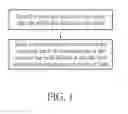
FIG. 1 is a main flow diagram illustrating a manufacturing method of a car safety seat according to an embodiment of the present application.
FIG. 2 is a diagram of a car safety seat manufactured by the manufacturing method according to the embodiment of the present application.
FIG. 3 is a more detailed flow diagram illustrating the manufacturing method of the car safety seat according to the embodiment of the present application.
DETAILED DESCRIPTION
In the following detailed description of the preferred embodiments, reference is made to the accompanying drawings which form a part hereof, and in which is shown by way of illustration specific embodiments in which the invention may be practiced. In this regard, directional terminology, such as “top,” “bottom,” “front,” “back,” etc., is used with reference to the orientation of the Figure (s) being described. The components of the present invention can be positioned in a number of different orientations. As such, the directional terminology is used for purposes of illustration and is in no way limiting. Accordingly, the drawings and descriptions will be regarded as illustrative in nature and not as restrictive.
Please refer to FIG. 1 and FIG. 2. FIG. 1 is a main flow diagram illustrating a manufacturing method of a car safety seat 1 according to an embodiment of the present application. FIG. 2 is a diagram of the car safety seat 1 manufactured by the manufacturing method according to the embodiment of the present application. The present application provides the manufacturing method for post forming a shaped polypropylene (PP) main body 11 for producing the car safety seat 1, without a need to dispose a seat pad or a cushion onto the main body 11. The manufacturing method includes two main steps of providing a mold and disposing the main body 11 into the mold before closing the mold, and injecting a foam material into a cavity of the mold and foaming the foam material in the cavity of the mold to form a flexible layer 12 covering and integrated with the main body 11.
After the foam material is injected into the cavity of the mold, a vapor is injected with high temperature into the cavity to provide the cavity with a particular environment of temperature and pressure. The foam material is foamed and combined with the main body 11 under the temperature and the pressure. The pressure in the cavity during the foaming process can be set between 1.5 bar and 5.0 bar, preferably can be set between 2.0 bar and 4.0 bar. After the foaming and post forming process, the car safety seat 1 can be kept and cooled in the cavity for a certain period before being drawn out of the mold. A wall thickness of the main body 11 can be substantially 1.5 mm. It should be noticed that a clearance between the main body 11 and an inner wall of the mold can be restricted to avoid deformation of the main body 11.
During the foaming process, four important conditions of the process are pressure, vapor temperature, foam expansion ratio, and cooling time. By adjusting the conditions, nine different foamed specimens are produced as shown in the following table:
| Sample 1 | Sample 2 | Sample 3 | Sample 4 | Sample 5 | Sample 6 | Sample 7 | Sample 8 | Sample 9 | |
| Process | Pressure | 3.5 | 3.5 | 3.5 | 2 | 4 | 1.5 | 5 | 1 | 6 |
| conditions | (bar) | |||||||||
| Vapor | 125 | 125 | 125 | 125 | 125 | 110 | 150 | 100 | 170 | |
| temperature | ||||||||||
| (° C.) | ||||||||||
| Foam | 45 | 30 | 50 | 45 | 45 | 45 | 45 | |||
| expansion | ||||||||||
| ratio | ||||||||||
| Cooling time | 55 | 55 | 55 | 55 | 55 | 55 | 55 | 55 | 55 | |
| (sec.) |
| quality of the | excellent | excellent | excellent | good | good | fair | fair | Failed | Shrunk by |
| formed sample | to foam | overheating | |||||||
| Average particle | 6 | 1 | 10 | 6 | 6 | 6 | 6 | ||
| diameter (mm) | |||||||||
It can be concluded from the above table that the foam material is unable to foam if the pressure in the cavity is too low (lower than 1.5 bar, specifically). While the foam material overly foams when the pressure in the cavity is too high (higher than 6 bar, specifically), the foam particles shrink and the main body 11 deforms due to excessive pressurization. Therefore, the present application limits the pressure between 1.5 bar and 5.0 bar, and preferably between 2.0 bar and 4.0 bar.
Furthermore, quality of the formed car safety seat 1 is affected by the parameters of the foam expansion ratio and the average particle diameter of the foam material. A final product of the car safety seat 1 might have overweight if the foam expansion ratio is substantially lower than 30, while an otherwise lightweight product has poor impact resistance if the foam expansion ratio is substantially higher than 50. The average particle diameter of the foam material can be designed between 1 mm and 10 mm for producing a lightweight car safety seat 1, and the average particle diameter is defined as an average value of measured diameters of all the foam particles within a 1 cm3 volume. Specifically, the foam material of the embodiment can be expanded polypropylene (EPP).
Please refer to FIG. 3. FIG. 3 is a more detailed flow diagram illustrating the manufacturing method of the car safety seat 1 according to the embodiment of the present application. The detailed manufacturing method for the car safety seat 1 includes the following steps:
Providing the mold and disposing the main body 11 into the mold, and then closing the mold;
Injecting the foam material into the cavity of the mold;
Injecting the vapor with high temperature into the mold to provide an environment of particular temperature and pressure to combine the foam material with the main body 11, so as to form the flexible layer 12 covering the main body 11;
Cooling the formed flexible layer;
Demolding the mold to draw the car safety seat 1 manually or by an ejector pin;
Drying and cooling the car safety seat 1; and
Deburring the car safety seat 1.
After finishing the manufacturing method for the car safety seat 1, the car safety seat 1 is ready to be packaged.
There are many holes or grooves on the main body 11, and the holes or the grooves may be filled by the foam material during the foaming process if the main body 11 is directly put into the mold for the foaming process. Therefore, sealing fixtures can be utilized to be disposed on the main body 11 for temporarily sealing the desirable holes or grooves in advance before the main body 11 is put into the mold for the foaming process, so as to prevent the desirable holes or grooves from being filled by the foam material. The sealing fixtures can be plugs having shapes corresponding to the shapes of the holes or grooves.
The demolded car safety seat might be deformed by heat in the step of drying, and hollow structures on the main body 11, such as holes, grooves, or trenches, are particularly easy to be deformed. Therefore, fixing fixtures can be utilized to be inserted in to the hollow structures to keep shapes of the hollow structures before the car safety seat is dried through the drying process. During the drying process, possible deformation is avoided as the fixing fixtures holds at these locations of the hollow structures to fix the shapes thereof. The fixing fixtures can be plugs having shapes corresponding to the shapes of the hollow structures.
In contrast to the prior art, the manufacturing method of the present application disposes the main body 11 into the mold and directly forms the flexible layer 12 on the main body 11 by the foaming process. The flexible layer 12 ensures the safety and comfort of the car safety seat 1 and saves the necessity to dispose a seat pad or a cushion and fixing structures on the main body 11. Therefore, the present application can achieve the purposes of reducing the cost and the work-hour of assembly. The overall weight of the car safety seat 1 is also reduced since the fixing structures are omitted.
Those skilled in the art will readily observe that numerous modifications and alterations of the device and method may be made while retaining the teachings of the invention. Accordingly, the above disclosure should be construed as limited only by the metes and bounds of the appended claims.
Claims
What is claimed is:1. A manufacturing method for a car safety seat, the manufacturing method comprising:
providing a mold and disposing a main body of the car safety seat into the mold; and
injecting a foam material into a cavity of the mold and foaming the foam material in the cavity of the mold so as to form a flexible layer integrated with the main body, wherein a pressure in the cavity of the mold is between 1.5 bar and 5.0 bar during a foaming process.
2. The manufacturing method of claim 1, wherein the pressure in the cavity is between 2.0 bar and 4.0 bar during the foaming process.
3. The manufacturing method of claim 1, wherein an average particle diameter of the foam material after being foamed is between 1 mm and 10 mm.
4. The manufacturing method of claim 1, wherein a wall thickness of the main body is substantially 1.5 mm.
5. The manufacturing method of claim 1, further comprising:
injecting a vapor into the cavity of the mold after injecting the foam material into the cavity, for combining the foam material with the main body by temperature and the pressure.
6. The manufacturing method of claim 1, further comprising:
cooling the formed flexible layer; and
demolding the mold to draw the car safety seat comprising the main body and the flexible layer manually or by an ejector pin.
7. The manufacturing method of claim 6, further comprising:
drying and cooling the car safety seat after drawing the car safety seat from the mold.
8. The manufacturing method of claim 7, further comprising:
deburring the car safety seat after cooling the car safety seat.
9. The manufacturing method of claim 7, further comprising:
disposing a fixing fixture into the car safety seat to shape the car safety seat before drying the car safety seat.
10. The manufacturing method of claim 1, further comprising:
disposing a sealing fixture onto the main body of the car safety seat to seal at least one hole or at least one groove on the main body of the car safety seat before disposing the main body of the car safety seat into the mold.
Images & Drawings included:



Sources:
- United States Patent and Trademark Office - verify current appl. status at the USPTO↗
Recent applications in this class:
- » 20250206211 2025-06-26
TOOL WITH INTEGRATED FLUID LINES TO FORM A CUSHION ASSEMBLY - » 20250178501 2025-06-05
SEAT ASSEMBLY, CUSHION, AND TOOL AND METHOD OF FORMING - » 20250178500 2025-06-05
SEAT ASSEMBLY - » 20250153622 2025-05-15
CUSHION, MANUFACTURING TOOL, AND A METHOD OF MANUFACTURE - » 20250145068 2025-05-08
CUSHION BODY FOR VEHICLE SEAT - » 20250121755 2025-04-17
CUSHION, MANUFACTURING APPARATUS, AND A METHOD OF MANUFACTURE - » 20240424965 2024-12-26
Method of manufacturing a heat mat - » 20240383389 2024-11-21
SEAT COMPONENT, SEAT AND METHOD FOR PRODUCING A SEAT COMPONENT - » 20240278700 2024-08-22
SEAT PAD AND SEAT PAD MANUFACTURING METHOD - » 20240227647 2024-07-11
SEAT PAD AND METHOD FOR MANUFACTURING SEAT PAD
Recent applications for this Assignee:
- » 20250282266 2025-09-11
SEATING ASSEMBLY, FOLDING MECHANISM, STORAGE DEVICE AND CHILD SAFETY SEAT - » 20250277505 2025-09-04
CONNECTING STRUCTURE, CHILD CARRYING DEVICE, FRAME, AND CHILD CARRIER - » 20250270842 2025-08-28
FOLDABLE PLAYARD HAVING X-FRAME ASSEMBLIES, OVAL-SHAPED LEG ASSEMBLIES, AND CANOPY COVER - » 20250269894 2025-08-28
COMPACT FOLDABLE STROLLER - » 20250269771 2025-08-28
CHILD SAFETY SEAT - » 20250268398 2025-08-28
FOLDABLE PLAYARD HAVING X-FRAME ASSEMBLIES AND CANOPY COVER - » 20250268397 2025-08-28
FOLDABLE PLAYARD HAVING X-FRAME ASSEMBLIES AND CANOPY COVER - » 20250268396 2025-08-28
FOLDABLE PLAYARD - » 20250263103 2025-08-21
CARRYCOT WITH COUPLER FOR ATTACHING TO A CARRIAGE, STAND, OR OTHER SUPPORT STRUCTURE - » 20250249947 2025-08-07
BABY STROLLER AND LATERAL SEAT COVER PORTION THEREOF