Method for decorating the sides of plastic cards
US20180345655A1
2018-12-06
16/059,187
2018-08-09
✅ Patent granted
US 10,245,824 B2
2019-04-02
-
-
Leslie J Evanisko
Thedford I. Hitaffer | Hitaffer & Hitaffer, PLLC
2038-08-09
Abstract:
Engraver configured to be coupled to a heater piece of a hot foil stamping machine for decorating sides of plastic cards wherein the engraver is made of silicone and capable of being heated up and comprising a recess on its external face opposite to a foil of the hot foil stamping machine, in such a way that a cross-section of said engraver is a negative shape and size of a side of plastic cards, including rounded corners formed by said side and adjacent side, wherein engraver size is dependent on number of plastic cards and the engraver is capable of being heated up and is suitable for being coupled to the heater head piece of the hot foil stamping machine.
Assignee:
- SMART LAYER 3, S.L 2 🇪🇸 Barcelona, Spain
Applicant:
Interested in similar patents?
Get notified when new applications in this technology area are published.
Classification:
B41F19/06 » CPC further
Apparatus or machines for carrying out printing operations combined with other operations with embossing Printing and embossing between a negative and a positive forme after inking and wiping the negative forme; Printing from an ink band treated with colour or "gold"
B44C1/1729 » CPC further
Processes, not specifically provided for elsewhere, for producing decorative surface effects for applying transfer pictures or the like for decalcomanias; sheet material therefor; Dry transfer; Decalcomanias applied under heat and pressure, e.g. provided with a heat activable adhesive Hot stamping techniques
G06K19/00 » CPC further
Record carriers for use with machines and with at least a part designed to carry digital markings
B44C1/17 IPC
Processes, not specifically provided for elsewhere, for producing decorative surface effects for applying transfer pictures or the like for decalcomanias; sheet material therefor Dry transfer
B41F16/008 » CPC further
Transfer printing apparatus for printing from an inked or preprinted foil or band with means for printing on specific materials or products for printing on three-dimensional articles
B41F19/02 » CPC main
Apparatus or machines for carrying out printing operations combined with other operations with embossing
B41F16/00 IPC
Transfer printing apparatus
B41F19/062 » CPC further
Apparatus or machines for carrying out printing operations combined with other operations with embossing; Printing and embossing between a negative and a positive forme after inking and wiping the negative forme; Printing from an ink band treated with colour or "gold" Presses of the rotary type
B41F19/064 » CPC further
Apparatus or machines for carrying out printing operations combined with other operations with embossing; Printing and embossing between a negative and a positive forme after inking and wiping the negative forme; Printing from an ink band treated with colour or "gold" Presses of the reciprocating type
B42D25/40 » CPC further
Information-bearing cards or sheet-like structures characterised by identification or security features; Manufacture thereof Manufacture
B42D25/00 » CPC further
Information-bearing cards or sheet-like structures characterised by identification or security features; Manufacture thereof
Description
CROSS-REFERENCE TO RELATED APPLICATIONS
This application is a divisional of U.S. patent application Ser. No. 14/651,786 filed Jun. 12, 2015, which is a Nation Phase of International Application No. PCT/ES2014/070632 filed Aug. 1, 2014, which claims priority from ES Patent Application No. P201331233 filed Aug. 6, 2013, the disclosures of which are incorporated herein by reference.
OBJECT OF THE INVENTION
The object of the present invention is an innovative method for decorating the sides of plastic cards, by means of hot foil stamping, in addition to the engraver to be coupled to the heater head piece of the hot foil stamping machine, used to carry out the former method and the plastic cards, the sides of which have been decorated by means of the decoration process, using the engraver designed to carry out said method.
BACKGROUND OF THE INVENTION
Plastic cards used for a multitude of purposes are well known in the state of the art, the most well-known including payment by debit or credit card, credit cards or identification for buildings or various kinds of events. The frontal and rear faces of these plastic cards are usually decorated with all kinds of motifs, which usually constitute advertising and, on many occasions, contain some or all of the information required in order for them to fulfil their objective within this decoration, for example the name of the card holder.
One aesthetic requirement of decorated plastic cards is that their sides are the same color as their frontal and rear faces or other kinds of decoration wished to be incorporated.
In order to ensure that the sides of cards are the desired color, cards made of plastic of the desired color are used. This solution requires manufacturers to maintain stock in each one of the colors offered, therefore meaning the cost of maintaining this stock is very high. Furthermore, since storing cards in all colors is very costly, it is highly likely that they will lose out on sales opportunities simply because they don't have the color a client desires at any particular time.
The invention object of the present description offers a decoration technique, unpublished to date, for decorating the sides of plastic cards by means of the well-known hot foil stamping decoration method, the characteristics of this method making it possible to lower production and stock maintenance costs, thereby possibly meaning just one color of card needs to be stocked, which is usually white.
The hot foil stamping method consists of applying a certain amount of pressure using an engraver, during a certain period of time at a certain temperature, to a piece of foil located on the surface to be decorated.
The surface where the engraver comes into contact with the foil may be completely flat or have a relief of the symbol to be decorated engraved onto it. After hot stamping, it is possible to clean the foil traces by means of the blowing, brushing or transfer process, in order to eliminate the traces of foil that may be left behind.
Hot foil stamping is carried out, amongst other things, in vertical stamping machines and roll-on stamping machines.
Vertical hot stamping machines constitute vertical presses, the mobile body of which is an arm, which moves up and down alternately, there being a heater head piece at the end of said arm, to which an engraver that may be heated up is coupled, in addition to a support or wedge, which positions and holds the pieces to be stamped, as well as various feeder, transportation and placement devices for the foil and devices for controlling pressure, stamping time and the temperature at which the engraver is to be heated.
In roll-on stamping machines, the heater head piece is a cylinder that rotates on its own axis, to which the engraver that may be heated up is coupled on the external cylindrical surface thereof, this kind of machine being used to carry out large series stamping.
Hot stamping foil is formed by various layers that are deposited on a polyester support. In order, these layers include: polyester, a coating layer, a protective layer, a decorative layer or layers or color/aluminum layer and an adhesive layer, applied with heat and pressure.
It is applied using heat and pressure on the surface to be decorated, the relief with which the engraver is formed constituting the element that comes into physical contact with the foil, which is transferred to the surface.
DESCRIPTION OF THE INVENTION
The method for decorating the sides of plastic cards object of the present invention comprises the following steps:
-
- a. Placing a plurality, preferably 25 units, of plastic cards on a first support wedge, in such a way that the first, shortest side of said plastic cards is opposite the engraver.
- b. Hot foil stamping the first shortest sides of the plastic cards.
- c. Blowing air onto the stamping applied to the first shortest sides.
- d. Placing a plurality of plastic cards on a first support wedge, such that the second shorter side of said plastic cards is opposite the engraver.
- e. Hot foil stamping the second shortest sides of the plastic cards.
- f. Blowing air onto the stamping applied to the second longest sides.
- g. Placing a plurality of plastic cards on a second support wedge, in such a way that the first longest side of said plastic cards is opposite the engraver.
- h. Hot foil stamping the first longest sides of the plastic cards.
- i. Blowing air onto the stamping applied to the first longest sides.
- j. Placing a plurality of plastic cards on a second support wedge, in such a way that the second longest side of said plastic cards is opposite the engraver.
- k. Hot stamping the second longest sides of the plastic cards.
- l. Blowing air onto the stamping applied to the second longest sides, in order to eliminate over-press left behind from the hot stamping method.
Please note that the term “engraver” used in this text means a stamping or printing element that functions to apply color or indicia by hot stamping upon a substrate.
In order to carry out the above described process, a hot foil stamping machine of the vertical or roll-on variety described above is used, to which an engraver that may be heated up is coupled on the heater head piece, said engraver being made from silicone, the external face thereof opposite the foil having a recess, such that the shape of a cross-section of said engraver is the negative shape and the same size as a side of said card, including the rounded corners formed by said side with the adjacent sides of the card. Said vertical hot foil stamping machine also comprises one or more wedges, suitable for positioning and holding the plastic cards in such a way that the sides to be decorated are opposite the lower face of the engraver, it being possible for said wedges to be holding devices that facilitate the use of the same wedge to hot stamp all four sides of the cards.
The cross-section of the engraver is preferably the same shape and size as the first and second longest side of the plastic cards and in another preferred embodiment, is the same shape and size as the first and second shortest side of said plastic cards.
The engraver is preferably made of 80° Shore A silicone.
The card stamped with hot foil according to the method described in the paragraphs above, using the hot stamping machine, the sides of which are hot stamped with foil, also forms the object of the present invention.
DESCRIPTION OF THE FIGURES
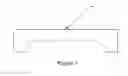
FIG. 1: is a cross-section of the controlled temperature engraver.
FIG. 2: is a perspective view of a detail of a plastic card, showing the sides thereof.
FIG. 3: is perspective view of a vertical hot foil stamping machine with the engraver coupled to a heater head piece of said vertical hot foil stamping machine.
FIG. 4: is a perspective view of a roll-on hot foil stamping machine with the engraver coupled to a heater head piece of said roll-on hot foil stamping machine.
LIST OF REFERENCES
1. Engraver
2. Plastic card
3. Longest side
4. Shortest side
5. Rounded corner
6. Heater head piece
8. Foil
9. Negative
10. Vertical hot foil stamping machine
11. Roll-on hot foil stamping machine.
PREFERRED EMBODIMENT OF THE INVENTION
In a preferred embodiment of the invention, the plastic cards comply with ISO 7816 and the measurements thereof are:
-
- Length: 85.6+1/−0.5 mm
- Width: 53.98+/−0.2 mm
- Nominal depth: 0.762 mm
and groups of 25 cards are preferably worked with.
The method uses hot foil stamping machines that are either vertical or roll-on, with the engraver and the wedge described previously; the production chain may consist of:
-
- Four hot stamping machines, each of which is followed by its corresponding blowing station. In this production chain, each hot stamping machine stamps one side.
- Two hot stamping machines followed by their corresponding blowing stations, each one of the hot stamping machines stamping two sides.
- One hot stamping machine followed by a blowing station.
Claims
What is claimed is:1. A method for decorating the sides of plastic cards of the hot foil stamping variety, comprising the following steps:
a. placing a plurality of plastic cards on the support wedge, such that a first side of said plastic cards is opposite the engraver,
b. hot foil stamping the first sides of the plastic cards and including round corners formed by said first sides with the adjacent sides of the cards,
c. blowing air on the stamping applied to the first sides,
d. placing a plurality of plastic cards on the support wedge such that a second side of said plastic cards is opposite the engraver,
e. hot foil stamping the second sides of the plastic cards and including round corners formed by said second sides with the adjacent sides of the cards,
f. blowing air on the stamping applied to the second sides,
g. placing a plurality of plastic cards on the support wedge, such that a third side of said plastic cards is opposite the engraver,
h. hot foil stamping the third sides of the plastic cards and including round corners formed by said third sides with the adjacent sides of the cards,
i. blowing air onto the stamping applied to the third sides,
j. placing a plurality of plastic cards on the support wedge, such that a fourth side of said plastic cards is opposite the engraver,
k. hot foil stamping the fourth sides of the plastic cards and including round corners formed by said fourth sides with the adjacent sides of the cards,
l. blowing air onto the stamping made on the fourth sides.
2. The method for decorating the sides of plastic cards according to claim 1, wherein the plurality of cards consists of cards consists of 25 cards.
3. The method for decorating the sides of plastic cards according to claim 1, wherein a same wedge is used to hot stamp all four sides of said plastic cards.
Images & Drawings included:



Sources:
- United States Patent and Trademark Office - verify current appl. status at the USPTO↗
Similar patent applications:
- » 20160152021
Method for Decorating the Sides of Plastic Cards
Recent applications in this class:
- » 20240246332 2024-07-25
METHOD AND APPARATUS FOR PRODUCING EMBOSSED IMAGES AND TEXT - » 20230278327 2023-09-07
TECHNIQUE FOR MARKING A PROLATE OBJECT - » 20230241882 2023-08-03
Technique for arranging a marking around a prolate object - » 20220032606 2022-02-03
METHOD AND AN APPARATUS FOR DECORATING A PANEL - » 20210237428 2021-08-05
RADIATIVE EMBOSSING WITH ENHANCING FLUID - » 20210129520 2021-05-06
METHOD AND DEVICE FOR EMBOSSING OF A NANOSTRUCTURE - » 20200070496 2020-03-05
Method for embossing micro-structures and/or nano-structures - » 20200047485 2020-02-13
Method and device for embossing of a nanostructure - » 20200039206 2020-02-06
Processing device - » 20200009857 2020-01-09
Digital full-color 3-dimensional stamped metal
Recent applications for this Assignee:
- » 20160152021 2016-06-02
Method for Decorating the Sides of Plastic Cards