Method for Making Low V.O.C. Construction Adhesive
US20180346769A1
2018-12-06
15/610,677
2017-06-01
Abstract:
The present invention relates to a method for making low VOC construction adhesive. It could pass VOC regulation of Californian Rule 1168 SCAQMD which VOC content<70 g/L. The procedure is using solvent to dissolve petroleum resin and styrene-butadiene rubber first. Then add filler to stir properly. During production, the temperature must be controlled under 40° C. In order to make VOC content<70 g/L, we choose methyl acetate, cyclohexane, and acetone as raw materials. Methyl acetate and acetone are exempt solvent in Californian Rule 102 SCAQMD. When calculating VOC content of adhesive, methyl acetate and acetone are not included.
Interested in similar patents?
Get notified when new applications in this technology area are published.
Classification:
C09J11/06 » CPC main
Features of adhesives not provided for in group , e.g. additives; Non-macromolecular additives organic
C09J153/02 » CPC further
Adhesives based on block copolymers containing at least one sequence of a polymer obtained by reactions only involving carbon-to-carbon unsaturated bonds; Adhesives based on derivatives of such polymers Vinyl aromatic monomers and conjugated dienes
C09J11/04 » CPC further
Features of adhesives not provided for in group , e.g. additives; Non-macromolecular additives inorganic
Description
BACKGROUND OF THE INVENTION
1. Field of the Invention
The present invention relates to a method for making low V.O.C. of less than 70 g per liter product construction adhesive (VOC stands for volatile organic compound).
2. Description of the Related Art
Construction adhesive is commonly used in construction area. Common substrates are plywood, timber, MDF, plaster board, concrete, ceramic tiles, bricks, metals and mirror installation. In addition, construction adhesive is applied from cartridges and sausage with extrusion gun.
However, conventional construction adhesive contains volatile organic compounds (V.O.C.), toluene, ethyl benzene, xylene, or the like that contribute to smog buildup in the environment that causes short and long term health effects.
Health effects may include:
-
- Eye, nose and throat irritation
- headaches, loss of coordination and nausea
- damage to liver, kidney and central nervous system
- Some organics can cause cancer in animals, some are suspected or known to cause cancer in humans.
Key signs or symptoms associated with exposure to VOCs include:
-
- conjunctival irritation
- nose and throat discomfort
- headache
- allergic skin reaction
- dyspnea
- declines in serum cholinesterase levels
- nausea
- emesis
- epistaxis
- fatigue
- dizziness
BRIEF SUMMARY OF THE INVENTION
The primary objective of the present invention is to provide a method for making low V.O.C. (volatile organic compound) construction adhesive.
The following are the component and procedure for producing low V.O.C. (volatile organic compound) construction adhesive.
-
- 1. loading solvents to mixer.
- 2. Load SBS, C9 resins, Kaolin, Anti-oxidants. Start mixing to disperse and dissolve it. That takes about 30 minutes.
- 3. Stop mixing, load C5+C9 copolymer and the rest of C9 resin. Mix for 15 minutes.
- 4. Load CaCO3 filler and the rest of kaolin. Mix for 15 minutes.
- 5. Load fumed Silica and mix for 3 minutes.
- 6. Load Mono-ethylene glycol, mix 2 minutes.
Ingredients
-
- 1. Solvent includes methyl 10-25% methyl acetate, 5-20% acetone and 1.0-20% methyl cyclohexane.
- 2. Resins used are: C9 hydrocarbon resin, C5 and C9 copolymer
- 3. SBS triblock (styrene Butadiene styrene)
- 4. Fumed silica—Aerosil 200 or similar
- 5. Antioxidant—Evernox 10 or similar
- 6. Monoethylene glocol.
Solvent Composition
| Component | Description | CAS No. | % range | |
| Methyl Acetate | Solvent | 79-20-9 | 10-25% | |
| Acetone | Solvent | 67-64-1 | 5-20% | |
| Methyl cyclohexane | Solvent | 108-87-2 | 1.0-10% | |
Our VOC content of our Low VOC Construction is less that 70 gm/liter product. It meets the specification of California Rule 1168 SCAQMD.
Another advantage of the present invention, the construction adhesive is fast drying adhesive that squeezed easily and quick setting time, also can enhance work efficiency.
Further benefits and advantages of the present invention will become apparent after a careful reading of the detailed description with appropriate reference to the accompanying drawings.
BRIEF DESCRIPTION OF THE SEVERAL VIEWS OF THE DRAWING
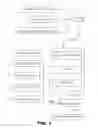
FIG. 1 is a flow chart of a method for making a low V.O.C. construction adhesive in accordance with the preferred embodiment of the present invention.
DETAILED DESCRIPTION OF THE INVENTION
Referring to FIG. 1, the method for making a low V.O.C. construction adhesive in accordance with the preferred embodiment of the present invention comprises first step (1) of preparing solvent 1, second step (2) is to add solvent 1 into a mixture to dissolve the mixture and form the mixing solution 20, third step (3) is add filler and additive into the mixing solution 20. All mixing procedure is in a three-shaft mixer, and temperature is controlled under 40°.
In the first step (1), the solvent 1 includes 10-25% methyl acetate 11, 5-20% acetone 12 and 1.0-10% methyl cyclohexane 13.
In the second step (2), the mixture includes C9 hydrocarbon resin 21, C5 and C9 co-polymer hydrocarbon resin 22 and styrene-butadiene rubber 23. Preferably, the C9 hydrocarbon resin 21 is petroleum resin SK 120. Preferably, the C5 and C9 co-polymer hydrocarbon resin 22 is GT 100. Preferably, the styrene-butadiene rubber 23 is Taipol 3206. The mixing solution 20 contains the solvent 1 and the mixture that is dissolved by the solvent 1.
In the third step (3), the filler includes calcined kaolin 31, calcium carbonate 32, anti-oxidant 33 and fumed silica 34. Preferably, the calcined kaolin 31 is Kaolin BR95. Preferably, the anti-oxidant 33 is Evernox 10. Preferably, the fumed silica 34 is aerosil 200. The additive includes monoethylene glycol 35.
In practice, methyl acetate 11, acetone 12 and methyl cyclohexane 13 are mixed in a predetermined proportion to form the solvent 1, so that the content of the V.O.C. (volatile organic compound) contained in the construction adhesive 2 is controlled at an allowed range, preferably, the V.O.C. content<70 g/L, so as to satisfy the regulations of California Rule 1168 SCAQMD.
The composition of solvent used are listed below:—
| Component | Description | CAS No. | % range | |
| Methyl Acetate | Solvent | 79-20-9 | 10-25% | |
| Acetone | Solvent | 67-64-1 | 5-20% | |
| Methyl cyclohexane | Solvent | 108-87-2 | 1.0-10% | |
Methyl acetate 11 and acetone 12 are exempted solvent that satisfy the regulations of California Rule 102 SCAQMD. Thus, the methyl acetate 11 and the acetone 12 are not considered in calculation of the V.O.C. content in the construction adhesive.
Although the invention has been explained in relation to its preferred embodiment(s) as mentioned above, it is to be understood that many other possible modifications and variations can be made without departing from the scope of the present invention. It is, therefore, contemplated that the appended claim or claims will cover such modifications and variations that fall within the true scope of the invention.
Claims
1. A method for making a low V.O.C. construction adhesive, comprising:
a first step of preparing a solvent;
a second step of adding the solvent into a mixture to dissolve the mixture and to form a mixing solution;
a third step of adding a filler and an additive into the mixing solution; and
a fourth step of using a three-shaft mixer to stir and blend the solvent, the filler, the mixing solution and the additive to form a sticky construction adhesive;
wherein:
the temperature is controlled under 40° C. in the first step, the second step, the third step and the fourth step;
the solvent includes methyl acetate with a proportion of 10-25%, acetone with a proportion of 5-20% and methyl cyclohexane with a proportion of 1.0-10%;
the mixture includes C9 hydrocarbon resin, C5 and C9 co-polymer hydrocarbon resin and styrene-butadiene;
the mixing solution contains the solvent and the mixture that is dissolved by the solvent;
the filler includes calcined kaolin, calcium carbonate, anti-oxidant and fumed silica; and
the additive includes monoethylene glycol.
2. The method of claim 1, wherein the C9 hydrocarbon resin is petroleum resin SK 120.
3. The method of claim 1, wherein the C5 and C9 co-polymer hydrocarbon resin is GT 100.
4. The method of claim 1, wherein the styrene-butadiene is Taipol 3206.
5. The method of claim 1, wherein the calcined kaolin is Kaolin BR95.
6. The method of claim 1, wherein the anti-oxidant is Evernox 10.
7. The method of claim 1, wherein the fumed silica is aerosil 200.
Images & Drawings included:
Sources:
- United States Patent and Trademark Office - verify current appl. status at the USPTO↗
Similar patent applications:
- » 20190211240
Method for making low V.O.C. construction adhesive
Recent applications in this class:
- » 20250163303 2025-05-22
ADHESIVE COMPRISING POLYVINYL ACETATE AND A MIXTURE OF GLUCOSE AND FRUCTOSE - » 20250154390 2025-05-15
ADHESIVE FORMULATIONS COMPRISING SILANES AND HYDROPHOBIZED FUMED SILICA - » 20250034439 2025-01-30
WOOD BOARDS - » 20240425726 2024-12-26
Liquid Ejecting Head And Liquid Ejecting Apparatus - » 20240417603 2024-12-19
VERSATILE SELF-ADHESIVE MODIFIERS ON SILICONE RUBBER FOR BONDING PLASTIC AUTOMATICALLY - » 20240327681 2024-10-03
BONDING SYSTEM - » 20240294811 2024-09-05
WOOD BOARDS - » 20240294810 2024-09-05
STRUCTURAL ADHESIVES AND PREPARATION METHODS THEREOF - » 20240287356 2024-08-29
COMPOSITION AND THE USE THEREOF AS JOINT COMPOUND - » 20240254372 2024-08-01
ADHESIVE COMPOSITION FOR SEMICONDUCTOR PROCESSING, FILM COMPRISING SAME FOR SEMICONDUCTOR PROCESSING, AND METHOD FOR PRODUCING SEMICONDUCTOR PACKAGE USING SAME