Method and device for adding transactions to a blockchain
US20180349867A1
2018-12-06
15/987,640
2018-05-23
✅ Patent granted
US 10,902,388 B2
2021-01-26
-
-
Neha Patel | Duan Zhang
Norton Rose Fulbright US LLP | Gerard Messina
2039-04-16
Abstract:
A method for adding transactions to a blockchain, characterized by the following features: subscribers of the computer network, who are connected by a predefined relation, are determined; multiplication triples are generated as a secret shared among the subscribers; at least one multiplication triple among the multiplication triples is mapped, along with the transactions, to a hash value; if the hash value falls below a predefined target value, a block, which contains the multiplication triple mapped to the hash value, as well as the transactions, is transferred to the blockchain; and a multiparty computation in the computer network is controlled with the remaining multiplication triples.
Assignee:
- Robert Bosch GMBH 19,123 🇩🇪 Stuttgart, Germany
Applicant:
Interested in similar patents?
Get notified when new applications in this technology area are published.
Classification:
G06Q20/065 » CPC main
Payment architectures, schemes or protocols; Payment circuits; Private payment circuits, e.g. involving electronic currency used among participants of a common payment scheme using e-cash
G06Q20/3827 » CPC further
Payment architectures, schemes or protocols; Payment protocols; Details thereof insuring higher security of transaction Use of message hashing
G06Q20/3829 » CPC further
Payment architectures, schemes or protocols; Payment protocols; Details thereof insuring higher security of transaction involving key management
H04L9/0643 » CPC further
arrangements for secret or secure communications Cryptographic mechanisms or cryptographic ; Network security protocols the encryption apparatus using shift registers or memories for block-wise coding, e.g. DES systems Hash functions, e.g. MD5, SHA, HMAC or f9 MAC
H04L9/3239 » CPC further
arrangements for secret or secure communications Cryptographic mechanisms or cryptographic ; Network security protocols including means for verifying the identity or authority of a user of the system or for message authentication, e.g. authorization, entity authentication, data integrity or data verification, non-repudiation, key authentication or verification of credentials using cryptographic hash functions involving non-keyed hash functions, e.g. modification detection codes [MDCs], MD5, SHA or RIPEMD
H04L9/3247 » CPC further
arrangements for secret or secure communications Cryptographic mechanisms or cryptographic ; Network security protocols including means for verifying the identity or authority of a user of the system or for message authentication, e.g. authorization, entity authentication, data integrity or data verification, non-repudiation, key authentication or verification of credentials involving digital signatures
G06Q2220/00 » CPC further
Business processing using cryptography
H04L2209/46 » CPC further
Additional information or applications relating to cryptographic mechanisms or cryptographic arrangements for secret or secure communication Secure multiparty computation, e.g. millionaire problem
H04L2209/56 » CPC further
Additional information or applications relating to cryptographic mechanisms or cryptographic arrangements for secret or secure communication Financial cryptography, e.g. electronic payment or e-cash
G06Q20/36 IPC
Payment architectures, schemes or protocols characterised by the use of specific devices or networks using electronic wallets or electronic money safes
G06Q20/06 IPC
Payment architectures, schemes or protocols; Payment circuits Private payment circuits, e.g. involving electronic currency used among participants of a common payment scheme
G06Q20/38 IPC
Payment architectures, schemes or protocols Payment protocols; Details thereof
H04L9/06 IPC
arrangements for secret or secure communications Cryptographic mechanisms or cryptographic ; Network security protocols the encryption apparatus using shift registers or memories for block-wise coding, e.g. DES systems
H04L9/08 IPC
arrangements for secret or secure communications Cryptographic mechanisms or cryptographic ; Network security protocols Key distribution or management, e.g. generation, sharing or updating, of cryptographic keys or passwords
H04L9/32 IPC
arrangements for secret or secure communications Cryptographic mechanisms or cryptographic ; Network security protocols including means for verifying the identity or authority of a user of the system or for message authentication, e.g. authorization, entity authentication, data integrity or data verification, non-repudiation, key authentication or verification of credentials
H04L9/085 » CPC further
arrangements for secret or secure communications Cryptographic mechanisms or cryptographic ; Network security protocols; Key distribution or management, e.g. generation, sharing or updating, of cryptographic keys or passwords; Key establishment, i.e. cryptographic processes or cryptographic protocols whereby a shared secret becomes available to two or more parties, for subsequent use Secret sharing or secret splitting, e.g. threshold schemes
Description
RELATED APPLICATION INFORMATION
The present application claims priority to and the benefit of German patent application no. 10 2017 209 014.6, which was filed in Germany on May 30, 2017, the disclosure which is incorporated herein by reference.
FIELD OF THE INVENTION
The present invention relates to a method for adding transactions to a blockchain. The present invention further relates to a corresponding device, a corresponding computer program, as well as a corresponding storage medium.
BACKGROUND INFORMATION
In cryptology, a database, whose integrity is secured by storing, in each instance, a hash value of the previous data record in the subsequent data record, is understood as a blockchain or block chain. This cryptographic linking forms the basis of so-called cryptocurrencies, but may also contribute to increasing the transaction security in other distributed systems.
Patent document DE 10 2016 104 478 A1 is directed to methods, systems and computer program products for securing data operations in a computer-based system, which includes interconnected nodes; the nodes being configured in such a manner, that they may transmit, receive and store data; and the method including the execution of computer-based cryptographic methods, in order to produce two or more proofs of work (PoW); the execution including: using crawler search runs, demonstrably ascertaining, from each node of at least a subset of the interconnected nodes, a corresponding subset of data, which are stored on nodes of the system; and at each node of the subset, demonstrably acquiring data in the subset of data.
SUMMARY OF THE INVENTION
The present invention provides a method for adding transactions to a blockchain, a corresponding device, a corresponding computer program, as well as a storage medium, according to the independent claims.
The proposed approach is based on the knowledge that a conventional PoW requires considerable energy consumption. In this context, the computations performed within the scope of the PoW are used, as a rule, for no reason other than to establish a consensus between the nodes connected in the blockchain. Therefore, one aspect of the present invention is to modify the PoW algorithm, in order to produce a useful side effect without increasing the energy consumption.
One specific advantage of the modified method is that, in order to produce the proof of work, so-called multiplication triples (Beaver triples, Beaver's triples) are generated, which may be used subsequently for performing secure multiparty computations (SMPC's). Relevant protocols are introduced in BEAVER, Donald, Efficient multiparty protocols using circuit randomization, In: Annual International Cryptology Conference, Springer, Berlin, Heidelberg, 1991, pp. 420-432.
Advantageous further refinements of and improvements to the root idea set forth in the independent claim are rendered possible by the measures specified in the dependent claims. Thus, the transactions combined in a data block of the blockchain may include the entries of nodes into the computer network or exits of nodes from the computer network. Therefore, the (theoretical) availability of nodes may be deduced immediately from the blockchain by every node.
Exemplary embodiments of the present invention are represented in the drawing and explained in greater detail in the following description.
BRIEF DESCRIPTION OF THE DRAWINGS
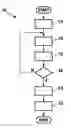
FIG. 1 shows the flow chart of a method according to a first specific embodiment.
FIG. 2 shows a control unit according to a second specific embodiment.
DETAILED DESCRIPTION
FIG. 1 illustrates a functional aspect of the proposed method 10, in light of the Bitcoin cyptocurrency: each subscriber of a network is assigned a set of partners, which are described by a relationship or relation P (operation 11). In the further course of method 10, these partners generate multiplication triples jointly. P is symmetric (that is, if a subscriber n is a partner of subscriber m, then m is also a partner of n) and irreflexive (that is, a subscriber is never a partner of himself/herself). P shall be defined uniformly over the subscribers. One implementation provides for P to be derivable deterministically from the state of the blockchain. This may be achieved by a special “membership transaction,” which is used in order to register or cancel the registration of subscribers, when they enter or exit the computer network. Since the order of the transactions is fixed and ultimately uniform among the nodes, this also applies to resulting relation P.
As soon as a block is intended to be transferred to the blockchain, the partners begin to generate (operation 12) multiplication triples ti=(a, b, c) jointly, using a protocol suitable for this. This results in each partner being provided with a secret share ([a], [b], [c]), such that multiplication triple ti is distributed among all of the partners as a secret.
On each partner node, each secret share ([a], [b], [c]) generated is now created in the header data (header) of a new data block as a nonce, before the multiplication triple is mapped, together with the transactions to be linked, to a hash value, the so-called hash cash (operation 13). In this context, the encoding of ti is intended to allow the individual secret shares ([a], [b], [c]) to be extracted for future verification (see below). From this standpoint, an example of suitable encoding is the simple linking of the bytes of the secret shares ([a], [b], [c]), which is filled up to the maximum size of the elements of the finite field that is used in the SMPC protocol selected. If the resulting hash is less than the current target value (decision 16, branch Y), the subscriber in question signals to the partners, that his/her secret share of multiplication triple ti is a hit.
In this respect, if all of the partners signal a hit before the computer network agrees to a new data block, the partners enter an operation 14 to transfer the block to be added to the chain. To this end, each partner initially signs his/her secret share, using his/her private key. Each partner then transmits his/her signed secret share to a deterministically selected node among the partners, the so-called coordinator. The selection may fall, for example, to the first subscriber, in accordance with the lexically sorted list of the public keys of the partners. After the coordinator receives the signed secret shares of all the partners, it assembles a header, which contains an encoding of the signed secret shares as a nonce, and distributes the resulting block over the computer network. Similarly to the encoding in operation 13, in this case, the encoding should allow the individual secret shares to be extracted for future verification (see below). To this end, simple linkage of the byte representation of the signed secret shares is considered in this case, as well.
Subscribers, who receive the block, perform a validity check (operation 15) of the hash cash, as in the case of the conventional Bitcoin algorithm. In addition, they check if components a, b and c form a valid multiplication triple, that is, satisfy the equation c=a·b. The receivers may do that easily, since all of the secret shares ([a], [b], [c]) may be extracted from the header data. Finally, they verify that the secret shares are signed by subscribers, who satisfy predefined relation P. This is also easy to check, since relation P may be derived from the state of the blockchain.
Since the multiplication triple, which is contained in successfully generated blocks and is used as a proof of work, is now public, it is worthless for secret sharing within the scope of a multiparty computation. However, all of the secret shares, which were generated jointly by the partners or other subscribers prior to obtaining the hit, remain secret and may therefore be used by the partners in the so-called online phase of an SMPC.
This method 10 may be implemented, for example, as software or hardware, or in a combined form of software and hardware, in, for example, a control unit 20, as the schematic representation of FIG. 2 clearly shows.
Claims
What is claimed is:1. A method for adding transactions to a blockchain in a computer network, the method comprising:
determining subscribers of the computer network, who are connected by a predefined relation;
generating multiplication triples as a secret shared among the subscribers;
mapping at least one multiplication triple among the multiplication triples is mapped, along with the transactions, to a hash value;
transferring, if the hash value falls below a predefined target value, a block, which contains the multiplication triple mapped to the hash value, as well as the transactions, to the blockchain; and
controlling a multiparty computation in the computer network with the remaining multiplication triples.
2. The method of claim 1, wherein the transferring of the block includes using a private key of the subscriber, each subscriber among the subscribers signs a secret share of the multiplication triple available to the respective subscriber,
wherein the subscribers transmit the secret shares to a coordinator selected among the subscribers,
wherein the coordinator encodes the secret shares in a nonce, and
wherein the coordinator transmits the block to a plurality of receivers within the computer network; header data of the block containing the nonce, and payload data of the block including the transactions.
3. The method of claim 2, wherein the receivers map the multiplication triple contained in the block, along with the transactions, to the hash value, and wherein the receivers check that the hash value falls below the target value, that the multiplication triple is valid, and that the secret shares are signed by signatories, who are connected by the predefined relation.
4. The method of claim 2, wherein the coordinator is selected, using a linear order relation on a number of public keys of the subscribers.
5. The method of claim 1, wherein the relation is derived from the blockchain.
6. The method of claim 1, wherein the transactions include entries of nodes into the computer network or exits of nodes from the computer network.
7. The method of claim 1, wherein the transactions are business transactions, and wherein the blockchain is a register of ownership of a cryptocurrency.
8. A non-transitory computer readable medium having a computer program, which is executable by a processor, comprising:
a program code arrangement having program code for adding transactions to a blockchain in a computer network, by performing the following:
determining subscribers of the computer network, who are connected by a predefined relation;
generating multiplication triples as a secret shared among the subscribers;
mapping at least one multiplication triple among the multiplication triples is mapped, along with the transactions, to a hash value;
transferring, if the hash value falls below a predefined target value, a block, which contains the multiplication triple mapped to the hash value, as well as the transactions, to the blockchain; and
controlling a multiparty computation in the computer network with the remaining multiplication triples.
9. The computer readable medium of claim 8, wherein the transferring of the block includes using a private key of the subscriber, each subscriber among the subscribers signs a secret share of the multiplication triple available to the respective subscriber,
wherein the subscribers transmit the secret shares to a coordinator selected among the subscribers,
wherein the coordinator encodes the secret shares in a nonce, and
wherein the coordinator transmits the block to a plurality of receivers within the computer network; header data of the block containing the nonce, and payload data of the block including the transactions.
10. A device for adding transactions to a blockchain in a computer network, comprising:
a determining arrangement to determine subscribers of the computer network, who are connected by a predefined relation;
a generating arrangement to generate multiplication triples as a secret shared among the subscribers;
a mapping arrangement to map at least one multiplication triple among the multiplication triples is mapped, along with the transactions, to a hash value;
a transferring arrangement to transfer, if the hash value falls below a predefined target value, a block, which contains the multiplication triple mapped to the hash value, as well as the transactions, to the blockchain; and
a controlling arrangement to control a multiparty computation in the computer network with the remaining multiplication triples.
Images & Drawings included:
Sources:
- United States Patent and Trademark Office - verify current appl. status at the USPTO↗
Recent applications in this class:
- » 20250285090 2025-09-11
SYSTEMS AND METHODS FOR INTERFACING AND INTEGRATING DISTRIBUTED LEDGER AND FINANCIAL SERVICES - » 20250285089 2025-09-11
METHOD FOR CARRYING OUT TRANSACTIONS - » 20250285088 2025-09-11
Active Meta Data Based Transaction Amalgamation Offset in Blocks to Increase Carbon Efficiency - » 20250272667 2025-08-28
SYSTEMS AND METHODS FOR CROSS-BORDER PAYMENTS VIA DISTRIBUTED LEDGER-BASED PAYMENT RAIL - » 20250259155 2025-08-14
SYSTEMS, METHODS AND DEVICES FOR RETAIL CRYPTOCURRENCY TRANSACTIONS - » 20250259154 2025-08-14
Method and System for Identifying and Recording Encumbrances on an Asset in a Secure, Immutable Ledger - » 20250238774 2025-07-24
DECENTRALIZED PEER-TO-PEER TRANSACTION SERVICE - » 20250225489 2025-07-10
FORMAT TRANSFORMATION OF NON-FUNGIBLE TOKEN (NFT) VIA TRANSFER BY CONTAINERIZED DATA STRUCTURES - » 20250225488 2025-07-10
PRIVACY-PRESERVING SECURE OFFLINE PAYMENTS - » 20250200535 2025-06-19
CRYPTOCURRENCY TRANSACTION BACKUP SYSTEM
Recent applications for this Assignee:
- » 20250154889 2025-05-15
PRESSURE CONTROL IN AN EXHAUST AFTERTREATMENT SYSTEM - » 20250154580 2025-05-15
ENZYME TRANSLOCATORS IN NANOGAP WITH 3' -ESTERS - » 20250147582 2025-05-08
METHOD FOR DETERMINING AN EYE DISTANCE IN A PAIR OF DATA GLASSES, AND DATA GLASSES - » 20250146568 2025-05-08
DRIVE ASSEMBLY AND VEHICLE HAVING SUCH A DRIVE ASSEMBLY - » 20250146495 2025-05-08
Flexible Pump Assembly for Use in a Fan Drive - » 20250140882 2025-05-01
FUEL CELL SYSTEM HAVING ENERGY RECUPERATION - » 20250137810 2025-05-01
METHOD FOR MATCHING A DIGITAL ROAD MAP - » 20250137033 2025-05-01
DNA UNFOLDING USING A FREE-END TAG FLOW MODIFIER - » 20250119751 2025-04-10
A BLUETOOTH COMMUNICATION METHOD AND SYSTEM - » 20250118116 2025-04-10
Diagnostic Protocol Search With Improved Efficiency