Paste for ohmic contact to P-type semiconductor and method for forming ohmic contact to P-type semiconductor using the same
US20180358146A1
2018-12-13
15/990,824
2018-05-29
✅ Patent granted
US 10,685,762 B2
2020-06-16
-
-
William F Kraig | Khatib A Rahman
Cantor Colburn LLP
2038-05-29
Abstract:
The present disclosure relates to a paste for ohmic contact to p-type semiconductor, including a metal oxide and a binder, wherein the metal oxide is a rhenium oxide or a molybdenum oxide.
Inventors:
- Ji Won CHOI 63 🇰🇷 Seoul, South Korea
- Jin Sang KIM 28 🇰🇷 Seoul, South Korea
- Chong Yun KANG 40 🇰🇷 Seoul, South Korea
- Seung Hyub BAEK 28 🇰🇷 Seoul, South Korea
- Young Shin Lee 3 🇰🇷 Seoul, South Korea
- Seong Keun Kim 29 🇰🇷 Seoul, South Korea
- Sang Tae KIM 16 🇰🇷 Seoul, South Korea
- Won Jae LEE 1 🇰🇷 Seosan-si, South Korea
- Narendra Singh PARMAR 1 🇰🇷 Seoul, South Korea
Assignee:
- Korea Institute of Science and Technology 2,066 🇰🇷 Seoul, South Korea
Applicant:
Interested in similar patents?
Get notified when new applications in this technology area are published.
Classification:
H01B1/22 » CPC main
Conductors or conductive bodies characterised by the conductive materials; Selection of materials as conductors; Conductive material dispersed in non-conductive organic material the conductive material comprising metals or alloys
C08L29/04 » CPC further
Compositions of homopolymers or copolymers of compounds having one or more unsaturated aliphatic radicals, each having only one carbon-to-carbon double bond, and at least one being terminated by an alcohol, ether, aldehydo, ketonic, acetal or ketal radical; Compositions of hydrolysed polymers of esters of unsaturated alcohols with saturated carboxylic acids; Compositions of derivatives of such polymers; Homopolymers or copolymers of unsaturated alcohols Polyvinyl alcohol; Partially hydrolysed homopolymers or copolymers of esters of unsaturated alcohols with saturated carboxylic acids
H01L29/20 IPC
Semiconductor devices adapted for rectifying, amplifying, oscillating or switching, or capacitors or resistors with at least one potential-jump barrier or surface barrier, e.g. PN junction depletion layer or carrier concentration layer; Details of semiconductor bodies or of electrodes thereof; Multistep manufacturing processes therefor; Semiconductor bodies ; Multistep manufacturing processes therefor characterised by the materials of which they are formed including, apart from doping materials or other impurities, only AB compounds
H01L29/2003 » CPC further
Semiconductor devices adapted for rectifying, amplifying, oscillating or switching, or capacitors or resistors with at least one potential-jump barrier or surface barrier, e.g. PN junction depletion layer or carrier concentration layer; Details of semiconductor bodies or of electrodes thereof; Multistep manufacturing processes therefor; Semiconductor bodies ; Multistep manufacturing processes therefor characterised by the materials of which they are formed including, apart from doping materials or other impurities, only AB compounds Nitride compounds
H01L29/452 » CPC further
Semiconductor devices adapted for rectifying, amplifying, oscillating or switching, or capacitors or resistors with at least one potential-jump barrier or surface barrier, e.g. PN junction depletion layer or carrier concentration layer; Details of semiconductor bodies or of electrodes thereof; Multistep manufacturing processes therefor; Electrodes ; Multistep manufacturing processes therefor characterised by the materials of which they are formed; Ohmic electrodes on AIII-BV compounds
C08K2003/2255 » CPC further
Use of inorganic substances as compounding ingredients; Oxygen-containing compounds, e.g. metal carbonyls; Oxides; Hydroxides of metals of molybdenum
C08K2201/001 » CPC further
Specific properties of additives Conductive additives
H01L21/288 » CPC further
Processes or apparatus adapted for the manufacture or treatment of semiconductor or solid state devices or of parts thereof; Manufacture or treatment of semiconductor devices or of parts thereof the devices having at least one potential-jump barrier or surface barrier, e.g. PN junction, depletion layer or carrier concentration layer the devices having semiconductor bodies comprising elements of Group IV of the Periodic System or AB compounds with or without impurities, e.g. doping materials; Manufacture of electrodes on semiconductor bodies using processes or apparatus not provided for in groups -; Deposition of conductive or insulating materials for electrodes conducting electric current from a liquid, e.g. electrolytic deposition
H01L21/285 IPC
Processes or apparatus adapted for the manufacture or treatment of semiconductor or solid state devices or of parts thereof; Manufacture or treatment of semiconductor devices or of parts thereof the devices having at least one potential-jump barrier or surface barrier, e.g. PN junction, depletion layer or carrier concentration layer the devices having semiconductor bodies comprising elements of Group IV of the Periodic System or AB compounds with or without impurities, e.g. doping materials; Manufacture of electrodes on semiconductor bodies using processes or apparatus not provided for in groups -; Deposition of conductive or insulating materials for electrodes conducting electric current from a gas or vapour, e.g. condensation
H01L29/45 IPC
Semiconductor devices adapted for rectifying, amplifying, oscillating or switching, or capacitors or resistors with at least one potential-jump barrier or surface barrier, e.g. PN junction depletion layer or carrier concentration layer; Details of semiconductor bodies or of electrodes thereof; Multistep manufacturing processes therefor; Electrodes ; Multistep manufacturing processes therefor characterised by the materials of which they are formed Ohmic electrodes
C08K3/22 IPC
Use of inorganic substances as compounding ingredients; Oxygen-containing compounds, e.g. metal carbonyls; Oxides; Hydroxides of metals
Description
CROSS-REFERENCE TO RELATED APPLICATION
This application claims priority to Korean Patent Application No. 10-2017-0073908, filed on Jun. 13, 2017, and all the benefits accruing therefrom under 35 U.S.C. § 119, the contents of which in its entirety are herein incorporated by reference.
BACKGROUND
1. Field
The present disclosure relates to a paste for ohmic contact to p-type semiconductor and a method for forming ohmic contact to p-type semiconductor using the same, and more particularly, to a paste for ohmic contact to p-type semiconductor, including a metal oxide and a binder, and a method for forming ohmic contact to p-type semiconductor using the same.
2. Description of the Related Art
Ohmic contacts to p-type semiconductor materials are an essential premise for manufacture of devices in a wide range of applications such as solar cells, light-emitting diodes (LEDs), transistors and laser diodes. However, p-type semiconductor materials have higher work function than available contact metals on Earth, and thus they are difficult to form ohmic contacts.
For example, many noble metals such as Pt (5.65 eV) and Au (5.1 eV) have a relatively high work function, but they are insufficient to form ohmic contacts by removal of Schottky barriers to semiconductors having a wide energy bandgap such as GaN and ZnO.
Meanwhile, some attempts have been made to overcome these problems by using metals with high work function, and through doping and formation of semiconductor-metal alloys. These attempts succeeded in achieving ohmic contacts, but the forming process is complex. For example, to form contact to p-type Si using Al, it requires a high temperature process that is higher than the melting temperature 577° C.
As alternative materials, it was reported that metal oxide such as molybdenum (Mo), rhenium (Re) and tungsten (W) oxide exhibits high work function (higher than 6 eV) and electrical conductivity. Metal trioxide materials such as MoO3 and ReO3 have been formed and used as a buffer layer to improve the power conversion efficiency in organic solar cells through thermal evaporation.
Recently, it is possible to form ohmic contact to p-type semiconductor having a wide energy bandgap using metal oxide such as MoO2 and ReO2 through a vacuum process, but the contact is weak and heat treatment of 200° C. or above is needed.
RELATED LITERATURES
(Patent Literature 1) Korean Patent Publication No. 10-2005-0025210
(Patent Literature 2) Japanese Patent Publication No. 2004-192853
SUMMARY
For example, a method for forming ohmic contact disclosed by Patent Literature 1 needs deposition of Mo or Re metal by a physical vapor deposition or a chemical vapor deposition method, and as shown in FIG. 7, additional heat treatment at 600° C. in oxidizing atmosphere. Accordingly, the process is very complex, and it cannot be applied to PET or PI substrates vulnerable to heat treatment of 600° C.
Additionally, a conductive paste disclosed by Patent Literature 2 is nothing but a conductive paste that is necessary at high temperature, and is irrelevant to formation of ohmic contact to p-type semiconductor.
Accordingly, until now, there is a limitation in obtaining ohmic contacts due to higher work function of p-type semiconductor materials than available contact metals on Earth, and in this circumstance, there is a need for the technology development of p-type semiconductors having a wide energy bandgap in next-generation devices using MoO2 and ReO2 with high work function through non-vacuum and non-thermal process and their related flexible devices.
Accordingly, the present disclosure proposes a method for obtaining excellent ohmic contacts to p-type semiconductor using metal oxide with high work function such as MoO2 and ReO2 without a vacuum process or a thermal process.
To achieve the above-described technical object, the present disclosure provides a paste for ohmic contact to p-type semiconductor, including a metal oxide and a binder, wherein the metal oxide is a rhenium oxide or a molybdenum oxide.
Additionally, the rhenium oxide of the present disclosure may include at least one selected from Re2O, Re2O3, ReO2, ReO3 and Re2O7, and the molybdenum oxide may include at least one selected from Mo2O, Mo2O3, MoO2, MoO3 and Mo2O7.
Additionally, there may be provided the paste for ohmic contact to p-type semiconductor wherein the binder of the present disclosure is an inorganic or organic polymer compound.
Additionally, the organic polymer compound of the present disclosure may include at least one selected from a vinyl-based polymer compound, a polyamide-based polymer compound and a polyurethane-based polymer compound.
Additionally, there may be provided the paste for ohmic contact to p-type semiconductor wherein the vinyl-based polymer compound of the present disclosure is polyvinylalcohol.
Additionally, the polyvinylalcohol of the present disclosure may be present in an amount ranging between 0.03 and 0.15 mL, and when the rhenium oxide is ReO2, the binder may include 0.15 mL of polyvinylalcohol, and when the molybdenum oxide is MoO2, the binder may include 0.10 mL of polyvinylalcohol.
Additionally, the present disclosure provides a method for forming ohmic contact to p-type semiconductor, including applying the above-described paste to a substrate, drying the substrate, and performing surface treatment of the substrate.
Additionally, the performing surface treatment of the substrate of the present disclosure may include immersing in a solvent and boiling aqua regia.
Additionally, the substrate of the present disclosure may be a GaN substrate, and the GaN substrate may be flexible.
The present disclosure provides the MoO2 and ReO2 paste by a simple process with no need of a variety of vacuum deposition methods (chemical vapor deposition, physical vapor deposition and sputtering methods) for deposition of Mo or Re to form MoO2 and ReO2 and heat treatment of 200° C. or above to form oxide of deposited Mo or Re as in the related art.
Additionally, through the MoO2 and ReO2 paste of the present disclosure, there is provided a method for forming ohmic contact to p-type semiconductor by a simple process and with the minimized exposure to heat, and which can be used in the applications of organic solar cells and vulnerable devices and various flexible substrates such as polyethylene terephthalate (PET).
BRIEF DESCRIPTION OF THE DRAWINGS
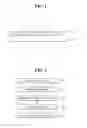
FIG. 1 is a diagram of a substrate and a paste for ohmic contact to p-type semiconductor according to an embodiment of the present disclosure.
FIG. 2 is a diagram showing each step of a method for forming ohmic contact to p-type semiconductor according to an embodiment of the present disclosure.
FIG. 3 shows electrical resistance characteristics of metal oxide MoO2 and ReO2 as a function of PVA content according to an embodiment of the present disclosure.
FIG. 4A shows linear I-V characteristics of metal oxide contact on p-type Si according to an embodiment of the present disclosure.
FIG. 4B shows specific contact resistance characteristics of metal oxide on p-type Si extracted by the TLM according to an embodiment of the present disclosure.
FIG. 5A shows I-V characteristics of a p-type GaN substrate with metal oxide MoO2 ohmic contact as a function of PVA content according to an embodiment of the present disclosure.
FIG. 5B shows I-V characteristics of a p-type GaN substrate with metal oxide ReO2 ohmic contact as a function of PVA content according to an embodiment of the present disclosure.
FIG. 6 shows I-V characteristics of ReO2 contact on a p-type GaN substrate after surface treatment according to an embodiment of the present disclosure.
FIG. 7 shows a method for forming ohmic contact to p-type semiconductor according to the related art.
DETAILED DESCRIPTION
Hereinafter, a paste for ohmic contact to p-type semiconductor according to the present disclosure and a method for forming ohmic contact to p-type semiconductor using the same will be described through the preferred embodiments of the present disclosure on the basis of the accompanying drawings.
Prior to the description, in many embodiments, elements with the same configuration will be representatively described in an embodiment using the same symbol, and in the other embodiments, only different elements will be described.
FIG. 1 is a diagram of a substrate 100 and a paste 110 for ohmic contact to p-type semiconductor according to an embodiment of the present disclosure.
As shown in FIG. 1, in the paste 110 material for forming ohmic contact, the present disclosure uses a metal oxide 111 and a binder 112. Specifically, for the metal oxide 111, rhenium (Re) or molybdenum (Mo) oxide is used.
The rhenium oxide may be used as a material for forming ohmic contact to p-type semiconductor including at least one type of material selected from Re2O, Re2O3, ReO2, ReO3 and Re2O7.
Additionally, the molybdenum oxide may be used as a material for forming ohmic contact to p-type semiconductor including at least one type of material selected from Mo2O, Mo2O3, MoO2, MoO3 and Mo2O7.
Additionally, for the binder 112, an inorganic or organic polymer compound may be used, and the organic polymer compound may include at least one selected from a vinyl-based polymer compound, a polyamide-based polymer compound and a polyurethane-based polymer compound. Particularly, for the vinyl-based polymer compound, it is preferred to use polyvinylalcohol (PVA).
The application of the paste 110 using the rhenium or molybdenum oxide and the binder to the substrate 100, followed by treatment of the substrate 100, may greatly improve the ohmic contact characteristics.
FIG. 2 is a diagram showing each step of a method for forming ohmic contact to p-type semiconductor according to an embodiment of the present disclosure.
As shown in FIG. 2, all substrates (glass, Si and GaN) are cleaned with a general solvent and prepared (S1), and the Si substrate is immersed in 10% dilute HF before deposition. Metal oxide powder 111 and 5 wt % of PVA are mixed on the substrates patterned with Kapton tape (S2), applied to the substrate 100 (S3), and dried in the air (S4).
To improve the ohmic contact characteristics, surface treatment (S5) for oxide removal from the GaN substrate is each performed using a buffered oxide etch (BOE) and boiling aqua regia (HNO3:HCl=1:3) for 10 minutes and 20 minutes.
Additionally, specific contact resistance characteristics on p-type Si are investigated using an optimized metal oxide mixture evaluated by electrical resistivity of the p-type semiconductor and contact state on the substrate. Additionally, to investigate Schottky barrier characteristics, metal oxide n-type silicon Schottky barrier diodes are fabricated.
FIG. 3 shows electrical resistance characteristics of metal oxide MoO2 and ReO2 as a function of PVA content according to an embodiment of the present disclosure.
As shown in FIG. 3, when the mixture of 5 wt % of PVA and metal oxide is applied to the glass substrate, electrical resistance is measured by Hall effect measurements as a function of PVA content in 30 mg of metal oxide powder.
Specifically, it can be seen that ReO2 has lower resistance than MoO2, and the electrical resistance reduces with the increasing PVA content irrespective of metal oxide. Additionally, as the PVA content is lower, the bond strength of powder is lower and the resistance is higher, causing a contact problem of a probe tip.
Meanwhile, an amount of binder in the mixture is very important because it may change the characteristics of metal oxide powder. Accordingly, a minimum amount of PVA for strongly binding the oxide powder is optimized. The optimized minimum amount of binder is evaluated by resistivity of the mixture and contact state on the substrate.
Because the density of MoO2 and ReO2 (6.47 and 11.4 g/cm3 respectively) is different, the resistivity of the metal oxide mixture starts to reduce at different points, and at the point where the resistivity falls (in FIG. 1, where an amount of PVA in MoO2 is 0.1 mL and an amount of PVA in ReO2 is 0.05 mL), PVA in similar amounts is mixed in the same volume. The resistivity of the optimized mixture is 0.067.8±0.01 Ω·cm and 0.023±0.004 Ω·cm in MoO2 and ReO2 respectively.
FIG. 4A shows linear I-V characteristics of metal oxide contact on p-type Si according to an embodiment of the present disclosure.
As shown in FIG. 4A, considering barrier formation in the energy band diagram, characterization of contacts of metal oxide is performed by forming contacts on p-type Si (ρ=9.77 Ω·cm and Np=1.87′1015 cm−3, measured by the Hall effect).
Additionally, the linear I-V characteristics show no barrier between the contacting parts of p-type Si and metal oxide. Furthermore, it is shown that the work function of p-type Si is 4.91 eV (χSi=4.05 eV, bandgap=1.12 eV, EFi−EF=0.304 eV), and the work function of metal oxide is 4.9 eV or higher.
Accordingly, it can be seen that MoO2 and ReO2 all have much higher work function than p-type Si, and ohmic contacts are easily formed.
FIG. 4B shows specific contact resistance characteristics of metal oxide on p-type Si extracted by the transmission line method (TLM), according to an embodiment of the present disclosure.
As shown in FIG. 4B, the extracted specific contact resistance is 3.818±0.15 and 2.407±0.11 Ω·cm2 in MoO2 and ReO2 respectively. It can be seen that the extracted specific contact resistance is higher than the contact resistance 10−3 Ω·cm2) of Si—Al alloy on p-type Si formed by heat treatment at the melting temperature (≥577° C.), but it cannot be directly compared with metal alloy contact due to a difference in specific resistance of metal oxide and the use of non-vacuum and non-thermal process in the operation.
FIGS. 5A and 5B each show I-V characteristics of a p-type GaN substrate with metal oxide MoO2 and ReO2 ohmic contact as a function of PVA content according to an embodiment of the present disclosure.
Specifically, a 1 μm-thick p-type GaN:Mg layer is grown on 2 μm undoped GaN deposited on a sapphire substrate. In this instance, the carrier concentration of the p-type GaN film measured by the Hall effect measurements is 1.47*1016 cm−3 (ρ=31.14 Ω·cm). Additionally, because GaN has a wide energy bandgap (˜3.4 eV) and electron affinity (˜4.1 eV), the work function of p-type GaN is a value obtained by subtracting an energy difference between Fermi level EF and valance band maximum EV (NV=1.45′1019 cm−3) from the sum of the energy bandgap and the electron affinity.
Accordingly, p-type GaN has the work function of 7.3 eV, and metal for forming ohmic contact should have theoretically high work function.
Additionally, as shown in FIGS. 5A and 5B, it can be seen that the I-V curve is also influenced by the PVA content, and ReO2 has better contact characteristics than MoO2. This implies that ReO2 has not only higher electrical conductivity but also higher work function than MoO2.
Additionally, it can be seen from the linear I-V characteristics showing that in the case of ReO2, the work function of ReO2 is not high enough to remove barrier to the p-type GaN, but it is close to the work function of GaN and forms a very low barrier height.
FIG. 6 shows I-V characteristics of ReO2 contact on the p-type GaN substrate after surface treatment according to an embodiment of the present disclosure.
Surface oxide acts as a barrier against carrier transport, affecting the contact characteristics. Accordingly, many researchers have studied various surface treatment methods to reduce the barrier. In the present disclosure, boiling aqua regia of HNO3:HCl=1:3 does not etch GaN, and effectively reduces the concentration of oxygen atoms on the surface.
Additionally, surface treatment is each performed using BOE and boiling aqua regia for 10 minutes and 20 minutes. This treatment effectively removes surface oxide and reduces the barrier, thereby obtaining excellent linear I-V characteristics (ohmic contact) using boiling aqua regia without vacuum and thermal process.
Particularly, oxide powder mixed with the binder used in the present disclosure is a metal oxide compound with high work function, and thus forms low metal semiconductor contact barriers when contacted with p-type semiconductor, facilitating the flow of carriers. Furthermore, without vacuum and thermal process, the process is made simpler and the cost savings are achieved.
Additionally, 5 wt % of polyvinylalcohol (PVA) as a binder is added to molybdenum and rhenium oxide powder with high work function to prepare a paste without vacuum process and thermal process, thereby overcoming the limitation in obtaining ohmic contacts because of higher work function of the p-type semiconductor materials than available contact metals on Earth.
Additionally, because ohmic characteristics are optimized with an addition of PVA in various amounts, it is possible to form ohmic contacts to p-type semiconductors using the MoO2 and ReO2 paste with high work function through non-vacuum and non-thermal process.
Those skilled in the art will appreciate that the present disclosure may be embodied in other specific forms without changing the technical spirit or essential features.
Therefore, it should be understood that the embodiments described hereinabove are for illustration only in all aspects, but not intended to limit the present disclosure to the above-described embodiments, and it should be interpreted that the scope of the present disclosure is defined by the appended claims rather than the above-described detailed description, and all modifications or variations derived from the meaning and scope of the appended claims and the equivalent concept are included in the scope of the present disclosure.
Claims
What is claimed is:1. A paste for ohmic contact to p-type semiconductor, comprising:
a metal oxide and a binder,
wherein the metal oxide is a rhenium oxide or a molybdenum oxide.
2. The paste for ohmic contact to p-type semiconductor according to claim 1, wherein the rhenium oxide includes at least one selected from Re2O, Re2O3, ReO2, ReO3 and Re2O7.
3. The paste for ohmic contact to p-type semiconductor according to claim 1, wherein the molybdenum oxide includes at least one selected from Mo2O, Mo2O3, MoO2, MoO3 and Mo2O7.
4. The paste for ohmic contact to p-type semiconductor according to claim 1, wherein the binder is an inorganic or organic polymer compound.
5. The paste for ohmic contact to p-type semiconductor according to claim 4, wherein the organic polymer compound includes at least one selected from a vinyl-based polymer compound, a polyamide-based polymer compound and a polyurethane-based polymer compound.
6. The paste for ohmic contact to p-type semiconductor according to claim 5, wherein the vinyl-based polymer compound is polyvinylalcohol.
7. The paste for ohmic contact to p-type semiconductor according to claim 6, wherein the polyvinylalcohol is present in an amount ranging between 0.03 and 0.15 mL.
8. The paste for ohmic contact to p-type semiconductor according to claim 7, wherein the rhenium oxide is ReO2, and the binder includes 0.15 mL of polyvinylalcohol.
9. The paste for ohmic contact to p-type semiconductor according to claim 7, wherein the molybdenum oxide is MoO2, and the binder includes 0.10 mL of polyvinylalcohol.
10. A method for forming ohmic contact to p-type semiconductor, comprising:
applying the paste defined in claim 5 to a substrate;
drying the substrate; and
performing surface treatment of the substrate.
11. The method for forming ohmic contact to p-type semiconductor according to claim 10, wherein the performing surface treatment of the substrate comprises immersing in a solvent and boiling aqua regia.
12. The method for forming ohmic contact to p-type semiconductor according to claim 10, wherein the substrate is a GaN substrate.
13. The method for forming ohmic contact to p-type semiconductor according to claim 12, wherein the GaN substrate is flexible.
Images & Drawings included:



Sources:
- United States Patent and Trademark Office - verify current appl. status at the USPTO↗
Recent applications in this class:
- » 20250232890 2025-07-17
STRETCHABLE WIRING MATERIAL, AND STRETCHABLE DEVICE - » 20250210217 2025-06-26
PHOTOSENSITIVE CONDUCTIVE PASTE, METHOD FOR PRODUCING LAMINATED ELECTRONIC COMPONENT, AND LAMINATED ELECTRONIC COMPONENT - » 20250174371 2025-05-29
PROCESS FOR PREPARATION OF PLASTIC COPPER NANOWIRE COMPOSITION - » 20250166864 2025-05-22
SILVER-COPPER COMPOSITE CONDUCTIVE PASTE CAPABLE OF BEING SINTERED AT LOW TEMPERATURE AND PREPARATION METHOD AND USE THEREOF - » 20250140437 2025-05-01
SILVER PASTE, AND PREPARATION METHOD AND USE THEREOF - » 20250125065 2025-04-17
OVERHEAD CONDUCTORS WITH HIGH-TEMPERATURE RESISTANT CURED COATINGS - » 20250069771 2025-02-27
SILVER PASTE AND METHOD FOR PRODUCING SAME, AND METHOD FOR PRODUCING BONDED ARTICLE - » 20250029747 2025-01-23
Conductive particle, conductive materials and connection structure - » 20250022629 2025-01-16
CONDUCTIVE FILM AND DISPLAY DEVICE - » 20250014775 2025-01-09
CONDUCTIVE FILM AND DISPLAY DEVICE
Recent applications for this Assignee:
- » 20250294796 2025-09-18
GATE ALL AROUND FIELD EFFECT TRANSISTOR HAVING MULTIPLE GATE STACK STRUCTURE AND FABRICATION METHOD THEREFOR - » 20250288978 2025-09-18
MULTI-ELEMENT CATALYST INCLUDING INTERMETALLIC ALLOY NANOPARTICLES AND METHOD FOR PREPARING THE SAME - » 20250286083 2025-09-11
METHOD OF MANUFACTURING CATALYST AND ELECTRODE USING SUPERCRITICAL FLUID - » 20250281415 2025-09-11
EXOSOMES EXPRESSING RSVF AND USE THEREOF - » 20250280550 2025-09-04
CAPACITOR AND METHOD FOR MANUFACTURING THE SAME - » 20250278659 2025-09-04
SYSTEM FOR CALCULATING QUANTUM CHEMISTRY BASED ON QUDIT - » 20250250454 2025-08-07
MXene SURFACE-MODIFIED WITH METAL ALKOXIDE AND PREPARATION METHOD THEREOF - » 20250250324 2025-08-07
NOVEL FUSION PROTEIN FOR ELIMINATING NEURODEGENERATIVE DISEASE-CAUSING FACTOR AND USE THEREOF - » 20250246640 2025-07-31
ELECTRODE COMPRISING CERIA NANOTUBE ANTIOXIDANT, AND MEMBRANE-ELECTRODE ASSEMBLY AND FUEL CELL COMPRISING THE SAME - » 20250239968 2025-07-24
THREE-DIMENSIONAL SOLAR POWER GENERATION SYSTEM FOR SMART FARMS