USE OF NOOTKATONE
US20190054041A1
2019-02-21
16/084,238
2016-05-26
Abstract:
Disclosed is a use of a nootkatone in the preparation of medicines for preventing and/or treating depression. The nootkatone has a significant efficacy which is better than that of the existing antidepressant drug Prozac; and it has a wide range of sources and offers more choices for preventing and treating depression.
Inventors:
- Haofu DAI 1 🇨🇳 Haikou, Hainan, China
- Wenli MEI 1 🇨🇳 Haikou, Hainan, China
- Wenhua DONG 1 🇨🇳 Haikou, Hainan, China
Assignee:
- INSTITUTE OF TROPICAL BIOSCIENCE AND BIOTECHOLOGY CHINESE ACADEMY OF TROPICAL AGRICULTURAL SCIENCES 1 🇨🇳 Haikou, Hainan, China
Interested in similar patents?
Get notified when new applications in this technology area are published.
Classification:
A61K9/00 IPC
Medicinal preparations characterised by special physical form
A61K9/0043 » CPC further
Medicinal preparations characterised by special physical form; Galenical forms characterised by the site of application Nose
A61K9/19 » CPC further
Medicinal preparations characterised by special physical form; Particulate form, e.g. powders, Processes for size reducing of pure drugs or the resulting products, Pure drug nanoparticles lyophilised, i.e. freeze-dried, solutions or dispersions
A61K9/0019 » CPC further
Medicinal preparations characterised by special physical form; Galenical forms characterised by the site of application Injectable compositions; Intramuscular, intravenous, arterial, subcutaneous administration; Compositions to be administered through the skin in an invasive manner
A61K9/0053 » CPC further
Medicinal preparations characterised by special physical form; Galenical forms characterised by the site of application Mouth and digestive tract, i.e. intraoral and peroral administration
A61K31/122 » CPC main
Medicinal preparations containing organic active ingredients; Ketones having the oxygen directly attached to a ring, e.g. quinones, vitamin K, anthralin
A61P25/24 » CPC further
Drugs for disorders of the nervous system Antidepressants
Description
FIELD
The present disclosure relates to the field of pharmaceutical technology, specifically to use of nootkatone.
BACKGROUND
Depression is a type of neurosis mainly characterized by prolonged depression, anxiety, physical discomfort, and sleep disorders. In severe cases, suicidal thoughts and behavior may occur. Studies by European and American researchers show that 15% of people in the community have depression. With the aging of China's social population and increasing social pressure, more and more studies have shown that the incidence and consultation rate of depression are on the rise.
So far, the etiology and pathogenesis of depression are still unclear, and it may be related to the decrease of the concentration of 5-HTP and norepinephrine, the neurotransmitters in the synaptic cleft of the brain. In the past decades, research on antidepressant drugs has developed rapidly, and many new types of antidepressant drugs have emerged one after another. The existing antidepressant drugs are mainly divided into three categories: monoamine oxidase inhibitors, tricyclic antidepressants and heterocyclic antidepressants. Monoamine oxidase inhibitors are the earliest antidepressants developed, which were discovered in the early 1950s. Due to the severe toxicity, they are quickly replaced by tricyclic antidepressants. Tricyclic antidepressants are currently the most widely used antidepressant drugs, including amitriptyline, doxepin, imipramine, clomipramine, etc., and are applicable to all kinds of depression. Heterocyclic antidepressants include maprotiline, Mianserin, fluoxetine (fluorine phenoxypropanol fluoxetine, fluoxetine hydrochloride, Prozac), paroxetine, fluoochlor sertraline, fluorine aniline etc. Depression is a chronic disease, so taking these antidepressant drugs for a long term not only requires expensive fees, but also has strong toxic and side effects, which brings great pains to patients.
Comparing with western medicine, traditional Chinese medicine is safer. Currently, there are Chinese medicines for antidepressants such as Puyu capsule, Jieyu'anshen granules, and Jieyu pill on the market. However, they are expensive and have slow efficacies, and have not achieved satisfactory results. Therefore, there is still a need for traditional Chinese medicine preparations that are effective and inexpensive for treating depression.
SUMMARY
In view of this, an object of the present disclosure is to provide use of nootkatone in treating and preventing depression. The nootkatone has significant curative efficacy for depression, and it is from a natural source with low price and without toxicity and side effect, which is capable to be used in preparation of related medicines.
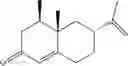
Since it was discovered in 1960s, nootkatone has been normally used for preparing orange essence, and has been widely used in the field of tobaccos and foods. The structure formula of which is shown herein:
However, there is little application of nootkatone on diseases, nor reports about its use for preventing and treating depression. When screening the antidepressant drugs, the present disclosure finds that nootkatone has function of preventing and treating depression. In addition, it can be extracted from traditional Chinese herbal medicine Alpinia oxyphylla Miq., which is from a natural source and without toxicity and side effects. In addition, nootkatone can also be obtained by chemical synthesis, so that it has a low price and a wide range of resources.
In the pharmacodynamics test of nootkatone, the present disclosure compares nootkatone with the present positive drug Prozac in three aspects: immobility time of mouse tail suspension test, immobility time of mouse forced swimming test, and 5-HTP-induced head twitching mouse model. The results show that nootkatone has significant effects in the above three aspects and is superior to the present product Prozac.
In addition, the present disclosure also uses Hamilton Depression Scale as a criterion to verify the clinical efficacy. The results show that after 6-week of treatment, in 40 patients, 14 cases are cured, accounting for 35%; fourteen cases are significantly improved, accounting for 35%; ten cases are improved, accounting for 25%; and 2 cases have no change, accounting for 5%. No case has adverse reactions. The clinic observations show that the curative effective rate reaches 95%, showing a significant curative effect on depression and without toxicity or side effect.
On account of the pharmacodynamics and clinical effect, the present disclosure provides use of nootkatone in preparing medicines for preventing and/or treating depression. The dosage form of the medicine can be any type of oral preparations, injection preparations or external preparations in medicine field. Therein, the oral preparation can be tablets, capsules, pills, granules, decoctions, gels, ointments, distillate formulas, oral liquids, dripping pills, syrups, etc.; the injection preparation can be injection liquids, freeze-dried powders, etc.; and the external preparation can be spray, nasal drops etc. The above preparations can be produced from routine pharmaceutic adjuvants in the art and reference can be made to The Extra Pharmaceutical Necessities (edited by Luo, Mingsheng).
Based on the above technical solutions, the present disclosure provides use of nootkatone in the manufacture of a medicament for preventing and/or treating depression, which has a remarkable curative effect on the treatment of depression and is superior to the present antidepressant drug Prozac. In addition, since it is a natural ingredient form a traditional Chinese herbal medicine and can be obtained either through extraction or through chemical synthesis, it has a wide range of sources, and it is natural, low in price, without toxicity and side effects, providing more options for patients to prevent and treat depression.
DETAILED DESCRIPTION
The present disclosure discloses the application of nootkatone in the manufacture of a medicament for preventing and/or treating depression, one of ordinary skill in the art can learn from the content of the present document and appropriately improve the process parameters. In particular, it should be noted that all similar replacements and modifications will be apparent to one of ordinary skill in the art, and they are all deemed to be included in the present invention. The application of the present disclosure has been described by the preferred embodiments. It will be apparent to one of ordinary skill in the art that changes and modifications and combinations of the methods and applications described herein can be made without departing from the spirit, scope, and scope of the present invention to realize and utilize the present technology.
The present disclosure will be further illustrated in conjunction with the following examples.
Example 1: Pharmacodynamics Experiment of Nootkatone
One week before the experiment, normal ICR mice were housed in different cages, with Light-Dark cycle of 12 h/12 h, room temperature between 20 and 22° C., and free access to foods and drinks. Before the experiment, mice were subjected to qualification test by being put in a water-containing cylindrical glass container with a height of 20 cm and a diameter of 12 cm. The water has a depth of 12 cm and temperature of 25° C. The mice were observed for 6 min, and the accumulative immobility time of the mice in the last 4 min was recorded. The mice having an accumulative immobility time from 100 to 190 s were the qualified mice. The so-called immobility meant that the mice stopped struggling in the water, or in state of floating and only the limbs moved slightly to keep their heads above the water. 100 qualified normal ICR mice were randomly divided into 5 groups, i.e., a blank control group (distilled water), a positive drug control group (Prozac, 20 mg/Kg), a large-dose group of nootkatone (2 mg/Kg), a medium-dose group of nootkatone (1.5 mg/Kg) and a small-dose group of nootkatone (1 mg/Kg). In all the groups, both the male and the female accounted for half. All the experiments were carried out between 1:00 pm and 5:00 pm, and the mice in each group were respectively administered with distilled water, Prozac and nootkatone by intragastric gavage according to the dosages. The administration was performed once a day and lasted for 14 days. The body weights of the mice before the administration, one week after the administration and 2 weeks after the administration were recorded, and the fur appearance of the mice were observed. After the last administration, behavior tests were performed on the ICR mice, including a tail suspension test of the mice, a forced swimming test of the mice and a 5-HTP induced head-twitching mice model.
1. Tail Suspension Test
One and half an hour after the last administration, the mice were subjected to tail suspension test. The tail of a mouse was fastened at 2 cm position with wooden clips, and the mouse was hung upside down in a 12×27×27 cm box, with the head approximately 5 cm from the bottom. The mouse was hung for 6 min, and the accumulative immobility time in the last 4 min was recorded. The results of the data analysis were shown in Table 1.
| TABLE 1 |
| Effect of nootkatone on immobility time of mice in tail suspension test |
| Dosage | ||
| Group | (Mg/Kg) | Immobility Time (S) |
| Blank Control Group (Distilled Water) | 0 | 151.1 ± 20.1 |
| Positive Control Group (Prozac) | 20 | 87.9 ± 22.0** |
| Large-dose Group of Nootkatone | 2 | 75.1 ± 19.6** |
| Medium-dose Group of Nootkatone | 1.5 | 80.2 ± 21.6** |
| Small-dose Group of Nootkatone | 1 | 84.0 ± 17.6** |
| **P < 0.01 |
2. Forced Swimming Test
One and half an hour after the last administration, the mice were subjected to forced swimming test. The mice were placed in a glass container and observed for 6 min, and the accumulative immobility time in the last 4 min was recorded. The results of the data analysis were shown in Table 2.
| TABLE 2 |
| Effects of nootkatone on immobility time of mice in forced swimming test |
| Dosage | ||
| Group | (mg/Kg) | Immobility Time (s) |
| Blank Control Group (Distilled Water) | 0 | 148.1 ± 18.9 |
| Positive Control Group (Prozac) | 20 | 80.9 ± 20.4** |
| Large-dose Group of Nootkatone | 2 | 66.1 ± 21.6** |
| Medium-dose Group of Nootkatone | 1.5 | 70.2 ± 22.3** |
| Small-dose Group of Nootkatone | 1 | 74.0 ± 26.9** |
| **P < 0.01 |
3. 5-HTP Induced Head Twitching Mouse Model
Half an hour after the last administration, 150 mg/Kg of 5-HTP was intraperitoneal injected and mice were placed in cage respectively. The head-twitching numbers of the mice in 20 min were recorded and the results of data analysis were shown in Table 3.
| TABLE 3 |
| Effects of nootkatone on 5-HTP induced head twitching mice model |
| Dosage | Head-Twitching | |
| Group | (mg/Kg) | Number (Time) |
| Blank Control Group (Distilled Water) | 0 | 34.1 ± 18.1 |
| Positive Control Group (Prozac) | 20 | 57.9 ± 10.4** |
| Large-dose Group of Nootkatone | 2 | 63.1 ± 22.5** |
| Medium-dose Group of Nootkatone | 1.5 | 60.2 ± 25.1** |
| Small-dose Group of Nootkatone | 1 | 58.0 ± 26.2** |
| **P < 0.01 |
4. Conclusions
As shown in Table 1, Table 2 and Table 3, when comparing with the blank control group, both nootkatone and positive drug Prozac obviously decreased the immobility times in tail suspension test and forced swimming test of mice in experimental group, and obviously increased the head twitching number of the 5-HTP induced head twitching mouse model. The efficacy of nootkatone was better than that of Prozac. The results demonstrated that nootkatone has a function of decreasing despair behaviors of mice.
By observing the whole appearance of mice, there was no significant difference between the weight of mice before administration, one week after administration and 2 weeks after administration, and the fur was lustrous and there were no significant differences, indicating that neither nootkatone nor the positive drug Prozac has toxicity.
Example 2: Clinical Efficacy Observation
Forty patients were selected, wherein 20 were male and 20 were female, and their disease durations were from 1 month to 2 years. Diagnosis criteria of depression that conformed to Chinese Classification and Diagnostic Criteria of Mental Disorders scored 8 according to the first 17 items in the Hamilton Depression Rating Scale (HAM-D) shown in Table 4. First-onset patients, or patients that had not taken antidepressants and antipsychotics and had not been subjected to electric shock therapy over the past week, and patients with depressive episodes of unipolar affective disorder, aged 20-50 years. Patients having depressive disorder caused by bipolar affective disorder and other causes, severe suicidal tendency, and severe abnormalities in laboratory tests (pregnant or lactating women) were eliminated.
| TABLE 4 |
| Hamilton Depression Rating Scale (HAM-D) |
| Score |
| Very | |||||||
| Item | Standard for Evaluation | Absent | Mild | Moderate | Severe | Severe | |
| 1 | Depressed | 0 = Absent | 0 | 1 | 2 | 3 | 4 |
| Mood | 1 = These feeling states indicated only | ||||||
| on questioning. | |||||||
| 2 = These feeling states spontaneously | |||||||
| reported verbally. | |||||||
| 3 = Communicates feeling states non- | |||||||
| verbally, i.e. through facial expression, | |||||||
| posture, voice and tendency to weep | |||||||
| 4 = Patient reports virtually only these | |||||||
| feeling states in his/her spontaneous | |||||||
| verbal and non-verbal communication. | |||||||
| 2 | Feelings | 0 = Absent. | 0 | 1 | 2 | 3 | 4 |
| of | 1 = Self reproach, feels he/she has let | ||||||
| Guilt | people down. | ||||||
| 2 = Ideas of guilt or rumination over | |||||||
| past errors or sinful deeds. | |||||||
| 3 = Present illness is a punishment. | |||||||
| Delusions of guilt. | |||||||
| 4 = Hears accusatory or denunciatory | |||||||
| voices and/or experiences threatening | |||||||
| visual hallucinations | |||||||
| 3 | Suicide | 0 = Absent | 0 | 1 | 2 | 3 | 4 |
| 1 = Feels life is not worth living | |||||||
| 2 = Wishes he/she were dead, or any | |||||||
| thoughts of possible death to self | |||||||
| 3 = Suicide, ideas or half-hearted attempts | |||||||
| 4 = Attempts at suicide | |||||||
| 4 | Insomnia | 0 = No difficulty falling asleep | 0 | 1 | 2 | — | — |
| (Early) | 1 = Complains of occasional difficulty | ||||||
| falling asleep; i.e. more than half an | |||||||
| hour (pay attention to the usual time | |||||||
| for patients to fall asleep) | |||||||
| 2 = Complains of nightly difficulty falling | |||||||
| asleep | |||||||
| 5 | Insomnia | 0 = No difficulty | 0 | 1 | 2 | — | — |
| (Middle) | 1 = Patient complains of being restless | ||||||
| and disturbed during the night | |||||||
| 2 = Waking during the night (before | |||||||
| 12:00 p.m., excepting for voiding) | |||||||
| 6 | Insomnia | 0 = Absent | 0 | 1 | 2 | — | — |
| (Late) | 1 = Waking in early hours of the morning | ||||||
| (1 hour earlier than usual) but | |||||||
| goes back to sleep | |||||||
| 2 = Unable to fall asleep gain if he/she | |||||||
| wakes in early hours | |||||||
| 7 | Work | 0 = No difficulty. | 0 | 1 | 2 | 3 | 4 |
| and | 1 = These feeling states indicated only | ||||||
| Activities | on questioning. | ||||||
| 2 = Loss of interest in activity, hobbies | |||||||
| or work - either directly reported | |||||||
| by the patient or indirect in listlessness, | |||||||
| indecision and vacillation (feels he/ | |||||||
| she has to push self to work or activities). | |||||||
| 3 = The patient spend less than three | |||||||
| hours a day on labor or entertainment. | |||||||
| 4 = Stopped working because of present | |||||||
| illness. The patient engages in no | |||||||
| activities, or the patient fails to perform | |||||||
| routine chores unassisted without | |||||||
| help of other people. | |||||||
| 8 | Retardation | 0 = Normal speech and thought. | 0 | 1 | 2 | 3 | 4 |
| 1 = Slight retardation during the interview. | |||||||
| 2 = Obvious retardation during the interview. | |||||||
| 3 = Interview difficult. | |||||||
| 4 = Complete stupor. | |||||||
| 9 | Agitation | 0 = None. | 0 | 1 | 2 | 3 | 4 |
| 1 = Fidgetiness during the interview. | |||||||
| 2 = Obviously unset, or performs numerous | |||||||
| petty actions. | |||||||
| 3 = Cannot sit quietly, or stand up during | |||||||
| the interview. | |||||||
| 4 = Hand wringing, nail biting, hair- | |||||||
| pulling, biting of lips. | |||||||
| 10 | Anxiety | 0 = No difficulty. | 0 | 1 | 2 | 3 | 4 |
| (Psychic) | 1 = These feeling states indicated only | ||||||
| on questioning. | |||||||
| 2 = Spontaneously express. | |||||||
| 3 = Apprehensive attitude apparent in | |||||||
| face or speech. | |||||||
| 4 = Obvious fears. | |||||||
| 11 | Anxiety | Physiological concomitants of anxiety, | 0 | 1 | 2 | 3 | 4 |
| (Somatic) | including dry mouth, abdominal distension, | ||||||
| diarrhea, hiccup, abdominal angina, | |||||||
| palpitations, headaches, Hyperventilation | |||||||
| and sighing, urinary frequency, | |||||||
| etc.. | |||||||
| 0 = Absent. | |||||||
| 1 = Mild. | |||||||
| 2 = Moderate, there are certainly the | |||||||
| above symptoms. | |||||||
| 3 = Severe, the above symptoms are | |||||||
| serious, and affect life or need to be | |||||||
| dealt with. | |||||||
| 4 = Seriously affect life and activities. | |||||||
| 12 | Somatic | 0 = None. | 0 | 1 | 2 | — | — |
| Symptoms | 1 = Loss of appetite but eating without | ||||||
| (Gastrointestinal) | staff encouragement. | ||||||
| 2 = Difficulty eating without staff urging. | |||||||
| Requests or requires laxatives or | |||||||
| medication for bowels or medication | |||||||
| for gastro-intestinal symptoms. | |||||||
| 13 | Somatic | 0 = None. | 0 | 1 | 2 | — | — |
| Symptoms | 1 = Heaviness in limbs, back or head. | ||||||
| (General) | Backaches, headaches, muscle aches. | ||||||
| Loss of energy and fatigability. | |||||||
| 2 = Clear-cut symptoms. | |||||||
| 14 | Genital | (Symptoms such as loss of libido, menstrual | 0 | 1 | 2 | — | — |
| Symptoms | disturbances) | ||||||
| 0 = Absent. | |||||||
| 1 = Mild. | |||||||
| 2 = Severe. | |||||||
| Not sure, or that the item is not suitable | |||||||
| for the person to be rated (not included | |||||||
| in the total score). | |||||||
| 15 | Hypochondriasis | 0 = Not present. | 0 | 1 | 2 | 3 | 4 |
| 1 = Pay excessively attention to oneself | |||||||
| (bodily). | |||||||
| 2 = Preoccupation with health. | |||||||
| 3 = Hypochondriacal delusions, and frequent | |||||||
| complaints, requests for help, | |||||||
| etc. | |||||||
| 4 = Hypochondriacal delusions with hallucination. | |||||||
| 16 | Loss | Rate either A) or B): | 0 | 1 | 2 | — | — |
| of | A) According to the patient: | ||||||
| Weight | 0 = No weight loss. | ||||||
| 1 = Probable weight loss associated | |||||||
| with present illness. | |||||||
| 2 = Definite (according to patient) weight | |||||||
| loss. | |||||||
| B) According to weekly measurements: | |||||||
| 0 = Less than 0.5 kg weight loss in | |||||||
| week. | |||||||
| 1 = Greater than 0.5 kg weight loss in | |||||||
| week. | |||||||
| 2 = Greater than 1 kg weight loss in | |||||||
| week. | |||||||
| 17 | Insight | 0 = Acknowledges being depressed and | 0 | 1 | 2 | 3 | 4 |
| ill. | |||||||
| 1 = Acknowledges illness but attributes | |||||||
| cause to bad food, climate, overwork, | |||||||
| virus, need for rest, etc. | |||||||
| 2 = Denies being ill at all. | |||||||
Comment: 0 to 4 in the items of Standard for Evaluation and Point referred to the scores, and the standard for evaluation is: the total score <7 means normality; the total score between 7 and 17 means possible depression; the total score between 17 and 24 means definite depression; and the total score >24 means severe depression.
Nootkatone preparation was used to treat the 40 patients, and the administration manner was: orally taking, 1.5 mg nootkatone monomer/Kg/time, twice a day, and 6 weeks were one course of treatment. The patients were observed in the course of treatment for any adverse reaction. After 1 course of treatment, reduction rate of HAM-D was used to measure the curative efficacy of the traditional Chinese medicine on patients, reduction rate of HAM-D=(total scores before the treatment−total scores after the treatment)/total scores before the treatment×100%.
The standard of curative efficacy evaluation is hereinafter:
cure: reduction rate of HAMD is >75%;
significantly improved: the reduction rate of HAMD is from 51% to 75%;
improved: reduction rate of HAMD is from 25% to 50%;
invalid: reduction rate of HAMD is <25%.
After 6-week treatment, in the 40 patients, 14 cases were cured, accounting for 35%; 14 cases were significantly improved, accounting for 35%; 10 cases were improved, accounting for 25%; and 2 cases were invalid, accounting for 5%, and no case has adverse reactions. The clinical efficacy observation showed that the curative effective rate of nootkatone reached 95% in the patients, indicating a significant curative effect on depression and without toxicity and side effect.
The above descriptions are merely preferred embodiments of the present invention, and it should be noted that for one of ordinary skill in the art, a number of improvements and modifications can be made without departing from the principle of the present invention, and these improvements and modifications should also be regarded as the protection scope of the present invention.
Claims
1. A method of preventing and/or treating depression, comprising administrating an effective amount of nootkatone to the subject in need thereof.
2. The method according to claim 1, wherein nootkatone is an oral preparation, an injection preparation or an external preparation.
3. The method according to claim 2, wherein the oral preparation is a tablet, a capsule, a pill, granules, a decoction, a gel, an ointment, a distillate formula, an oral liquid, a dripping pill or a syrup.
4. The method according to claim 2, wherein the injection preparation is an injection liquid or a freeze-dried powder.
5. The method according to claim 2, wherein the external preparation is a spray or nasal drops.
Images & Drawings included:
Sources:
- United States Patent and Trademark Office - verify current appl. status at the USPTO↗
Similar patent applications:
- » 20190069543
Use of nootkatone to kill sap-sucking insects - » 20190208779
Use of nootkatone to treat mosquito infestations - » 20220022451
Use of nootkatone to treat mosquito infestations - » 20220324823
Nootkatone derivatives and methods of using the same - » 20250043320
USE OF OXIDOREDUCTASE AND MUTANT THEREOF IN BIOSYNTHESIS OF NOOTKATONE
Recent applications in this class:
- » 20250161237 2025-05-22
BIOLOGIC ENHANCEMENT FORMULATION - » 20250161236 2025-05-22
THYMOQUINONE AND BLACK SEED COMPOSITIONS FOR TREATING NEUROENDOCRINE CANCER IN COMBINATION WITH IMMUNOTHERAPY - » 20250144049 2025-05-08
METHODS, COMPOSITIONS, AND USES RELATED TO THE TREATMENT AND PREVENTION OF LEIGH SYNDROME - » 20250090481 2025-03-20
Methods of reducing the production of greenhouse gases from animals - » 20250082585 2025-03-13
METHOD FOR STORING REDUCED COENZYME Q10 - » 20250073184 2025-03-06
CANNABIGEROQUINONE COMPOUNDS, COMPOSITIONS INCLUDING SUCH COMPOUNDS, AND USES OF SUCH COMPOUNDS AND COMPOSITIONS - » 20250041242 2025-02-06
Coenzyme Q10 composition, and preparation method and application thereof in cardio-protection - » 20250017877 2025-01-16
PHYTONADIONE FOR PARENTERAL ADMINISTRATION - » 20250009686 2025-01-09
INHIBITORS OF BUNYAVIRIDAE AND USES THEREOF - » 20240415787 2024-12-19
COMPOSITION FOR TREATING OR PREVENTING OBESITY OR OBESITY-ASSOCIATED LIVER DISEASE, COMPRISING VERBENONE DERIVATIVES