Beverage can lid
US20190084732A1
2019-03-21
16/046,522
2018-07-26
✅ Patent granted
US 10,800,582 B2
2020-10-13
-
-
J. Gregory Pickett | Niki M Eloshway
2038-08-20
Abstract:
A sealing lid. The sealing lid includes a lid top portion having an upper surface and a lower surface. An outer concentric ring protrudes from the lower surface of the lid top portion. An inner concentric ring protrudes from the lower surface of the lid top portion. A channel is defined between the outer concentric ring and the inner concentric ring. The sealing lid is configured to releasably secure to a top rim of a beverage can by the top rim friction fitting within the channel.
Assignee:
- Michael M. Lamberto 1 🇺🇸 Grenville, SD, United States
Applicant:
Interested in similar patents?
Get notified when new applications in this technology area are published.
Classification:
B65D51/007 » CPC further
Closures not otherwise provided for Separate closure devices for reclosing opened cans or tins, e.g. beer cans
B65D51/20 IPC
Closures not otherwise provided for; Arrangements of closures with protective outer cap-like covers or of two or more co-operating closures Caps, lids, or covers co-operating with an inner closure arranged to be opened by piercing, cutting, or tearing
B65D51/00 IPC
Closures not otherwise provided for
B65D43/06 IPC
Lids or covers for rigid or semi-rigid containers; Removable lids or covers having a peripheral channel embracing the rim of the container
B65D43/0218 » CPC main
Lids or covers for rigid or semi-rigid containers; Removable lids or covers without integral tamper element secured only by friction or gravity on both the inside and the outside of the mouth of the container
B65D1/165 » CPC further
Containers having bodies formed in one piece, e.g. by casting metallic material, by moulding plastics, by blowing vitreous material, by throwing ceramic material, by moulding pulped fibrous material, by deep-drawing operations performed on sheet material; Cans, casks, barrels, or drums characterised by shape of curved cross-section, e.g. cylindrical Cylindrical cans
B65D51/245 » CPC further
Closures not otherwise provided for combined or co-operating with auxiliary devices for non-closing purposes provided with decoration, information or contents indicating devices, labels
B65D43/02 IPC
Lids or covers for rigid or semi-rigid containers Removable lids or covers
B65D51/24 IPC
Closures not otherwise provided for combined or co-operating with auxiliary devices for non-closing purposes
B65D1/16 IPC
Containers having bodies formed in one piece, e.g. by casting metallic material, by moulding plastics, by blowing vitreous material, by throwing ceramic material, by moulding pulped fibrous material, by deep-drawing operations performed on sheet material; Cans, casks, barrels, or drums characterised by shape of curved cross-section, e.g. cylindrical
Description
CROSS-REFERENCE TO RELATED APPLICATION
This application claims the benefit of priority of U.S. provisional application No. 62/560,928, filed Sep. 20, 2017, the contents of which are herein incorporated by reference.
BACKGROUND OF THE INVENTION
The present invention relates to a lid and, more particularly, to a lid used to seal cans of partially consumed beverages.
Currently, when a can of soda, water, juice, etc. is opened, you cannot close or re-seal the can. Therefore, the beverage inside the can is constantly open to debris, bugs etc. until the beverage is finished. Further, the longer a can of soda is open, the more carbonation escapes from the drink, making the soda flat.
As can be seen, there is a need for a device that re-seals a canned beverage.
SUMMARY OF THE INVENTION
In one aspect of the present invention, a sealing lid comprises: a lid top portion comprising an upper surface and a lower surface; an outer concentric ring protruding from the lower surface of the lid top portion; and an inner concentric ring protruding from the lower surface of the lid top portion, wherein a channel is defined between the outer concentric ring and the inner concentric ring, and the sealing lid is configured to releasably secure to a top rim of a beverage can by the top rim friction fitting within the channel.
In another aspect of the present invention, a sealing lid comprises: a lid top portion comprising an upper surface and a lower surface; an outer concentric ring protruding from the lower surface of the lid top portion; and an inner concentric ring protruding from the lower surface of the lid top portion, wherein a channel is defined between the outer concentric ring and the inner concentric ring, and the sealing lid is configured to releasably secure to a top rim of a beverage can by the top rim friction fitting within the channel.
These and other features, aspects and advantages of the present invention will become better understood with reference to the following drawings, description and claims.
BRIEF DESCRIPTION OF THE DRAWINGS
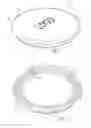
FIG. 1 is a top perspective view of an embodiment of the present invention;
FIG. 2 is a bottom perspective view of an embodiment of the present invention;
FIG. 3 is a perspective view of an embodiment of the present invention in use;
FIG. 4 is an exploded view of an embodiment of the present invention in use; and
FIG. 5 is a cross-sectional view taken along line 5-5 in FIG. 1.
DETAILED DESCRIPTION OF THE INVENTION
The following detailed description is of the best currently contemplated modes of carrying out exemplary embodiments of the invention. The description is not to be taken in a limiting sense, but is made merely for the purpose of illustrating the general principles of the invention, since the scope of the invention is best defined by the appended claims.
Broadly, an embodiment of the present invention provides a lid that fits over a top of an opened beverage can and seals it. Once the lid is snapped onto the top of the can, the lid keeps the beverage sealed, fresh and sanitary, preventing debris and bugs from entering.
Referring to FIGS. 1 through 5, the present invention includes a sealing lid 10. The sealing lid 10 includes a lid top portion 14 having an upper surface and a lower surface. An outer concentric ring 16 protrudes from the lower surface of the lid top portion 14. An inner concentric ring 18 protrudes from the lower surface of the lid top portion 14. A channel 22 is defined between the outer concentric ring 16 and the inner concentric ring 18. The sealing lid 10 is configured to releasably secure to a top rim of a beverage can 20 by the top rim friction fitting within the channel 22.
Each of the outer concentric ring 16 and the inner concentric ring 18 include a sidewall having a ring shape. Each of the sidewalls may include a height, which is a distance from a proximal end of the sidewall where the sidewall is adjoined to the lid top portion, and a distal end of the sidewall. The height of the sidewall of the outer concentric ring 16 may be greater than the height of the inner concentric ring 16. Additionally, a slot 16a may be formed through the sidewall of the outer concentric ring 16 and a slot 18a may be formed through the sidewall of the inner concentric ring 18. The slot 16a of the outer concentric ring 16 aligns with the slot 18a of the inner concentric ring 18. The slots 16a, 18a allow a small amount of the carbonation to escape from the beverage can 20 when the lid 10 is attached to relieve pressure. Allowing small amounts of carbonation to escape prevents the lid 10 from popping off the can 20.
The channel 22 of the sealing lid may include a width less than a width of the top edge of the beverage can 20. Further, the sealing lid 10 is made of a solid but bendable or pliable material. For example, the present invention may be made of a polymer, such as Thermoplastic Polyurethane Elastomer (TPU), Polypropylene and the like. When the sealing lid 10 is pressed over the top edge of the beverage can 20, the material bends and the top edge of the beverage can 20 friction fits within the channel 22. The lid 10 is designed to fit over a 2.1 inch can 16.
The lid to portion 14 may be a disc shape having a planar upper surface. In certain embodiments, the upper surface of the lid top portion 14 includes a recess 15. In such embodiments, the present invention may include a plate 12 that releasably fits within the recess 15. The plate 15 may include a logo, a marking, a design, and the like to either identify the drinker of the beverage can 20 or to provide advertising. The recess 15 may define a disk shape and the plate 12 may be a disk shape.
To use the present invention, the sealing lid 10 is pressed against a top of the beverage can 20. The top rim of the beverage can 20 friction fits within the channel 22, in between the outer concentric ring 16 and the inner concentric ring 18. The sealing lid 10 snaps on and secures to the top rim of the beverage can 16, preventing the beverage can 16 from spilling and preventing debris and bugs from entering into the beverage.
It should be understood, of course, that the foregoing relates to exemplary embodiments of the invention and that modifications may be made without departing from the spirit and scope of the invention as set forth in the following claims.
Claims
What is claimed is:1. A sealing lid comprising:
a lid top portion comprising an upper surface and a lower surface;
an outer concentric ring protruding from the lower surface of the lid top portion; and
an inner concentric ring protruding from the lower surface of the lid top portion, wherein
a channel is defined between the outer concentric ring and the inner concentric ring, and
the sealing lid is configured to releasably secure to a top rim of a beverage can by the top rim friction fitting within the channel.
2. The sealing lid of claim 1, wherein a height of the outer concentric ring is greater than a height of the inner concentric ring.
3. The sealing lid of claim 1, wherein the outer concentric ring comprises a slot formed therethrough and the inner concentric ring comprises a slot formed therethrough, wherein the slot of the outer concentric ring aligns with the slot of the inner concentric ring.
4. The sealing lid of claim 1, wherein the upper surface of the lid top portion comprises a recess.
5. The sealing lid of claim 4, further comprising a plate releasably secured within the recess.
6. The sealing lid of claim 1, wherein the sealing lid is a single piece integral unit.
7. A sealing lid comprising:
a lid top portion comprising an upper surface and a lower surface;
an outer concentric ring protruding from the lower surface of the lid top portion; and
an inner concentric ring protruding from the lower surface of the lid top portion, wherein
a channel is defined between the outer concentric ring and the inner concentric ring,
a height of the outer concentric ring is greater than a height of the inner concentric ring, and
the sealing lid is a single piece integral unit.
8. The sealing lid of claim 7, wherein the sealing lid is configured to releasably secure to a top rim of a beverage can by the top rim friction fitting within the channel.
9. The sealing lid of claim 7, wherein the outer concentric ring further comprises a slot formed therethrough and the inner concentric ring further comprises a slot formed therethrough, wherein the slot of the outer concentric ring aligns with the slot of the inner concentric ring.
10. The sealing lid of claim 7, wherein the upper surface of the lid top portion comprises a recess.
11. The sealing lid of claim 10, further comprising a plate releasably secured within the recess.
Images & Drawings included:



Sources:
- United States Patent and Trademark Office - verify current appl. status at the USPTO↗
Similar patent applications:
- » 20150166231
Beverage lid system, beverage lid and associated methods - » 20150164253
Beverage lid system, beverage lid and associated methods - » 20210114788
DISPOSABLE BEVERAGE LID AND DISPOSABLE BEVERAGE CONTAINER SYSTEM AND METHOD - » 20200385185
DISPOSABLE BEVERAGE LID AND DISPOSABLE BEVERAGE CONTAINER SYSTEM AND METHOD - » 20050035011
Beverage container lids and methods of manufacturing beverage container lids - » 20050035018
Beverage container lids and methods of manufacturing beverage container lids - » 20060249526
Beverage lid dispenser - » 20060027588
Removable clip for beverage lid - » 20060249527
Beverage lid dispenser - » 13243566
Combined beverage lid plug and bookmark
Recent applications in this class:
- » 20250263207 2025-08-21
Tray with Lid - » 20240317468 2024-09-26
REVERSIBLE LID - » 20230182969 2023-06-15
CONTAINER FOR THE SHIPMENT AND DISPLAY OF A PRODUCT - » 20230030416 2023-02-02
END CAPS FOR COLLECTIBLE CARD PROTECTIVE HOLDERS - » 20220212839 2022-07-07
Storage box - » 20220081172 2022-03-17
Cup with cup lid and detachable and washable cup lid - » 20210371169 2021-12-02
BOWL AND LID SET - » 20210354885 2021-11-18
CONTAINER LID - » 20210253309 2021-08-19
COVER STRUCTURE - » 20210237945 2021-08-05
Paper lid