One pot, one step process for the halogenation of aromatics using solid acid catalysts
US20190100487A1
2019-04-04
16/086,831
2017-03-17
✅ Patent granted
US 11,111,207 B2
2021-09-07
WO; PCT/IN2017/050097; 20170317
WO; WO2017/163262; 20170928
Clinton A Brooks
Eversheds Sutherland (US) LLP
2037-03-17
Abstract:
The present invention disclosed an improved one pot, one step process for halogenation of compound of formula (II) to afford corresponding halogenated compound of formula (I) having improved yield and increased selectivity under very mild conditions.
Inventors:
- Shubhangi Bhalchandra UMBARKAR 3 🇮🇳 Maharashtra, India
- Atul Balasaheb KULAL 1 🇮🇳 Maharashtra, India
- Amar Jaywant DESHMUKH 1 🇮🇳 Maharashtra, India
Assignee:
- Council of Scientific & Industrial Research 655 🇮🇳 New Delhi, India
Applicant:
Interested in similar patents?
Get notified when new applications in this technology area are published.
Classification:
C07C37/62 » CPC further
Preparation of compounds having hydroxy or O-metal groups bound to a carbon atom of a six-membered aromatic ring by introduction of halogen; by substitution of halogen atoms by other halogen atoms
B01J21/063 » CPC further
Catalysts comprising the elements, oxides, or hydroxides of magnesium, boron, aluminium, carbon, silicon, titanium, zirconium, or hafnium; Silicon, titanium, zirconium or hafnium; Oxides or hydroxides thereof Titanium; Oxides or hydroxides thereof
B01J23/28 » CPC further
Catalysts comprising metals or metal oxides or hydroxides, not provided for in group of arsenic, antimony, bismuth, vanadium, niobium, tantalum, polonium, chromium, molybdenum, tungsten, manganese, technetium or rhenium; Chromium, molybdenum or tungsten Molybdenum
B01J23/30 » CPC further
Catalysts comprising metals or metal oxides or hydroxides, not provided for in group of arsenic, antimony, bismuth, vanadium, niobium, tantalum, polonium, chromium, molybdenum, tungsten, manganese, technetium or rhenium; Chromium, molybdenum or tungsten Tungsten
C07C231/12 » CPC further
Preparation of carboxylic acid amides by reactions not involving the formation of carboxamide groups
C07C45/63 » CPC further
Preparation of compounds having >C = O groups bound only to carbon or hydrogen atoms; Preparation of chelates of such compounds by reactions not involving the formation of >C = O groups by introduction of halogen; by substitution of halogen atoms by other halogen atoms
B01J21/06 IPC
Catalysts comprising the elements, oxides, or hydroxides of magnesium, boron, aluminium, carbon, silicon, titanium, zirconium, or hafnium Silicon, titanium, zirconium or hafnium; Oxides or hydroxides thereof
C07C211/52 » CPC further
Compounds containing amino groups bound to a carbon skeleton having amino groups bound to carbon atoms of six-membered aromatic rings of the carbon skeleton having amino groups bound to only one six-membered aromatic ring the carbon skeleton being further substituted by halogen atoms or by nitro or nitroso groups
C07C209/74 » CPC main
Preparation of compounds containing amino groups bound to a carbon skeleton from amines, by reactions not involving amino groups, e.g. reduction of unsaturated amines, aromatisation, or substitution of the carbon skeleton by halogenation, hydrohalogenation, dehalogenation, or dehydrohalogenation
B01J21/08 » CPC further
Catalysts comprising the elements, oxides, or hydroxides of magnesium, boron, aluminium, carbon, silicon, titanium, zirconium, or hafnium; Silicon, titanium, zirconium or hafnium; Oxides or hydroxides thereof Silica
B01J21/12 » CPC further
Catalysts comprising the elements, oxides, or hydroxides of magnesium, boron, aluminium, carbon, silicon, titanium, zirconium, or hafnium Silica and alumina
C07C237/30 » CPC further
Carboxylic acid amides, the carbon skeleton of the acid part being further substituted by amino groups having the carbon atom of at least one of the carboxamide groups bound to a carbon atom of a non-condensed six-membered aromatic ring of the carbon skeleton having the nitrogen atom of the carboxamide group bound to hydrogen atoms or to acyclic carbon atoms
C07C39/27 » CPC further
Compounds having at least one hydroxy or O-metal group bound to a carbon atom of a six-membered aromatic ring; Halogenated derivatives monocyclic monohydroxylic containing halogen bound to ring carbon atoms all halogen atoms being bound to ring carbon atoms
C07C47/55 » CPC further
Compounds having —CHO groups; Compounds having —CHO groups bound to carbon atoms of six—membered aromatic rings containing halogen
Description
FIELD OF THE INVENTION
The present invention relates to halogenation of aromatics using solid acid catalysts. More particularly, the present invention relates to an improved one pot, one step process for the halogenation of compound of formula (II) to afford corresponding halogenated compound of formula (I) having improved yield and increased selectivity.
BACKGROUND AND PRIOR ART OF THE INVENTION
Halogenated hydrocarbons have many important industrial and technical uses which make these compounds extremely valuable, and which therefore make the possibility of producing such compounds in quantity and in an easily controllable, inexpensive manner extremely desirable. Halogenated aromatic hydrocarbons are particularly valuable as starting materials for many purposes, such as for the production of dyes, synthetic resins and insecticides. The functional halogen group of such compounds may be varied in many respects in order to give the obtained products a higher degree of color, a higher degree of flame-proofing, or even toxicity. The production of such halogenated aromatic compound is particularly difficult. The halogenation with elementary halogen usually results in a large loss of solvents, requires carefully controlled conditions, and thorough purification of the final product, one half of the utilized halogen is converted to the corresponding hydrogen halide compound and is thus lost for the halogenation.
Further, aryl iodides are important intermediates in organic synthesis, medicine and biochemistry. They are also valuable and reactive intermediates for various cross-coupling reactions, for example, Heck, Stille and Negishi cross-coupling. Direct iodination using I2 is a simple method, but is not straight forward and requires the oxidation of iodine to the more reactive species with a pronounced I+ nature. Iodination of aromatic compounds has been carried out using molecular iodine together with strong oxidizing agents such as nitric acid, sulphuric acid, iodic acid, sulphur trioxide and hydrogen peroxide, ceric ammonium nitrate, bismuth (III) nitrate pentahydrate, sodium hypochlorite and urea-hydrogen peroxide. Several reagents reported for iodination of aromatic compounds include iodine and 1,4-bis(triphenylphosphonium)-2-butene peroxodisulfate, iodine and pyridine/dioxane, AgNO3/I2, I2/NaBO3.4H2O in ionic liquid, I2/HIO3, heat, I2/CrO3, NaClO2/NaI/HCl, KI/K2FeO4 in water, N-iodosuccinimide and catalytic trifluoroacetic acid, pyCl/CH3OH, I2/Pb(OAc)4, KI/H2O2, KI/KIO3/H+, KClO3/KI/HCl, NCS/NaI and iodine with H2O2 and O2. Strong Lewis acids or Bronsted acids, such as trifluoroacetic acid, trifluoromethanesulfonic acid and BF3.OEt2-H2O have been utilized for electron-withdrawing groups on the aromatic ring, which is not suitable for acid sensitive functional groups.
Hence, there is an increasing demand for new greener methods for iodination without catalyst and solvent. Iodination using ICl is usually carried out in polar solvents, such as methanol, water and acids such as acetic acid, trifluoroacetic acid, aq. hydrochloric acid, sulphuric acid, etc., in which the heterolytic dissociation facilitates electrophilic attack of iodine. Iodination using ICl is carried out in Lewis acids such as Hg(OTf)2 and AgOTf. Very few ammonium ICl2— salts have been reported for the iodination of aromatic compounds. Hexamethylene bis(Nmethylimidazolium) bis(dichloroiodate) an ionic liquid iodinating reagent has been used for iodination of aromatic amines. The drawback was that the reaction requires CaCO3 as base and the recycle yields are less (82%). Benzyltrimethylammonium dichlroiodate was used for iodination. The drawback was the use of MeOH as solvent and the requirement of CaCO3 as a base. A variety of 1,3-dialkylimidazolium trihalide-based ionic liquids were used for iodochlorination for alkenes and alkynes and not for iodination.
U.S. Pat. No. 6,225,514 disclosed a method of halogenating the ring of an aromatic compound. The aromatic compound is contacted with a halogenating agent in the presence of a heterogeneous catalyst. The catalysts of this invention, commonly known as “solid acid catalysts,” can be made by reacting a dopant with a support. Examples of suitable dopants include H2SO4, (NH4)2SO4, (NH4)HS O4, SO3, WO3, H2WO4, H2MoO4, (NH4)2WO4, (NH4)2MoO4, Mo(NO3)6, W(NO3)6, MoO3, H3PO4, (NH4)3PO4, (NH4)2HPO4, (NH4)H2PO4, Cr2O3, and mixtures thereof. Supports that can be used include TiO2, ZrO2, HfO2, MnO2, Fe2O3, Fe3O4, GeO2, SnO2, TlO3, Nb2O5, Ta2O5, SC2O3, La2O3, SiO2, and mixtures thereof.
Article titled “Regiospecific Oxyhalogenation of Aromatics Over SBA-15-Supported Nanoparticle Group IV-VI Metal Oxides” by L Saikia et al. published in Catalysis Letters; 2010, Volume 137, Issue 3, pp 190-201 reports Nanoparticulate WOx, MoOx, TiOx and VOx supported on SBA-15 for efficient catalytic activity for oxyhalogenation of aromatic compounds. The reaction occurs at 298 K and moderate acidic pH (3-5). The catalytic activity of these catalysts is higher than most of the hitherto known solid catalysts and unsupported metal oxides.
U.S. Pat. No. 6,166,272 disclosed a method of fluorinating a substrate comprising reacting said substrate with a fluorinating agent in the presence of about 0.01 to about 2 wt % molybdenum trioxide at a temperature between about 40 and about 100° C.
Article titled “Iodination of activated aromatic compounds using nanostructure solid acid catalyst” by A Hosseini et al. published in Synthetic Communications, 2012; 42; pp 2407-2414 reports iodination of aromatic compounds catalyzed by Nanoporous silica anchored with sulfonic acid groups. The reaction was performed in water using hydrogen peroxide as oxidant. The recyclability of catalyst in green media significantly contributes to the environmental friendliness of the procedure.
Article titled “Studies on heteropoly acid supported zirconia: III: Oxidative bromination of phenol using phosphotungstic acid supported on zirconia” by S Mallik et al. published in Journal of Molecular Catalysis A: Chemical; 2007, 261(2), pp 172-179 reports a series of ecofriendly solid acid catalyst synthesized by supporting phosphotungstic acid onto hydrous zirconia by an incipient wetness impregnation method in order to contribute towards clean technology. Further, Phosphotungstic acid supported on hydrous zirconia acts as an efficient and stable solid acid catalyst for oxybromination of phenol.
Article titled “A new, environment friendly protocol for iodination of electron-rich aromatic compounds” by S Adimurthy et al. published in Tetrahedron Letters, 2003, 44 (27), pp 5099-5101 reports a new environment friendly procedure for effective aromatic iodination.
A mixture of potassium iodide and potassium iodate is used in the presence of an acid for in situ iodination of aromatic compounds.
Therefore, there is need to overcome prior art problems such as use of strong mineral acids, carried out at high temperature and high oxygen pressure, solvents are not environmental friendly and excess use of reagents and more importantly prior art fails to disclose the process for selectively obtaining ortho-halogenated compound. Accordingly, the present invention provides an environment friendly single pot process for halogenation of aromatic compounds under milder conditions with improved conversion and increased selectivity towards ortho substituted compounds using heterogeneous solid acid catalysts.
OBJECTIVE OF THE INVENTION
The main objective of the present invention is to provide an improved one pot, one step process for the halogenation of compound of formula (II) to afford corresponding halogenated compound of formula (I) having improved yield and increased selectivity.
Another objective of the present invention is to provide an improved one pot, one step process for iodination of aromatics of compound of formula (II) to corresponding iodo compound of formula (I) in presence of suitable catalyst using I2 having improved yield and increased selectivity.
Yet another objective of the present invention is to provide an improved one pot, one step process for the halogenation of aminoaromatic or hydroxy aromatic or aromatic aldehyde compound using suitable halogenating agent and solid acid catalyst to afford corresponding halogenated compound having improved yield and increased selectivity.
SUMMARY OF THE INVENTION
Accordingly, the present invention provides an improved one pot, one step process for the halogenation of substituted aromatic compound comprises addition of halogenating agent and solid acid catalyst to the mixture of substituted aromatic compound in solvent followed by stirring the reaction mixture at temperature in the range of 25 to 150° C. for the period in the range of 2 to 6 hrs to afford corresponding halogenated compound.
In preferred embodiment, said substituted aromatic compound is selected from aminoaromatic compound, hydroxy aromatic compound, aromatic aldehyde compound, halo substituted aromatics, amide substituted aromatic compound.
In another preferred embodiment, said aminoaromatic compound is selected from aniline, 4-Chloroaniline, 4-Bromoaniline, 2,6 dimethyl aniline, anthranilamide, 2,6 diethyl aniline.
In yet another preferred embodiment, wherein said hydroxy aromatic compound is selected from phenol.
In still another preferred embodiment, said aromatic aldehyde compound is benzaldehyde.
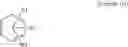
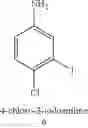
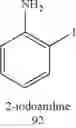
In yet still another preferred embodiment, said corresponding ortho-halogenated compound is selected from 4-chloro-2-iodoaniline, 2-iodoaniline, 4-bromo-2-iodoaniline, 4-iodo-2,6-dimethylaniline, 3-iodobenzaldehyde, 2-iodophenol, 2-amino-3-iodobenzamide, 2,6-diethyl-4-iodoaniline, 4-chloro-2,6-dimethylaniline and 4-bromo-2,6-dimethylaniline.
In yet still another preferred embodiment, said solid acid catalyst is selected from SiO2, MoO3/TiO2, MoO3/TiO2, WO3/TiO2, WO3/TiO2 and 5% Mo Si/Al (7.5) Impr.
In yet still another preferred embodiment, said solvent is selected from ethylene dichloride, methanol, hexane, toluene, dichloromethane, ethanol, higher alcohols, dimethylsulfoxide, dioxane, dimethylformamide, acetone, diethyl ether, butanol and benzylalcohol.
In yet still another preferred embodiment, selectivity towards said corresponding ortho-halogenated aromatic compound is in the range of 50 to 100%.
In yet still another preferred embodiment, said process is carried out in batch mode or continuous mode.
DETAILED DESCRIPTION OF THE INVENTION
The invention will now be described in detail in connection with certain preferred and optional embodiments, so that various aspects thereof may be more fully understood and appreciated.
In the view of above, the present invention provides an improved one pot, one step process for the halogenation of compound of formula (II);
Wherein;
R1 is selected from alkyl, amines, carbonyl containing compounds, halides, amides and acids;
R2 and R3 is selected from the hydrogen, halogen, alkyl, aryl and amine;
to afford corresponding halo compound of formula (I)
Wherein;
X is selected from chlorine, bromine, iodine;
R1 is selected from alkyl, amines, carbonyl containing compounds, halides, amides and acids;
R2 and R3 is selected from the hydrogen, halogen, alkyl, aryl and having improved yield and increased selectivity.
In an embodiment, the present invention provides an improved one pot, one step process for iodination of aromatics of compound of formula (II) to corresponding iodo compound of formula (I) in presence of suitable catalyst and solvent using I2 as iodinating agent having improved yield and increased selectivity.
In another embodiment, the present invention provides an improved one pot, one step process for the halogenation of substituted aromatic compound comprises addition of halogenating agent and solid acid catalyst to the mixture of substituted aromatic compound in solvent followed by stirring the reaction mixture at temperature in the range of 25 to 150° C. for the period in the range of 2 to 6 hrs to afford corresponding halogenated compound.
In preferred embodiment, said substituted aromatic compound is selected from aminoaromatic compound, hydroxy aromatic compound, aromatic aldehyde compound, halo substituted aromatics, amide substituted aromatic compound.
In another preferred embodiment, said aminoaromatic compound is selected from aniline, 4-Chloroaniline, 4-Bromoaniline, 2,6 dimethyl aniline, anthranilamide, 2,6 diethyl aniline.
In yet another preferred embodiment, wherein said hydroxy aromatic compound is selected from phenol.
In still another preferred embodiment, said aromatic aldehyde compound is benzaldehyde.
In yet still another preferred embodiment, said corresponding ortho-halogenated compound is selected from 4-chloro-2-iodoaniline, 2-iodoaniline, 4-bromo-2-iodoaniline, 4-iodo-2,6-dimethylaniline, 3-iodobenzaldehyde, 2-iodophenol, 2-amino-3-iodobenzamide, 2,6-diethyl-4-iodoaniline, 4-chloro-2,6-dimethylaniline and 4-bromo-2,6-dimethylaniline.
In yet still another preferred embodiment, said solid acid catalyst is selected from SiO2, MoO3/TiO2, MoO3/TiO2, WO3/TiO2, WO3/TiO2 and 5% Mo Si/Al (7.5) Impr.
In yet still another preferred embodiment, said solvent is selected from ethylene dichloride, methanol, hexane, toluene, dichloromethane, ethanol, higher alcohols, dimethylsulfoxide, dioxane, dimethylformamide, acetone, diethyl ether, butanol and benzylalcohol.
In yet still another preferred embodiment, selectivity towards said corresponding ortho-halogenated aromatic compound is in the range of 50 to 100%.
In yet still another preferred embodiment, said process is carried out in batch mode or continuous mode.
The halogenation is carried out in batch mode.
The halogenation is carried out in continuous mode in down-flow reactor.
The improved one pot, one step process for the halogenation of compound of formula (II) is to afford corresponding halo compound of formula (I) is depicted in scheme 1 below:
A range of heterogeneous solid acid catalysts are used for iodination of aromatics to corresponding iodo compounds with upto 97% conversion and 100% selectivity using I2 as iodinating agent and ethylene dichloride as solvent at only 80° C.
The following examples, which include preferred embodiments, will serve to illustrate the practice of this invention, it being understood that the particulars shown are by way of example and for purpose of illustrative discussion of preferred embodiments of the invention.
EXAMPLES
Following examples are given by way of illustration and therefore should not be construed to limit the scope of the invention.
Example: 1 General Procedure for the Synthesis of Halo Compound of Formula (I)
A 25 mL two-necked round bottom flask was fitted with condenser. Initially 0.1 g substrate (0.001 mol) was added to the flask followed by 10 mL solvent. After this 0.28 g iodine (0.001 mol) was added to the same flask followed by addition of 0.02 g catalyst. The reaction was carried out at different temperatures (Table 1) for 2-6 hrs. After completion of the reaction, 5 mL water was added to the reaction flask to stop the reaction. The reaction was monitored by GC analysis.
The compounds which are used for the iodination of aromatics are listed in table 1 below:
| TABLE 1 |
| Liquid phase iodination of aromatics |
| Molar | % | |||||||
| ratio | Catalyst | |||||||
| of | loading | |||||||
| Ex | Temp, | Sub: | wrt | % | ||||
| no. | Substrate | Catalyst | ° C. | I2 | Solvent | substrate | Conv. | % Selectivity |
| 1 | SiO2 | 28° C. | 1:0.5 | Hexane | 10 | 45 | ||||
| 2 | 20% MoO3/ TiO2 | 65° C. | 1:1 | MeOH | 5 | 91 | ||||
| 3 | 2% WO3/ TiO2 | 68° C. | 1:0.5 | Hexane | 20 | 48 | #OP 22 | |||
| 4 | 20 wt % WO3/ SiO2 | 28° C. | 1:1.2 | EDC | 10 | 85 | ||||
| 5 | 20 mol % MoO3/ SiO2 | 28° C. | 1:1.2 | EDC | 10 | 65 | ||||
| 7 | 5% MoSi/ Al (7.5) Impr | 40° C. | 1:1.2 | EDC | 5 | 3 | ||||
| 8 | 20 wt % WO3/ SiO2 | 28° C. | 1:1.2 | MeOH | 20 | 11 | ||||
| 9 | 20 wt % WO3/ SiO2 | 65° C. | 1:1.2 | MeOH | 20 | 22 | ||||
| 10 | 20 wt % MO3/ SiO2 | 84° C. | 1:1.2 | EDC | 20 | 88 | #OP 15 | |||
| 11 | 20 wt % MO3/ SiO2 | 84° C. | 1:1.2 | EDC | 20 | 88 | ||||
| #OP = Other products |
Example 2: Catalyst Preparation
a) SiO2:
-
- In a typical procedure, SiO2 catalyst was synthesized by dissolving ES-40 (50.0 g) in IPA (35 mL) with constant stirring. To this solution 3 mL dil. NH4OH (2.5%) solution was added. The solution was stirred until white gel was obtained. The resultant gel was air dried and further calcined at 500° C. in air in a muffle furnace for 5 h.
b) 20% WO3/SiO2:
-
- In a typical procedure, 20 WS catalyst was synthesized by dissolving 5.31 g AMT in 10 mL distilled water. This solution was added drop wise to the dry IPA solution (35 mL) of ES-40 (50.0 g) with constant stirring. To this solution 3 mL dil. NH4OH (2.5%) solution was added. The solution was stirred until white gel was obtained. The resultant gel was air dried and further calcined at 500° C. in air in a muffle furnace for 5 h. Similarly catalysts with 1, 5, 10, 15, 25 and 30 wt % tungsten oxide loadings were prepared.
c) 20 mol % MoO3/SiO2:
-
- In a typical procedure, 20 m % MoO3/SiO2 catalyst was synthesized by dissolving 14.11 g of ABM in 40 ml of water at 80° C. This hot solution was added dropwise to a dry isopropyl alcohol solution of ethyl silicate-40 (48.0 g) with constant stirring. The resultant transparent greenish gel was air-dried and calcined at 500° C. in air in a muffle furnace for 12 h. Similarly, catalysts with 1, 10 and 30 mol % molybdenum oxide loading were prepared.
d) 20% MoO3/TiO2:
-
- In typical procedure Titanium(W) tetrabutoxide hydrolysed with deionized water (500 mL) and stirred vigorously for 10 min. The resulting titanium hydroxide precipitate separated by decantation and thoroughly washed with water until the alcohol generated during the hydrolysis of titanium alkoxide completely removes. Then precipitate dissolved in aqueous hydrogen peroxide (50%), which resulted in a very exothermic reaction. Additional water (200 mL) added to reduce the reaction rate and avoid the development of a highly viscous polymeric gel phase. A clear yellow solution formed within 30 min, the colour of which is characteristic of a titanium peroxo complex. To it added the aqueous solution of precursor MoO3 dropwise with stirring. Then the solution was kept overnight to form the uniform gel. After gelation air dried the gel, crushed it. The resulting powder dried in oven @ 100° C. then calcined @ 500° C. for 5 hr. (heating rate 2° C./min.).
e) 2% WO3/TiO2:
-
- In typical procedure Titanium(IV) tetrabutoxide hydrolysed with deionized water (500 mL) and stirred vigorously for 10 min. The resulting titanium hydroxide precipitate separated by decantation and thoroughly washed with water until the alcohol generated during the hydrolysis of titanium alkoxide completely removes. Then precipitate dissolved in aqueous hydrogen peroxide (50%), which resulted in a very exothermic reaction. Additional water (200 mL) added to reduce the reaction rate and avoid the development of a highly viscous polymeric gel phase. A clear yellow solution formed within 30 min, the colour of which is characteristic of a titanium peroxo complex. To it added the aqueous solution (in 50% H2O2) of precursor AMT dropwise with stirring. Then the solution was kept overnight to form the uniform gel. After gelation air dried the gel, crushed it. The resulting powder dried in oven @ 100° C. then calcined @ 500° C. for 5 hr. (heating rate 2° C./min.).
f) 5% Mo Si/Al (7.5) Impr:
-
- In typical procedure aluminium isopropoxide was taken in a beaker to this IPA was added, kept for stirring. To dissolve aluminium isopropoxide HNO3 was added ml by ml till it dissolves. In a separate beaker TEOS+IPA was taken, kept for stirring. To the clear solution of aluminium isopropoxide, TEOS+IPA mixture was added drop wise with stirring. The homogeneous mixture was stirred for 2 hrs then NH3 (1% NH3 in IPA) was added drop wise for gelation. The viscous liquid kept for gelation. Formed gel was oven dried at 60° C. The dried, grinded gel kept for calcination for 5 hr at 500° C. Then aqueous solution of ammonium heptamolybdate added to silica alumina support in an impregnation method. This mixture was stirred on hot plate to dry with stirring. The dried catalyst was calcined at 500° C. for 5 hr.
Example 3: Recycle Study for Liquid Phase Iodination of Aromatics
A 250 mL two-necked round bottom flask fitted with condenser was charged 1 g 2,6 Dimethyl aniline (0.01 mol), 2.5 g iodine (0.01 mol), 100 mL 1,2-dichloroethane, and 0.2 g catalyst. The flask was flushed with argon. The reaction was carried out at room temperature (Table 2) for 1 hr. The reaction was monitored by GC analysis. The reaction mixture decanted leaving catalyst in the RB. The RB was charged with fresh reactants and it was stirred for 1 hr. The cycle was repeated 3 times.
| TABLE 2 |
| Recycle study |
| Sr. No. | Recycle no. | % conversion |
| 1 | 0 | 77 |
| 2 | 1 | 74 |
| 3 | 2 | 78 |
| 4 | 3 | 76 |
Example 4: Continuous Flow Iodination
In 10 cm fixed bed reactor 2 g 20% WO3/SiO2 was loaded. Reaction mixture containing 1 g aniline (0.01 mol), 2.8 g Iodine (0.01 mol) dissolved in 50 mL ethylene dichloride passed through the reactor at the flow rate of 3.5 ml/hr. Samples were collected at regular intervals and analyzed with GC. (Table 3)
| TABLE 3 |
| Continuous flow iodination |
| Sr. No. | Sample (hrs) | % conversion |
| 1 | 0.25 | 69 |
| 2 | 0.5 | 68 |
| 3 | 0.75 | 68 |
| 4 | 1 | 70 |
| 5 | 3.5 | 69 |
| 6 | 7 | 68 |
| 7 | 18 | 70 |
Example 5: Bromination of Aniline
A 25 mL two-necked round bottom flask was fitted with condenser. Initially 0.1 g aniline (0.001 mol) was added to the flask followed by 10 mL solvent. After this 0.1 g bromine (0.0012 mol) was added to the same flask followed by addition of 0.02 g 20% WO3/SiO2 catalyst. The reaction was carried out at room temperature (25° C.) for 10 mins. The reaction was monitored by GC analysis. There was 100% aniline conversion observed with 40, 50 and 10% selectivity for 2-bromo aniline, 4-bromo aniline and 2,4-dibromo aniline respectively.
Example 6: Chlorination of Aniline
A 25 mL two-necked round bottom flask was fitted with condenser. Initially 0.1 g aniline (0.001 mol) was added to the flask followed by 10 mL solvent. After this 0.02 g of catalyst 20% WO3/SiO2 added. Later 0.027 g of chlorine (0.001 mol) gas was passed through the reaction flask. The reaction was carried out at room temperature (25° C.) for 10 mins. The reaction was monitored by GC analysis. There was 40% aniline conversion observed with 40 and 60% selectivity for 2-chloro aniline and 4-chloro aniline respectively.
Example 7: Chlorination of Aniline
A 25 mL two-necked round bottom flask was fitted with condenser. Initially 0.1 g aniline (0.001 mol) was added to the flask followed by 10 mL solvent. After this 0.02 g of catalyst 20% WO3/SiO2 added. Later 0.04 g of chlorine (0.0015 mol) gas was passed through the reaction flask. The reaction was carried out at room temperature (25° C.) for 60 mins. The reaction was monitored by GC analysis. There was 100% aniline conversion observed with 40 and 60% selectivity for 4-chloro aniline and 2,4-dichloro aniline respectively.
Advantages of the Invention
- 1. Halogenation of anilines can be carried out with >90% conversion in only 30 mins.
- 2. Very mild reaction conditions, No harmful or hazardous reagents needed for the reaction.
- 3. Ease of catalyst handling due to heterogeneous catalyst working at mild reaction conditions, Catalysts could be recycled very easily by just filtration or decantation.
- 4. No decrease in the conversion as well as selectivity in recycle runs.
- 5. No need to regenerate the catalyst or activate the catalyst for next cycles.
- 6. The iodination carried out in continuous mode in down-flow reactor at room temperature (at 25-28° C.).
Claims
1. An improved one pot, one step process for the halogenation of substituted aromatic compound comprises addition of halogenating agent and solid acid catalyst to the mixture of substituted aromatic compound in solvent followed by stirring the reaction mixture at temperature in the range of 25 to 150° C. for the period in the range of 2 to 6 hrs to afford corresponding halogenated compound.
2. The process as claimed in claim 1, wherein said substituted aromatic compound is selected from aminoaromatic compound, hydroxy aromatic compound, aromatic aldehyde compound, halo substituted aromatics, amide substituted aromatic compound.
3. The process as claimed in claim 2, wherein said aminoaromatic compound is selected from aniline, 4-Chloroaniline, 4-Bromoaniline, 2,6 dimethyl aniline, anthranilamide, 2,6 diethyl aniline.
4. The process as claimed in claim 2, wherein said hydroxy aromatic compound is selected from phenol.
5. The process as claimed in claim 2, wherein said aromatic aldehyde compound is benzaldehyde.
6. The process as claimed in claim 1, wherein said corresponding ortho-halogenated compound is selected from 4-chloro-2-iodoaniline, 2-iodoaniline, 4-bromo-2-iodoaniline, 4-iodo-2,6-dimethylaniline, 3-iodobenzaldehyde, 2-iodophenol, 2-amino-3-iodobenzamide, 2,6-diethyl-4-iodoaniline, 4-chloro-2,6-dimethylaniline and 4-bromo-2,6-dimethylaniline.
7. The process as claimed in claim 1, wherein said solid acid catalyst is selected from SiO2, MoO3/TiO2, MoO3/TiO2, WO3/TiO2, WO3/TiO2 and Mo Si/Al (7.5) Impr.
8. The process as claimed in claim 1, wherein said solvent is selected from ethylene dichloride, methanol, hexane, toluene, dichloromethane, ethanol, higher alcohols, dimethylsulfoxide, dioxane, dimethylformamide, acetone, diethyl ether, butanol and benzylalcohol.
9. The process as claimed in claim 1, wherein selectivity towards said corresponding ortho-halogenated compound is in the range of 50 to 100%.
10. The process as claimed in claim 1, wherein said process is carried out in batch mode or continuous mode.
Images & Drawings included:





Sources:
- United States Patent and Trademark Office - verify current appl. status at the USPTO↗
Recent applications in this class:
- » 20250171395 2025-05-29
PROCESS FOR THE PREPARATION OF AMPHETAMINE AND DERIVATIVES THEREOF - » 20240018090 2024-01-18
Processes for the Preparation of Fenfluramine - » 20230062431 2023-03-02
Preparation method of 4-(heptafluoro-2-propyl)-2-trifluoromethylaniline and application thereof - » 20220251023 2022-08-11
Method for preparing amantadine - » 20220177411 2022-06-09
PRODUCTION METHOD FOR NITROGEN-CONTAINING FLUORINE-CONTAINING COMPOUND - » 20220048847 2022-02-17
PROCESS FOR PREPARING SUBSTITUTED ANILINES - » 20150329472 2015-11-19
Halogenated aniline and method for producing same - » 20150210625 2015-07-30
PROCESSES FOR THE PREPARATION OF 5-HT2C RECEPTOR AGONISTS - » 20140142339 2014-05-22
Method for preparing fluoroacylated arylamine - » 20130338400 2013-12-19
Process for the selective meta-chlorination of alkylanilines
Recent applications for this Assignee:
- » 20250289849 2025-09-18
PEPTIDE TO TREAT ALPHA-SYNUCLEIN AMYLOID BASED DISORDERS - » 20250201811 2025-06-19
N-DOPED SODIOPHILIC CARBON ANODE FROM POLYMER FOR SODIUM BATTERIES - » 20240279176 2024-08-22
SUBSTITUTED TRICYCLIC HETEROCYCLIC COMPOUNDS AS METALLO-BETA-LACTAMASE INHIBITORS - » 20240041772 2024-02-08
Sustained release formulations of - » 20230346860 2023-11-02
Synbiotic composition for improving immune response and antioxidant capacity during aging and a process for the preparation thereof - » 20230202953 2023-06-29
Fluid catalytic cracking of p-cresol dimer into phenolic monomers and process thereof - » 20230201815 2023-06-29
HOMOGENEOUS SINGLE SITE CATALYST AND ITS USE IN PREPARING LINEAR POLYETHYLENE - » 20230146664 2023-05-11
Kinetically enhanced engineered FnCas9 and its uses thereof - » 20230065184 2023-03-02
Light assisted, catalyst-free oxidation of aldehydes to carboxylic acids using carbon dioxide - » 20230044103 2023-02-09
Fluorinated-aliphatic hydrocarbon based stable anion-exchange membrane and its method of preparation thereof