Fiber-reinforced plastic component and method for producing same
US20190106159A1
2019-04-11
16/213,417
2018-12-07
✅ Patent granted
US 10,870,452 B2
2020-12-22
-
-
David Sample | Donald M Flores, Jr.
Crowell & Moring LLP
2038-12-07
Abstract:
A fiber-reinforced plastic component includes a three-dimensional component plastic member and at least one reinforcement fiber rod. The three-dimensional component plastic member determines at least parts of a shape of the plastic component. The three-dimensional component plastic member has at least one void which is open to at least one side and in which the at least one reinforcement fiber rod is placed.
Assignee:
- BAYERISCHE MOTOREN WERKE AKTIENGESELLSCHAFT 3,338 🇩🇪 Munich, Germany
Applicant:
Interested in similar patents?
Get notified when new applications in this technology area are published.
Classification:
B29C66/7212 » CPC further
General aspects of processes or apparatus for joining preformed parts characterised by the composition, physical properties or the structure of the material of the parts to be joined; Joining with non-plastics material characterised by the structure of the material of the parts to be joined; Fibre-reinforced materials characterised by the composition of the fibres
B29C66/526 » CPC further
General aspects of processes or apparatus for joining preformed parts; General aspects of joining tubular articles; General aspects of joining long products, i.e. bars or profiled elements; General aspects of joining single elements to tubular articles, hollow articles or bars; General aspects of joining several hollow-preforms to form hollow or tubular articles; Joining tubular articles, profiled elements or bars; Joining single elements to tubular articles, hollow articles or bars; Joining several hollow-preforms to form hollow or tubular articles; Joining tubular articles, bars or profiled elements Joining bars
B29C65/00 IPC
Joining of preformed parts ; Apparatus therefor
B33Y80/00 » CPC further
Products made by additive manufacturing
B29L2031/001 » CPC further
Other particular articles Profiled members, e.g. beams, sections
B29C66/71 » CPC further
General aspects of processes or apparatus for joining preformed parts characterised by the composition, physical properties or the structure of the material of the parts to be joined; Joining with non-plastics material characterised by the composition of the plastics material of the parts to be joined
B29C66/73921 » CPC further
General aspects of processes or apparatus for joining preformed parts characterised by the composition, physical properties or the structure of the material of the parts to be joined; Joining with non-plastics material characterised by the intensive physical properties of the material of the parts to be joined, by the optical properties of the material of the parts to be joined, by the extensive physical properties of the parts to be joined, by the state of the material of the parts to be joined or by the material of the parts to be joined being a thermoplastic or a thermoset characterised by the material of the parts to be joined being a thermoplastic or a thermoset characterised by the material of at least one of the parts being a thermoplastic characterised by the materials of both parts being thermoplastics
B29C66/91411 » CPC further
General aspects of processes or apparatus for joining preformed parts; Measuring or controlling the joining process by measuring or controlling the temperature, the heat or the thermal flux by controlling or regulating the temperature, the heat or the thermal flux by controlling or regulating the temperature of the parts to be joined, e.g. the joining process taking the temperature of the parts to be joined into account
B29C66/91931 » CPC further
General aspects of processes or apparatus for joining preformed parts; Measuring or controlling the joining process by measuring or controlling the temperature, the heat or the thermal flux characterised by specific temperature, heat or thermal flux values or ranges in explicit relation to another variable, e.g. temperature diagrams in explicit relation to another temperature, e.g. to the softening temperature or softening point, to the thermal degradation temperature or to the ambient temperature in explicit relation to the fusion temperature or melting point of the material of one of the parts to be joined
B62D29/04 » CPC main
Superstructures, characterised by the material thereof predominantly of synthetic material
B29C65/02 » CPC further
Joining of preformed parts ; Apparatus therefor by heating, with or without pressure
B29C66/721 » CPC further
General aspects of processes or apparatus for joining preformed parts characterised by the composition, physical properties or the structure of the material of the parts to be joined; Joining with non-plastics material characterised by the structure of the material of the parts to be joined Fibre-reinforced materials
B29C66/7392 » CPC further
General aspects of processes or apparatus for joining preformed parts characterised by the composition, physical properties or the structure of the material of the parts to be joined; Joining with non-plastics material characterised by the intensive physical properties of the material of the parts to be joined, by the optical properties of the material of the parts to be joined, by the extensive physical properties of the parts to be joined, by the state of the material of the parts to be joined or by the material of the parts to be joined being a thermoplastic or a thermoset characterised by the material of the parts to be joined being a thermoplastic or a thermoset characterised by the material of at least one of the parts being a thermoplastic
B29L2031/30 » CPC further
Other particular articles Vehicles, e.g. ships or aircraft, or body parts thereof
Y10T428/249921 » CPC further
Stock material or miscellaneous articles Web or sheet containing structurally defined element or component
B29C66/532 » CPC further
General aspects of processes or apparatus for joining preformed parts; General aspects of joining tubular articles; General aspects of joining long products, i.e. bars or profiled elements; General aspects of joining single elements to tubular articles, hollow articles or bars; General aspects of joining several hollow-preforms to form hollow or tubular articles; Joining tubular articles, profiled elements or bars; Joining single elements to tubular articles, hollow articles or bars; Joining several hollow-preforms to form hollow or tubular articles; Joining single elements to tubular articles, hollow articles or bars Joining single elements to the wall of tubular articles, hollow articles or bars
B29C66/61 » CPC further
General aspects of processes or apparatus for joining preformed parts; General aspects of joining tubular articles; General aspects of joining long products, i.e. bars or profiled elements; General aspects of joining single elements to tubular articles, hollow articles or bars; General aspects of joining several hollow-preforms to form hollow or tubular articles Joining from or joining on the inside
B33Y10/00 » CPC further
Processes of additive manufacturing
Description
CROSS REFERENCE TO RELATED APPLICATIONS
This application is a continuation of PCT International Application No. PCT/EP2017/061107, filed May 10, 2017, which claims priority under 35 U.S.C. § 119 from German Patent Application No. 10 2016 210 095.5, filed Jun. 8, 2016, the entire disclosures of which are herein expressly incorporated by reference.
BACKGROUND AND SUMMARY OF THE INVENTION
The embodiments of the invention relate to a fiber-reinforced plastic component and to a method for producing said fiber-reinforced plastic component.
Fiber-reinforced plastic components have been used for many years in various fields of technology, inter alia also intensively in the automotive industry. Said fiber-reinforced plastic components have a high potential in lightweight construction and as compared to other materials such as, for example, metals or non-reinforced plastics, can absorb high tensile forces on account of the incorporated fibers. The weight-specific advantages of fiber-reinforced plastics herein can be best utilized when the fibers in the matrix material are laid out so as to be correctly adapted to the load path, this requiring a construction of the material that is correctly adapted to the stress.
Reinforcement fiber rods are used in the technology of fiber-composite components and differ from fiber tiers or woven fiber fabrics in that said reinforcement fiber rods are formed by a multiplicity of fibers that are continuous in one direction, that is to say have been shaped to a predetermined rod shape by the fibers. In most instances round, rectangular, or hexagonal rods having a height-to-width ratio of more than or equal to 1:10 are used herein as a cross-sectional shape of the rod. In the case of lower height-to-width ratios this is not a shaped fiber rod but a type of scrim.
The use in a skeleton construction mode with subsequent processing by injection molding for fabricating components has also proven advantageous for the use of fiber rods, but the investment costs for the tooling for producing components of this type are comparatively high.
The embodiments of the invention are therefore based on the object of providing fiber-reinforced plastic components and a method for producing the latter, in which the positive effect of the reinforcement fiber rods are utilizable in a more cost-effective manner.
This and other objects are achieved by a fiber-reinforced component having a three-dimensional component plastic member which determines at least parts of a shape of the plastic component, and at least one reinforcement fiber rod is proposed. The component plastic member herein has at least one void which is open to at least one side and in which the at least one reinforcement fiber rod is placed.
Carbon fiber rods having a plastics material matrix are in particular used as reinforcement rods. The component plastic member depicts at least one part of the final shape of the fiber-reinforced plastic component to be fabricated.
As a cost-effective embodiment it has proven positive for the component plastic member to be produced in a generative or additive, respectively, manufacturing method. The manufacturing herein is performed directly from shapeless, in most instances liquid or pulverulent, material by means of chemical and/or physical processes based on data models which are stored in the computer. Selective laser sintering in particular is used in order for the three-dimensional shape to be generated. Suitable materials for the component plastic member are, for example, polyamide 6 or polyamide 12.
In one exemplary embodiment it is provided for the fiber-reinforced plastic component that the at least one void is configured by a tub-shaped or groove-shaped depression. Depressions of this type are particularly suitable for placing the reinforcement fiber rods. Moreover, said depressions can be dimensioned so as to correspond to the measurements of the reinforcement fiber rods such that the reinforcement fiber rods fully or substantially fully fill the voids. Alternatively however, it is also possible for the void to be configured so as to be open toward two sides. In this instance, the reinforcement fiber rod placed in the void is held, for example, by way of a tool until the reinforcement rod is fixed to the component plastic member. The reinforcement rod in this instance is accessible from two sides in the finished component.
The component plastic member can solely, or conjointly with further components, form the external shape of the fiber-reinforced plastic component. It is provided according to one variant that the fiber-reinforced plastic component in addition to the component plastic member has at least one mating member which is configured for closing the open side of the at least one void. In a refinement, the mating member, at least in portions in the region of the at least one void, has a shape that is complementary to the component plastic member. The mating member, or the mating members, respectively, and the component plastic member conjointly form the fiber-reinforced plastic component. The reinforcement fiber rods extend in the depressions that are enclosed by the member elements and enhance the rigidity of the plastic component.
An embodiment in which the reinforcement fiber rods are pressed through the mating member into the respective void is likewise favorable. It is in particular provided that the reinforcement fiber rods are connected in a materially integral manner to the component plastic member. This can be implemented, for example, by heating the reinforcement fiber rods or the component plastic member according to the production methods described hereunder.
In order for the fiber-reinforced plastic component to be reinforced across an enlarged area, a multiplicity of voids which extend in each case in a parallel direction are provided in the component plastic member. Herein one reinforcement fiber rod is placed in each of the multiplicity of voids. An advantageous reinforcement, particularly in a predetermined load direction, can be achieved by way of the corresponding configuration. It can moreover be provided for the voids and the fiber rods placed therein to be aligned so as to indeed run in parallel but to be spaced apart in the other two directions. This means that the reinforcement fiber rods within the plastic component in the space run so as to be spaced apart from one another in two planes that are mutually perpendicular. Moreover, the open sides of the voids can point in opposite directions.
In an alternative variant, the fiber-reinforced plastic component is characterized in that a multiplicity of voids which form a framework structure are provided in the component plastic member, and one reinforcement fiber rod is placed in each of the multiplicity of voids. The framework structure by way of reinforcement rods serves for enhancing the rigidity in multiple directions.
Also disclosed herein is a method for producing the aforedescribed fiber-reinforced plastic component, wherein the at least one reinforcement fiber rod is fastened to the component plastic member in that a surface of the component plastic member in the region of the at least one void is heated to a range of the melting temperature of the component plastic member, and the at least one reinforcement fiber rod is placed onto the heated surface such that the at least one fiber rod is welded to the component plastic member.
In a variant of the method it is provided that the at least one reinforcement fiber rod is fastened to the component plastic member in that the at least one reinforcement fiber rod is heated to a melting temperature of the component plastic member, and the at least one heated reinforcement fiber rod is placed into the at least one void of the component plastic member such that the at least one reinforcement fiber rod is welded to the component plastic member.
The materially integral connection between the reinforcement fiber rods in the voids of the component plastic member can be achieved by both methods. The heating of the surface or of the reinforcement fiber rod can be implemented, for example, by way of a laser, of infrared radiation, or by infeeding hot air.
In a variant of the method, at least the process of placing the reinforcement fiber rods is automated, preferably in that the reinforcement fiber rods are placed into the voids and fastened therein in a robotically guided manner. Compressing and/or applying the aforedescribed mating member, for example as a type of lid, can also be performed in a robotically supported manner. The manufacturing time is significantly shortened on account thereof.
BRIEF DESCRIPTION OF THE DRAWING
Other objects, advantages and novel features of the present invention will become apparent from the following detailed description of one or more preferred embodiments when considered in conjunction with the accompanying drawing in which:
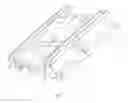
FIG. 1 is a perspective illustration of a component plastic member having reinforcement fiber rods for a fiber-reinforced plastic component.
DETAILED DESCRIPTION OF THE DRAWING
A three-dimensional component plastic member 1 of a fiber-reinforced plastic component is illustrated in a perspective view in FIG. 1. The component plastic member 1 thus forms part of the shape of the plastic component.
The component plastic member 1 is produced by the 3D printing method and has a multiplicity of voids that extend in parallel and are configured as a tub-shaped depression 3. The tub-shaped depressions 3 are in each case open to one side, wherein the open side in the width direction in an alternating manner points in a first and a second axial direction. Both the depressions 3 as well as the reinforcement fiber rods 4 placed therein run in parallel in a longitudinal direction, but in spatial terms are spaced apart in an alternating manner both in the width direction as well as in the axial direction.
The component plastic member 1 has a multiplicity of structural elements 2 which connect the depressions 3 and per se form substantial parts of the component plastic member 1. The depressions 3 for reasons of production methodology are configured so as to be integral on the component plastic member 1. One reinforcement fiber rod 4 is placed in each depression 3. The reinforcement fiber rods 4 are penetrated by a plastic matrix. Said reinforcement fiber rods 4 substantially have the cross-sectional shape of the depressions 3 and in spatial terms fill the latter with the exception of a small peripheral spacing of less than 10% of the cross-sectional area of the depression toward the respective open side. This also means that the reinforcement fiber rods 4 extend across the entire length of the depressions 3. The reinforcement rods 4 are fastened in a materially integral manner in the depressions 3 by one of the aforedescribed methods. The illustration of a mating member has been dispensed with in FIG. 1; however, said mating member could be readily added so as to, conjointly with the component plastic member 1, form the fiber-reinforced plastic component. Mating members can also be disposed on both axial sides, the depressions 3 being closed on account thereof.
The embodiments of the invention are not limited to the preferred exemplary embodiments stated above. Rather, a number of variants which make use of the illustrated solution even for embodiments of a fundamentally different nature are conceivable. For example, the reinforcement fiber rods do not have to extend in a linear manner but can run in the component plastic member so as to correspond to curved designs of voids.
The foregoing disclosure has been set forth merely to illustrate the embodiments of the invention and is not intended to be limiting. Since modifications of the disclosed embodiments incorporating the spirit and substance of the invention may occur to persons having ordinary skill in the art, the embodiments of the invention should be construed to include everything within the scope of the appended claims and equivalents thereof.
Claims
What is claimed is:1. A fiber-reinforced plastic component comprising:
a three-dimensional component plastic member which determines at least parts of a shape of the plastic component; and
at least one reinforcement fiber rod, wherein
the three-dimensional component plastic member has at least one void which is open to at least one side and in which the at least one reinforcement fiber rod is placed.
2. The fiber-reinforced plastic component as claimed in claim 1, wherein the component plastic member is produced in a generative or additive manufacturing method.
3. The fiber-reinforced plastic component as claimed in claim 2, wherein the at least one void is configured by a tub-shaped or groove-shaped depression.
4. The fiber-reinforced plastic component as claimed in claim 3, wherein the at least one reinforcement fiber rod fills the at least one void.
5. The fiber-reinforced plastic component as claimed in claim 4, wherein said fiber-reinforced plastic component in addition to the component plastic member has at least one mating member which is configured for closing the open side of the at least one void.
6. The fiber-reinforced plastic component as claimed in claim 5, wherein the at least one mating member, at least in portions in the region of the at least one void, has a shape that is complementary to the component plastic member.
7. The fiber-reinforced plastic component as claimed in claim 6, wherein the reinforcement fiber rod is pressed into the at least one void via the mating member.
8. The fiber-reinforced plastic component as claimed in claim 7, wherein the at least one reinforcement fiber rod is connected in a materially integral manner to the component plastic member.
9. The fiber-reinforced plastic component as claimed in claim 8, wherein a multiplicity of voids which extend in each case in a parallel direction are provided in the component plastic member, and one reinforcement fiber rod is placed in each of the multiplicity of voids.
10. The fiber-reinforced plastic component as claimed in claim 9, wherein a multiplicity of voids which form a framework structure are provided in the component plastic member, and one reinforcement fiber rod is placed in each of the multiplicity of voids.
11. A method for producing a fiber-reinforced plastic component, comprising:
providing a three-dimensional component plastic member which determines at least parts of a shape of the fiber-reinforced plastic component; and
providing at least one reinforcement fiber rod, wherein
the three-dimensional component plastic member has at least one void which is open to at least one side and in which the at least one reinforcement fiber rod is placed,
the at least one reinforcement fiber rod is fastened to the component plastic member in that a surface of the component plastic member in the region of the at least one void is heated to a range of the melting temperature of the component plastic member, and
the at least one reinforcement fiber rod is placed onto the heated surface such that the at least one fiber rod is welded to the component plastic member.
12. The method for producing a fiber-reinforced plastic component as claimed in claim 11, wherein the at least one reinforcement fiber rod is fastened to the component plastic member, the at least one reinforcement fiber rod is heated to a melting temperature of the component plastic member, and the at least one heated reinforcement fiber rod is placed into the at least one void of the component plastic member such that the at least one reinforcement fiber rod is welded to the component plastic member.
13. The method for producing a fiber-reinforced plastic component as claimed in 12, wherein the at least one reinforcement fiber rod is placed into the at least one void in a robotically guided manner.
Images & Drawings included:

Sources:
- United States Patent and Trademark Office - verify current appl. status at the USPTO↗
Similar patent applications:
- » 20090008836
METHOD FOR PRODUCING FIBER-REINFORCED PLASTIC COMPONENTS - » 20150210018
DEVICE AND METHOD FOR PRODUCING FIBER-REINFORCED PLASTICS COMPONENTS - » 20170348925
Method for producing fiber-reinforced plastic components - » 20170334149
Method for producing fiber-reinforced plastic components - » 20180065326
Process arrangement and a method for producing a fiber-reinforced plastic component - » 20170066161
Method for producing a fiber-reinforced plastic component - » 20180050504
Processing arrangement and a method for producing a fiber-reinforced plastic component - » 20170326821
Process arrangement and method for producing a fiber-reinforced plastic component - » 20200171762
METHOD FOR PRODUCING A FIBER-REINFORCED PLASTIC COMPONENT - » 20220274357
Method for Producing a Fiber-Reinforced Plastic Component and Fiber-Reinforced Component
Recent applications in this class:
- » 20240199141 2024-06-20
Vehicle body component - » 20240174302 2024-05-30
BODY PANEL ASSEMBLY - » 20230286596 2023-09-14
VEHICLE COMPONENT AND METHOD - » 20230219635 2023-07-13
VEHICLE BODY STRUCTURAL MEMBER - » 20230202584 2023-06-29
REINFORCING ELEMENT FOR REINFORCING A STRUCTURAL ELEMENT - » 20220297768 2022-09-22
Frame which is made of fiber reinforced composite - » 20220194487 2022-06-23
Exterior member for vehicle and method for manufacturing the same - » 20220135144 2022-05-05
VEHICLE STRUCTURE AND METHOD FOR COATING VEHICLE - » 20220081044 2022-03-17
Underbody shield compositions and articles that provide enhanced peel strength and methods of using them - » 20210362787 2021-11-25
BODYWORK PART COMPRISING A BACKLIT ZONE
Recent applications for this Assignee:
- » 20250236179 2025-07-24
METHOD FOR OPERATING A BRAKE CONTROL SYSTEM, BRAKE CONTROL SYSTEM, COMPUTER PROGRAM, AND COMPUTER-READABLE STORAGE MEDIUM - » 20250109792 2025-04-03
Mounting assembly for a coupler mechanism of a motor vehicle - » 20250077042 2025-03-06
Method for increasing safety during the operation of a device - » 20250042351 2025-02-06
Arrangement for Holding a Sidewall Element on a Bodyshell Part of a Vehicle, Bracket and Vehicle - » 20250026428 2025-01-23
Handlebar Assembly for a Motor Vehicle, and Motor Vehicle Having a Handlebar Assembly of This Kind - » 20250020305 2025-01-16
Decorative element for a motor vehicle, and production method for a decorative element - » 20250001843 2025-01-02
Motor Vehicle With a Side Door - » 20240426445 2024-12-26
Motor Vehicle Lighting Module - » 20240383554 2024-11-21
Leaning vehicle - » 20240383416 2024-11-21
Motor vehicle having a plurality of control devices which provide different vehicle functions in the motor vehicle and method for configuring the control devices and control device