Systems and methods for providing L-band RF architectures
US20190113616A1
2019-04-18
16/162,237
2018-10-16
✅ Patent granted
US 11,194,041 B2
2021-12-07
-
-
Vladimir Magloire | Nuzhat Pervin
Dickinson Wright PLLC
2039-06-28
Abstract:
Various communication systems may benefit from suitable architectures. For example, L-band radio frequency (RF) architectures may be beneficial to systems including avionics systems. A system can include a mode-s function as well as a traffic alert and collision avoidance system function separate from the mode-s function. The system can further include a directional antenna in reception and transmission connection with the traffic alert and collision avoidance system function. The system can additionally include an omni-directional antenna in reception and transmission connection with the mode-s function.
Inventors:
- Robert John McCullen 2 🇺🇸 Queen Creek, AZ, United States
- Gregory Theodore Stayton 1 🇺🇸 Peoria, AZ, United States
Assignee:
- Aviation Communications & Surveillance Systems LLC 2 🇺🇸 Phoenix, AZ, United States
- AVIATION COMMUNIATION & SURVEILLANCE SYSTEMS LLC 2 🇺🇸 Phoenix, AZ, United States
Applicant:
Interested in similar patents?
Get notified when new applications in this technology area are published.
Classification:
G01S13/93 IPC
Systems using the reflection or reradiation of radio waves, e.g. radar systems; Analogous systems using reflection or reradiation of waves whose nature or wavelength is irrelevant or unspecified; Radar or analogous systems specially adapted for specific applications for anti-collision purposes
G01S13/785 » CPC further
Systems using the reflection or reradiation of radio waves, e.g. radar systems; Analogous systems using reflection or reradiation of waves whose nature or wavelength is irrelevant or unspecified; Systems using reradiation of radio waves, e.g. secondary radar systems; Analogous systems wherein pulse-type signals are transmitted discriminating between different kinds of targets, e.g. IFF-radar, i.e. identification of friend or foe Distance Measuring Equipment [DME] systems
G08G5/0021 » CPC further
Traffic control systems for aircraft, e.g. air-traffic control [ATC]; Arrangements for implementing traffic-related aircraft activities, e.g. arrangements for generating, displaying, acquiring or managing traffic information located in the aircraft
H04B7/18506 » CPC further
Radio transmission systems, i.e. using radiation field; Relay systems; Active relay systems; Space-based or airborne stations; Stations for satellite systems; Airborne stations Communications with or from aircraft, i.e. aeronautical mobile service
H04B7/185 IPC
Radio transmission systems, i.e. using radiation field; Relay systems; Active relay systems Space-based or airborne stations; Stations for satellite systems
G01S13/78 IPC
Systems using the reflection or reradiation of radio waves, e.g. radar systems; Analogous systems using reflection or reradiation of waves whose nature or wavelength is irrelevant or unspecified; Systems using reradiation of radio waves, e.g. secondary radar systems; Analogous systems wherein pulse-type signals are transmitted discriminating between different kinds of targets, e.g. IFF-radar, i.e. identification of friend or foe
G01S13/767 » CPC further
Systems using the reflection or reradiation of radio waves, e.g. radar systems; Analogous systems using reflection or reradiation of waves whose nature or wavelength is irrelevant or unspecified; Systems using reradiation of radio waves, e.g. secondary radar systems; Analogous systems wherein pulse-type signals are transmitted Responders; Transponders
G01S13/933 » CPC main
Systems using the reflection or reradiation of radio waves, e.g. radar systems; Analogous systems using reflection or reradiation of waves whose nature or wavelength is irrelevant or unspecified; Radar or analogous systems specially adapted for specific applications for anti-collision purposes of aircraft or spacecraft
G01S13/76 IPC
Systems using the reflection or reradiation of radio waves, e.g. radar systems; Analogous systems using reflection or reradiation of waves whose nature or wavelength is irrelevant or unspecified; Systems using reradiation of radio waves, e.g. secondary radar systems; Analogous systems wherein pulse-type signals are transmitted
G01S13/781 » CPC further
Systems using the reflection or reradiation of radio waves, e.g. radar systems; Analogous systems using reflection or reradiation of waves whose nature or wavelength is irrelevant or unspecified; Systems using reradiation of radio waves, e.g. secondary radar systems; Analogous systems wherein pulse-type signals are transmitted discriminating between different kinds of targets, e.g. IFF-radar, i.e. identification of friend or foe Secondary Surveillance Radar [SSR] in general
G08G5/0008 » CPC further
Traffic control systems for aircraft, e.g. air-traffic control [ATC]; Transmission of traffic-related information to or from an aircraft with other aircraft
G08G5/0013 » CPC further
Traffic control systems for aircraft, e.g. air-traffic control [ATC]; Transmission of traffic-related information to or from an aircraft with a ground station
G08G5/045 » CPC further
Traffic control systems for aircraft, e.g. air-traffic control [ATC]; Anti-collision systems Navigation or guidance aids, e.g. determination of anti-collision manoeuvers
G08G5/04 IPC
Traffic control systems for aircraft, e.g. air-traffic control [ATC] Anti-collision systems
H01Q21/28 » CPC further
Antenna arrays or systems Combinations of substantially independent non-interacting antenna units or systems
G08G5/00 IPC
Traffic control systems for aircraft, e.g. air-traffic control [ATC]
G08G5/0078 » CPC further
Traffic control systems for aircraft, e.g. air-traffic control [ATC]; Surveillance aids for monitoring traffic from the aircraft
Description
CROSS-REFERENCE TO RELATED APPLICATION
This application is a non-provisional, and claims the benefit and priority of, U.S. Provisional Patent Application No. 62/573,096, filed Oct. 16, 2017, the entirety of which is hereby incorporated herein by reference.
BACKGROUND
Field
Various communication systems may benefit from suitable architectures. For example, L-band radio frequency (RF) architectures may be beneficial to systems including avionics systems.
Related Art
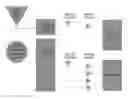
Use of a traffic alert and collision avoidance system (TCAS) directional antenna for a Mode-S function currently requires four Mode-S transmitters and four Mode-S receivers. FIG. 1 illustrates a current system for use of a TCAS directional antenna for the Mode-S function. The four Mode-S transmitters must maintain the same RF phase for the Mode-S Omni directional antenna pattern. This configuration needs initial and constant phase adjustment.
Again with reference to FIG. 1, the switching network using the TCAS directional antenna is more complex to switch out the four TCAS receivers and transmitters. Additionally, switching more pin diodes uses more power, thereby increasing heat production. As a result, TCAS system reliability typically declines due to complexity and unnecessary heating.
In the L-band RF architecture illustrated in FIG. 1, use of the TCAS directional antenna for the mode S function requires four mode S transmitters and four mode S receivers. The four mode S transmitters must maintain the same RF phase for the mode S omni antenna pattern. This may lead to needing both initial and on-going phase adjustments. Furthermore, the switching network using the TCAS directional antenna may be complex in order to switch out the four TCAS receivers and TCAS transmitters. Switching more pin diodes may use more power and may increase heating. The additional complexity and heating may decrease TCAS system reliability.
SUMMARY
According to certain embodiments of the present invention, a system can include a mode-s function. The system can also include a traffic alert and collision avoidance system function separate from the mode-s function. The system can further include a directional antenna in reception and transmission connection with the traffic alert and collision avoidance system function. The system can additionally include an omni-directional antenna in reception and transmission connection with the mode-s function.
BRIEF DESCRIPTION OF THE DRAWINGS
The accompanying drawings are provided for purposes of illustration and not by way of limitation.
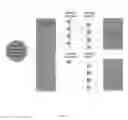
FIG. 1 illustrates a current system for use of a TCAS directional antenna for the Mode-S function.
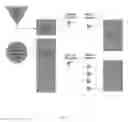
FIG. 2 illustrates an improved and simplified L-band RF architecture, according to certain embodiments.
DETAILED DESCRIPTION
Certain embodiments of the present invention, as exemplified by reference to FIG. 2, provide for an improved and simplified L-Band RF architecture. Thus, FIG. 2 illustrates an improved and simplified L-band RF architecture, according to certain embodiments.
This architecture may use an omnidirectional top L-Band antenna. This may enable use of one Mode-S transmitter and one Mode-S receiver. This configuration may also have the benefit of eliminating the need for phase adjustment.
The switching network using the omnidirectional L-Band antenna can be simplified since only one Mode-S transmitter and receiver may be used. Moreover, switching fewer pin diodes may result in using less power and decreasing heat generation. As a result, TCAS system reliability may increase due to reduced overall complexity and heat generation. One transmitter can be used for the L-Band frequencies of TCAS, Mode-S and DME.
Various embodiments of the present invention can be implemented in a variety of ways. For example, a system can include a mode-s function. In this context, a “function” can include computer hardware and communication hardware. The computer hardware may be any suitable processors, such as multiple core processors, a field programmable gate array (FPGA), or an application specific integrated circuit (ASIC). The communication hardware can include interface cards, power amplifiers, cabling, receivers, transmitters, and transceivers. The function can also include computer memory including a non-transitory computer-readable medium. The system can store a program of instructions on such memory, and can execute the program for example to accomplish the switching procedures mentioned above.
The system can also include a traffic alert and collision avoidance system function separate from the mode-s function. In terms of being separate, the traffic alert and collision avoidance system function can be on a separate line replaceable unit (LRU), on a separate card, or on the same card, but with dedicated hardware. The traffic alert and collision avoidance system function can be any collision avoidance or alerting system function, such as a TCAS-I, a TCAS-II, a traffic advisory system (TAS), or an automated dependent surveillance B (ADS-B) advisory system. Any other similar or equivalent systems can also be included within the general category of collision avoidance or alerting systems.
The system can further include a directional antenna in reception and transmission connection with the traffic alert and collision avoidance system function. The system can additionally include an omni-directional antenna in reception and transmission connection with the mode-s function.
The mode-s function can also include a distance measuring equipment (DME) function.
In certain embodiments, only a single transmitter and a single receiver are provided between the mode-s function and the omni-directional antenna. The single transmitter can be a 1090 MHz transmitter, with normal design tolerances regarding the frequency of transmission. The single receiver can be a 1030 Mhz receiver, with normal design tolerances regarding the frequency of reception.
The omni-directional antenna can be a mode-s omni-directional antenna. This may be an omni-directional antenna suitable for the transmission and reception of mode-s signals.
The directional antenna can be a four port directional antenna. More specifically, in certain embodiments, the four port directional antenna can be a four port 90 degree beam directional antenna.
The simplified L-band RF architecture according to certain embodiments of the present invention may make use of an omni top L-band antenna, as mentioned above. This may only involve a single Mode S transmitter and a single Mode S receiver, which may provide a variety of benefits. No phase adjustments may be necessary because of the use of an omnidirectional antenna. Furthermore, the switching network using the omni-directional L-band antenna may be simplified, because only one Mode S transmitter and receiver are used. Switching fewer pin diodes can result in using less power, which may decrease heating. As a result of the lower complexity and decreased heating TCAS system reliability may be improved. One transmitter can be used for the L-band RF frequencies of TCAS, Mode S, and DME.
Claims
What is claimed is:1. A system, comprising:
a mode-s function;
a traffic alert and collision avoidance system function separate from the mode-s function;
a directional antenna in reception and transmission connection with the traffic alert and collision avoidance system function; and
an omni-directional antenna in reception and transmission connection with the mode-s function.
2. The system of claim 1, wherein the mode-s function also comprises a distance measuring equipment function.
3. The system of claim 1, wherein a single transmitter and a single receiver are provided between the mode-s function and the omni-directional antenna.
4. The system of claim 3, wherein the single transmitter comprises a 1090 MHz transmitter.
5. The system of claim 3, wherein the single receiver comprises a 1030 Mhz receiver.
6. The system of claim 1, wherein the omni-directional antenna comprises a mode-s omni-directional antenna.
7. The system of claim 1, wherein the directional antenna comprises a four port directional antenna.
8. The system of claim 7, wherein the four port directional antenna comprises a four port 90 degree beam directional antenna.
Images & Drawings included:
Sources:
- United States Patent and Trademark Office - verify current appl. status at the USPTO↗
Recent applications in this class:
- » 20200264301 2020-08-20
Systems and methods for vehicle navigation - » 20200256982 2020-08-13
SYNTHETIC APERTURE DIRECTION FINDING AND GEOLOCATION - » 20200116856 2020-04-16
Collision warning using ultra wide band radar - » 20200064465 2020-02-27
Device and method for an aircraft bird congestion indicator system - » 20190346562 2019-11-14
SYSTEMS AND METHODS FOR RADAR CONTROL ON UNMANNED MOVABLE PLATFORMS - » 20190146083 2019-05-16
Determination of collision risks between a taxiing aircraft and objects external to the taxiing aircraft - » 20190113617 2019-04-18
Surveillance systems providing integrated functional redundancy - » 20190079183 2019-03-14
Radar detection system and radar detection method - » 20180164431 2018-06-14
Aircraft radar system for bird and bat strike avoidance - » 20170343667 2017-11-30
Integrated digital active phased array antenna and wingtip collision avoidance system
Recent applications for this Assignee:
- » 20160371990 2016-12-22
HELIDECK SURVEILLANCE TRANSCEIVER - » 20110004398 2011-01-06
Systems and methods for providing optimal sequencing and spacing in an environment of potential wake vortices