CONSTRUCTION TOOL APPARATUS
US20190126360A1
2019-05-02
16/233,903
2018-12-27
Abstract:
An construction tool apparatus for facilitating the task of joining framing together includes a includes a template having a peripheral wall arranged about a longitudinal plane and with an internal chamber for reception of a section of a construction framing member of predetermined shape, a first guide defining a first guide throughbore extending along a first axis which is arranged at a first oblique angle with respect to the longitudinal plane and a second guide defining a second guide throughbore extending along a second axis which is arranged at a second oblique angle with respect to the longitudinal plane. The first and second throughbores are adapted for reception of a drill to form first and second pilot holes in the section of the framing member. The first and second oblique angles each range from about 50° to 58° degrees relative to the longitudinal plane. In one embodiment, the first and second oblique angles are substantially equivalent.
Interested in similar patents?
Get notified when new applications in this technology area are published.
Classification:
E04G21/16 » CPC further
Preparing, conveying, or working-up building materials or building elements ; Other devices or measures for constructional work; Conveying or assembling building elements Tools or apparatus
E04B2/70 » CPC further
Walls, e.g. partitions, for buildings; Wall construction with regard to insulation; Connections specially adapted to walls walls of framework or pillarwork Load-bearing ; Walls incorporating load-bearing elongated members with elongated members of wood
B23B2247/10 » CPC further
Details of drilling jigs Jigs for drilling inclined holes
B23B2247/12 » CPC further
Details of drilling jigs Drilling jigs with means to affix the jig to the workpiece
B23B47/28 » CPC main
Constructional features of components specially designed for boring or drilling machines; Accessories therefor Drill jigs for workpieces
Description
CROSS REFERENCE TO RELATED APPLICATIONS
The present application is a divisional of U.S. patent application Ser. No. 15/315,263, filed Nov. 30, 2016, which is a national stage application of International Application No. PCT/2015/033244, filed May 29, 2015, which claims the benefit of and priority to U.S. Provisional Patent Application Ser. No. 62/005,398, filed May 30, 2014, the entire contents of which are incorporated by reference herein for all purposes.
BACKGROUND
1. Technical Field
The present disclosure is directed to a construction tool apparatus, and, in particular, relates to a carpenter's tool to facilitate securement of framing at angles, for example, in connection with toe-nailing of framing material.
2. Description of Related Art
The joining of framing or studs to each other, e.g., in a toe nail relation, may be very challenging even for experienced carpenters. Generally, the fasteners must be driven through the framing at a desired angle to catch both the vertical and the underlying base plates to adequately secure the framing material. Limited access to the framing material during construction, inexperience of the practicing carpenter etc., presents issues, which may be deleterious to effectively accomplishing this carpentry technique.
SUMMARY
Accordingly, the present disclosure is directed to an apparatus and method which facilitates the task of joining framing together particularly in toe nail arrangement. In one embodiment, a construction tool apparatus includes a template having a peripheral wall arranged about a longitudinal plane and with an internal chamber for reception of a section of a construction framing member of predetermined shape, a first guide defining a first guide throughbore extending along a first axis which is arranged at a first oblique angle with respect to the longitudinal plane and a second guide defining a second guide throughbore extending along a second axis which is arranged at a second oblique angle with respect to the longitudinal plane. The first and second throughbores are adapted for reception of a drill to form first and second pilot holes in the section of the framing member. The first and second oblique angles each range from about 50° to 58° relative to the longitudinal plane. In one embodiment, the first and second oblique angles are substantially equivalent.
The peripheral wall of the template may define a general rectangular configuration having first and second side wall segments and first and second end wall segments. The first and second guides may be disposed along the first side wall segment of the peripheral wall of the template. The first guide may be positioned a first predetermined distance from the first end wall segment of the peripheral wall and the second guide is positioned a second distance from the second end wall segment where the first and second distances are different.
The internal chamber of the peripheral wall may be dimensioned to receive one of a 2″×3″, 2″×4″, 2″×6″, 2″×8″, 2″×10″ or 2″×12″ framing member.
In embodiments, a third guide defines a third guide throughbore extending along a third axis which is arranged at a third oblique angle with respect to the longitudinal plane. The third guide is disposed along the second side wall segment of the peripheral wall of the template.
In embodiments, a third guide may be disposed along the second side wall segment of the peripheral wall of the template and defines a third guide throughbore extending along a third axis arranged at a third oblique angle with respect to the longitudinal plane. The third guide may be positioned a third predetermined distance from the first end wall segment of the peripheral wall. The first and third predetermined distances of the respective first and third guides may be different. A fourth guide may be disposed along the second side wall segment of the peripheral wall of the template and defines a fourth guide throughbore extending along a fourth axis which is arranged at a fourth oblique angle with respect to the longitudinal plane. The fourth guide may be positioned a fourth predetermined distance from the second end wall segment of the peripheral wall. The second and fourth predetermined distances of the respective second and fourth guides may be different.
In embodiments, at least one of the first and second guides may be separable from the peripheral wall.
In another embodiment, a method of joining first and second construction framing members, includes:
introducing an end segment of a first framing member of a predetermined shape into an internal chamber of a template;
advancing a drill within first and second guide throughbores of the template to establish first and second pilot holes in the end segment of the first framing member, the first and second guide throughbores arranged at first and second oblique angles relative to a longitudinal plane of the template;
positioning the end segment of the first framing member in toe relation to a second frame member; and
delivering first and second fasteners through the first and second pilot holes and into the second framing member to secure the first framing member to the second framing member.
In one embodiment, advancing the drill includes establishing the first and second pilot holes through a first side of the framing member, and thereafter maneuvering one of the first framing member and the template to position the first and second guide throughbores adjacent a second side of the framing member opposing the first side. The method may further include advancing the drill through the first and second guide throughbores to establish third and fourth pilot holes through the second side and within the end segment of the first framing member. Third and fourth fasteners may be delivered through the third and fourth pilot holes and into the second framing member to secure the first framing member to the second framing member.
The apparatus and method of the present disclosure facilitates the task of joining construction framing together, e.g., through toenailing, by creating a reliable and efficient methodology ensuring the fasteners catch sufficient volume of construction material or wood of the joined framing to secure the framing in a lasting manner. Other advantages of the present disclosure will become apparent from the following description.
BRIEF DESCRIPTION OF THE DRAWINGS
Embodiments of the present disclosure will be appreciated by reference to the accompanying drawings wherein:
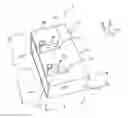
FIGS. 1-2 are perspective views of the construction tool apparatus in accordance with the principles of the present disclosure;
FIGS. 3-4 are first and second side elevation views of the construction tool apparatus;
FIG. 5 is a top plan view of the construction tool apparatus;
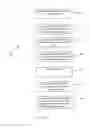
FIG. 6 is a flow chart illustrating a method of use of the construction tool apparatus for joining first and second framing members in toe nail relation;
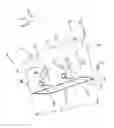
FIG. 7 is a view illustrating use of the construction tool apparatus to drill pilot holes in a first framing member;
FIGS. 8 is a view illustrating fasteners introduced through each side of the first framing member and into the second horizontal framing member to secure the framing members to each other in toe nail relation; and
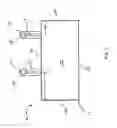
FIG. 9 is a top plan view of another alternate embodiment of the construction tool apparatus.
DETAILED DESCRIPTION
Particular embodiments of the present disclosure are described hereinbelow with reference to the accompanying drawings; however, it is to be understood that the disclosed embodiments are merely examples of the disclosure and may be embodied in various forms. Well-known functions or constructions are not described in detail to avoid obscuring the present disclosure in unnecessary detail. Therefore, specific structural and functional details disclosed herein are not to be interpreted as limiting, but merely as a basis for the claims and as a representative basis for teaching one skilled in the art to employ the present disclosure in virtually any appropriately detailed structure.
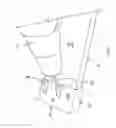
Referring now to the drawings where like reference numerals indicate similar components throughout the several views, FIGS. 1-5 illustrate the construction tool apparatus 10 in accordance with the principles of the present disclosure. The construction tool apparatus 10 includes a template 12 having an outer peripheral wall 14 defining an internal chamber 16 for at least partial reception of an end segment of framing. In one embodiment, the peripheral wall defines an “x” axis, a “y” axis and a “z’ axis. The peripheral wall 14 may define a rectangular configuration having opposed first and second side wall segments 14a, 14b, opposed first and second end wall segments 14c, 14d and bottom wall segment 14e. The dimensioning of the template 12 may be suitable for a 2″×3″, 2″×4″, 2″×6″, 2″×8″, 2″×10″, 2″×12″, and/or 2″×14″ framing material or studs. In the embodiment depicted, the template 12 is adapted for use with 2″×4″ framing. For example, the template 12 defines a length “A” along the x-axis (internal dimension) of about 3½ inches, a width or depth “B” (internal dimension) along the y-axis of about 2¼ inches and a height “C” along the z-axis of about 1½ inches. Other dimensions are contemplated, e.g., for use with any of the sized framing studs identified hereinabove.
The template 12 further includes first and second guides or guide tubes 18, 20 positioned or mounted to the first side wall segment 14a of the peripheral wall 14 of the template 12. The first and second guide tubes 18, 20 may be partial or full cylinders, tubes or any other arrangement suitable to guide a drill bit. The first and second guide tubes 18, 20 define respective first and second guide throughbores 18t, 20t extending along respective first and second axes “p1”, “p2”. The first and second guide throughbores 18t, 20t are dimensioned for reception of a drill to form first and second pilot holes in the framing member. In embodiments, the first axis “p1” is arranged at a first oblique angle “α1” with respect to the longitudinal plane “xz” (or, e.g., relative to the bottom wall segment 14e) and the second axis “p2” is arranged at a second oblique angles “α2” with respect to the longitudinal “xz” plane of the template 12. The longitudinal plane “xz” is parallel to the bottom wall segment 14e. In FIG. 3, both “α1, α2” are represented as well as guide tubes 18, 20. In embodiments, the angles “α1, “α2” may range between about 48° to about 62° in a 2″×4″ application, or range between about 50° to 58°, preferably between about 54°-56°, or more preferably 54°. In embodiments, the angles “α1”, “α2” are the same. In other embodiments, the angles “α1, “α2” may be different. Other arrangements are also envisioned.
The guide tubes 18, 20 are aligned with respective openings 22, 24 through the first side wall segment 14a of the template 12. The openings 22, 24 may be positioned about the midpoint of the first side wall segment 14a, e.g., about 1⅛ inches from the bottom wall segment 14e. Other dimensions are envisioned. The guide tubes 18, 20 are dimensioned to receive the drill bit of a drill to create pilot holes in the framing “f1” or wood positioned within the template 12 for securement with an adjoining piece of framing “f2”. The adjoining framing “f2” is typically at a right angle to the framing “f1” in which the template 12 is positioned to create a toenail joint between the respective framing pieces.
In accordance with one feature of the disclosure best depicted in FIGS. 4-5, the guide tubes 18, 20 may not be equally spaced relative to the respective adjacent first and second end wall segments 14c, 14d of the template 12, but, rather their respective axes “p1”, “p2” are at different predetermined distances “d1”, “d2” relative to the first and second end wall segments 14c, 14d. Although not restricted to particular dimensions identified herein, in one embodiment, “d1” is about ⅝ inches and “d2” is about 1¼ inches. The centers of the guide tubes 18, 20 between axes “p1”,“p2” may be spaced about 1⅝ inches. Other arrangements are also envisioned. The purpose of this offset relationship relative to the end wall segments 14c, 14d is to ensure that when the template 12 is rotated 180° to drill pilot holes in the second side of the framing, the opposing pilot holes will not intersect, i.e., they will be offset.
The selected angle “α1, “α2” of the guide tubes 18, 20 and the location of the guide tubes 18, 20 and openings 22, 24 will ensure that the fasteners catch a sufficient volume of framing material to secure the framing members in a lasting arrangement. In embodiments, at least 1 inch of wood is caught by the fasteners through the aforedescribed arrangement.
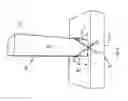
Referring now to the flow chart 100 of FIG. 6, the use of the construction tool apparatus 10 for joining first and second framing members in toe nail relation will be described. In use, the template 12 is positioned about the end of the framing “f1”, for example, a 2″×4″ (Step 102) and also depicted in FIG. 7 such that the bottom wall segment 14e engages the end of the framing member “f1”. A drill bit “k” of a drill “m” is positioned within each guide tube 18, 20 to drill pilot holes within the first side “s1” of the framing member “f1” (Step 104). The pilot holes will extend to the end face of the framing member “f1”, and are arranged at the oblique angles “α1”, “α2” defined by the guide tubes 18, 20. Thereafter, the framing member “f1” is rotated 180°, and the template 12 is positioned over the same end face of the framing member “f1”. (Step 106) The pilot holes are drilled in the same manner through the second side “s2” of the framing “f1”. (Step 108) Due to the offset arrangement of the guide tube 18, 20 the pilot holes created through both sides “s1”, “s2” of the framing “f1” will not interfere or intersect with each other. With the pilot holes drilled, the template is removed (Step 110) and the framing member “f1” is positioned in orthogonal relation (e.g., toenail style) with respect to a second framing piece (Step 112) as depicted in FIG. 8. A fastener “n” (e.g., a nail or screw fastener or any other fattener type suitable to join framing together) is positioned within each pilot hole and then driven within the second framing piece “f2” to secure the first and second framing members “f1”, “f2” to each other in toe nail relation (Step 114). FIG. 8 depicts the fasteners “n” in phantom extending through the first framing member “f1” depicting the angles at which the pilot holes are formed corresponding to the angles “α1”, “α2” (shown for illustrative purposes) defined by the guide tubes 18, 20. The fasteners “n” are driven to penetrate the second framing member “f2”. As shown, the selected angles “α1”, “α2” will position the fasteners “n” approximately through the center of the framing “f1” thereby ensuring a sufficient volume of wood or composite material is caught by the fasteners “n” to establish an effective positive securement of the two pieces of framing “f1”, “f2”.
In an alternate embodiment depicted in FIG. 9, the template 12 may include a second set of guide tubes 26, 28 on the opposed second side wall segment 14b of the template 12 and arranged in offset relationship with each other and with the guide tubes 18, 20 on the opposed side wall of the template 12. For example, the axes “p3”, “p4” of the guide tubes 26, 28 may be at different predetermined distances “d3”, “d4” relative to the respective first and second end wall segments 14c, 14d. Distances “d1” and “d3” would be different and distances “d2” and “d4” would be different. With this arrangement, all of the pilot holes may be drilled without switching or rotating the template 12 about the end of the first framing piece “f1”, and the pilot holes will each be offset with respect to each other. As a further feature, any or all the guide tubes 18, 20, 26, 28 may be separable from the peripheral wall, e.g., separated along connection segments 30 as depicted with the guide tubes 26, 28. With this arrangement, the first framing member “f1” may be arranged in toe nail relation to the second frame member “f2” as depicted in FIG. 8 with the template 10 mounted over the end of the first framing member “f1”. The pilot holes may be drilled through the guide tubes 26, 28 and the guide tubes 26, 28 may be separated from the peripheral wall 14 of the template 10. Fasteners “n” may be advanced through the pilot holes. The same procedure may be followed to form pilot holes through the guide tubes 18, 20. Thus, in accordance with this embodiment, the template 10 may remain on the first framing member “f1” during the entire toe nailing process.
In another embodiment, the bottom wall segment 14e may be removed to reduce material cost. It is envisioned that one or small tabs 32 (shown in phantom in FIG. 9) may extend between adjacent sides, or a peripheral edge extend within the inner periphery, to prevent the template 12 from sliding down the framing “f1’. The tabs 32 may be dimensioned to engage the wood in the same manner as bottom wall segment 14e.
The framing material may be wood, wood composite, a polymer composite and/or combinations thereof.
While the above description contains many specifics, these specifics should not be construed as limitations on the scope of the present disclosure, but merely as exemplifications of embodiments thereof. It is envisioned that the elements and features illustrated or described in connection with one exemplary embodiment may be combined with the elements and features of another exemplary embodiment without departing from the scope of the present disclosure, and that such modifications and variations are also intended to be included within the scope of the present disclosure. Those skilled in the art will envision many other possible variations that are within the scope and spirit of the present disclosure.
Claims
What is claimed is:1. A method of joining first and second construction framing members, comprising:
introducing an end segment of a first framing member of a predetermined shape into an open internal chamber of a template;
advancing a drill element within at least a first guide throughbore of the template to establish at least a first pilot hole in the end segment of the first framing member, the first guide throughbore extending along a first axis which is arranged at a first oblique angle relative to a longitudinal plane of the template;
positioning the end segment of the first framing member in toe relation to a second frame member; and
delivering a first fastener through the first pilot hole and into the second framing member to secure the first framing member to the second framing member.
2. The method according to claim 1 wherein advancing the drill element includes establishing the first pilot hole through a first side of the first framing member.
3. The method according to claim 2 wherein the template includes a peripheral wall having first and second opposing side wall segments and first and second opposing end wall segments intersecting the first and second side wall segments, the peripheral wall being arranged about a longitudinal plane and defining the open internal chamber, and wherein introducing the end segment of the first framing member includes at least partially enclosing the end segment within the side wall segments and the end wall segments of the template.
4. The method according to claim 3 including a first guide mounted to the first side wall segment of the peripheral wall and extending outwardly therefrom, the first guide defining the first guide throughbore, and wherein advancing the drill element includes introducing the drill element through the first guide.
5. The method according to claim 4 including advancing a drill element within at least a second guide throughbore of the template to establish a second pilot hole in the end segment of the first framing member, the second guide throughbore extending along a second axis which is arranged at a second oblique angle relative to a longitudinal plane of the template; and
delivering a second fastener through the second pilot hole and into the second framing member to secure the first framing member to the second framing member.
6. The method according to claim 5 including a second guide mounted to the first wall segment and extending outwardly therefrom, the second guide defining the second guide throughbore arranged at a second oblique angle relative to the longitudinal plane of the template, and wherein advancing the drill element includes introducing the drill element within the second guide.
7. The method according to claim 6 including positioning the first guide at a first predetermined distance from the first end wall segment of the peripheral wall and positioning the second guide at a second predetermined distance from the second end wall segment, and wherein the first and second predetermined distances are different; and
wherein introducing the drill element through the first guide and introducing the drill element through the second guide creates respective first and second pilot holes disposed at the respective first and second predetermined distances.
8. The method according to claim 7 including removing the template from the end segment of the first framing member prior to delivering the first fastener and delivering the second fastener.
9. The method according to claim 8 including reintroducing the end segment of the first framing member into the internal chamber of the template to position the first and second guide throughbores adjacent a second side of the end segment of the first framing member opposing the first side.
10. The method according to claim 9 including introducing the drill element through the first and second guide throughbores to establish third and fourth pilot holes through the second side of the end segment of the first framing member.
11. The method according to claim 10 including delivering third and fourth fasteners through the third and fourth pilot holes and into the second side of the second framing member to secure the first framing member to the second framing member.
12. The method according to claim 7 wherein the first and second oblique angles each range from about 50° to 58° relative to the longitudinal plane and wherein delivering the first and second fasteners includes penetrating a volume of framing material of each of the first and second framing members sufficient to secure the first and second framing members to each other.
13. The method according to claim 12 the first and second oblique angles are substantially equivalent.
14. The method according to claim 7 wherein the internal chamber of the peripheral wall is dimensioned to receive one of a 2″×3″, 2″×4″, 2″×6″, 2″×8″, 2″×10″ or 2″×12″ framing member.
15. The method according to claim 7 including a third guide defining a third guide throughbore extending along a third axis which is arranged at a third oblique angle with respect to the longitudinal plane, the third guide disposed along the second side wall segment of the peripheral wall of the template and being positioned a third predetermined distance from the first end wall segment of the peripheral wall, the first and third predetermined distances of the respective first and third guides being different, and including:
introducing a drill element through the third guide to form a third pilot hole third pilot hole through a second side of the framing member opposing the first side; and
delivering a third fastener through the third pilot hole and into the second framing member to secure the first framing member to the second framing member.
16. The method according to claim 15 including a fourth guide defining a fourth guide throughbore extending along a fourth axis which is arranged at a fourth oblique angle with respect to the longitudinal plane, the fourth guide disposed along the second side wall segment of the peripheral wall of the template and being positioned a fourth predetermined distance from the second end wall segment of the peripheral wall, the second and fourth predetermined distances of the respective second and fourth guides being different, and including:
introducing a drill element through the fourth guide to form a fourth pilot hole through the second side of the framing member opposing the first side.
delivering a fourth fastener through the fourth pilot hole and into the second framing member to secure the first framing member to the second framing member.
17. The method according to claim 7 including separating the first and second guides from the peripheral wall of the template.
Images & Drawings included:



Sources:
- United States Patent and Trademark Office - verify current appl. status at the USPTO↗
Similar patent applications:
- » 20170113280
CONSTRUCTION TOOL APPARATUS - » 20070081732
Decoding apparatus using tool information for constructing a decoding algorithm - » 20140238173
Methods and apparatus for construction of machine tools - » 20190329368
Methods and apparatus for construction of machine tools - » 20210330480
Multifunctional tooling apparatus with non-anthropomorphic construction - » 20090054740
METHOD AND APPARATUS OF CONSTRUCTING AND USING A REFERENCE TOOL TO GENERATE A DISCRIMINATORY SIGNAL FOR INDICATING A MEDICAL CONDITION OF A SUBJECT - » 20130048420
METHODS, SYSTEMS AND APPARATUS DIRECTED TO SAFETY HARNESSES, AND TOOL BAGS AND HOLDERS, FOR CONSTRUCTION WORKERS AND THE LIKE - » 20110017546
METHODS, SYSTEMS AND APPARATUS DIRECTED TO SAFETY HARNESSES, AND TOOL BAGS AND HOLDERS, FOR CONSTRUCTION WORKERS AND THE LIKE - » 20130047561
METHODS, SYSTEMS AND APPARATUS DIRECTED TO SAFETY HARNESSES, AND TOOL BAGS AND HOLDERS, FOR CONSTRUCTION WORKERS AND THE LIKE - » 20130048418
METHODS, SYSTEMS AND APPARATUS DIRECTED TO SAFETY HARNESSES, AND TOOL BAGS AND HOLDERS, FOR CONSTRUCTION WORKERS AND THE LIKE
Recent applications in this class:
- » 20250162043 2025-05-22
PRECISE MANUFACTURING METHOD FOR MANUFACTURING A LIQUID CONTAINER - » 20250100054 2025-03-27
ADAPTIVE DRILLING SYSTEM - » 20250050430 2025-02-13
HANDHELD POWERED POCKET HOLE DRILL SYSTEM - » 20250025944 2025-01-23
DRILL JIGS FOR POSITIONING MOUNTING HOLES USING METROLOGY PROCESSES, AND ASSOCIATED SYSTEMS AND METHODS - » 20250001508 2025-01-02
machining device equipped with guiding means and method for producing an orifice with such a device - » 20240375189 2024-11-14
MODULAR JIG FOR MANUFACTURING PARTIALLY COMPLETE FIREARM PISTOL FRAME BLANK - » 20240335890 2024-10-10
ADDITIVELY MANUFACTURED GEOMETRY OPTIMIZED DRILLING JIGS AND METHODS OF MAKING AND USING THE SAME - » 20240227036 2024-07-11
A JIG TO PERFORM TASKS ON A WORKPIECE AND ACCOMPANYING SYSTEMS, APPARATUS, AND METHODS USING SAME - » 20240207949 2024-06-27
Drilling and Finishing Jig for the Manufacture of Pistols - » 20240123519 2024-04-18
Drilling Jig Assembly