Lateral trifluoromethyl-containing liquid crystal compound, liquid crystal mixture and display device
US20190144751A1
2019-05-16
16/164,149
2018-10-18
✅ Patent granted
US 10,975,306 B2
2021-04-13
-
-
Geraldina Visconti
Muncy, Geissler, Olds & Lowe, P.C.
2038-10-27
Abstract:
Provide are a liquid crystal compound represented by formula I, and a liquid crystal mixture comprising the compound
A lateral trifluoromethyl-containing liquid crystal compound having the structural characteristics of Formula I not only has a negative dielectric anisotropy (Δε), an appropriate optical anisotropy (Δn), a higher clearing point (CP), a prominent low-temperature miscibility with other liquid crystals, and a low rotary viscosity (γ1), but also has a good stability to UV and high temperatures, particularly, a negative dielectric anisotropy. Same can be applied to the formulation of liquid crystal compositions of positive and negative types, and it is particularly prominent that same has the advantages of a good solubility at low temperatures and a high transmittance.
Inventors:
- Zhian Liang 14 🇨🇳 Shijiazhuang, China
- Kui Wang 8 🇨🇳 Shijiazhuang, China
- Kai Xu 5 🇨🇳 Shijiazhuang City, China
- Kui Wang 6 🇨🇳 Shijiazhuang City, China
- Limei ZHANG 3 🇨🇳 Shijiazhuang, China
- Wei Zhang 3 🇨🇳 Shijiazhuang City, China
- LIMEI ZHANG 2 🇨🇳 Shijiazhuang City, China
- Zhian LIANG 6 🇨🇳 Shijiazhuang City, China
- Yang XIANG 1 🇨🇳 Shijiazhuang City, China
- Shen YUAN 1 🇨🇳 Shijiazhuang City, China
- Minsheng GUO 1 🇨🇳 Shijiazhuang City, China
- Wei Zhang 3 🇨🇳 Shijiazhuang, China
- Kai Xu 5 🇨🇳 Shijiazhuang, China
- Yang Xiang 1 🇨🇳 Shijiazhuang, China
- Shen Yuan 1 🇨🇳 Shijiazhuang, China
- Minsheng Guo 1 🇨🇳 Shijiazhuang, China
Assignee:
- SHIJIAZHUANG CHENGZHI YONGHUA DISPLAY MATERIAL CO., LTD. 19 🇨🇳 Shijiazhuang, China
Applicant:
Interested in similar patents?
Get notified when new applications in this technology area are published.
Classification:
C07C43/225 » CPC further
Ethers; Compounds having groups, groups or groups; Ethers having an ether-oxygen atom bound to a carbon atom of a six-membered aromatic ring containing halogen
C07D319/06 » CPC further
Heterocyclic compounds containing six-membered rings having two oxygen atoms as the only ring hetero atoms 1,3-Dioxanes; Hydrogenated 1,3-dioxanes not condensed with other rings
C09K19/3402 » CPC further
Liquid crystal materials characterised by the chemical structure of the liquid crystal components, e.g. by a specific unit; Non-steroidal liquid crystal compounds containing at least one heterocyclic ring having oxygen as hetero atom
C09K19/3405 » CPC further
Liquid crystal materials characterised by the chemical structure of the liquid crystal components, e.g. by a specific unit; Non-steroidal liquid crystal compounds containing at least one heterocyclic ring having oxygen as hetero atom the heterocyclic ring being a five-membered ring
C09K19/542 » CPC further
Liquid crystal materials characterised by components which are not liquid crystals, e.g. additives with special physical aspect: solvents, solid particles; Additives having no specific mesophase characterised by their chemical composition Macromolecular compounds
C09K2019/0466 » CPC further
Liquid crystal materials characterised by the chemical structure of the liquid crystal components, e.g. by a specific unit characterized by a linking chain between rings or ring systems, a bridging chain between extensive mesogenic moieties or an end chain group the linking chain being a -CFO- chain
C09K19/34 IPC
Liquid crystal materials characterised by the chemical structure of the liquid crystal components, e.g. by a specific unit; Non-steroidal liquid crystal compounds containing at least one heterocyclic ring
C09K19/30 IPC
Liquid crystal materials characterised by the chemical structure of the liquid crystal components, e.g. by a specific unit; Non-steroidal liquid crystal compounds containing at least two non-condensed rings containing saturated or unsaturated non-aromatic rings, e.g. cyclohexane rings
C09K19/54 IPC
Liquid crystal materials characterised by components which are not liquid crystals, e.g. additives with special physical aspect: solvents, solid particles Additives having no specific mesophase characterised by their chemical composition
C07D309/06 » CPC further
Heterocyclic compounds containing six-membered rings having one oxygen atom as the only ring hetero atom, not condensed with other rings having no double bonds between ring members or between ring members and non-ring members with only hydrogen atoms, hydrocarbon or substituted hydrocarbon radicals, directly attached to ring carbon atoms Radicals substituted by oxygen atoms
C09K19/3003 » CPC further
Liquid crystal materials characterised by the chemical structure of the liquid crystal components, e.g. by a specific unit; Non-steroidal liquid crystal compounds containing at least two non-condensed rings containing saturated or unsaturated non-aromatic rings, e.g. cyclohexane rings; Cyclohexane rings Compounds containing at least two rings in which the different rings are directly linked (covalent bond)
C09K19/3491 » CPC main
Liquid crystal materials characterised by the chemical structure of the liquid crystal components, e.g. by a specific unit; Non-steroidal liquid crystal compounds containing at least one heterocyclic ring having sulfur as hetero atom
C09K19/3066 » CPC further
Liquid crystal materials characterised by the chemical structure of the liquid crystal components, e.g. by a specific unit; Non-steroidal liquid crystal compounds containing at least two non-condensed rings containing saturated or unsaturated non-aromatic rings, e.g. cyclohexane rings; Cyclohexane rings in which the rings are linked by a chain containing carbon and oxygen atoms, e.g. esters or ethers
C09K19/0403 » CPC further
Liquid crystal materials characterised by the chemical structure of the liquid crystal components, e.g. by a specific unit the structure containing one or more specific, optionally substituted ring or ring systems
C07C2601/02 » CPC further
Systems containing only non-condensed rings with a three-membered ring
C07C2601/08 » CPC further
Systems containing only non-condensed rings with a five-membered ring the ring being saturated
C09K2019/0448 » CPC further
Liquid crystal materials characterised by the chemical structure of the liquid crystal components, e.g. by a specific unit characterized by a linking chain between rings or ring systems, a bridging chain between extensive mesogenic moieties or an end chain group the end chain group being a polymerizable end group, e.g. -Sp-P or acrylate
C09K2019/3408 » CPC further
Liquid crystal materials characterised by the chemical structure of the liquid crystal components, e.g. by a specific unit; Non-steroidal liquid crystal compounds containing at least one heterocyclic ring having oxygen as hetero atom the heterocyclic ring being a five-membered ring Five-membered ring with oxygen(s) in fused, bridged or spiro ring systems
C09K2019/3422 » CPC further
Liquid crystal materials characterised by the chemical structure of the liquid crystal components, e.g. by a specific unit; Non-steroidal liquid crystal compounds containing at least one heterocyclic ring having oxygen as hetero atom the heterocyclic ring being a six-membered ring
C09K2019/3425 » CPC further
Liquid crystal materials characterised by the chemical structure of the liquid crystal components, e.g. by a specific unit; Non-steroidal liquid crystal compounds containing at least one heterocyclic ring having oxygen as hetero atom the heterocyclic ring being a six-membered ring Six-membered ring with oxygen(s) in fused, bridged or spiro ring systems
C09K2019/548 » CPC further
Liquid crystal materials characterised by components which are not liquid crystals, e.g. additives with special physical aspect: solvents, solid particles; Additives having no specific mesophase characterised by their chemical composition; Macromolecular compounds stabilizing the alignment; Polymer stabilized alignment
G02F1/1333 IPC
Devices or arrangements for the control of the intensity, colour, phase, polarisation or direction of light arriving from an independent light source, e.g. switching, gating or modulating; Non-linear optics for the control of the intensity, phase, polarisation or colour based on liquid crystals, e.g. single liquid crystal display cells; Constructional arrangements; Operation of liquid crystal cells; Circuit arrangements Constructional arrangements; Manufacturing methods
C09K19/04 IPC
Liquid crystal materials characterised by the chemical structure of the liquid crystal components, e.g. by a specific unit
C09K19/12 IPC
Liquid crystal materials characterised by the chemical structure of the liquid crystal components, e.g. by a specific unit; Non-steroidal liquid crystal compounds containing at least two non-condensed rings containing at least two benzene rings at least two benzene rings directly linked, e.g. biphenyls
C07C2601/14 » CPC further
Systems containing only non-condensed rings with a six-membered ring The ring being saturated
Description
TECHNICAL FIELD
The present invention belongs to the field of liquid crystal compounds and applications thereof, and particularly relates to a lateral trifluoromethyl-containing liquid crystal compound, a liquid crystal mixture, and a liquid crystal display device using such a compound or mixture.
BACKGROUND ART
Since the Austrian scientist Reinitzer first synthesized a liquid crystal in 1888, the actual development of the liquid crystal industry is in the recent more than 30 years; since liquid crystal display materials have obvious advantages, such as a low drive voltage, a small power consumption, high reliability, a great display information amount, color display, no flicker, a capability of achieving panel display, etc., both liquid crystal monomers and liquid crystal displays have gone through a huge development, and liquid crystal monomers have been used in the synthesis of more than 10,000 kinds of liquid crystal materials, wherein there are thousands of common liquid crystal display materials, and by the classification according to the characteristics of the central bridge bond and rings of liquid crystal molecules, there are mainly biphenyl liquid crystals, phenyl cyclohexane liquid crystals, ester liquid crystals, alkynes, difluoromethoxy bridge types, ethane types and heterocyclic types. The liquid crystal display is also developed from TN and STN of black and white small screen in 30 years ago to the current TN-TFT, VA-TFT, IPS-TFT, PDLC of scale color screen, etc.
Main new liquid crystal display modes include optical compensation bending mode (OCB), coplanar transformation liquid crystal display (IPS), vertical alignment mode (VA), axisymmetric microstructure liquid crystal display (ASM), multi-domain twisted liquid crystal display, etc.
In the various display modes, liquid crystal cells have different designs and different driving methods, and the orientations of liquid crystal molecular directors with respect to glass substrates are different, wherein in the optical compensation bending mode (OCB) and the coplanar transformation liquid crystal display (IPS), liquid crystal molecular directors are parallel to the direction of the glass substrates, while in the vertical alignment mode (VA) and the axisymmetric microstructure liquid crystal display (ASM), the liquid crystal molecular directors are perpendicular to the direction of the glass substrates in the absence of an electric field.
With regard to the IPS of the parallel arranged mode, the dielectric anisotropy (Δε) of the liquid crystal may be either positive or negative.
In the vertical alignment mode (VA), all liquid crystal molecules in a null field are perpendicular to the direction of the glass substrates and parallel to a vertical incident light. When a polarizer is orthogonal, a good dark state is shown; therefore this kind of device has a good contrast, and the dielectric anisotropy (Δε) of the liquid crystal used has to be negative. The optical anisotropy (Δε) of the crystal, the thickness (d) of the liquid crystal cell and the wavelength (λ) of the incident light barely affect the contrast. The response time of the vertical alignment mode (VA) is much shorter than that of a twist-type device and is about half of that. Under the influence of an applied voltage, a VA device mainly produces a bending deformation of liquid crystal molecules, ECB produces a splay deformation of liquid crystal molecules, and the twisted display produces a twist deformation of liquid crystal molecules; the response times thereof are also inversely proportional to bending, splay, and twist elastic constants, respectively, because in general cases for most liquid crystals, the bending elastic constant of liquid crystal is greater than the splay elastic constant and the splay elastic constant is greater than the twist elastic constant, which is also the reason why the VA device has a faster response time.
In order to enable the performance of a display device to be closer to ideal, people have always been working to study new liquid crystal compounds, which allows the performances of liquid crystal compounds and display devices to continuously advance.
In fact, in many cases, liquid crystal mixtures can also work at a very low temperature, especially in an outdoor environment, and liquid crystals are required to have a good low temperature performance to investigate that liquid crystals can also work at −30° C. for a long time; that is to say, during the storage of the liquid crystal monomer at a low temperature for a long time, no monomer is precipitated, so it is still necessary to develop a liquid crystal having a good miscibility at a low temperature.
Liquid crystal display devices are increasingly oriented toward high pixel density designs, and for the control of backlight power consumption, the requirements for the light transmittance of the liquid crystal layer are also getting higher and higher, so to develop a liquid crystal with a high transmittance is an important direction for the development of liquid crystals currently.
SUMMARY OF THE INVENTION
Surprisingly, a lateral trifluoromethyl-containing liquid crystal compound having the structural characteristics of Formula I not only has a negative dielectric anisotropy (Δε), an appropriate optical anisotropy (Δn), a higher clearing point (CP), a prominent low-temperature miscibility with other liquid crystals, and a low rotary viscosity (γ1), but also has a good stability to UV and high temperatures, particularly, a negative dielectric anisotropy. Same can be applied to the formulation of liquid crystal compositions of positive and negative types, and it is particularly prominent that same has the advantages of a good solubility at low temperatures and a high transmittance.
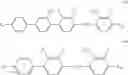
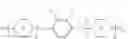
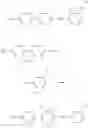
The present invention specifically provides a liquid crystal compound represented by formula I:
wherein R1 and R2 each independently represent H, an alkyl group having a carbon atom number of 1-5, an alkenyl group having a carbon atom number of 2-6, or an alkoxy group having a carbon atom number of 1-5, wherein any CH2 therein may be substituted with cyclopentyl, cyclobutyl or cyclopropyl;
n represents 1 or 2;
Z1 represents one or more of a single bond, —CF2O—, —OCF2—, —COO—, —C≡C— and/or —CH2O—;
Z2 represents —CF2O—, —OCF2—, —CH2O— or —OCH2—; and
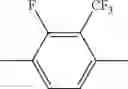
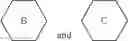
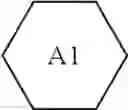
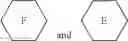
each independently represent one or more of phenylene, phenylene substituted with one or more fluorines and/or one trifluoromethyl, cyclohexenylene, cyclohexylene, or groups formed by substituting one or two non-connected CH2 in cyclohexylene with O, with one of said
representing phenylene substituted with one trifluoromethyl, wherein said phenylene substituted with one trifluoromethyl may be substituted with fluorine.
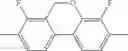
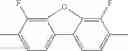
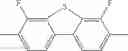
The compound represented by formula I is preferably a compound represented by formula Ia, Ib, Ic or Id:
wherein R1 and R2 each independently represent H, an alkyl group having a carbon atom number of 1-5, an alkenyl group having a carbon atom number of 2-6, or an alkoxy group having a carbon atom number of 1-5, wherein any CH2 therein may be substituted with cyclopentyl, cyclobutyl or cyclopropyl;
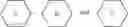
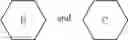
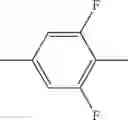
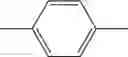
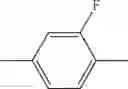
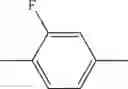
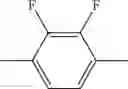
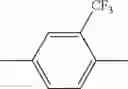
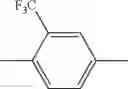
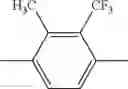
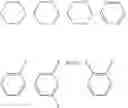
represents one or more of
and
n represents 1 or 2.
A pure compound of formula I is colourless, and has different properties depending on R1, R2,
n, Z1 and Z2. It may be used for the formulation of a positive liquid crystal mixture, and may also be used for the formulation of a negative liquid crystal mixture for use in display devices of various modes such as OCB, TN, STN, IPS, FFS and VA, and therefore it has a wider range of applications.
It may also be used as a base material for liquid crystal mixtures, and may also be added, as an additive material, into liquid crystal base materials composed of other types of compounds, for example, to improve the low temperature solubility and/or the vertical dielectricity, dielectric anisotropy Δε and/or rotary viscosity γ1 and/or threshold voltage Vth and/or contrast at a low temperature and/or optical anisotropy Δn and/or clearing point Cp of the liquid crystal mixture, and it is particularly prominent that it has the advantages of a good solubility at low temperatures and a high transmittance.
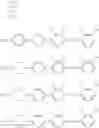
The compound represented by formula I is further preferably a compound represented by formula I1 to I34:
wherein each R1 independently represents H, an alkyl group having a carbon atom number of 1-5, an alkenyl group having a carbon atom number of 2-6, or an alkoxy group having a carbon atom number of 1-5, wherein any CH2 therein may be substituted with cyclopentyl, cyclobutyl or cyclopropyl;
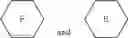
each (F) independently represents F or H; and
each R21 independently represents H, an alkyl group having a carbon atom number of 1-5, an alkenyl group having a carbon atom number of 2-6, or an alkoxy group having a carbon atom number of 1-5.
The lateral trifluoromethyl-containing compounds of general formulas I1 to I32 have a particularly prominently larger vertical dielectricity (ε⊥), an appropriate optical anisotropy (Δn), a good low-temperature miscibility with other liquid crystals, and a low rotary viscosity, and also has a good stability to ultraviolet light and high temperatures.
With regard to the lateral trifluoromethyl-containing compounds of general formulas I1 to I32, depending on the respective groups, liquid crystal molecules of different structures have different degrees of conjugation, the optical anisotropies (Δn) thereof can achieve values within a range between 0.05 and 0.35; the numbers of rings are different, the substituents are different, and the clearing points can achieve a range of 20−200° C.; in addition to the above-mentioned characteristics, the compounds of general formulas I1 to I32 further have a good low-temperature miscibility with other liquid crystals, and can improve the low-temperature characteristics of mixed liquid crystals. The structure of the lateral trifluoromethyl group together with the Z2 linking group brings about the characteristics of improved low temperature properties, increased vertical dielectricity, and maintained low viscosity.
The present invention further provides a liquid crystal mixture comprising one or more compounds represented by formula I and one or more compounds represented by formula II
wherein R3 and R4 each independently represent H, an alkyl group having a carbon atom number of 1-5, an alkenyl group having a carbon atom number of 2-6, or an alkoxy group having a carbon atom number of 1-5, wherein any CH2 therein may be substituted with cyclopentyl, cyclobutyl or cyclopropyl;
m represents 1 or 2; and
each independently represent one or more of phenylene, 5 cyclohexylene and/or cyclohexenylene.
The concentrations (in mass percentage, the same hereinafter) of said compound represented by formula I and said compound represented by formula II comprised in the mixture are respectively 1-40% and 1-65%, preferably; and it is further preferable that the concentrations of said compound represented by formula I and said compound represented by formula II are respectively 2-30% and 15-55%.
The optimum concentration of the compound represented by formula I is 5-25%, and the optimum concentration of the compound represented by formula II is 25-40%;
said one or more compounds represented by formula II are preferably one or more of compounds represented by formulas II1 to II22 below:
The liquid crystal composition of the present invention further comprises one or more of compounds represented by formulas III1 to III14 below:
wherein each R5 independently represents H, an alkyl group having a carbon atom number of 1-5, an alkenyl group having a carbon atom number of 2-6, or an alkoxy group having a carbon atom number of 1-5, wherein any CH2 therein may be substituted with cyclopentyl, cyclobutyl or cyclopropyl;
(F) represents F or H; and
(O) represents O or a single bond.
The liquid crystal composition of the present invention may further comprise one or more compounds represented by formula IV:
wherein R6 represents H, an alkyl group having a carbon atom number of 1-5, an alkenyl group having a carbon atom number of 2-6, or an alkoxy group having a carbon atom number of 1-5, wherein any CH2 therein may be substituted with cyclopentyl, cyclobutyl or cyclopropyl;
o represents 0 or 1;
each (F) independently represents H or F; and
represents phenylene, cyclohexylene, cyclohexenylene, or a group formed by substituting one or two non-connected CH2 in cyclohexylene with O.
The compound represented by formula IV is preferably
wherein R11 represents H, an alkyl group having a carbon atom number of 1-5, an alkenyl group having a carbon atom number of 2-6, or an alkoxy group having a carbon atom number of 1-5, wherein any CH2 therein may be substituted with cyclopentyl, cyclobutyl or cyclopropyl.
The compound of formula IV has a larger dielectric anisotropy and can be used for adjusting drive voltages.
To the liquid crystal composition of the present invention, a negative liquid crystal or nearly negative liquid crystal component may be further added: one or more negative compounds of formula V,
wherein R7 and R8 each independently represent H, an alkyl group having a carbon atom number of 1-5, an alkenyl group having a carbon atom number of 2-6, or an alkoxy group having a carbon atom number of 1-5, wherein any CH2 therein may be substituted with cyclopentyl, cyclobutyl or cyclopropyl;
p and q each independently represent 0, 1 or 2, with 1≤p+q≤3;
Z3 and Z4 each independently represent a single bond, —CH2CH2—, —CH2O—, —OCH2— or —CF2O—; and
each independently represent one or more of
The compound represented by formula V is preferably
In addition, it may also be used together with the following large negative dielectricity monomers:
To the liquid crystal composition of the present invention, one or more compounds represented by formula VI may be further added:
wherein each P independently represents a polymerizable functional group;
each Sp independently represents a spacer group;
M represents H, -Sp-P, F, an alkyl group having a carbon atom number of 1-5, an alkoxy group having a carbon atom number of 1-5, or an alkenyl group having a carbon atom number of 2-5;
r represents 0, 1 or 2;
Z5 represents a single bond, —COO—, —C≡C—, —C═C— or —CH2O—; and
each independently represent one or more of a benzene ring, cyclohexane, indane or a naphthalene ring.
The polymerizable functional group may be one of 0-,
the spacer group may be an alkylene group having a carbon atom number of 1-6; and
the polymerizable compound of formula VI may be the following polymerizable compound:
The liquid crystal composition of the invention is formulated from a plurality of compounds, generally by mixing 5-20 liquid crystal monomers, each of which monomers has a different function in the mixture system due to having a different performance parameter, so a formulation engineer would be able to adjust the various performance parameters, such as dielectric anisotropy (Δε), optical anisotropy (Δn), nematic phase temperature range (crystallization point, clearing point CP), low rotary viscosity (γ1), elastic constant (K), low temperature performance and transmittance, of the mixed liquid crystals by selecting various preferred monomers and optimizing the ratio of these monomers, so as to meet the requirements of display devices and adapt the matching of the PI and sealant used in the display devices, etc., thereby avoiding some display defects.
The liquid crystal mixture involved in the present invention has a wider range of dielectric anisotropy (Δε) that can achieve a value between −5 and −2, an appropriate optical anisotropy (Δn) that can achieve a value between 0.060 and 0.300, a good low-temperature miscibility, a low rotary viscosity (γ1) of 150 mPa·s or less, or even up to 60 mPa·s, and a higher clearing point (CP) that can achieve a value between 60° C. and 120° C., and further has a good stability to UV and high temperatures, so it can be applied to various display modes and can meet the requirements for the properties, such as different cell thickness, fast response, different drive voltage and low viscosity, of liquid crystals of various display modes.
The present invention relates not only to a liquid crystal composition comprising a liquid crystal compound of general formula I, but also to a liquid crystal display device comprising such a liquid crystal composition. Said display is an IPS display, an FFS display, a TN display, or a VA display.
To the liquid crystal composition of the present invention, a left-handed or right-handed chiral dopant may be further added to form a chiral nematic phase.
The liquid crystal or a trace amount of impurities therein easily form an excited state or even radicals after being exposed to high temperatures or irradiated with ultraviolet light or visible light, and the excited state or radicals are active in chemical properties, and may undergo chemical reactions such as oxidation which causes a decrease in the quality of the liquid crystal; During the synthesis and use of the liquid crystal compound of the present invention, various functional dopants may be further added to improve the stability of the liquid crystal, improve the quality and extend the service time of a mixed liquid crystal, wherein the contents of these dopants are preferably between 0.01% and 1%, and these dopants are mainly antioxidants, UV absorbers, and light stabilizers.
Preferred antioxidants, UV absorbers, and light stabilizers are
UV-P,
with s representing an integer of 1-10.
BRIEF DESCRIPTION OF THE DRAWINGS
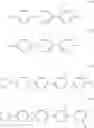
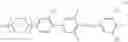
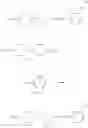
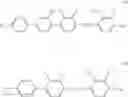
The sole FIGURE is a mass spectrum of compound (1-a).
DETAILED DESCRIPTION OF EMBODIMENTS
The present invention is further described in conjunction with particular examples below, but is not limited to these examples below Said methods are all conventional methods, unless otherwise specified. Said raw materials are commercially available, unless otherwise specified.
The specific meanings of symbols in the examples and the test conditions are as follows:
Cp: represents a clearing point of a liquid crystal, with a unit of ° C.
S-N: represents a melting point of a liquid crystal from a crystal state to a nematic phase, with a unit of ° c.
Δn: represents an optical anisotropy, with Δn=no−ne, in which no is the refractive index of an ordinary light, and ne is the refractive index of an extraordinary light, with the test conditions being: 589 nm, 25±0.5° C.
Δε: is a dielectric anisotropy, with Δε=ε//−ε⊥, in which ε// is a dielectric constant parallel to the molecular axis, and ε⊥ is a dielectric constant perpendicular to the molecular axis, with the test conditions being 25±0.50° C., 1 KHz, HP4284A, and 5.2 □m TN left-handed cell.
γ1: is a rotary viscosity, with a unit of mPa·s, with the test conditions being 25±0.5° C.
VHR: is a voltage holding ratio (%), with the test conditions being 20±2° C., a voltage of ±5 V, a pulse width of 10 ms, and a voltage holding time of 16.7 ms. The test equipment is a TOYO Model 6254 liquid crystal performance comprehensive tester.
In the reaction process, the reaction progress is generally monitored by means of TLC, and treatments after the completion of the reaction are generally water washing, extraction, organic phase combination and drying, solvent evaporation under reduced pressure, as well as recrystallization and column chromatography; and a person skilled in the art would be able to implement the present invention according to the following description.
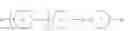
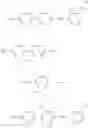
Route 1: Z2 is —OCF2—; reference can be made to “Chemical Reagents”, 2015, 37(1), 40-43; 48, “Progress on Synthesis of Liquid Crystalline Compounds Containing Difluoromethyleneoxy-bridged Groups”
c: DMF anhydrous potassium carbonate
Route 2: Z2 is —CF2O—; reference can be made to “Chemical Reagents”, 2015, 37(1), 40-43; 48, “Progress on Synthesis of Liquid Crystalline Compounds Containing Difluoromethyleneoxy-bridged Groups”
d: DMF anhydrous potassium carbonate
Route 3: Z2 is —CH2O—;
a: DMF K2CO3
Route 4: Z2 is —OCH2—;
b: DMF K2CO3
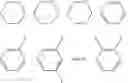
In the examples of the present invention application, liquid crystal monomer structures are represented by codes, wherein the code representation of ring structures, end groups and linking groups of the liquid crystals are shown in tables (I) and (II) below
| TABLE (I) |
| Corresponding code for ring structure |
| Ring structure | Corresponding code | |
| C | ||
| L | ||
| U | ||
| P | ||
| G | ||
| Gi | ||
| Y | ||
| K | ||
| Ki | ||
| K(2CH3) | ||
| K(2F) | ||
| Sa | ||
| Sb | ||
| Sc | ||
| TABLE (II) |
| Corresponding code for end group and linking group |
| End groups and linking | ||
| groups | Corresponding code | |
| CnH2n+1— | n- | |
| CnH2n+1O— | nO— | |
| —OCF3 | —OT | |
| —CF2O— | —Q— | |
| —OCF2— | —Qi— | |
| —CH2O— | —O— | |
| —OCH2— | —Oi— | |
| —F | —F | |
| —CN | —CN | |
| —CH2CH2— | —E— | |
| —CH═CH— | —V— | |
| —C≡C— | —W— | |
| —COO— | —COO— | |
| —CH═CH—CnH2n+1 | Vn— | |
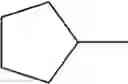
| C(5)- | ||
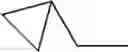
| C(3)1- | ||
Example 1
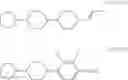
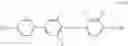
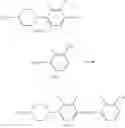
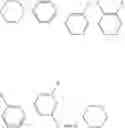
23.4 g (0.1 mole) of (1-a-1), 35.6.0 g (0.11 mole) of (1-a-2), 200 ml of DMF and 18 g of anhydrous potassium carbonate are charged into a 500 ml three-necked flask, are reacted at 100° C. for 3 hours under stirring, and poured into 1000 nl of water, extraction is carried out using toluene, and the organic phase is washed with water, subjected to evaporation to remove toluene, dissolved in petroleum ether, passes through a silica gel column, and is recrystallized twice by means of toluene+petroleum ether to obtain 19.4 g of product (1-a), with Gc: 99.89%
Δε: −2.1
Δn: 0.081
Δ⊥: 8.9
γ1: 43
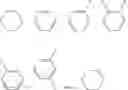
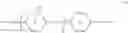
The sole FIGURE is a mass spectrum of compound (1-a).
With reference to the synthesis method of Example 1, only except that some of the raw materials are replaced, the following compounds can be synthesized
Example 2
34.6 g (0.1 mole) of (2-a-1), 23.32.0 g (0.11 mole) of (2-a-2), 200 ml of DMF and 18 g of anhydrous potassium carbonate are charged into a 500 ml three-necked flask, are reacted at 100° C. for 3 hours under stirring, and poured into 1000 nl of water, extraction is carried out using toluene, and the organic phase is washed with water, subjected to evaporation to remove toluene, dissolved in petroleum ether, passes through a silica gel column, and is recrystallized twice by means of toluene+petroleum ether to obtain 20.4 g of product (2-a), with Gc: 99.90%
Comparative Compound
Δε: −0.9
the dielectric anisotropy is positive.
Example 3
32.8 g (0.1 mole) of (3-a-1), 23.32.0 g (0.11 mole) of (3-a-2), 200 ml of DMF and 18 g of anhydrous potassium carbonate are charged into a 500 ml three-necked flask, are reacted at 80° C. for 5 hours under stirring, and poured into 1000 nl of water, extraction is carried out using petroleum ether, and the organic phase is washed with water, passes through a silica gel column, and is recrystallized 4 times by means of petroleum ether to obtain 27.4 g of product (3-a), with Gc: 99.85%
Δε: −3.3
Δn: 0.08
Δ⊥: 9.2
γ1: 80
Example 4
28.2 g (0.1 mole) of (4-a-1), 31.68 g (0.11 mole) of (4-a-2), 200 ml of DMF and 18 g of anhydrous potassium carbonate are charged into a 500 ml three-necked flask, are reacted at 50° C. for 5 hours under stirring, and poured into 1000 nl of water, extraction is carried out using petroleum ether, and the organic phase is washed with water, passes through a silica gel column, and is recrystallized 4 times by means of petroleum ether to obtain 29.4 g of product (4-a), with Gc: 99.88%
Δε: −2.3
Δn: 0.09
Δ⊥: 8.9
γ1: 80
Example 5
Liquid Crystal Composition
| Liquid crystal | |||
| Category | monomer code | Content (%) | |
| I | PYQK(2F)-3 | 10 | |
| I | PYQiK(2F)-3-O2 | 10 | |
| I | PGYQK(2F)-3 | 10 | |
| I | APYQK(2F)-2 | 10 | |
| II | CC-3-2 | 30 | |
| II | CC-3-V | 5 | |
| II | CC-3-V1 | 5 | |
| II | CCP-3-1 | 7 | |
| II | CPP-3-2 | 8 | |
| II | CPP-3-2V1 | 5 | |
| Δε: −1.1 | |||
| Δn: 0.08 | |||
| Cp: 50° C. | |||
| γ1: 35 mPa · s. |
After the mixture is stored at −20° C. for 200 hours, no crystal of the compound of formula I is precipitated.
Example 6
Liquid Crystal Composition
| Liquid crystal | |||
| Category | monomer code | Content (%) | |
| I | CCQK(2F)-3 | 10 | |
| I | PYQiK(2F)-5-O2 | 10 | |
| I | PYQKi(3F)-5 | 8 | |
| I | CPK(2F)-3 | 2 | |
| II | CC-3-2 | 25 | |
| II | CC-3-V | 5 | |
| II | CPP-1V-2 | 5 | |
| II | CPP-3-2V1 | 5 | |
| V | PY-3-O2 | 5 | |
| V | CPY-3-O2 | 5 | |
| V | CCY-3-O2 | 5 | |
| V | CY-3-O4 | 5 | |
| V | CCOY-3-O2 | 5 | |
| V | COY-3-O2 | 2 | |
| V | PYP-C(3)1-2 | 2 | |
| Sb-C(5)O-O4 | 1 | ||
| Δε: −2.4 | |||
| Δn: 0.09 | |||
| Cp: 75° C. | |||
| γ1: 80 mPa · s. |
This liquid crystal composition has a moderate Δε, a moderate Δn, a lower γ1, and a high Cp, and is suitable for use in liquid crystal materials for rapid response TN, IPS, and FFS-TFT displays.
After the mixture is stored at −20° C. for 200 hours, no crystal of the compound of formula I is precipitated.
Where 10% of the compound of formula I, i.e., PYQiK(2F)-5-O2, is replaced by comparative compound (AA), crystals of compound (AA) are precipitated after the mixture is stored at −20° C. for 100 hours.
A composition formed by adding RM-2 at a concentration in mass percentage of 0.3% of the liquid crystal composition of Example 6 can be applied to PSVA display mode.
Example 7
Liquid Crystal Composition
| Liquid crystal | |||
| Category | monomer code | Content (%) | |
| I | PYQiK(2F)-2-O2 | 5 | |
| I | CCOK(2F)-3-O2 | 5 | |
| I | PGYQKi(3F)-5 | 5 | |
| I | APYQK(2F)-5 | 5 | |
| II | CC-3-2 | 25 | |
| II | CC-3-V | 5 | |
| II | PP-1-5 | 5 | |
| II | CPP-1V-2 | 5 | |
| V | CY-3-O2 | 5 | |
| V | CPY-3-O2 | 10 | |
| V | CCY-3-O2 | 10 | |
| V | CPY-C(3)1-O2 | 5 | |
| V | CCOY-3-O2 | 5 | |
| Sa-C(5)O-O4 | 5 | ||
| Δε: −3.2 | |||
| Δn: 0.090 | |||
| Cp: 78° C. | |||
| γ1: 55 mPa · s. |
After the mixture is stored at −20° C. for 200 hours, no crystal of the compound of formula I is precipitated.
Example 8
Liquid Crystal Composition
| Liquid crystal | |||
| Category | monomer code | Content (%) | |
| I | PGYQiK(2F)-2 | 3 | |
| I | APYQK(2F)-3 | 3 | |
| I | PYQK(2F)-5 | 3 | |
| II | CC-3-5 | 10 | |
| II | PP-1-2V | 5 | |
| II | CPP-3-2 | 4 | |
| II | CCP-3-O1 | 2 | |
| V | CY-3-O2 | 10 | |
| V | CPY-3-O2 | 15 | |
| V | CCY-3-O2 | 10 | |
| V | CPY-C(5)-O2 | 10 | |
| V | CCOY-3-O2 | 10 | |
| V | COY-C(5)-O2 | 10 | |
| Sc-C(5)O-O4 | 5 | ||
| Δε: −4.4 | |||
| Δn: 0.10 | |||
| Cp: 80° C. | |||
| γ1: 120 mPa · s. |
After the mixture is stored at −20° C. for 200 hours, no crystal of the compound of formula I is precipitated.
Example 9
Dielectrically Positive Liquid Crystal Composition
| Liquid crystal | |||
| Category | monomer code | Content (%) | |
| I | PYQK(2F)-3 | 3 | |
| I | CCOK(2F)-2 | 2 | |
| I | PYPQK-3 | 5 | |
| II | CC-3-V | 30 | |
| II | CC-2-3 | 5 | |
| II | CC-3-V1 | 5 | |
| II | PP-2V-1 | 3 | |
| II | CCP-3-1 | 2 | |
| II | CPP-3-2V1 | 5 | |
| III | CCG-3-F | 5 | |
| III | CPU-3-F | 5 | |
| III | CCP-3-OT | 5 | |
| III | PPGI-3-F | 5 | |
| IV | PUQU-C(5)-F | 1 | |
| IV | PUQU-C(3)1-F | 1 | |
| IV | PGUQU-3-F | 1 | |
| IV | PGUQU-C(3)1-F | 2 | |
| IV | PGUQU-C(5)-F | 2 | |
| IV | APUQU-C(5)-F | 3 | |
| Δε: 6.0 | |||
| Δn: 0.10 | |||
| Cp: 60° C. | |||
| γ1: 40 mPa · s. |
After the mixture is stored at −20° C. for 200 hours, no crystal of the compound of formula I is precipitated.
Example 10
Dielectrically Positive Liquid Crystal Composition
| Liquid crystal | |||
| Category | monomer code | Content (%) | |
| I | PYQiK(2F)-3 | 5 | |
| I | CCOK(2F)-5-O2 | 5 | |
| I | PYQK(2F)-3-O2 | 5 | |
| II | CC-3-V | 30 | |
| II | CC-5-3 | 5 | |
| II | CC-3-V1 | 5 | |
| II | CCP-V2-1 | 5 | |
| II | CCP-V-1 | 5 | |
| II | CPP-1V-2 | 3 | |
| III | PGP-C(3)-2 | 5 | |
| III | PPGU-C(5)-F | 1 | |
| III | CPUP-3-OT | 5 | |
| III | PGP-3-F | 5 | |
| IV | PUQU-C(5)-F | 8 | |
| IV | PUQU-C(3)1-F | 2 | |
| IV | PGUQU-3-F | 1 | |
| IV | PGUQU-C(3)1-F | 2 | |
| IV | PGUQU-C(5)-F | 1 | |
| IV | CPUQU-C(5)-F | 1 | |
| IV | DUQU-C(5)-F | 1 | |
| Δε: 4.8 | |||
| Δn: 0.101 | |||
| Cp: 75° C. | |||
| γ1: 65 mPa · s. |
After the mixture is stored at −20° C. for 200 hours, no crystal of the compound of formula I is precipitated.
The liquid crystal compound of formula I has a negative dielectric anisotropy, a good low temperature performance, and a good stability to UV and high temperatures, and has varying Δn, Δε, Cp and γ1 properties depending on R,
Z, X, m, n and p, and therefore it has a wider range of applications, and can be used for formulating various positive and negative liquid crystal mixtures with different parameters.
Claims
1. A liquid crystal compound of formula I,
wherein R1 and R2 each independently represent H, an alkyl group having a carbon atom number of 1-5, an alkenyl group having a carbon atom number of 2-6, or an alkoxy group having a carbon atom number of 1-5, wherein any CH2 therein may be substituted with cyclopentyl, cyclobutyl or cyclopropyl;
n represents 1 or 2;
Z1 represents one or more of a single bond, —CF2O—, —OCF2—, —COO—, —C≡C— and/or —CH2O—;
Z2 represents —CF2O—, —OCF2—, —CH2O— or —OCH2—; and
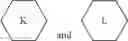
each independently represent one or more of phenylene, phenylene substituted with one or more fluorines and/or one trifluoromethyl, cyclohexenylene, cyclohexylene, or groups formed by substituting one or two non-connected CH2 in cyclohexylene with O, with one of said
and representing phenylene substituted with one trifluoromethyl, wherein said phenylene substituted with one trifluoromethyl may be substituted with fluorine.
2. The liquid crystal compound according to claim 1, wherein said liquid crystal compound represented by formula I is a compound represented by formula Ia, Ib, Ic or Id:
wherein R1 and R2 each independently represent H, an alkyl group having a carbon atom number of 1-5, an alkenyl group having a carbon atom number of 2-6, or an alkoxy group having a carbon atom number of 1-5, wherein any CH2 therein may be substituted with cyclopentyl, cyclobutyl or cyclopropyl;
represents one or more of
and
n represents 1 or 2.
3. The liquid crystal compound according to claim 1, wherein said liquid crystal compound represented by formula I is a compound represented by formulas I1 to I34:
wherein each R1 independently represents H, an alkyl group having a carbon atom number of 1-5, an alkenyl group having a carbon atom number of 2-6, or an alkoxy group having a carbon atom number of 1-5, wherein any CH2 therein may be substituted with cyclopentyl, cyclobutyl or cyclopropyl;
each R21 independently represents H, an alkyl group having a carbon atom number of 1-5, an alkenyl group having a carbon atom number of 2-6, or an alkoxy group having a carbon atom number of 1-5; and
each (F) independently represents F or H.
4. A liquid crystal mixture, comprising one or more compounds represented by formula I among the liquid crystal compounds of claim 1, and one or more compounds represented by formula II
wherein R3 and R4 each independently represent H, an alkyl group having a carbon atom number of 1-5, an alkenyl group having a carbon atom number of 2-6, or an alkoxy group having a carbon atom number of 1-5, wherein any CH2 therein may be substituted with cyclopentyl, cyclobutyl or cyclopropyl;
m represents 1 or 2; and
each independently represent one or more of phenylene, cyclohexylene and/or cyclohexenylene.
5. The liquid crystal mixture according to claim 4, wherein the concentrations in mass percentage of said compound represented by formula I and said compound represented by formula II are respectively 1-40% and 1-65%.
6. The liquid crystal mixture according to claim 4, wherein said one or more compounds represented by formula II are one or more of compounds represented by formulas II1 to II22 below:
7. The liquid crystal mixture according to claim 4, wherein said liquid crystal mixture further comprises one or more of compounds represented by formulas III1 to III14 below:
wherein each R5 independently represents H, an alkyl group having a carbon atom number of 1-5, an alkenyl group having a carbon atom number of 2-6, or an alkoxy group having a carbon atom number of 1-5, wherein any CH2 therein may be substituted with cyclopentyl, cyclobutyl or cyclopropyl;
(F) represents F or H; and
(O) represents O or a single bond.
8. The liquid crystal mixture according to claim 4, wherein said liquid crystal mixture further comprises one or more compounds represented by formula IV:
wherein R6 represents H, an alkyl group having a carbon atom number of 1-5, an alkenyl group having a carbon atom number of 2-6, or an alkoxy group having a carbon atom number of 1-5, wherein any CH2 therein may be substituted with cyclopentyl, cyclobutyl or cyclopropyl;
o represents 0 or 1;
each (F) independently represents H or F; and
represents phenylene, cyclohexylene, cyclohexenylene, or a group formed by substituting one or two non-connected CH2 in cyclohexylene with O.
9. The liquid crystal mixture according to claim 4, wherein the liquid crystal mixture may further comprise one or more negative compounds of formula V,
wherein R7 and R8 each independently represent H, an alkyl group having a carbon atom number of 1-5, an alkenyl group having a carbon atom number of 2-6, or an alkoxy group having a carbon atom number of 1-5, wherein any CH2 therein may be substituted with cyclopentyl, cyclobutyl or cyclopropyl;
p and q each independently represent 0, 1 or 2, with 1≤p+q≤3;
Z3 and Z4 each independently represent a single bond, —CH2CH2—, —CH2O—, —OCH2— or —CF2O—; and
and each independently represent one or more of
10. The liquid crystal mixture according to claim 4, wherein said liquid crystal mixture further comprises one or more compounds represented by formula VI:
wherein each P independently represents a polymerizable functional group;
each Sp independently represents a spacer group;
M represents H, -Sp-P, F, an alkyl group having a carbon atom number of 1-5, an alkoxy group having a carbon atom number of 1-5, or an alkenyl group having a carbon atom number of 2-5;
r represents 0, 1 or 2;
Z5 represents a single bond, —COO—, —C≡C—, —C═C— or —CH2O—; and
and each independently represent one or more of a benzene ring, cyclohexane, indane or a naphthalene ring.
11. A liquid crystal display element or liquid crystal display comprising the liquid crystal compound or mixture of any claim 1, wherein said display element or display is an active matrix display element or display or a passive matrix display element or display.
Images & Drawings included:





Sources:
- United States Patent and Trademark Office - verify current appl. status at the USPTO↗
Recent applications in this class:
- » 20250250486 2025-08-07
LIQUID-CRYSTALLINE MEDIUM - » 20250230360 2025-07-17
LIQUID-CRYSTALLINE MEDIUM - » 20250223496 2025-07-10
LIQUID-CRYSTAL MEDIUM - » 20250215323 2025-07-03
LIQUID-CRYSTAL MEDIUM - » 20250163325 2025-05-22
LIQUID CRYSTAL COMPOSITION AND DISPLAY PANEL - » 20250136868 2025-05-01
LIQUID-CRYSTALLINE MEDIUM - » 20250101306 2025-03-27
LIQUID CRYSTAL COMPOSITION AND DISPLAY PANEL - » 20240400900 2024-12-05
POLYMERISABLE COMPOUND, POLYMERISABLE LC MATERIAL AND POLYMER FILM - » 20240376382 2024-11-14
LIQUID-CRYSTALLINE MEDIUM AND LIQUID-CRYSTAL DISPLAY COMPRISING THE SAME AND COMPOUNDS - » 20240360362 2024-10-31
LIQUID CRYSTAL MEDIUM
Recent applications for this Assignee:
- » 20250221301 2025-07-03
BLUE LUMINESCENT COMPOUND, BLUE LUMINESCENT COMPOSITION, AND ORGANIC ELECTROLUMINESCENT DEVICE, DISPLAY DEVICE AND LIGHTING DEVICE COMPRISING SAME - » 20250188345 2025-06-12
BLUE LUMINESCENT COMPOSITION AND ORGANIC ELECTROLUMINESCENT DEVICE COMPRISING BLUE LUMINESCENT COMPOSITION - » 20240315128 2024-09-19
COMPOUND CONTAINING CARBAZOLE DERIVATIVE AND ORGANIC ELECTROLUMINESCENT DEVICE COMPRISING SAME - » 20240158419 2024-05-16
Heteroatom- and cycloalkyl-containing organic compound and organic electroluminescent device containing compound - » 20240018168 2024-01-18
COMPOUND WITH MULTIPLE RESONANCE CHARACTERISTICS AND ORGANIC ELECTROLUMINESCENT DEVICE CONTAINING COMPOUND - » 20230183572 2023-06-15
Liquid crystal composition with good frequency dependence and liquid crystal display element - » 20200239778 2020-07-30
Liquid crystal composition, and liquid crystal display element and liquid crystal display - » 20200239776 2020-07-30
Liquid crystal composition, liquid crystal display element and liquid crystal display - » 20200073180 2020-03-05
Liquid crystal display device - » 20190353963 2019-11-21
Liquid crystal display device