Method for preparing substituted styrene derivatives
US20190177256A1
2019-06-13
16/324,159
2017-08-07
✅ Patent granted
US 10,384,995 B2
2019-08-20
WO; PCT/EP2017/069926; 20170807
WO; WO2018/029140; 20180215
Jafar F Parsa
McBee Moore Woodward & Vanik IP, LLC
2037-08-07
Abstract:
The present invention relates to a method for preparing substituted styrene derivatives.
Inventors:
- Daniel Gallenkamp 10 🇩🇪 Wuppertal, Germany
- MARK JAMES FORD 24 🇩🇪 WIESBADEN-BRECKENHEIM, Germany
- Mark James Ford 1 🇩🇪 Wiesbaden-Breckenhelm, Germany
Assignee:
- Bayer Cropscience Aktiengesellschaft 251 🇩🇪 Monheim am Rhein, Germany
Applicant:
Interested in similar patents?
Get notified when new applications in this technology area are published.
Classification:
C07C37/002 » CPC main
Preparation of compounds having hydroxy or O-metal groups bound to a carbon atom of a six-membered aromatic ring by modification in a side chain by transformation of a functional group, e.g. oxo, carboxyl
C07C37/00 IPC
Preparation of compounds having hydroxy or O-metal groups bound to a carbon atom of a six-membered aromatic ring
C07C309/66 » CPC further
Sulfonic acids; Halides, esters, or anhydrides thereof; Esters of sulfonic acids having sulfur atoms of esterified sulfo groups bound to acyclic carbon atoms of a saturated carbon skeleton Methanesulfonates
C07C39/373 » CPC further
Compounds having at least one hydroxy or O-metal group bound to a carbon atom of a six-membered aromatic ring; Halogenated derivatives with all hydroxy groups on non-condensed rings and with unsaturation outside the aromatic rings
A01N31/08 » CPC further
Biocides, pest repellants or attractants, or plant growth regulators containing organic oxygen or sulfur compounds Oxygen or sulfur directly attached to an aromatic ring system
C07C309/73 » CPC further
Sulfonic acids; Halides, esters, or anhydrides thereof; Esters of sulfonic acids having sulfur atoms of esterified sulfo groups bound to carbon atoms of six-membered aromatic rings of a carbon skeleton to carbon atoms of non-condensed six-membered aromatic rings
C07C33/28 » CPC further
Unsaturated compounds having hydroxy or O-metal groups bound to acyclic carbon atoms Alcohols containing only six-membered aromatic rings as cyclic part with unsaturation outside the aromatic rings
C07C37/06 » CPC further
Preparation of compounds having hydroxy or O-metal groups bound to a carbon atom of a six-membered aromatic ring by conversion of non-aromatic six-membered rings or of such rings formed into aromatic six-membered rings, e.g. by dehydrogenation
Description
The present invention relates to a method for preparing substituted styrene derivatives.
It is already known that substituted styrene derivatives are useful intermediates in the preparation of active agrochemical ingredients (see WO 2012/025557 for example).
Various methods for preparing such substituted styrene derivatives are described in the literature.
A possible method for preparing 3-chloro-2-vinylphenol is described in WO 2015/189114 and U.S. Pat. No. 5,424,460. The preparation is effected by aromatization of 2,2,6-trichloro-1-vinyl-7-oxabicyclo[4.1.0]heptane under basic conditions. A disadvantage of this method is the use of an organometallic reagent for preparing 2,2,6-trichloro-1-vinyl-7-oxabicyclo[4.1.0]heptane and also the tendency of this precursor to oligomer or polymer formation during the preparation.
An alternative and general possibility for preparing 2-vinylphenols consists of the ring-opening of 2,3-dihydrobenzofurans under basic conditions. For example, the treatment of 2,3-dihydrobenzofuran with 2.3 equivalents of LiNH2 as base in HMPA or DMSO at a temperature of 20 to 60° C. and a reaction time of five hours affords 2-vinylphenol with a yield of 95% (Doklady Akademii Nauk SSSR 1978, 239, 1357). A disadvantage of this method is the use of LiNH2 as very strong base and HMPA or DMSO as solvent since these substances are unsuitable for industrial use. The treatment of 2,3-dihydrobenzofuran with 1.5 equivalents of LiNEt2 as base in diethyl ether at a temperature of 35° C. and a reaction time of forty-five hours affords 2-vinylphenol with a yield of 25% (Chem. Ber. 1960, 93, 1496). A disadvantage of this method is the use of LiNEt2 as very strong base and diethyl ether as solvent since these substances are unsuitable for industrial use. Moreover, a low yield of 25% of 2-vinylphenol is achieved by the method described and a very long reaction time is required. For these reasons, the method is unsuitable for industrial use.
Due to the importance of substituted styrene derivatives as a unit for synthesis of novel active agrochemical ingredients, the problem addressed is that of finding a method which can be used on an industrial scale and inexpensively and which circumvents the disadvantages described above. It is also desirable to obtain the specific styrene derivatives with high yield and high purity, such that the target compound preferably does not have to be subjected to any further potentially complex purification.
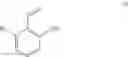
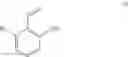
This object is achieved by a method for preparing substituted styrene derivatives of the formula (I):
where
R1 is Cl (Ia), Br (Ib) or methyl (Ic),
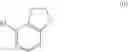
characterized in that a dihydrobenzofuran derivative of the formula (II)
where
R1 is Cl, Br or methyl
is reacted by heating in the presence of an alkoxide or hydroxide base
to give compounds of the formula (I).
Preference is given to a method according to the invention in which the radical definitions of the formulae (I) and (II) are as follows:
R1 is Cl.
DESCRIPTION OF THE PROCESS
The reaction according to the invention is shown in Scheme 1.
The desired styrene derivatives of the general formula (I) are obtained with good yields and in high purity by the method according to the invention.
The method according to the invention has the advantage over the methods described above that the starting materials can be prepared on the industrial scale and, surprisingly, the method can be carried out successfully by using weaker bases such as potassium hydroxide.
Useful solvents for the method according to the invention in principle include any organic solvents or solvent mixtures that are inert under the reaction conditions, including: ethers (such as: 1,2-dimethoxyethane (DME), diglyme, tetrahydrofuran (THF), 2-methyl-THF, anisole and 1,4-dioxane); amide solvents (such as: DMF, N,N-dimethylacetamide (DMAc)) and dipolar aprotic solvents (such as: DMSO). Preference is given to using THF, 2-methyl-THF, dioxane, DME, anisole, diglyme, DMF or DMAc or mixtures of DMAc with ethers or mixtures of DMAc with aromatic solvents (such as: toluene, xylene, chlorobenzene or 1,2-dichlorobenzene). Particular preference is given to using DMAc, DMF or diglyme or mixtures of DMAc or DMF with THF, 2-methyl-THF, dioxane, DME, toluene, xylene, chlorobenzene or 1,2-dichlorobenzene.
Examples of useful alkoxide bases for the method according to the invention include the following: potassium tert-butoxide, sodium tert-butoxide, sodium methoxide, sodium ethoxide or potassium methoxide. Examples of useful hydroxide bases for the method according to the invention include the following: potassium hydroxide. Preference is given to using potassium hydroxide, potassium tert-butoxide, sodium tert-butoxide or sodium methoxide. Particular preference is given to using potassium hydroxide or potassium tert-butoxide.
Particularly preferred are the following combinations of the groups of solvents and bases described above:
-
- a) diglyme in combination with potassium hydroxide
- b) DMAc in combination with potassium hydroxide
- c) DMF in combination with potassium hydroxide
- d) solvent mixture of DMAc with toluene, xylene, chlorobenzene, 1,2-dichlorobenzene, dioxane, DME, 2-methyl-THF or THF in combination with potassium hydroxide
- e) solvent mixture of DMF with toluene, xylene, chlorobenzene, 1,2-dichlorobenzene, dioxane, DME, 2-methyl-THF or THF in combination with potassium hydroxide
- f) DMAc, DMF, THF, 2-methyl-THF, dioxane, DME, anisole or diglyme or mixtures of these solvents in combination with potassium tert-butoxide.
Especially preferred for the method according to the invention is the following combination of solvents and base: DMAc or diglyme and potassium hydroxide.
The temperature in the method according to the invention can be varied within wide limits. A customary operating temperature is from 20° C. to 120° C. The reaction is preferably conducted at a temperature in the range of 80° C. to 120° C. The reaction is particularly preferably conducted at a temperature in the range of 100° C. to 120° C.
The method according to the invention is typically conducted at standard pressure. It is also possible to conduct the reaction under reduced pressure or at elevated pressure (positive pressure).
The molar ratios of the compound of the formula (II) to bases of the group described above may be varied within wide limits. Typically, a molar ratio from 1:1 to 1:5 is employed. For organic bases such as potassium tert-butoxide, a molar ratio from 1:1 to 1:1.5 is preferred. Particular preference is given to a molar ratio of 1:1.1. For inorganic bases such as potassium hydoxide, a molar ratio from 1:2 to 1:4 is preferred. Particular preference is given to a molar ratio of 1:3.
The reaction time is short and is in the range from about 0.5 to about 5 hours. A longer reaction time is possible, but is not economically worthwhile.
The compounds of the formula (I) are not isolated. The compounds of the formula (I) are further reacted to compounds of the formula (III) (Scheme 2), either directly (when using potassium tert-butoxide as base) or after an intermediate work-up (when using potassium hydroxide as base). The reaction to give compounds of the formula (III) is carried out as described in WO 2015/189114.
The following reaction sequence is preferably carried out for preparing the compound of the formula (III):
EXAMPLES
The present invention is elucidated in more detail by the examples which follow, without restricting the invention to these examples.
3-Chloro-2-vinylphenol (Ia)
Potassium hydroxide powder (85%, 22.6 g, 342.9 mmol) is added to a solution of 4-chloro-2,3-dihydro-1-benzofuran (IIa) (19.0 g, 114.3 mmol) in N,N-dimethylacetamide (75 ml) at 20° C., the mixture is heated to 120° C. and stirred at this temperature for 1 hour. The reaction mixture was cooled to ca. 10-15° C., diluted with water (150 ml) and brought to a pH of 1 by slow addition of 37% hydrochloric acid (40 ml). The aqueous phase was extracted twice with toluene (100 ml each time), the combined organic phases washed once with 10% hydrochloric acid (30 ml) and concentrated under reduced pressure to a residual volume of ca. 100 ml. The solution thus obtained is used directly in the next step. Analytical data for 3-chloro-2-vinylphenol are as follows: 1H-NMR (CDCl3, 400 MHz) δ (ppm)=7.08 (dd, J=8.0, 8.0 Hz, 1H), 6.96 (d, J=8.0 Hz, 1H), 6.84 (d, J=8.0 Hz, 1H), 6.79 (dd, J=12.0 Hz, 12.0 Hz, 1H), 5.74 (d, J=12.0 Hz, 1H), 5.73 (s, 1H), 5.68 (d, J=12.0 Hz, 1H).
3-Bromo-2-vinylphenol (Ib)
1H-NMR (DMSO-d6, 400 MHz) δ (ppm)=10.20 (s, 1H), 7.08 (dd, J=8.0, 1.3 Hz, 1H), 6.99 (t, J=8.0 Hz, 1H), 6.89 (dd, J=8.0, 1.0 Hz, 1H), 6.77 (dd, J=17.8, 12.1 Hz, 1H), 6.08 (dd, J=17.8, 2.5 Hz, 1H), 5.51 (dd, J=12.1, 2.5 Hz, 1H).
3-Methyl-2-vinylphenol (Ic)
1H-NMR (DMSO-d6, 400 MHz) δ (ppm)=9.45 (s, 1H), 6.93 (t, J=7.8 Hz, 1H), 6.73 (dd, J=17.9, 11.8 Hz, 1H), 6.69 (d, J=7.8, 1.0 Hz, 1H), 6.63 (d, J=7.8 Hz, 1H), 5.76 (dd, J=17.9, 2.5 Hz, 1H), 5.41 (dd, J=11.9, 2.5 Hz, 1H), 2.27 (s, 3H).
3-Chloro-2-vinylphenyl methanesulphonate (IIIa)
The toluene solution of Ia obtained in the step above was cooled to 0-5° C. and triethylamine (17.5 ml, 125.7 mmol) was added. A 50% solution of methanesulphonyl chloride (9.7 ml, 125.7 mmol) in toluene was metered in over a period of 1 hour at a temperature of 0-5° C. and, after addition was complete, the mixture was stirred at 20° C. for 30 min. Subsequently, the reaction mixture was brought to a pH of 1 by slow addition of 10% hydrochloric acid (50 ml) at 10-15° C. and the aqueous phase extracted twice with a mixture of toluene/tert-butyl methyl ether 4:1 (50 ml each time). The combined organic phases were concentrated under reduced pressure and the residue was recrystallized from ethanol (15 ml) (23.7 g, 89% of theory). 1H-NMR (CDCl3, 400 MHz) δ (ppm)=7.36 (dd, J=8.0, 1.2 Hz, 1H), 7.34 (dd, J=8.0, 1.2 Hz, 1H), 7.23 (t, J=8.0 Hz, 1H), 6.76 (dd, J=18.0 Hz, 11.7 Hz, 1H), 5.91 (dd, J=18.0, 1.6 Hz, 1H), 5.73 (dd, J=11.8, 1.4 Hz, 1H), 3.11 (s, 3H).
3-Bromo-2-vinylphenyl methanesulphonate (IIIb)
1H-NMR (CDCl3, 400 MHz) δ (ppm)=7.56 (dd, J=8.1, 1.1 Hz, 1H), 7.38 (dd, J=8.1, 1.1 Hz, 1H), 7.16 (t, J=8.1 Hz, 1H), 6.72 (dd, J=18.0 Hz, 11.8 Hz, 1H), 5.84 (dd, J=18.0, 1.4 Hz, 1H), 5.71 (dd, J=11.6, 1.4 Hz, 1H), 3.11 (s, 3H).
3-Methyl-2-vinylphenyl methanesulphonate (IIIc)
1H-NMR (CDCl3, 400 MHz) δ (ppm)=7.23 (dd, J=7.8, 1.8 Hz, 1H), 7.18 (t, J=7.8 Hz, 1H), 7.14 (dd, J=7.5, 1.4 Hz, 1H), 6.71 (dd, J=17.8 Hz, 11.8 Hz, 1H), 5.65 (dd, J=11.8, 1.6 Hz, 1H), 5.63 (dd, J=17.8, 1.6 Hz, 1H), 3.09 (s, 3H), 2.37 (s, 3H).
Claims
1. Method for preparing substituted styrene derivative of formula (I):
where
R1 is Cl (Ia), Br (Ib) or methyl (Ic),
comprising reacting a dihydrobenzofuran derivative of formula (II)
where
R1 is Cl, Br or methyl,
by heating in the presence of an alkoxide or hydroxide base
to give a compound of formula (I).
2. Method according to claim 1, wherein
the radical definitions of formulae (I) and (II) are as follows:
R1 is Cl.
3. Method according to claim 1, wherein the base used is potassium tert-butoxide, sodium tert-butoxide, sodium methoxide, sodium ethoxide, potassium methoxide or potassium hydroxide.
4. Method according to claim 1, further comprising using one or more of an amide or ether solvent or mixtures of amide solvents with ethers or aromatic solvents as solvent.
5. Method according to claim 1, further comprising using one or more solvents comprising one or more of DMAc, DMF or diglyme or mixtures of DMAc or DMF with THF, 2-methyl-THF, dioxane, DME, toluene, xylene, chlorobenzene or 1,2-dichlorobenzene.
6. Method according to claim 1, wherein one of the following combinations of solvent and base is used for the reaction:
a) diglyme in combination with potassium hydroxide
b) DMAc in combination with potassium hydroxide
c) DMF in combination with potassium hydroxide
d) solvent mixture of DMAc with toluene, xylene, chlorobenzene, 1,2-dichlorobenzene, dioxane, DME, 2-methyl-THF or THF in combination with potassium hydroxide
e) solvent mixture of DMF with toluene, xylene, chlorobenzene, 1,2-dichlorobenzene, dioxane, DME, 2-methyl-THF or THF in combination with potassium hydroxide
f) DMAc, DMF, THF, 2-methyl-THF, dioxane, DME, anisole or diglyme or mixtures of these solvents in combination with potassium tert-butoxide
g) potassium hydroxide as inorganic base and potassium tert-butoxide as organic base.
Images & Drawings included:


Sources:
- United States Patent and Trademark Office - verify current appl. status at the USPTO↗
Recent applications in this class:
- » 20210340089 2021-11-04
PROCESS FOR THE PREPARATION OF 3,3,5-TRIMETHYLCYCLOHEXYLIDENE BISPHENOL - » 20170362151 2017-12-21
Compositions and methods for reduction of ketones, aldehydes and iminiums, and products produced thereby - » 20130112925 2013-05-09
Method and system for producing graphene and graphenol - » 20120123171 2012-05-17
Catalytic reduction of lignin acids and substituted aliphatic carboxylic acid compounds - » 20110201739 2011-08-18
Method and system for producing graphene and graphenol - » 20060129002 2006-06-15
Process for the synthesis of alkylresorcinols - » 20050054884 2005-03-10
Process for the preparation of a cosmetic active
Recent applications for this Assignee:
- » 20230192617 2023-06-22
AZABICYCLIC(THIO)AMIDES AS FUNGICIDAL COMPOUNDS - » 20220346376 2022-11-03
Method of promoting plant growth effects - » 20210321615 2021-10-21
Active compound combinations containing a thiazoylisoxazoline and a fungicide - » 20210292312 2021-09-23
Herbicidally active 3-phenylisoxazoline-5-carboxamides of tetrahydro and dihydrofuran carboxylic acids and esters - » 20210289777 2021-09-23
Method of reducing crop damage - » 20210261536 2021-08-26
Process for producing heterocylic compounds - » 20210227828 2021-07-29
ACTIVE COMPOUND COMBINATIONS COMPRISING A (THIO)CARBOXAMIDE DERIVATIVE AND A FUNGIDICAL COMPOUND - » 20210163430 2021-06-03
Method for producing 3,4-dichloro-N-(2-cyanophenyl)-5-isothiazolecarboxamide - » 20210161128 2021-06-03
Solid formulation of insecticidal mixtures - » 20210106005 2021-04-15
Tricyclic carboxamides for controlling arthropods