Method of making a fiber preform for ceramic matrix composite (CMC) fabrication utilizing a fugitive binder
US20190185385A1
2019-06-20
16/116,173
2018-08-29
✅ Patent granted
US 10,822,280 B2
2020-11-03
-
-
Alex B Efta
Brinks Gilson & Lione
2038-10-26
Abstract:
A method of making a fiber preform for ceramic matrix composite (CMC) fabrication comprises laminating an arrangement of fibers between polymer sheets comprising an organic polymer, which may function as a fugitive binder during fabrication, to form a flexible prepreg sheet. A plurality of the flexible prepreg sheets are laid up in a predetermined geometry to form a stack, and the stack is heated to soften the organic polymer and bond together the flexible prepreg sheets into a bonded prepreg structure. Upon cooling of the bonded prepreg structure, a rigid preform is formed. The rigid preform is heated at a sufficient temperature to pyrolyze the organic polymer. Thus, a porous preform that may undergo further processing into a CMC is formed.
Inventors:
- Stephen Harris 11 🇺🇸 Long Beach, CA, United States
- David Smolenski 1 🇺🇸 Huntington Beach, CA, United States
Assignee:
- Rolls-Royce High Temperature Composites Inc. 113 🇺🇸 Cypress, CA, United States
Applicant:
Interested in similar patents?
Get notified when new applications in this technology area are published.
Classification:
C04B37/008 » CPC further
Joining burned ceramic articles with other burned ceramic articles or other articles by heating by means of an interlayer consisting of an organic adhesive, e.g. phenol resin or pitch
B32B37/203 » CPC further
Methods or apparatus for laminating, e.g. by curing or by ultrasonic bonding characterised by the properties of the layers with all layers existing as coherent layers before laminating involving the assembly of continuous webs only One or more of the layers being plastic
B32B2260/04 » CPC further
Layered product comprising an impregnated, embedded, or bonded layer wherein the layer comprises an impregnation, embedding, or binder material Impregnation, embedding, or binder material
B32B2262/105 » CPC further
Composition or structural features of fibres which form a fibrous or filamentary layer or are present as additives; Inorganic fibres Ceramic fibres
C04B2235/3826 » CPC further
Aspects relating to ceramic starting mixtures or sintered ceramic products; Composition of constituents of the starting material or of secondary phases of the final product; Constituents and secondary phases not being of a fibrous nature; Non-oxide ceramic constituents or additives; Carbides Silicon carbides
C04B2235/524 » CPC further
Aspects relating to ceramic starting mixtures or sintered ceramic products; Composition of constituents of the starting material or of secondary phases of the final product; Constituents or additives of the starting mixture chosen for their shape or used because of their shape or their physical appearance; Constituents or additives characterised by their shapes; Fibers; Inorganic Non-oxidic, e.g. borides, carbides, silicides or nitrides
C04B2235/604 » CPC further
Aspects relating to ceramic starting mixtures or sintered ceramic products; Aspects relating to the preparation, properties or mechanical treatment of green bodies or pre-forms Pressing at temperatures other than sintering temperatures
C04B2235/616 » CPC further
Aspects relating to ceramic starting mixtures or sintered ceramic products; Aspects relating to the preparation, properties or mechanical treatment of green bodies or pre-forms Liquid infiltration of green bodies or pre-forms
C04B2237/38 » CPC further
Aspects relating to ceramic laminates or to joining of ceramic articles with other articles by heating; Composition of layers of ceramic laminates or of ceramic or metallic articles to be joined by heating, e.g. Si substrates; Ceramic Fiber or whisker reinforced
C04B35/657 » CPC further
Shaped ceramic products characterised by their composition ; Ceramics compositions ; Processing powders of inorganic compounds preparatory to the manufacturing of ceramic products; Forming processes; Processing powders of inorganic compounds preparatory to the manufacturing of ceramic products; Processes involving a melting step for manufacturing refractories
C08J2329/04 » CPC further
Characterised by the use of homopolymers or copolymers of compounds having one or more unsaturated aliphatic radicals, each having only one carbon-to-carbon double bond, and at least one being terminated by an alcohol, ether, aldehydo, ketonic, acetal, or ketal radical; Hydrolysed polymers of esters of unsaturated alcohols with saturated carboxylic acids; Derivatives of such polymer; Homopolymers or copolymers of unsaturated alcohols Polyvinyl alcohol; Partially hydrolysed homopolymers or copolymers of esters of unsaturated alcohols with saturated carboxylic acids
C08J2339/06 » CPC further
Characterised by the use of homopolymers or copolymers of compounds having one or more unsaturated aliphatic radicals, each having only one carbon-to-carbon double bond, and at least one being terminated by a single or double bond to nitrogen or by a heterocyclic ring containing nitrogen; Derivatives of such polymers; Homopolymers or copolymers of monomers containing heterocyclic rings having nitrogen as ring member Homopolymers or copolymers of N-vinyl-pyrrolidones
C08J2369/00 » CPC further
Characterised by the use of polycarbonates; Derivatives of polycarbonates
C04B35/634 IPC
Shaped ceramic products characterised by their composition ; Ceramics compositions ; Processing powders of inorganic compounds preparatory to the manufacturing of ceramic products; Forming processes; Processing powders of inorganic compounds preparatory to the manufacturing of ceramic products; Preparing or treating the powders individually or as batches ; preparing or treating macroscopic reinforcing agents for ceramic products, e.g. fibres; mechanical aspects section using additives specially adapted for forming the products, e.g.. binder binders; Organic additives Polymers
C04B35/638 » CPC further
Shaped ceramic products characterised by their composition ; Ceramics compositions ; Processing powders of inorganic compounds preparatory to the manufacturing of ceramic products; Forming processes; Processing powders of inorganic compounds preparatory to the manufacturing of ceramic products; Preparing or treating the powders individually or as batches ; preparing or treating macroscopic reinforcing agents for ceramic products, e.g. fibres; mechanical aspects section using additives specially adapted for forming the products, e.g.. binder binders Removal thereof
B32B38/00 IPC
Ancillary operations in connection with laminating processes
B29C48/08 IPC
Extrusion moulding, i.e. expressing the moulding material through a die or nozzle which imparts the desired form; Apparatus therefor characterised by the shape of the extruded material at extrusion; Flat, e.g. panels flexible, e.g. films
B29C48/00 » CPC further
Extrusion moulding, i.e. expressing the moulding material through a die or nozzle which imparts the desired form; Apparatus therefor
B32B37/20 IPC
Methods or apparatus for laminating, e.g. by curing or by ultrasonic bonding characterised by the properties of the layers with all layers existing as coherent layers before laminating involving the assembly of continuous webs only
C04B37/00 IPC
Joining burned ceramic articles with other burned ceramic articles or other articles by heating
B29C70/00 » CPC further
Shaping composites, i.e. plastics material comprising reinforcements, fillers or preformed parts, e.g. inserts
C08J5/12 IPC
Manufacture of articles or shaped materials containing macromolecular substances Bonding of a preformed macromolecular material to the same or other solid material such as metal, glass, leather, e.g. using adhesives
B32B9/00 IPC
Layered products characterised by particular substances used
B32B9/00 IPC
Layered products comprising a layer of a particular substance not covered by groups -
C08J5/24 » CPC further
Manufacture of articles or shaped materials containing macromolecular substances Impregnating materials with prepolymers which can be polymerised , e.g. manufacture of prepregs
B32B5/024 » CPC further
Layered products characterised by the non- homogeneity or physical structure, i.e. comprising a fibrous, filamentary, particulate or foam layer; Layered products characterised by having a layer differing constitutionally or physically in different parts characterised by structural features of a layer Woven fabric
C04B35/80 IPC
Shaped ceramic products characterised by their composition ; Ceramics compositions ; Processing powders of inorganic compounds preparatory to the manufacturing of ceramic products; Ceramic products containing macroscopic reinforcing agents containing non-metallic materials Fibres, filaments, whiskers, platelets, or the like
B32B5/02 IPC
Layered products characterised by the non- homogeneity or physical structure, i.e. comprising a fibrous, filamentary, particulate or foam layer; Layered products characterised by having a layer differing constitutionally or physically in different parts characterised by structural features of a layer
B32B9/005 » CPC further
Layered products comprising a layer of a particular substance not covered by groups - comprising one layer of ceramic material, e.g. porcelain, ceramic tile
B32B37/153 » CPC further
Methods or apparatus for laminating, e.g. by curing or by ultrasonic bonding characterised by the properties of the layers with at least one layer being manufactured and immediately laminated before reaching its stable state, e.g. in which a layer is extruded and laminated while in semi-molten state at least one layer is extruded and immediately laminated while in semi-molten state
C04B35/62894 » CPC further
Shaped ceramic products characterised by their composition ; Ceramics compositions ; Processing powders of inorganic compounds preparatory to the manufacturing of ceramic products; Forming processes; Processing powders of inorganic compounds preparatory to the manufacturing of ceramic products; Preparing or treating the powders individually or as batches ; preparing or treating macroscopic reinforcing agents for ceramic products, e.g. fibres; mechanical aspects section; Coating the powders or the macroscopic reinforcing agents with more than one coating layer
C08J5/121 » CPC further
Manufacture of articles or shaped materials containing macromolecular substances; Bonding of a preformed macromolecular material to the same or other solid material such as metal, glass, leather, e.g. using adhesives by heating
B32B2260/021 » CPC further
Layered product comprising an impregnated, embedded, or bonded layer wherein the layer comprises an impregnation, embedding, or binder material; Composition of the impregnated, bonded or embedded layer Fibrous or filamentary layer
B32B38/0036 » CPC further
Ancillary operations in connection with laminating processes Heat treatment
B32B37/15 IPC
Methods or apparatus for laminating, e.g. by curing or by ultrasonic bonding characterised by the properties of the layers with at least one layer being manufactured and immediately laminated before reaching its stable state, e.g. in which a layer is extruded and laminated while in semi-molten state
B29B11/00 » CPC further
Making preforms
C04B35/628 IPC
Shaped ceramic products characterised by their composition ; Ceramics compositions ; Processing powders of inorganic compounds preparatory to the manufacturing of ceramic products; Forming processes; Processing powders of inorganic compounds preparatory to the manufacturing of ceramic products; Preparing or treating the powders individually or as batches ; preparing or treating macroscopic reinforcing agents for ceramic products, e.g. fibres; mechanical aspects section Coating the powders or the macroscopic reinforcing agents
Description
RELATED APPLICATIONS
The present patent document claims the benefit of priority under 35 U.S.C. § 119(e) to U.S. Provisional Patent Application Ser. No. 62/599,154, filed Dec. 15, 2017, and which is hereby incorporated by reference in its entirety.
TECHNICAL FIELD
The present disclosure is directed generally to ceramic matrix composite (CMC) fabrication and more specifically to a method to improve the preforming process.
BACKGROUND
A typical method for the production of silicon carbide (SiC) based ceramic matrix composites includes weaving dry fiber into a two-dimensionally (2D) woven fabric or drum-winding to form a unidirectional tape, preforming the fabric or tape to the desired geometry, coating the fiber preform with a fiber interphase, rigidizing the preform with silicon carbide using chemical vapor infiltration (CVI), infiltrating a ceramic slurry into the rigidized preform, and subsequently melt infiltrating with molten silicon or an alloy thereof to form a ceramic matrix composite.
Since the preforming process sets the initial component geometry and also determines the skeletal material structure for subsequent processing operations, it is paramount that the fabric or tape can conform to the desired curvatures and be sufficiently immobilized such that there is no distortion on the bulk level or the individual fiber tow/filament level.
In some cases, the preforming process may utilize the native “sizing” on the fiber, which is typically composed of polyvinyl alcohol (PVA), polyethylene oxide (PEO) or another low char-yielding high purity polymer, along with a solvent or polymer solution to perform a “wet” layup of the fabric/tape into the desired geometry; then the preform is dried or cured while constrained in the tool to yield a rigid preform. This preform can then be placed in a high-temperature capable tool for ridigization and the polymer can be pyrolized to leave the fiber essentially bare for CVI. While this method may be effective in some cases, it can lead to considerable inhomogeneity in the preform due to non-uniform fiber compaction, particularly around tight radii, poor control of individual tow aspect ratios, preform skew and delamination, and generally insufficient control over the fabric/tape placement.
BRIEF SUMMARY
An improved method of making a fiber preform for ceramic matrix composite (CMC) fabrication that utilizes a fugitive binder is described herein. The fiber preform may exhibit both a controlled tow aspect ratio and uniform fiber compaction.
The method comprises laminating an arrangement of fibers between polymer sheets comprising an organic polymer, which may function as a fugitive binder during fabrication, to form a flexible prepreg sheet. A plurality of the flexible prepreg sheets are laid up in a predetermined geometry to form a stack, and the stack is heated to soften the organic polymer and bond together the flexible prepreg sheets into a bonded prepreg structure. Upon cooling of the bonded prepreg structure, a rigid preform is formed. The rigid preform is then heated at a sufficient temperature to pyrolyze the organic polymer. Thus, a porous preform that may undergo further processing into a CMC is formed.
BRIEF DESCRIPTION OF THE DRAWINGS
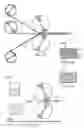
FIG. 1A is a schematic showing an exemplary laminating process to form a flexible prepreg sheet.
FIG. 1B shows a preform fabricated by laying up a plurality of the flexible prepreg sheets in a predetermined geometry. Each of the flexible prepreg sheets includes an arrangement of fibers in an organic polymer (or fugitive binder).
FIG. 1C is a schematic of an exemplary porous preform formed from the preform of FIG. 1B upon pyrolysis of the fugitive binder.
FIG. 2 is a schematic showing an exemplary fabrication process for the polymer sheets used for the laminating step.
DETAILED DESCRIPTION
A method of pre-impregnating a fabric or tape with a polymeric binder to immobilize the fibers in a tacky, flexible, and low char-yielding polymer has been developed to form flexible prepreg sheets for ceramic matrix composite (CMC) fabrication. The flexible prepreg sheets are laid up to form a preform of any desired geometry during a preforming step. The prepreg method allows pre-compaction of the fabric or tape to the desired thickness, thereby enabling a controlled tow aspect ratio and uniform fiber compaction in the preform. After lay-up, the flexible prepreg sheets undergo a bonding step to form a rigid preform, and, in a subsequent step, the polymeric binder (organic polymer) is removed by pyrolysis. The polymeric binder may be referred to as a fugitive binder since it is employed during fabrication of the CMC but does not appear in the final composite. After pyrolysis, the resulting porous preform may then undergo further processing into a CMC.
Referring now to FIG. 1A, the method entails laminating an arrangement of fibers between polymer sheets in order to form a flexible prepreg sheet. The polymer sheets comprise an organic polymer (e.g., an aliphatic organic polymer) that is preferably high purity and low char-yielding. The arrangement of fibers may be a 2D woven arrangement, a unidirectional arrangement, or another suitable arrangement of fibers. The fibers employed in the process are typically ceramic fibers, and they may also be continuous fibers having a length much greater than the diameter or width. As illustrated in FIG. 1A, the lamination may comprise feeding the polymer sheets 10 and the arrangement of fibers 12 into opposing rollers 14 in a continuous or batch process, and extracting a laminated product (the flexible prepreg sheet) 16 from the rollers 14 on the downstream side. The lamination is typically carried out at a temperature ranging from about 80° C. to about 200° C., or from 100° C. to about 125° C., and may entail applying a compressive pressure in a range from about 50 psi (about 0.3 MPa) to about 200 psi (about 1.4 MPa). An ambient environment (e.g., air) is typically suitable for the laminating process.
Once laminated, the flexible prepreg sheet may be passively or actively cooled (e.g., via an air jet). In the process illustrated in FIG. 1A, it may be possible to control the extraction rate of the flexible prepreg sheet 16 from the rollers 14 such that the flexible prepreg sheet 16 cools as it is extracted. After lamination, the organic polymer may function as a fugitive binder for the arrangement of fibers 12 in the flexible prepreg sheet 16. Thus, in the present disclosure the terms “fugitive binder” and “organic polymer” may be used interchangeably.
Advantageously, the flexible prepreg sheet formed from the laminating process is tacky and pliable but able to retain the desired thickness, which may be determined based on the laminating parameters (e.g., roller spacing). Typically, the flexible prepreg sheet has a predetermined thickness in a range from about 0.004 in to about 0.015 in. The predetermined thickness may be substantially uniform (within ±0.001 in) along the length and width of the sheet. The flexible prepreg sheet preferably includes a homogeneous distribution of the organic polymer throughout, such that each fiber is coated with the fugitive binder. After pre-pregging, conventional “dry layup” polymer matrix composite-derived preforming methods can be utilized to improve the homogeneity of the resulting preform.
To form the preform, a number of the flexible prepreg sheets 16 formed in the lamination process are laid up in a predetermined geometry, thereby forming a stack 18 of the flexible prepreg sheets 16. For example, the predetermined geometry may be a planar stack, as shown in the schematic of FIG. 1B, or the geometry may be a curved stack or another simple or complex three-dimensional shape. The lay-up may proceed in a desired orientation sequence so as to achieve a particular orientation of each flexible prepreg sheet 16 with respect to the underlying flexible prepreg sheet 16. The stack 18 may be formed in a double-sided tool or a single-sided tool, optionally with the aid of vacuum or pressure.
The stack 18 is then heated to soften the organic polymer and bond together the flexible prepreg sheets 16 into a bonded prepreg structure. The heating of the stack 18 may be carried out at a low temperature sufficient to soften but not liquefy the polymer, and thus the low temperature may be referred to as a “softening temperature.” Typically, the softening temperature is in a range from about 80° C. to about 200° C., or from about 100° C. to about 130° C. During the heating, the stack 18 may also be compressed at a low pressure (e.g., about 50 psi to about 100 psi, or about 0.3 MPa to about 0.7 MPa). Vacuum bagging or mechanical pressing may be used to compress the stack. Upon cooling, a rigid preform 20 that exhibits both a controlled tow aspect ratio and uniform fiber compaction may be obtained.
The rigid preform 20 is then heated at a sufficient temperature (“pyrolysis temperature”) to pyrolyze the organic polymer. In other words, the organic polymer is removed from the rigid preform 20. Thus, a porous preform 30 that can be used for further CMC processing is formed, as shown schematically in FIG. 1C. The porous preform 30 comprises the arrangement of fibers as laid up during the preforming process, and thus may alternatively be referred to as a fiber preform. Typically, the laying-up, the heating of the stack 18, and the cooling are carried out in a first tool, and the heating of the rigid preform 20 to pyrolyze the fugitive binder and form the porous preform 30 is carried out in a second tool suitable for elevated temperature exposure. The pyrolysis temperature is higher than the softening temperature, and may be at least about 200° C. or at least about 250° C. and as high as about 1000° C.
Prior to the laminating process, each of the polymer sheets 10 may be formed by extrusion from a polymer precursor 22, as shown schematically in FIG. 2. The polymer precursor 22 may comprise a polymer solution 24 or a polymer melt formed from polymer solids (e.g., pellets) 26 that are heated for extrusion. As would be recognized by the skilled artisan, the polymer solution or melt comprises the organic polymer of the polymer sheets. The extrusion is typically carried out at a temperature in a range from about 80° C. to about 200° C., or from about 100° C. to about 125° C., and may take place in an ambient environment (e.g., air). The process may be a batch process or a continuous process. In other words, the extrusion of the polymer sheets may occur in line with the lamination process, such that the extruded sheets are formed and continuously fed into the laminating process to form the flexible prepreg sheets. Alternatively, the polymer sheets may be fabricated in a batch process separate from the lamination process or obtained from a commercial supplier prior to lamination.
The organic polymer (and fugitive binder) employed in the process may comprise a low molecular weight polymer. Also or alternatively, the organic polymer may be a CO2-derived polymer. For example, the organic polymer may be selected from polyethylene carbonate, polypropylene carbonate, polyvinyl alcohol, and/or polyvinyl pyrollidone. During pyrolysis, the organic polymer forms a decomposition product that primarily or exclusively comprises carbon dioxide and water. For this reason, the organic polymer may be said to be low char-yielding.
To form a CMC from the porous preform prepared as described above, the method may further include CMC processing steps known in the art. For example, the porous preform may be coated with a fiber interphase material such as boron nitride to form a coated preform. The coated preform may be rigidized (e.g., using chemical vapor infiltration) to form a rigidized preform. Rigidization may refer to a coating process in which a matrix material such as silicon carbide is deposited on the fibers to stiffen the preform. The rigidized preform may be infiltrated with a slurry comprising a particulate matrix material to form an impregnated preform. The particulate matrix material includes ceramic particles that become part of the ceramic matrix after melt infiltration. Typically, these ceramic particles comprise silicon carbide, but they may also or alternatively include silicon nitride, alumina, and/or aluminosilicate. One or more reactive elements, such as carbon and/or refractory metals such as molybdenum or tungsten, may also be included in the slurry used to infiltrate the rigidized preform; such reactive element(s) may be present to react with the molten material during melt infiltration. The impregnated preform may be melt infiltrated with a molten metal or alloy, thereby densifying the impregnated preform and fabricating the CMC. In a preferred embodiment, the fibers of the CMC are ceramic fibers comprising silicon carbide and the ceramic matrix comprises silicon carbide. The CMC that is formed in this case may be referred to as a silicon carbide/silicon carbide or SiC/SiC composite.
To clarify the use of and to hereby provide notice to the public, the phrases “at least one of <A>, <B>, . . . and <N>” or “at least one of <A>, <B>, . . . <N>, or combinations thereof” or “<A>, <B>, . . . and/or <N>” are defined by the Applicant in the broadest sense, superseding any other implied definitions hereinbefore or hereinafter unless expressly asserted by the Applicant to the contrary, to mean one or more elements selected from the group comprising A, B, . . . and N. In other words, the phrases mean any combination of one or more of the elements A, B, . . . or N including any one element alone or the one element in combination with one or more of the other elements which may also include, in combination, additional elements not listed.
While various embodiments have been described, it will be apparent to those of ordinary skill in the art that many more embodiments and implementations are possible. Accordingly, the embodiments described herein are examples, not the only possible embodiments and implementations.
Furthermore, the advantages described above are not necessarily the only advantages, and it is not necessarily expected that all of the described advantages will be achieved with every embodiment.
Claims
What is claimed is:1. A method of making a fiber preform for ceramic matrix composite (CMC) fabrication, the method comprising:
laminating an arrangement of fibers between polymer sheets comprising an organic polymer, thereby forming a flexible prepreg sheet;
laying up a plurality of the flexible prepreg sheets in a predetermined geometry, thereby forming a stack of the flexible prepreg sheets;
heating the stack to soften the organic polymer and bond together the flexible prepreg sheets, thereby forming a bonded prepreg structure;
cooling the bonded prepreg structure, thereby forming a rigid preform; and
heating the rigid preform at a sufficient temperature to pyrolyze the organic polymer, thereby forming a porous preform for further processing.
2. The method of claim 1, further comprising:
coating the porous preform with a fiber interphase material to form a coated preform;
rigidizing the coated preform to form a rigidized preform; and
infiltrating the rigidized preform with a slurry comprising a particulate matrix material to form an impregnated preform; and
melt infiltrating the impregnated preform with a molten metal or alloy, thereby fabricating a CMC.
3. The method of claim 1, wherein the laying-up, the heating of the stack, and the cooling are carried out in a first tool, and
wherein the heating of the rigid preform to pyrolyze the organic polymer is carried out in a second tool.
4. The method of claim 1, further comprising, prior to the laminating, forming each of the polymer sheets by extrusion from a polymer precursor.
5. The method of claim 4, wherein the polymer precursor comprises a polymer solution or a polymer melt.
6. The method of claim 4, wherein the extrusion is carried out at a temperature in a range from about 80° C. to about 200° C.
7. The method of claim 1, wherein the lamination is carried out at a temperature in a range from about 80° C. to about 200° C.
8. The method of claim 1, wherein the lamination comprises a pressure in a range from about 50 psi to about 200 psi.
9. The method of claim 1, wherein the lamination comprises feeding the polymer sheets and the arrangement of fibers into opposing rollers and extracting the flexible prepreg sheet from the opposing rollers.
10. The method of claim 1, wherein the flexible prepreg sheet comprises a thickness in a range from about 0.004 in to about 0.015 in.
11. The method of claim 1, wherein the arrangement of fibers comprises a woven arrangement or a unidirectional arrangement.
12. The method of claim 1, wherein the predetermined geometry comprises a planar or curved shape.
13. The method of claim 1, wherein the heating of the stack is carried out at a softening temperature in a range from about 80° C. to about 200° C.
14. The method of claim 1, further comprising, during the heating of the stack, compressing the stack at a pressure in a range from about 50 psi to about 100 psi.
15. The method of claim 14, wherein the compression of the stack comprises vacuum bagging or pressing.
16. The method of claim 1, wherein the heating of the rigid preform to pyrolyze the organic polymer is carried out at a pyrolysis temperature in a range from about 200° C. to about 1000° C.
17. The method of claim 1, wherein the organic polymer is selected from the group consisting of polyethylene carbonate, polypropylene carbonate, polyvinyl alcohol, and polyvinyl pyrollidone.
18. The method of claim 1, wherein a decomposition product of the organic polymer during pyrolysis consists of carbon dioxide and water.
19. The method of claim 1, wherein the fibers comprise a ceramic selected from the group consisting of silicon carbide and silicon nitride.
20. The method of claim 1, wherein the fibers are continuous fibers comprising silicon carbide, and the CMC includes a matrix comprising silicon carbide.
Images & Drawings included:

Sources:
- United States Patent and Trademark Office - verify current appl. status at the USPTO↗
Recent applications in this class:
- » 20210261470 2021-08-26
Induction melt infiltration processing of ceramic matrix composite components - » 20210198155 2021-07-01
SiC composite and method for manufacturing the same - » 20210155553 2021-05-27
Preform for ceramic matrix composite, method of making a ceramic matrix composite and ceramic matrix composite - » 20200361826 2020-11-19
Rapid processing of laminar composite components - » 20200308066 2020-10-01
Ceramic Matrix Composite Articles and Methods for Manufacturing the Same - » 20200255345 2020-08-13
Internal cooling circuits for CMC and method of manufacture - » 20200207668 2020-07-02
Pre-impregnated fibre-reinforced composite material and fibre-reinforced composite ceramic material, obtained by forming and subsequent pyrolysis of said pre-impregnated material - » 20200207667 2020-07-02
Preform for making a component of a braking system - » 20200181029 2020-06-11
A METHOD OF FABRICATING A PART OUT OF CERAMIC MATRIX COMPOSITE MATERIAL - » 20200157011 2020-05-21
Method of fabricating a ceramic composite
Recent applications for this Assignee:
- » 20250226123 2025-07-10
CLADDING AND ASSEMBLY FOR NUCLEAR APPLICATIONS - » 20240425422 2024-12-26
METHOD OF FORMING A SMOOTH AS-FABRICATED CERAMIC MATRIX COMPOSITE (CMC) SURFACE - » 20240025812 2024-01-25
Method of producing machined CMC surfaces without exposing fiber - » 20240024963 2024-01-25
METHOD OF MACHINING HOLES AND CHAMFERS IN CERAMIC MATRIX COMPOSITES - » 20230193782 2023-06-22
Gas turbine engine components with metallic and ceramic foam for improved cooling - » 20230193763 2023-06-22
Gas turbine engine components with foam filler for impact resistance - » 20230192564 2023-06-22
Joining material with silicon carbide particles and reactive additives - » 20230130393 2023-04-27
Ceramic matrix composite airfoil with heat transfer augmentation - » 20220341335 2022-10-27
Barrier layer and surface preparation thereof - » 20220169574 2022-06-02
Method to fabricate a machinable ceramic matrix composite