System and Method for Generating Forensic Documents Using a Feedback Loop System with Field Data
US20190188254A1
2019-06-20
15/849,476
2017-12-20
Abstract:
In an illustrative embodiment, the method and system creates forensic engineering reports for use in legal proceedings with minimal errors from field evidence. The method and system may be a workflow implemented using program instructions hosted on a cloud, where the program instructions may be executed on-demand from multiple locations. Evidence is uploaded to the workflow and input into template reports and documents with feedback loops for error minimization.
Assignee:
- BSC Forensics LLC 2 🇺🇸 Rosenberg, TX, United States
Interested in similar patents?
Get notified when new applications in this technology area are published.
Classification:
G06Q10/103 » CPC further
Administration; Management; Office automation, e.g. computer aided management of electronic mail or groupware ; Time management, e.g. calendars, reminders, meetings or time accounting Workflow collaboration or project management
G06Q10/06313 » CPC further
Administration; Management; Resources, workflows, human or project management, e.g. organising, planning, scheduling or allocating time, human or machine resources; Enterprise planning; Organisational models; Operations research or analysis; Resource planning, allocation or scheduling for a business operation Resource planning in a project environment
H04L67/12 » CPC further
Network arrangements or protocols for supporting network services or applications; Protocols specially adapted for proprietary or special-purpose networking environments, e.g. medical networks, sensor networks, networks in vehicles or remote metering networks
G06Q10/06 IPC
Administration; Management Resources, workflows, human or project management, e.g. organising, planning, scheduling or allocating time, human or machine resources; Enterprise planning; Organisational models
G10L15/26 IPC
Speech recognition Speech to text systems
G06Q10/10 IPC
Administration; Management Office automation, e.g. computer aided management of electronic mail or groupware ; Time management, e.g. calendars, reminders, meetings or time accounting
G06Q50/18 » CPC further
Systems or methods specially adapted for specific business sectors, e.g. utilities or tourism; Services Legal services; Handling legal documents
Description
SUMMARY OF ILLUSTRATIVE EMBODIMENTS
The present invention is directed at a method and system for creating forensic engineering reports for use in legal proceedings with minimal errors from field evidence. In one, illustrative embodiment, the method and system consists of a workflow that may be implemented using a processor and a memory operably coupled to the processor and having program instructions stored therein, where the processor is operable to execute the program instructions. In another illustrative embodiment, the method and system consists of a workflow that may be implemented using program instructions hosted on a cloud, the program instructions may be executed on-demand from multiple locations.
The workflow initiates with the creation of a project. Then, from a remote site location, evidence pieces are added to the project, where at least one has an audio component and at least one has a visual component. Then, either a person or a program instruction triggers a transcription of the audio component and pairs and tags the visual component to match up with the transcribed audio. The transcribed audio with visual evidence are the main components of a final report or set of documents to be used in legal proceedings.
The forgoing general description of the illustrative implementations and the following detailed description thereof are merely exemplary aspects of the teachings of this disclosure, and are not restrictive.
BRIEF DESCRIPTION OF THE DRAWINGS
The accompanying drawings, which are incorporated in and constitute a part of the specification, illustrate one or more embodiments and, together with the description, explain these embodiments. The accompanying drawings have not necessarily been drawn to scale. Any values dimensions illustrated in the accompanying graphs and figures are for illustration purposes only and may or may not represent actual or preferred values or dimensions. Where applicable, some or all features may not be illustrated to assist in the description of underlying features. In the drawings:
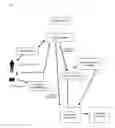
FIG. 1 Flow chart depicting a process and system for receiving field photographs and data and integrating into an automatically updated document
FIG. 2. A flowchart depicting a template document with linked fields and a feedback loop for automated updates.
DETAILED DESCRIPTION OF ILLUSTRATIVE EMBODIMENTS
The description set forth below in connection with the appended drawings is intended to be a description of various, illustrative embodiments of the disclosed subject matter. Specific features and functionalities are described in connection with each illustrative embodiment; however, it will be apparent to those skilled in the art that the disclosed embodiments may be practiced without each of those specific features and functionalities.
Reference throughout the specification to “one embodiment” or “an embodiment” means that a particular feature, structure, or characteristic described in connection with an embodiment is included in at least one embodiment of the subject matter disclosed. Thus, the appearance of the phrases “in one embodiment” or “in an embodiment” in various places throughout the specification is not necessarily referring to the same embodiment. Further, the particular features, structures or characteristics may be combined in any suitable manner in one or more embodiments. Further, it is intended that embodiments of the disclosed subject matter cover modifications and variations thereof.
It must be noted that, as used in the specification and the appended claims, the singular forms “a,” “an,” and “the” include plural referents unless the context expressly dictates otherwise. That is, unless expressly specified otherwise, as used herein the words “a,” “an,” “the,” and the like carry the meaning of “one or more.” Additionally, it is to be understood that terms such as “left,” “right,” “top,” “bottom,” “front,” “rear,” “side,” “height,” “length,” “width,” “upper,” “lower,” “interior,” “exterior,” “inner,” “outer,” and the like that may be used herein merely describe points of reference and do not necessarily limit embodiments of the present disclosure to any particular orientation or configuration. Furthermore, terms such as “first,” “second,” “third,” etc., merely identify one of a number of portions, components, steps, operations, functions, and/or points of reference as disclosed herein, and likewise do not necessarily limit embodiments of the present disclosure to any particular configuration or orientation.
Furthermore, the terms “approximately,” “about,” “proximate,” “minor variation,” and similar terms generally refer to ranges that include the identified value within a margin of 20%, 10% or preferably 5% in certain embodiments, and any values there between.
All of the functionalities described in connection with one embodiment are intended to be applicable to the additional embodiments described below except where expressly stated or where the feature or function is incompatible with the additional embodiments. For example, where a given feature or function is expressly described in connection with one embodiment but not expressly mentioned in connection with an alternative embodiment, it should be understood that the inventors intend that that feature or function may be deployed, utilized or implemented in connection with the alternative embodiment unless the feature or function is incompatible with the alternative embodiment.
FIG. 1 depicts a flow chart representing field personnel using a system and method to create a detailed, customer-facing document. In the depicted figure, a field personnel [100] collects field data using a recording device [105] and a camera [110]. The recording device contains a real-time recording with the field personnel's [100] document from the field location. The camera [110] may record photographs, videos, or both. The field personnel [100] has instructions from a scope of work [115] with communicated or standard specific categories [120] of items to record or document on. After completion, the recording and the photographs or video are uploaded to a cloud-based platform [125] under the specific categories [120], such as audio categories [120a] or visual categories [120b]. Uploading the data into a project folder, and/or changing the system status, triggers the remaining steps in the workflow [130]. The recording then enters an automatic transcription workflow [135]. The visual categories [120b] and the transcription created from the automatic transcription workflow [135] populates template documents [140]. Simultaneously, checklists and requests to other personnel [145] are created to continue the document generation process. Finally, a final document or set of documents [150] are created that is error-reduced. This process ensures an error-reduced document is created with minimal input from personnel, advantageously saving time and labor while increasing document quality and minimizing error.
FIG. 2 depicts an exemplary document with linked fields. Embedded in the document creation system overview depicted in FIG. 1, the document templates [200] have pre-determined linked fields [205a] and [205b]. When the final documents [210] are populated from the transcription [215] and the photographs or recordings [220], any changes to linked field [205a] would automatically change field [205b], and vice versa. The creation of an automatically updating feedback loop system for the document creation advantageously increases consistency and operational efficiency in the forensic document creation process.
In some embodiments, the document creation system may contain video or photographs or a combination of both. The video may not be embedded in the document directly but may be incorporated into the documents by other means, such as still images. This may require additional checklists or workflows to be created.
In some embodiments, the field personnel may be assisted by an automated flying photograph or video capture device, commonly known as a drone. The field personnel may simply be dictating into the recording device while watching the drone footage and may not be in the field.
While certain embodiments have been described, these embodiments have been presented by way of example only, and are not intended to limit the scope of the present disclosures. Indeed, the novel methods, apparatuses and systems described herein can be embodied in a variety of other forms; furthermore, various omissions, substitutions and changes in the form of the methods, apparatuses and systems described herein can be made without departing from the spirit of the present disclosures. The accompanying claims and their equivalents are intended to cover such forms or modifications as would fall within the scope and spirit of the present disclosures.
Claims
1. A system for generating forensic engineering documents using automated feedback loops, the system executable by a processor containing logic or a series of instructions that, when executed by the processor, with the proper inputs, cause the processor to perform the automated feedback loops, the system comprising:
at least one statement of work with evidentiary categories to be automatedly populated with digital audio and visual data from said field study hosted on a cloud-based project management platform, which hosts the processor;
a person conducting a field study, collecting digital audio on a field recording device and visual data on a photo or video capture device;
digital audio input from a field recording device and digital visual input from a photo or video capture device uploaded to a cloud-based file storage used in direct conjunction with the said cloud-based project management platform and assigned to evidentiary categories;
where uploading said digital audio input to said cloud-based project management platform prompts a transcription program to convert said digital audio input into a transcription;
where converting said digital audio input into a transcription triggers automatedly placing the said digital visual input at tagged points in the transcription;
where converting said digital audio input into a transcription triggers sending of form checklists and task lists for additional informational inputs and verification;
the said transcription, the said digital visual input, and the said additional informational inputs, populate a designated field in a document template to generate at least one final forensic engineering document ready for use in a legal proceeding;
where the said final forensic engineering document contains fields linking to all similar values within the said final forensic engineering document so that any changes made to one field in the said final forensic engineering document automatically updates all other linked fields within the said final forensic engineering document; and
the system producing an error-reduced final forensic engineering document with said visual data and said transcription ready for use in legal proceedings.
2. A method for generating forensic engineering documents using automated feedback loops, the method executable by a processor containing logic or a series of instructions that, when executed by the processor, with the proper inputs, cause the processor to perform the automated feedback loops, the method comprising:
populating at least one form with evidentiary categories with audio and photographic data from a field study hosted on a cloud-based project management platform;
a person conducting a field study, collecting digital audio on a field recording device and visual data on a photo or video capture device
uploading a digital audio input into a field recording device and a digital visual input from a photo or video capture device to a cloud-based file storage used in direct conjunction with the said cloud-based project management platform and assigned to the said evidentiary categories;
where uploading said digital audio input to said cloud-based project management platform prompts a transcription program to convert said digital audio input into a transcription;
where converting said digital audio input into a transcription triggers automatedly placing the said digital visual input at tagged points in the transcription;
where converting said audio input into a transcription triggers sending of a form checklists and a task lists for additional informational inputs and verification;
the said transcription, the said digital visual input, and the said additional informational inputs, populate a designated field in a document template to generate at least one final forensic engineering document;
where the said final forensic engineering document contains fields linking to all similar values within the said final forensic engineering document so that any changes made to one field in the said final forensic engineering document automatically updates all other linked fields within the said final forensic engineering document; and
the system producing an error-reduced final forensic engineering document with said visual data and said transcription ready for use in legal proceedings.
3. A computerized method for generating a forensic document for use in legal proceeding using automated feedback loops comprising:
creating, by a processor, a work project on a local server or a remote server;
receiving, by a processor, a plurality of user uploaded evidence pieces comprising at least one digital audio component and at least one digital visual component, wherein the evidence pieces are assigned to evidentiary categories; and
populating, by a processor, at least one form with the evidentiary categories and storing on a cloud-based project management platform.
4. The computerized method of claim 3, wherein uploading evidentiary pieces further comprises,
converting automatedly, by a processor using a transcription program installed thereon, the digital audio components into a digital transcription, and the digital visual components into a plurality of informational inputs.
5. The computerized method of claim 4, further comprising,
transmitting automatedly, by the processor, a form checklist and a task list for additional user informational inputs and verification.
6. The computerized method of claim 5, further comprising,
populating, by a processor, a designated field in a document template to generate at least one final forensic document ready for use in a legal proceeding, by using said transcription, the digital visual input and the additional informational inputs.
7. The computerized method of claim 6, wherein said final forensic document contains fields linking to all similar values within said final document so that any changes made to one field automatically updates all other linked fields.
Images & Drawings included:


Sources:
- United States Patent and Trademark Office - verify current appl. status at the USPTO↗
Similar patent applications:
Recent applications in this class:
- » 20210149992 2021-05-20
Automatic template generation with inbuilt template logic interface - » 20210089619 2021-03-25
Methods to create and use responsive forms with externalized configurations and artifacts - » 20210056165 2021-02-25
System and method of contextually converting a media file into an electronic document - » 20210004436 2021-01-07
Task templates and social task discovery - » 20200410049 2020-12-31
PERSONALIZING ONLINE FEED PRESENTATION USING MACHINE LEARNING - » 20200387568 2020-12-10
METHODS AND SYSTEMS FOR REPORTING REQUESTS FOR DOCUMENTING PHYSICAL OBJECTS VIA LIVE VIDEO AND OBJECT DETECTION - » 20200372104 2020-11-26
METHODS, SYSTEMS, APPARATUSES AND DEVICES FOR FACILITATING BOOK FORMATTING - » 20200342051 2020-10-29
Artificial intelligence (AI) based generation of data presentations - » 20200320166 2020-10-08
Dynamic whiteboard templates - » 20200320165 2020-10-08
TECHNIQUES FOR GENERATING TEMPLATES FROM REFERENCE SINGLE PAGE GRAPHIC IMAGES
Recent applications for this Assignee:
- » 20200104953 2020-04-02
System and Method for Generating Forensic Documents Using a Feedback Loop System with Field Data