Oligomeric and polymeric species comprising cyclobutane units
US20190211142A1
2019-07-11
16/239,938
2019-01-04
✅ Patent granted
US 11,001,667 B2
2021-05-11
-
-
Catherine S Branch
J. Clinton Wimbish | Nexsen Pruet PLLC
2039-01-04
Abstract:
In one aspect, oligomeric and polymeric species are described herein exhibiting new architectures and associated properties. In some embodiments, such species are synthesized by oligomerization or polymerization of diene monomer via cycloaddition in the presence of a transition metal complex. Oligomers described herein, for example, comprise cyclobutane units in the oligomer backbone. Similarly, a polymers described herein comprise cyclobutane units in the polymer backbone.
Inventors:
- Paul J. CHIRIK 21 🇺🇸 Princeton, NJ, United States
- C. Rose KENNEDY 1 🇺🇸 Princeton, NJ, United States
- Sarah RUSSELL 1 🇺🇸 Los Alamos, NM, United States
- Sarah Tondreau 1 🇺🇸 Los Alamos, NM, United States
Assignee:
- THE TRUSTEES OF PRINCETON UNIVERSITY 868 🇺🇸 Princeton, NJ, United States
Applicant:
Interested in similar patents?
Get notified when new applications in this technology area are published.
Classification:
B01J31/18 IPC
Catalysts comprising hydrides, coordination complexes or organic compounds containing coordination complexes containing nitrogen, phosphorus, arsenic or antimony as complexing atoms, e.g. in pyridine ligands, or in resonance therewith, e.g. in isocyanide ligands C=N-R or as complexed central atoms
B01J31/183 » CPC further
Catalysts comprising hydrides, coordination complexes or organic compounds containing coordination complexes containing nitrogen, phosphorus, arsenic or antimony as complexing atoms, e.g. in pyridine ligands, or in resonance therewith, e.g. in isocyanide ligands C=N-R or as complexed central atoms the ligands containing nitrogen; Cyclic ligands, including e.g. non-condensed polycyclic ligands, comprising at least one complexing nitrogen atom as ring member, e.g. pyridine; Ligands comprising condensed ring systems, e.g. acridine, carbazole with more than one complexing nitrogen atom, e.g. phenanthroline
B01J2231/12 » CPC further
Catalytic reactions performed with catalysts classified in; Polymerisation reactions involving at least dual use catalysts, e.g. for both oligomerisation and polymerisation Olefin polymerisation or copolymerisation
B01J2531/842 » CPC further
Additional information regarding catalytic systems classified in; Complexes comprising metals of Group VIII as the central metal; Metals of the iron group Iron
C08G2261/3323 » CPC further
Macromolecular compounds obtained by reactions forming a carbon-to-carbon link in the main chain of the macromolecule; Monomer units or repeat units incorporating structural elements in the main chain incorporating non-aromatic structural elements in the main chain containing only carbon atoms derived from other monocyclic systems
C08G2261/362 » CPC further
Macromolecular compounds obtained by reactions forming a carbon-to-carbon link in the main chain of the macromolecule; Monomer units or repeat units incorporating structural elements in the main chain; Oligomers, i.e. comprising up to 10 repeat units containing only carbon atoms
C08G61/04 » CPC main
Macromolecular compounds obtained by reactions forming a carbon-to-carbon link in the main chain of the macromolecule; Macromolecular compounds containing only carbon atoms in the main chain of the macromolecule, e.g. polyxylylenes only aliphatic carbon atoms
B01J31/1805 » CPC further
Catalysts comprising hydrides, coordination complexes or organic compounds containing coordination complexes containing nitrogen, phosphorus, arsenic or antimony as complexing atoms, e.g. in pyridine ligands, or in resonance therewith, e.g. in isocyanide ligands C=N-R or as complexed central atoms the ligands containing nitrogen
B01J31/1815 » CPC further
Catalysts comprising hydrides, coordination complexes or organic compounds containing coordination complexes containing nitrogen, phosphorus, arsenic or antimony as complexing atoms, e.g. in pyridine ligands, or in resonance therewith, e.g. in isocyanide ligands C=N-R or as complexed central atoms the ligands containing nitrogen; Cyclic ligands, including e.g. non-condensed polycyclic ligands, comprising at least one complexing nitrogen atom as ring member, e.g. pyridine with more than one complexing nitrogen atom, e.g. bipyridyl, 2-aminopyridine
B01J2231/125 » CPC further
Catalytic reactions performed with catalysts classified in; Polymerisation reactions involving at least dual use catalysts, e.g. for both oligomerisation and polymerisation; Olefin polymerisation or copolymerisation Radical (co)polymerisation, e.g. mediators therefor
C07C2/465 » CPC further
Preparation of hydrocarbons from hydrocarbons containing a smaller number of carbon atoms by addition between unsaturated hydrocarbons homo- or co-oligomerisation with ring formation, not being a Diels-Alder conversion of conjugated dienes only; Catalytic processes with hydrides or organic compounds
C07C2/46 IPC
Preparation of hydrocarbons from hydrocarbons containing a smaller number of carbon atoms by addition between unsaturated hydrocarbons homo- or co-oligomerisation with ring formation, not being a Diels-Alder conversion of conjugated dienes only Catalytic processes
B01J2231/20 » CPC further
Catalytic reactions performed with catalysts classified in Olefin oligomerisation or telomerisation
B01J2531/0244 » CPC further
Additional information regarding catalytic systems classified in; Compositional aspects of complexes used, e.g. polynuclearity; Complexes comprising multidentate ligands, i.e. more than 2 ionic or coordinative bonds from the central metal to the ligand, the latter having at least two donor atoms, e.g. N, O, S, P; Rigid ligands, e.g. extended sp2-carbon frameworks or geminal di- or trisubstitution Pincer-type complexes, i.e. consisting of a tridentate skeleton bound to a metal, e.g. by one to three metal-carbon sigma-bonds
B01J2531/0294 » CPC further
Additional information regarding catalytic systems classified in; Compositional aspects of complexes used, e.g. polynuclearity; Complexes comprising ligands or other components characterized by their function "Non-innocent" or "non-spectator" ligands, i.e. ligands described as, or evidently, taking part in the catalytic reaction beyond merely stabilizing the central metal as spectator or ancilliary ligands, e.g. by electron transfer to or from the central metal or by intra-/intermolecular chemical reactions, e.g. disulfide coupling, H-abstraction
B01J2531/845 » CPC further
Additional information regarding catalytic systems classified in; Complexes comprising metals of Group VIII as the central metal; Metals of the iron group Cobalt
B01J2531/847 » CPC further
Additional information regarding catalytic systems classified in; Complexes comprising metals of Group VIII as the central metal; Metals of the iron group Nickel
C07C2531/22 » CPC further
Catalysts comprising hydrides, coordination complexes or organic compounds containing coordination complexes Organic complexes
C07C2601/04 » CPC further
Systems containing only non-condensed rings with a four-membered ring
C08F136/04 » CPC further
Homopolymers of compounds having one or more unsaturated aliphatic radicals, at least one having two or more carbon-to-carbon double bonds the radical having only two carbon-to-carbon double bonds conjugated
Description
RELATED APPLICATION DATA
The present application claims priority pursuant to 35 U.S.C. § 119(e) to U.S. Provisional Patent Application Ser. No. 62/614,022 filed Jan. 5, 2018 which is incorporated herein by reference in its entirety.
FIELD
The present invention relates to oligomers and polymers and, in particular, to oligomers and polymers comprising cyclobutane units in the oligomer or polymer backbone.
BACKGROUND
Conjugated dienes are typically polymerized by free radical, anionic or transition metal-mediated 1,2- or 1,4-addition to faun branched or linear polymers, respectively. As a result of few polymerization options, the potential for development of new oligomeric and polymeric species from diene monomers is limited.
SUMMARY
In one aspect, oligomeric and polymeric species are described herein exhibiting new architectures and associated properties. In some embodiments, such species are synthesized by oligomerization or polymerization of diene monomer via cycloaddition in the presence of a transition metal complex. Oligomers described herein, for example, comprise cyclobutane units in the oligomer backbone. Similarly, polymers described herein comprise cyclobutane units in the polymer backbone.
In another aspect, methods of polymerization are also described. A method of polymerization comprises providing a reaction mixture including a diene monomer component and polymerizing the diene monomer component in the presence of a transition metal complex or derivative thereof to provide a polymer, wherein the transition metal complex is of Formula (I):
wherein M is selected from the group consisting of iron, cobalt and nickel and wherein R1-R7 are independently selected from the group consisting of hydrogen, alkyl, heteroalkyl, cycloalkyl, heterocycloalkyl, aryl and heteroaryl, wherein the alkyl, heteroalkyl, cycloalkyl, heterocycloalkyl, aryl and heteroaryl are optionally substituted with one or more substituents selected from the group consisting of (C1-C10)-alkyl, (C1-C10)-alkenyl, alkoxy, halo and hydroxyl; and wherein L is selected from the group consisting of halo, N2, alkene/diene, carboxylate and CO, and n is 1 or 2. As described herein, polymerization of the diene monomer may proceed via cycloaddition with the transition metal complex serving as catalyst.
The resulting polymer comprises cyclobutane units in the polymer backbone. In some embodiments, the cyclobutane units are directly bonded to one another in the backbone. Alternatively, the cyclobutane units can be separated by one or more methylenes in the polymer backbone. Moreover, oligomers comprising cyclobutane units in the oligomer backbone can be synthesized according to the foregoing method wherein diene monomer is limited to the desired oligomer chain length and/or the polymerization is otherwise terminated at the desired oligomer chain length.
These and other embodiments are described in further detail in the detailed description which follows.
BRIEF DESCRIPTION OF THE DRAWINGS
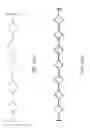
FIG. 1(a) illustrates a polymer comprising cyclobutane units according to some embodiments.
FIG. 1(b) illustrates incorporation of atoms from adjacent diene monomers into a cyclobutane unit according to some embodiments.
FIG. 2 illustrates a polymer comprising cyclobutane units according to some embodiments.
DETAILED DESCRIPTION
Embodiments described herein can be understood more readily by reference to the following detailed description and examples and their previous and following descriptions. Elements, apparatus and methods described herein, however, are not limited to the specific embodiments presented in the detailed description and examples. It should be recognized that these embodiments are merely illustrative of the principles of the present invention. Numerous modifications and adaptations will be readily apparent to those of skill in the art without departing from the spirit and scope of the invention.
Definitions
The term “alkyl” as used herein, alone or in combination, refers to a straight or branched saturated hydrocarbon group optionally substituted with one or more substituents. For example, an alkyl can be C1-C30.
The term “alkene” or “alkenyl” as used herein, alone or in combination, refers to a straight or branched chain hydrocarbon group having at least one carbon-carbon double bond and optionally substituted with one or more substituents
The term “aryl” as used herein, alone or in combination, refers to an aromatic monocyclic or multicyclic ring system optionally substituted with one or more ring substituents.
The term “heteroaryl” as used herein, alone or in combination, refers to an aromatic monocyclic or multicyclic ring system in which one or more of the ring atoms is an element other than carbon, such as nitrogen, oxygen and/or sulfur.
The term “cycloalkyl” as used herein, alone or in combination, refers to a non-aromatic, mono- or multicyclic ring system optionally substituted with one or more ring substituents.
The term “heterocycloalkyl” as used herein, alone or in combination, refers to a non-aromatic, mono- or multicyclic ring system in which one or more of the atoms in the ring system is an element other than carbon, such as nitrogen, oxygen or sulfur, alone or in combination, and wherein the ring system is optionally substituted with one or more ring substituents.
The term “heteroalkyl” as used herein, alone or in combination, refers to an alkyl moiety as defined above, having one or more carbon atoms in the chain, for example one, two or three carbon atoms, replaced with one or more heteroatoms, which may be the same or different, where the point of attachment to the remainder of the molecule is through a carbon atom of the heteroalkyl radical.
The term “alkoxy” as used herein, alone or in combination, refers to the moiety RO—, where R is alkyl or alkenyl defined above.
The term “halo” as used herein, alone or in combination, refers to elements of Group VIIA of the Periodic Table (halogens). Depending on chemical environment, halo can be in a neutral or anionic state.
I. Oligomers and Polymers
Oligomers and polymers comprising cyclobutane units in the oligomer or polymer backbone are described herein. In forming part of the backbone, the cyclobutane units are not pendant groups. FIG. 1(a) illustrates a polymer comprising cyclobutane units in the polymer backbone according to some embodiments. In the embodiment of FIG. 1(a), the cyclobutane units exhibit a 1,3-incorporation into the polymer backbone. Moreover, the cyclobutane units are directly linked with one another. In other embodiments, the linked cyclobutane units can exhibit a 1,2-incorporation into the polymeric backbone. A mixture of 1,3-incorporation and 1,2-incorporation of cyclobutane units is also possible. As described further herein, the embodiment of FIG. 1(a) can be synthesized via cycloaddition polymerization of 1,3-butadiene in the presence of transition metal complex. Cyclobutane units of the polymer, for example, incorporate atoms from linked butadiene monomers, as illustrated in FIG. 1(b).
FIG. 2 illustrates another embodiment of a polymer comprising cyclobutane units in the polymer backbone. In the embodiment of FIG. 2, the cyclobutane units are separated by one or more methylene groups. Depending on identity of the diene monomer component, m, n and p can be the same or can vary from one another. In some embodiments, m, n and p are independently selected from 0-10. Additionally, the cyclobutane units may be separated by one or more heteroatoms or heteroatom moieties (O, NR, SiR2, etc.). In further embodiments, the cyclobutane units may be separated by one more ring structures, such as cycloalkyl or heterocycloalkyl. Any combination of methylene groups, heteroatoms and/or ring structures may also separate the cyclobutane units.
Polymeric species comprising cyclobutane units in the polymer backbone may also exhibit tacticity. Depending on specific identity of the diene monomer component and/or transition metal complex, the resulting polymer can be isotactic, syndiotactic or atactic. In some embodiments, polymeric species described herein can also comprise one or more pendent groups. Pendent groups, for example, can comprise alkyl or alkenyl moieties. Substituted diene monomer can be employed to incorporate pendant groups into the polymer. In some embodiments, isoprene or 2-vinyl-1,3-butadiene monomer can result in polymer comprising alkyl and alkenyl pendant groups, respectively. The pendent groups can provide additional functionality for cross-linking or altering chain packing and/or crystallinity. In some embodiments, polymers described herein are entirely aliphatic.
Chain ends of polymeric species described herein can exhibit reactive moieties or functionalities permitting incorporation of the polymer into various architectures including, but not limited to, block copolymers, graft copolymers and/or crosslinked structures. In other embodiments, chain ends can comprise a capping agent. The capping agent may provide orthogonal protection for reaction specificity and/or self-assembled architectures comprising the polymer. Capping agents can also be chemical modified to impart various functionalities including hydroxyl, amine, carboxyl or glycol moieties. In some embodiments, capping agents are coupled to one or more polymer ends via hydrofunctionalization including, but not limited to, hydroboration, hydrosilylation and hydroformylation.
Notably, oligomers can have any of the foregoing properties described herein for polymeric species. Oligomers can have any desired chain length. In some embodiments, for example, an oligomer incorporates as little as 2 to 5 cyclobutane units.
II. Methods of Oligomerization/Polymerization
In another aspect, methods of polymerization are also described. A method of polymerization comprises providing a reaction mixture including a diene monomer component and polymerizing the diene monomer component in the presence of a transition metal complex or derivative thereof to provide a polymer, wherein the transition metal complex is of Formula (I):
wherein M is selected from the group consisting of iron, cobalt and nickel and wherein R1-R7 are independently selected from the group consisting of hydrogen, alkyl, heteroalkyl, cycloalkyl, heterocycloalkyl, aryl and heteroaryl, wherein the alkyl, heteroalkyl, cycloalkyl, heterocycloalkyl, aryl and heteroaryl are optionally substituted with one or more substituents selected from the group consisting of (C1-C10)-alkyl, (C1-C10)-alkenyl, alkoxy, halo and hydroxyl; and wherein L is selected from the group consisting of halo, N2, alkene/diene, carboxylate and CO, and N2 and n is 1 or 2. As described herein, polymerization of the diene monomer may proceed via cycloaddition with the transition metal complex serving as catalyst. The resulting polymer comprises cyclobutane units in the polymer backbone. Moreover, the resulting polymer can have any properties described in Section I herein.
The diene monomer component of the reaction mixture can comprise conjugated diene such as 1,3-butadiene and/or substituted 1,3-butadiene. Alternatively, the diene monomer component can comprise non-conjugated diene or a mixture of conjugated diene and non-conjugated diene. Specific composition of the diene monomer component can be selected according to the desired structure and properties of the polymer.
In some embodiments, the transition metal complex of Formula (I) is provided to the reaction mixture under an inert atmosphere due to air and/or moisture sensitivity of the complex. The transition metal complex may also be formed in situ. Bench stable precursor, such as MX2 (M=Fe, Co or Ni and X=halo, pseudohalide, sulfonate, etc.) can be added to the reaction mixture along with PDI [bis(imino)pyridine] ligand and reductant (RMgX, RLi, NaBHEt3, Mg, AlR3, etc.) to generate the transition metal complex in situ. Optionally, initiator and/or chain terminating agent may also be added to the reaction mixture.
Oligomers comprising cyclobutane units in the oligomer backbone can be synthesized according to the foregoing method wherein diene monomer is limited to the desired oligomer chain length and/or the polymerization is otherwise terminated at the desired oligomer chain length.
These and other embodiments are further illustrated by the following non-limiting example.
Example 1—Diene Polymerization
Under an inert atmosphere, a high-pressure reaction vessel was primed with precatalyst (PDIFe(N2)n=1,2 or PDIFe(diene) where PDI describes generic substituted pyridine-2,6-diimine ligand). Optionally, hydrocarbon solvent may be added. The head-space of the vessel was evacuated, and 1,3-butadiene monomer was added by a calibrated gas addition or by vacuum transfer of a known mass of liquid reagent. Optionally, initiator and/or chain-terminating agent (α-olefins or branched conjugated dienes) may also be added. The reaction was maintained with mixing until complete consumption of the monomer occurred or the desired chain length was obtained. The volatile reaction components were removed by vacuum transfer. The non-volatile residue was diluted with solvent and either a) passed through a short plug of silica and concentrated in vacuo, or b) precipitated from solution with the addition of an anti-solvent and collected by filtration. The resulting polymeric material is dried under vacuum.
Various embodiments of the invention have been described in fulfillment of the various objects of the invention. It should be recognized that these embodiments are merely illustrative of the principles of the present invention. Numerous modifications and adaptations thereof will be readily apparent to those skilled in the art without departing from the spirit and scope of the invention.
Claims
1. An oligomer comprising:
cyclobutane units in the oligomer backbone.
2. The oligomer of claim 1, wherein the cyclobutane units are directly bonded to one another in the oligomer backbone.
3. The oligomer of claim 1, wherein the cyclobutane units are separated by one or more methylenes in the polymer backbone.
4. The oligomer of claim 1, wherein cyclobutane units comprise 1,2-cyclobutane.
5. The oligomer of claim 1, wherein cyclobutane units comprise 1,3-cyclobutane.
6. The oligomer of claim 1, wherein the cyclobutane units comprise a mixture of 1,2-cyclobutane and 1,3-cyclobutane.
7. The oligomer of claim 1 comprising 2 to 5 cyclobutane units.
8. The oligomer of claim 1, wherein the oligomer is entirely aliphatic.
9. The oligomer of claim 1 further comprising one or more pendant groups.
10. The oligomer of claim 9, wherein the pendant groups comprise alkyl or alkenyl moieties.
11. A polymer comprising:
cyclobutane units in the polymer backbone.
12. The polymer of claim 11, wherein the cyclobutane units are directly bonded to one another in the polymer backbone.
13. The polymer of claim 11, wherein the cyclobutane units are separated by one or more methylenes in the polymer backbone.
14. The polymer of claim 11, wherein the cyclobutane units comprise 1,2-cyclobutane.
15. The polymer of claim 11, wherein the cyclobutane units comprise 1,3-cyclobutane.
16. The polymer of claim 11, wherein the cyclobutane units comprise a mixture of 1,2-cyclobutane and 1,3-cyclobutane.
17. The polymer of claim 11, wherein the polymer is entirely aliphatic.
18. The polymer of claim 11 further comprising one or more pendant groups.
19. The polymer of claim 18, wherein the pendant groups comprise alkyl or alkenyl moieties.
20. The polymer of claim 11 further comprising a capping agent.
21. The polymer of claim 20, wherein the capping agent provides orthogonal protection.
22. A method polymerization comprising:
providing a reaction mixture including a diene monomer component; and
polymerizing the diene monomer component in the presence of a transition metal complex or derivative thereof to provide a polymer, wherein the transition metal complex is of Formula (I):
wherein M is selected from the group consisting of iron, cobalt and nickel and wherein R1-R7 are independently selected from the group consisting of hydrogen, alkyl, heteroalkyl, cycloalkyl, heterocycloalkyl, aryl and heteroaryl, wherein the alkyl, heteroalkyl, cycloalkyl, heterocycloalkyl, aryl and heteroaryl are optionally substituted with one or more substituents selected from the group consisting of (C1-C10)-alkyl, (C1-C10)-alkenyl, alkoxy, halo and hydroxyl; and wherein L is selected from the group consisting of halo, N2, alkene/diene, carboxylate and CO, and N2 and n is 1 or 2.
23. The method of claim 22, wherein the polymer comprises cyclobutane units in the polymer backbone.
24. The method of claim 23, wherein the cyclobutane units are directly bonded to one another in the polymer backbone.
25. The method of claim 23, wherein the cyclobutane units are separated by one or more methylenes in the polymer backbone.
26. The method of claim 23, wherein the cyclobutane units comprise 1,2-cyclobutane.
27. The method of claim 23, wherein the cyclobutane units comprise 1,3-cyclobutane.
28. The method of claim 23, wherein wherein the cyclobutane units comprise a mixture of 1,2-cyclobutane and 1,3-cyclobutane.
29. The method of claim 23, wherein the polymer is entirely aliphatic.
30. The method of claim 23, wherein the diene monomer component comprises conjugated diene.
31. The method of claim 23, wherein the diene monomer component comprises non-conjugated conjugated diene.
32. The method of claim 23, wherein the diene monomer component comprises a mixture of conjugated diene and non-conjugated diene.
33. The method of claim 23, wherein the transition metal complex is formed in situ.
34. The method of claim 22, wherein the polymerization proceeds via cycloaddition.
35. The method of claim 22, wherein M is iron.
Images & Drawings included:



Sources:
- United States Patent and Trademark Office - verify current appl. status at the USPTO↗
Recent applications in this class:
- » 20250051510 2025-02-13
CARBON-IODINE CONJUGATED POLYMER AND PREPARATION THEREOF, AND USE THEREOF FOR PREPARING LOCALIZATION MARKER - » 20240174790 2024-05-30
CAPPED BISPHENOL POLYINDANE OLIGOMER AND COMPOSITION, METHOD OF MANUFACTURE, AND ARTICLES MADE THEREFROM - » 20240117103 2024-04-11
POLYMER, METHOD OF PREPARING SAME, AND POLYURETHANE PREPARED BY USING SAME - » 20230399456 2023-12-14
CARBON-IODINE CONJUGATED POLYMER AND PREPARATION THEREOF, AND USE THEREOF FOR PREPARING LOCALIZATION MARKER - » 20230348658 2023-11-02
COPOLYMERS AND TERPOLYMERS OF POST MODIFIED POLYACRYLATES AS EFFICIENT GAS HYDRATE INHIBITORS - » 20220127413 2022-04-28
IMIDAZOLES AND IMIDAZOLIUM CATIONS WITH EXCEPTIONAL ALKALINE STABILITY - » 20220025110 2022-01-27
Resin composition, molded body, optical lens, and optical lens unit - » 20210246259 2021-08-12
LAYER COMPRISING CHAINS OF STABLE CARBYNE AND A METHOD FOR PREPARING THE SAME - » 20210206910 2021-07-08
Composition for forming underlayer film for imprinting, method for producing composition for forming underlayer film for imprinting, pattern producing method, method for manufacturing semiconductor element, cured product, and kit - » 20210206909 2021-07-08
Polymer and organic light emitting device comprising same
Recent applications for this Assignee:
- » 20250283885 2025-09-11
MODULAR BIOSENSOR FOR RECEPTOR TYROSINE KINASE ACTIVITY - » 20250249454 2025-08-07
CONTROLLING AND MANIPULATING FLOATING DROPLETS - » 20250223452 2025-07-10
SUPERCONDUCTING WS2-BASED NANOSHEET INK - » 20250197902 2025-06-19
CHEMOENZYMATIC SYNTHESIS OF SELENONEINE AND ITS ANALOGS - » 20250183534 2025-06-05
BROADBAND AND MULTI-BAND PLANAR ANTENNA ARRAY ARCHITECTURES - » 20250182843 2025-06-05
Systems and Methods for Analyzing Genetic Data for Assessment of Gene Regulatory Activity - » 20250179478 2025-06-05
FLUORESCENT METABOLICALLY INCORPORATED NUCLEOSIDES FOR LIVE CELL IMAGING OF RN - » 20250169516 2025-05-29
METHODS, DEVICES AND COMPOSITIONS FOR PRESERVING HUMAN MILK - » 20250165257 2025-05-22
LIGHTWEIGHT OUT OF ORDER SCHEDULER FOR PROCESSING UNITS - » 20250148260 2025-05-08
DATA MULTIPLEXING FOR NEURAL NETWORKS