Camera optical lens
US20190227265A1
2019-07-25
16/102,054
2018-08-13
✅ Patent granted
US 10,649,175 B2
2020-05-12
-
-
Ricky L Mack | Gary W O'Neill
IPro, PLLC | Na Xu
2039-01-09
Abstract:
The present disclosure discloses a camera optical lens. The camera optical lens includes, in an order from an object side to an image side, a first lens, a second lens, a third lens, a fourth lens, a fifth lens, a sixth lens and a seventh lens. The first lens is made of glass material, the second lens is made of plastic material, the third lens is made of plastic material, the fourth lens is made of plastic material, the fifth lens is made of plastic material, the sixth lens is made of plastic material, and the seventh lens is made of plastic material. The camera optical lens further satisfies specific conditions.
Assignee:
- AAC TECHNOLOGIES PTE. LTD 958 🇸🇬 Singapore, Singapore
Applicant:
Interested in similar patents?
Get notified when new applications in this technology area are published.
Classification:
G02B13/0025 » CPC further
Optical objectives specially designed for the purposes specified below; Miniaturised objectives for electronic devices, e.g. portable telephones, webcams, PDAs, small digital cameras characterised by the lens design having at least one aspherical surface having one lens only
G02B27/00 IPC
Optical systems or apparatus not provided for by any of the groups -
G02B13/00 IPC
Optical objectives specially designed for the purposes specified below
G02B27/0037 » CPC further
Optical systems or apparatus not provided for by any of the groups - for optical correction, e.g. distorsion, aberration with diffracting elements
G02B9/64 » CPC main
Optical objectives characterised both by the number of the components and their arrangements according to their sign, i.e. + or - having more than six components
G02B13/0045 » CPC further
Optical objectives specially designed for the purposes specified below; Miniaturised objectives for electronic devices, e.g. portable telephones, webcams, PDAs, small digital cameras characterised by the lens design having at least one aspherical surface having five or more lenses
G02B27/0025 » CPC further
Optical systems or apparatus not provided for by any of the groups - for optical correction, e.g. distorsion, aberration
Description
FIELD OF THE PRESENT DISCLOSURE
The present disclosure relates to optical lens, in particular to a camera optical lens suitable for handheld devices such as smart phones and digital cameras and imaging devices.
DESCRIPTION OF RELATED ART
With the emergence of smart phones in recent years, the demand for miniature camera lens is increasing day by day, but the photosensitive devices of general camera lens are no other than Charge Coupled Device (CCD) or Complementary metal-Oxide Semiconductor Sensor (CMOS sensor), and as the progress of the semiconductor manufacturing technology makes the pixel size of the photosensitive devices shrink, coupled with the current development trend of electronic products being that their functions should be better and their shape should be thin and small, miniature camera lens with good imaging quality therefor has become a mainstream in the market. In order to obtain better imaging quality, the lens that is traditionally equipped in mobile phone cameras adopts a three-piece or four-piece lens structure. And, with the development of technology and the increase of the diverse demands of users, and under this circumstances that the pixel area of photosensitive devices is shrinking steadily and the requirement of the system for the imaging quality is improving constantly, the five-piece, six-piece and seven-piece lens structure gradually appear in lens design. There is an urgent need for ultra-thin wide-angle camera lenses which have good optical characteristics and the chromatic aberration of which is fully corrected.
BRIEF DESCRIPTION OF THE DRAWINGS
Many aspects of the exemplary embodiments can be better understood with reference to the following drawings. The components in the drawing are not necessarily drawn to scale, the emphasis instead being placed upon clearly illustrating the principles of the present disclosure.
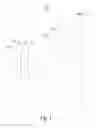
FIG. 1 is a schematic diagram of a camera optical lens in accordance with a first embodiment of the present invention;
FIG. 2 shows the longitudinal aberration of the camera optical lens shown in FIG. 1;
FIG. 3 shows the lateral color of the camera optical lens shown in FIG. 1;
FIG. 4 presents a schematic diagram of the field curvature and distortion of the camera optical lens shown in FIG. 1;
FIG. 5 is a schematic diagram of a camera optical lens in accordance with a second embodiment of the present invention;
FIG. 6 presents the longitudinal aberration of the camera optical lens shown in FIG. 5;
FIG. 7 presents the lateral color of the camera optical lens shown in FIG. 5;
FIG. 8 presents the field curvature and distortion of the camera optical lens shown in FIG. 5;
DETAILED DESCRIPTION OF THE EXEMPLARY EMBODIMENTS
The present disclosure will hereinafter be described in detail with reference to several exemplary embodiments. To make the technical problems to be solved, technical solutions and beneficial effects of the present disclosure more apparent, the present disclosure is described in further detail together with the figure and the embodiments. It should be understood the specific embodiments described hereby is only to explain the disclosure, not intended to limit the disclosure.
Embodiment 1
As referring to FIG. 1, the present invention provides a camera optical lens 10. FIG. 1 shows the camera optical lens 10 of embodiment 1 of the present invention, the camera optical lens 10 comprises 7 lenses. Specifically, from the object side to the image side, the camera optical lens 10 comprises in sequence: an aperture S1, a first lens L1, a second lens L2, a third lens L3, a fourth lens L4, a fifth lens L5, a sixth lens L6, and a seventh lens L7. Optical element like optical filter GF can be arranged between the seventh lens L7 and the image surface S1. The first lens L1 is made of glass material, the second lens L2 is made of plastic material, the third lens L3 is made of plastic material, the fourth lens L4 is made of plastic material, the fifth lens L5 is made of plastic material, the sixth lens L6 is made of plastic material, and the seventh lens L7 is made of plastic material. This design effectively improves the optical performance of the camera optical lens 10, and provides the camera lens 10 with better reliability under different conditions of temperature and humidity.
In this embodiment, the first lens L1 has a positive refractive power with a convex object side surface relative to the proximal axis, the second lens L2 has a negative refractive power with a concave image side surface relative to the proximal axis, the third lens L3 has a negative refractive power with a concave object side surface relative to the proximal axis, the fourth lens L4 has a positive refractive power with a convex image side surface relative to the proximal axis, the fifth lens L5 has a positive refractive power with a convex object side surface relative to the proximal axis and a concave image side surface relative to the proximal axis, the sixth lens L6 has a positive refractive power with a convex object side surface relative to the proximal axis, the seventh lens L7 has a negative refractive power with a concave object side surface relative to the proximal axis.
Here, the focal length of the whole camera optical lens 10 is defined as f, the focal length of the first lens L1 is defined as f1, the focal length of the third lens L3 is defined as f3, the focal length of the fourth lens L4 is defined as f4, the refractive power of the first lens L1 is defined as n1, the thickness on-axis of the first lens L1 is defined as d1, the total optical length of the camera optical lens 10 is defined as TTL, the curvature radius of the object side surface of the seventh lens L7 is defined as R13, the curvature radius of the image side surface of the seventh lens L7 is defined as R14. The f, f3, f4, n1, d1, r13 and r14 satisfies the following condition: 1<f1/f<1.5, 1.70<n1<2.2, −2<f3/f4<2; −10<(R13+R14)/(R13−R14)<10; 0.01<d1/TTL<0.05.
When the focal length of the camera optical lens 10 of the present invention, the focal length of each lens, the refractive power of the related lens, and the total optical length, the thickness on-axis and the curvature radius of the camera optical lens satisfy the above conditions, the camera optical lens 10 has the advantage of high performance and satisfies the design requirement of low TTL.
In this embodiment, the focal length of the first lens L1 is defined as f1, the focal length of the second lens L2 is defined as f2, the focal length of the third lens L3 is defined as D, the focal length of the fourth lens L4 is defined as f4, the focal length of the fifth lens L5 is defined as f5, the focal length of the sixth lens L6 is defined as f6 and the focal length of the seventh lens L7 is defined as f7. Here the following condition should satisfied: 1.5<f1<5, −15<f2<−4, −15<f3<−7.5, 2<f4<8, 20<f5<50, 5<f6<10, −6<r<−1. The unit of distance, radius and center thickness is mm. With such design, the total optical length TTL of the whole camera optical lens 10 can be made as short as possible, thus the miniaturization characteristics can be maintained.
The refractive power of the second lens L2 is defined as n2, the refractive power of the third lens L3 is defined as n3, the refractive power of the fourth lens L4 is defined as n4, the refractive power of the fifth lens L5 is defined as n5, the refractive power of the sixth lens L6 is defined as n6 and the refractive power of the seventh lens L7 is defined as n7. Preferably, the following condition shall be satisfied, 1.60<n2<1.70, 1.60<n3<1.70, 1.5<n4<1.65, 1.50<n5<1.65, 1.50<n6<1.65, 1.50<n7<1.65. Such design enables the lenses made from different optical materials to match each other better, and further enables the camera lens 10 to perform better imaging quality.
In this embodiment, the abbe number of the first lens L1 is defined as v1, the abbe number of the second lens L2 is defined as v2, the abbe number of the third lens L3 is defined as v3, the abbe number of the fourth lens L4 is defined as v4, the abbe number of the fifth lens L5 is defined as v5, the abbe number of the sixth lens L6 is defined as v6, and the abbe number of the seventh lens L3 is defined as v7. Here the following condition should satisfied: 40<v1<65, 15<v2<30, 15<v3<30, 40<v4<65, 40<v5<65, 40<v6<65, 40<v7<65. This design can suppress optical color difference when the optical lens 10 works.
Configurations of refractive index and abbe number of the lenses mentioned above can be combined and applied for designing the camera optical lens 10. Therefore, the second lens L2 and the third lens L3 made from optical materials with high refractive index and low abbe number can effectively reduce color difference of the system and greatly improve the imaging quality of the camera optical lens 10.
Besides, surfaces of the lens are configured to be aspherical for approaching more controllable variables to correct aberrations, reduce the amount of the lenses, and further to reduce the total length of the camera lens.
Preferably, inflexion points and/or arrest points can also be arranged on the object side surface and/or image side surface of the lens, so that the demand for high quality imaging can be satisfied, the description below can be referred for specific implementable scheme.
The design information of the camera optical lens 10 in the first embodiment of the present invention is shown in the tables 1 and 2.
| TABLE 1 |
| focal length (mm) |
| f | 3.994 | |
| f1 | 3.998 | |
| f2 | −9.424 | |
| f3 | −10.037 | |
| f4 | 6.263 | |
| f5 | 25.018 | |
| f6 | 6.367 | |
| f7 | −2.987 | |
| f12 | 6.168 | |
Where:
In which, the meaning of the various symbols is as follows.
f: the focal length of the camera optical lens;
f1: the focal length of the first lens;
f2: the focal length of the second lens;
f3: the focal length of the third lens;
f4: the focal length of the fourth lens;
f5: the focal length of the fifth lens;
f6: the focal length of the sixth lens;
f7: the focal length of the seventh lens;
f12: the combined focal length of the first lens and the second lens;
| TABLE 2 | ||||
| Curvature radius | Thickness/Distance | Refractive power | Abbe number | |
| (R) (mm) | (d) (mm) | (nd) | (νd) | |
| St | St | ∞ | d0 = | −0.200 | ||||
| L1 | R1 | 2.049 | d1 = | 0.250 | nd1 | 1.7250 | ν1 | 56.10 |
| R2 | 6.567 | d2 = | 0.223 | |||||
| L2 | R3 | 8.651 | d3 = | 0.236 | nd2 | 1.6450 | ν2 | 22.44 |
| R4 | 3.548 | d4 = | 0.316 | |||||
| L3 | R5 | −5.627 | d5 = | 0.200 | nd3 | 1.6450 | ν3 | 23.50 |
| R6 | −43.756 | d6 = | 0.038 | |||||
| L4 | R7 | 5.672 | d7 = | 0.550 | nd4 | 1.5440 | ν4 | 56.10 |
| R8 | −8.312 | d8 = | 0.580 | |||||
| L5 | R9 | 8.393 | d9 = | 0.480 | nd5 | 1.5350 | ν5 | 56.10 |
| R10 | 21.920 | d10 = | 0.240 | |||||
| L6 | R11 | 2.014 | d11 = | 0.396 | nd6 | 1.5350 | ν6 | 56.10 |
| R12 | 4.563 | d12 = | 0.496 | |||||
| L7 | R13 | −6.143616 | d13 = | 0.270 | nd7 | 1.5350 | ν7 | 56.10 |
| R14 | 2.204163 | d14 = | 0.100 | |||||
| Glass | R15 | ∞ | d15 = | 0.210 | ndg | 1.5160 | νg | 64.16 |
| R16 | ∞ | d16 = | 0.465 | |||||
In which, R1 and R2 represent respectively the object side surface and image side surface of the first lens L1, R3 and R4 represent respectively the object side surface and image side surface of the second lens L2, R5 and R6 represent respectively the object side surface and image side surface of the third lens L3, R7 and R8 represent respectively the object side surface and image side surface of the fourth lens L4, R9 and R10 represent respectively the object side surface and image side surface of the fifth lens L5, R11 and R12 represent respectively the object side surface and image side surface of the sixth lens L6, R13 and R14 represent respectively the object side surface and image side surface of the seventh lens L7, R15 and R16 represent respectively the object side surface and image side surface of the optical filter GF. Other, the meaning of the various symbols is as follows.
d0: The distance on-axis from aperture St to the object side surface of the first lens L1;
d1: The thickness on-axis of the first lens L1;
d2: The distance on-axis from the image side surface of the first lens L1 to the object side surface of the second lens L2;
d3: The thickness on-axis of the second lens L2;
d4: The distance on-axis from the image side surface of the second lens L2 to the object side surface of the third lens L3;
d5: The thickness on-axis of the third lens L3;
d6: The distance on-axis from the image side surface of the third lens L3 to the object side surface of the fourth lens L4;
d7: The thickness on-axis of the fourth lens L4;
d8: The distance on-axis from the image side surface of the fourth lens L4 to the object side surface of the fifth lens L5;
d9: The thickness on-axis of the fifth lens L5;
d10: The distance on-axis from the image side surface of the fifth lens L5 to the object side surface of the sixth lens L6;
d11: The thickness on-axis of the sixth lens L6;
d12: The distance on-axis from the image side surface of the sixth lens L6 to the object side surface of the seventh lens L7;
d13: The thickness on-axis of the seventh lens L7;
d14: The distance on-axis from the image side surface of the seventh lens L7 to the object side surface of the optical filter GF;
d15: The thickness on-axis of the optical filter GF;
d16: The distance on-axis from the image side surface to the image surface of the optical filter GF;
nd1: The refractive power of the first lens L1;
nd2: The refractive power of the second lens L2;
nd3: The refractive power of the third lens L3;
nd4: The refractive power of the fourth lens L4;
nd5: The refractive power of the fifth lens L5;
nd6: The refractive power of the sixth lens L6;
nd7: The refractive power of the seventh lens L7;
ndg: The refractive power of the optical filter GF;
v1: The abbe number of the first lens L1;
v2: The abbe number of the second lens L2;
v3: The abbe number of the third lens L3;
v4: The abbe number of the fourth lens L4;
v5: The abbe number of the fifth lens L5;
v6: The abbe number of the sixth lens L6;
v7: The abbe number of the seventh lens L7;
vg: The abbe number of the optical filter GF.
Table 3 shows the aspherical surface data of the camera optical lens 10 in the embodiment 1 of the present invention.
| TABLE 3 | ||
| Conic Index | Aspherical Surface Index |
| k | A4 | A6 | A8 | A10 | A12 | A14 | A16 | |
| R1 | −2.8646E−01 | 7.5536E−03 | 2.5725E−03 | 1.0962E−04 | 1.7813E−02 | −3.9834E−02 | 4.0453E−02 | −1.6123E−02 |
| R2 | −1.5622E+00 | −1.3578E−02 | 6.5241E−03 | 1.9124E−02 | −4.1164E−02 | 4.8501E−02 | −3.0241E−02 | 6.7255E−03 |
| R3 | 6.6441E+01 | −6.7514E−02 | 4.8807E−02 | 4.4343E−02 | −1.5379E−01 | 2.0444E−01 | −1.5018E−01 | 4.8182E−02 |
| R4 | −2.9989E+01 | 2.5879E−02 | −6.6482E−02 | 2.0644E−01 | −4.3424E−01 | 5.7199E−01 | −4.5016E−01 | 1.4667E−01 |
| R5 | 1.9947E+01 | −9.8166E−02 | −9.8993E−02 | 1.3412E−01 | −7.0964E−02 | −5.0935E−02 | 6.5289E−02 | −2.5562E−02 |
| R6 | −9.0000E+01 | −1.1086E−01 | 6.0203E−02 | −1.7958E−02 | 7.5596E−02 | −1.6242E−01 | 1.4397E−01 | −4.3299E−02 |
| R7 | 1.5529E+01 | −1.0753E−01 | 1.5207E−01 | −1.5270E−01 | 9.8412E−02 | −5.5577E−02 | 2.5642E−02 | −5.2587E−03 |
| R8 | −7.0884E+01 | −1.0181E−01 | 3.6373E−02 | −1.2221E−02 | −4.9693E−03 | 1.4911E−02 | −1.2460E−02 | 3.9343E−03 |
| R9 | −1.2709E+01 | −8.0732E−02 | 2.3465E−02 | −3.0632E−02 | 2.5703E−02 | −1.0518E−02 | 2.7583E−03 | −3.8298E−04 |
| R10 | 5.0756E+01 | −1.8671E−01 | 9.6986E−02 | −4.1056E−02 | 1.1593E−02 | −3.8124E−04 | −2.0982E−04 | −9.4187E−06 |
| R11 | −3.7068E+00 | −7.7694E−02 | −7.6904E−02 | 5.4646E−02 | −3.9895E−03 | −1.2166E−02 | 5.1539E−03 | −6.0784E−04 |
| R12 | 2.8347E+00 | 5.2872E−02 | −2.2099E−01 | 1.8426E−01 | −8.4385E−02 | 2.1939E−02 | −2.9799E−03 | 1.6324E−04 |
| R13 | 6.6077E+00 | −2.5193E−01 | 1.5927E−01 | −3.8749E−02 | 1.6800E−03 | 1.1944E−03 | −2.4312E−04 | 1.4575E−05 |
| R14 | −1.1994E+01 | −1.6913E−01 | 1.1861E−01 | −4.8441E−02 | 1.2200E−02 | −1.8702E−03 | 1.5923E−04 | −5.7741E−06 |
Table 4 and table 5 show the inflexion points and the arrest point design data of the camera optical lens 10 lens in embodiment 1 of the present invention. In which, R1 and R2 represent respectively the object side surface and image side surface of the first lens L1, R3 and R4 represent respectively the object side surface and image side surface of the second lens L2, R5 and R6 represent respectively the object side surface and image side surface of the third lens L3, R7 and R8 represent respectively the object side surface and image side surface of the fourth lens L4, R9 and R10 represent respectively the object side surface and image side surface of the fifth lens L5, R11 and R12 represent respectively the object side surface and image side surface of the sixth lens L6, R13 and R14 represent respectively the object side surface and image side surface of the seventh lens L7. The data in the column named “inflexion point position” are the vertical distances from the inflexion points arranged on each lens surface to the optic axis of the camera optical lens 10. The data in the column named “arrest point position” are the vertical distances from the arrest points arranged on each lens surface to the optic axis of the camera optical lens 10.
| TABLE 4 | ||||
| Inflexion point | Inflexion point | Inflexion point | Inflexion point | |
| number | position 1 | position 2 | position 3 | |
| R1 | 0 | |||
| R2 | 0 | |||
| R3 | 0 | |||
| R4 | 1 | 0.785 | ||
| R5 | 0 | |||
| R6 | 1 | 0.895 | ||
| R7 | 0 | |||
| R8 | 1 | 1.175 | ||
| R9 | 3 | 0.365 | 1.315 | 1.465 |
| R10 | 2 | 0.145 | 1.245 | |
| R11 | 2 | 0.535 | 1.575 | |
| R12 | 2 | 0.595 | 1.665 | |
| R13 | 2 | 1.165 | 1.985 | |
| R14 | 1 | 0.435 | ||
| TABLE 5 | ||
| Arrest point number | Arrest point position 1 | |
| R1 | 0 | ||
| R2 | 0 | ||
| R3 | 0 | ||
| R4 | 0 | ||
| R5 | 0 | ||
| R6 | 0 | ||
| R7 | 0 | ||
| R8 | 0 | ||
| R9 | 1 | 0.625 | |
| R10 | 1 | 0.255 | |
| R11 | 1 | 0.925 | |
| R12 | 1 | 0.965 | |
| R13 | 0 | ||
| R14 | 1 | 1.005 | |
FIG. 2 and FIG. 3 show the longitudinal aberration and lateral color schematic diagrams after light with a wavelength of 470 nm, 555 nm and 650 nm passes the camera optical lens 10 in the first embodiment. FIG. 4 shows the field curvature and distortion schematic diagrams after light with a wavelength of 555 nm passes the camera optical lens 10 in the first embodiment.
Table 11 shows the various values of the embodiments 1, 2, and the values corresponding with the parameters which are already specified in the conditions.
As shown in Table 11, the first embodiment satisfies the various conditions.
In this embodiment, the pupil entering diameter of the camera optical lens is 2 mm, the full vision field image height is 2.9335 mm, the vision field angle in the diagonal direction is 72.04°, it has wide-angle and is ultra-thin, its on-axis and off-axis chromatic aberrations are fully corrected, and it has excellent optical characteristics.
Embodiment 2
Embodiment 2 is basically the same as embodiment 1, the meaning of its symbols is the same as that of embodiment 1, in the following, only the differences are described.
Table 6 and table 7 show the design data of the camera optical lens 20 in embodiment 2 of the present invention.
| TABLE 6 |
| focal length (mm) |
| f | 3.994 | |
| f1 | 4.034 | |
| f2 | −4.5048 | |
| f3 | −8.91132 | |
| f4 | 8.926 | |
| f5 | 12.538 | |
| f6 | 6.0256 | |
| f7 | −3.041 | |
| f12 | 5.8325 | |
| TABLE 7 | ||||
| Curvature radius | Thickness/Distance | Refractive power | Abbe number | |
| (R) (mm) | (d) (mm) | (nd) | (νd) | |
| St | St | ∞ | d0 = | −0.200 | ||||
| L1 | R1 | 2.049 | d1 = | 0.252 | nd1 | 1.7250 | ν1 | 56.10 |
| R2 | 6.444 | d2 = | 0.198 | |||||
| L2 | R3 | 8.513 | d3 = | 0.261 | nd2 | 1.6450 | ν2 | 22.44 |
| R4 | 3.804 | d4 = | 0.361 | |||||
| L3 | R5 | −5.083 | d5 = | 0.201 | nd3 | 1.6400 | ν3 | 23.53 |
| R6 | −44.806 | d6 = | 0.053 | |||||
| L4 | R7 | 5.780 | d7 = | 0.550 | nd4 | 1.5440 | ν4 | 56.10 |
| R8 | −29.984 | d8 = | 0.397 | |||||
| L5 | R9 | 5.537 | d9 = | 0.495 | nd5 | 1.5350 | ν5 | 56.10 |
| R10 | 30.211 | d10 = | 0.288 | |||||
| L6 | R11 | 1.951 | d11 = | 0.361 | nd6 | 1.5350 | ν6 | 56.10 |
| R12 | 4.597 | d12 = | 0.631 | |||||
| L7 | R13 | −5.643586 | d13 = | 0.275 | nd7 | 1.5350 | ν7 | 56.10 |
| R14 | 2.336798 | d14 = | 0.412 | |||||
| Glass | R15 | ∞ | d15 = | 0.210 | ndg | 1.5160 | νg | 64.16 |
| R16 | ∞ | d16 = | 0.159 | |||||
Table 8 shows the aspherical surface data of each lens of the camera optical lens 20 in embodiment 2 of the present invention.
| TABLE 8 | ||
| Conic Index | Aspherical Surface Index |
| k | A4 | A6 | A8 | A10 | A12 | A14 | A16 | |
| R1 | −2.7444E−01 | −2.3103E−02 | 0.0000E+00 | 0.0000E+00 | 7.8891E−02 | −2.6769E−02 | 0.0000E+00 | 0.0000E+00 |
| R2 | −1.6598E+00 | 1.6504E−02 | 0.0000E+00 | 0.0000E+00 | −2.9344E−02 | 6.2678E−03 | 0.0000E+00 | 0.0000E+00 |
| R3 | 6.3386E+01 | −2.4518E−02 | 0.0000E+00 | 0.0000E+00 | 1.2659E−02 | −4.4985E−03 | 0.0000E+00 | 0.0000E+00 |
| R4 | −3.2513E+01 | 1.0719E−01 | 0.0000E+00 | 0.0000E+00 | −2.2611E−01 | 7.3200E−02 | 0.0000E+00 | 0.0000E+00 |
| R5 | 1.8798E+00 | −1.0364E−01 | −7.4728E−02 | 1.7799E−01 | −2.9321E−01 | 3.1541E−01 | −2.0665E−01 | 5.5851E−02 |
| R6 | 8.8512E+01 | −9.9055E−02 | 4.0565E−02 | 3.6542E−02 | −5.7239E−02 | 2.9558E−02 | 7.4780E−03 | −6.5386E−03 |
| R7 | 1.4785E+01 | −8.9835E−02 | 1.1157E−01 | −1.0753E−01 | 6.8190E−02 | −3.4228E−02 | 1.3085E−02 | −2.3588E−03 |
| R8 | 3.8096E+01 | −1.0817E−01 | 4.9528E−02 | −3.9352E−02 | 3.1934E−02 | −1.6248E−02 | 3.3473E−03 | 1.7648E−04 |
| R9 | −5.0982E+00 | −8.6610E−02 | 3.9005E−02 | −3.8238E−02 | 2.5155E−02 | −7.7691E−03 | 1.4806E−03 | −1.8254E−04 |
| R10 | 9.0000E+01 | −1.7781E−01 | 1.1790E−01 | −6.7422E−02 | 2.6091E−02 | −5.3547E−03 | 8.8359E−04 | −1.1723E−04 |
| R11 | −3.2201E+00 | −8.6826E−02 | −5.1049E−02 | 4.4072E−02 | −1.1238E−02 | −4.6692E−03 | 2.8525E−03 | −3.6550E−04 |
| R12 | 2.9065E+00 | 3.2805E−02 | −1.7567E−01 | 1.5245E−01 | −7.4473E−02 | 2.0730E−02 | −2.9916E−03 | 1.7264E−04 |
| R13 | 4.0830E+00 | −2.1902E−01 | 1.3432E−01 | −3.4262E−02 | 2.3822E−03 | 8.4814E−04 | −1.9788E−04 | 1.2445E−05 |
| R14 | −1.3578E+01 | −1.3054E−01 | 8.3482E−02 | −3.2650E−02 | 7.9724E−03 | −1.1920E−03 | 9.9297E−05 | −3.5304E−06 |
Table 9 and table 10 show the inflexion points and the arrest point design data of the camera optical lens 20 lens in embodiment 2 of the present invention.
| TABLE 9 | ||||
| Inflexion | Inflexion | Inflexion | Inflexion | |
| point | point | point | point | |
| number | position 1 | position 2 | position 3 | |
| R1 | 0 | ||||
| R2 | 0 | ||||
| R3 | 0 | ||||
| R4 | 1 | 0.785 | |||
| R5 | 0 | ||||
| R6 | 1 | 0.885 | |||
| R7 | 0 | ||||
| R8 | 1 | 1.245 | |||
| R9 | 3 | 0.455 | 1.235 | 1.535 | |
| R10 | 2 | 0.135 | 1.245 | ||
| R11 | 2 | 0.55 | 1.585 | ||
| R12 | 2 | 0.605 | 1.625 | ||
| R13 | 2 | 1.275 | 2.005 | ||
| R14 | 1 | 0.465 | |||
| TABLE 10 | |||
| Arrest point | |||
| Arrest point number | Arrest point position 1 | position 2 | |
| R1 | 0 | ||
| R2 | 0 | ||
| R3 | 0 | ||
| R4 | 0 | ||
| R5 | 0 | ||
| R6 | 1 | 1.095 | |
| R7 | 0 | ||
| R8 | 0 | ||
| R9 | 1 | 0.805 | |
| R10 | 2 | 0.225 | 1.555 |
| R11 | 1 | 0.975 | |
| R12 | 1 | 1.005 | |
| R13 | 0 | ||
| R14 | 1 | 1.085 | |
FIG. 6 and FIG. 7 show the longitudinal aberration and lateral color schematic diagrams after light with a wavelength of 470 nm, 555 nm and 650 nm passes the camera optical lens 20 in the second embodiment. FIG. 8 shows the field curvature and distortion schematic diagrams after light with a wavelength of 555 nm passes the camera optical lens 20 in the second embodiment.
As shown in Table 11, the second embodiment satisfies the various conditions.
In this embodiment, the pupil entering diameter of the camera optical lens is 2 mm, the full vision field image height is 2.9335 mm, the vision field angle in the diagonal direction is 72.05°, it has wide-angle and is ultra-thin, its on-axis and off-axis chromatic aberrations are fully corrected, and it has excellent optical characteristics.
| TABLE 11 | ||
| Embodiment 1 | Embodiment 2 | |
| 1 < f1/f < 1.5 | 1.001001502 | 1.010015023 | |
| −2 < f3/f4 < 2 | −1.60258662 | −0.998355366 | |
| 1.70 < n1 < 2.2 | 1.7250 | 1.7250 | |
| −10 < (R13 + R14)/(R13 − | 0.471916303 | 0.414364522 | |
| R14) < 10 | |||
| 0.01 < d1/TTL < 0.05 | 0.049513593 | 0.049345896 | |
It is to be understood, however, that even though numerous characteristics and advantages of the present exemplary embodiments have been set forth in the foregoing description, together with details of the structures and functions of the embodiments, the disclosure is illustrative only, and changes may be made in detail, especially in matters of shape, size, and arrangement of parts within the principles of the invention to the full extent indicated by the broad general meaning of the terms where the appended claims are expressed.
Claims
What is claimed is:1. A camera optical lens comprising, from an object side to an image side in sequence: a first lens having a positive refractive power, a second lens having a negative refractive power, a third lens having a negative refractive power, a fourth lens having a positive refractive power, a fifth lens having a positive refractive power, a sixth lens having a positive refractive power, a seventh lens having a negative refractive power; wherein the camera optical lens further satisfies the following conditions:
1<f1/f<1.5;
1.70<n1<2.2;
−2<f3/f4<2;
−10<(R13+R14)/(R13−R14)<10;
0.01<d1/TTL<0.05;
where
f: the focal length of the camera optical lens;
f1: the focal length of the first lens;
f3: the focal length of the third lens;
f4: the focal length of the fourth lens;
n1: the refractive power of the first lens;
d1: the thickness on-axis of the first lens;
TTL: the total optical length of the camera optical lens;
R13: the curvature radius of object side surface of the seventh lens;
R14: the curvature radius of image side surface of the seventh lens.
2. The camera optical lens as described in claim 1, wherein the first lens is made of glass material, the second lens is made of plastic material, the third lens is made of plastic material, the fourth lens is made of plastic material, the fifth lens is made of plastic material, the sixth lens is made of plastic material, the seventh lens is made of plastic material.
3. The camera optical lens as described in claim 1 further satisfying the following conditions:
1.5<f1<5;
−15<f2<−4;
−15<f3<−7.5;
2<f4<8;
20<f5<50;
5<f6<10;
−6<f7<−1; where
f1: the focal length of the first lens;
f2: the focal length of the second lens;
f3: the focal length of the third lens;
f4: the focal length of the fourth lens;
f5: the focal length of the fifth lens;
f6: the focal length of the sixth lens;
f7: the focal length of the seventh lens.
4. The camera optical lens as described in claim 1, further satisfying the following conditions:
1.60<n2<1.70;
1.60<n3<1.70;
1.50<n4<1.65;
1.50<n5<1.65;
1.50<n6<1.65;
1.50<n7<1.65; where
n2: the refractive power of the second lens;
n3: the refractive power of the third lens;
n4: the refractive power of the fourth lens;
n5: the refractive power of the fifth lens;
n6: the refractive power of the sixth lens;
n7: the refractive power of the seventh lens.
5. The camera optical lens as described in claim 1 further satisfying the following conditions:
40<v1<65;
15<v2<30;
15<v3<30;
40<v4<65;
40<v5<65;
40<v6<65;
40<v7<65; where
v1: The abbe number of the first lens;
v2: The abbe number of the second lens;
v3: The abbe number of the third lens;
v4: The abbe number of the fourth lens;
v5: The abbe number of the fifth lens;
v6: The abbe number of the sixth lens;
v7: The abbe number of the seventh lens.
Images & Drawings included:



Sources:
- United States Patent and Trademark Office - verify current appl. status at the USPTO↗
Similar patent applications:
- » 20200041751
OPTICAL LENS AND OPTICAL CAMERA LENS - » 20200041700
OPTICAL LENS AND OPTICAL CAMERA LENS - » 20210352196
INTEGRATED LENS BARREL, OPTICAL CAMERA LENS, CAMERA MODULE AND ASSEMBLY METHOD THEREOF - » 20220120937
Compound, resin precursor, cured object, optical element, optical system, interchangeable camera lens, optical device, cemented lens, and method for manufacturing cemented lens - » 20210395580
Compound, resin precursor, cured object, optical element, optical system, interchangeable camera lens, optical device, cemented lens, and method for manufacturing cemented lens - » 20230048981
COMPOUND, RESIN PRECURSOR, CURED OBJECT, OPTICAL ELEMENT, OPTICAL SYSTEM, INTERCHANGEABLE CAMERA LENS, OPTICAL DEVICE, CEMENTED LENS, AND METHOD FOR MANUFACTURING CEMENTED LENS - » 20220107480
Optical lens, camera module, and assembly method for the optical lens - » 20240244309
CAMERA LENS MODULE, CAMERA LENS OPTICAL AXIS ADJUSTING DEVICE, AND BINOCULAR CAMERA - » 20200223781
Compound, resin precursor, cured product, optical element, optical system, interchangeable lens for camera, optical device, cemented lens, and production method for cemented lens - » 15416457
Optical camera lens
Recent applications in this class:
- » 20250291156 2025-09-18
OPTICAL IMAGING SYSTEM - » 20250291155 2025-09-18
OPTICAL IMAGING SYSTEM - » 20250284094 2025-09-11
OPTICAL IMAGING SYSTEM - » 20250284093 2025-09-11
HIGH BRIGHTNESS ZOOM PROJECTION LENS - » 20250271640 2025-08-28
OPTICAL IMAGING SYSTEM - » 20250271639 2025-08-28
OPTICAL SYSTEM INCLUDING NEGATIVE LENS AND POSITIVE LENS, IMAGING APPARATUS INCLUDING THE SAME, IN-VEHICLE SYSTEM INCLUDING THE SAME, AND MOVING APPARATUS INCLUDING THE SAME - » 20250271638 2025-08-28
PORTABLE ELECTRONIC DEVICE, OPTICAL IMAGING SYSTEM, AND LENS ASSEMBLY - » 20250271637 2025-08-28
IMAGING LENS AND IMAGING APPARATUS - » 20250264692 2025-08-21
INFORMATION HANDLING SYSTEM CAMERA LENS WITH EIGHT ELEMENTS FOR IMPROVED APERTURE AND REDUCED BLUR - » 20250258358 2025-08-14
OPTICAL IMAGING LENS
Recent applications for this Assignee:
- » 20250106561 2025-03-27
MICROELECTROMECHANICAL SYSTEM MEMBRANE - » 20250042724 2025-02-06
CAPACITIVE SENSING CIRCUIT AND CAPACITIVE SENSING METHOD - » 20240284120 2024-08-22
Acoustic transducer and method for manufacturing acoustic transducer - » 20240284119 2024-08-22
Acoustic transducer and method for manufacturing acoustic transducer - » 20240236551 2024-07-11
LOUDSPEAKER ASSEMBLY AND HAND-HELD DEVICE - » 20240236550 2024-07-11
Sound reproducing apparatus and method - » 20240223942 2024-07-04
Speaker module - » 20240223941 2024-07-04
Speaker module - » 20240223937 2024-07-04
Speaker module - » 20240214749 2024-06-27
MEMS OPTICAL MICROPHONE