Heat sink interface for a device
US20190237383A1
2019-08-01
15/885,070
2018-01-31
✅ Patent granted
US 10,381,287 B1
2019-08-13
-
-
James Wu | Michael A Matey
Mentor Graphics Corporation
2038-01-31
Abstract:
This application discloses an device disposed on a substrate, and a heat sink disposed on the substrate over the device. The heat sink disposed on the substrate forms a cavity to hold a fluid between the heat sink and the device. The fluid can absorb heat emitted by the device and transfer at least a portion of the absorbed heat to the heat sink. A gasket can be disposed between and in contact with the substrate and the heat sink. The gasket can prevent the fluid from exiting the cavity formed by the heat sink disposed on the substrate. The heat sink can have an opening to the cavity, which can be detachably sealed by a plug. The plug can reduce a pressure within the cavity or allow removal of gas bubbles in the fluid held in the cavity.
Inventors:
- Terry Goode 3 🇺🇸 Sunnyvale, CA, United States
- Spencer Saunders 3 🇬🇧 Bedfordshire, United Kingdom
Assignee:
- Mentor Graphics Corporation 650 🇺🇸 Wilsonville, OR, United States
Applicant:
Interested in similar patents?
Get notified when new applications in this technology area are published.
Classification:
H01L23/3737 » CPC further
Details of semiconductor or other solid state devices; Arrangements for cooling, heating, ventilating or temperature compensation ; Temperature sensing arrangements; Selection of materials, or shaping, to facilitate cooling or heating, e.g. heatsinks; Cooling facilitated by selection of materials for the device or materials for thermal expansion adaptation, e.g. carbon Organic materials with or without a thermoconductive filler
H01L23/3735 » CPC main
Details of semiconductor or other solid state devices; Arrangements for cooling, heating, ventilating or temperature compensation ; Temperature sensing arrangements; Selection of materials, or shaping, to facilitate cooling or heating, e.g. heatsinks; Cooling facilitated by selection of materials for the device or materials for thermal expansion adaptation, e.g. carbon Laminates or multilayers, e.g. direct bond copper ceramic substrates
F16J15/064 » CPC further
Sealings between relatively-stationary surfaces with solid packing compressed between sealing surfaces the packing combining the sealing function with other functions
F16J15/06 IPC
Sealings between relatively-stationary surfaces with solid packing compressed between sealing surfaces
H05K9/0015 » CPC further
Screening of apparatus or components against electric or magnetic fields; Casings Gaskets or seals
H05K9/0015 » CPC further
Screening of apparatus or components against electric or magnetic fields; Casings Gaskets or seals
H01L23/373 IPC
Details of semiconductor or other solid state devices; Arrangements for cooling, heating, ventilating or temperature compensation ; Temperature sensing arrangements; Selection of materials, or shaping, to facilitate cooling or heating, e.g. heatsinks Cooling facilitated by selection of materials for the device or materials for thermal expansion adaptation, e.g. carbon
H01L23/40 » CPC further
Details of semiconductor or other solid state devices; Arrangements for cooling, heating, ventilating or temperature compensation ; Temperature sensing arrangements Mountings or securing means for detachable cooling or heating arrangements ; fixed by friction, plugs or springs
H05K9/00 IPC
Screening of apparatus or components against electric or magnetic fields
H05K9/00 IPC
Screening of apparatus or components against electric or magnetic fields
H05K7/20 IPC
Constructional details common to different types of electric apparatus Modifications to facilitate cooling, ventilating, or heating
H05K7/20 IPC
Constructional details common to different types of electric apparatus Modifications to facilitate cooling, ventilating, or heating
H01L23/34 IPC
Details of semiconductor or other solid state devices Arrangements for cooling, heating, ventilating or temperature compensation ; Temperature sensing arrangements
B65B63/08 IPC
Auxiliary devices, not otherwise provided for, for operating on articles or materials to be packaged for heating or cooling articles or materials to facilitate packaging
B65B3/04 IPC
Packaging plastic material, semiliquids, liquids or mixed solids and liquids, in individual containers or receptacles, e.g. bags, sacks, boxes, cartons, cans, or jars Methods of, or means for, filling the material into the containers or receptacles
Description
TECHNICAL FIELD
This application is generally related to heat sinks for devices and, more specifically, to a liquid heat sink interface for devices.
BACKGROUND
Most electronics and mechanical devices emit heat as a by-product of their operations. One common technique to remove heat from the device includes affixing a heat sink to the device, for example, by thermally bonding the heat sink to the device with a thermal compound, such as a thermal paste or phase change material. This thermal bonding between the device and the heat sink, however, can pose challenges. One such challenge can be that the thermal compound can be difficult to remove for servicing of the device. Another challenge can be the variability in a thermal interface created by the thermal bonding. For example, the performance of the heat sink in removing heat emitted by the device can be affected by a thickness of the thermal bonding material between the device and the heat sink and the contact pressure applied. Thus, the physical application of the heat sink to the device via thermal bonding can alter the performance of the heat sink in removing heat emitted by the device. In some instances, the heat sink can be disposed on a printed circuit board coupled to multiple integrated circuits, and the heat sink can be thermally bonded to the multiple integrated circuits. Since the integrated circuits can have differing heights relative to the plane of the printed circuit board, the manufacture of the heat sink can include machining steps into the heat sink material that can be utilized to thermally bond the different height integrated circuits. This specialized machining of heat sinks can be time-consuming and expensive as well as lead to introducing thermal interface performance variability based on an accuracy of the machined step heights.
SUMMARY
This application discloses a device disposed on a substrate, and a heat sink disposed on the substrate over the device. The heat sink disposed on the substrate forms a cavity to hold a fluid between the heat sink and the device. The fluid can absorb heat emitted by the device and transfer at least a portion of the absorbed heat to the heat sink. A gasket can be disposed between and in contact with the substrate and the heat sink. The gasket can prevent the fluid from exiting the cavity formed by the heat sink disposed on the substrate. The heat sink can have an opening to the cavity, which can be detachably sealed by a plug. The plug can reduce a pressure within the cavity or allow removal of gas bubbles in the fluid held in the cavity. Embodiments will be described in greater detail below.
DESCRIPTION OF THE DRAWINGS
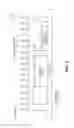
FIG. 1 illustrates an example of a system with a multi-height heat sink interface.
FIGS. 2A and 2B illustrate an example of a system with a liquid heat sink interface.
FIG. 3 illustrates an example flowchart for assembling a system with a liquid heat sink interface.
DETAILED DESCRIPTION
Illustrative Electronic System with a Multi-Height Heat Sink Interface
FIG. 1 illustrates an example of electronic system 100 with a multi-height heat sink interface. Referring to FIG. 1, the electronic system 100 can include multiple electronic devices 103-105 disposed on a substrate 101. In some embodiments, the electronic system 100 may be the portion of an emulation system and/or a prototyping system having programmable logic devices corresponding to the electronic devices 103-105 mounted on a printed circuit board corresponding to the substrate 101, for example, configured to implement functionality described in a logical design for an electronic system to be functionally verified.
The electronic system 100 can include a heat sink 102 mounted to the substrate 101 over the electronic devices 103-105. The heat sink 102 can be affixed to the electronic devices 104 and 105 through thermal bonding with a thermal interface compound 106. The thermal interface compound 106 can be a polymer-based compound with an electrically insulating and thermally conductive filler material. In some embodiments, the polymer-based compound can be an epoxy-based compound, silicon-based compound, urethane-based compound, acrylate-based compound, or the like. The electrically insulating and thermally conductive filler material can include diamond, aluminum nitride, boron nitride, aluminum oxide, or the like. In this embodiment, the electronic device 103 may not be in contact with the heat sink 102, and thus have an air gap interface between the electronic device 103 and the heat sink 102.
Since the electronic devices 103-105 have different heights and dimensions, the heat sink 102 may be specially machined to form steps in the heat sink material. During the thermal bonding process, the thermal interface compound 106 can be applied to the electronic devices 104 and 105. When the heat sink 102 is mounted to the substrate 101, the specially machined steps can couple with the thermal interface compound 106 can be applied to the electronic devices 104 and 105, which allows the heat sink 102 to become affixed to the electronic devices 104 and 105. Since the performance of the thermal interface between the heat sink 102 and the electronic devices 104 and 105 depends on the thermal interface compound 106, the mechanical tolerances of the special machined steps in the heat sink 102 and a range of pressure utilized to mount the heat sink 102 to the substrate 101 can be limited.
Electronic System with a Liquid Heat Sink Interface
FIGS. 2A and 2B illustrate an example of a system 200 with a liquid heat sink interface. Referring to FIGS. 2A and 2B, the system 200 can include multiple devices 203-205 disposed on a substrate 201. The devices 203-205 can be electronic devices, such as integrated circuitry, resistors, light emitting diodes (LEDs), transformers, inductor coils, or the like, or mechanical devices, such as motors, industrial machinery, or the like. In some embodiments, the system 200 may be the portion of an emulation system and/or a prototyping system having programmable logic devices corresponding to the devices 203-205 mounted on a printed circuit board corresponding to the substrate 201, for example, configured to implement functionality described in a logical design for an electronic system to be functionally verified. When at least one of the devices 203-205 corresponds to a light emitting diode, the substrate 201 can be transparent, opaque, or otherwise allow transmission of light from the light emitting diode externally from the system 200.
The system 200 can include a heat sink 202 mounted to the substrate 201 over the devices 203-205. In some embodiments, the system 200 can include a gasket 206 disposed between the heat sink 202 and the substrate 201 after the heat sink 202 has been mounted to the substrate 201. The gasket 206 can be an o-ring, a packing joint, toric joint, or the like, configured to compress and create a seal between the heat sink 202 and the substrate 201, which, in some embodiments, can be made of an elastomer, rubber, or polymer having viscoelasticity. The heat sink 202 as mounted on the substrate 201 can form a cavity between the heat sink 202, the substrate 201, and the devices 203-205. The heat sink 202 may include one or more openings to allow access to the cavity.
The cavity between the heat sink 202, the substrate 201, and the devices 203-205 can hold an inert fluid 207. The inert fluid 207 can be an electrically inert fluid, such as Fluorinert® or the like, which can be an electrically insulating stable fluorocarbon-based fluid. The gasket 206 may create a seal between the heat sink 202 and the substrate 201, which prevent the inert fluid 207 from escaping the cavity at the joint where the heat sink 202 and the substrate 201 meet.
The system 200 can include a relief plug 208 configured to seal an opening in the heat sink 202. The relief plug 208 also can allow the cavity between the heat sink 202, the substrate 201, and the devices 203-205 to be filled with the inert fluid 207 through the opening in the heat sink 202. In some embodiments, the cavity can be filled with the relief plug 208 removed from the opening in the heat sink 202, or the relief plug 208 may provide a conduit to allow the inert fluid 207 into the cavity while the relief plug 208 is disposed in the opening of the heat sink 202. The relief plug 208 also can include pressure relief capabilities, for example, to reduce pressure when a temperature in the cavity rises. The relief plug 208 can include a valve to allow a volume of the inert fluid 207 to exit the cavity when the pressure in the cavity meets or exceeds a threshold pressure level. In some embodiments, the relief plug 208 can include an expansion device configured to bellow, deform, or flexibly blister based on a pressure within the cavity.
The system 200 can include a bleed plug 209 to allow for vacuum filling of the cavity between the heat sink 202, the substrate 201, and the devices 203-205 with the inert fluid 207. The bleed plug 209, when disposed in the opening of the heat sink 202, can allow for the removal of air and air bubbles from the cavity through the bleed plug 209.
By utilizing the inert fluid 207 as an interface between the heat sink 202 and the devices 203-205 disposed on the substrate 201, the system 200 can utilize a heat sink configured to be agnostic to the relative heights and sizes of the devices dispose under the heat sink, which may be simpler and/or cheaper to manufacture and utilize in assembly. The system 200 also can ensure a consistent thermal contact between the heat sink 202 and the devices 203-205 that remain unaffected by mechanical tolerances of the heat sink 202 or attachment pressure utilized while mounting the heat sink 202 to the substrate 201.
FIG. 3 illustrates an example flowchart for assembling a system with a liquid heat sink interface. Referring to FIG. 3, in a block 301, a device can be disposed on a substrate. In some embodiments, the system may be the portion of an emulation system and/or a prototyping system having programmable logic devices corresponding to the device mounted on a printed circuit board corresponding to the substrate, for example, configured to implement functionality described in a logical design for an electronic system to be functionally verified.
In a block 302, a gasket can be disposed on the substrate so that the gasket surrounds the device disposed on the substrate. The gasket can be an o-ring, a packing joint, toric joint, or the like, which, in some embodiments, can be made of an elastomer, rubber, or polymer having viscoelasticity.
In a block 303, a heat sink can be mounted to the substrate on the gasket. The mounting of the heat sink to the substrate can compress the gasket, which creates a seal between the heat sink and the substrate. The heat sink as mounted on the substrate can form a cavity between the heat sink, the substrate, and the device. The heat sink may include one or more openings to allow access to the cavity.
In a block 304, the cavity formed between the heat sink, the substrate, and the device can be filled with an inert fluid through an opening in the heat sink and, in a block 305, the opening in the heat sink can be sealed. The inert fluid can be an electrically inert fluid, such as Fluorinert® or the like, which can be an electrically insulating stable fluorocarbon-based fluid. The gasket may create a seal between the heat sink and the substrate, which prevent the inert fluid from escaping the cavity at the joint where the heat sink and the substrate meet.
In some embodiments, the system can include a relief plug configured to seal an opening in the heat sink. The relief plug also can allow the cavity to be filled with the inert fluid through the opening in the heat sink. In some embodiments, the cavity can be filled with the relief plug removed from the opening in the heat sink, or the relief plug may provide a conduit to allow the inert fluid into the cavity while the relief plug is disposed in the opening of the heat sink.
The relief plug also can include pressure relief capabilities, for example, to reduce pressure when a temperature in the cavity rises. The relief plug can include a valve to allow a volume of the inert fluid to exit the cavity when the pressure in the cavity meets or exceeds a threshold pressure level. In some embodiments, the relief plug can include an expansion device configured to bellow, deform, or flexibly blister based on a pressure within the cavity. The system also may include a bleed plug to allow for vacuum filling of the cavity with the inert fluid. The bleed plug, when disposed in the opening of the heat sink, can allow for the removal of air and air bubbles from the cavity through the bleed plug.
CONCLUSION
While the application describes specific examples of carrying out embodiments, those skilled in the art will appreciate that there are numerous variations and permutations of the above described systems and techniques that fall within the spirit and scope of the invention as set forth in the appended claims.
One of skill in the art will also recognize that the concepts taught herein can be tailored to a particular application in many other ways. In particular, those skilled in the art will recognize that the illustrated examples are but one of many alternative implementations that will become apparent upon reading this disclosure.
Although the specification may refer to “an”, “one”, “another”, or “some” example(s) in several locations, this does not necessarily mean that each such reference is to the same example(s), or that the feature only applies to a single example.
Claims
1. A system comprising:
a device disposed on a substrate;
a heat sink disposed on the substrate over the device to form a cavity, wherein the heat sink includes a first opening to allow a fluid to enter the cavity, wherein the cavity is configured to hold the fluid between the heat sink and the device, the fluid to absorb heat emitted by the device and transfer at least a portion of the absorbed heat to the heat sink;
a relief plug disposed in the first opening formed in the heat sink, wherein the relief plug includes a conduit configured to allow the fluid to enter the cavity through the first opening in the heat sink; and
a bleed plug disposed in a second opening formed in the heat sink, wherein the bleed plug is configured to allow removal of gas from the cavity through the bleed plug and the second opening in the heat sink.
2. The system of claim 1, further comprising another device disposed on the substrate and having a different height relative to the substrate, wherein the heat sink is disposed on the substrate over both of the devices and the cavity holds the fluid between the heat sink and both of the devices.
3. The system of claim 1, further comprising a gasket disposed between and in contact with the substrate and the heat sink, wherein the gasket is configured to prevent the fluid from exiting the cavity formed by the heat sink disposed on the substrate.
4. (canceled)
5. The system of claim 1, wherein the relief plug is configured to reduce a pressure within the cavity by allowing the liquid to exit the cavity through the first opening and the relief plug.
6. The system of claim 1, wherein the relief plug is configured to reduce a pressure within the cavity by expanding at least a portion of the relief plug.
7. The system of claim 1, wherein the fluid is an electrically inert fluid.
8. A method comprising:
mounting a heat sink on a substrate disposed over a device to form a cavity between the heat sink and the device, wherein the heat sink includes a first opening to allow a fluid to enter the cavity between the heat sink and the device;
disposing a relief plug in the first opening formed in the heat sink, wherein the relief plug includes a conduit configured to allow the fluid to enter the cavity through the first opening in the heat sink;
disposing a bleed plug in a second opening formed in the heat sink, wherein the bleed plug is configured to allow removal of gas from the cavity through the bleed plug and the second opening in the heat sink; and
filling, through the relief plug and the first opening formed in the heat sink, the cavity between the heat sink and the device with the fluid configured to absorb heat emitted by the device and transfer at least a portion of the absorbed heat to the heat sink.
9. The method of claim 8, further comprising disposing another device on the substrate, the another device having a different height relative to the substrate than the device, wherein the heat sink is disposed on the substrate over both of the devices and the cavity holds the fluid between the heat sink and both of the devices.
10. The method of claim 8, further comprising disposing a gasket on the substrate surrounding the device on the substrate, wherein the heat sink is mounted on the substrate over the gasket, and wherein the gasket is configured to prevent the fluid from exiting the cavity formed by the heat sink disposed on the substrate.
11. The method of claim 8, wherein disposing the relief plug in the first opening formed in the heat sink is configured to seal the first opening in the heat sink to the cavity.
12. The method of claim 8, wherein the relief plug is configured to reduce a pressure within the cavity by allowing the liquid to exit the cavity through the first opening and the relief plug or by expanding at least a portion of the relief plug.
13. The method of claim 8, further comprising, during the filling of the cavity with the fluid, removing gas from the cavity through the bleed plug and the second opening in the heat sink.
14. The method of claim 8, wherein the fluid is an electrically inert fluid.
Images & Drawings included:



Sources:
- United States Patent and Trademark Office - verify current appl. status at the USPTO↗
Similar patent applications:
- » 20100101088
Method of manufacturing a heat sink pedestal device with interface medium chamber - » 20070217161
Heat sink having protective device for thermal interface material spread thereon - » 20090067133
Heat sink having protective device for thermal interface material spread thereon - » 20250048530
CONFINEMENT AND PROTECTION OF A THERMAL INTERFACE MATERIAL BETWEEN A HEAT SINK AND AN ELECTRONIC DEVICE - » 20110310566
Flux-free detachable thermal interface between an integrated circuit device and a heat sink - » 12493829
Heat sinks having a thermal interface for cooling electronic devices - » 20160005906
Optoelectronic Thermal Interfaces for 3-Dimensional Billet Devices, Including Vertical Multijunction Photovoltaic Receivers Using Heat Sinked Anode/Billet/Cathode For High Intensity Beaming and Wireless Power Transmission - » 20180288907
Mounting apparatus, for mounting at least one heat dissipating electrical device, optionally including a heat sink body for solid, gas and fluid heat exchange, and circuit board assembly providing interface between circuits - » 20200329590
Mounting apparatus, for mounting at least one heat dissipating electrical device, optionally including a heat sink body for solid, gas and fluid heat exchange, and circuit board assembly providing interface between circuits
Recent applications in this class:
- » 20250285934 2025-09-11
THERMALLY-CONDUCTIVE CRYSTALLINE PEDESTAL FOR SEMICONDUCTOR DEVICE PACKAGES - » 20250279332 2025-09-04
FREQUENCY-SELECTIVE HEAT DISSIPATING DEVICE AND THIN FILM - » 20250279331 2025-09-04
HEAT DISSIPATION STRUCTURE FOR HEATING ELEMENT AND HOUSING STRUCTURE FOR BRAKE SYSTEM HAVING THE SAME - » 20250273532 2025-08-28
Interposer for Thermally Engineered Electro-Optical Multichip Modules - » 20250266318 2025-08-21
3DIC WITH HEAT DISSIPATION STRUCTURE AND WARPAGE CONTROL - » 20250259909 2025-08-14
A HEAT DISSIPATION SUBSTRATE FOR A POWER SEMICONDUCTOR MODULE, A POWER SEMICONDUCTOR MODULE INCLUDING THE SAME AND A POWER CONVERTER INCLUDING THE SAME, AND MANUFACTURING METHOD OF THE HEAT DISSIPATION SUBSTRATE FOR A POWER SEMICONDUCTOR MODULE - » 20250259908 2025-08-14
HEAT DISSIPATION SUBSTRATE FOR A POWER SEMICONDUCTOR MODULE, A POWER SEMICONDUCTOR MODULE INCLUDING THE SAME AND A POWER CONVERTER INCLUDING THE SAME, AND MANUFACTURING METHOD OF THE HEAT DISSIPATION SUBSTRATE FOR A POWER SEMICONDUCTOR MODULE - » 20250259907 2025-08-14
DISTINGUISHED FLIP CHIP PACKAGING FOR STRESS RELAXATION AND ENHANCED EM PROTECTION - » 20250253203 2025-08-07
METAL CERAMIC SUBSTRATE AND METHOD FOR PRODUCING THE SAME - » 20250246510 2025-07-31
COOLING STRUCTURE FOR A SEMICONDUCTOR DEVICE
Recent applications for this Assignee:
- » 20210065821 2021-03-04
Voltage and temperature adaptive memory leakage reduction bias circuit - » 20210064714 2021-03-04
Genealogy driven IC layout generator and classification method - » 20200410065 2020-12-31
Deterministic test pattern generation for designs with timing exceptions - » 20200327268 2020-10-15
Scan cell architecture for improving test coverage and reducing test application time - » 20200326975 2020-10-15
Performance profiling for a multithreaded processor - » 20200302102 2020-09-24
Circuit validation for circuits comprising multiple possible variants for individual components - » 20200233931 2020-07-23
Machine learning-based parasitic extraction automation for circuit design and verification - » 20200220951 2020-07-09
System for processing messages of data stream - » 20200218788 2020-07-09
Hybrid performance of electronic design automation (EDA) procedures with delayed acquisition of remote resources - » 20200137581 2020-04-30
Resource utilization of heterogeneous compute units in electronic design automation