Insect repellent formulation for surface protection
US20190307128A1
2019-10-10
16/061,647
2017-02-15
✅ Patent granted
US 11,000,040 B2
2021-05-11
WO; PCT/BR2017/050033; 20170215
WO; WO2017/139862; 20170824
Gina C Justice
2037-03-22
Abstract:
The composition of a set of formulations based on synthetic active ingredients and natural boosting additives, which provide repellent action against flying insects such as mosquitoes, flies and black-winged stilts, as well as crawling insects such as cockroaches and ants.
Assignee:
- IPEL-ITIBANYL PRODUTOS ESPECIAIS LTDA 1 🇧🇷 Sao Paulo, Brazil
Applicant:
Interested in similar patents?
Get notified when new applications in this technology area are published.
Classification:
A01N53/00 » CPC main
Biocides, pest repellants or attractants, or plant growth regulators containing cyclopropane carboxylic acids or derivatives thereof
A01N65/44 » CPC further
Biocides, pest repellants or attractants, or plant growth regulators containing material from algae, lichens, bryophyta, multi-cellular fungi or plants, or extracts thereof; Liliopsida [monocotyledons] Poaceae or Gramineae [Grass family], e.g. bamboo, lemon grass or citronella grass
C09D5/14 » CPC further
Coating compositions, e.g. paints, varnishes or lacquers, characterised by their physical nature or the effects produced ; Filling pastes Paints containing biocides, e.g. fungicides, insecticides or pesticides
A01N65/00 » CPC further
Biocides, pest repellants or attractants, or plant growth regulators containing material from algae, lichens, bryophyta, multi-cellular fungi or plants, or extracts thereof
A01N65/26 » CPC further
Biocides, pest repellants or attractants, or plant growth regulators containing material from algae, lichens, bryophyta, multi-cellular fungi or plants, or extracts thereof; Magnoliopsida [dicotyledons] Meliaceae [Chinaberry or Mahogany family], e.g. mahogany, langsat or neem
Y02A50/30 » CPC further
in human health protection, e.g. against extreme weather Against vector-borne diseases, e.g. mosquito-borne, fly-borne, tick-borne or waterborne diseases whose impact is exacerbated by climate change
Description
FIELD OF APPLICATION
This invention provides a formulation used as surface coating with repellent action against flying and crawling insects, combining synthetic active ingredients, additives, solvents, stabilizer and surfactants, in which said formulation may be included to products such as water-based and solvent-based coating compositions, wood laminate products, wallpapers and others.
“Most febrile illnesses on humans are caused by microorganisms transmitted by insects”, says the Encyclopedia Britannica. The term “insect” indicates not only insects as such six-legged animals, such as flies, fleas, mosquitoes, head lice and beetles but also eight-legged creatures, such as mite and ticks. According to scientific classification, all said species fall into the most comprehensive category of arthropods the largest division in the animal kingdom including at least a million known species.
Most insects are harmless to humans, and some are quite useful, such as pollinators, and others that help in decomposing waste, among other functions. A large number of insects feed exclusively on plants, whereas some feed on other insects. Obviously, there are insects that are bothersome to humans, have painful stings or are simply numerous. Some may also cause damage to crops, and others may cause diseases and even death.
Insect transmitted diseases “have cause more deaths from the 17th century up to the beginning of the 20th century than all other causes of death combined”, says Duane Gubler, from the Centers for Disease Control and Prevention of the United States.
Nowadays, about 1 out of 6 people is infected with an insect transmitted disease. Aside from the affliction, these diseases represent a large financial burden, particularly in developing countries, which are precisely those with the least resources. Even a single outbreak can be hugely costly. An epidemic at western India, in 1994, cost billions of dollars to local and world economy.
Insects may act as vectors—in other words, disease transmitting agents—in two particular forms, as follows:
-
- Mechanical transmission: Similarly, as people bring dirt from their shoes to their homes, houseflies may carry millions of microorganisms on their legs, which, depending on quantity, may cause diseases. Flies that landed on feces, for example, contaminate food and drink;
- Vectors: the transmission takes place when insects hosting viruses, bacteria or parasites infect victims by stinging or other means. Only a minor percentage of insects transmit diseases to humans in that manner. For example, although there are millions of different species of mosquitoes, only the Anopheles genus can transmit malaria the second most deadly infectious disease in the world, after tuberculosis.
Some scientists foresee that the global warming will enable disease-transmitting insects to breed in currently colder environments. As it seems, this is already taking place. Dr. Paul R. Epstein, from the Center for Health and Global Environment of Harvard University, says: “Currently there are reports of incidence of insects and insect transmitted diseases (including malaria and dengue fever) in higher regions of Africa, Asia and Latin America.” In Costa Rica, dengue fever has surpassed the mountainous barriers, which, not long ago, restricted the illness to the Pacific Coast, and now the entire country is affected.
In face of the aforementioned scenario, insect repellent coating materials may contribute in insect control and become an additional tool in fighting diseases and improving the quality of life for people. Furthermore, such functionality in a coating material is a differential feature, which aggregates value and technology to the product.
STATE OF THE ART
Various studies have been performed for insect repellent compositions, in order to achieve an effective product, harmless to humans and to the environment. An insect repellent composition for surfaces is described in document US 2015/0201615. This invention differs from US patent 2015/0201615 regarding the types of active ingredients and vehicles used. Moreover, this invention focuses on application to surfaces such as paint, laminate flooring and wallpapers, which differs from the application of the product mentioned in the North American patent, thus has relevant inventive step to the proposed application. The active ingredients selected in the object of this patent provide good compatibility and chemical stability for the proposed applications.
BRIEF DESCRIPTION OF THE DRAWINGS
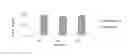
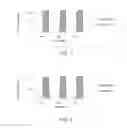
FIG. 1 shows a chart with repellency results and performance at time 0 against Periplaneta Americana (house roach) using composition 1.
FIG. 2 shows a chart with repellency results and performance at time 0 against Periplaneta Americana (house roach) using composition 2.
FIG. 3 shows a chart with repellency results and performance at time 0 against Aedes aegypti using composition 1.
FIG. 4 shows a chart with repellency results and performance at time 0 against Aedes aegypti using composition 2.
DETAILED DESCRIPTION OF THE INVENTION
Some natural active ingredients, which also include insect repellent properties, were also evaluated. Some examples include the Neem oil, Eucalyptus oil, lemongrass (essential oils), among others.
Afterwards, drawing on some of the work already performed, formulations including said active ingredients and formulations including synthetic active ingredients such as pyrethrin and pyrethroid byproducts were prepared, which will be described in detail in the following examples, and water-based coating compatibility and stability evaluation work was launched (acrylic paint and PVA latex).
After the stability and compatibility test phase, paint samples were prepared and submitted to lab testing for proof of efficiency of the additive.
According to ANVISA [Brazilian Health Surveillance Agency], repellents are “products with repellent action against insects, for application to immovable surfaces and volatilization in environments with slow and continuous release of the active ingredient(s) by electric heating or other energy form, or even spontaneously”, and the concept of insect repellency is different from insecticide action, as it does not kill the insect, but rather discourages the insect from landing or pushes it away from a certain surface.
There are various types of repellents available in the market directed at skin application or room protection, in which the release of the active ingredient is done by heating (repellent tablets or solutions that are released by electric devices) or even by burning as candles or coil repellents.
The development described herein features the compatibility of repellent active ingredients through formulations including additives, solvents, stabilizers and surfactants as innovation, enabling inclusion in products such as:
-
- water-based (acrylic, latex, styrene-acrylic, epoxy, alkyd, among others) and solvent-based (acrylic, epoxy, alkyd, among others) coating compositions;
- wood laminate products that include resin in their compositions, which may be used in producing furniture, tools, base trims, ceiling trims, etc.;
- surface coating paper, such as wallpapers;
- in order to provide rooms less susceptible to insect dwelling and development, contributing to the quality of life of users of said rooms or environments.
The composition comprises the following ingredients: permethrin or cypermethrin, glycol, hydrogenated castor oil and/or essential lemongrass oil, ethoxylate/propoxylate alcohol, anionic surfactants, namely calcium dodecylbenzenesulfonate and/or polyethylene-polypropylene monobutyl glycol ether. More particularly, the composition comprises the proportions listed in the following examples:
EXAMPLES AND RESULTS
Example 1—Additive Formulation with Repellent Action, Synthetic Base
Repellent additive composition, named composition 1, including:
| Compound | % weight | Addition order |
| Permethrin/Cypermethrin | 45.0-60.0 | 5 |
| Glycol (propylene glycol/ | 8.0-12.0 | 1 |
| dipropylene glycol) | ||
| Hydrogenated Castor Oil 40 EO | 10.0-15.0 | 4 |
| Ethoxylate/Propoxylate Alcohol | 4.0-7.0 | 3 |
| Calcium dodecylbenzenesulfonate | 15.0-20.0 | 2 |
| and/Polyethylene-polypropylene | ||
| monobutyl glycol ether | ||
Stability and compatibility test results for water-based coatings (vinyl-acrylic resin) with Composition 1 at 1.00 and 1.50% dosages are as follows.
Methodology:
-
- Use of additives on PAINT 1 VINYL and PAINT 2 VINYL samples, with 1.00% and 1.50% dosages of the repellent additive composition 1;
- Advanced stability testing in oven at 45° C. for 14 days; Daily color and odor monitoring of the samples in humid state;
- pH measurement at the start and end of the stability period.
Results:
A—Sample: Water-Based Vinyl Paint
| (Ref.: RAM 1262/13) |
| Sample: Vinyl 1 |
| Additives: | Color | Odor |
| Paint as such | WHITE (10% pH at 9.38 water) | CHARACTERISTIC |
| 1.00% | WHITE | CHARACTERISTIC |
| Composition 1 | ||
| Day 2 | WHITE | CHARACTERISTIC |
| Day 3 | WHITE | CHARACTERISTIC |
| Day 4 | WHITE | CHARACTERISTIC |
| Day 5 | WHITE | CHARACTERISTIC |
| Day 6 | WHITE | CHARACTERISTIC |
| Day 7 | WHITE | CHARACTERISTIC |
| Day 8 | WHITE | CHARACTERISTIC |
| Day 9 | WHITE | CHARACTERISTIC |
| Day 10 | WHITE | CHARACTERISTIC |
| Day 11 | WHITE | CHARACTERISTIC |
| Day 12 | WHITE | CHARACTERISTIC |
| Day 13 | WHITE | CHARACTERISTIC |
| Day 14 | WHITE | CHARACTERISTIC |
| pH (10% solution in water) | Initial: 9.34 |
| Final: 9.31 |
| 1.50% | WHITE | CHARACTERISTIC |
| Composition 1 | ||
| Day 2 | WHITE | CHARACTERISTIC |
| Day 3 | WHITE | CHARACTERISTIC |
| Day 4 | WHITE | CHARACTERISTIC |
| Day 5 | WHITE | CHARACTERISTIC |
| Day 6 | WHITE | CHARACTERISTIC |
| Day 7 | WHITE | CHARACTERISTIC |
| Day 8 | WHITE | CHARACTERISTIC |
| Day 9 | WHITE | CHARACTERISTIC |
| Day 10 | WHITE | CHARACTERISTIC |
| Day 11 | WHITE | CHARACTERISTIC |
| Day 12 | WHITE | CHARACTERISTIC |
| Day 13 | WHITE | CHARACTERISTIC |
| Day 14 | WHITE | CHARACTERISTIC |
| pH (10% solution in water) | Initial: 9.34 |
| Final: 9.34 | |
Samples were kept in oven after 14 days of stability. Also, a film extension test was carried out, with no changes observed regarding aspect of the dry film.
Example 2—Additive Formulation with Synthetic-Based Repellent Action Additive Boosted with Natural Additives
The incorporation of natural additives, aside from bolstering the additive action, increasing its action spectrum, provides a more sustainable product from the viewpoint of availability of plant-derived raw materials such lemongrass, Neem oil, among others.
Below is the description of a repellent additive composition, called composition 2, which comprises:
| Compound | % weight | Addition order |
| Permethrin/Cypermethrin | 40.0-50.0 | 5 |
| Glycol (propylene glycol/ | 8.0-12.0 | 1 |
| dipropylene glycol) | ||
| Essential Lemongrass oil | 10.0-12.0 | 6 |
| Hydrogenated Castor Oil 40 EO | 10.0-15.0 | 4 |
| Ethoxylate/Propoxylate Alcohol | 3.0-6.0 | 3 |
| Calcium dodecylbenzenesulfonate | 12.0-17.0 | 2 |
| and/Polyethylene-polypropylene | ||
| monobutyl glycol ether | ||
Stability and compatibility test results for water-based coatings (vinyl-acrylic resin) with Composition 2 at 1.00 and 1.50% dosages are as follows:
| Additives: | Color | Odor | |
| 1.00% | WHITE | REPELLENT ADDITIVE | |
| Composition 2 | SLIGHT ODOR | ||
| Day 2 | WHITE | REPELLENT ADDITIVE | |
| ODOR | |||
| Day 3 | WHITE | REPELLENT ADDITIVE | |
| ODOR | |||
| Day 4 | WHITE | REPELLENT ADDITIVE | |
| ODOR | |||
| Day 5 | WHITE | REPELLENT ADDITIVE | |
| ODOR | |||
| Day 6 | WHITE | REPELLENT ADDITIVE | |
| SLIGHT ODOR | |||
| Day 7 | WHITE | REPELLENT ADDITIVE | |
| SLIGHT ODOR | |||
| Day 8 | WHITE | REPELLENT ADDITIVE | |
| SLIGHT ODOR | |||
| Day 9 | WHITE | REPELLENT ADDITIVE | |
| SLIGHT ODOR | |||
| Day 10 | WHITE | REPELLENT ADDITIVE | |
| SLIGHT ODOR | |||
| Day 11 | WHITE | REPELLENT ADDITIVE | |
| SLIGHT ODOR | |||
| Day 12 | WHITE | REPELLENT ADDITIVE | |
| SLIGHT ODOR | |||
| Day 13 | WHITE | REPELLENT ADDITIVE | |
| SLIGHT ODOR | |||
| Day 14 | WHITE | REPELLENT ADDITIVE | |
| SLIGHT ODOR |
| pH (10% solution in water) | Initial: 8.78 | ||
| Final: 9.02 |
| 1.50% | WHITE | REPELLENT ADDITIVE | |
| Composition 2 | SLIGHT ODOR | ||
| Day 2 | WHITE | REPELLENT ADDITIVE | |
| ODOR | |||
| Day 3 | WHITE | REPELLENT ADDITIVE | |
| ODOR | |||
| Day 4 | WHITE | REPELLENT ADDITIVE | |
| ODOR | |||
| Day 5 | WHITE | REPELLENT ADDITIVE | |
| ODOR | |||
| Day 6 | WHITE | REPELLENT ADDITIVE | |
| ODOR | |||
| Day 7 | WHITE | REPELLENT ADDITIVE | |
| ODOR | |||
| Day 8 | WHITE | REPELLENT ADDITIVE | |
| ODOR | |||
| Day 9 | WHITE | REPELLENT ADDITIVE | |
| ODOR | |||
| Day 10 | WHITE | REPELLENT ADDITIVE | |
| ODOR | |||
| Day 11 | WHITE | REPELLENT ADDITIVE | |
| ODOR | |||
| Day 12 | WHITE | REPELLENT ADDITIVE | |
| ODOR | |||
| Day 13 | WHITE | REPELLENT ADDITIVE | |
| ODOR | |||
| Day 14 | WHITE | REPELLENT ADDITIVE | |
| ODOR |
| pH (10% solution in water) | Initial: 8.73 | ||
| Final: 8.91 | |||
Samples were kept in oven after 14 days of stability. Also, a film extension test was carried out, with no changes observed regarding aspect of the dry film.
After the film dried, odor was no longer noticeable, allowing application of the coating without restrictions.
Claims
1. A formulation of synthetic repellent additive used against crawling and flying insects comprising from 40 to 70% weight of active ingredient selected from the group consisting of permethrin, cypermethrin, and a mixture of permethrin and cypermethrin.
2. The formulation according to claim 1 further comprising a natural additive selected from the group consisting of lemongrass oil, neem oil, andiroba oil, and a mixture of two or more thereof.
3. A coated composition comprising:
the formulation according to claim 1; and
a composition;
wherein the formulation is applied to a surface of the composition; and
wherein the composition is selected from the group consisting of water-based and solvent-based compositions.
4. The formulation according to claim 1 further comprising glycol.
5. The formulation according to claim 1 further comprising hydrogenated castor oil.
6. The formulation according to claim 1 further comprising alcohol.
7. The formulation according to claim 1 further comprising an anionic surfactant.
8. The formulation according to claim 1 further comprising a natural additive.
9. The formulation according to claim 1 further comprising:
from 8-12% weight of glycol;
from 10-15% weight of hydrogenated castor oil;
from 4-7% weight of an alcohol;
from 15-20% weight of an anionic surfactant; and
from 45-60% weight of the active ingredient.
10. The formulation according to claim 1 further comprising:
from 8-12% weight of glycol;
from 10-12% weight of a natural additive;
from 10-15% weight of hydrogenated castor oil;
from 3-6% weight of an alcohol;
from 12-17% weight of an anionic surfactant; and
from 40-50% weight of the active ingredient.
11. The formulation according to claim 2, wherein the natural additive(s) comprise from 10 to 20% weight of the formulation.
12. The coated composition according to claim 3, wherein the water-based composition is selected from the group consisting of acrylic, latex, styrene-acrylic, epoxy and alkyd.
13. The coated composition according to claim 3, wherein the solvent-based composition is selected from the group consisting of acrylic, epoxy and alkyd.
14. The formulation according to claim 9, wherein the glycol is selected from the group consisting of propylene glycol, dipropylene glycol, and mixtures thereof;
wherein the alcohol is selected from the group consisting of ethoxylate alcohol, propoxylate alcohol, and mixtures thereof; and
wherein the anionic surfactant is selected from the group consisting of calcium dodecylbenzenesulfonate, polyethylene-polypropylene monobutyl glycol ether, and mixtures thereof.
15. The formulation according to claim 10, wherein the glycol is selected from the group consisting of propylene glycol, dipropylene glycol, and mixtures thereof;
wherein the natural additive is selected from the group consisting of lemongrass oil, neem oil, andiroba oil, and mixtures thereof;
wherein the alcohol is selected from the group consisting of ethoxylate alcohol, propoxylate alcohol, and mixtures thereof; and
wherein the anionic surfactant is selected from the group consisting of calcium dodecylbenzenesulfonate, polyethylene-polypropylene monobutyl glycol ether, and mixtures thereof.
16. A coated product comprising:
the formulation according to claim 1; and
a product;
wherein the formulation is applied to a surface of the product; and
wherein the product is selected from the group consisting of a wood laminate product that includes resin in its composition and surface coating paper product.
Images & Drawings included:

Sources:
- United States Patent and Trademark Office - verify current appl. status at the USPTO↗
Recent applications in this class:
- » 20250255306 2025-08-14
METHODS TO INDUCE HEAT STRESS TOLERANCE IN PLANTS - » 20250255305 2025-08-14
METHODS TO INDUCE HEAT STRESS TOLERANCE IN PLANTS - » 20250241312 2025-07-31
PYRETHROID IN-CAN ADJUVANTED SUSPENSION CONCENTRATES - » 20250228243 2025-07-17
METHODS AND COMPOSITIONS FOR PPO HERBICIDE TOLERANCE - » 20250204531 2025-06-26
AN AGROCHEMICAL COMPOSITION - » 20250134105 2025-05-01
MOLECULES HAVING PESTICIDAL UTILITY, AND INTERMEDIATES, COMPOSITIONS, AND PROCESSES, RELATED THERETO - » 20250024840 2025-01-23
READY-TO-USE BARRIER AND KNOCKDOWN PESTICIDES - » 20250008960 2025-01-09
MOLECULES HAVING PESTICIDAL UTILITY, AND INTERMEDIATES, COMPOSITIONS, AND PROCESSES, RELATED THERETO - » 20240415125 2024-12-19
INSECT-REPELLENT COMPOSITIONS AND USES THEREOF - » 20240389596 2024-11-28
INSECT, ACARINA AND NEMATODE PEST CONTROL