Terpineol and preparation method and application thereof
US20190337900A1
2019-11-07
16/074,403
2017-01-16
✅ Patent granted
US 11,117,866 B2
2021-09-14
WO; PCT/CN2017/071217; 20170116
WO; WO2017/133429; 20170810
Taofiq A Solola
Jiwen Chen | Jacobson Holman PLLC
2038-04-16
Abstract:
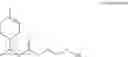
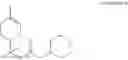
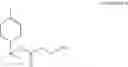
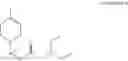
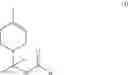
The present invention discloses a terpinenol compound as well as its preparation method and application. The structure of such terpinenol compound is as shown in Formula (I) or (II). In Formula (I), R is independently selected from C12-C16 alkyl, —NR1R2, —SR3 or —OR4; R1, R2, R3 and R4 are independently selected from C1-C6 alkyl or —NO2; the C1-C6 alkyl can be substituted by OH; Alternatively, the R1 and R2 form a five-member ring or six-member ring in together with N used to link up them; the five-member or six-member ring may contain one O or C═O. As indicated by results of activity test, such terpinenol compound has satisfactory effect in prevention of asthma, inflammation and pulmonary artery hypertension, which also has high pharmaceutical significance.
Inventors:
- Yongzhou HU 2 🇨🇳 HANGZHOU, ZHEJIANG PROVINCE, China
- WANPING ZHU 1 🇨🇳 HANGZHOU, ZHEJIANG PROVINCE, China
- XIA LIU 1 🇨🇳 HANGZHOU, ZHEJIANG PROVINCE, China
- FANZHI KONG 1 🇨🇳 HANGZHOU, ZHEJIANG PROVINCE, China
- YUJI WANG 1 🇨🇳 HANGZHOU, ZHEJIANG PROVINCE, China
- Yongzhou Hu 4 🇨🇳 Hangzhou, China
- Wanping Zhu 1 🇨🇳 Hangzhou, China
- Xia Liu 1 🇨🇳 Hangzhou, China
- Fanzhi Kong 1 🇨🇳 Hangzhou, China
- Yuji Wang 1 🇨🇳 Hangzhou, China
Assignee:
- ZHEJIANG ACADEMY OF TRADITIONAL CHINESE MEDICINE 1 🇨🇳 Hangzhou, Zhejiang Province, China
- ZHEJIANG ACADEMY OF TRADITIONAL CHINESE MEDICINE 1 🇨🇳 Hangzhou, China
Applicant:
Interested in similar patents?
Get notified when new applications in this technology area are published.
Classification:
A61P9/12 » CPC further
Drugs for disorders of the cardiovascular system Antihypertensives
C07C229/12 » CPC further
Compounds containing amino and carboxyl groups bound to the same carbon skeleton having amino and carboxyl groups bound to acyclic carbon atoms of the same carbon skeleton the carbon skeleton being acyclic and saturated having only one amino and one carboxyl group bound to the carbon skeleton the nitrogen atom of the amino group being further bound to acyclic carbon atoms or to carbon atoms of rings other than six-membered aromatic rings to carbon atoms of acyclic carbon skeletons
C07C323/52 » CPC further
Thiols, sulfides, hydropolysulfides or polysulfides substituted by halogen, oxygen or nitrogen atoms, or by sulfur atoms not being part of thio groups containing thio groups and carboxyl groups bound to the same carbon skeleton having the sulfur atoms of the thio groups bound to acyclic carbon atoms of the carbon skeleton the carbon skeleton being acyclic and saturated
C07D263/04 » CPC further
Heterocyclic compounds containing 1,3-oxazole or hydrogenated 1,3-oxazole rings not condensed with other rings having no double bonds between ring members or between ring members and non-ring members
C07D221/00 » CPC main
Heterocyclic compounds containing six-membered rings having one nitrogen atom as the only ring hetero atom, not provided for by groups -
C07C69/24 » CPC further
Esters of carboxylic acids; Esters of carbonic or haloformic acids; Esters of acyclic saturated monocarboxylic acids having the carboxyl group bound to an acyclic carbon atom or to hydrogen having three or more carbon atoms in the acid moiety esterified with monohydroxylic compounds
C07C203/04 » CPC further
Esters of nitric or nitrous acid; Esters of nitric acid having nitrate groups bound to acyclic carbon atoms
Description
FIELD OF THE INVENTION
The present invention is related to the biomedicine field, in particular to a terpinenol compound and its preparation method and application.
BACKGROUND ARTS
Blumea oil belongs to a volatile oil as contained in the dry or fresh leaf of Artemisia argyi, which can directly slacken tracheal smooth muscle, and guard against convulsion to the tracheal smooth muscle and asthma as incurred by antigen, acetylcholine and histamine. It also has anti-allergic effect to inhibit allergic slow reacting substance (SRS-A) released by sensitized lung tissue, and guard against SRS-A and 5-hydroxy tryptamine. It is also available for phlegm elimination and cough suppression. It exerts no excitation to the heart, which is mainly used for therapy of bronchial asthma and asthmatic chronic bronchitis.
Alpha-terpinenol is an active ingredient extracted from the Blumea oil for asthma suppression, of which chemical designation is α,α,4-Trimethylcyclohex-3-en-1-methanol. According to pharmacological action of α-terpinenol reported by Bian Rulian and his colleagues (“a new antiasthmatic drug-pharmacological action of α-terpinenol”, Chinese Pharmacological Bulletin, Page 323-328, Vol. 3, No. 6, 1987), α-terpinenol is available for air passage relaxation during in vivo experiment and experiment in vitro to guinea pig, which can increase cAMP content in the tracheal smooth muscle; it also plays a role of anti-anaphylaxis, cough suppression and phlegm elimination, which is a safe and effective new antiasthmatic drug owing to its low toxicity. As different from β receptor agonist, α-terpinenol has inhibiting effect on isolated atria of guinea pig.
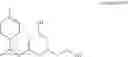
Chinese Patent Application with the publication number of CN 103922927 A discloses a derivative of α-terpinenol as well as its preparation method and application; structure of such derivative of α-terpinenol is shown as follows:
Wherein, R is selected from C1˜C5 alkyl; however, the anti-asthmatic activity is not satisfactory despite of the fact that it has been enhanced to some extent through derivatization of α-terpinenol.
SUMMARY OF THE INVENTION
The present invention provides an α-terpinenol compound as well as its preparation method and application; such terpinenol compound has higher anti-asthmatic activity and anti-inflammation activity.
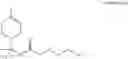
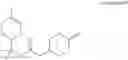
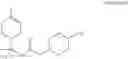
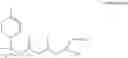
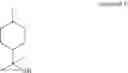
An anti-asthmatic compound, of which structure is as shown in Formula (I) or (II):
In Formula (I), R is independently selected from C12˜C16 alkyl, —NR1R2, —SR3 or —OR4;
R1, R2, R3 and R4 are independently selected from C1˜C6 alkyl or —NO2; the C1˜C6 alkyl can be substituted by OH;
Alternatively, the R1 and R2 form a five-member ring or six-member ring in together with N used to link up them; the five-member or six-member ring may contain one O or C═O.
As indicated by activity test, the terpinenol compound according to the present invention can slacken the tracheal smooth muscle, and reduce the inflammatory cell, which can also effectively alleviate pulmonary hypertension.
In a preferred embodiment, the R is —NR1R2; in such case, the terpinenol compound can form a medically acceptable salt with acids to facilitate dissolution in the water and pharmaceutical application.
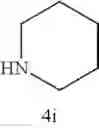
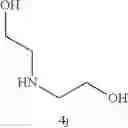
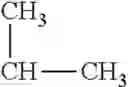
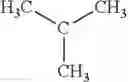
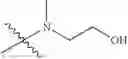
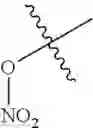
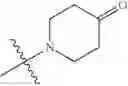
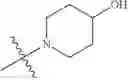
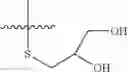
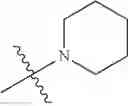
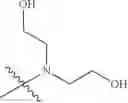
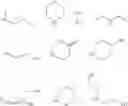
In a preferred embodiment, the R is C12H25, C16H33 or one of the following functional groups:
Wherein, “” refers to link location.
Such functional groups can ensure higher activity and easy acquisition of compound.
The present invention further provides a method for preparation of the terpinenol compound.
When the terpinenol compound is the compound as shown in Formula (I), and R is C12˜C16 alkyl, the preparation method comprises the following steps:
Obtaining the terpinenol compound through a reaction between the α-terpinenol and alkyl chloride in the dichloromethane under the action of pyridine;
The alkyl chloride is C14˜C16 alkyl chloride.
When the terpinenol compound is the compound as shown in Formula (I), and R is —NR1R2, —SR3 or —OR4; such preparation method comprises the following steps:
(1) Obtaining the esterified intermediate through a reaction between the α-terpinenol and bromoacetyl bromide in the dichloromethane under the action of pyridine;
(2) Obtaining the terpinenol compound through a substitution reaction between the esterified intermediate as obtained in Step (1) and a nucleophilic reagent in the acetonitrile under the action of inorganic base;
The nucleophilic reagent is HNR1R2, HSR3 or HOR4.
When the terpinenol compound is the compound as shown in Formula (II), the preparation method comprises the following steps:
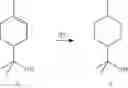
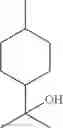
Obtaining the terpinenol compound through hydrogenation of α-terpinenol in the methanol in the atmosphere of Pd/C and hydrogen gas;
The present invention further provides an application of the terpinenol compound in pharmaceutical field.
In a preferred embodiment, the terpinenol compound is used to prepare anti-asthmatic drug;
The anti-asthmatic drug is used to relax bronchus.
As indicated by testing results, the terpinenol compound can also effectively reduce inflammatory cells. In a further preferred embodiment, the terpinenol compound is used to prepare anti-inflammatory drug.
In still a further preferred embodiment, the terpinenol compound is used to prepare drugs for therapy or alleviation of pulmonary hypertension.
As compared with prior arts, the present invention has the following beneficial effect:
(1) The present invention has effectively improved the role of such compound in guarding against asthma and pulmonary hypertension through derivatization of terpinenol compound;
(2) The terpinenol compound according to the present invention can reduce inflammatory cells, which has higher anti-inflammation activity.
SPECIFIC EMBODIMENTS OF THE INVENTION
Embodiment 1
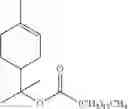
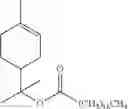
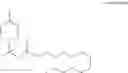
α-terpinenol (4 mmol) taken by precise weighing was dissolved in 10 ml dichloromethane, and (6 mmol) pyridine was added, then myristoyl chloride (6 mmol) was added subjecting to ice bathing for reaction for 8 hours at room temperature to obtain the final product 2a (3.74 mmol, yield rate of 93.5%). Product structure is as follows:
Embodiment 2
α-terpinenol (4 mmol) taken by precise weighing was dissolved in 10 ml dichloromethane, and (6 mmol) pyridine was added, then Octadecanoyl chloride (6 mmol) was added subjecting to ice bathing for reaction for 8 hours at room temperature to obtain the final product 2b (3.86 mmol, yield rate of 96.5%).
Embodiment 3-12
(1) 1.85 g (10 mmol) α-terpinenol was taken by weighing, and was put into 50 ml round-bottom flask; 30 ml dichloromethane and 1.91 ml (20 mmol) pyridine were further added, then 2.09 ml (20 mmol) bromoacetyl bromide was added subjecting to ice bathing for reaction at room temperature for 7 hours to obtain intermediate 3 (5.9 mmol, yield rate of 48.2%).
Reaction equation is stated as follows:
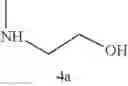
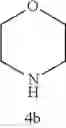
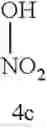
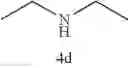
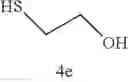
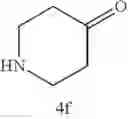
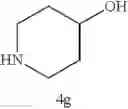
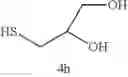
(2) Intermediate 3 (274 mg, 1 mmol) was dissolved in 10 mL acetonitrile, and potassium carbonate (276.4 mg, 2 mmol) and intermediate 4 (2 mmol) were added at room temperature to obtain product 5; structure and yield rate of intermediate 4 were as shown in Table 1.
| TABLE 1 |
| Substrate in Embodiment 3-12 and Results |
| Embodiment | Intermediate 3 | Yield | Yield Coefficient |
| 3 | 0.765 mmol | 76.5% | |
| 4 | 0.842 mmol | 84.2% | |
| 5 | 0.748 mmol | 74.8% | |
| 6 | 0.914 mmol | 91.4% | |
| 7 | 0.839 mmol | 83.9% | |
| 8 | 0.812 mmol | 81.2% | |
| 9 | 0.828 mmol | 82.8% | |
| 10 | 0.87 mmol | 87% | |
| 11 | 0.873 mmol | 87.3% | |
| 12 | 0.635 mmol | 63.5% | |
Embodiment 13
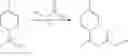
α-terpinenol (400 mg) was added into 10 mL methanol, and Pd/C (40 mg) was further added for agitation in the hydrogen environment for 8 hours. Colorless oily substance 6 (38 mg, 93.5%) was obtained through separation. Reaction equation is as follows:
Data on structural characteristics of some compounds is as follows:
1H NMR (500 MHz, CDCl3): δ 5.37 (s, 1H), 2.25-2.16 (m, 2H), 2.07-1.90 (m, 4H), 1.89-1.76 (m, 2H), 1.64 (s, 3H), 1.61-1.52 (m, 2H), 1.43 (s, 3H), 1.41 (s, 3H), 1.25 (s, 21H), 0.91-0.82 (m, 3H).
1H NMR (500 MHz, CDCl3): δ 5.36 (dd, J=8.3, 6.9 Hz, 1H), 2.20 (t, J=7.5 Hz, 2H), 2.08-1.91 (m, 4H), 1.88-1.75 (m, 2H), 1.64 (s, 3H), 1.58-1.53 (m, 2H), 1.44 (s, 3H), 1.41 (s, 3H), 1.34-1.19 (m, 29H), 0.88 (t, J=7.0 Hz, 3H).
1H NMR (500 MHz, CDCl3): δ 5.38 (d, J=2.0 Hz, 1H), 3.62-3.58 (m, 2H), 3.24 (s, 2H), 2.73-2.69 (m, 2H), 2.44 (s, 3H), 2.13-1.93 (m, 4H), 1.89-1.76 (m, 2H), 1.66 (s, 3H), 1.49 (s, 3H), 1.46 (s, 3H), 1.32 (tt, J=10.4, 5.3 Hz, 1H).
1H NMR (500 MHz, CDCl3): δ 5.38 (dd, J=3.1, 1.7 Hz, 1H), 3.78 (dd, J=8.3, 3.6 Hz, 4H), 3.13 (d, J=1.3 Hz, 2H), 2.64-2.56 (m, 4H), 2.12-1.92 (m, 4H), 1.89-1.76 (m, 2H), 1.66 (s, 3H), 1.48 (s, 3H), 1.45 (s, 3H), 1.36-1.26 (m, 1H).
1H NMR (500 MHz, CDCl3): δ 5.36 (s, 1H), 3.75 (s, 2H), 2.13-1.94 (m, 4H), 1.92-1.76 (m, 2H), 1.64 (s, 3H), 1.45 (s, 3H), 1.36 (s, 3H), 1.33 (qd, J=12.3, 5.6 Hz, 1H).
1H NMR (500 MHz, CDCl3): 5.38 (dd, J=2.9, 1.5 Hz, 1H), 3.23 (s, 2H), 2.67 (q, J=7.3 Hz, 4H), 2.10-1.93 (m, 4H), 1.88-1.76 (m, 2H), 1.65 (s, 3H), 1.47 (s, 3H), 1.44 (s, 3H), 1.35-1.25 (m, 1H), 1.08 (td, J=7.2, 4.1 Hz, 6H).
1H NMR (500 MHz, CDCl3): δ 5.37-5.34 (m, 1H), 3.75 (t, J=5.6 Hz, 2H), 3.18 (s, 2H), 2.81 (t, J=5.5 Hz, 2H), 2.09-1.94 (m, 4H), 1.86-1.76 (m, 2H), 1.63 (s, 3H), 1.45 (s, 3H), 1.43 (s, 3H), 1.35-1.25 (m, 1H);
1H NMR (500 MHz, CDCl3): δ 5.33 (t, J=8.9 Hz, 1H), 3.24 (s, 2H), 2.87 (t, J=6.1 Hz, 4H), 2.48 (t, J=6.1 Hz, 4H), 2.09-1.89 (m, 4H), 1.86-1.73 (m, 2H), 1.63 (s, 3H), 1.46 (s, 3H), 1.43 (s, 3H), 1.34-1.25 (m, 1H);
1H NMR (500 MHz, CDCl3): δ 5.35 (d, J=2.1 Hz, 1H), 3.73-3.66 (m, 1H), 3.11 (s, 2H), 2.81 (td, J=8.9, 3.8 Hz, 2H), 2.38-2.30 (m, 2H), 2.10-1.88 (m, 4H), 1.85-1.74 (m, 2H), 1.68-1.58 (m, 6H), 1.45 (s, 3H), 1.42 (s, 3H), 1.33-1.26 (m, 1H);
1H NMR (500 MHz, CDCl3): δ 5.35 (s, 1H), 3.81 (s, 1H), 3.71 (d, J=11.0 Hz, 1H), 3.60 3.46 (m, 1H), 3.27-3.15 (m, 2H), 2.85-2.77 (m, 1H), 2.68 (dd, J=14.0, 8.4 Hz, 1H), 2.09 1.90 (m, 4H), 1.86-1.75 (m, 2H), 1.63 (s, 3H), 1.45 (s, 3H), 1.43 (s, 3H), 1.33-1.25 (m, 1H);
1H NMR (500 MHz, CDCl3): δ 5.42-5.33 (m, 1H), 3.06 (d, J=1.2 Hz, 2H), 2.55-2.43 (m, 4H), 2.10-1.89 (m, 4H), 1.86-1.71 (m, 2H), 1.62 (s, 3H), 1.59 (dd, J=11.3, 5.7 Hz, 4H), 1.43 (d, J=5.8 Hz, 3H), 1.42-1.37 (m, 5H), 1.27 (ddd, J=24.4, 12.2, 5.7 Hz, 1H);
1H NMR (500 MHz, CDCl3): δ 5.33 (s, 1H), 3.56-3.54 (m, 1H), 3.11 (s, 2H), 2.81 (td, J=8.9, 3.8 Hz, 2H), 2.38-2.30 (m, 2H), 2.10-1.88 (m, 4H), 1.85-1.74 (m, 2H), 1.68-1.58 (m, 6H), 1.45 (s, 3H), 1.42 (s, 3H), 1.33-1.26 (m, 1H);
1H NMR (500 MHz, CDCl3): δ 1.75 (ddd, J=16.6, 10.2, 4.5 Hz, 4H), 1.43-1.42 (m, 1H), 1.29-1.17 (m, 2H), 1.13 (s, 6H), 1.07-0.96 (m, 2H), 0.89 (dd, J=12.0, 2.9 Hz, 1H), 0.85 (d, J=6.5 Hz, 3H).
Bronchiectasis and Anti-Inflammation Experiment
Method: Isolated tracheal strip was fabricated, and was placed in the in-vitro tracheal experiment device; 100 μL acetylcholine chloride was added following tension adjustment and balancing to make the trachea extract, and the tension of trachea was increased. Once the tension was increased to the maximum value, and became balanced, corresponding trial drug was fed to inhibit extraction of the trachea; isometric muscle tension variation curve was recorded, and diastolic rate of smooth muscle was calculated. Diastolic rate=(tension after radiography−tension after dosing)/(tension after radiography)*100%.
Rat asthma model was established, and proceeded with blunt dissection of trachea following the last feeding of drug for trachea alveolar washing. Bronchi alveolar lavage fluid (BALF) was collected, and total number of nucleated cells were counted. Results were as shown in Table 2.
| TABLE 2 | |
| Relaxation rate % |
| Inflammatory | ||||
| Group | 0.75 mmol/L | 1.25 mmol/L | cell (× 108/L) | |
| Blank | R | 7.73 ± 4.81 | 13.59 ± 9.14 | 85.50 ± 18.70## |
| group | ||||
| Model | 182.50 ± 24.52ΔΔ | |||
| group | ||||
| Amino- | 43.67 ± 10.20ΔΔ | 56.70 ± 9.26ΔΔ | ||
| phylline | ||||
| Aa | H | 14.62 ± 4.24* * | 21.57 ± 7.04* * Δ | |
| Ba | CH3 | 34.35 ± 14.72 | 47.72 ± 15.94 | |
| Ca | CH2CH3 | 18.18 ± 6.26* * | 23.22 ± 4.39* * Δ | |
| Na | CH2CH2CH3 | 21.20 ± 9.24* * | 25.47 ± 8.69* * | |
| ISOa | 19.88 ± 8.82* * | 22.79 ± 8.27* * Δ | ||
| TRa | 25.49 ± 6.53* | 28.02 ± 8.83* * | ||
| α-T | 28.40 ± 16.13ΔΔ | 38.35 ± 13.62Δ | 113.00 ± 21.27# | |
| A | —(CH2)12CH3 | 17.56 ± 2.89* *ΔΔ | 16.55 ± 14.47* * | 139.50 ± 31.24Δ |
| B | —(CH2)16CH3 | 15.4 ± 9.83* * | 10.63 ± 13.77* * | 134.50 ± 25.27Δ |
| C | 50.24 ± 7.30ΔΔ | 76.85 ± 7.70* *ΔΔ | 77.50 ± 68.81## | |
| D | 36.60 ± 13.79ΔΔ | 59.35 ± 14.66Δ | 110.5 ± 16.21## | |
| E | 17.13 ± 6.98* * | 10.84 ± 4.46* * | 139.50 ± 20.71Δ | |
| F | 42.33 ± 10.45ΔΔ | 46.71 ± 3.56* ΔΔ | 101.50 ± 14.68# | |
| G | 48.29 ± 9.36ΔΔ | 81.09 ± 10.15* *ΔΔ | 76.00 ± 18.15## | |
| H | 20.85 ± 7.55* *Δ | 43.81 ± 10.16*ΔΔ | 123.00 ± 17.23# | |
| J | 35.17 ± 13.87ΔΔ | 71.53 ± 15.45ΔΔ | 99.50 ± 21.23## | |
| K | 34.84 ± 19.74 | 65.29 ± 13.43Δ | 104.50 ± 13.25## | |
| L | 42.49 ± 6.14ΔΔ | 52.21 ± 6.98Δ | 110.50 ± 16.18## | |
| M | 27.74 ± 2.08*ΔΔ | 61.01 ± 5.07ΔΔ | 97.50 ± 13.11## | |
| N | 27.16 ± 14.10* | 41.28 ± 13.17*ΔΔ | 140.00 ± 26.21Δ | |
| With regard to several compounds in preferred embodiments of aCN 103922927 A, formula for computation of diastolic rate has been improved to some extent; meanwhile, as there exists certain difference to testing results of different batches, data on diastolic rate is also varied. | ||||
| “ ” refers to substitution position; compound N is product structure. | ||||
| **refers to P<0.01 as compared with α-terpinenol group; | ||||
| *refer to P<0.05 as compared with α-terpinenol group; | ||||
| ΔΔrefers to P<0.01 as compared with blank group; | ||||
| Δrefers to P<0.05 as compared with blank group. | ||||
| As compared with model group, #P<0.05, ##P<0.01 |
Various compound groups can increase the diastolic rate of trachea smooth muscle, and inhibit inflammation under different dosage. On this account, it can be used to cure inflammation incurred by asthma, chronic obstructive pulmonary diseases and various other diseases, such as arthritis, rheumatoid arthritis, bronchitis, allergic rhinitis and allergic dermatitis.
Impact on Monocrotaline Incurred Pulmonary Hypertension to Rats
Method: Rat PAH model was established, and normal saline was fed to contrast group with volume equivalent to that for injection. Drug for interference was fed 2 days after radiography. 200 mg/Kg per compound was fed on daily basis. Normal saline was used with equivalent volume for lavage to the contrast group and model group respectively. Right ventricular systolic pressure of rat was measured by means of Right cardiac catheterization at anesthesia state on the 30th day. Results were as shown in Table 3.
| TABLE 3 |
| Right Ventricular Systolic Pressure of Different Groups (x ± s) |
| n | RVSP (mmHg) | |
| Normal group | 10 | 21.08 ± 2.13Δ# | |
| Model group | 8 | 43.78 ± 2.14# | |
| α-terpinenol group | 8 | 33.03 ± 2.22Δ | |
| A | 8 | 35.07 ± 2.81 | |
| B | 10 | 36.08 ± 2.01 | |
| C | 8 | 22.33 ± 1.03ΔΔ## | |
| D | 8 | 32.04 ± 1.12Δ | |
| E | 8 | 35.53 ± 3.02 | |
| F | 8 | 23.35 ± 1.04ΔΔ## | |
| G | 8 | 21.08 ± 1.31ΔΔ# | |
| H | 8 | 30.33 ± 2.03Δ | |
| J | 8 | 27.06 ± 1.17Δ | |
| K | 8 | 31.13 ± 2.03Δ | |
| L | 8 | 25.36 ± 1.17ΔΔ# | |
| M | 8 | 33.36 ± 2.05Δ | |
| N | 8 | 32.56 ± 2.82Δ | |
As compared with model group, ΔP<0.05, ΔΔP<0.01; as compared with α-terpinenol group #P<0.05, ##P<0.01.
As indicated by testing results, various compounds can provide certain protection for monocrotaline incurred rat pulmonary artery hypertension. Furthermore, they can improve hemodynamic indicators, reduce right ventricular systolic pressure, alleviate right ventricular load, reduce right heart hypertrophy indicators, and alleviate pulmonary vascular remodeling.
Claims
1-9. (canceled)
10. A terpinenol compound, characterized in that its structure is as shown in Formula (I):
wherein R is one of the following functional groups:
and wherein, “” refers to link location.
11. The method for preparation of terpinenol compound according to claim 10, characterized in that it comprises the following steps:
(1) obtaining the esterified intermediate through reaction between the α-terpinenol and bromoacetyl bromide in the dichloromethane under the action of pyridine;
(2) obtaining the terpinenol compound through substitution reaction between the esterified intermediate as obtained in Step (1) and nucleophilic reagent in the acetonitrile under the action of inorganic base;
wherein the nucleophilic reagent is in one of the following structural groups:
12. The method of using the terpinenol compound according to claim 10 in the pharmaceutical field, characterized in that the terpinenol compound is used to prepare anti-asthma drug;
wherein the anti-asthma drug is used for bronchial dilation.
13. The method of using the terpinenol compound according to claim 10 in the pharmaceutical field, characterized in that the terpinenol compound is used to prepare anti-inflammatory drug.
14. The method of using the terpinenol compound according to claim 10 in the pharmaceutical field, characterized in that the terpinenol compound is used to prepare the drug used for therapy or alleviation of pulmonary hypertension.
Images & Drawings included:









Sources:
- United States Patent and Trademark Office - verify current appl. status at the USPTO↗
Recent applications in this class:
- » 20250282731 2025-09-11
SUBSTITUTED 3-DIALKYLAMINOMETHYL-PIPERIDIN-4-YL-BENZAMIDES AND METHODS OF MAKING AND USING SAME - » 20240336571 2024-10-10
NOVEL CYCLOPROPYL COMPOUNDS - » 20210101868 2021-04-08
Substituted 3-dialkylaminomethyl-piperidin-4-yl-benzamides and methods of making and using same - » 20190337901 2019-11-07
Substituted 3-dialkylaminomethyl-piperidin-4-yl-benzamides and methods of making and using same - » 20090203683 2009-08-13
BICYCLIC HETEROCYCLES, PHARMACEUTICAL COMPOSITIONS CONTAINING THEM, THEIR USE, AND PROCESSES FOR PREPARING THEM - » 20060063752 2006-03-23
Bicyclic heterocycles, pharmaceutical compositions containing them, their use, and processes for preparing them