3-D projection printing system and fabrication method therefor
US20190387110A1
2019-12-19
16/549,424
2019-08-23
✅ Patent granted
US 11,196,876 B2
2021-12-07
-
-
Yung-Sheng M Tsui
Muncy, Geissler, Olds and Lowe, P.C.
2039-08-23
Abstract:
The embodiment of the present invention provides a method for a 3-D projection printing system and a system thereof, more particularly to a system adopts both ways of look-up table and interpolation method to calibrate. The embodiment of the present invention provides a portable calibration fixture system and a flexible 3-D projection printing system in order to improve calibration precision, facilitate calibration and printing operations, increase printing effect and save cost.
Inventors:
- Chao-Shun Chen 39 🇹🇼 Hsinchu, Taiwan
- Chang-Chun Chen 11 🇹🇼 Hsinchu, Taiwan
- Ming-Fu Hsu 6 🇹🇼 Hsinchu, Taiwan
Assignee:
- YOUNG OPTICS INC. 259 🇹🇼 Hsinchu, Taiwan
Applicant:
Interested in similar patents?
Get notified when new applications in this technology area are published.
Classification:
H04N1/00267 » CPC main
Scanning, transmission or reproduction of documents or the like, e.g. facsimile transmission; Details thereof; Connection or combination of a still picture apparatus with another apparatus, e.g. for storage, processing or transmission of still picture signals or of information associated with a still picture with a photographic apparatus, e.g. a photographic printer or a projector with a viewing or projecting apparatus, e.g. for reading image information from a film
B33Y50/02 » CPC further
for controlling or regulating additive manufacturing processes
G06K15/02 IPC
Arrangements for producing a permanent visual presentation of the output data, e.g. computer output printers using printers
H04N1/00251 » CPC further
Scanning, transmission or reproduction of documents or the like, e.g. facsimile transmission; Details thereof; Connection or combination of a still picture apparatus with another apparatus, e.g. for storage, processing or transmission of still picture signals or of information associated with a still picture with a photographic apparatus, e.g. a photographic printer or a projector with an apparatus for taking photographic images, e.g. a camera
H04N1/00 IPC
Scanning, transmission or reproduction of documents or the like, e.g. facsimile transmission; Details thereof
B33Y30/00 » CPC further
Apparatus for additive manufacturing; Details thereof or accessories therefor
B29C64/00 IPC
Additive manufacturing, i.e. manufacturing of three-dimensional [3D] objects by additive deposition, additive agglomeration or additive layering, e.g. by 3D printing, stereolithography or selective laser sintering
B29C64/291 » CPC further
Additive manufacturing, i.e. manufacturing of three-dimensional [3D] objects by additive deposition, additive agglomeration or additive layering, e.g. by 3D printing, stereolithography or selective laser sintering; Apparatus for additive manufacturing; Details thereof or accessories therefor; Arrangements for irradiation for operating globally, e.g. together with selectively applied activators or inhibitors
B29C64/393 » CPC further
Additive manufacturing, i.e. manufacturing of three-dimensional [3D] objects by additive deposition, additive agglomeration or additive layering, e.g. by 3D printing, stereolithography or selective laser sintering; Auxiliary operations or equipment; Data acquisition or data processing for additive manufacturing for controlling or regulating additive manufacturing processes
G06K15/027 » CPC further
Arrangements for producing a permanent visual presentation of the output data, e.g. computer output printers using printers Test patterns and calibration
Description
CROSS REFERENCE TO RELATED APPLICATIONS
This application is a Continuation of co-pending application Ser. No. 15/224,507, filed on Jul. 29, 2016, for which priority is claimed under 35 U.S.C. § 120, the entire contents of which are hereby incorporated by reference.
BACKGROUND OF THE INVENTION
1. Field of the Invention
The present invention generally relates to a fabrication method for a 3-D projection printing system and a system thereof, more particularly to a system adopts both the ways of look-up table and interpolation method to calibrate.
2. Description of the Prior Art
In case the lens of the projector is malfunctioned or deformed by some reasons as hot environment, falling down, etc., and/or the whole system happens tolerances while in assembly, the precisions for the system may not exist. Such system is applied to the field of 3-D printing very often, and the printing quality cannot be assured if aforesaid conditions do occur. Hence, an advanced 3-D projection system with an advanced fabrication method are deemed to be a developed issue to the people skilled in the art.
SUMMARY OF THE INVENTION
One embodiment of a fabrication method for a 3-D projection printing system comprises the steps of: the 3-D projection printing system capturing a light-uniform device with a projected single second sample pattern thereon to obtain a second practical pattern, the second practical pattern being calibrated by a second camera look-up table to gain a calibrated pattern, a comparison of the calibrated pattern and the second sample pattern being a first projection look-up table which is transformed to a second projection look-up table with a projection resolution as a resulted projection look-up table, and the resulted projection look-up table being stored in the 3-D projection printing system; and the 3-D projection printing system using the resulted projection look-up table to calibrate a plurality of sliced printing files, and then the plurality of calibrated sliced printing files being used to engaged in a projection printing work.
An embodiment of the present invention provides a method for a 3-D projection printing system and a system thereof, more particularly to a system adopts both ways of look-up table and interpolation method to calibrate. The embodiment of the present invention provide a portable calibration fixture system and a flexible 3-D projection printing system in order to improve calibration precision, facilitate calibration and printing operations, increase printing effect and save cost.
Other and further features, advantages, and benefits of the invention will become apparent in the following description taken in conjunction with the following drawings. It is to be understood that the foregoing general description and following detailed description are exemplary and explanatory but are not to be restrictive of the invention. The accompanying drawings are incorporated in and constitute a part of this application and, together with the description, serve to explain the principles of the invention in general terms. Like numerals refer to like parts throughout the disclosure.
BRIEF DESCRIPTION OF THE DRAWINGS
The objects, spirits, and advantages of the preferred embodiments of the present invention will be readily understood by the accompanying drawings and detailed descriptions, wherein:
FIGS. 1A and 1B illustrate a flow chart of a first preferred embodiment of the present invention;
FIGS. 2-1, 2-2, 2-3 and 2-4 illustrate a plurality of schematic views of calibration fixture steps of the embodiment of the present invention;
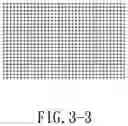
FIGS. 3-1, 3-2, 3-3, 3-4 and 3-5 illustrate a plurality of schematic views of calibration projection steps of the embodiment of the present invention;
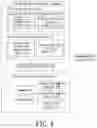
FIG. 4 illustrates a schematic system block of the first preferred embodiment of the present invention;
FIGS. 5A and 5B illustrate a flow chart of a second preferred embodiment of the present invention;
FIG. 6 illustrates a schematic system block of the second preferred embodiment of the present invention; and
FIG. 7 illustrates a schematic view of a calibration projection system.
DETAILED DESCRIPTION OF THE INVENTION
Following preferred embodiments and figures will be described in detail so as to achieve aforesaid objects.
According to FIG. 7, which illustrates a schematic view of a calibration projection system. The system includes a projector 51, a diffuser 53, a reflection mirror 55, a camera 56, and a computer 57. The projector 51 projects a projected image 54 onto the diffuser 53. The projected image 54 goes through the diffuser 53, and then to the reflection mirror 55. The reflection mirror 55 reflects the projected image 54 to the camera 56. The camera 56 captures the reflected projected image 54. Continuously, the captured image in the camera 56 is digitized and sent to the computer 57 via WIFI, USB, Bluetooth, cable, or the other wireless/wired methods.
Please refer to FIGS. 1A-1B, FIGS. 2-1 to 2-4, FIGS. 3-1 to 3-5, and FIG. 4, which illustrate a flow chart, plural schematic views of calibration fixture steps, plural schematic views of calibration projection steps, and a schematic system block of the first preferred embodiment of the present invention. As shown in FIGS. 1A and 1B, the method includes the steps of:
- (S1) providing a single first sample pattern 23 to a calibration fixture system 2;
- (S2) a distortion correction calculation unit 121 of a calculation control system 12, which can be a computer for the preferred embodiment, of a 3-D projection printing system 1 using a camera 22 of the calibration fixture system 2 to capture the single first sample pattern 23, as shown in FIG. 2-1, which is a grid pattern;
- (S3) obtaining a first schematic pattern, as shown in FIG. 2-2, which is another grid pattern with a plurality of nodes;
- (S4) the distortion correction calculation unit 121 determining a plurality of displacement amounts of the nodes between the first schematic pattern and the single first sample pattern 23 to gain a first camera look-up table W1, as shown in FIG. 2-3;
- (S5) the distortion correction calculation unit 121 using an interpolation method to transform the first camera look-up table W1 into a second camera look-up table W2 with a camera resolution, as shown in FIG. 2-4, wherein the view in FIG. 2-4 is larger than the view in FIG. 2-3, since the view in FIG. 2-4 is with a higher resolution;
- (S6) the distortion correction calculation unit 121 storing the second camera look-up table W2;
- (S7) removing the single first sample pattern 23 from the calibration fixture system 2;
- (S8) providing a light-uniform device, which is a diffuser 21 for the preferred embodiment, to the calibration fixture system 2;
- (S9) the distortion correction calculation unit 121 using the projection system 1111 of the printing control system 111 to project a single second sample pattern 24 to the diffuser 21, as shown in FIG. 3-1, which is a grid pattern;
- (S10) the distortion correction calculation unit 121 using the camera 22 to capture the single second sample pattern 24 in order to gain a second schematic pattern;
- (S11) the distortion correction calculation unit 121 using the second camera look-up table to calibrate the second schematic pattern obtained by that of the camera 22 capturing the single second sample pattern 24, as shown in FIG. 3-2, which is a grid pattern;
- (S12) obtaining a calibrated pattern, as shown in FIG. 3-3, which is another grid pattern with a plurality of nodes;
- (S13) the distortion correction calculation unit 121 determining a plurality of displacement amounts of the nodes between the calibrated pattern and the single second sample pattern 24 to gain a first projection look-up table X1, as shown in FIG. 3-4;
- (S14) the distortion correction calculation unit 121 using the interpolation method to transform the first projection look-up table X1 into a second projection look-up table 1121 with a projection resolution, as shown in FIG. 3-5, wherein the view in FIG. 3-5 is larger than the view in FIG. 3-4, since the view in FIG. 3-5 is with a higher resolution;
- (S15) the distortion correction calculation unit 121 storing the second projection look-up table 1121 into a storing unit 112 of a 3-D printing system 11 of the 3-D projection printing system 1;
- (S16) the distortion correction calculation unit 121 copying the second projection look-up table 1121 to a calculation control system 12 for becoming a third projection look-up table 122 as a resulted projection look-up table;
- (S17) the distortion correction calculation unit 121 using the third projection look-up table 122 to calibrate a plurality of sliced printing files 13;
- (S18) the distortion correction calculation unit 121 transmitting the plurality of calibrated sliced printing files 13 to a printing control system 111 of the 3-D printing system 11 of the 3-D projection printing system 1; and
- (S19) a projection system 1111 of the printing control system 111 engaging in a projection printing work.
Again, please refer to FIG. 4, the calibration fixture system 2 includes the single first sample pattern 23, the projected single second sample pattern 24, the light-uniform device as the diffuser 21, wherein the camera 22 is used to capture the single first sample pattern 23 and the diffuser 21 with the projected single second sample pattern 24 thereon, and the reflection mirror 25 is used to reflect images of the camera 22 capturing the single first sample pattern 23 and the diffuser 21 with the projected single second sample pattern 24 thereon; and the 3-D projection printing system 1 has the 3-D printing system 11 and the calculation control system 12, wherein the 3-D printing system 11 has the printing control system 111 with the projection system 1111 and the storing unit 112 with the second projection look-up table 1121, and a computer(no shown in the FIG. 4) engages that of using the camera 22 to capture the single first sample pattern 23 in order to obtain the first practical pattern, determining the plurality of displacement amounts between the first practical pattern and the single first sample pattern 23 to gain the first camera look-up table, using the interpolation method to transform the first camera look-up table into the second camera look-up table with the camera resolution, storing the second camera look-up table, using the projection system 1111 of the printing control system 111 to project the single second sample pattern 24 to the diffuser 21, using the camera 22 to capture the single second sample pattern 24, using the second camera look-up table to calibrate the second practical pattern obtained by that of the camera 22 capturing the single second sample pattern 24 so as to obtain the calibrated pattern, determining the plurality of displacement amounts between the calibrated pattern and the single second sample pattern 24 to gain the first projection look-up table, using the interpolation method to transform the first projection look-up table into the second projection look-up table 112 with the projection resolution, storing the second projection look-up table 1121 into the storing unit 112 of the 3-D printing system 11 of the 3-D projection printing system 11, copying the second projection look-up table 1121 to the calculation control system 12 for becoming the third projection look-up table 122 as the resulted projection look-up table, using the resulted projection look-up table to calibrate the plurality of sliced printing files 13, and transmitting the plurality of calibrated sliced printing files 13 to the printing control system 111, and the projection system 1111 engaging in a projection printing work.
Please refer to FIGS. 5A and 5B, FIGS. 2-1 to 2-4, FIGS. 3-1 to 3-5, and FIG. 6, which illustrate a flow chart of a second preferred embodiment, plural schematic views of calibration fixture steps, plural schematic views of calibration projection steps, and a schematic system block of the second preferred embodiment of the present invention. As shown in FIGS. 5A and 5B, the method includes the steps of:
- (S1′)-(S15′) is similar substantially as (S1)-(S15), so it is not described repeatedly here.
- (S16′) the distortion correction calculation unit 1131′ using the second projection look-up table 1121′ as a resulted projection look-up table to calibrate a plurality of sliced printing files 13′;
- (S17′) the distortion correction calculation unit 1131′ transmitting the plurality of calibrated sliced printing files 13′ to a printing control system 111′ of the 3-D printing system 11′ of the 3-D projection printing system 1′; and
- (S18′) a projection system 1111′ of the print control system 111 engaging in a projection printing work.
Again, please refer to FIG. 6, the calibration fixture system 2′ is similar substantially as the calibration fixture system 2, so it is not described repeatedly here.
The 3-D projection printing system 1′ includes the 3-D printing system 11′ which has the printing control system 111′ with the projection system 1111′, the storing unit 112′ and the calculation control system 113′ with the distortion correction calculation unit 1131′, wherein the a computer (not shown in the FIG. 6) engages that of using the camera 22′ to capture the single first sample pattern 23′ in order to obtain the first practical pattern, determining a plurality of displacement amounts between the first practical pattern and the first sample pattern 23′ to gain the first camera look-up table, using an interpolation method to transform the first camera look-up table into the second camera look-up table with the camera resolution, storing the second camera look-up table, using the projection system 1111′ of the printing control system 111′ to project the single second sample pattern 24′ to the light-uniform device 21′, using the camera 22′ to capture the second sample pattern 24′, using the second camera look-up table to calibrate the second practical pattern obtained by that of the camera 22′ capturing the second sample pattern 24′ so as to obtain the calibrated pattern, determining a plurality of displacement amounts between the calibrated pattern and the second sample pattern 24′ to gain the first projection look-up table, using the interpolation method to transform the first projection look-up table into the second projection look-up table 1121′ with the projection resolution, storing the second projection look-up table 1121′ into the storing unit 112′ of the 3-D printing system 11′ of the 3-D projection printing system, using the second projection look-up table 1121′ as a resulted projection look-up table to calibrate the plurality of sliced printing files 13′, and transmitting the plurality of calibrated sliced printing files 13′ to a projection system 1111′ of a printing control system 111′ of a 3D printing system 11′ of the 3-D projection printing system 1, and the projection system 1111′ engaging in a projection printing work.
As it can be seen, the reflection mirror 25 for the first preferred embodiment and the reflection mirror 25′ for the second preferred embodiment can be neglected, hence the whole calibration fixture system may be decreased and lightened in volume and weight, since the calibration fixture system is portable. The camera 22 and 22′ for the two preferred embodiments must be with the function of higher resolutions, and can also be replaced by scanner or related image-capturing device.
With reference to FIG. 4 and FIG. 6, two communication interface 3 and 3′ for the first and second preferred embodiments play the roles to be communication media for the 3-D projection printing system 1 and the calculation control system 12 of the first preferred embodiment and the 3-D projection printing system 1′ and the calculation control system 113′ of the second preferred embodiment by way of cable, WIFI, USB, Blue Tooth, etc., or the other wireless/wired methods
According to FIG. 4, the calculation control system 12 not designed in the 3-D printing system 11 is to lower cost and raise printing speed, since the calculation control system 12 could be in a cloud system. Correspondingly, FIG. 6 represents that the calculation control system 113′ in the 3-D printing system 11′ is to increase convenience of printing.
Each of the first sample patterns 23 and 23′ and the second sample patterns 24 and 24′ is a single and plane pattern, that is to say, the complex procedures of calibration is simplified, and the problem for depth of field may not be occurred, since only one single pattern is vertically faced to the camera. Further, the projected image/pattern is calibrated by means of the look-up table and the interpolation method, therefore time for calculation is saved and image jags phenomena may not happen. Practically, the 3-D printing system 11/11′ could be a 3-D printer; the printing control system 111/111′ could be a projector, a laser control system, a CPU, an FPGA, etc.; the projection system 1111′ could be a projector, etc.; the storing unit 112/112′ could be an SD card, an SDRAM, a flash memory, etc.; the calculation control system 12/113′ could be a computer, a station, a CPU, a software, a firmware, or a network system, etc.; the distortion correction calculation unit 121/1131′ could be hardware as FPGA (Field-Programmable Gate Array) accelerator, GPU (Graphic Processor Unit), etc., or software/firmware as C-code program, etc.; the calibration fixture system 2/2′ could be a jig; the light-uniform device 21/21′ could be a diffuser. In addition, the calibration fixture system 2/2′ as a jig could be portable.
There are two results to prove what the steps (51) to (S6), the steps (51′) to (S6′), the steps (S8) to (S14), and the steps (S8′) to (S14′) of the embodiments have done is better. That is, the RMS (Root Mean Square) results of before and after going through the steps (S1) to (S6) or the steps (S1′) to (S6′) are 80.3 and 2.2; comparatively, the RMS (Root Mean Square) results of before and after going through the steps (S8) to (S14) or the steps (S8′) to (S14′) are 31.5 and 2.0.
Although the invention has been disclosed and illustrated with reference to particular embodiments, the principles involved are susceptible for use in numerous other embodiments that will be apparent to persons skilled in the art. This invention is, therefore, to be limited only as indicated by the scope of the appended claims
Claims
What is claimed is:1. A fabrication method for a 3-D projection printing system, comprising:
providing a single first sample pattern;
capturing an image of the single first sample pattern to obtain a first practical pattern;
generating a camera look-up table according to the first practical pattern and the single first sample pattern;
projecting a single second sample pattern on a medium by a projector of the 3-D projection printing system;
capturing an image of the projected single second sample pattern to obtain a second practical pattern;
using the camera look-up table to calibrate the second practical pattern to obtain a calibrated pattern; and
generating a projection look-up table according to the calibrated pattern and the single second sample pattern.
2. The fabrication method for the 3-D projection printing system according to claim 1, wherein the projection look-up table generated according to the calibrated pattern and the single second sample pattern is a second projection look-up table, and the fabrication method further comprising:
determining displacement amounts between the calibrated pattern and the single second sample pattern to gain a first projection look-up table; and
transforming the first projection look-up table into the second projection look-up table by interpolation.
3. The fabrication method for the 3-D projection printing system according to claim 2, wherein a resolution of the second projection look-up table is higher than a resolution of the first projection look-up table.
4. The fabrication method for the 3-D projection printing system according to claim 2, further comprising:
calibrating a plurality of sliced printing files according to the second projection look-up table.
5. The fabrication method for the 3-D projection printing system according to claim 1, wherein the medium is a diffuser.
6. The fabrication method for the 3-D projection printing system according to claim 1, wherein the camera look-up table generated according to the first practical pattern and the single first sample pattern is a second camera look-up table, and the fabrication method further comprising:
determining displacement amounts between the first practical pattern and the single first sample pattern to gain a first camera look-up table; and
transforming the first camera look-up table into the second camera look-up table by interpolation.
7. The fabrication method for the 3-D projection printing system according to claim 6, wherein a resolution of the second camera look-up table is higher than a resolution of the first camera look-up table.
8. The fabrication method for the 3-D projection printing system according to claim 1, further comprising:
transmitting a plurality of calibrated sliced printing files to a printing control system of the 3-D printing system.
9. The fabrication method for the 3-D projection printing system according to claim 8, wherein the plurality of sliced printing files are calibrated by a calculation control system, and the calculation control system is a computer, a station, a CPU, a software, a firmware, or a network system.
10. The fabrication method for the 3-D projection printing system according to claim 8, further comprising:
engaging the plurality of calibrated sliced printing files in a projection printing work.
11. The fabrication method for the 3-D projection printing system according to claim 1, further comprising:
reflecting the single first sample pattern and the projected single second sample pattern to be captured by an image-capturing device.
12. The fabrication method for the 3-D projection printing system according to claim 1, further comprising:
storing the projection look-up table into a storing unit.
13. A fabrication method for a 3-D projection printing system, comprising:
projecting a single sample pattern on a medium by a projector of the 3-D projection printing system; and
generating a projection look-up table according to the projected single sample pattern and an image of the projected single sample pattern.
14. The fabrication method for the 3-D projection printing system according to claim 13, wherein the image of the projected single sample pattern is calibrated by a camera look-up table.
15. The fabrication method for the 3-D projection printing system according to claim 13, wherein the projection look-up table generated according to the projected single sample pattern and the image of the projected single sample pattern is a second projection look-up table, and the fabrication method further comprising:
determining displacement amounts between the projected single sample pattern and the image of the projected single sample pattern to gain a first projection look-up table; and
transforming the first projection look-up table into the second projection look-up table by interpolation.
16. The fabrication method for the 3-D projection printing system according to claim 15, wherein a resolution of the second projection look-up table is higher than a resolution of the first projection look-up table.
17. The fabrication method for the 3-D projection printing system according to claim 15, further comprising:
calibrating a plurality of sliced printing files according to the second projection look-up table.
18. The fabrication method for the 3-D projection printing system according to claim 13, wherein the medium is a diffuser.
19. A 3-D projection printing system, comprising:
a projector for projecting a single sample pattern on a medium; and
a calculation control system for generating a projection look-up table according to the projected single sample pattern and an image of the projected single sample pattern.
20. The 3-D projection printing system according to claim 19, wherein the calculation control system is a computer, a station, a CPU, a software, a firmware, or a network system, and the medium is a light-uniform device.
Images & Drawings included:







Sources:
- United States Patent and Trademark Office - verify current appl. status at the USPTO↗
Recent applications in this class:
- » 20220303407 2022-09-22
Projection system and image projection method - » 20210329133 2021-10-21
Image forming device - » 20200314260 2020-10-01
Print image control device, method and computer product for projecting an overlap deleted print image onto an object to be printed - » 20190068806 2019-02-28
Image forming apparatus with projector to display an image to be printed and related method - » 20190037085 2019-01-31
IMAGE PROCESSING APPARATUS, IMAGE PROCESSING METHOD AND STORAGE MEDIUM - » 20180376011 2018-12-27
Image processing apparatus and method, image projection apparatus, printing apparatus, and image printing and projection system - » 20180376010 2018-12-27
Image processing apparatus, projection apparatus, image processing method, projection method, and storage medium - » 20180205839 2018-07-19
Image forming apparatus with projector to display an image to be printed and related method - » 20150009317 2015-01-08
Digital microform imaging apparatus - » 20140218505 2014-08-07
DIGITAL MICROFORM READER AND METHOD
Recent applications for this Assignee:
- » 20240319571 2024-09-26
LIGHT VALVE ANGLE DYNAMIC ADJUSTMENT DEVICE FOR PROJECTOR - » 20240241378 2024-07-18
Lens of head-mounted display - » 20240111118 2024-04-04
LENS SHIFT BACKLASH ELIMINATION DEVICE - » 20230138830 2023-05-04
OPTICAL LENS - » 20230120403 2023-04-20
HEAT DISSIPATION DEVICE AND PROJECTOR HAVING A PHOSPHOR LAYER - » 20230081121 2023-03-16
IMAGING LENS - » 20230079547 2023-03-16
3D PRINTING APPARATUS - » 20230013059 2023-01-19
3D printing apparatus - » 20220291515 2022-09-15
Display system - » 20220229268 2022-07-21
PROJECTION LENS