Authentication system, authentication device, authentication target device and image forming apparatus
US20200034554A1
2020-01-30
16/511,274
2019-07-15
✅ Patent granted
US 11,657,167 B2
2023-05-23
-
-
Kari L Schmidt
Venable LLP
2040-05-10
Abstract:
The authentication device holds first data and second data, the first data to authenticate the authentication target device of a version from a first version same as the authentication device to a second version newer than the first version, the second data to authenticate the authentication target device of a version newer than the second version. The authentication target device holds a plurality pieces of first target data and second target data, the plurality pieces of first target data corresponding to each of versions from a third version same as the authentication target device to a fourth version older than the third version, one second target data corresponding to each of versions from a fifth version to a sixth version, the fifth version being older than the fourth version by one version, the sixth version being older than the fifth version.
Assignee:
- CANON KABUSHIKI KAISHA 64,842 🇯🇵 Tokyo, Japan
Applicant:
Interested in similar patents?
Get notified when new applications in this technology area are published.
Classification:
H04L9/32 IPC
arrangements for secret or secure communications Cryptographic mechanisms or cryptographic ; Network security protocols including means for verifying the identity or authority of a user of the system or for message authentication, e.g. authorization, entity authentication, data integrity or data verification, non-repudiation, key authentication or verification of credentials
H04L9/3247 » CPC further
arrangements for secret or secure communications Cryptographic mechanisms or cryptographic ; Network security protocols including means for verifying the identity or authority of a user of the system or for message authentication, e.g. authorization, entity authentication, data integrity or data verification, non-repudiation, key authentication or verification of credentials involving digital signatures
G06F21/60 IPC
Security arrangements for protecting computers, components thereof, programs or data against unauthorised activity Protecting data
H04W12/06 » CPC further
Security arrangements; Authentication; Protecting privacy or anonymity Authentication
G06F21/608 » CPC main
Security arrangements for protecting computers, components thereof, programs or data against unauthorised activity; Protecting data by securing the transmission between two devices or processes Secure printing
G06F21/31 » CPC further
Security arrangements for protecting computers, components thereof, programs or data against unauthorised activity; Authentication, i.e. establishing the identity or authorisation of security principals User authentication
Description
BACKGROUND OF THE INVENTION
Field of the Invention
The present invention relates to a technique of authenticating an authentication target device by an authentication device.
Description of the Related Art
US-2009-175632 discloses a method of authenticating a toner cartridge that is a replacement component with an image forming apparatus. Specifically, when a toner cartridge is mounted, the image forming apparatus authenticates the toner cartridge by reading the authentication information included in the toner cartridge and by comparing it with the authentication information included in the image forming apparatus. Also, US-2013-070279 discloses a configuration in which a plurality of secret keys are stored in each of an image forming apparatus and a cartridge, and one secret key to be used for authentication is selected in accordance with the use state of the image forming apparatus to perform the authentication of the cartridge on the basis of the selected secret key. Also, Japanese Patent Laid-Open No. 2003-084631 discloses a toner cartridge that can be shared among a plurality of different image forming apparatuses.
Consider a configuration in which a plurality pieces of secret data for authentication is stored in a toner cartridge that is an authentication target device to improve the security level. In this case, an image forming apparatus that is an authentication device authenticates the toner cartridge on the basis of one secret data of the plurality pieces of secret data stored in the toner cartridge. With such a configuration, the security level can be improved. However, continuous use of the same value as a plurality pieces of secret data increases the risk of leakage of the values of all the secret data over time.
On the other hand, commercially available image forming apparatuses are improving with the progress of times, and are released as new models, i.e., as image forming apparatuses of new versions. A replacement unit, such as a toner cartridge, can also be upgraded in accordance with a new version of the image forming apparatus when the version of the image forming apparatus is changed. As described above, continuous use of the same value as a plurality pieces of secret data can lead to leakage of the values of all the plurality pieces of secret data, and therefore the plurality pieces of secret data are typically changed at the time of the upgrade (at the generation change).
However, since the use period of the image forming apparatuses are longer than that of the replacement units, backward compatibility is required for the replacement units. That is, the replacement units are designed to be useable not only in an image forming apparatus of the same version, but also in image forming apparatuses of previous versions. When a replacement unit of a new version stores not only secret data for authentication with the image forming apparatus of the same version, but also a plurality pieces of secret data for authentication with image forming apparatuses of previous versions to ensure backward compatibility, the number of pieces of secret data to be stored in the replacement unit increases, thus increasing the cost of the replacement unit. Also, the security level may not be ensured since there is a high possibility of leakage of a plurality of secret data for authentication with the image forming apparatuses of previous versions.
SUMMARY OF THE INVENTION
According to an aspect of the present invention, an authentication system includes an authentication device and an authentication target device. The authentication device holds one first authentication secret data and one second authentication secret data, the one first authentication secret data to authenticate the authentication target device of a version from a first version that is the same as the authentication device to a second version newer than the first version, the one second authentication secret data to authenticate the authentication target device of a version newer than the second version; and the authentication target device holds a plurality pieces of first authentication target secret data and second authentication target secret data, the plurality pieces of first authentication target secret data corresponding to each of versions from a third version that is same as the authentication target device to a fourth version older than the third version and for authentication by the authentication device of a version from the third version to the fourth version, one second authentication target secret data corresponding to each of versions from a fifth version to a sixth version and for authentication by the authentication device of a version from the fifth version to the sixth version, the fifth version being older than the fourth version by one version, the sixth version being older than the fifth version.
Further features of the present invention will become apparent from the following description of exemplary embodiments with reference to the attached drawings.
BRIEF DESCRIPTION OF THE DRAWINGS
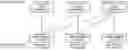
FIG. 1 is a configuration diagram of an authentication system according to one embodiment.
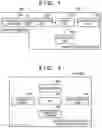
FIG. 2 is a configuration diagram of an authentication unit and authentication target unit according to one embodiment.
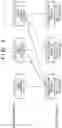
FIG. 3 is a diagram illustrating compatibility of an image forming apparatus and a toner cartridge according to one embodiment.
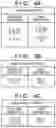
FIG. 4A is a diagram illustrating information held by a toner cartridge according to one embodiment.
FIGS. 4B and 4C are diagrams illustrating information held by an image forming apparatus according to one embodiment.
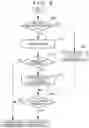
FIG. 5 is a flowchart of an authentication process according to one embodiment.
FIG. 6 is a diagram illustrating compatibility of an image forming apparatus and a toner cartridge according to one embodiment.
DESCRIPTION OF THE EMBODIMENTS
Embodiments of the present invention are described below with reference to the accompanying drawings. Note that the following embodiments are merely examples, and the present invention is not limited to the embodiments. Components that are not necessary for the description of the embodiment are omitted in the drawings.
First Embodiment
In the following description of the present embodiment, an electrophotographic image forming apparatus serves as an authentication device, and a toner cartridge, which is a replacement unit for the image forming apparatus, serves as an authentication target device. Note that the authentication target device is not limited to a toner cartridge, and the authentication target device may be any replacement unit that is detachable from the main body of the image forming apparatus, such as a unit including a photosensitive member, a unit including a fixing device, and a unit including an intermediate transfer belt. In addition, the authentication device is not limited to an electrophotographic image forming apparatus, and may be an inkjet image forming apparatus, for example. In this case, for example, an ink cartridge, which is a replacement unit, may be an authentication target device. Further, the present invention is not limited to a configuration in which an image forming apparatus and a replacement unit thereof serve as an authentication device and an authentication target device, respectively, and the present invention may be applied to any device and a replacement unit of the device.
FIG. 1 is a configuration diagram of an authentication system according to the present embodiment. A toner cartridge 100 (hereinafter also referred to as a cartridge), which is an authentication target device, includes an authentication target unit 101 described later. The authentication target unit 101 is an integrated circuit (IC) such as a memory tag, for example. The cartridge 100 is a replacement unit for an image forming apparatus 102, which is an authentication device, and the cartridge 100 is mounted on or attached to the image forming apparatus 102 when in use. A communication unit 103 of the image forming apparatus 102 communicates with the authentication target unit 101 of the mounted cartridge 100. The control unit 104 controls the entire image forming apparatus 102. The control unit 104 authenticates the mounted cartridge 100 and determines whether the cartridge 100 is an authorized item. The image forming apparatus 102 includes an authentication unit 105 and a verification unit 106 described later. The authentication unit 105 is an integrated circuit (IC) such as a memory tag, for example.
The configurations of the authentication target unit 101 and the authentication unit 105 are identical, and the configurations are illustrated in FIG. 2. A program memory 202 stores a program configured to be executed by a CPU 201. A non-public memory 203 stores secret data. The data stored in the non-public memory 203 cannot be read from the outside of the authentication target unit 101/authentication unit 105. The public memory 204 stores externally readable data. The communication unit 205 communicates with the communication unit 103 of the image forming apparatus 102 in the authentication target unit 101 and communicates with the control unit 104 in the authentication unit 105. Note that the program memory 202, the non-public memory 203, and the public memory 204 may be physically different memories or physically the same memory.
Hereinafter, it is assumed that the image forming apparatus 102 includes image forming apparatuses of three versions, P1, P2, and P3 as illustrated in FIG. 3. For example, the image forming apparatus P2 is a succeeding version of the image forming apparatus P1, and the image forming apparatus P3 is a succeeding version of the image forming apparatus P2. Likewise, it is assumed that the cartridge 100 includes cartridges of three different versions, T1, T2 and T3 as illustrated in FIG. 3. For example, the cartridge T1 is released with the image forming apparatus P1, the cartridge T2 is released with the image forming apparatus P2, and the cartridge T3 is released with the image forming apparatus P3. In the following description, the image forming apparatus P1 and the cartridge T1 are of a version A, the image forming apparatus P2 and the cartridge T2 are of a version B, and the image forming apparatus P3 and the cartridge T3 are of a version C.
As described above, the cartridge 100, which is a consumable item, has backward compatibility. That is, the cartridge T2 is designed to be usable not only in the co-released image forming apparatus P2, but also in the previously released image forming apparatus P1. Likewise, the cartridge T3 is designed to be usable not only in the co-released image forming apparatus P3, but also in the previously released image forming apparatuses P1 and P2. The straight lines illustrated in FIG. 3 indicate compatibility of the cartridge 100 and the image forming apparatus 102. In the present example, the cartridge T1 can be used only in the image forming apparatus P1. The cartridge T2 can be used in the image forming apparatuses P1 and P2, but cannot be used in the image forming apparatus P3. The cartridge T3 can be used in the image forming apparatuses P1, P2, and P3.
FIG. 3 also illustrates authentication keys stored in the image forming apparatus 102 and the cartridge 100. Note that in the present embodiment, the authentication key is a generic term of authentication target secret data and authentication target public data stored in the cartridge 100 as described later, and authentication secret data stored in the image forming apparatus 102. That is, there are authentication target secret data, authentication target public data and authentication secret data that correspond to one authentication key, and the authentication target secret data and the authentication target public data are stored in the cartridge 100 whereas the authentication secret data is stored in the image forming apparatus 102. In the following description, the phrase that an authentication key is stored in the image forming apparatus 102 and/or the cartridge 100 means that secret data corresponding to the authentication key is stored in the image forming apparatus 102 and/or the cartridge 100.
As illustrated in FIG. 3, in this embodiment, the cartridge T1 of the version A stores a total of n authentication keys, A11 to A1n. The cartridge T2 stores a total of (n+1) authentication keys, B11 to B1n and A20. The cartridge T3 stores a total of (n+2) authentication keys, C11 to C1n, A20, and B20. The image forming apparatus P1 stores two authentication keys, namely, one authentication key (selected authentication key) selected from the authentication keys A1 to A1n, and A20. The image forming apparatus P2 stores two authentication keys, namely, an authentication key (selected authentication key) of any one of B1 to B1n, and B20. The image forming apparatus P3 stores two authentication keys, namely, an authentication key (selected authentication key) of any one of C1 to C1n, and C20.
Thus, the image forming apparatus P1 uses an authentication key A1i (where i is an integer from 1 to n) in authentication when the cartridge T1 is mounted. The image forming apparatus P2 uses an authentication key B1i in authentication when the cartridge T2 is mounted, and the image forming apparatus P3 uses an authentication key C1i in authentication when the cartridge T3 is mounted. In the following description, the authentication key that can be used when the cartridge 100 of the same version is attached to the image forming device 102 is referred to as a first authentication key. That is, the authentication keys A1 to A1n are the first authentication key of the version A, the authentication keys B11 to B1n are the first authentication key of the version B and the authentication keys C1 to C1n are the first authentication key of the version C.
The image forming apparatus P1 uses the authentication key A20 in authentication when the cartridge T2 or T3 is mounted. The image forming apparatus P2 uses the authentication key B20 in authentication when the cartridge T3 is mounted. In the following description, the authentication key that is used when the cartridge 100 of a version newer than that of the image forming apparatus 102 is mounted in the image forming apparatus 102 is referred to as a second authentication key. That is, the authentication key A20 is the second authentication key of the version A, the authentication key B20 is the second authentication key of the version B, and the authentication key C20 is the second authentication key of the version C.
FIG. 4A illustrates information stored in the non-public memory 203 and the public memory 204 of the authentication target unit 101 of the cartridge T2. The non-public memory 203 of the cartridge T2 stores the authentication target secret data for each of the authentication keys A20 and B11 to B1n. Hereinafter, as illustrated in FIG. 4A, the authentication target secret data corresponding to the authentication key A20 held by the cartridge T2 is referred to as S_T2_A20. In addition, the authentication target secret data corresponding to the authentication key B1k (k is an integer from 1 to n) held by the cartridge T2 is referred to as S_T2_B1k. The public memory 204 of the cartridge T2 stores authentication target public data for each of the authentication keys A20 and B11 to B1n. Hereinafter, as illustrated in FIG. 4A, the authentication target public data corresponding to the authentication key A20 held by the cartridge T2 is referred to as O_T2_A20, and the authentication target public data corresponding to the authentication key B1k is referred to as O_T2_B1k. In addition, although not illustrated in FIG. 4A, the public memory 204 of the cartridge T2 also stores an identifier for each of the authentication keys A20 and B11 to B1n. Hereinafter, the identifier of the authentication key X is referred to as an identifier X_ID. The public memory 204 of the cartridge T2 further stores signature data Sig. The signature data corresponds to each second authentication key stored in the cartridge 100 and is stored in the public memory 204. For example, the cartridge T2 stores only the authentication key A20 as the second authentication key, and accordingly the cartridge T2 stores only the signature data for the authentication key A20. On the other hand, the cartridge T3 stores the authentication keys A20 and B20 as the second authentication key, and accordingly the cartridge T3 stores the signature data for the authentication key A20 and the signature data for the authentication key B20. The signature data Sig corresponding to the authentication key A20 held by the cartridge T2 is message-recovery type signature data that is concatenated data, message-recovery type signed with a secret key, of the authentication target public data O_T2_A20 and the identifier A20_ID of the authentication key A20. Note that the verification key corresponding to the secret key is stored in the verification unit 106 of the image forming apparatus 102.
FIG. 4B illustrates the information stored in the non-public memory 203 and the public memory 204 of the authentication unit 105 of the image forming apparatus P1. The non-public memory 203 of the image forming apparatus P1 stores authentication secret data corresponding to the authentication keys A20 and A1i (i is an integer from 1 to n). Hereinafter, as illustrated in FIG. 4B, the authentication secret data corresponding to the authentication key A20 held by the image forming apparatus P1 is referred to as S_P1_A20, and the authentication secret data corresponding to the authentication key A1i held by the image forming apparatus P1 is referred to as S_P1_A1i. The public memory 204 of the image forming apparatus P1 stores identifiers of the authentication keys A20 and A1i.
FIG. 4C illustrates information stored in the non-public memory 203 and the public memory 204 of the authentication unit 105 of the image forming apparatus P2. The non-public memory 203 of the image forming apparatus P2 stores authentication secret data corresponding to the authentication keys B20 and B1i (i is an integer from 1 to n). Hereinafter, as illustrated in FIG. 4C, the authentication secret data corresponding to the authentication key B20 held by the image forming apparatus P2 is referred to as S_P2_B20, and the authentication secret data corresponding to the authentication key B1i held by the image forming apparatus P2 is referred to as S_P2_B1i. The public memory 204 of the image forming apparatus P2 stores identifiers of the authentication keys B20 and B1i.
In the present embodiment, the authentication target secret data of the authentication key X stored in the cartridge 100 is generated by a one-way function with the authentication target public data of the authentication key X stored in the cartridge 100 and the authentication secret data of the authentication key X stored in the image forming apparatus as input. For example, when the authentication target secret data of the authentication key X is represented by TSX, the authentication target public data is represented by TOX, the authentication secret data is represented by PSX, and the one-way function is represented by f( ), the following equation holds.
TSX=f(PSX,TOX).
In terms of the authentication target secret data stored in the cartridge T2 illustrated in FIG. 4A, the following equations hold.
S_T2_A20=f(S_P1_A20,O_T2_A20) (1)
S_T2_B1i=f(S_P2_B1i,O_T2_B1i) (2)
FIG. 5 is a flowchart of an authentication process executed by the control unit 104 in the present embodiment. The control unit 104 executes the process of FIG. 5 when the cartridge 100 is attached to the image forming device 102. At S10, the control unit 104 determines which of the first authentication key and the second authentication key of the authentication unit 105 of the image forming apparatus 102, and the first authentication key and the second authentication key of the cartridge 100 match. Specifically, at S10, the control unit 104 acquires from the cartridge 100 the identifier of the authentication key and the authentication target public data stored in the public memory 204. For example, it is assumed that the cartridge 100 is a cartridge T2. In this case, as illustrated in FIG. 4A, the control unit 104 acquires the identifiers A20_ID and B1k_ID of the authentication keys A20 and B1k (k is an integer from 1 to n) and the authentication target public data O_T2_A20 and O_T2_B1k. In addition, at S10, the control unit 104 acquires the identifier of the authentication key stored in the public memory 204 of the authentication unit 105, and compares this identifier with the identifier acquired from the cartridge 100 to determine which of the first authentication key and the second authentication key match. For example, in the case where the image forming device 102 is the image forming device P2, the identifiers of the authentication keys B20 and B1i are stored in the public memory 204 as illustrated in FIG. 4C. Accordingly, the control unit 104 determines that the authentication key B1i matches, or in other words, the first authentication key matches.
When a determination result at S10 is that the first authentication key matches, the control unit 104 authenticates the cartridge 100 on the basis of the matched first authentication key at S11. For example, it is assumed that the image forming device 102 is the image forming device P2, and the cartridge 100 is the cartridge T2. In this case, for example, the control unit 104 notifies the cartridge T2 that the authentication key B1i is to be used. Also, the control unit 104 generates arbitrary data Msg and transmits the data Msg to the cartridge T2. The CPU 201 of the authentication target unit 101 of the cartridge T2 calculates response data R1 by a one-way function g( ) with the received Msg and the authentication target secret data S_T2_B1i corresponding to the specified authentication key B1i as input in accordance with the following Equation (3). Then, the CPU 201 transmits the calculation result to the image forming device P2.
R1=g(S_T2_B1i,Msg) (3)
Likewise, the control unit 104 notifies the authentication unit 105 that the authentication key B1i is to be used, and transmits the data Msg and the authentication target public data O_T2_B1i corresponding to the authentication key B1i acquired at S10 to the authentication unit 105. The CPU 201 of the authentication unit 105 generates the authentication target secret data S_T2_B1i by the one-way function f( ) with the authentication secret data S_P2_B1i corresponding to the specified authentication key B1i and the received authentication target public data O_T2_B1i as input in accordance with Equation (2). Then, the CPU 201 of the authentication unit 105 generates the response data R2 by a calculation in accordance with Equation (3) based on the generated authentication target secret data S_T2_B1i and Msg, and transmits the calculation result to the control unit 104. At S15, the control unit 104 compares the response data R1 received from the cartridge T2 with the response data R2 received from the authentication unit 105. When the data match, the authentication of the cartridge T2 is determined to be successful, and when the data do not match, the authentication of the cartridge T2 is determined to be unsuccessful.
On the other hand, when the image forming device 102 is the image forming device P1, the identifiers of the authentication keys A20 and A1i are stored in the public memory 204 as illustrated in FIG. 4B. Accordingly, at S10, the image forming device P1 determines that the authentication key A20 matches, or in other words, the second authentication key matches. When a determination result at S10 is that the second authentication key matches, the control unit 104 acquires, from the cartridge 100, the signature data Sig corresponding to the matching second authentication key stored in the public memory 204 to perform the verification of the data at S12. Specifically, the control unit 104 notifies the verification unit 106 of the signature data Sig acquired from the cartridge T2 and the authentication target public data O_T2_A20 and the identifier A20_ID of the authentication key A20. With the held verification key, the verification unit 106 performs verification of the validity of the signature data Sig, and recovery of the original data. When the signature data Sig is valid and the data recovered from the signature data Sig is concatenated data of the authentication target public data O_T2_A20 and the identifier A20_ID of the authentication key A20, the verification unit 106 determines that the verification is successful. Otherwise, the verification unit 106 determines that the verification is unsuccessful. The verification unit 106 notifies the control unit 104 of the verification result at S13. When the verification result notified from the verification unit 106 is unsuccessful, the control unit 104 determines that the authentication is failed. On the other hand, when the verification result notified from the verification unit 106 is successful, the control unit 104 performs authentication based on the second authentication key A20 at S14. Note that the authentication method using the second authentication key A20 is the same as the authentication method using the first authentication key described at S11.
In the present embodiment, one first authentication key used to authenticate the cartridge 100 of the same version and one second authentication key used to authenticate the cartridge 100 of the newer version are stored in the image forming device 102. On the other hand, a plurality of first authentication keys corresponding to the version of the cartridge 100 and a second authentication key corresponding to the previous version are stored in the cartridge 100. Note that the number of second authentication keys stored in the cartridge 100 depends on the number of the previous generations of the image forming device 102 allowed to use the cartridge 100. Specifically, in the case where the compatibility with q (q is an integer greater than or equal to 1) previous versions of the image forming device 102 is ensured, a total of q second authentication keys corresponding to the versions are stored in the cartridge 100.
The cartridge 100 includes a plurality of first authentication keys, and when it is attached to the image forming device 102 of the same version, authentication is performed using the first authentication key selected in accordance with that image forming apparatus 102. Accordingly, to successfully achieve the authentication with a certain image forming apparatus 102 of the same version, all the plurality of first authentication keys must be acquired, and thus the security level can be improved. Also, in this embodiment, to successfully achieve the authentication with the image forming apparatus 102 of a previous version, one second authentication key is stored instead of storing in the cartridge 100 of the new version the plurality of first authentication keys used for the previous version. Specifically, the authentication key A20 is stored in the cartridge T2 instead of storing the authentication keys A11 to A1n.
This is because the possibility of leakage of the authentication keys A11 to A1n increases over time, and therefore using the authentication keys A11 to A1n even after the release of the cartridge T2 to ensure compatibility leads to reduction in security level. Another reason is that storing in the cartridge 100 the first authentication keys of all the generations for ensuring the compatibility increases the memory capacity of the cartridge 100 and increases the cost of the cartridge 100. For example, in the case of a configuration of storing in the cartridge 100 the first authentication keys of all the generations for ensuring the compatibility, it is necessary to store additional 3n authentication keys in the cartridge 100 to ensure the compatibility with previous three generations. In this embodiment, the cartridge stores only one second authentication key for each generation, and thus it suffices to additionally store three second authentication keys in the cartridge 100 even when ensuring the compatibility with three previous generations.
In addition, while the second authentication key of a certain version (generation) is stored in the image forming apparatus 102 of the same version, that second authentication key is not stored in the cartridge 100 of the same version but is stored in the cartridge 100 released as a newer version. Thus, the security level can be improved since there is a lower risk of leakage of the second authentication key at the time of starting the authentication with the second authentication key of the previous version by version update.
Further, in the present embodiment, the signature data Sig corresponding to the second authentication key is stored in the cartridge 100, and, at the time of authentication with the second authentication key, the verification based on the corresponding signature data Sig is performed before performing the authentication. The secret key for generating the signature data Sig is not stored in the cartridge 100 or in the image forming apparatus 102. Note that while the image forming apparatus 102 verifies the signature data Sig with the verification key (public key) corresponding to the secret key, the secret key is secured even when the verification key is leaked. With this configuration, the reliability of the authentication with the second authentication key is improved.
Note that in the present embodiment, the signature data Sig is concatenated data, which includes both the authentication target public data and the identifier of the second authentication key and is message-recovery type signed with a secret key. However, any of the authentication target public data and the identifier of the second authentication key may be data that is message-recovery type signed with a secret key. Note that instead of the configuration in which the authentication target public data and the identifier have different values, the authentication target public data itself corresponding to the authentication key may be used as the identifier of the authentication key.
Second Embodiment
The following describes Second Embodiment mainly about differences from First Embodiment. In First Embodiment, the image forming apparatus 102 uses the first authentication key in the authentication of the cartridge 100 of the same version (generation), and uses the second authentication key in the authentication of the cartridge 100 of the previous version. However, the image forming apparatus 102 may be configured to use the first authentication key in the authentication of the cartridges 100 of a version from the same version to a predetermined number of previous versions where the generation change span is short. In this case, the image forming apparatus 102 uses the second authentication key to authenticate the cartridge 100 of a version older by one or more versions than the cartridges 100 of the predetermined previous versions. FIG. 6 illustrates a case where the image forming apparatus 102 uses the first authentication key in authentication of the same version and version older by one version, and uses the second authentication key in authentication of versions older by two or more versions. The authentication keys are stored in the image forming apparatuses P1 to P3 as in First Embodiment. Also, the authentication key is stored in the cartridge T1 as in First Embodiment. In contrast, in this embodiment, the cartridge T2 stores a total of 2n authentication keys, the authentication keys A11 to A1n and B11 to B1n. The cartridge T3 stores total of 2n+1 authentication keys, namely, B11 to B1n and C11 to C1n, and, A20.
With this configuration, the image forming apparatus P1 uses the authentication key A1i (where i is an integer from 1 to n) when the cartridge T1 of the same version and the cartridge T2 of a version newer by one version are mounted. On the other hand, the image forming apparatus P1 uses the authentication key A20 in the authentication when the cartridge T3 of a version newer by two versions is mounted. Other configurations and authentication methods are the same as those of First Embodiment.
Other Embodiments
Embodiments of the present invention can also be realized by a computer of a system or apparatus that reads out and executes computer executable instructions (e.g., one or more programs) recorded on a storage medium (which may also be referred to more fully as a ‘non-transitory computer-readable storage medium’) to perform the functions of one or more of the above-described embodiments and/or that includes one or more circuits (e.g., application specific integrated circuit (ASIC)) for performing the functions of one or more of the above-described embodiments, and by a method performed by the computer of the system or apparatus by, for example, reading out and executing the computer executable instructions from the storage medium to perform the functions of one or more of the above-described embodiments and/or controlling the one or more circuits to perform the functions of one or more of the above-described embodiments. The computer may comprise one or more processors (e.g., central processing unit (CPU), micro processing unit (MPU)) and may include a network of separate computers or separate processors to read out and execute the computer executable instructions. The computer executable instructions may be provided to the computer, for example, from a network or the storage medium. The storage medium may include, for example, one or more of a hard disk, a random-access memory (RAM), a read only memory (ROM), a storage of distributed computing systems, an optical disk (such as a compact disc (CD), digital versatile disc (DVD), or Blu-ray Disc (BD)™), a flash memory device, a memory card, and the like.
While the present invention has been described with reference to exemplary embodiments, it is to be understood that the invention is not limited to the disclosed exemplary embodiments. The scope of the following claims is to be accorded the broadest interpretation so as to encompass all such modifications and equivalent structures and functions.
This application claims the benefit of Japanese Patent Application No. 2018-141631, filed on Jul. 27, 2018, which is hereby incorporated by reference herein in its entirety.
Claims
What is claimed is:1. An authentication system comprising an authentication device and an authentication target device, wherein
the authentication device holds one first authentication secret data and one second authentication secret data, the one first authentication secret data to authenticate the authentication target device of a version from a first version that is the same as the authentication device to a second version newer than the first version, the one second authentication secret data to authenticate the authentication target device of a version newer than the second version; and
the authentication target device holds a plurality pieces of first authentication target secret data and second authentication target secret data, the plurality pieces of first authentication target secret data corresponding to each of versions from a third version that is same as the authentication target device to a fourth version older than the third version and for authentication by the authentication device of a version from the third version to the fourth version, one second authentication target secret data corresponding to each of versions from a fifth version to a sixth version and for authentication by the authentication device of a version from the fifth version to the sixth version, the fifth version being older than the fourth version by one version, the sixth version being older than the fifth version.
2. The authentication system according to claim 1, wherein
the authentication target device further holds signature data corresponding to each of versions from the fifth version to the sixth version;
when the first version is any of version from the fifth version to the sixth version, the authentication device acquires signature data corresponding to the first version from the authentication target device and verifies the signature data corresponding to the first version; and
when verification of the signature data corresponding to the first version is successful, the authentication device performs authentication of the authentication target device based on the one second authentication secret data.
3. An authentication system comprising an authentication device and an authentication target device, wherein
the authentication device holds one first authentication secret data to authenticate the authentication target device of a first version that is the same as the authentication device and one second authentication secret data to authenticate the authentication target device of a version newer than the first version; and
the authentication target device holds a plurality of first authentication target secret data and second authentication target secret data, the plurality of first authentication target secret data for authentication by the authentication device of a second version that is the same as the authentication target device, one second authentication target secret data corresponding to each of versions from a third version to a fourth version and for authentication by the authentication device of a version from the third version to the fourth version, the third version being older than the second version by one version, the fourth version being older than the third version.
4. An authentication device comprising:
a holding unit configured to hold authentication secret data corresponding to a first authentication key of a first version and authentication secret data corresponding to a second authentication key of the first version;
a determination unit configured to communicate with an authentication target device to determine whether the authentication target device is a first authentication target device or a second authentication target device, the first authentication target device holding authentication target secret data corresponding to the first authentication key of the first version and authentication target secret data corresponding to the second authentication key of a second version older than the first version, the second authentication target device holding authentication target secret data corresponding to the first authentication key of a third version newer than the first version and authentication target secret data corresponding to the second authentication key of the first version; and
an authentication unit configured to authenticate the authentication target device based on the first authentication key of the first version in accordance with a determination that the authentication target device is the first authentication target device, and to authenticate the authentication target device based on the second authentication key of the first version in accordance with a determination that the authentication target device is the second authentication target device.
5. An authentication device comprising:
a holding unit configured to hold a first secret data corresponding to a selected authentication key selected from a plurality of first authentication keys and second secret data corresponding to a second authentication key;
a determination unit configured to communicate with an authentication target device to determine that the authentication target device includes third secret data corresponding to the selected authentication key or fourth secret data corresponding to the second authentication key;
an authentication unit configured to authenticate the authentication target device based on the selected authentication key or the second authentication key depending on a determination result of the determination unit; and
a verification unit configured to verify signature data held by the authentication target device, wherein
when the authentication target device includes the fourth secret data, the verification unit verifies the signature data, and
when verification of the signature data by the verification unit is successful, the authentication unit performs authentication of the authentication target device based on the second authentication key.
6. The authentication device according to claim 5, wherein, when the authentication target device includes the third secret data, the verification unit authenticates the authentication target device based on the selected authentication key without verifying the signature data.
7. The authentication device according to claim 5, wherein
the authentication target device includes first public data corresponding to the selected authentication key when the authentication target device includes the third secret data;
the third secret data is generated by a one-way function with the first secret data and the first public data as input; and
the authentication unit authenticates the authentication target device based on the first authentication key by acquiring a first calculation result based on the third secret data from the authentication target device, by acquiring the first public data from the authentication target device, and by comparing the first calculation result with a second calculation result based on the first secret data and the first public data.
8. The authentication device according to claim 5, wherein
the authentication target device includes second public data corresponding to the second authentication key when the authentication target device includes the fourth secret data;
the fourth secret data is generated by a one-way function with the second secret data and the second public data as input; and
the authentication unit authenticates the authentication target device based on the second authentication key by acquiring a third calculation result based on the fourth secret data from the authentication target device, by acquiring the second public data from the authentication target device, and by comparing the third calculation result with a fourth calculation result based on the second secret data and the second public data.
9. The authentication device according to claim 8, wherein the signature data is message-recovery type signature data of data including at least one of an identifier of the second authentication key and the second public data.
10. The authentication device according to claim 5, wherein
the plurality of first authentication keys and the second authentication key correspond to a first version; and
the authentication target device includes a secret data corresponding to each of a plurality of first authentication keys of a second version newer than the first version when the authentication target device includes the fourth secret data.
11. The authentication device according to claim 10, wherein the authentication target device includes secret data corresponding to the second authentication key of a third version older than the first version when the authentication target device includes the third secret data.
12. An image forming apparatus comprising:
a holding unit configured to hold authentication secret data corresponding to a first authentication key of a first version and authentication secret data corresponding to a second authentication key of the first version;
a determination unit configured to communicate with an authentication target device to determine whether the authentication target device is a first authentication target device or a second authentication target device, the first authentication target device holding authentication target secret data corresponding to the first authentication key of the first version and authentication target secret data corresponding to the second authentication key of a second version older than the first version, the second authentication target device holding authentication target secret data corresponding to the first authentication key of a third version newer than the first version and authentication target secret data corresponding to the second authentication key of the first version; and
an authentication unit configured to authenticate the authentication target device based on the first authentication key of the first version in accordance with a determination that the authentication target device is the first authentication target device, and to authenticate the authentication target device based on the second authentication key of the first version in accordance with a determination that the authentication target device is the second authentication target device.
13. The image forming apparatus according to claim 12, wherein the authentication target device is a unit that is detachable from the image forming apparatus.
14. An authentication target device comprising:
a holding unit configured to hold a plurality pieces of authentication target secret data respectively corresponding to a plurality of first authentication keys of a first version and an authentication target secret data corresponding to a second authentication key of a second version older than the first version; and
a calculation unit configured to communicate with an authentication device to perform a calculation based on authentication target secret data corresponding to one first authentication key of the plurality of first authentication keys for authentication by the authentication device when the authentication device is of the first version, and to perform a calculation based on the authentication target secret data corresponding to the second authentication key for the authentication by the authentication device when the authentication device is of the second version.
15. An authentication target device comprising:
a holding unit configured to hold a plurality pieces of first secret data respectively corresponding to a plurality of first authentication keys, second secret data corresponding to a second authentication key, and signature data;
a transmission unit configured to transmit, to an authentication device, information identifying the plurality pieces of first secret data and the second secret data held by the holding unit; and
a calculation unit configured to perform a calculation based on one first secret data of the plurality pieces of first secret data or the second secret data based on a determination result by the authentication device as to which of the one first secret data of the plurality pieces of first secret data and the second secret data is used for authentication, wherein
in accordance of a determination of the authentication device that the second secret data is used for the authentication, the transmission unit transmits the signature data to the authentication device.
16. The authentication target device according to claim 15, wherein
the holding unit holds a plurality pieces of first public data respectively corresponding to the plurality of first authentication keys and second public data corresponding to the second authentication key;
the transmission unit transmits, to the authentication device, first public data corresponding to a first authentication key corresponding to the one first secret data in accordance with a determination of the authentication device that the one first secret data of the plurality pieces of first secret data is used for the authentication; and
the transmission unit transmits, to the authentication device, the second public data in accordance with a determination of the authentication device determines that the second secret data is used for the authentication.
17. The authentication target device according to claim 16, wherein the signature data is message-recovery type signature data of data including at least one of an identifier of the second authentication key and the second public data.
18. The authentication target device according to claim 15, wherein
the plurality of first authentication keys are of a first version; and
the second authentication key is of a second version older than the first version.
19. The authentication target device according to claim 18, wherein the authentication target device is a unit that is detachable from an image forming apparatus.
Images & Drawings included:

Sources:
- United States Patent and Trademark Office - verify current appl. status at the USPTO↗
Recent applications in this class:
- » 20250278499 2025-09-04
METHODS AND SYSTEMS FOR COMMUNICATING MESSAGES ON AN ELECTRONIC DEVICE - » 20250278498 2025-09-04
METHODS AND SYSTEMS FOR COMMUNICATING MESSAGES ON AN ELECTRONIC DEVICE - » 20250094610 2025-03-20
INFORMATION PROCESSING APPARATUS, CONTROL METHOD FOR INFORMATION PROCESSING APPARATUS, AND STORAGE MEDIUM - » 20250005178 2025-01-02
PRINTING SYSTEM AND METHOD OF CONTROLLING THE SYSTEM - » 20240330488 2024-10-03
TRANSMISSION APPARATUS, PROCESSING APPARATUS, TRANSMISSION METHOD, AND PROCESSING METHOD - » 20240265121 2024-08-08
IMAGE FORMING APPARATUS, INFORMATION TERMINAL, METHODS OF CONTROLLING IMAGE FORMING APPARATUS AND INFORMATION TERMINAL, STORAGE MEDIUM, AND IMAGE FORMING SYSTEM - » 20240119165 2024-04-11
Image processing apparatus capable of executing scan processing based on request from client terminal, and control method therefor to cause a client terminal to send a password to an image processing apparatus using encrypted communication temporarily in a case where a scan request includes a designation for an encrypted file - » 20240045977 2024-02-08
Information processing apparatus performing control to prevent setting values associated with any usage environment in the plurality of usage environments from being set to the information processing apparatus - » 20230394162 2023-12-07
Information processing device, information processing method, and distributed component - » 20230394161 2023-12-07
DATA ASSURANCE IN THREE-DIMENSIONAL FORMING
Recent applications for this Assignee:
- » 20250209774 2025-06-26
MONITORING CAMERA SYSTEM, RADIATION IMAGING SYSTEM, AND METHOD - » 20250209619 2025-06-26
IMAGE PROCESSING APPARATUS, IMAGE PROCESSING METHOD, AND COMPUTER PROGRAM - » 20250183154 2025-06-05
PHOTOELECTRIC CONVERSION APPARATUS - » 20250173872 2025-05-29
INFORMATION PROCESSING APPARATUS, INFORMATION PROCESSING METHOD, AND STORAGE MEDIUM - » 20250168334 2025-05-22
ADAPTIVE LOOP FILTERING (ALF) WITH NON-LINEAR CLIPPING - » 20250148743 2025-05-08
IMAGE INFORMATION PROCESSING APPARATUS, IMAGE INFORMATION PROCESSING METHOD, AND NON-TRANSITORY COMPUTER READABLE MEDIUM - » 20250148598 2025-05-08
IMAGE INFORMATION PROCESSING APPARATUS, IMAGE INFORMATION PROCESSING METHOD, AND NON-TRANSITORY COMPUTER READABLE MEDIUM - » 20250145931 2025-05-08
CELL TREATMENT APPARATUS, CELL TREATMENT METHOD AND CELL TREATMENT SYSTEM - » 20250127480 2025-04-24
ULTRASONIC DIAGNOSTIC APPARATUS AND IMAGE PROCESSING METHOD - » 20250124572 2025-04-17
INFORMATION PROCESSING APPARATUS, INFORMATION PROCESSING METHOD, AND STORAGE MEDIUM