Method for Smart Contract Data Input through a Proof-of-Work Consensus Mechanism
US20200034571A1
2020-01-30
16/045,662
2018-07-25
Abstract:
System and method for placing cryptographically secure data in a network comprising a public ledger, including associating a transaction inserting data in said network with a cryptographically secure transaction.
The invention is an oracle schema that implements a mineable proof of work (POW) competition to eliminate reliance on trusted third parties for access to off chain data. Users engage in a POW competition to find a nonce which satisfies the requirement of the challenge. The users who find a nonce which correctly solves the POW puzzle input data for the POW Oracle contract and receive native tokens in exchange for their work. The oracle data submissions are stored in the smart contract for use by other on-chain operations
Interested in similar patents?
Get notified when new applications in this technology area are published.
Classification:
H04L9/0637 » CPC further
arrangements for secret or secure communications Cryptographic mechanisms or cryptographic ; Network security protocols the encryption apparatus using shift registers or memories for block-wise coding, e.g. DES systems; Block ciphers, i.e. encrypting groups of characters of a plain text message using fixed encryption transformation Modes of operation, e.g. cipher block chaining [CBC], electronic codebook [ECB] or Galois/counter mode [GCM]
H04L2209/08 » CPC further
Additional information or applications relating to cryptographic mechanisms or cryptographic arrangements for secret or secure communication Randomization, e.g. dummy operations or using noise
G06Q20/223 » CPC further
Payment architectures, schemes or protocols; Payment schemes or models based on the use of peer-to-peer networks
H04L9/3213 » CPC further
arrangements for secret or secure communications Cryptographic mechanisms or cryptographic ; Network security protocols including means for verifying the identity or authority of a user of the system or for message authentication, e.g. authorization, entity authentication, data integrity or data verification, non-repudiation, key authentication or verification of credentials involving a third party or a trusted authority using tickets or tokens, e.g. Kerberos
G06F21/64 » CPC main
Security arrangements for protecting computers, components thereof, programs or data against unauthorised activity; Protecting data Protecting data integrity, e.g. using checksums, certificates or signatures
H04L9/06 IPC
arrangements for secret or secure communications Cryptographic mechanisms or cryptographic ; Network security protocols the encryption apparatus using shift registers or memories for block-wise coding, e.g. DES systems
H04L9/32 IPC
arrangements for secret or secure communications Cryptographic mechanisms or cryptographic ; Network security protocols including means for verifying the identity or authority of a user of the system or for message authentication, e.g. authorization, entity authentication, data integrity or data verification, non-repudiation, key authentication or verification of credentials
G06Q20/22 IPC
Payment architectures, schemes or protocols Payment schemes or models
Description
FIELD OF THE INVENTION
The present invention relates to the method and system for using a proof-of-work consensus mechanism for the determination of a value external to the/a distributed ledger/blockchain network.
DESCRIPTION OF ILLUSTRATION
It will be readily understood that the instant components, as generally described and illustrated in the figures herein, may be arranged and designed in a wide variety of different configurations. Thus, the following detailed description of the embodiments of at least one of a method, apparatus, and system, as represented in the figure, is not intended to limit the scope of the application as claimed, but is merely representative of selected embodiments.
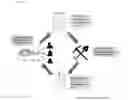
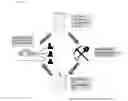
FIG. 1 illustrates the flow for a token issuing oracle contract utilizing proof-of-work for data input and validation.
At the top of the diagram, a contract is created which specifies the data to be input into the contract (e.g. an API address), a difficulty, and a challenge (a random variable to be included in the hash of the solution).
Miners then compete to find a solution to the challenge, an example being the hash of the challenge, nonce (solution), and the public address of the miner will have a certain number of trailing zeros.
When a solution Is found, the miners will then input their solution along with the data requested into the smart contract. Parties will then be paid out an issued token based upon a formula for incentivizing honesty (e.g. median value is selected from n inputting miners).
Once the value is selected, it is stored, and a new challenge is created.
BACKGROUND OF THE INVENTION
Cryptocurrencies and blockchains began from a paper in 2008 titled Bitcoin: A Peer-to-Peer Electronic Cash System. 1 This paper outlined the usage of a peer-to-peer network for generating the trust necessary for anonymous electronic transactions. In January 2009, the bitcoin network came into existence. Many other decentralized, distributed consensus networks have come into existence since and are creating new utility and functionality on top of the base layer of a cryptographically secured, distributed and validated database or virtual machine, many of which use a proof-of-work consensus mechanism. 1 http://bitcoin.org/bitcoin.pdf
In 2018, the ‘mineable token’ was created on the Ethereum network. Parties could then issue new tokens to the winner of a proof-of-work challenge. 2 This enabled smart contract networks to layer POW solutions within a given blockchain or distributed ledger system. 2 https://github.com/ethereum/EIPs/blob/master/EIPS/eip-918.md
Decentralized computing networks cannot read outside data (e.g. API calls) and rely on third party services to manually enter data into smart contracts. This represents a major point of centralization in an otherwise trustless network. By replacing these third parties with a proof-of-work consensus mechanism, data can be input into the smart contract without necessitating the trust of a third-party data retrieval service.
Claims
What is claimed:1. A computer-implemented method comprising:
a POW definition in this example can apply to blockchain configurations, such ones where a miner is calculating a hash.
input data can be secured/or accepted after n number of miner submissions where n>0
rewards can be in a token native to the smart contract or a staked cryptocurrency where miners are paid from a non-native balance of the smart contract or base oracle contract
The oracle data submissions are stored in contract
data values stored in the contract can be comprised of time-series variables or a non-specific or unique data representation for each mining round (e.g. Boolean values for different events)
reward calculation can be determined using various configurations including mean, median, or mode selections
rewards for neighbor or simply accepted smart contract data submissions can also be implemented for security.
The underlying digital ledger or smart contract computing platform is not specified
As used herein, the term ‘decentralized consensus network (system which POW contract is deployed on) refers to any private or public blockchain or non-blockchain based network that secures the validity of transactions using a non-specific consensus mechanism (e.g. proof-of-work, proof-of-stake, collateral-based voting, or hybrid POS system).
Images & Drawings included:
Sources:
- United States Patent and Trademark Office - verify current appl. status at the USPTO↗
Recent applications in this class:
- » 20250165654 2025-05-22
Method for Operating Control Software and Arrangement having a Computer System - » 20250156584 2025-05-15
DATA PROCESSING METHOD AND APPARATUS BASED ON HIERARCHICAL CHAIN NETWORK - » 20250156583 2025-05-15
BLOCKCHAIN BASED PRIVACY ENHANCED OUTSOURCED DATA STORAGE - » 20250148131 2025-05-08
APPLICATION INTEGRITY VERIFICATION BY SDK - » 20250139296 2025-05-01
DATA STORAGE APPARATUS, DATA STORAGE METHOD, AND PROGRAM - » 20250139295 2025-05-01
MANAGEMENT OF CONFIGURATION OF DATA PROCESSING SYSTEMS - » 20250131134 2025-04-24
METHOD, COMPUTER, AND COMPUTER-READABLE MEDIUM RELATED TO CERTIFICATION OF SIGNATORY OF DOCUMENT - » 20250131133 2025-04-24
METHODS AND SYSTEMS OF FACILITATING PROVISIONING OF A VERIFICATION DATA - » 20250131132 2025-04-24
APPLICATION PROGRAMMING INTERFACES FOR PRESENTING AND MANAGING TRUST DATA - » 20250131131 2025-04-24
METHOD AND SYSTEM OF INTERACTION OF PROGRAMS AND DEVICES VIA CONTROL PLATFORM