Sound absorbing material and speaker box using same
US20200037062A1
2020-01-30
16/522,687
2019-07-26
✅ Patent granted
US 10,939,195 B2
2021-03-02
-
-
Elizabeth D Wood
W&G Law Group LLP
2039-07-26
Abstract:
The present disclosure provides a sound absorbing material. The sound absorbing material comprising a heteroatom zeolite molecular sieve comprising a framework and an extra-framework cation, the framework comprising SiO2 and a metal oxide MxOy comprising a metal element M, wherein the framework has a molar ratio of Si/M between 250 to 500, wherein the M includes Fe, and that the extra-framework cation is at least one of a monovalent copper ion, a monovalent silver ion, a monovalent gold ion, an alkali metal ion or an alkaline earth metal ion. The sound absorbing material provided by the present disclosure, sound absorbing material to have better oxygen adsorption capacity, good waster repellency and stability. When such a sound absorbing material is applied to a speaker box, the speaker box will have better low frequency acoustic performance and better reliability.
Inventors:
- Kun TANG 17 🇨🇳 Shenzhen, China
- HeZhi WANG 26 🇨🇳 Shenzhen, China
- Hongshu Feng 10 🇨🇳 Shenzhen, China
- Guochuang Huang 7 🇨🇳 Shenzhen, China
- Jiqiang Dai 6 🇨🇳 Shenzhen, China
Assignee:
- AAC ACOUSTIC TECHNOLOGIES (SHENZHEN) CO., LTD. 368 🇨🇳 Shenzhen, China
Applicant:
Interested in similar patents?
Get notified when new applications in this technology area are published.
Classification:
H04R1/2803 » CPC main
Details of transducers, loudspeakers or microphones; Arrangements for obtaining desired frequency or directional characteristics for obtaining desired frequency characteristic only; Transducer mountings or enclosures modified by provision of mechanical or acoustic impedances, e.g. resonator, damping means for loudspeaker transducers
C01B39/48 » CPC further
Compounds having molecular sieve and base-exchange properties, e.g. crystalline zeolites; Their preparation; After-treatment, e.g. ion-exchange or dealumination; Crystalline aluminosilicate zeolites; Isomorphous compounds thereof; Direct preparation thereof; Preparation thereof starting from a reaction mixture containing a crystalline zeolite of another type, or from preformed reactants; After-treatment thereof; Other types characterised by their X-ray diffraction pattern and their defined composition using at least one organic template directing agent
H04R1/025 » CPC further
Details of transducers, loudspeakers or microphones; Casings; Cabinets ; Supports therefor; Mountings therein Arrangements for fixing loudspeaker transducers, e.g. in a box, furniture
C01P2002/72 » CPC further
Crystal-structural characteristics defined by measured X-ray, neutron or electron diffraction data by d-values or two theta-values, e.g. as X-ray diagram
C01P2004/03 » CPC further
Particle morphology depicted by an image obtained by SEM
C01P2004/61 » CPC further
Particle morphology; Particles characterised by their size Micrometer sized, i.e. from 1-100 micrometer
H04R1/28 IPC
Details of transducers, loudspeakers or microphones; Arrangements for obtaining desired frequency or directional characteristics for obtaining desired frequency characteristic only Transducer mountings or enclosures modified by provision of mechanical or acoustic impedances, e.g. resonator, damping means
H04R1/02 IPC
Details of transducers, loudspeakers or microphones Casings; Cabinets ; Supports therefor; Mountings therein
C01B39/06 » CPC further
Compounds having molecular sieve and base-exchange properties, e.g. crystalline zeolites; Their preparation; After-treatment, e.g. ion-exchange or dealumination; Crystalline aluminosilicate zeolites; Isomorphous compounds thereof; Direct preparation thereof; Preparation thereof starting from a reaction mixture containing a crystalline zeolite of another type, or from preformed reactants; After-treatment thereof Preparation of isomorphous zeolites characterised by measures to replace the aluminium or silicon atoms in the lattice framework by atoms of other elements, i.e. by direct or secondary synthesis
C01B39/065 » CPC further
Compounds having molecular sieve and base-exchange properties, e.g. crystalline zeolites; Their preparation; After-treatment, e.g. ion-exchange or dealumination; Crystalline aluminosilicate zeolites; Isomorphous compounds thereof; Direct preparation thereof; Preparation thereof starting from a reaction mixture containing a crystalline zeolite of another type, or from preformed reactants; After-treatment thereof; Preparation of isomorphous zeolites characterised by measures to replace the aluminium or silicon atoms in the lattice framework by atoms of other elements, i.e. by direct or secondary synthesis Galloaluminosilicates; Group IVB- metalloaluminosilicates; Ferroaluminosilicates
B01J20/2803 » CPC further
Solid sorbent compositions or filter aid compositions; Sorbents for chromatography; Processes for preparing, regenerating or reactivating thereof characterised by their form or physical properties characterised by their form Sorbents comprising a binder, e.g. for forming aggregated, agglomerated or granulated products
B01J20/28004 » CPC further
Solid sorbent compositions or filter aid compositions; Sorbents for chromatography; Processes for preparing, regenerating or reactivating thereof characterised by their form or physical properties characterised by their physical properties Sorbent size or size distribution, e.g. particle size
B01J29/44 » CPC further
Catalysts comprising molecular sieves having base-exchange properties, e.g. crystalline zeolites; Crystalline aluminosilicate zeolites; Isomorphous compounds thereof of the pentasil type, e.g. types ZSM-5, ZSM-8 or ZSM-11, as exemplified by patent documents US3702886, GB1334243 and US3709979, respectively containing iron group metals, noble metals or copper Noble metals
B01J29/405 » CPC further
Catalysts comprising molecular sieves having base-exchange properties, e.g. crystalline zeolites; Crystalline aluminosilicate zeolites; Isomorphous compounds thereof of the pentasil type, e.g. types ZSM-5, ZSM-8 or ZSM-11, as exemplified by patent documents US3702886, GB1334243 and US3709979, respectively containing rare earth elements, titanium, zirconium, hafnium, zinc, cadmium, mercury, gallium, indium, thallium, tin or lead
B01J29/67 » CPC further
Catalysts comprising molecular sieves having base-exchange properties, e.g. crystalline zeolites; Crystalline aluminosilicate zeolites; Isomorphous compounds thereof of the ferrierite type, e.g. types ZSM-21, ZSM-35 or ZSM-38, as exemplified by patent documents US4046859, US4016245 and US4046859, respectively containing iron group metals, noble metals or copper Noble metals
B01J29/7057 » CPC further
Catalysts comprising molecular sieves having base-exchange properties, e.g. crystalline zeolites; Crystalline aluminosilicate zeolites; Isomorphous compounds thereof of types characterised by their specific structure not provided for in groups - containing rare earth elements, titanium, zirconium, hafnium, zinc, cadmium, mercury, gallium, indium, thallium, tin or lead Zeolite Beta
B01J29/87 » CPC further
Catalysts comprising molecular sieves Gallosilicates; Aluminogallosilicates; Galloborosilicates
B01J29/46 » CPC further
Catalysts comprising molecular sieves having base-exchange properties, e.g. crystalline zeolites; Crystalline aluminosilicate zeolites; Isomorphous compounds thereof of the pentasil type, e.g. types ZSM-5, ZSM-8 or ZSM-11, as exemplified by patent documents US3702886, GB1334243 and US3709979, respectively containing iron group metals, noble metals or copper Iron group metals or copper
B01J35/023 » CPC further
Catalysts, in general, characterised by their form or physical properties; Solids Catalysts characterised by dimensions, e.g. grain size
B01J29/68 » CPC further
Catalysts comprising molecular sieves having base-exchange properties, e.g. crystalline zeolites; Crystalline aluminosilicate zeolites; Isomorphous compounds thereof of the ferrierite type, e.g. types ZSM-21, ZSM-35 or ZSM-38, as exemplified by patent documents US4046859, US4016245 and US4046859, respectively containing iron group metals, noble metals or copper Iron group metals or copper
B01J29/7084 » CPC further
Catalysts comprising molecular sieves having base-exchange properties, e.g. crystalline zeolites; Crystalline aluminosilicate zeolites; Isomorphous compounds thereof of types characterised by their specific structure not provided for in groups - containing rare earth elements, titanium, zirconium, hafnium, zinc, cadmium, mercury, gallium, indium, thallium, tin or lead MTW-type, e.g. ZSM-12, NU-13, TPZ-12 or Theta-3
B01J29/7415 » CPC further
Catalysts comprising molecular sieves having base-exchange properties, e.g. crystalline zeolites; Crystalline aluminosilicate zeolites; Isomorphous compounds thereof of types characterised by their specific structure not provided for in groups - containing iron group metals, noble metals or copper; Noble metals Zeolite Beta
B01J29/7469 » CPC further
Catalysts comprising molecular sieves having base-exchange properties, e.g. crystalline zeolites; Crystalline aluminosilicate zeolites; Isomorphous compounds thereof of types characterised by their specific structure not provided for in groups - containing iron group metals, noble metals or copper; Noble metals MTW-type, e.g. ZSM-12, NU-13, TPZ-12 or Theta-3
B01J29/7615 » CPC further
Catalysts comprising molecular sieves having base-exchange properties, e.g. crystalline zeolites; Crystalline aluminosilicate zeolites; Isomorphous compounds thereof of types characterised by their specific structure not provided for in groups - containing iron group metals, noble metals or copper; Iron group metals or copper Zeolite Beta
B01J29/7669 » CPC further
Catalysts comprising molecular sieves having base-exchange properties, e.g. crystalline zeolites; Crystalline aluminosilicate zeolites; Isomorphous compounds thereof of types characterised by their specific structure not provided for in groups - containing iron group metals, noble metals or copper; Iron group metals or copper MTW-type, e.g. ZSM-12, NU-13, TPZ-12 or Theta-3
B01J29/89 » CPC further
Catalysts comprising molecular sieves Silicates, aluminosilicates or borosilicates of titanium, zirconium or hafnium
B01J37/0009 » CPC further
Processes, in general, for preparing catalysts; Processes, in general, for activation of catalysts Use of binding agents; Moulding; Pressing; Powdering; Granulating; Addition of materials ameliorating the mechanical properties of the product catalyst
B01J37/0072 » CPC further
Processes, in general, for preparing catalysts; Processes, in general, for activation of catalysts Preparation of particles, e.g. dispersion of droplets in an oil bath
B01J29/072 » CPC further
Catalysts comprising molecular sieves having base-exchange properties, e.g. crystalline zeolites; Crystalline aluminosilicate zeolites; Isomorphous compounds thereof containing iron group metals, noble metals or copper Iron group metals or copper
C01B39/38 » CPC further
Compounds having molecular sieve and base-exchange properties, e.g. crystalline zeolites; Their preparation; After-treatment, e.g. ion-exchange or dealumination; Crystalline aluminosilicate zeolites; Isomorphous compounds thereof; Direct preparation thereof; Preparation thereof starting from a reaction mixture containing a crystalline zeolite of another type, or from preformed reactants; After-treatment thereof; Pentasil type, e.g. types ZSM-5, ZSM-8 or ZSM-11 Type ZSM-5
C01B39/44 » CPC further
Compounds having molecular sieve and base-exchange properties, e.g. crystalline zeolites; Their preparation; After-treatment, e.g. ion-exchange or dealumination; Crystalline aluminosilicate zeolites; Isomorphous compounds thereof; Direct preparation thereof; Preparation thereof starting from a reaction mixture containing a crystalline zeolite of another type, or from preformed reactants; After-treatment thereof Ferrierite type, e.g. types ZSM-21, ZSM-35 or ZSM-38
C01B39/36 » CPC further
Compounds having molecular sieve and base-exchange properties, e.g. crystalline zeolites; Their preparation; After-treatment, e.g. ion-exchange or dealumination; Crystalline aluminosilicate zeolites; Isomorphous compounds thereof; Direct preparation thereof; Preparation thereof starting from a reaction mixture containing a crystalline zeolite of another type, or from preformed reactants; After-treatment thereof Pentasil type, e.g. types ZSM-5, ZSM-8 or ZSM-11
C01B39/087 » CPC further
Compounds having molecular sieve and base-exchange properties, e.g. crystalline zeolites; Their preparation; After-treatment, e.g. ion-exchange or dealumination; Crystalline aluminosilicate zeolites; Isomorphous compounds thereof; Direct preparation thereof; Preparation thereof starting from a reaction mixture containing a crystalline zeolite of another type, or from preformed reactants; After-treatment thereof; Preparation of isomorphous zeolites characterised by measures to replace the aluminium or silicon atoms in the lattice framework by atoms of other elements, i.e. by direct or secondary synthesis the aluminium atoms being wholly replaced Ferrosilicates
C01B39/46 » CPC further
Compounds having molecular sieve and base-exchange properties, e.g. crystalline zeolites; Their preparation; After-treatment, e.g. ion-exchange or dealumination; Crystalline aluminosilicate zeolites; Isomorphous compounds thereof; Direct preparation thereof; Preparation thereof starting from a reaction mixture containing a crystalline zeolite of another type, or from preformed reactants; After-treatment thereof Other types characterised by their X-ray diffraction pattern and their defined composition
B01J2229/186 » CPC further
Aspects of molecular sieve catalysts not covered by; After treatment, characterised by the effect to be obtained to introduce other elements into or onto the molecular sieve itself not in framework positions
B01J2229/42 » CPC further
Aspects of molecular sieve catalysts not covered by; After treatment, characterised by the means used Addition of matrix or binder particles
B01J29/40 IPC
Catalysts comprising molecular sieves having base-exchange properties, e.g. crystalline zeolites; Crystalline aluminosilicate zeolites; Isomorphous compounds thereof of the pentasil type, e.g. types ZSM-5, ZSM-8 or ZSM-11, as exemplified by patent documents US3702886, GB1334243 and US3709979, respectively
B01J29/70 IPC
Catalysts comprising molecular sieves having base-exchange properties, e.g. crystalline zeolites; Crystalline aluminosilicate zeolites; Isomorphous compounds thereof of types characterised by their specific structure not provided for in groups -
B01J29/76 IPC
Catalysts comprising molecular sieves having base-exchange properties, e.g. crystalline zeolites; Crystalline aluminosilicate zeolites; Isomorphous compounds thereof of types characterised by their specific structure not provided for in groups - containing iron group metals, noble metals or copper Iron group metals or copper
B01J29/74 IPC
Catalysts comprising molecular sieves having base-exchange properties, e.g. crystalline zeolites; Crystalline aluminosilicate zeolites; Isomorphous compounds thereof of types characterised by their specific structure not provided for in groups - containing iron group metals, noble metals or copper Noble metals
B01J29/88 » CPC further
Catalysts comprising molecular sieves Ferrosilicates; Ferroaluminosilicates
B01J37/00 IPC
Processes, in general, for preparing catalysts; Processes, in general, for activation of catalysts
B01J37/30 » CPC further
Processes, in general, for preparing catalysts; Processes, in general, for activation of catalysts Ion-exchange
B01J37/03 IPC
Processes, in general, for preparing catalysts; Processes, in general, for activation of catalysts; Impregnation, coating or precipitation Precipitation; Co-precipitation
C01B39/08 IPC
Compounds having molecular sieve and base-exchange properties, e.g. crystalline zeolites; Their preparation; After-treatment, e.g. ion-exchange or dealumination; Crystalline aluminosilicate zeolites; Isomorphous compounds thereof; Direct preparation thereof; Preparation thereof starting from a reaction mixture containing a crystalline zeolite of another type, or from preformed reactants; After-treatment thereof; Preparation of isomorphous zeolites characterised by measures to replace the aluminium or silicon atoms in the lattice framework by atoms of other elements, i.e. by direct or secondary synthesis the aluminium atoms being wholly replaced
B01J20/186 » CPC further
Solid sorbent compositions or filter aid compositions; Sorbents for chromatography; Processes for preparing, regenerating or reactivating thereof comprising inorganic material comprising silica or silicate; Alumino-silicates; Synthetic zeolitic molecular sieves Chemical treatments in view of modifying the properties of the sieve, e.g. increasing the stability or the activity, also decreasing the activity
B01J20/28007 » CPC further
Solid sorbent compositions or filter aid compositions; Sorbents for chromatography; Processes for preparing, regenerating or reactivating thereof characterised by their form or physical properties characterised by their physical properties; Sorbent size or size distribution, e.g. particle size with size in the range 1-100 nanometers, e.g. nanosized particles, nanofibers, nanotubes, nanowires or the like
B01J37/031 » CPC further
Processes, in general, for preparing catalysts; Processes, in general, for activation of catalysts; Impregnation, coating or precipitation; Precipitation; Co-precipitation Precipitation
C01B39/082 » CPC further
Compounds having molecular sieve and base-exchange properties, e.g. crystalline zeolites; Their preparation; After-treatment, e.g. ion-exchange or dealumination; Crystalline aluminosilicate zeolites; Isomorphous compounds thereof; Direct preparation thereof; Preparation thereof starting from a reaction mixture containing a crystalline zeolite of another type, or from preformed reactants; After-treatment thereof; Preparation of isomorphous zeolites characterised by measures to replace the aluminium or silicon atoms in the lattice framework by atoms of other elements, i.e. by direct or secondary synthesis the aluminium atoms being wholly replaced Gallosilicates
B01J2229/183 » CPC further
Aspects of molecular sieve catalysts not covered by; After treatment, characterised by the effect to be obtained to introduce other elements into or onto the molecular sieve itself in framework positions
B01J29/068 » CPC further
Catalysts comprising molecular sieves having base-exchange properties, e.g. crystalline zeolites; Crystalline aluminosilicate zeolites; Isomorphous compounds thereof containing iron group metals, noble metals or copper Noble metals
B01J20/28 IPC
Solid sorbent compositions or filter aid compositions; Sorbents for chromatography; Processes for preparing, regenerating or reactivating thereof characterised by their form or physical properties
B01J35/02 IPC
Catalysts, in general, characterised by their form or physical properties Solids
B01J20/18 » CPC further
Solid sorbent compositions or filter aid compositions; Sorbents for chromatography; Processes for preparing, regenerating or reactivating thereof comprising inorganic material comprising silica or silicate; Alumino-silicates Synthetic zeolitic molecular sieves
Description
FIELD OF THE DISCLOSURE
The present disclosure relates to a sound absorbing material, and more particularly to a sound absorbing material applied in speaker box and a speaker box using the same.
DESCRIPTION OF RELATED ART
With the rapid development of electronic information technology, speakers are applied in more and more electronic products as the sounding components, such as mobile phones, notebooks and the like. However, with the advancement of technology, electronic communication equipments are becoming more and more miniaturized, and which further constrains the resonance space of the speaker boxes. Therefore, the air absorption and desorption effect thereof can increase air compliance, thereby reducing the resonant frequency of the speaker and playing an equivalent effect of virtually increasing the resonant space.
In a related art, a speaker box comprises a speaker and a cavity filled with a sound absorbing material, wherein the sound absorbing material mainly comprises a zeolite molecular sieve.
However, in the related art, the framework structure of the zeolite molecular sieve is mainly composed of silicon or silicon aluminum, which has a limited adsorption capacity for oxygen in the air, and preferentially adsorbs water vapor than oxygen, so that the zeolite or the molecular sieve exhibits a poor low frequency performance. Although the water absorption performance will be constrained in a high silica zeolite range when Si/Al>200, the effect on improving the sound quality of the speaker is limited.
Therefore, it is desired to provide new and improvement sound absorbing materials and a speaker box using the same to overcome the aforesaid problems.
BRIEF DESCRIPTION OF THE DRAWINGS
Many aspects of the exemplary embodiments can be better understood with reference to the following drawings. The components in the drawing are not necessarily drawn to scale, the emphasis instead being placed upon clearly illustrating the principles of the present disclosure. Moreover, in the drawings, like reference numerals designate corresponding parts throughout the several views.
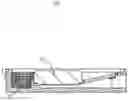
FIG. 1 is a schematic structural view of a speaker provided by the present disclosure;
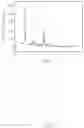
FIG. 2 is an XRD spectrum of the zeolite prepared in Example 1;
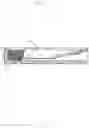
FIG. 3 is a SEM topographical view of the zeolite prepared in Example 1;
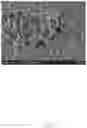
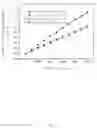
FIG. 4 is a graph comparing the air adsorption capacity of the heteroatom zeolite molecular sieve in Example 2 and that of a conventional silicalite-alumina zeolite.
DETAILED DESCRIPTION
The present disclosure will be hereinafter described in detail below with reference to the attached drawings and embodiments thereof.
Referring to FIG. 1, the present disclosure provides a speaker box 100, the speaker box 100 comprises a housing 1 having a receiving space, a speaker 2 disposed in the housing 1, and a posterior cavity 3 defined by the housing 1 and the speaker 2. The posterior cavity 3 is filled with a sound absorbing material to increase the acoustic compliance of the air in the posterior cavity, thereby improving the low frequency performance of the speaker.
The sound absorbing material comprises a heteroatom zeolite molecular sieve. The heteroatom zeolite molecular sieve comprises a framework and extra-framework cation. The framework comprises SiO2 and metal oxide MxOy comprising a metal element M, wherein the molar ratio of Si/M in the framework is in the ranges of 250 to 500. Wherein the element M comprises Fe, and the extra-framework cation is at least one of a monovalent copper ion, a monovalent silver ion, a monovalent gold ion, an alkali metal ion or an alkaline earth metal ion.
Specifically, the framework of the heteroatom zeolite molecular sieve comprises SiO2, which has a plurality of uniform micro-pores capable of absorbing and desorbing air molecules under the action of sound pressure to increase the volume of the virtual acoustic cavity, when the material is filled into the posterior cavity of the speaker box, and the low-frequency effect of the speaker can be significantly improved, thereby improving the low-frequency acoustic performance. The metal oxide MxOy acts as a part of a framework, and the molar ratio of Si/M in the framework is in the ranges of 250 to 500. The sound absorbing material made of the heteroatom zeolite molecular sieve of the above structure has more excellent oxygen adsorption capacity, good water repellency and stability.
The element M further comprises at least one of titanium (Ti), zirconium (Zr), tin (Sn), copper (Cu), and gallium (Ga), and does not affect the effects of the present disclosure. Compared with the conventional silica-alumina atomic zeolite, the hetero atomic zeolite molecular sieve has more excellent water repellency, which will greatly weaken the preferential adsorption of water vapor by the sound absorbing material, improve the sound absorbing effect of the sound absorbing material in the speaker box, and exhibit better performance of moisture resistance.
The molecular structure of the heteroatom zeolite molecular sieve comprises at least one of MFI, MEL, FER, BEA, and MWT. In this embodiment, the molecular sieve may be a pure phase MFI structure molecular sieve, due to the purity of the pure phase molecular sieve is high, and the speaker box filled with the MFI structure molecular sieve in the posterior cavity has better acoustic performance in the low-frequency range. Of course, the molecular sieve can also be an MFI structure molecular sieve containing other miscellaneous phases such as MEL, BEA, etc., without affecting the effect of the present disclosure, and the combination form is not limited thereto.
In this embodiment, the hetero atom zeolite molecular sieve comprises extra-framework cations, so that the heteroatom zeolite molecular sieve can more effectively adsorb and desorb the gas in the cavity, thereby better improved the low frequency performance.
The extra-framework cations is formed by cation exchange between the hetero atom zeolite molecular sieve and a salt compound. The heteroatom zeolite molecular sieve after undergoing cation exchange has excellent heat resistance and aging stability, and is suitable for improving low frequency performance of the speaker box in different environments and for a long period of time.
The hetero atom zeolite molecular sieve has a particle size of 0.1 to 10 μm, preferably 0.2 to 5 μm.
The hetero atomic zeolite molecular sieve is adhesively formed into a molded particle by adding an adhesive, and the molded particle has a particle size of 10 to 1000 μm, preferably 50 to 500 μm.
Specifically, the adhesive may be an inorganic adhesive or an organic polymer adhesive. The inorganic adhesive mainly includes activated alumina, silica sol, etc., and the organic polymer adhesive mainly includes acrylates, epoxys, polyurethanes and the like.
Embodiments of the present disclosure are explained below in conjunction with specific embodiments.
Example 1
The sound absorbing material of this example comprises an MFI structure molecular sieve, and the preparation method is as follows:
Using a silicon source (including tetraethyl orthosilicate, silica sol, sodium silicate, etc.), an iron source (including ferric chloride, ferric nitrate, ferric sulfate, etc.), an alkali source (including sodium hydroxide, potassium hydroxide, hydroxide Lithium and organic base), a templating agent (including one of tetrapropylammonium bromide, tetrapropylammonium hydroxide, tetrapropylammonium chloride, tetrapropylammonium iodide, n-hexylamine, ethylenediamine and n-butylamine) and water were used as raw materials and provided with a molar ratio Si/Fe=400 to prepare an MFI structure zeolite. After the raw materials were stirred and mixed, they were crystallized at a high temperature for 7 days to obtain a sample of hetero atom zeolite molecular sieve. The XRD pattern is shown in FIG. 2. It can be seen from FIG. 2 that the prepared molecular sieve is a typical MFI structure, and the molar ratio of the Si/Fe atoms is 387; the SEM spectrum thereof is shown in FIG. 3, and it can be seen from FIG. 3 that the particle size thereof is 1.0 to 3.0 μm.
Embodiment 2
The sound absorbing material of the present example comprises an MFI molecular sieve, and the preparation method thereof is as follows:
The material zeolite is a heteroatom zeolite molecular sieve material having iron element as a hetero atom and a molecular structure of MFI, and the synthetic raw material ratio Si/Fe=400. The material zeolite 2 is a conventional silica-alumina ZSM-5 zeolite molecular sieve, and the synthetic raw material ratio Si/Al=400. The atmospheric nitrogen and oxygen adsorption capacity of the zeolite molecular sieve material was measured using a Microscopy ASAP 2020 adsorber. The adsorption test results are shown in FIG. 4. Obviously, the hetero atomic zeolite molecular sieve has more excellent air absorption capacity, especially oxygen adsorption capacity; this will make the material more effective in improving the sound of the speaker box.
Example 3
The sound absorbing material of the present example includes molecular sieves having different Si/Fe molar ratios.
The preparation method thereof is as shown in Example 1. Zeolite materials (i.e., sound absorbing materials) of different Si/Fe ratios were prepared, and the actual Si/Fe atomic molar ratios were analyzed using the XRF element for comparison. The materials were filled in the posterior cavity of a speaker box for examining their respective effect on improving the low-frequency performance of the speaker box. The acoustic performance of the samples with different atomic ratios is shown in Table 1. The volume of the tool posterior cavity for acoustic performance measurement is 1 cubic centimeter (1 cc for short). It can be seen from the test data that the resonance frequency of the speaker box is relatively high when the molar ratio of Si/Fe atoms is too high or too low, which is not conducive to improving the low-frequency performance of the speaker box by the heteroatom zeolite molecular sieve.
| TABLE 1 |
| F0 values of the acoustic performance of the sound |
| absorbing material samples with different atomic ratios |
| Zeolite 3 | Zeolite 4 | Zeolite 5 | Zeolite 6 | Zeolite 7 | Zeolite 8 | |
| Si/Fe ratio | 200 | 350 | 400 | 500 | 600 | 800 |
| of the | ||||||
| synthetic | ||||||
| raw | ||||||
| materials | ||||||
| Actual | 221 | 331 | 387 | 472 | 616 | 828 |
| Si/Fe ratio | ||||||
| Resonance | 787 | 761 | 750 | 771 | 779 | 792 |
| frequency | ||||||
| F0 of the | ||||||
| speaker | ||||||
| box | ||||||
Example 4
When a zeolite molecular sieve is used to improve the sound quality of the low frequency band of a speaker box, it will preferentially adsorb water vapor, thus weakening the adsorption capacity of air and reducing the effect in improving low frequency performance. One conventional method of reducing the preferential adsorption capacity of water vapor by the zeolite molecular sieves is to increase the ratio of Si/Al in the alumino silicate zeolite framework. However, an excessively high Si/Al ratio is disadvantageous for the zeolite molecular sieve material to improve the low frequency effect of the speaker box. Also, the preparation of a high silicon aluminum ratio zeolite molecular sieve is costly. In a non-limiting embodiment, a heteroatom zeolite molecular sieve having a heteroatom selected from at least one of iron (Fe), titanium (Ti), zirconium (Zr), and tin (Sn) was prepared, with the raw materials for synthesis having a Si/M ratio of 400. The hydrophobicity of the heteroatom zeolite molecular sieve and the conventional alumino silicate zeolite molecular sieve was compared by measuring their isothermal adsorption of n-hexane and water. The test method for adsorption can be obtained from the “gravimetric” test standard. The measurement results are shown in Table 2, wherein K represents n-hexane adsorption amount/water adsorption amount, which can indicate the water repellency of the material. Comparing the measurement data, it can be seen that the K value of the conventional silica-alumina zeolite is 10.95, and the K values of the heteroatom zeolites are all high than the former, indicating that heteroatom zeolites have superior water repellency. This will weaken the material's preferential adsorption on water vapor, enhance its adsorption capacity of air, and help to improve the water resistance of the speaker box with improved low-frequency performance.
| TABLE 2 |
| Experimental results on the adsorption performance of the |
| sound absorbing material of the prior art and the |
| sound absorbing materials of the present disclosure |
| Traditional | ||
| silica-alumina | Heteroatom zeolite molecular sieve |
| zeolite | Zeolite | Zeolite | Zeolite | Zeolite | |
| Zeolite 9 | 10 | 11 | 12 | 13 | |
| Heteroatom | (Al) | Fe | Ti | Zr | Sn |
| n-hexane | 11.5 | 12.9 | 11.2 | 9.3 | 11.8 |
| adsorption | |||||
| amount (%) | |||||
| Water | 1.05 | 1.05 | 0.72 | 0.62 | 0.84 |
| adsorption | |||||
| amount (%) | |||||
| K | 10.95 | 12.29 | 15.56 | 15.00 | 14.05 |
Example 5
A small amount of cations were introduced into the heteroatom zeolite molecular sieve framework by ion exchange. While potassium salt was used for exchange, the ion is not limited to the potassium salt, and may be one or more of a monovalent copper ion, a monovalent silver ion, a monovalent gold ion, an alkali metal ion or an alkaline earth metal ion. In a non-limiting embodiment, the potassium salt used is potassium nitrate; however, the use of other potassium salts of the same type, such as potassium chloride, potassium sulfate, potassium carbonate, potassium phosphate, and the like, will also be apparent to those skilled in the art. The performance of the heteroatom zeolite molecular sieve (Zeolite 14) after undergoing cation exchange and the performance of the heteroatom zeolite molecular sieve (Zeolite 15) to which a small amount of cations were not introduced by ion exchange is as shown in Table 3. In both cases, the ratio of Si/Fe in the raw materials for synthesis is 400. From the data in the table, it can be concluded that when the cavity of the speaker box was filled with the heteroatom zeolite molecular sieve to which a small amount of cations were introduced by ion exchange, the resonance frequency of the speaker box can still be kept at a low level after being used in high temperature for a long period of time. This indicates that the introduction of a small amount of cations enables the heteroatom zeolite molecular sieve to have better heat resistance and aging stability.
| TABLE 3 |
| Resonance frequencies F0 and Q before and after adding |
| the molecular sieves to the rear chamber of the speaker box |
| High | High | |||||
| temperature | temperature | |||||
| Initial | for 72 h | for 120 h |
| F0 | Q | F0 | Q | F0 | Q | |
| Zeolite | 748 | 0.98 | 769 | 1.03 | 771 | 1.08 | |
| 14 | |||||||
| Zeolite | 755 | 1.05 | 789 | 1.13 | 803 | 1.18 | |
| 15 | |||||||
Compared with the related art, the sound absorbing material of the present disclosure is a heteroatom molecular sieve based on a silica-based zeolite molecular sieve. The heteroatom zeolite molecular sieve comprises a framework and extra-framework cations. The framework comprises SiO2 and a metal oxide MxOy containing a metal element M. The framework has a Si/M molar ratio of 250 to 500, wherein M includes Fe. This results in a heteroatom zeolite molecular sieve which replaces the silicon atom in a conventional zeolite with an iron atom. Such a structure enables the sound absorbing material to have better oxygen adsorption capacity, good water repellency and stability. When such a sound absorbing material applied to a speaker box, the speaker box will have better low frequency acoustic performance and better reliability.
It is to be understood, however, that even though numerous characteristics and advantages of the present embodiments have been set forth in the foregoing description, together with details of the structures and functions of the embodiments, the disclosure is illustrative only, and changes may be made in detail, especially in matters of shape, size, and arrangement of parts within the principles of the disclosure to the full extent indicated by the broad general meaning of the terms in which the appended claims are expressed.
Claims
What is claimed is:1. A sound absorbing material comprising a heteroatom zeolite molecular sieve comprising a framework and an extra-framework cation, the framework comprising SiO2 and a metal oxide MxOy comprising a metal element M, wherein the framework has a Si/M molar ratio of 250 to 500, wherein the M includes Fe, and that the extra-framework cation is at least one of a monovalent copper ion, a monovalent silver ion, a monovalent gold ion, an alkali metal ion or an alkaline earth metal ion.
2. The sound absorbing material according to claim 1, wherein the M further comprises at least one of titanium, zirconium, tin, copper, and gallium.
3. The sound absorbing material according to claim 1, wherein the heteroatom zeolite molecular sieve has a molecular structure of at least one of MFI, MEL, FER, BEA, and MWT.
4. The sound absorbing material according to claim 1, wherein the extra-framework cation is formed by cation exchange between the heteroatom zeolite molecular sieve and a salt compound.
5. The sound absorbing material according to claim 1, wherein the heteroatom zeolite molecular sieve has a particle size of 0.1 to 10 μm.
6. The sound absorbing material according to claim 5, wherein the heteroatom zeolite molecular sieve has a particle size of 0.2 to 5 μm.
7. The sound absorbing material according to claim 1, wherein the heteroatom zeolite molecular sieve is formed into shaped particles through the addition of an adhesive, and the shaped particles have a particle size of 10 to 1000 μm.
8. The sound absorbing material according to claim 7, wherein the shaped particles have a particle size of 50 to 500 μm.
9. The sound absorbing material according to claim 7, wherein the adhesive is one of an inorganic adhesive or an organic polymer adhesive.
10. A speaker box comprising a housing having a receiving space, a speaker disposed within the housing, and a posterior cavity defined by the speaker and the housing, wherein the posterior cavity is filled with the sound absorbing material according to the claim 1.
Images & Drawings included:
Sources:
- United States Patent and Trademark Office - verify current appl. status at the USPTO↗
Similar patent applications:
Recent applications in this class:
- » 20250287141 2025-09-11
Wearable Sound Device and Method for Ventilation and Acoustic Tuning - » 20250287140 2025-09-11
WOOFER SYSTEM, ACOUSTIC SYSTEM, SEAT, AND MOBILE OBJECT - » 20250240560 2025-07-24
MODULAR QUICK-CONNECT A/V SYSTEM AND METHODS THEREOF - » 20250240559 2025-07-24
MODULAR QUICK-CONNECT A/V SYSTEM AND METHODS THEREOF - » 20250240558 2025-07-24
VIBRATION DAMPING LOUDSPEAKER - » 20250203272 2025-06-19
AUDIO SPEAKER - » 20250150751 2025-05-08
COVERING STRUCTURE, SOUND PRODUCING PACKAGE AND MANUFACTURING METHOD OF SOUND PRODUCING PACKAGE - » 20250119680 2025-04-10
ACOUSTIC OUTPUT DEVICE - » 20250056151 2025-02-13
FORCE-CANCELLING, ISOBARIC AUDIO SYSTEM WITH CONFIGURABLE BASS AND PRIVACY MODES - » 20240430612 2024-12-26
SYSTEMS, METHODS, AND DEVICES FOR ACOUSTIC OUTPUT
Recent applications for this Assignee:
- » 20250126386 2025-04-17
MEMS microphone - » 20250080917 2025-03-06
Speaker module and assembling method thereof - » 20250056163 2025-02-13
Sounding Device - » 20250042722 2025-02-06
MEMS microphone - » 20250039600 2025-01-30
SINGLE-END-TO-DIFFERENTIAL MICROPHONE CIRCUIT AND ELECTRONIC EQUIPMENT - » 20250038713 2025-01-30
Single-end-to-differential microphone circuit - » 20250024199 2025-01-16
Microphone amplifying circuit design method and microphone amplifying circuit - » 20240393821 2024-11-28
TRIGGER MODULE WITH FORCE FEEDBACK - » 20240284093 2024-08-22
Microphone module - » 20240219293 2024-07-04
Gas Sensor