Production method
US20200078825A1
2020-03-12
16/395,289
2019-04-26
✅ Patent granted
US 11,040,371 B2
2021-06-22
-
-
Alexander M Weddle
Buchanan Ingersoll & Rooney P.C.
2039-04-26
Abstract:
A method for producing a panel including a core and a decorative surface layer is disclosed. The method includes the step of applying a dry powder layer on the core. The method includes the step of applying steam on a dry powder layer on the core. Thereafter heat and pressure are applied to the powder layer in order to bond the powder together.
Assignee:
- VALINGE INNOVATION AB 553 🇸🇪 Viken, Sweden
Applicant:
Interested in similar patents?
Get notified when new applications in this technology area are published.
Classification:
B32B37/24 » CPC further
Methods or apparatus for laminating, e.g. by curing or by ultrasonic bonding characterised by the properties of the layers with at least one layer not being coherent before laminating, e.g. made up from granular material sprinkled onto a substrate
B44C5/04 IPC
Processes for producing special ornamental bodies Ornamental plaques, e.g. decorative panels, decorative veneers
B44C5/043 » CPC further
Processes for producing special ornamental bodies; Ornamental plaques, e.g. decorative panels, decorative veneers containing wooden elements
B05D3/12 » CPC further
Pretreatment of surfaces to which liquids or other fluent materials are to be applied; After-treatment of applied coatings, e.g. intermediate treating of an applied coating preparatory to subsequent applications of liquids or other fluent materials by mechanical means
B05D2401/32 » CPC further
Form of the coating product, e.g. solution, water dispersion, powders or the like the coating being applied in other forms than involving eliminable solvent, diluent or dispersant applied as powders
B32B2307/554 » CPC further
Properties of the layers or laminate having particular mechanical properties Wear resistance
B32B2310/049 » CPC further
Treatment by energy or chemical effects using liquids, gas or steam using steam or damp
B32B2317/125 » CPC further
Animal or vegetable based; Paper, e.g. cardboard impregnated with thermosetting resin
B32B2317/16 » CPC further
Animal or vegetable based Wood, e.g. woodboard, fibreboard, woodchips
B32B2607/00 » CPC further
Walls, panels
B05D5/06 » CPC main
Processes for applying liquids or other fluent materials to surfaces to obtain special surface effects, finishes or structures to obtain multicolour or other optical effects
B44F5/00 » CPC further
Designs characterised by irregular areas, e.g. mottled patterns
B05D3/0473 » CPC further
Pretreatment of surfaces to which liquids or other fluent materials are to be applied; After-treatment of applied coatings, e.g. intermediate treating of an applied coating preparatory to subsequent applications of liquids or other fluent materials by exposure to gases the gas being a non-reacting gas for heating, e.g. vapour heating
Y10T428/24893 » CPC further
Stock material or miscellaneous articles; Structurally defined web or sheet [e.g., overall dimension, etc.]; Discontinuous or differential coating, impregnation or bond [e.g., artwork, printing, retouched photograph, etc.] including particulate material
B05D3/02 IPC
Pretreatment of surfaces to which liquids or other fluent materials are to be applied; After-treatment of applied coatings, e.g. intermediate treating of an applied coating preparatory to subsequent applications of liquids or other fluent materials by baking
B05D3/04 IPC
Pretreatment of surfaces to which liquids or other fluent materials are to be applied; After-treatment of applied coatings, e.g. intermediate treating of an applied coating preparatory to subsequent applications of liquids or other fluent materials by exposure to gases
B05D3/0254 » CPC further
Pretreatment of surfaces to which liquids or other fluent materials are to be applied; After-treatment of applied coatings, e.g. intermediate treating of an applied coating preparatory to subsequent applications of liquids or other fluent materials by baking After-treatment
Description
CROSS REFERENCE TO RELATED APPLICATIONS
The present application is a continuation of U.S. application Ser. No. 13/118,846, filed on May 31, 2011, which claims the benefit of U.S. Provisional Application No. 61/349,950, filed on May 31, 2010. The entire contents of each of U.S. application Ser. Nos. 13/118,846 and 61/349,950 are hereby incorporated by reference herein.
TECHNICAL FIELD
The disclosure generally relates to a method for producing a fibre-based building panel, preferably a floor panel, and to a building panel produced by said method.
BACKGROUND
A new type of panel called Wood Fiber Floor (WFF) is disclosed in WO2009/065769, which shows both products and methods to produce such a panel. Further methods and production equipments are disclosed in WO2009/124704.
The WFF floor panels are produce by applying a dry powder mix on a HDF core. The powder mix is bonded together under heat and pressure to form a decorative surface layer.
In order to stabilize the dry powder mix the production methods in WO2009/065769 or in WO2009/124704 (see page 15, line 15-21; FIG. 3) uses spraying of pure water or water with additives.
The entire contents of WO2009/065769 and WO2009/124704 are hereby incorporated by reference herein, and with a specific reference to page 15, line 15-21 and FIG. 3 of WO2009/124704.
SUMMARY OF THE DISCLOSURE
An objective of embodiments of the disclosure is to provide production methods that are more effective than the present known technology. Another objective is to produce panels with a more uniform colour or a more controlled colour variation and/or pattern.
When pressing a surface layer out of powder mix—such as a WFF mixture disclosed in WO2009/065769 or in WO2009/124704—one problem is to avoid that the powder mixture completely or partly blows off when the board is handled in the line before pressing and/or blow out of the press when the air is evacuated due to the closing of the press.
The known solutions to stabilize the powder by using spraying of water has the disadvantage that it is difficult to control the distribution of the water and to avoid water drops unintentionally falling down on the powder layer from the spraying unit.
An uneven water distribution and/or unintentional water drops normally have a negative effect of the visual as well as technical properties of the product. Furthermore, a waiting time to let the water penetrate into the powder before entering the press slow down the press cycle and to total out put from the production line is lowered.
A first aspect of the disclosure is a method of manufacturing a panel comprising a core (1) and a decorative surface layer (4) comprising the steps of:
-
- Applying a dry powder layer (2) on a core (1); and
- Applying steam to the powder layer.
The steam is preferably a water steam, most preferably a substantially pure water steam, even though the steam may comprise one or more additives. Examples of additives are wetting agents, releasing agents and/or colour additives.
The dry powder layer is preferably a mix of fibres, preferably wood fibres, and binder(s). The powder layer may also include wear resistant particles, preferably aluminium oxide.
The core is preferably a wood fibre based core, preferably an HDF panel.
A second aspect of the disclosure is a method of manufacturing a panel comprising a core (1) and a surface layer (4) with a designed pattern comprising the steps of:
-
- Applying a dry powder layer (2) on a core (1); and
- Creating a pattern by applying steam to parts of the powder layer or applying steam unevenly (e.g., over all of the powder layer, but in different amounts) over the powder layer.
The steam in the first and the second aspect is preferably a water steam, most preferably a substantially pure water steam, even though the steam may comprise one or more additives. The steam may be a mist or the gas phase of water (water vapour), preferably a saturated vapour and most preferably a saturated vapour mainly comprising water.
Preferred embodiments of the first and second aspects of the disclosure are disclosed below.
A third aspect of the disclosure is a panel produced according to any one the aspects above.
The methods above may be used to any production of a building panel in which a dry powder layer is applied to a core.
BRIEF DESCRIPTION OF THE DRAWINGS
The disclosure will in the following be described in connection to exemplary embodiments and in greater detail with reference to the appended exemplary drawings, wherein:
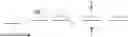
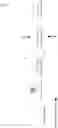
FIG. 1 Illustrates a production line and a method according to an embodiment of the disclosure;
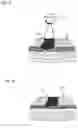
FIGS. 2a-2b Illustrate a method for creating a design according to an embodiment of the disclosure;
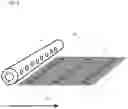
FIG. 3 Illustrates a method for creating a design according to an embodiment of the disclosure.
DETAILED DESCRIPTION OF EMBODIMENTS
In FIG. 1 an embodiment of a production line is disclosed for producing a panel 5 with a decorative layer 4. A dry powder mix 2 is applied by scattering on a core 1, preferably an HDF core. The powder mix is stabilized by applying steam 3 before the powder mix is bonded together by applying heat and pressure in, for example, a press 9. If a pattern is desired, the steam may in one embodiment, be applied through a template 6, preferably rotating. In a preferred embodiment also a balancing layer 7 is applied to the core.
In the methods according to the present disclosure preferably the same scattering and pressing units as disclosed in WO2009/065769 or in WO2009/124704 are used.
In one embodiment the steam is applied by using a steam box 8, a box with one or more outlets at the bottom for steam, positioned above the transportation belt. The box preferably extends across the panel with a uniform width. An even moisture distribution is applied over the surface of the scattered powder layer 2, when the board pass under the steam box. Since the steam penetrate into the powder very effectively it is possible to immediately move the board into the press and close the press 9.
A suitable steam box is either fed by an external steam generator or the steam is generated in the steam box itself. It is suitable that that the steambox is equipped with one or several layers of nets for example mesh and/or sheets with holes to even out the steam concentration close to the powder layer.
FIGS. 2a and 2b shows how an uneven distribution of moisture 21, obtained by applying steam 3 through, e.g., a nozzle 25, can be used for design effect purpose. Different amount of moisture 21 in different parts of a single colour powder, but not yet pressed, surface gives a visual colour difference of the different parts. By controlling where on the surface the moisture content is higher a wanted design effect 22 can be generated (see FIG. 2b) in the pressed surface 24 of the panel even if only one unicolored powder layer is applied on the core 1.
By controlling the relative movement between a core 1 with the powder mix layer 2 and one or several steam outlets a controlled variation of the content of moisture 21 in the powder can be achieved. This variation of moisture content will after pressing be visible as color differences 22 on the ready surface 24.
One or several of the steam outlets could be fixed on a robot arm and their position in relation to the scattered board could then be controlled in all directions.
The steam outlets 41 could be positioned in a rotating device, preferably a steam pipe 40, to generate a controlled moisture variation 42 in the powder layer 2, see FIG. 3.
As a Non-Limiting Example, the Steps for Producing a WFF Board could be as Follows:
-
- 1) Place a balancing layer, e.g. a paper impregnated with a thermosetting resin or a mixture of wood powder and thermosetting resin is placed on a transportation belt. A typical balancing layer is two sheets of DKB 140 paper.
- 2) Place a wood fibre board, typically an about 10 mm thick HDF board with a density of typically about 900 kg/m3, on top of the balancing layer.
- 3) Moving the balancing layer and board in a speed of 1-10 m/min (a typical value is about 3 m/min) under a scattering machine were a premade mixture of wood fibres, binders, hard particles and pigments are scattered on top of the board. The powder applied can be in the range of about 100-1000 g/m2. Typical value is about 700 g/m2.
- 4) Moving the board, with a balancing layer on the backside and a scattered powder layer on the top side, through a steam box with even steam concentration in the speed of 1-10 m/min (typical value is about 3 m/min) where steamed water, with or without additives, penetrates into the powder and stabilize it to improve further handling and to avoid that the powder blows out when the press is closing. Typical amount of moisture applied by the steam box is 3 g/m2.
- 5) Bringing the board with a balancing layer on the backside and a scattered and steam stabilized powder layer on the top side into the press.
- 6) Closing the press, and curing the thermosetting resin in the balancing layer and the powder layer under heat and pressure. Typical press parameters are 30 seconds pressing (range is, for example, 8-60 seconds). 40 bars pressure (range is, for example, 30-60 bars) may be applied on the board. Temperature of typically about 170 degrees C. (range is, for example, 150-220 degrees C.) on the top and bottom press plates. The pressing surfaces of the press plates can be even or have structure. Structure depth typically about 0.5 mm (range for example about 0-1.5 mm)
In an alternative example also one or more paper sheets are applied after step 4.
An Example of a Production of a WFF Board with a Designed Pattern by Controlled Uneven Moisture Distribution:
-
- 1) Place a balancing layer, e.g. a paper impregnated with a thermosetting resin or a mixture of wood powder and thermosetting resin is placed on a transportation belt. A typical balancing layer is two sheets of DKB 140 paper.
- 2) Place a wood fibre board, typically an about 10 mm thick HDF board with a density of typically about 900 kg/m3, on top of the balancing layer.
- 3) Moving the balancing layer and board in a speed of about 1-10 m/min (typical value is about 3 m/min) under a scattering machine were a premade mixture of wood fibres, binders, hard particles and pigments are scattered on top of the board. The powder applied can be in the range of about 100-1000 g/m2. Typical value is about 700 g/m2.
- 4) Moving the board, with a balancing layer on the backside and a scattered powder layer on the top side, under one or several steam outlets that also might move sideways and open and close during the board passing time, in the speed of about 1-10 m/min (typical value is about 3 m/min) where steamed water, with or without additives, penetrates into the powder in an uneven but controlled way to obtain a variation in the moisture content in the powder layer.
- 5) Bringing the board with a balancing layer on the backside and a scattered and steam stabilized powder layer on the top side into the press.
- 6) Closing the press, and curing the thermosetting resin in the balancing layer and the powder layer under heat and pressure. The different moisture content resulting in a visible design effect in the ready pressed board. Typical press parameters are about 30 seconds pressing (range is, for example, about 8-60 seconds). About 40 bars pressure (range is, for example, 30-60 bars) may be applied on the board. Temperature of typically about 170 degrees C. (range is, for example, about 150-220 degrees C.) on the top and bottom press plates. The pressing surfaces of the press plates can be even or have structure. Structure depth typically value about 0.5 mm (range for example about 0-1.5 mm)
In an alternative example also one or more paper sheets are applied after step 4.
Claims
1-18. (canceled)
19. A method comprising:
applying a dry powder layer on a core, the dry powder layer comprising a mix of wood fibers and a binder;
subsequently applying steam directly onto the dry powder layer while the dry powder layer is on the core to form a stabilized powder layer on the core; and
subsequently bonding the powder in the stabilized powder layer together into a cured layer by applying heat and pressure, and thereby forming a panel comprising the core and the cured layer.
20. The method as claimed in claim 19, wherein the steam is a saturated vapour consisting essentially of water.
21. The method as claimed in claim 19, wherein the steam comprises one or more additives selected from the group consisting of wetting agents, releasing agents, and colour additives.
22. The method as claimed in claim 19, wherein the core is a wood fibre based core.
23. The method as claimed in claim 19, wherein the core is an HDF panel.
24. The method as claimed in claim 19, wherein the formed panel is a building panel.
25. The method as claimed in claim 19, wherein the formed panel is a floor panel.
26. The method as claimed in claim 19, wherein the mix of the dry powder layer further comprises wear resistant particles.
27. The method as claimed in claim 19, wherein the mix of the dry powder layer further comprises aluminium oxide.
28. The method as claimed in claim 19, wherein the mix of the dry powder layer further comprises pigments.
29. The method as claimed in claim 19, wherein the mix of the dry powder layer further comprises wear resistant particles and pigments, and wherein the binder is a thermosetting resin.
30. The method as claimed in claim 19, wherein the binder is a thermosetting resin.
31. The method as claimed in claim 19, wherein a thickness of the cured layer is less than about 1 mm.
32. The method as claimed in claim 19, wherein a thickness of the cured layer is less than about 0.3 mm.
33. The method as claimed in claim 19, wherein the cured layer is a surface layer of the panel.
34. The method as claimed in claim 19, wherein the cured layer is a decorative surface layer of the panel.
35. The method as claimed in claim 19, wherein the steam is applied with a steam box.
36. The method as claimed in claim 19, wherein the dry powder layer is applied by scattering.
37. The method as claimed in claim 19, wherein heat and pressure are applied by a press.
38. The method as claimed in claim 19, wherein the press is operated with the following parameters: 8-60 seconds of pressing time; 30-60 bars of applied pressure; and 150-220° C. of pressing temperature.
39. The method as claimed in claim 19, wherein the steam is applied to the dry powder layer when the core is moving at a speed of 1 to 10 meters per minute.
40. The method as claimed in claim 19, wherein the steam is substantially uniformly applied over the dry powder layer.
41. A floor panel produced according to the method in claim 19.
42. A floor panel produced according to the method in claim 29.
43. A floor panel produced according to the method in claim 40.
Images & Drawings included:
Sources:
- United States Patent and Trademark Office - verify current appl. status at the USPTO↗
Similar patent applications:
- » 20230322653
BISPHENOL PRODUCTION METHOD , RECYCLED POLYCARBONATE RESIN PRODUCTION METHOD, CARBON DIOXIDE PRODUCTION METHOD, CARBONIC ACID DIESTER PRODUCTION METHOD, EPOXY RESIN PRODUCTION METHOD, AND EPOXY RESIN CURED PRODUCT PRODUCTION METHOD - » 20190004421
Pattern forming method, production method for processed substrate, production method for optical component, production method for circuit substrate, production method for electronic component and production method for imprint mold - » 20230183059
MICROCHANNEL DEVICE, PRODUCTION METHOD FOR LIQUID DROPLET, PRODUCTION METHOD FOR AIR BUBBLE, PRODUCTION METHOD FOR MICROCAPSULE, PRODUCTION METHOD FOR MULTIPLE EMULSION, PRODUCTION METHOD FOR LIQUID DROPLET THAT ENCOMPASSES AIR BUBBLE, AND MANUFACTURING METHOD FOR MICROCHANNEL DEVICE - » 20230191399
MICROCHANNEL DEVICE, PRODUCTION METHOD FOR OIL DROPLET, PRODUCTION METHOD FOR AIR BUBBLE, PRODUCTION METHOD FOR MICROCAPSULE, PRODUCTION METHOD FOR MULTIPLE EMULSION, PRODUCTION METHOD FOR LIQUID DROPLET THAT ENCOMPASSES AIR BUBBLE, AND MANUFACTURING METHOD FOR MICROCHANNEL DEVICE - » 20250257252
RAW MATERIAL FOR OBTAINING ABRASIVE GRAINS AND SELECTION METHOD THEREFOR, PRODUCTION METHOD FOR ABRASIVE GRAINS, PRODUCTION METHOD FOR POLISHING LIQUID, POLISHING METHOD, PRODUCTION METHOD FOR COMPONENT, AND PRODUCTION METHOD FOR SEMICONDUCTOR COMPONENT - » 20220315438
BERYLLIUM SOLUTION PRODUCTION METHOD, BERYLLIUM PRODUCTION METHOD, BERYLLIUM HYDROXIDE PRODUCTION METHOD, BERYLLIUM OXIDE PRODUCTION METHOD, SOLUTION PRODUCTION DEVICE, BERYLLIUM PRODUCTION SYSTEM, AND BERYLLIUM - » 20220401613
Nonwoven Fabric Containing Silk Fibers, Wound Dressing, iPS Cell Scaffold Material, Nonwoven Fabric for Blood-Compatible Material, Blood-Compatible Material, Production Method of Nonwoven Fabric Containing Silk Fibers, Production Method of Wound Dressing, Production Method of iPS Cell Scaffold Material, Production Method of Non-Woven Fabric for Blood-Compatible Material, and Production Method of Blood-Compatible Material - » 10470166
Prepreg production method and prepeg production device and prepreg obtained by the production method and production method for insulating layer attached copper foil and insulating layer attached copper foil obtained by the production method - » 20170259459
Production method for fiber-reinforced thermoplastic resin composite material, production method for fiber-reinforced thermoplastic resin tape, production method for press-molding material, production method for molded article, unidirectional prepreg, and molded article - » 20250263594
RAW MATERIAL FOR OBTAINING ABRASIVE GRAINS AND METHOD FOR SELECTING SAME, ABRASIVE GRAIN PRODUCTION METHOD, POLISHING SOLUTION PRODUCTION METHOD, POLISHING METHOD, COMPONENT PRODUCTION METHOD, AND SEMICONDUCTOR COMPONENT PRODUCTION
Recent applications in this class:
- » 20250187036 2025-06-12
METHODS FOR PRODUCING OPTICAL EFFECT LAYERS COMPRISING MAGNETIC OR MAGNETIZABLE PIGMENT PARTICLES AND EXHIBITING ONE OR MORE INDICIA - » 20250083184 2025-03-13
METHOD FOR FORMING TWO-COLOR COATING LAYER - » 20250010332 2025-01-09
COMPOSITE MATERIAL AND ITS PREPARATION - » 20240238839 2024-07-18
Methods for producing optical effect layers comprising magnetic or magnetizable pigment particles and exhibiting one or more indicia - » 20240091810 2024-03-21
THREE-DIMENSIONALLY ARRANGED NANOPARTICLE FILM WITH ARRAY STRUCTURE AND PREPARATION METHOD AND USE THEREOF - » 20230338987 2023-10-26
COATING SYSTEMS WITH INCREASED JETNESS OF BLACK AND IMPROVED COLOR - » 20220410210 2022-12-29
Method for forming multilayer coating film - » 20210205842 2021-07-08
Method for finishing a wood board - » 20200398308 2020-12-24
Method for forming multilayer coating film - » 20200254485 2020-08-13
Optical elements
Recent applications for this Assignee:
- » 20250290326 2025-09-18
BUILDING PANEL WITH MECHANICAL LOCKING DEVICE - » 20250277501 2025-09-04
JOINERY ARRANGEMENT COMPRISING INTERLOCKED JOINERY COMPONENTS - » 20250276542 2025-09-04
METHOD TO PRODUCE A BUILDING PANEL AND A SEMI-FINISHED PRODUCT - » 20250270821 2025-08-28
PANEL WITH LOCKING DEVICE - » 20250270819 2025-08-28
VERTICAL JOINT SYSTEM AND ASSOCIATED SURFACE COVERING SYSTEM - » 20250270812 2025-08-28
BUILDING PANEL WITH LOCKING SYSTEM - » 20250248520 2025-08-07
PANELS COMPRISING A MECHANICAL LOCKING DEVICE AND AN ASSOCIATED ASSEMBLED ARTICLE - » 20250243675 2025-07-31
FLOOR COVERING WITH INTERLOCKING DESIGN - » 20250243674 2025-07-31
FLOOR COVERING WITH INTERLOCKING DESIGN - » 20250243673 2025-07-31
FLOOR COVERING WITH INTERLOCKING DESIGN