Industrial composite manufacturing method
US20200078991A1
2020-03-12
16/554,284
2019-08-28
✅ Patent granted
US 11,351,701 B2
2022-06-07
-
-
Stella K Yi
PatentTM.US
2040-02-25
Abstract:
The present invention proposes a method of industrial composite manufacturing. The method combines the resin transferring molding method with vacuum process and compression process in appropriate orders for achieving high quality products. In the curing process, microwaves are used to harden the plastic resin in the mold. Specifically, the main steps of the method are following: step 1: preparation of materials and equipment; Step 2: Disposition of the reinforced fibers/fabrics and mold closing at the extend position; Step 3: Vacuum and transfer plastic resin into the mold; Step 4: Mold closing by compression pressure; Step 5: Plastic resin curing by using a microwave system; Step 6: Open the mold and take the composite product.
Inventors:
- Anh Vu Nguyen 1 🇻🇳 Hanoi City, Vietnam
- Trong Dai Vu 4 🇻🇳 Ha Noi City, Vietnam
- Ky Nam Pham 5 🇻🇳 Ha Noi City, Vietnam
- Ky Nam Pham 2 🇻🇳 Ha Noi, Vietnam
- Trong Dai Vu 3 🇻🇳 Ha Noi, Vietnam
- Anh Vu Nguyen 1 🇻🇳 Hanoi, Vietnam
Assignee:
- VIETTEL GROUP 128 🇻🇳 Ha Noi City, Vietnam
- VIETTEL GROUP 44 🇻🇳 Ha Noi, Vietnam
Applicant:
Interested in similar patents?
Get notified when new applications in this technology area are published.
Classification:
B29C35/0805 » CPC main
Heating, cooling or curing, e.g. crosslinking or vulcanising; Apparatus therefor; Heating or curing, e.g. crosslinking or vulcanizing during moulding, e.g. in a mould by wave energy or particle radiation using electromagnetic radiation
B29C2035/0855 » CPC further
Heating, cooling or curing, e.g. crosslinking or vulcanising; Apparatus therefor; Heating or curing, e.g. crosslinking or vulcanizing during moulding, e.g. in a mould by wave energy or particle radiation using electromagnetic radiation using microwave
B29C35/08 IPC
Heating, cooling or curing, e.g. crosslinking or vulcanising; Apparatus therefor; Heating or curing, e.g. crosslinking or vulcanizing during moulding, e.g. in a mould by wave energy or particle radiation
B29C70/48 » CPC further
Shaping composites, i.e. plastics material comprising reinforcements, fillers or preformed parts, e.g. inserts comprising reinforcements only, e.g. self-reinforcing plastics; Shaping operations therefor; Shaping or impregnating by compression not applied for producing articles of definite length, i.e. discrete articles using matched moulds, e.g. for deforming sheet moulding compounds [SMC] or prepregs and impregnating the reinforcements in the closed mould, e.g. resin transfer moulding [RTM], e.g. by vacuum
Description
FIELD OF THE INVENTION
The present invention provides a method for manufacturing products made of composite materials in the industrial production scale.
BACKGROUND OF THE INVENTION
Composite materials have the advantages of mechanical properties such as high modulus, high strength and light weight. Therefore, they are increasingly used in the fields of aviation, spacecraft, automobiles, sport products and civil products.
For composite products used in high-tech fields like aviation and aerospace, they work under high loading conditions, strong vibration and high temperature, therefore they must satisfy strict requirements of quality such as high consistency, low porosity, good surface quality and accurate geometry (thickness and shape).
At the present, there are several methods to make composite products as:
-
- Hand lay-up method, spray lay-up method: These methods are low-cost, not automated, suitable for production at small/medium scale and for products with low/medium quality control requirements;
- Compression molding method and resin transfer molding method: in the compression molding method, the resin is injected into the mold within reinforced fibers/fabrics then the top mold is pressed down to form product shape. In the resin transfer molding method, a pressure force is used to pump the plastic resin into the mold within reinforced fibers/reinforced fabrics. These methods have automation abilities and can be applied for the production of large scales, but their product qualities are limited. Because air contacts directly with the resin in the mold during the resin transferring process and can go inside the resin, therefore it is difficult to control and reduce air-pore content in the products, especially for the products with complex shapes;
- Compression resin transfer molding method is able to make composite products with higher quality, at large scale production. This method is similar to the resin transfer molding method. However, the top mold is set at larger position during the resin transferring period in order to facilitate the transferring resin flow and it is closed by compression loading after the mold is filled with resin.
- Vacuum assisted resin transfer molding method (VARTM): VARTM is a variation of the resin transfer molding method with its distinguishing characteristic being the replacement of the top mold with a vacuum bag and the use of a vacuum process to assist in resin flow. The vacuum process removes air in the mold before resin transferring process and generate a pressure difference inside the mold and outside the vacuum bag. This pressure difference increases the resin flow and engenders a compression pressure on the vacuum bag. This method makes products with high quality of consistency. However, it is difficult to control accurately the product thickness;
- Autoclave molding of pre-pregs: the method uses pre-impregnated fibers/fabrics as primary materials. After arranging pre-pregs fabric in the mold, the mold is put into a vacuum furnace for air vacuum and curing process. The method is very expensive in terms of primary material costs as well as machinery investment, so it is not suitable for the industrial production of large quantity scale;
Actually, there are two main measures for curing thermosetting plastic resin matrix:
-
- Use curing additives to harden plastic resin matrix at normal temperature. However, the curing time of this method is quite long, so it is often used in small/medium scale productions;
- Heating to accelerate the curing process of thermosetting plastic resin matrix. However, this method consumes time/energy for heating and cooling the mold. The high temperature of the mold causes a thermal deformation of the mold that could change the shape of the product. Currently, the heating process is the main method used for industrial composite production at large scale.
In addition, some composite manufacturing methods were registered as:
The invention in the patent US2014/0191447 provides a method for manufacturing composite materials by a combination of resin transfer molding method with a vacuum process before transferring plastic resin into the mold. The curing process of thermosetting plastic resin is accelerated by the heating process on the mold.
The patent U.S. Pat. No. 5,686,038A proposes a composite manufacturing method for plastic resin matrix emitting volatile gas during the curing period. This method is based on the resin transfer molding method combined with the vacuum process before transferring plastic resin into the mold. In the plastic resin curing process, the mold is firstly heated during 6 hours at 665° F., then press at 185 psi in 1 hour to push volatile gas away.
In order to improve the quality and quantity of industrial composite production, we propose the method of manufacturing composite materials based on the resin transferring molding method combined with vacuum process and compression process. In curing process, the plastic resin is cured by the application of microwaves.
SUMMARY OF THE INVENTION
The invention presents the composite manufacturing method that could be used in industrial production scale for obtaining high quality products. This method includes the following steps: Step 1: Preparation of materials and equipment; Step 2: Disposition of the reinforced fibers/fabrics and mold closing at the extend position; Step 3: Vacuum and transfer plastic resin into the mold; Step 4: Mold closing by compression pressure; Step 5: Plastic resin curing by using a microwave system; Step 6: Open the mold and take the composite product.
BRIEF DESCRIPTION OF THE DRAWINGS
FIG. 1: Block diagram of the industrial composite manufacturing method
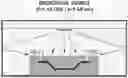
FIG. 2: Figure illustrating the second step of the method.
FIG. 3: Figure illustrating the third step of the method.
FIG. 4: Figure illustrating the fourth step of the method.
FIG. 5: Figure illustrating the fifth step of the method.
DESCRIPTION OF THE SPECIFIC EMBODIMENTS
The quality of composite materials is evaluated through many factors. One important factor is the consistency, low pore ratio in the composite structure improves the material strength, durability and resistance to dynamic loads. The curing degree of the plastic resin matrix also affects considerably to the composite product quality. A uniform curing of the resin matrix of composite materials allows a continuous force transmission in the composite structure. Another important factor is the geometric quality of the composite products. In the high-tech application, many composite products are required to have smooth surfaces as well as a precise thickness.
In order to satisfy all the quality requirements, the industrial composite manufacturing method proposed in this invention includes the following steps:
Step 1: Preparation of materials and equipment
Step 2: Disposition of the reinforced fibers/fabrics and mold closing at the extend position
Step 3: Vacuum and transfer plastic resin into the mold;
Step 4: Mold closing by compression pressure;
Step 5: Plastic resin curing by using a microwave system;
Step 6: Open the mold and take the composite product.
Specifically, the steps of the method are described as follows:
Step 1: Preparation of materials and equipment. Referring to FIGS. 1 and 2, necessary equipment and materials are prepared as follows:
-
- Raw materials include plastic resin, reinforcing fibers/fabrics and additives;
- Mold must made by non-conductive materials that is low affected by electromagnetic waves such as wood, concrete, porcelain, plastic . . . . Specifically, the mold is composed by: the interior surface (1) is designed as the shape of the product; the wedges (2) have the air insulation ability, help to keep the distance between bottom mold and upper mold and can be disassembled; bottom mold (3); upper mold (4); inlet valve (5); and outlet valve (6).
- Main machines include vacuum pump, compressing machine and microwave system;
- Other equipment: balance, resin tank, pipelines, valves, pressure gauges . . . .
Step 2: Disposition of the reinforced fibers/fabrics and mold closing at the extend position. Referring to the FIGS. 1 and 2, reinforcing fibers/fabrics (1) are arranged in the molds corresponding to the design. The fiber volume content and the fiber orientation are determined based on the design principles and the design standards to satisfy the load-bearing conditions of the product. After fibers/fabrics arrangement on the surface of the bottom mold, place the upper mold (4) at the extend position where the distance between the upper mold (4) and the bottom mold (3) is greater than the thickness of the product by at least 30%. The distance is held by the wedges (2) that have the air insulation ability. This extension creates more space for resin flow transferring into the mold.
Step 3: Vacuum and transfer plastic resin into the mold. Referring to the FIG. 1 and FIG. 3, after the disposition of fibers/fabrics into the mold, the vacuum in the mold is carried out. Firstly, the inlet valve is closed (5); then the outlet valve (6) which connects the molds and the vacuum pump is opened; Start the vacuum pump machine in order to eliminate air in the mold. By using a pressure gauge measuring the pressure in the mold, it can be determined the moment when the mold interior reaches the vacuum state. After reaching the vacuum state, close the outlet valve (6), then turn off the vacuum machine. Then, the inlet valve (5) connected between the resin tank and the mold is opened to transfer the plastic resin into the mold until the plastic matrix resin fills the mold.
Step 4: Mold closing by compression pressure. Referring to the FIG. 1 and FIG. 4, after the plastic resin filled the mold, the wedges (2) are disassembled. Then, compression pressure is applied on the upper mold in order to push the excess plastic resin out and move the upper mold to the designed position corresponding to the designed thickness of the composite product. The pressing pressure on the upper mold is chosen from 0.2 MPa to 20 Mpa depending on the type of plastic resin and the shape of the product. It can be seen that the applied pressure in the method is 2-200 times greater than the pressure in the conventional VARTM method.
Step 5: Plastic resin curing by using a microwave system. Referring to FIG. 1 and FIG. 5, after the upper mold is closed at the product thickness position, the thermosetting resin in the mold is then cured by microwave, where the microwave frequency could be chosen from 1-15 GHz, and the wavelength can be from 1 to 50 cm. By using the curing microwave system, the entire product can be cured at the same time. The curing time depends on the size, thickness and type of used plastic resin.
Step 6: Open the mold and take the composite product. After the curing process, keep the mold during at least 30 minutes for cooling, then open the mold to get the product.
In the method, the two surface sides of the product are in contact with two solid surfaces of the mold. Therefore, two surfaces of the products are smooth, and the thickness of the product can be accurately controlled according to the designed thickness. The consistency of the composite products is also high due to the effects of two processes: the vacuum process in the mold and the compressing process with pressure 2-200 times higher than conventional compression pressure in the VARTM method. Finally, the curing process could be faster and more energy saving, because by using microwaves, energy could be quickly transmitted for curing the plastic resin matrix. The method of the present invention could be automated at high level with medium investing cost. Especially, with time saving in the curing process, the method could improve the productivity of the manufacturing unit.
Claims
We claim:1. An industrial composite manufacturing method comprising the following steps:
Step 1: Preparation of materials and equipment; said preparation comprising preparing necessary materials and equipments including: a mold set comprising upper and lower molds, reinforced fiber/fabrics, plastic resin, additives, vacuum pump, compression machine, microwave system and other tools;
Step 2: Disposition of the reinforced fibers/fabrics and mold closing at the extend position; comprising the reinforced fibers/fabrics are arranged in the mold, Then the upper mold is set at an extend position to make more space (at least 30%) for the resin flow by using wedges with air-insulation ability;
Step 3: Vacuum and transfer plastic resin into the mold; comprising, after vacuuming air inside the mold, the plastic resin is transferred into the mold;
Step 4: Mold closing by compression pressure; comprising, the upper mold is closed at the designed position by using a compression pressure;
Step 5: Plastic resin curing by using a microwave system; comprising, the plastic resin matrix is cured by using microwave system;
Step 6: Open the mold and take the composite product; After curing process, the mold is firstly cooled, then is opened to take out the composite product.
2. The industrial composite manufacturing method according to the claim 1, wherein in the Step 2, the upper mold is firstly closed at the extend position where the distance between the upper mold (4) and the bottom mold (3) is set greater than the thickness of the composite product by at least 30%.
3. The industrial composite manufacturing method according to the claim 1, wherein in the Step 4, the compression pressure is applied to the mold set in order to push the excess plastic resin out and move the upper mold to a position corresponding to the designed thickness of the composite product; The compression pressure process takes place immediately after the plastic resin fills the mold; the value of the compression pressure is taken from 0.2-20 Mpa.
4. The industrial composite manufacturing method according to the claim 1, wherein in the Step 5, thermosetting resin in the mold is hardened by a microwave with frequency from 1-15 GHz, wavelength from 1-50 cm.
Images & Drawings included:


Sources:
- United States Patent and Trademark Office - verify current appl. status at the USPTO↗
Similar patent applications:
- » 20050166401
Wear-resistant composite rings for jewelry, medical or industrial devices and manufacturing method therefor - » 20200093203
INDUSTRIAL GLOVE COATED WITH POLYUREA RESIN COMPOSITION AND SILICONE RESIN, AND METHOD OF MANUFACTURING THE SAME - » 20150050506
Rubber composition, method for manufacturing rubber-metal composite body, rubber-metal composite body, tire, industrial belt, and rubber crawler - » 20090047471
Fiber structure component, robot component, industrial robot, composite component in general, composite components for terrestrial or air and space vehicles, and manufacturing method for a fiber structure component - » 20210169945
MANUFACTURING OR ONSIDE INSTALLATION OF COMPOSITIONS WITH METHODS, SYSTEMS TO ADDRESS ECOLOGICAL AND ECONOMICAL CONCERNS OF THE AQUACULTURE INDUSTRY - » 20130192960
METHOD OF MANUFACTURING RUBBER-METAL COMPOSITE, RUBBER-METAL COMPOSITE, TIRE, BASE-ISOLATION RUBBER BEARING-BODY, INDUSTRIAL BELT, AND CRAWLER - » 20200276752
RESIN COMPOSITION, METHOD FOR MANUFACTURING THREE-DIMENSIONAL OBJECT USING RESIN COMPOSITION, THREE-DIMENSIONAL OBJECT, AND OBJECT-GRIPPING ATTACHMENT, AND INDUSTRIAL ROBOT USING OBJECT-GRIPPING ATTACHMENT - » 20150056256
METHOD FOR TREATMENT OF SPIDER SILK-FILAMENT FOR USE AS THREAD OR A COMPOSITION IN THE MANUFACTURE OF COSMETIC, MEDICAL, TEXTILE OR INDUSTRIAL APPLICATIONS SUCH AS BIO-ARTIFICIAL CELL TISSUE OR SKIN BASED ON (RECOMBINANT) SPIDER SILK
Recent applications in this class:
- » 20250236052 2025-07-24
CURING OF FLEXO PRINTING ELEMENTS USING UV LED SYSTEMS - » 20250205937 2025-06-26
GASKET MOLDING METHOD, GASKET, FUEL CELL COMPONENT, FUEL CELL, FUEL CELL PRODUCTION METHOD, SEALING METHOD, AND GASKET MOLDING DEVICE - » 20250114983 2025-04-10
APPARATUS AND METHOD FOR CURING FORMABLE MATERIAL - » 20250042063 2025-02-06
POUCH FOLDING METHOD AND DEVICE - » 20250018615 2025-01-16
Method and Apparatus for Uniform UV Curing of Resin Parts having Irregular Surfaces - » 20240416558 2024-12-19
Inert ultraviolet curing apparatus - » 20240359371 2024-10-31
SYSTEM AND METHOD FOR USING A VOC FREE LOW RADIANT FLUX LED UV CURABLE COMPOSITION - » 20240359370 2024-10-31
SYSTEM AND METHOD FOR USING A VOC FREE LOW RADIANT FLUX LED UV CURABLE COMPOSITION - » 20240286319 2024-08-29
SYSTEM AND METHOD FOR USING A VOC FREE LOW RADIANT FLUX LED UV CURABLE COMPOSITION - » 20240286318 2024-08-29
CORDLESS AND RECHARGEABLE RESIN-CURING LAMP
Recent applications for this Assignee:
- » 20250283411 2025-09-11
Optimization Framework for Multi-Stage Compressor Disk Design in Gas Turbine Engine - » 20250282489 2025-09-11
Mechanism for indicating the opening of a flight device guidance tube cap - » 20250282331 2025-09-11
Electric lifting mechanism for automatic balancing system - » 20250239778 2025-07-24
Ka band monopulse array antenna with low sidelobe levels - » 20250237507 2025-07-24
Coning, sculling and scrolling error compensation method for strapdown inertial navigation system - » 20250237283 2025-07-24
Shock Absorber Structure - » 20250236078 2025-07-24
Method of manufacturing square tube from composite materials - » 20250212233 2025-06-26
SYSTEM FOR DETECTING A MOTION STATE OF A DEVICE BASED ON RADIO SIGNAL INFORMATION - » 20250212171 2025-06-26
METHOD TO INCREASE A NAVIGATION UPDATE RATE FOR A RTK POSITIONING SYSTEM - » 20250212132 2025-06-26
AUTONOMOUS POWER REGULATION (APR) METHOD