Lubricant and method of preparing the same
US20200080019A1
2020-03-12
16/684,535
2019-11-14
✅ Patent granted
US 11,136,527 B2
2021-10-05
-
-
Pamela H Weiss
Matthias Scholl P.C. | Matthias Scholl
2039-12-24
Abstract:
A lubricant, including, by weight: 80-85 parts of a base oil; 1-2 parts of a methyl-silicone oil; 1-2 parts of polymethacrylate; 2-4 parts of pentaerythritol polyisobutylene succinate; 1-2 parts of di-n-butyl phosphite; 2-3 parts of butylhydroxytoluene; 2-4 parts of an ethylene-propylene copolymer; 1-2 parts of an alkenyl succinate; and 3-5 parts of copper nanoparticles. A method of preparing the lubricant includes: adding the base oil, the methyl-silicone oil, the polymethacrylate, the ethylene-propylene copolymer, the butylhydroxytoluene, the alkenyl succinate to a reactor, and stirring a resulting first mixture under normal temperature and pressure at 300-400 rpm for 3-4 hours, to yield a primary product; and adding the di-n-butyl phosphite, the pentaerythritol polyisobutylene succinate, and the copper nanoparticles to the primary product, and stirring a resulting second mixture at 150-250 rpm for 2-2.5 hours.
Inventors:
- Shengmao Zhang 3 🇨🇳 Kaifeng, China
- Yujuan ZHANG 2 🇨🇳 Kaifeng, China
- Pingyu ZHANG 2 🇨🇳 Kaifeng, China
- Zhijun ZHANG 3 🇨🇳 Kaifeng, China
Assignee:
- HENAN UNIVERSITY 11 🇨🇳 Kaifeng, China
Applicant:
Interested in similar patents?
Get notified when new applications in this technology area are published.
Classification:
C10M2205/0206 » CPC further
Organic hydrocarbon compounds or fractions, whether or not modified by oxidation as ingredients in lubricant compositions containing acyclic monomers used as base material
C10M169/044 » CPC main
Lubricating compositions characterised by containing as components a mixture of at least two types of ingredient selected from base-materials, thickeners or additives, covered by the preceding groups, each of these compounds being essential; Mixtures of base-materials and additives the additives being a mixture of non-macromolecular and macromolecular compounds
C10M107/02 » CPC further
Lubricating compositions characterised by the base-material being a macromolecular compound Hydrocarbon polymers; Hydrocarbon polymers modified by oxidation
C10M125/04 » CPC further
Lubricating compositions characterised by the additive being an inorganic material Metals; Alloys
C10M129/10 » CPC further
Lubricating compositions characterised by the additive being an organic non-macromolecular compound containing oxygen having a carbon chain of less than 30 atoms; Hydroxy compounds having hydroxy groups bound to a carbon atom of a six-membered aromatic ring
C10M129/72 » CPC further
Lubricating compositions characterised by the additive being an organic non-macromolecular compound containing oxygen having a carbon chain of less than 30 atoms; Esters of polycarboxylic acids
C10M137/02 » CPC further
Lubricating compositions characterised by the additive being an organic non-macromolecular compound containing phosphorus having no phosphorus-to-carbon bond
C10M141/10 » CPC further
Lubricating compositions characterised by the additive being a mixture of two or more compounds covered by more than one of the main groups - , each of these compounds being essential at least one of them being an organic phosphorus-containing compound
C10M143/04 » CPC further
Lubricating compositions characterised by the additive being a macromolecular hydrocarbon or such hydrocarbon modified by oxidation containing propene
C10M145/14 » CPC further
Lubricating compositions characterised by the additive being a macromolecular compound containing oxygen; Macromolecular compounds obtained by reactions only involving carbon-to-carbon unsaturated bonds containing monomers having an unsaturated radical bound to a carboxyl radical, e.g. acrylate monocarboxylic Acrylate; Methacrylate
C10M145/22 » CPC further
Lubricating compositions characterised by the additive being a macromolecular compound containing oxygen; Macromolecular compounds obtained otherwise than by reactions only involving carbon-to-carbon unsaturated bonds Polyesters
C10M155/02 » CPC further
Lubricating compositions characterised by the additive being a macromolecular compound containing atoms of elements not provided for in groups - Monomer containing silicon
C10M2201/05 » CPC further
Inorganic compounds or elements as ingredients in lubricant compositions; Elements Metals; Alloys
C10M2205/024 » CPC further
Organic hydrocarbon compounds or fractions, whether or not modified by oxidation as ingredients in lubricant compositions containing acyclic monomers Propene
C10M2207/023 » CPC further
Organic hydrocarbon compounds containing hydrogen, carbon and oxygen as ingredients in lubricant compositions; Hydroxy compounds having hydroxy groups bound to carbon atoms of six-membered aromatic rings
C10M2207/282 » CPC further
Organic hydrocarbon compounds containing hydrogen, carbon and oxygen as ingredients in lubricant compositions; Esters of (cyclo)aliphatic oolycarboxylic acids
C10M2207/2835 » CPC further
Organic hydrocarbon compounds containing hydrogen, carbon and oxygen as ingredients in lubricant compositions; Esters of polyhydroxy compounds used as base material
C10M2209/084 » CPC further
Organic compounds containing oxygen as ingredients in lubricant compositions; Macromolecular compounds obtained by reactions only involving carbon-to-carbon unsaturated bonds containing monomers having an unsaturated radical bound to a carboxyl radical, e.g. acrylate type Acrylate; Methacrylate
C10M2209/102 » CPC further
Organic compounds containing oxygen as ingredients in lubricant compositions; Macromolecular compoundss obtained otherwise than by reactions only involving carbon-to-carbon unsaturated bonds Polyesters
C10M2223/049 » CPC further
Organic compounds containing phosphorus as ingredients in lubricant compositions having no phosphorus-to-carbon bonds Phosphite
C10M2229/02 » CPC further
Organic compounds containing atoms of elements not provided for in groups, , , , or as ingredients in lubricant compositions Unspecified siloxanes; Silicones
C10M169/04 IPC
Lubricating compositions characterised by containing as components a mixture of at least two types of ingredient selected from base-materials, thickeners or additives, covered by the preceding groups, each of these compounds being essential Mixtures of base-materials and additives
C10M105/38 » CPC further
Lubricating compositions characterised by the base-material being a non-macromolecular organic compound containing oxygen; Esters of polyhydroxy compounds
C10M111/04 » CPC further
Lubrication compositions characterised by the base-material being a mixture of two or more compounds covered by more than one of the main groups - , each of these compounds being essential at least one of them being a macromolecular organic compound
C10N2020/06 » CPC further
Specified physical or chemical properties or characteristics, i.e. function, of component of lubricating compositions; Physico-chemical properties; Particles related characteristics Particles of special shape or size
C10N2030/06 » CPC further
Specified physical or chemical properties which is improved by the additive characterising the lubricating composition, e.g. multifunctional additives Oiliness; Film-strength; Anti-wear; Resistance to extreme pressure
C10N2040/25 » CPC further
Specified use or application for which the lubricating composition is intended Internal-combustion engines
C10M157/10 » CPC further
Lubricating compositions characterised by the additive being a mixture of two or more macromolecular compounds covered by more than one of the main groups - , each of these compounds being essential at least one of them being a compound containing atoms of elements not provided for in groups -
Description
CROSS-REFERENCE TO RELATED APPLICATIONS
This application is a continuation-in-part of International Patent Application No. PCT/CN2018/084216 with an international filing date of Apr. 24, 2018, designating the United States, now pending, and further claims foreign priority benefits to Chinese Patent Application No. 201710761292.4 filed Aug. 30, 2017. The contents of all of the aforementioned applications, including any intervening amendments thereto, are incorporated herein by reference. Inquiries from the public to applicants or assignees concerning this document or the related applications should be directed to: Matthias Scholl PC., Attn.: Dr. Matthias Scholl Esq., 245 First Street, 18th Floor, Cambridge, Mass. 02142.
BACKGROUND
This disclosure relates to a lubricant and a method of preparing the same.
A lubricant is a substance introduced to reduce friction between surfaces in mutual contact, which ultimately reduces the heat generated when the surfaces move.
Engine lubricants are widely used to reduce the friction between the metal surfaces of an engine. In recent years, the sliding parts of the engines also have been coated with a carbon film to reduce the frictional wear. However, conventional engine lubricants are incompatible with carbon films and tend to degrade them.
SUMMARY
Disclosed are a lubricant and a method of preparing the same. The lubricant exhibits stable dispersion and antioxidant properties, and can lubricate an engine that has sliding parts coated with a carbon film.
The disclosure provides a lubricant, comprising, by weight:
80-85 parts of a base oil;
1-2 parts of a methyl-silicone oil;
1-2 parts of polymethacrylate;
2-4 parts of pentaerythritol polyisobutylene succinate;
1-2 parts of di-n-butyl phosphite;
2-3 parts of butylhydroxytoluene;
2-4 parts of an ethylene-propylene copolymer;
1-2 parts of an alkenyl succinate; and
3-5 parts of copper nanoparticles.
The base oil can comprise 70 wt. % of a synthetic oil and 30 wt. % of a trimethylolpropane ester, and the synthetic oil can be a polyalphaolefin (PAO).
The polyalphaolefin (PAO) can be PAO6, PAO8, or PAO10.
Also provided is a method of preparing a lubricant, the method comprising:
-
- adding 80-85 parts of a base oil, 1-2 parts of a methyl-silicone oil, 1-2 parts of polymethacrylate, 2-4 parts of an ethylene-propylene copolymer, 2-3 parts of butylhydroxytoluene, 1-2 parts of an alkenyl succinate to a reactor, and stirring a resulting first mixture under normal temperature and pressure (NTP) at 300-400 rpm for 3-4 hours, to yield a primary product; and
- adding 1-2 parts of di-n-butyl phosphite, 2-4 parts of pentaerythritol polyisobutylene succinate, and 3-5 parts of copper nanoparticles to the primary product, and stirring a resulting second mixture at 150-250 rpm for 2-2.5 hours.
The materials involved in the method can be purchased from the market. The copper nanoparticles can be modified by dioctyl dithiophosphate. The modifier accounts for 50-70 wt. % of the total weight of the modified copper nanoparticles. The particle size of the copper nanoparticles is 3-5 nm. The particle size distribution can improve the dispersion stability and chemical stability of the copper in the base oil, thus improving the lubrication function of the lubricant.
Copper nanoparticles have strong nucleophilic force on both metals and carbon films, and thus the deposits are formed on both surfaces to reduce friction and wear between the two surfaces.
Advantages of the lubricant and the method of preparing the same as described in the disclosure are summarized as follows. The surface modified copper nanoparticles can form a lubricating film on the surface of a carbon film (the carbon film can be a pure carbon film, a Si-doped carbon film, an Al-doped carbon film, or a H-doped carbon film), improving the anti-friction and anti-wear properties of the carbon film-coated sliding parts of an engine. The copper nanoparticles exhibit affinity with metal friction pairs and carbon films, so that the lubricant can be widely used in various engines. The dispersion of the lubricant is uniform and stable, improving the lubricating efficiency. The method of preparing the lubricant is carried out under normal temperature and pressure.
BRIEF DESCRIPTION OF THE DRAWINGS
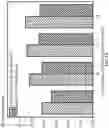
FIG. 1A is comparison of friction coefficients of four types of carbon films (that is, pure carbon film, Si-doped carbon film, Al-doped carbon film, H-doped carbon film) lubricated by conventional SL grade engine oil and a lubricant as described in the disclosure; and
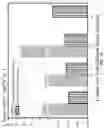
FIG. 1B is comparison of wear rates of four types of carbon films (that is, pure carbon film, Si-doped carbon film, Al-doped carbon film, H-doped carbon film) lubricated by conventional SL grade engine oil and a lubricant as described in the disclosure.
DETAILED DESCRIPTION
To further illustrate, embodiments detailing a lubricant and a method of preparing the same are described below. It should be noted that the following embodiments are intended to describe and not to limit the disclosure.
Example 1
Dispersion stability test of copper nanoparticles in lubricants
The copper nanoparticles were modified by dioctyl dithiophosphate which accounted for 60 wt. % of the modified copper nanoparticles. The copper nanoparticles had an average particle size of 4 nm and the C8-alkyl chain modifier was distributed outside the copper nanoparticles. The copper nanoparticles were mixed with different dispersants in different additive amounts for the study of dispersion stability in lubricants.
The mixtures of the copper nanoparticles and different dispersants in different additive amounts were respectively dissolved in a base oil comprising 70 wt. % of a synthetic oil and 30 wt. % of a trimethylolpropane ester, and the synthetic oil was polyalphaolefin 6 (PAO6). 24 hours later, the mixtures were centrifuged at 30° C. under 8000 rpm for 20 min. 10 mL of supernates were collected, and the transmittance thereof were measured using an UV spectrophotometer.
The copper nanoparticles contained a C8-alkyl chain modifier so that they had excellent dispersion stability. However, the addition of the dispersant changed the dispersion stability of the copper nanoparticles, and the dispersant competed with the modifier to adsorb on the copper core. Once the protection of modifier disappeared, the copper nanoparticles tended to oxidize, and the color changed from brown red to grey green, deteriorating the lubricity. On the other hand, the addition of the dispersants changed the agglomeration of the copper nanoparticles, thus adversely affecting its dispersion stability in the base oil. The test results are shown in Table 1 and Table 2.
| TABLE 1 |
| Influence of different types of dispersants on the dispersion stability of |
| copper nanoparticles |
| Transmittance | |||||
| Copper | Primary | after | Increase ratio of | ||
| nanoparticles | Dispersants | transmittance | centrifugation | transmittance | Color of |
| (Weight parts) | (3 parts by weight) | (%) | (%) | (%) | lubricants |
| 4 | T151- | 78.6 | 85.6 | 8.9 | Greyish green |
| Monoalkenyl | |||||
| succinimide | |||||
| 4 | T152-Dialkenyl | 78.6 | 86.4 | 9.9 | Greyish green |
| succinimide | |||||
| 4 | T153- | 78.5 | 84.8 | 8.0 | Greyish green |
| Multialkenyl | |||||
| succinimide | |||||
| 4 | T161-High | 78.8 | 86.7 | 10.0 | Greyish green |
| molecular weight | |||||
| (poly)succinimide | |||||
| 4 | T171- | 78.6 | 80.3 | 2.2 | Brownish red |
| Pentaerythritol | |||||
| polyisobutylene | |||||
| succinate | |||||
| TABLE 2 |
| Influence of different weight ratios of dispersants to copper nanoparticles |
| on the dispersion stability of copper nanoparticles |
| Dispersant T171- | |||||
| Pentaerythritol | Transmittance | Increase ratio | |||
| Copper | polyisobutylene | Primary | after | of | |
| nanoparticles | succinate | transmittance | centrifugation | transmittance | Color of |
| (Weight parts) | (Weight parts) | (%) | (%) | (%) | lubricants |
| 2 | 4 | 82.4 | 83.5 | 1.3 | Brownish red |
| 3 | 4 | 80.3 | 81.6 | 1.6 | Brownish red |
| 4 | 4 | 78.6 | 80.3 | 2.2 | Brownish red |
| 5 | 4 | 76.8 | 80.3 | 4.6 | Brownish red |
| 6 | 4 | 72.4 | 80.1 | 10.6 | Brownish red |
| 4 | 1 | 78.8 | 80.3 | 1.9 | Brownish red |
| 4 | 2 | 78.8 | 80.3 | 1.9 | Brownish red |
| 4 | 3 | 78.7 | 80.3 | 2.0 | Brownish red |
| 4 | 4 | 78.6 | 80.3 | 2.2 | Brownish red |
| 4 | 5 | 76.3 | 80.5 | 5.5 | Brownish red |
| 4 | 6 | 73.5 | 80.6 | 9.7 | Brownish red |
The results showed that, the polyamide dispersants (T151, T152, T153, T161, produced by Xinxiang Ruifeng New Materials Co., Ltd.) competed with the modifier of the copper nanoparticles to adsorb on the copper nanoparticles, so that the copper nanoparticles were oxidized and deteriorated. However, the pentaerythritol ester dispersants (T171, produced by Lanzhou Lubo Runlan Refining Additives Co., Ltd.) can efficiently disperse the copper nanoparticles. Too many of the dispersants caused the agglomerates of the copper nanoparticles to deposit, so that the additive amount were about 2-4 weight parts.
Example 2
The copper tends to oxidize the lubricant. Thus, the copper nanoparticles need to cooperate with different antioxidants to improve the antioxidant ability of the lubricant. Different antioxidants were mixed with a base oil comprising 70 wt. % of a synthetic oil and 30 wt. % of a trimethylolpropane ester, and the synthetic oil was polyalphaolefin 6 (PAO6). The antioxidant properties of the base oil were listed in Table 3.
| TABLE 3 |
| Antioxidant properties of base oil with different antioxidants |
| Copper | Initial | ||
| nanoparticles | oxidation | Oxidation | |
| (Weight | Antioxidants (2 parts by | temperature | induction |
| parts) | weight) | (° C.) | time (min) |
| 0 | 211.3 | 0.1 | |
| 4 | 219.3 | 7.8 | |
| 4 | T501-2, | 224.5 | 14.0 |
| 6-Di-tert-butyl-4-methylphenol | |||
| 4 | T512-Methyl | 242.6 | 21.6 |
| 3,5-methyl-β-(3,5-di-tert- | |||
| butyl-4- | |||
| hydroxyphenyl)propanoate | |||
| 4 | T521-2,6-Di-tert-butyl- | 223.7 | 8.7 |
| 4-(dimethylaminomethyl)phenol | |||
| 4 | T531- | 226.3 | 11.9 |
| N-Phenyl-α-naphthylamine | |||
| 4 | T534- | 238.0 | 19.2 |
| Butyl-octyl-diphenylamine | |||
The results show that, the copper nanoparticles can improve the antioxidant ability of the base oil. When mixing with the antioxidant T512, the antioxidant ability of the lubricant has been improved to the greatest extent.
Example 3
The copper nanoparticles as soft metals have excellent antifriction and repair functions, but under high load and extreme pressure conditions, the copper nanoparticles cooperate with an anti-wear agent to form a synergistic effect to achieve extreme pressure lubrication effect. The anti-wear agent is a mostly organic polar compound containing sulfur, phosphorus and chlorine. The extreme pressure anti-wear ability of the lubricant is evaluated by measuring its PB (maximum nonseizure load) and PD (minimum sintering load).
| TABLE 4 |
| Extreme pressure anti-wear ability of lubricant with different anti-wear |
| agents |
| Copper | |||
| nanoparticles | |||
| (Weight | |||
| parts) | Anti-wear agents (2 parts by weight) | PB (N) | PD (N) |
| 0 | 372 | 568 | |
| 4 | 813 | 5500 | |
| 4 | T301-Chlorinated paraffins | 900 | 7080 |
| 4 | T304-Acid dibutyl phosphite | 945 | 7300 |
| 4 | T305-Nitrogen-containing derivatives of | 812 | 5560 |
| dithiophosphoric acid | |||
| 4 | T306-Tricresyl phosphate | 760 | 5100 |
| 4 | T307-Thiophosphoric acid amine Salt | 715 | 3960 |
| 4 | T308-Isooctyl acid phosphate | 543 | 2920 |
| octadecylamine salt | |||
| 4 | T309-Triphenyl thiophosphate | 615 | 4600 |
| 4 | T321-Sulfurized isobutylene | 342 | 1960 |
| 4 | T322-Dibenzyl disulfide | 356 | 2020 |
| 4 | T323-Aminothioester | 273 | 1560 |
| 4 | T341-Lead naphthenate | 630 | 6300 |
| 4 | T351-DibutylCarbamodithiotic acid | 730 | 4860 |
| molybdenum salt | |||
| 4 | T352-DibutylCarbamodithiotic acid | 750 | 5260 |
| antimonic salt | |||
| 4 | T353-DibutylCarbamodithiotic acid lead | 780 | 6430 |
| salt | |||
The results show that, the copper nanoparticles greatly improve the extreme pressure anti-wear ability of the base oil. When mixing with the anti-wear agent T304 (dibutyl phosphite), the copper nanoparticles can improve the PB and PD of the lubricant to the greatest extent.
Example 4
A lubricant comprises: 80 parts of a base oil; 2 parts of a methyl-silicone oil; 1 part of polymethacrylate; 4 parts of pentaerythritol polyisobutylene succinate; 2 parts of di-n-butyl phosphite; 3 parts of butylhydroxytoluene; 4 parts of an ethylene-propylene copolymer; 1 part of alkenyl succinate; and 3 parts of copper nanoparticles. The base oil comprises 70 wt. % of a synthetic oil and 30 wt. % of a trimethylolpropane ester, and the synthetic oil is a polyalphaolefin 6 (PAO6).
A method of preparing the lubricant comprises:
-
- adding the base oil, the methyl-silicone oil, the polymethacrylate, the ethylene-propylene copolymer, the butylhydroxytoluene, the alkenyl succinate to a reactor, and stirring a resulting first mixture under normal temperature and pressure (NTP) at 300 rpm for 4 hours, to yield a primary product; and
- adding the di-n-butyl phosphite, the pentaerythritol polyisobutylene succinate, and the copper nanoparticles to the primary product, and stirring a resulting second mixture at 150 rpm for 2.5 hours.
Example 5
A lubricant comprises: 82 parts of a base oil; 2 parts of a methyl-silicone oil; 1 part of polymethacrylate; 2 parts of pentaerythritol polyisobutylene succinate; 1 part of di-n-butyl phosphite; 3 parts of butylhydroxytoluene; 3 parts of an ethylene-propylene copolymer; 2 parts of alkenyl succinate; and 4 parts of copper nanoparticles. The base oil comprises 70 wt. % of a synthetic oil and 30 wt. % of a trimethylolpropane ester, and the synthetic oil is a polyalphaolefin 8 (PAO8).
A method of preparing the lubricant comprises:
-
- adding the base oil, the methyl-silicone oil, the polymethacrylate, the ethylene-propylene copolymer, the butylhydroxytoluene, the alkenyl succinate to a reactor, and stirring a resulting first mixture under normal temperature and pressure (NTP) at 400 rpm for 3 hours, to yield a primary product; and
- adding the di-n-butyl phosphite, the pentaerythritol polyisobutylene succinate, and the copper nanoparticles to the primary product, and stirring a resulting second mixture at 250 rpm for 2 hours.
Example 6
A lubricant comprises: 85 parts of a base oil; 1 part of a methyl-silicone oil; 1 part of polymethacrylate; 2 parts of pentaerythritol polyisobutylene succinate; 1 part of di-n-butyl phosphite; 2 parts of butylhydroxytoluene; 2 parts of an ethylene-propylene copolymer; 1 part of alkenyl succinate; and 5 parts of copper nanoparticles. The base oil comprises 70 wt. % of a synthetic oil and 30 wt. % of a trimethylolpropane ester, and the synthetic oil is a polyalphaolefin 10 (PAO10).
A method of preparing the lubricant comprises:
-
- adding the base oil, the methyl-silicone oil, the polymethacrylate, the ethylene-propylene copolymer, the butylhydroxytoluene, the alkenyl succinate to a reactor, and stirring a resulting first mixture under normal temperature and pressure (NTP) at 350 rpm for 4 hours, to yield a primary product; and
- adding the di-n-butyl phosphite, the pentaerythritol polyisobutylene succinate, and the copper nanoparticles to the primary product, and stirring a resulting second mixture at 200 rpm for 2.5 hours.
The properties of the lubricants prepared in above examples are tested and the test results are shown in FIGS. 1A-1B. The friction pairs employed in the tests comprise one of four types of carbon films (that is, pure carbon film, Si-doped carbon film, Al-doped carbon film, H-doped carbon film) and stainless-steel balls. Friction conditions: the stainless-steel balls have a diameter of 4 mm, a single stroke of 5 mm, a linear velocity of 10 mm/s and a vertical load of 8 N. The experiments are carried out at room temperature. As shown in FIGS. 1A and 1B, compared with the SL grade engine oil on the market, the lubricant as described in the disclosure can reduce the friction coefficient and wear rate of the four types of carbon films by 9-19% and 93-99%, respectively. It can be concluded that the lubricant of the disclosure can effectively protect the carbon film and exhibit efficient lubricating properties.
It will be obvious to those skilled in the art that changes and modifications may be made, and therefore, the aim in the appended claims is to cover all such changes and modifications.
Claims
What is claimed is:1. A lubricant, comprising, by weight:
80-85 parts of a base oil;
1-2 parts of a methyl-silicone oil;
1-2 parts of polymethacrylate;
2-4 parts of pentaerythritol polyisobutylene succinate;
1-2 parts of di-n-butyl phosphite;
2-3 parts of butylhydroxytoluene;
2-4 parts of an ethylene-propylene copolymer;
1-2 parts of an alkenyl succinate; and
3-5 parts of copper nanoparticles.
2. The lubricant of claim 1, wherein the base oil comprises 70 wt. % of a synthetic oil and 30 wt. % of a trimethylolpropane ester, and the synthetic oil is a polyalphaolefin (PAO).
3. The lubricant of claim 2, wherein the polyalphaolefin (PAO) is PAO6, PAO8, or PAO10.
4. The lubricant of claim 1, wherein the lubricant comprises, by weight:
80 parts of the base oil;
2 parts of the methyl-silicone oil;
1 part of the polymethacrylate;
4 parts of the pentaerythritol polyisobutylene succinate;
2 parts of the di-n-butyl phosphite;
3 parts of the butylhydroxytoluene;
4 parts of the ethylene-propylene copolymer;
1 part of the alkenyl succinate; and
3 parts of the copper nanoparticles.
5. The lubricant of claim 1, wherein the lubricant comprises, by weight:
82 parts of the base oil;
2 parts of the methyl-silicone oil;
1 part of the polymethacrylate;
2 parts of the pentaerythritol polyisobutylene succinate;
1 part of the di-n-butyl phosphite;
3 parts of the butylhydroxytoluene;
3 parts of the ethylene-propylene copolymer;
2 parts of the alkenyl succinate; and
4 parts of the copper nanoparticles.
6. The lubricant of claim 1, wherein the lubricant comprises, by weight:
85 parts of the base oil;
1 part of the methyl-silicone oil;
1 part of the polymethacrylate;
2 parts of the pentaerythritol polyisobutylene succinate;
1 part of the di-n-butyl phosphite;
2 parts of the butylhydroxytoluene;
2 parts of the ethylene-propylene copolymer;
1 part of the alkenyl succinate; and
5 parts of the copper nanoparticles.
7. A method of preparing a lubricant, the method comprising:
adding 80-85 parts of a base oil, 1-2 parts of a methyl-silicone oil, 1-2 parts of polymethacrylate, 2-4 parts of an ethylene-propylene copolymer, 2-3 parts of butylhydroxytoluene, 1-2 parts of an alkenyl succinate to a reactor, and stirring a resulting first mixture under normal temperature and pressure (NTP) at 300-400 rpm for 3-4 hours, to yield a primary product; and
adding 1-2 parts of di-n-butyl phosphite, 2-4 parts of pentaerythritol polyisobutylene succinate, and 3-5 parts of copper nanoparticles to the primary product, and stirring a resulting second mixture at 150-250 rpm for 2-2.5 hours.
8. The method of claim 7, wherein the base oil comprises 70 wt. % of a synthetic oil and 30 wt. % of a trimethylolpropane ester, and the synthetic oil is a polyalphaolefin (PAO).
9. The method of claim 8, wherein the polyalphaolefin (PAO) is PAO6, PAO8, or PAO10.
Images & Drawings included:
Sources:
- United States Patent and Trademark Office - verify current appl. status at the USPTO↗
Similar patent applications:
- » 20220340834
Super-lubricity water lubricating additive, super-lubricity water lubricant, preparation method and application - » 20240336863
CHELATED LITHIUM MOLYBDATE LUBRICANT ADDITIVE, PREPARATION METHOD AND APPLICATION THEREOF - » 20090156443
Organic molybdenum additive, its preparation method, a lubricating composition containing said additive, and use of the same - » 20210054254
Drilling fluid lubricant and preparation method and use thereof - » 20130105359
Method for preparing lubricating base oils by using vacuum distilled deasphalted oil - » 20110046028
Preparation method of lubricating oil and lubricating oil produced thereby - » 20200157400
Sulfur- and phosphorus-free extreme pressure lubricant and preparation method and application thereof - » 20090291325
Phosphazene Compound, Lubricant and Magentic Recording Medium Having Such Compound, Method of Preparation, and Method of Lubrication - » 20200157401
Composition for preparing anti-wear lubricant for drilling fluid and preparation method of anti-wear lubricant for drilling fluid and drilling fluid - » 10478329
Method for preparing a lubricating composition based on polysiloxanes not releasing hydrogen
Recent applications in this class:
- » 20250263626 2025-08-21
ZINC FREE LUBRICATING COMPOSITIONS AND METHODS OF USING THE SAME - » 20250257281 2025-08-14
LUBRICANT COMPOSITIONS AND METHODS OF DRY LUBRICATING SURFACE USING THE SAME - » 20250230378 2025-07-17
GREASE COMPOSITION - » 20250197765 2025-06-19
Lubricant Compositions Containing Phosphorus For Use In Hydrogen Fueled Engines - » 20250197764 2025-06-19
Lubricant Compositions Containing Detergent For Reduced Pre-ignition In Hydrogen Fueled Engines - » 20250197763 2025-06-19
Lubricant Compositions Containing Silicon For Reduced Pre-ignition In Hydrogen Fueled Engines - » 20250197762 2025-06-19
Lubricant Compositions For Reduced Pre-ignition In Hydrogen Fueled Engines - » 20250197761 2025-06-19
Lubricant Compositions Containing Magnesium Detergent For Reduced Pre-ignition In Hydrogen Fueled Engines - » 20250145904 2025-05-08
LUBRICATING COMPOSITIONS - » 20250136889 2025-05-01
Lubricant Compositions Containing High C9 Disubstituted Diphenylamine Antioxidant Content
Recent applications for this Assignee:
- » 20240188421 2024-06-06
ORGANIC-INORGANIC HOLE TRANSPORT BILAYER FOR CARBON ELECTRODE PEROVSKITE SOLAR CELLS AND CARBON ELECTRODE PEROVSKITE SOLAR CELLS WITH ORGANIC-INORGANIC HOLE TRANSPORT BILAYER - » 20230340509 2023-10-26
TOMATO GLUTAREDOXIN SlGRXC9 GENE AND ITS APPLICATION - » 20230237794 2023-07-27
Method for automatically identifying global solar photovoltaic (PV) panels based on cloud platform by using remote sensing - » 20230068171 2023-03-02
Ferrous sulfide-containing passivator for removing heavy metal from soil and preparation method and use thereof - » 20220323605 2022-10-13
Gene editing nanocapsule and preparation method and use thereof - » 20220092306 2022-03-24
Cloud platform-based garlic crop recognition method by coupling active and passive remote sensing images - » 20210322330 2021-10-21
siRNA nanocapsule and preparation method and use thereof - » 20210308069 2021-10-07
Preparation and use of sugar-targeting nanoparticles for modifying SiRNA - » 20210305525 2021-09-30
Non-blinking quantum dot, preparation method thereof, and quantum dot-based light-emitting diode - » 20210198118 2021-07-01
Two-dimensional (2D) bismuth nanocomposite, and preparation method and use thereof