METHOD FOR STABILIZATION OF HYPOCHLOROUS ACID SOLUTION
US20200080208A1
2020-03-12
16/674,475
2019-11-05
Abstract:
The embodiments herein provide a method for producing and storing a shelf stable hypochlorous acid solution. The method comprises the steps of mixing distilled water with sodium chloride having at least 99 percent purity to form a saline solution; electrolyzing the saline solution by passing the saline solution through a chamber having an anode and a cathode that are separated by a membrane constructed and arranged to only permit a migration of chemical ions in one direction there through so that a hypochlorous acid solution is formed on the anode side and a sodium hydroxide is formed on the cathode side; directing the hypochlorous acid solution to a container for storage; and stabilizing the hypochlorous acid solution with vacuum or inert gas blanketing within the container.
Interested in similar patents?
Get notified when new applications in this technology area are published.
Classification:
C25B1/22 » CPC main
Electrolytic production of inorganic compounds or non-metals; Products Inorganic acids
Description
CROSS-REFERENCE TO RELATED APPLICATIONS
This application claims the priority of U.S. Provisional Patent Application No. 62/758,427, filed on Nov. 9, 2018, with the tile, “New Method for Stabilization of Hypochlorous Acid”, and the content of which is incorporated in its entirety by reference herein.
BACKGROUND
Technical Field
The embodiments herein generally relate to methods of production and storage of hypochlorous acid solution. The embodiments herein more particularly relate to methods of production and storage of hypochlorous acid solution aiming at providing improved stability of the hypochlorous acid solution thus produced.
Description of the Related Art
Hypochlorous Acid solution is one of the most potent all natural, anti-microbial agents known yet completely non-toxic to humans. It is known to kill virtually all known pathogens even prions which can cause mad-cow disease. It is normally produced by white blood cells in the body, but can also be produced in a lab using electrolysis. However, it is very unstable with a short half-life, losing approximately 1-2% potency per day and therefore commercialization has been incredibly challenging.
There have been very few successful methods of attempting to stabilize hypochlorous acid solution. One has been by adding stabilization agents such as bleach. Another is to manipulate the molecule via nanoparticle or other nanotechnology which is a very expensive process. Lastly the packaging is altered but still has the short half-life conundrum after opening the package.
Hence, there is a need for providing a method for production and storage of the hypochlorous acid solution that improves the stability of the hypochlorous acid solution thus manufactured.
The abovementioned shortcomings, disadvantages and problems are addressed herein and which will be understood by reading and studying the following specification.
OBJECT OF THE EMBODIMENTS HEREIN
The primary object of the embodiments herein is to provide a method for production and storage of the hypochlorous acid solution that improves the stability of the hypochlorous acid solution thus manufactured.
Another object of the embodiments herein is to provide a method for production of hypochlorous acid solution with increased stability.
Yet another object of the embodiments herein is to provide a method for production of hypochlorous acid solution with improved shelf life.
Yet another object of the embodiments herein is to provide a storage container which maintains the efficacy of the hypochlorous acid solution produced.
Yet another object of the embodiments herein is to provide hypochlorous acid solution with an improved shelf life for use as a food contact sanitizer.
Yet another object of the embodiments herein is to provide an improved shelf life hypochlorous acid solution suitable for use as a non-food contact sanitizer.
Yet another object of the embodiments herein is to provide an improved shelf life hypochlorous acid solution suitable for use in medical field to fight number of diseases in humans and animals.
These and other objects and advantages of the embodiments herein will become readily apparent from the following summary and the detailed description taken in conjunction with the accompanying drawings.
SUMMARY
The following details present a simplified summary of the embodiments herein to provide a basic understanding of the several aspects of the embodiments herein. This summary is not an extensive overview of the embodiments herein. It is not intended to identify key/critical elements of the embodiments herein or to delineate the scope of the embodiments herein. Its sole purpose is to present the concepts of the embodiments herein in a simplified form as a prelude to the more detailed description that is presented later.
The other objects and advantages of the embodiments herein will become readily apparent from the following description taken in conjunction with the accompanying drawing(s).
The various embodiments herein provide a method for production and storage of hypochlorous acid solution with improved stability.
According to an embodiment herein, a method for production and storage of a shelf stable hypochlorous acid solution is described. The method comprises steps of mixing distilled water with sodium chloride having at least 99 percent purity to form a saline solution, electrolyzing the saline solution by passing the saline solution through a chamber having an anode positioned on an anode side and a cathode positioned on a cathode side, the anode side and the cathode side being separated by a membrane constructed and arranged to only permit the migration of chemical ions in one direction therethrough; whereby a hypochlorous acid solution is formed on the anode side and a sodium hydroxide is formed on the cathode side, directing the hypochlorous acid solution to a container for storage and stabilizing the hypochlorous acid solution with one of vacuum and/or inert gas blanketing within the container, wherein the container is selected to be any one of an aerosol container, or a container with a unidirectional valve to prevent ambient air from entering the container, or an airless spray container or a container with specific parameters as noted: 1) MVTR (Moisture Vapor Transmission Rate) of the container being less than 10 g-mil/100 in, 2) Oxygen Transmission Rate (OTR) of the container being less than 150 cm3-mil/m2/24 hr and 3) Carbon Dioxide Transmission Rate (COTR) of the container is less than 550 cm3-mil/m2/24 hr.
According to an embodiment herein, the vacuum or inert gas blanketing is performed using at least one inert gas selected from a group comprising Nitrogen, Argon and Helium.
According to an embodiment herein, the container is opaque.
According to an embodiment herein, the container contains/comprises Titanium Dioxide (TiO2) in a range of 2% and 5%.
According to an embodiment herein, the hypochlorous acid solution further comprises freely available chlorine FAC in a range of 50-500 ppm.
According to an embodiment herein, the hypochlorous acid solution further comprises a pH within a range of 3.5-5.5.
These and other aspects of the embodiments herein will be better appreciated and understood when considered in conjunction with the following description and the accompanying drawings. It should be understood, however, that the following descriptions, while indicating preferred embodiments and numerous specific details thereof, are given by way of illustration and not of limitation. Many changes and modifications may be made within the scope of the embodiments herein without departing from the spirit thereof, and the embodiments herein include all such modifications.
BRIEF DESCRIPTION OF THE DRAWINGS
The other objects, features and advantages will occur to those skilled in the art from the following description of the preferred embodiment and the accompanying drawings in which:
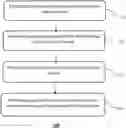
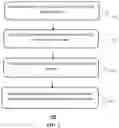
FIG. 1 illustrates a flow chart depicting a method of producing a shelf stable hypochlorous acid solution, according to an embodiment herein.
Although the specific features of the embodiments herein are shown in some drawings and not in others. This is done for convenience only as each feature may be combined with any or all of the other features in accordance with the embodiment herein.
DETAILED DESCRIPTION OF THE EMBODIMENTS HEREIN
The embodiments herein and the various features and advantageous details thereof are explained more fully with reference to the non-limiting embodiments that are illustrated in the accompanying drawings and detailed in the following description. Descriptions of well-known components and processing techniques are omitted so as to not unnecessarily obscure the embodiments herein. The examples used herein are intended merely to facilitate an understanding of ways in which the embodiments herein may be practiced and to further enable those of skill in the art to practice the embodiments herein. Accordingly, the examples should not be construed as limiting the scope of the embodiments herein.
In the following detailed description, a reference is made to the accompanying drawings that form a part hereof, and in which the specific embodiments that may be practiced is shown by way of illustration. The embodiments are described in sufficient detail to enable those skilled in the art to practice the embodiments and it is to be understood that the logical, mechanical and other changes may be made without departing from the scope of the embodiments. The following detailed description is therefore not to be taken in a limiting sense.
The other objects and advantages of the embodiments herein will become readily apparent from the following description taken in conjunction with the accompanying drawings.
The various embodiments herein provide a method for production and storage of hypochlorous acid solution with improved stability. The method disclosed herein for keeping the hypochlorous acid solution stable is by placing the manufactured hypochlorous acid solution in suitable containers that will then be vacuumed and/or filled with inert gas, such as nitrogen that will replace the oxygen and therefore maintain integrity and potency of the hypochlorous acid solution. Additionally, the manufactured hypochlorous acid solution may be stored in an aerosolized spray can for dispensing hypochlorous acid solution. The use of aerosolized can enables filling the storage container with Inert gas like nitrogen and ensures that no residual oxygen is in contact with the hypochlorous acid solution. Additionally, a customer is prevented from tampering with the container possibly resulting in exposure to ambient air.
Accordingly, as shown in FIG. 1, a method 100 for production and storage of a shelf stable hypochlorous acid solution is described. The method 100 comprises steps of mixing distilled water with sodium chloride having at least 99 percent purity to form a saline solution (at step 101), electrolyzing the saline solution by passing the saline solution through a chamber having an anode positioned on an anode side and a cathode positioned on a cathode side, the anode side and the cathode side being separated by a membrane constructed and arranged to only permit the migration of chemical ions in one direction therethrough; whereby a hypochlorous acid solution is formed on the anode side and a sodium hydroxide is formed on the cathode side (at step 102), directing the hypochlorous acid solution to a container for storage (at step 103) and stabilizing the hypochlorous acid solution with any one of vacuum and/or inert gas blanketing within the container, wherein the container is selected to any one of an aerosol container, or a container with a unidirectional valve to prevent ambient air from entering the container, or an airless spray container or a container with all of the specific parameters as noted: 1) MVTR (Moisture Vapor Transmission Rate) of the container being less than 10 g-mil/100 in, 2) Oxygen Transmission Rate (OTR) of the container being less than 150 cm3-mil/m2/24 hr and 3) Carbon Dioxide Transmission Rate (COTR) of the container being less than 550 cm3-mil/m2/24 hr (at step 104).
The hypochlorous acid solution is prepared by utilizing distilled water mixed with at least 99% pure sodium chloride to form a saline solution ranging from 0.07% to 0.11%. This saline solution is then electrolyzed by passing the saline solution through a chamber having an anode positioned on an anode side and a cathode positioned on a cathode side which is separated by a uniflow membrane constructed and arranged to only permit the migration of chemical ions in one direction such that a hypochlorous acid solution is formed on the anode side.
According to one embodiment herein, the saline solution is made more acidic by increasing the time of electrolysis. Accordingly, the stability of the hypochlorous acid solution is optimized over a pH range of about 3.5 to 5.5.
According to one embodiment herein, the saline solution which is electrolyzed yields a lower pH solution on the anode side (with the preferred pH being in the range of 3.5 to 5.5). by increasing the electrolysis current (ampere) level and electrolysis time.
According to one embodiment herein, the aerosol containers employed herein for the storing the manufactured hypochlorous acid solution is coated with a plurality of polymers selected from a group consisting of Polyethylene Terephthalate (PET), Polyvinyl Chloride (PVC), Polylactic Acid Solution (PLA). These polymers comprise Titanium Dioxide (TiO2) in a range of 2% to 5%.
According to one embodiment herein, the containers employed herein for the storing the manufactured hypochlorous acid solution is opaque and coated with Titanium Dioxide (TiO2) in a range of 2% to 5%.
The material for the container is selected based on a plurality of parameters comprising a Moisture vapor transmission rate (MVTR), Oxygen Transmission Rate (OTR) and Carbon Dioxide Transmission Rate (COTR).
MVTR is a measure of the passage of water vapor through a substance and is measured in g-mil/100 in2/24 hr. The lower the rate, the longer the package protects the stored contents from moisture and ensures the moisture content of a product remains the same. According to one embodiment herein, the MVTR of the container is less than 10 g-mil/100 in2/24 hr.
Oxygen Transmission Rate (OTR) and Carbon Dioxide Transmission Rate (COTR) are measured in cm3-mil/m2/24 hr. OTR and COTR are measures of the amount of gas that passes through a substance over a given period. The lower the readings, the more is the resistance for the plastic to let/allow the gasses to pass through. According to one embodiment herein, the OTR of the container is less than 150 cm3-mil/m2/24 hr and the COTR is less than 550 cm3-mil/m2/24 hr.
According to one embodiment herein, the aerosol containers employed herein for the storing and stabilizing the manufactured hypochlorous acid solution are coated with Polyethylene Terephthalate (PET) containing Titanium Dioxide.
According to an embodiment herein, the containers employed herein for the storing the manufactured hypochlorous acid solution include vacuumed Polyvinyl chloride (PVC) bags containing Titanium Dioxide.
According to an embodiment herein, the step of stabilizing the hypochlorous acid solution using vacuum or purging, flushing, or blanketing is performed with at least one inert gas selected from a group comprising Nitrogen, Argon and Helium.
The stability that is provided by performing vacuum/inert gas blanketing prevents mixing of oxygen with manufactured hypochlorous acid solution. The chemical reaction, which is a part of production of the hypochlorous acid solution, results in a rapid breakdown of the manufactured hypochlorous acid solution to saline water. Therefore, the vacuum/inert gas blanketing that is employed herein prevents an exposure of the manufactured hypochlorous acid solution to oxygen to prevent a shift in chemical reaction equilibrium which results in rapid degradation. Hence the step of stabilizing the hypochlorous acid solution using vacuum or purging, flushing, or blanketing with inert gas therefore extends the shelf life of the hypochlorous acid solution manufactured.
According to one embodiment herein, the container employed is an aerosol container or a container with a unidirectional valve to prevent ambient air from entering the container, or an airless spray bottle. When utilizing either an aerosol container, a container with a unidirectional valve or an airless spray bottle (as none of these containers permit ambient air to be drawn into the container keeping the inert gas from getting mixed with ambient air), the shelf life is further extended even once the container is used.
Further, the stability of the manufactured hypochlorous acid solution is indicated by the concentration of the hypochlorous acid solution manufactured. The concentration of the hypochlorous acid solution is measured using an available Free Chlorine level which diminishes over time. According to an embodiment herein, the hypochlorous acid solution further comprises free available chlorine (FAC) in a range of about 50-500 ppm.
The advantages of the embodiments disclosed herein comprise producing and storing hypochlorous acid solution with an extended shelf life to mitigate a need for manufacturing hypochlorous acid solution on-site. Extending the shelf life enables commercializing the all natural/non-toxic antimicrobial agent globally. The embodiments herein also disclose the use of the shelf life extended hypochlorous acid solution as a hospital disinfectant and as a sanitizer for food contact and non-food contact surfaces. The embodiments herein disclose the use of the shelf life extended hypochlorous acid solution as a cleaner and deodorizer. The embodiments herein disclose the use of the shelf life extended hypochlorous acid solution as a cut flower life extender. The embodiments herein disclose the use of the shelf life extended hypochlorous acid solution for the Health Care industry (with multiple uses such as wound care, cleanser, anti-microbial, anti-viral, anti-fungal, anti-inflammatory benefits, etc).
The foregoing description of the specific embodiments will so fully reveal the general nature of the embodiments herein that others can, by applying current knowledge, readily modify and/or adapt for various applications such specific embodiments without departing from the generic concept, and, therefore, such adaptations and modifications should and are intended to be comprehended within the meaning and range of equivalents of the disclosed embodiments.
It is to be understood that the phraseology or terminology employed herein is for the purpose of description and not of limitation. Therefore, while the embodiments herein have been described in terms of preferred embodiments, those skilled in the art will recognize that the embodiments herein can be practiced with modification within the spirit and scope of the appended claims.
Although the embodiments herein are described with various specific embodiments, it will be obvious for a person skilled in the art to practice the invention with modifications. However, all such modifications are deemed to be within the scope of the appended claims.
It is also to be understood that the following claims are intended to cover all of the generic and specific features of the embodiments described herein and all the statements of the scope of the embodiments which as a matter of language might be said to fall there between.
Claims
What is claimed is:1. A method for producing a shelf stable or shelf life extended hypochlorous acid solution comprising steps of:
mixing distilled water with sodium chloride having at least 99 percent purity to form a saline solution;
electrolyzing the saline solution by passing the saline solution through a chamber having an anode positioned on an anode side and a cathode positioned on a cathode side, and wherein the anode side and the cathode side are separated by a membrane that is constructed and arranged to only permit the migration of chemical ions in one direction therethrough, and wherein a hypochlorous acid solution is formed on the anode side and a sodium hydroxide is formed on the cathode side;
directing the hypochlorous acid solution formed to a container for storage; and
stabilizing the hypochlorous acid solution with any one of vacuum and/or inert gas blanketing within the container;
wherein the container is selected to be an aerosol container, or a container with a unidirectional valve to prevent ambient air from entering the container, or an airless spray container or a container with specific parameters as noted: 1) MVTR (Moisture Vapor Transmission Rate) of the container being less than 10 g-mil/100 in, 2) Oxygen Transmission Rate (OTR) of the container being less than 150 cm3-mil/m2/24 hr and 3) Carbon Dioxide Transmission Rate (COTR) of the container being less than 550 cm3-mil/m2/24 hr.
2. The method according to claim 1, wherein the vacuum and/or inert gas blanketing is performed using at least one inert gas selected from a group consisting of Nitrogen, Argon and Helium.
3. The method according to claim 1, wherein the container is any one of an aerosol or a container with a unidirectional valve to prevent ambient air from entering the container, or airless spray container or a container with specific parameters as noted: 1) MVTR (Moisture Vapor Transmission Rate) of the container being less than 10 g-mil/100 in, 2) Oxygen Transmission Rate (OTR) of the container being less than 150 cm3-mil/m2/24 hr and 3) Carbon Dioxide Transmission Rate (COTR) of the container being less than 550 cm3-mil/m2/24 hr.
4. The method according to claim 1, wherein the container is opaque.
5. The method according to claim 1, wherein the aerosol container is coated with a polymer selected from a group consisting of polyethylene terephthalate (PET), Polyvinyl Chloride (PVC), Polylactic acid solution (PLA) or a metal.
6. The method according to claim 1, wherein the container contains Titanium Dioxide (TiO2) in a range of 2%-5%
7. The method according to claim 1, wherein the hypochlorous acid solution further comprises freely available chlorine (FAC) in a range of 50-500 ppm.
8. The method according to claim 1, wherein the hypochlorous acid solution has a pH in a range of 3.5-5.5.
Images & Drawings included:
Sources:
- United States Patent and Trademark Office - verify current appl. status at the USPTO↗
Similar patent applications:
Recent applications in this class:
- » 20250171912 2025-05-29
ELECTROLYZERS - » 20240209519 2024-06-27
ELECTROLYTE CIRCULATION-BASED SODIUM HYPOCHLORITE GENERATOR WITH AUTOMATIC ELECTROLYTIC CELL CLEANING FUNCTION - » 20240167168 2024-05-23
CARBON DIOXIDE ELECTROLYSIS APPARATUS - » 20240133054 2024-04-25
CHEMICAL REACTION DEVICES INVOLVING ACID AND/OR BASE, AND RELATED SYSTEMS AND METHODS - » 20240124987 2024-04-18
Chemical reaction devices involving acid and/or base, and related systems and methods - » 20230079765 2023-03-16
STARTUP METHOD FOR ELECTROLYTIC SULFURIC ACID SOLUTION MANUFACTURING SYSTEM - » 20220411940 2022-12-29
Process to convert reduced sulfur species and water into hydrogen and sulfuric acid - » 20220364247 2022-11-17
System and Method for Making Hypochlorous Acid Using Saltwater with a Bicarbonate Compound - » 20220145477 2022-05-12
CHEMICAL REACTION DEVICES INVOLVING ACID AND/OR BASE, AND RELATED SYSTEMS AND METHODS - » 20220106691 2022-04-07
Process To Convert Reduced Sulfur Species And Water Into Hydrogen And Sulfuric Acid