VINYL SIDING PATCH
US20200087923A1
2020-03-19
16/563,895
2019-09-08
Abstract:
A vinyl siding patch for permanent repair of cracks, holes, and tears in vinyl siding. The vinyl siding patch includes metal backing for durability, allowing use of a thin vinyl component. Use of the vinyl siding patch allows repair without replacement of entire vinyl siding slats.
Interested in similar patents?
Get notified when new applications in this technology area are published.
Classification:
E04F13/18 » CPC main
Coverings or linings, e.g. for walls or ceilings composed of covering or lining elements; Sub-structures therefor; Fastening means therefor composed of a plurality of similar covering or lining elements of organic plastics with or without reinforcements or filling materials or with an outer layer of organic plastics with or without reinforcements or filling materials; plastic tiles
Description
CROSS-REFERENCE TO RELATED APPLICATIONS
This application claims the benefit of U.S. Provisional Application No. 62/730,644, filed Sep. 13, 2018.
STATEMENT REGARDING FEDERALLY SPONSORED RESEARCH OR DEVELOPMENT
Not Applicable
REFERENCE TO SEQUENCE LISTING, A TABLE, OR A COMPUTER PROGRAM LISTING COMPACT DISK APPENDIX
Not Applicable
BACKGROUND OF THE TECHNOLOGY
The subject technology is in the technical field of home improvement and building maintenance. In particular, the field includes repair of vinyl siding.
SUMMARY OF THE TECHNOLOGY
Vinyl siding as typically used for homes becomes brittle over time, with exposure to sunlight and weather. Thus, it becomes more and more susceptible to holes being punched into them. A primary purpose of siding is to protect the underlying materials. Cracks and holes of course remove that protection and allow water and other unwanted agents (insects, rodents, for example) through to create damage. Hail, lawn care equipment, errant baseballs, and other things can create the holes and cracks. Over time the damage to materials behind the siding accumulates unnoticed, as it is hidden by the siding. Yet, the damage grows with expensive consequences. Another primary purpose of siding is aesthetics. Cracks and holes are unsightly and affect property value. As another consequence of time and weather, vinyl siding colors fade according to the exposure. Spot repairs of cracks and holes may leave obvious color differences that detract from the appearance. One repair option is to replace all siding in order to avoid unsightly spot repairs, which is an expensive proposition.
Vinyl siding slats are interlocked and connected sequentially. Full replacement of a single damaged vinyl slat requires the slats must be removed one by one from the top down in order to reach and replace the slat which contains said damage. That process is very expensive and time-consuming. This is especially true as most vinyl siding damage tends to occur toward the bottom of a structure. Additionally, because the color of siding may fade over time, replacing a one or a few vinyl siding slats which have undergone fading will result in an inconsistent aesthetic appearance.
What is needed is a system and method of patching holes in vinyl siding that accomplishes the following:
-
- Preserves the integrity of the structure by weatherproofing damaged vinyl siding that contains minor and/or holes
- Creates a barrier against rodents and insects which could cause unseen structural damage and pose human health and safety risks
- Improves the overall appearance of the structures, by the repair of damaged vinyl siding
- Mitigates the effects of color fading with respect to the exiting vinyl siding.
BRIEF DESCRIPTION OF THE DRAWINGS
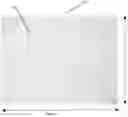
FIG. 1 is a front view of a vinyl siding patch, showing typical dimensions, and showing an external surface with texture.
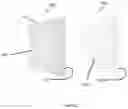
FIG. 2 shows perspective views of the vinyl siding patch with separate doubled sided adhesive backing, to be applied to the vinyl siding patch.
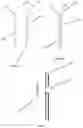
FIG. 3A is a side view of the vinyl siding patch and separate adhesive backing. FIG. 3B is a side view with the adhesive backing applied to the vinyl siding patch.
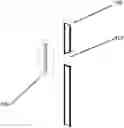
FIG. 4 is a side view of a patch cut from the vinyl siding patch, to be applied to a hole in siding.
DETAILED DESCRIPTION OF THE TECHNOLOGY
FIG. 1 shows a vinyl siding patch 100 with typical dimensions, and showing surface texture on an outward facing external surface 102. The outward facing external surface 102 bears a neutral color so that the user may paint the surface to match the surrounding siding. In one embodiment, typical dimensions of the vinyl siding patch 100 would be 2.75 inch by 4.5 inch. However, the vinyl siding patch 100 would be cut by the user to fit the particular hole or crack to be repaired. Also, a larger area would certainly require different dimensions.
Referring now to FIG. 2, vinyl clad metal 101 is metal coated with vinyl, comprising in effect a lamination. The vinyl siding patch 100 in one embodiment would comprise vinyl clad metal 101, the metal component typically aluminum or other metal with desirable non-corrosion attributes, and adhesive backing 120 affixed to an inward facing surface 104 of the vinyl siding patch. The inward facing surface 104 is on the reverse side of the vinyl clad metal 101. The use of non-corrosive metal provides durability for a long-term, as opposed to temporary, repair. The adhesive on an inward facing surface 124 of adhesive backing 120 is of sufficient adhesive quality and durability to effect a permanent attachment to the vinyl surface around hole to be repaired. The adhesive on a patch facing surface 122 of the adhesive backing 120 is of sufficient adhesive quality and durability to effect a permanent attachment to the inward facing surface 104. In one embodiment, the adhesive is double-sided material applied separately to the vinyl clad metal 101. The inward facing surface 104 of the double-sided adhesive would have a cover material to be removed prior to application to the target siding surface to be repaired. In another embodiment, the vinyl clad metal 101 and adhesive are manufactured as a single unit with a cover material to be removed prior to application to the target siding surface to be repaired.
Still referring to FIG. 2, an important attribute of the vinyl siding patch 100 is that the metal component of the vinyl clad metal 100 may considerably thinner than the vinyl component. This is particularly true when the metal is aluminum. The resulting vinyl siding patch 100 may itself be thinner than the siding to be patched, and thus not easily visually detected from a short distance when applied; this further enhances the aesthetics. Furthermore, although vinyl siding is manufactured in various thicknesses, the vinyl siding patch 100 of a particular thickness would aesthetically and structurally suit all vinyl siding thicknesses.
FIG. 3A is a side view of the vinyl siding patch 100 and separate adhesive backing 120. FIG. 3B is a side view of the vinyl siding patch 100 with the adhesive backing 120 applied to the vinyl siding patch 100.
FIG. 4 is a side view of a patch 140 cut from the vinyl siding patch 100, to be applied to a hole 152 in siding 150.
The entire vinyl siding patch 100 is easily cut by the user in order to meet the requirements of covering the particular hole to be repaired.
In an embodiment where the vinyl clad metal 101 and adhesive backing 120 are separate pieces, a method of patching would be as follows
-
- a.) Apply the double-sided adhesive backing 120 to the inward facing surface of the vinyl clad metal 101.
- b.) Paint the outward surface 102 to match the surrounding siding 150.
- Note: steps a.) and b.) may be reversed.
- c.) Cut the assembled vinyl clad metal 101 and adhesive, comprising the patch 140, to cover the hole or crack to be repaired.
- d.) Apply the patch 140 to cover the hole.
In another embodiment where the vinyl siding patch 100 comprises a single unit with adhesive backing 120 already applied, another method of patching would be as follows:
-
- a.) Paint the outward surface 102 to match the surrounding siding 150.
- b.) Cut the assembled vinyl clad metal 101 and adhesive, comprising the patch 140, to cover the hole 152 or crack to be repaired.
- c.) Apply the vinyl siding patch 100 to cover the hole 152.
The vinyl siding patch 100 requires little or no additional maintenance, particularly do to the use of metal clad vinyl, and particularly aluminum. Similar products use thin vinyl plastic material or loose material which does not mimic vinyl siding and which breaks up when subjected to prolonged weathering. The vinyl siding patch 100 will last through all types of weather.
We anticipate that the system will include other features, including but not limited to:
-
- Manufactured as a roll, either with adhesive backing 120 already applied or for separate application of adhesive.
- The roll being perforated to various, pre-measures sizes, or continuous.
While the foregoing written description enables one of ordinary skill to make and use what is considered presently to be the best mode thereof, those of ordinary skill will understand and appreciate the existence of variations, combinations, and equivalents of the specific embodiment, method, and examples herein. Dimensions shown are not critical, but represent one or more embodiments. The vinyl siding patch 100 described here should therefore not be limited by the above described embodiments, methods, or examples, but by all embodiments and methods within the scope and spirit of the subject technology.
Claims
I claim:1. A vinyl siding patch comprising
vinyl clad metal, comprising a lamination of vinyl, metal, and adhesive backing;
the adhesive backing being affixed to metal; and
the adhesive backing being sufficient to adhere to vinyl siding.
2. The vinyl siding patch of claim 1 wherein said metal comprises aluminum.
3. The vinyl siding patch of claim 2 wherein the adhesive backing is separately applied to the vinyl clad metal.
4. The vinyl siding patch of claim 2 wherein the vinyl siding patch is deployed as a continuous roll.
5. The vinyl siding patch of claim 4 wherein the continuous roll is perforated at predetermined dimensions.
6. The vinyl siding patch of claim 1 wherein the adhesive backing is separately applied to the vinyl clad metal.
7. The vinyl siding patch of claim 6 wherein the vinyl siding patch is deployed as a continuous roll.
8. The vinyl siding patch of claim 6 wherein the continuous roll is perforated at predetermined dimensions.
Images & Drawings included:
Sources:
- United States Patent and Trademark Office - verify current appl. status at the USPTO↗
Recent applications in this class:
- » 20240309650 2024-09-19
FLOOR OR WALL PANEL AND METHOD OF PRODUCING A FLOOR OR WALL PANEL - » 20240191514 2024-06-13
Layered Thermoplastic Structure With Reflective Intermediate Layer and Method of Manufacture - » 20240003139 2024-01-04
WALL OR CEILING PANEL ASSEMBLY, A SET OF PANELS FOR FORMING SUCH ASSEMBLY AND A WALL OR CEILING OBTAINED THEREWITH - » 20230304298 2023-09-28
FLOOR OR WALL PANEL AND METHOD OF PRODUCING A FLOOR OR WALL PANEL - » 20210285231 2021-09-16
Panel and method of producing a panel - » 20210270044 2021-09-02
MOULDED CLADDING PANEL - » 20210140177 2021-05-13
Moulded cladding panel - » 20200256065 2020-08-13
Layered thermoplastic structure with reflective intermediate layer and method of manufacture - » 20200056377 2020-02-20
PANEL WALL STRUCTURE FOR USE IN A TOWER/FRAME STRUCTURE AND COOLING TOWER - » 20110277415 2011-11-17
Backband and vinyl slat covering system for structures