Block copolymer and method for preparing the same
US20200095363A1
2020-03-26
16/574,885
2019-09-18
✅ Patent granted
US 11,279,776 B2
2022-03-22
-
-
Ling Siu Choi | David L Miller
Muncy, Geissler, Olds & Lowe, P.C.
2040-04-21
Abstract:
A block copolymer and a method for preparing the same are disclosed. The method comprises the following steps: (A) mixing a compound of formula (I), a catalyst of formula (II), and a first solvent to obtain a first mixture; (B) adding a first monomer into the first mixture for reaction to obtain a second mixture; and (C) adding a second monomer into the second mixture for reaction to obtain a third mixture; wherein the compound of formula (I) and the catalyst of formula (II) are as defined in the specification.
Inventors:
- Chien-Tien CHEN 8 🇹🇼 Hsinchu City, Taiwan
- Chien-Tien Chen 9 🇹🇼 Hsinchu, Taiwan
- Yi-Ya LIAO 4 🇹🇼 Hsinchu City, Taiwan
- Yi-Ya Liao 3 🇹🇼 Hsinchu, Taiwan
Assignee:
- NATIONAL TSING HUA UNIVERSITY 1,388 🇹🇼 Hsinchu, Taiwan
Applicant:
Interested in similar patents?
Get notified when new applications in this technology area are published.
Classification:
C08F2800/20 » CPC further
Copolymer characterised by the proportions of the comonomers expressed as weight or mass percentages
C08F297/02 IPC
Macromolecular compounds obtained by successively polymerising different monomer systems using a catalyst of the ionic or coordination type without deactivating the intermediate polymer using a catalyst of the anionic type
C08F220/18 » CPC further
Copolymers of compounds having one or more unsaturated aliphatic radicals, each having only one carbon-to-carbon double bond, and only one being terminated by only one carboxyl radical or a salt, anhydride ester, amide, imide or nitrile thereof; Monocarboxylic acids having less than ten carbon atoms; Derivatives thereof; Esters of monohydric alcohols or phenols of phenols or of alcohols containing two or more carbon atoms with acrylic or methacrylic acids
C08F297/026 » CPC main
Macromolecular compounds obtained by successively polymerising different monomer systems using a catalyst of the ionic or coordination type without deactivating the intermediate polymer using a catalyst of the anionic type polymerising acrylic acid, methacrylic acid or derivatives thereof
C08F220/38 » CPC further
Copolymers of compounds having one or more unsaturated aliphatic radicals, each having only one carbon-to-carbon double bond, and only one being terminated by only one carboxyl radical or a salt, anhydride ester, amide, imide or nitrile thereof; Monocarboxylic acids having less than ten carbon atoms; Derivatives thereof; Esters Esters containing sulfur
C08F4/44 » CPC further
Polymerisation catalysts; Metals; Metal hydrides; Metallo-organic compounds; Use thereof as catalyst precursors selected from light metals, zinc, cadmium, mercury, copper, silver, gold, boron, gallium, indium, thallium, rare earths or actinides
C08F4/7095 » CPC further
Polymerisation catalysts; Metals; Metal hydrides; Metallo-organic compounds; Use thereof as catalyst precursors selected from light metals, zinc, cadmium, mercury, copper, silver, gold, boron, gallium, indium, thallium, rare earths or actinides together with refractory metals, iron group metals, platinum group metals, manganese, rhenium technetium or compounds thereof; Iron group metals, platinum group metals or compounds thereof Cobalt, nickel or compounds thereof
C08F4/619 » CPC further
Polymerisation catalysts; Metals; Metal hydrides; Metallo-organic compounds; Use thereof as catalyst precursors selected from light metals, zinc, cadmium, mercury, copper, silver, gold, boron, gallium, indium, thallium, rare earths or actinides together with refractory metals, iron group metals, platinum group metals, manganese, rhenium technetium or compounds thereof Component covered by group containing a transition metal-carbon bond
C08F4/60 » CPC further
Polymerisation catalysts; Metals; Metal hydrides; Metallo-organic compounds; Use thereof as catalyst precursors selected from light metals, zinc, cadmium, mercury, copper, silver, gold, boron, gallium, indium, thallium, rare earths or actinides together with refractory metals, iron group metals, platinum group metals, manganese, rhenium technetium or compounds thereof
C08F4/7096 » CPC further
Polymerisation catalysts; Metals; Metal hydrides; Metallo-organic compounds; Use thereof as catalyst precursors selected from light metals, zinc, cadmium, mercury, copper, silver, gold, boron, gallium, indium, thallium, rare earths or actinides together with refractory metals, iron group metals, platinum group metals, manganese, rhenium technetium or compounds thereof; Iron group metals, platinum group metals or compounds thereof; Cobalt, nickel or compounds thereof Cobalt or compounds thereof
C08F4/7098 » CPC further
Polymerisation catalysts; Metals; Metal hydrides; Metallo-organic compounds; Use thereof as catalyst precursors selected from light metals, zinc, cadmium, mercury, copper, silver, gold, boron, gallium, indium, thallium, rare earths or actinides together with refractory metals, iron group metals, platinum group metals, manganese, rhenium technetium or compounds thereof; Iron group metals, platinum group metals or compounds thereof; Cobalt, nickel or compounds thereof Nickel or compounds thereof
C08F220/382 » CPC further
Copolymers of compounds having one or more unsaturated aliphatic radicals, each having only one carbon-to-carbon double bond, and only one being terminated by only one carboxyl radical or a salt, anhydride ester, amide, imide or nitrile thereof; Monocarboxylic acids having less than ten carbon atoms; Derivatives thereof; Esters; Esters containing sulfur and containing oxygen, e.g. 2-sulfoethyl (meth)acrylate
C08F4/76 » CPC main
Polymerisation catalysts; Metals; Metal hydrides; Metallo-organic compounds; Use thereof as catalyst precursors selected from metals not provided for in group selected from refractory metals selected from titanium, zirconium, hafnium, vanadium, niobium or tantalum
C08F4/80 » CPC further
Polymerisation catalysts; Metals; Metal hydrides; Metallo-organic compounds; Use thereof as catalyst precursors selected from metals not provided for in group selected from iron group metals or platinum group metals
C08F4/70 » CPC further
Polymerisation catalysts; Metals; Metal hydrides; Metallo-organic compounds; Use thereof as catalyst precursors selected from light metals, zinc, cadmium, mercury, copper, silver, gold, boron, gallium, indium, thallium, rare earths or actinides together with refractory metals, iron group metals, platinum group metals, manganese, rhenium technetium or compounds thereof Iron group metals, platinum group metals or compounds thereof
Description
CROSS REFERENCE TO RELATED APPLICATION
This application claims the benefits of the Taiwan Patent Application Serial Number 107133172, filed on Sep. 20, 2018, the subject matter of which is incorporated herein by reference.
BACKGROUND OF THE INVENTION
1. Field of the Invention
The present invention relates to a block copolymer and a method for preparing the same and, more particularly, to a triblock copolymer and a method for synthesizing a block copolymer by using an oxometallic complex as a catalyst.
2. Description of Related Art
Pigments are widely used in inks and paints because they have good stability to light, heat, water, etc., as compared to dyes. However, pigments are solid particles which are insoluble in water, so aggregation and uneven dispersion are likely to occur during preparation, use, or preservation, which accordingly affects the pigment quality. Therefore, the dispersibility of the pigments is one of the key factors affecting the quality.
Dispersants are often used as necessary additives and have the advantages of promoting dispersion of pigment particles and improving stability. However, conventional small molecule dispersants have poor stability and poor dispersion effect, and have gradually been replaced by polymer dispersants, among which block type polymer dispersants have received particular attention. In general, the synthesis of catalytic block copolymer mostly requires the use of 1 to 2 equivalents of the catalyst for reaction, which is low in reaction efficiency and high in cost.
Therefore, it is still necessary to continuously study the block copolymer for providing industrial utilization, and develop a new preparation method to simplify the process or reduce the cost.
SUMMARY OF THE INVENTION
In view of the above, the present disclosure provides a block copolymer and a method for preparing the block copolymer, which utilizes an oxometallic complex as a catalyst to catalyze the synthesis of the block copolymer and only needs to use a catalytic amount of catalyst for reaction, thereby reducing the cost. In addition, the oxometallic complex is biochemically absorbable and metabolizable, and thus can reduce the environmental burden.
The present disclosure provides a method for preparing a block copolymer.
The method comprises the following steps: (A) mixing a compound of formula (I), a catalyst of formula (II), and a first solvent to obtain a first mixture; (B) adding a first monomer into the first mixture for reaction to obtain a second mixture; and (C) adding a second monomer into the second mixture for reaction to obtain a third mixture.
Further, the present disclosure also provides a block copolymer having a structure of formula (V) below:
[D]x-[E]y-[F]z (V)
wherein D, E, and F are each independently a compound of formula (VI), and D, E, and F are different from each other; and x, y, and z are each independently an integer from 1 to 40; wherein the compound of formula (VI) is shown below:
wherein A2 is O, or S; R7 is H, or a C1-6 alkyl; and R8 is a C1-12 alkyl, (CH2)qN(R11)2, CH2(CH2OCH2)rCH2N(R12)2, or CH2(CH2OCH2)sCH2OR13, wherein R11, R12, and R13 are each independently a C1-6 alkyl; and q, r, and s are each independently an integer from 1 to 10.
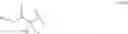
In the present disclosure, the compound of formula (I) is used as a starting material for synthesizing the block copolymer, wherein the compound of formula (I) is as follows:
wherein A1 is a bond, O, or S; and R1, R2, and R3 are each independently H, a C1-6 alkyl, —COOR4, or —CH2P(═O)R5R6; or R1 and R2 are bonded to each other to form a C4-8 cycloalkyl group or a C3-7 heterocycloalkyl group; or R2 and R3 are bonded to each other to form a C5-8 cycloalkyl group; wherein R4, R5, and R6 are each independently a C1-6 alkyl, a C1-6 alkoxyl, —OTMS, or an amino group substituted by a C1-6 alkyl.
In one embodiment of the present disclosure, it is optional for the compound of formula (I) that A1 is O and R1, R2, and R3 are each independently H or a C1-6 alkyl, but the present disclosure is not limited thereto.
In the present disclosure, the catalyst used in the method for preparing a block copolymer is shown as the following formula (II):
[M(O)a]m+Xbn− (II)
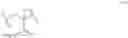
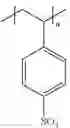
wherein M is an element of group IB, IVB, VB, VIB, VIIB, and VIIIB elements; X is Cl, Br, I, OH, OAc, OC(O)Ar, OC(O)(CF2)cCF3, OC(O)C12H25, [(OSO2C6H4—CHCH2)n], OTf, OTs, SO4, SO3C12H25, acetylacetonate (acac), or a mixture thereof; a is an integer from 0 to 3; b is an integer from 1 to 4; in is an integer from 2 to 4; n is an integer from 1 to 2; and c is an integer from 1 to 6; wherein Ar is a C6-20 aryl, and [(OSO2C6H4—CHCH2)n] has a structure of
For the catalyst of formula (II) in the present disclosure, a may be 0, and M is Ti(IV), Zr(IV), Hf(IV), V(III), Fe(II/III), Cu(I/II), Mn(II/III), Co(II), or Ni(II).
For the catalyst of formula (II) in the present disclosure, M(O)a may be BiO, VO, VO3, ZrO, HfO, WO2, MoO2, CrO2, or ReO3.
Among the catalyst of formula (II) in the present disclosure, Hf(O)Cl2, V(O)Cl2, V(O)[(O3SC6H4CHCH2)n]2, V(O)Cl3, V(O)(OTf)2, V(O)(OCOR)2, MoO2Cl2, Mn(O)(OCOR), FeCl3, Zr(O)Cl2, Zr(OAc)x(OH)y(x+y=4), Ti(O)(acac)2, V(O)SO4, V(O)(acac)2, MoO2(acac)2, Mn(II)SO4, and FeSO4 are included, but the present disclosure is not limited thereto, and the catalysts may be used singly or in combination thereof, wherein R is a C6-20 aryl.
In one embodiment of the present disclosure, the content of the catalyst is not particularly limited as long as the synthesis of the block copolymer can be catalyzed. Preferably, the catalyst is present in an amount of from 0.1% to 20% by weight based on a total weight of the first mixture, for example from 0.1% to 15% by weight, from 0.1% to 10% by weight, or from 0.1% to 5% by weight, but the present disclosure is not limited thereto.
In one embodiment of the present disclosure, after the third mixture is obtained in step (C), the third monomer is further added into the third mixture to obtain a fourth mixture.
In the present disclosure, the first monomer, the second monomer, and the third monomer are each independently an acrylate compound or a diacrylate compound.
In one embodiment of the present disclosure, the acrylate compound may be a compound of formula (III) below:
wherein A2 is O or S; R7 is H or a C1-6 alkyl; and R8 is a C1-12 alkyl, (CH2)qN(R11)2, CH2(CH2OCH2)rCH2N(R12)2, or CH2(CH2OCH2)sCH2OR13; wherein R11, R12, and R13 are each independently a C1-6 alkyl; and q, r, and s are each independently an integer from 1 to 10.
In one embodiment of the present disclosure, it is optional for the compound of formula (III) that A2 is O; R7 is H or a C1-6 alkyl; and R8 is a C1-10 alkyl, (CH2)qN(R11)2, CH2(CH2OCH2)rCH2N(R12)2, or CH2(CH2OCH2)sCH2OR13; wherein R11, R12, and R13 are each independently a C1-6 alkyl; and q, r, and s are each independently an integer from 1 to 6.
In one embodiment of the present disclosure, the diacrylate compound may be a compound of formula (IV) below:
wherein Y is O, NH, or S; R9 is H, or a C1-6 alkyl; R10 is a C1-6 alkyl, or a C6-20 aryl; and p is an integer from 1 to 12.
In one embodiment of the present disclosure, it is optional for the compound of formula (IV) that Y is O or NH; R9 is H or a C1-6 alkyl; R10 is a C1-6 alkyl or a C6-20 aryl; and p is an integer from 1 to 8.
In the method according to one embodiment of the present disclosure, after step (C), a step (D) of adding the third mixture into a second solvent may be further included. The second solvent is not particularly limited as long as it can induce the product to precipitate. For example, the second solvent may be water, an alcohol, a C5-10 alkane, or a mixture thereof. In particular, the alcohol comprises methanol, ethanol, n-propanol, isopropanol, 2-butanol, n-butanol, isobutanol, tert-butanol, n-pentanol, isopentanol, 2-methyl butanol, sec-amyl alcohol, or a mixture thereof, but the present disclosure is not limited thereto. The C5-10 alkane comprises pentane, hexane, heptane, octane, nonane, decane, cyclopentane, cyclohexane, cycloheptane, cyclooctane, or a mixture thereof, but the present disclosure is not limited thereto.
In the method according to another embodiment of the present disclosure, after step (C), a step (E) of adding the fourth mixture into a second solvent may be further included. The second solvent is not particularly limited as long as it can induce the product to precipitate. The second solvent is water, an alcohol, a C5-10 alkane, or a mixture thereof. In particular, the alcohol comprises methanol, ethanol, n-propanol, isopropanol, 2-butanol, n-butanol, isobutanol, tert-butanol, n-pentanol, isopentanol, 2-methyl butanol, sec-amyl alcohol, or a mixture thereof, but the present disclosure is not limited thereto. The C5-10 alkane comprises pentane, hexane, heptane, octane, nonane, decane, cyclopentane, cyclohexane, cycloheptane, cyclooctane, or a mixture thereof, but the present disclosure is not limited thereto.
In one embodiment of the present disclosure, the first solvent is not particularly limited as long as it can serve as a solvent for the reaction. Preferably, the first solvent is an ether solvent, such as tetrahydrofuran or ethyl ether, but the present disclosure is not limited thereto.
In one embodiment of the present disclosure, it is optional for the structure of formula (V) that x, y, and z are each independently an integer from 1 to 20. For example, x, y, and z are each independently an integer from 1 to 15, but the present disclosure is not limited thereto.
In one embodiment of the present disclosure, it is optional for the compound of formula (VI) that A2 is O; R7 is H or a C1-3 alkyl; and R8 is a C1-8 alkyl, (CH2)qN(R11)2, CH2(CH2OCH2)rCH2N(R12)2, or CH2(CH2OCH2)sCH2OR13, wherein R11, R12, and R13 are each independently a C1-3 alkyl; and q, r, and s are each independently an integer from 1 to 6.
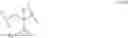
In one embodiment of the present disclosure, the block copolymer comprises an end group represented by formula (VII) below:
wherein R1 is a C1-6 alkyl; and R2 and R3 are each independently H or a C1-6 alkyl.
In one embodiment of the block copolymer of the present disclosure, at least one of D, E, and F is a compound of formula (VIII) below:
wherein R7 is H or a C1-6 alkyl; and R8 is (CH2)qN(R11)2 or CH2(CH2OCH2)rCH2N(R12)2, wherein R11 and R12 are each independently a C1-6 alkyl; and q and r are each independently an integer from 1 to 10.
In one embodiment of the block copolymer of the present disclosure, it is optional for the compound of formula (VIII) that R7 is H or a C1-3 alkyl; and R8 is (CH2)qN(R11)2 or CH2(CH2OCH2)rCH2N(R12)2, wherein R11 and R12 are each independently a C1-3 alkyl; and q and r are each independently an integer from 1 to 6.
DETAILED DESCRIPTION OF THE PREFERRED EMBODIMENT
The detailed description of the present disclosure is described below by way of specific embodiments, and those skilled in the art can readily appreciate the other advantages and efficacies of the present disclosure from the specification. The present disclosure may also be implemented or applied by other different embodiments. The details of the specification may also be applied to various aspects and applications, and various modifications and variations may be made without departing from the spirit of the present invention.
Synthesis of the Catalyst
In the present embodiment, the catalyst can be synthesized according to the following reaction formulae.
V(O)SO4(aq)+BaX2(aq)→V(O)X2(aq)+BaSO4(s)
V(O)SO4(aq)+Ba(OC(O)R)2(aq)→V(O)(OC(O)R)2(aq)+BaSO4(s)
V(O)SO4(aq)+Ba(OTf)2(aq)→V(O)(OTf)2(aq)+BaSO4(s)
V(O)SO4(aq)+Ba(OTs)2(aq)→V(O)(OTs)2(aq)+BaSO4(s)
V(O)SO4(aq)+Ba[(O3SC6H4CHCH2)11]2(aq)→V(O)[(O3SC6H4CHCH2)n]2(aq)+BaSO4(s)
Vanadium sulphate (VOSO4-5H2O, 2.5 mmol) was placed in a dry double-necked round bottom flask (50 mL), followed by anhydrous methanol (2.5 mL) To the resulting solution, a solution of BaX2 (1 equivalent, 2.5 mmol) (for example, Ba(OAc)2, BaOTs2, BaOTf2, or Ba[(O3SC6H4CHCH2)n]2) in methanol (2.5 mL) was slowly added at room temperature. After stirring for 30 minutes, the reaction mixture is cloudy and is accompanied by a large amount of barium sulfate precipitation. The mixture was filtered through a plug of celite, and the obtained filtrate was evaporated to give a dark blue solid. The resulting solid was dried under vacuum at 120° C. for 4 hours. The product obtained can be stored in a dry box for several weeks and can be used directly.
Synthesis of Block Copolymer
Example 1
To a round bottom flask (100 mL) containing the benzoic acid oxovanadium catalyst (2.5 mg), 1-methoxy-2-methyl-1-(trimethylsilyloxy)propene (MTS, 0.20 mL, 0.99 mmol) dissolved in tetrahydrofuran (20 mL) was added. The round bottom flask was previously sealed with a membrane and purged with argon gas. Then, butyl methacrylate (BuMA, 2.2 mL, 11.2 mmol) was injected, and the temperature was raised from 20° C. to 33° C. After 30 minutes, the exothermic reaction was weak, and two 0.1 mL aliquots of the reaction solution were extracted and analyzed by GPC and 1H NMR, respectively. Afterwards, 2-(dimethylamino)ethyl methacrylate (DMAEMA, 2.65 mL, 15.7 mmol) was added and the temperature was observed to rise from 22° C. to 34° C. The crude product was poured into hexane to induce precipitation, and the purified copolymer was filtered to remove small molecule impurities, obtaining a final product.
1H NMR (400 MHz, CDCl3) δ 0.88 (br, 55H), 0.94 (br, 56H), 1.04 (br, 39H), 1.40 (br, 40H), 1.61 (br, 35H), 1.81-1.90 (br, 82H), 2.28 (br, 107H), 2.56 (br, 36H), 3.94 (br, 33H), 4.06 (br, 35H).
Mn=4104 (THF); Mw=4785; PDI=1.17.
Example 2
To a round bottom flask (100 mL) containing the benzoic acid oxovanadium catalyst (2.5 mg), 1-methoxy-2-methyl-1-(trimethylsilyloxy)propene (MTS, 0.20 mL, 0.99 mmol) dissolved in tetrahydrofuran (20 mL) was added. The round bottom flask was previously sealed with a membrane and purged with argon gas. Then, hexyl methacrylate (HexMA, 2.2 mL, 11.2 mmol) was injected, and the temperature was raised from 20° C. to 33° C. After 30 minutes, the exothermic reaction was weak, and two 0.1 mL aliquots of the reaction solution were extracted and analyzed by GPC and 1H NMR, respectively. Afterwards, PEGMA (0.095 mL (a 50 vol % solution), 2.1 mmol, MW=500) dissolved in tetrahydrofuran was added and the temperature was raised from 25° C. to 27° C. Next, two 0.1 mL aliquots were extracted and analyzed by GPC and 1H NMR, respectively. Afterwards, 2-(dimethylamino)ethyl methacrylate (DMAEMA, 2.65 mL, 15.7 mmol) was added and the temperature was observed to rise from 22° C. to 34° C. The crude product was poured into hexane to induce precipitation, and the purified copolymer was filtered to remove small molecule impurities, obtaining a final product.
1H NMR (400 MHz, CDCl3) δ 0.90 (br, 50H), 1.00 (br, 21H), 1.32 (br, 46H), 1.61-1.68 (br, 23H), 1.81-1.98 (br, 31H), 2.28 (br, 58H), 2.56 (br, 19H), 3.38 (br, 3H), 3.55 (br, 3H), 3.64 (br, 18H), 3.92 (br, 14H), 4.06 (br, 21H).
Mn=6249 (THF); Mw=7811; PDI=1.25.
Example 3
To a round bottom flask (100 mL) containing the benzoic acid oxovanadium catalyst (2.5 mg), 1-methoxy-2-methyl-1-(trimethylsilyloxy)propene (MT S, 0.20 mL, 0.99 mmol) dissolved in tetrahydrofuran (20 mL) was added. The round bottom flask was previously sealed with a membrane and purged with argon gas. Then, a diacrylate compound (6.0 mL (a 33.3 vol % solution), 2.9 mmol) dissolved in tetrahydrofuran was added and the temperature was raised from 25° C. to 27° C. Next, two 0.1 mL aliquots were extracted and analyzed by GPC and 1H NMR, respectively. Afterwards, hexyl methacrylate (HexMA, 1.0 mL, 5.9 mmol) was injected, and the temperature was raised from 20° C. to 33° C. After 30 minutes, the exothermic reaction was weak, and two 0.1 mL aliquots of the reaction solution were extracted and analyzed by GPC and 1H NMR, respectively. The crude product was poured into hexane to induce precipitation, and the purified copolymer was filtered to remove small molecule impurities, obtaining a final product.
1H NMR (400 MHz, CDCl3) δ 0.99-1.18 (br, 10H), 1.32-1.35 (br, 7H), 1.62 (s, 8H), 1.95 (br, 3H), 3.64-3.71 (br, 17H), 3.83 (s, 2H), 3.95 (s, 2H), 6.79 (br, 2H), 7.11 (br, 2H).
Mn=6249 (THF); Mw=7811; PDI=1.25.
Dispersion Effect Test
The copolymer of Example 3 (1 g) and the commercially available dispersant (1 g) were dissolved in 1 mL of tetrahydrofuran, into which 135 uL of yellow pigment (from a solution of 500 mg yellow pigment in 3 mL of tetrahydrofuran) was added, followed by grinding and stirring for 30 seconds. The dispersion of the yellow pigment was observed and shown in Table 1.
| TABLE 1 | ||
| Dispersion | ||
| effect | Particle suspension | |
| Copolymer of | Excellent | No particle suspension or uneven |
| Example 2 | dispersion | |
| Copolymer of | Excellent | No particle suspension or uneven |
| Example 3 | dispersion | |
| Commercially | Good | Significant particle suspension |
| available dispersant | ||
The above specific embodiments are to be construed as illustrative only and do not limit the remainder of this disclosure in any way.
Although the present invention has been explained in relation to its preferred embodiment, it is to be understood that many other possible modifications and variations can be made without departing from the spirit and scope of the invention as hereinafter claimed.
Claims
What is claimed is:1. A method for preparing a block copolymer, comprising:
(A) mixing a compound of formula (I), a catalyst of formula (II), and a first solvent to obtain a first mixture:
wherein A1 is a bond, O, or S; and
R1, R2, and R3 are each independently H, a C1-6 alkyl, —COOR4, or —CH2P(═O)R5R6; or R1 and R2 are bonded to each other to form a C4-8 cycloalkyl group or a C3-7 heterocycloalkyl group; or R2 and R3 are bonded to each other to form a C5-8 cycloalkyl group;
wherein R4, R5, and R6 are each independently a C1-6 alkyl, a C1-6 alkoxyl, —OTMS, or an amino group substituted by a C1-6 alkyl;
[M(O)a]m++Xbn− (II)
wherein M is an element of group IB, IVB, VB, VIB, VIIB, and VIIIB elements;
X is Cl, Br, I, OAc, OC(O)Ar, OC(O)(CF2)cCF3, OC(O)C12H25, [(OSO2C6H4—CHCH2)n], OTf, OTs, SO4, SO3C12H25, acetylacetonate (acac), or a mixture thereof;
a is an integer from 0 to 3;
b is an integer from 1 to 4;
in is an integer from 2 to 4;
n is an integer from 1 to 2;
c is an integer from 1 to 6; and
Ar is a C6-20 aryl;
(B) adding a first monomer into the first mixture for reaction to obtain a second mixture; and
(C) adding a second monomer into the second mixture for reaction to obtain a third mixture.
2. The method according to claim 1, further comprising a step of (D) adding the third mixture into a second solvent.
3. The method according to claim 2, wherein the second solvent is water, an alcohol, a C5-10 alkane, or a mixture thereof.
4. The method according to claim 1, wherein a is zero, and M is Ti(IV), Zr(IV), Hf(IV), V(III), Fe(II/III), Cu(I/II), Mn(II/III), Co(II), or Ni(II).
5. The method according to claim 1, wherein M(O)a is VO, VO3, ZrO, HfO, WO2, MoO2, CrO2, or ReO3.
6. The method according to claim 1, wherein the first monomer and the second monomer are each independently an acrylate compound or a diacrylate compound.
7. The method according to claim 6, wherein the acrylate compound is a compound of formula (III) below:
wherein A2 is O or S;
R7 is H, or a C1-6 alkyl; and
R8 is a C1-12 alkyl, (CH2)qN(R11)2, CH2(CH2OCH2)rCH2N(R12)2, or CH2(CH2OCH2)sCH2OR13;
wherein R11, R12, and R13 are each independently a C1-6 alkyl; and q, r, and s are each independently an integer from 1 to 10.
8. The method according to claim 6, wherein the diacrylate compound is a compound of formula (IV) below:
wherein Y is O, NH, or S;
R9 is H or a C1-6 alkyl;
R10 is a C1-6 alkyl or a C6-20 aryl; and
p is an integer from 1 to 12.
9. The method according to claim 1, further comprising adding a third monomer into the third mixture for reaction to obtain a fourth mixture after obtaining the third mixture in step (C).
10. The method according to claim 9, further comprising a step of (E) adding the fourth mixture into a second solvent.
11. The method according to claim 10, wherein the second solvent is water, an alcohol, a C5-10 alkane, or a mixture thereof.
12. The method according to claim 9, wherein the first monomer, the second monomer, and the third monomer are each independently an acrylate compound, or a diacrylate compound.
13. The method according to claim 1, wherein the first solvent is an ether solvent.
14. The method according to claim 1, wherein the catalyst is present in an amount of 0.1 wt % to 20 wt %, based on a total weight of the first mixture.
15. A block copolymer, having a structure of formula (V) below:
[D]x-[E]y-[F]z (V)
wherein D, E, and F are each independently a compound of formula (VI) below, and D, E, and F are different from each other; and
x, y, and z are each independently an integer from 1 to 40;
wherein A2 is O or S;
R7 is H or a C1-6 alkyl; and
R8 is a C1-12 alkyl, (CH2)qN(R11)2, CH2(CH2OCH2)rCH2N(R12)2, or CH2(CH2OCH2)sCH2OR13, wherein R11, R12, and R13 are each independently a C1-6 alkyl; and q, r, and s are each independently an integer from 1 to 10.
16. The block copolymer according to claim 15, wherein x, y, and z are each independently an integer from 1 to 20; A2 is O; R7 is H or a C1-3 alkyl; and R8 is a C1-8 alkyl, (CH2)qN(R11)2, CH2(CH2OCH2)rCH2N(R12)2, or CH2(CH2OCH2)sCH2OR13, wherein R11, R12, and R13 are each independently a C1-3 alkyl; and q, r, and s are each independently an integer from 1 to 6.
17. The block copolymer according to claim 15, comprising an end group represented by formula (VII) below:
wherein R1 is a C1-6 alkyl; and
R2 and R3 are each independently H or a C1-6 alkyl.
18. The block copolymer according to claim 15, wherein at least one of D, E, and F is a compound of formula (VIII) below:
wherein R7 is H or a C1-6 alkyl; and
R8 is (CH2)qN(R11)2 or CH2(CH2OCH2)rCH2N(R12)2, wherein R11 and R12 are each independently a C1-6 alkyl; and q and r are each independently an integer from 1 to 10.
19. The block copolymer according to claim 18, wherein R7 is H or a C1-3 alkyl; and R8 is (CH2)qN(R11)2 or CH2(CH2OCH2)rCH2N(R12)2, wherein R11 and R12 are each independently a C1-3 alkyl; and q and r are each independently an integer from 1 to 6.
Images & Drawings included:






Sources:
- United States Patent and Trademark Office - verify current appl. status at the USPTO↗
Similar patent applications:
- » 20070260009
Block copolymer preparation method, block copolymers thus obtained and use thereof as compatibilizers - » 20250215135
Block Copolymer, Method for Preparing the Block Copolymer and Resin Composition - » 20220213282
Proton exchange membrane made of a crystalline sulfonated polyimide block copolymer, preparation method and use thereof - » 20220220308
POLYAMIDE-IMIDE BLOCK COPOLYMERS, PREPARATION METHOD THEREOF AND POLYAMIDE-IMIDE FILM COMPRISING THE SAME - » 20210198474
Block copolymer, preparation method thereof, and thin film structure comprising the same - » 20220098367
AMPHIPHILIC BLOCK COPOLYMER, PREPARATION METHOD THEREOF AND NANOMICELLE DRUG-LOADING SYSTEM - » 20190060463
BRIDGED POLYETHYLENE GLYCOL-ALIPHATIC POLYESTER BLOCK COPOLYMER, PREPARATION METHOD FOR SAME, INTERMEDIATE OF SAME, AND USES THEREOF - » 20210047467
Amphiphilic block copolymer, preparation method thereof and nanomicelle drug-loading system - » 20080312377
Low Surface Energy Block Copolymer Preparation Methods and Applications - » 20200299475
Block copolymer, ion-exchange membrane and method of preparing block copolymer
Recent applications in this class:
- » 20250282904 2025-09-11
RESIN COMPOSITION FOR FORMING PHASE-SEPARATED STRUCTURE, METHOD FOR PRODUCING STRUCTURE HAVING PHASE-SEPARATED STRUCTURE, AND BLOCK COPOLYMER - » 20250197551 2025-06-19
RESIN COMPOSITION FOR FORMING PHASE-SEPARATED STRUCTURE, METHOD FOR PRODUCING STRUCTURE HAVING PHASE-SEPARATED STRUCTURE, AND BLOCK COPOLYMER - » 20250197550 2025-06-19
RESIN COMPOSITION FOR FORMING PHASE-SEPARATED STRUCTURE, METHOD FOR PRODUCING STRUCTURE HAVING PHASE-SEPARATED STRUCTURE, AND BLOCK COPOLYMER - » 20250171577 2025-05-29
NOVEL POLYMER AND METHOD FOR THE PREPARATION THEREOF - » 20250011518 2025-01-09
Additives for 3D printing polymer resins - » 20240425637 2024-12-26
METHOD FOR PRODUCING COMPOSITE RESIN PARTICLES, COMPOSITE RESIN PARTICLES, MOLDED BODY USING COMPOSITE RESIN PARTICLES, INK AND COATING MATERIAL - » 20240360267 2024-10-31
RESIN COMPOSITION FOR FORMING ETCHING MASK PATTERN, AND METHOD FOR MANUFACTURING ETCHING MASK PATTERN - » 20240247093 2024-07-25
MULTI-PITCH TOLERABLE BLOCK COPOLYMERS WITH ENHANCED KINETICS FOR DIRECTED SELF-ASSEMBLY APPLICATIONS - » 20240002571 2024-01-04
TUNABLE HIGH-CHI DIBLOCK COPOLYMERS CONSISTING OF ALTERNATING COPOLYMER SEGMENTS FOR DIRECTED SELF-ASSEMBLY AND APPLICATION THEREOF - » 20230406985 2023-12-21
PREPARATION OF POLYOLEFIN-POLYACRYLATE BLOCK COPOLYMERS ADDITIVES FOR INCREASING SURFACE ENERGY OF POLYETHYLENE
Recent applications for this Assignee:
- » 20250175185 2025-05-29
SUCCESSIVE APPROXIMATION ANALOG-TO-DIGITAL CONVERTER FOR A PAM-(2N-2) RECEIVER - » 20250142264 2025-05-01
PIEZOELECTRIC SPEAKER AND METHOD FOR MANUFACTURING THE SAME - » 20250142263 2025-05-01
PIEZOELECTRIC SPEAKER AND METHOD FOR MANUFACTURING THE SAME - » 20250114638 2025-04-10
RADIOTHERAPY SYSTEM, METHOD FOR DELIVERING NEUTRON ACCEPTOR, AND METHOD FOR TREATING OR DIAGNOSING CANCER - » 20250054459 2025-02-13
EMOTION PERCEIVING ARTIFICIAL INTELLIGENCE MASK AND OPERATING METHOD - » 20250007758 2025-01-02
FEED-FORWARD EQUALIZER - » 20240404611 2024-12-05
ONE-TIME-PROGRAMMABLE MEMORY DEVICES - » 20240404511 2024-12-05
METHOD AND SYSTEM FOR FAIR SPEECH EMOTION RECOGNITION - » 20240402011 2024-12-05
TWO-DIMENSIONAL HYPERSPECTRAL IMAGING SYSTEM AND METHOD THEREOF - » 20240372561 2024-11-07
Decoder for decoding data in a PAM-2M format, decoder device using the decoder, and receiver using the decoder device