tree ‘Rincon’
US20200214186P1
2020-07-02
16/350,741
2018-12-28
✅ Patent granted
US PP031990 P2
2020-07-21
-
-
Annette H Para
2038-12-28
Abstract:
The new and distinct variety of cherimoya tree, “Annona Cherimola,” is of large size, vigorous, spreading growth, and a regular and productive bearer of large-sized fruits with firm white flesh with excellent mango-like flavor and eating quality with flesh that is smooth in texture. Seeds are smaller than average for the species. Stem is smaller than average for the species, lending to a more favorable fruit ratio. In comparison with conventional commercial cherimoyas grown under the same conditions, the new variety has flesh remaining in firm condition longer under storage, with superior texture, and high soluble solids (average 23.0 Brix).
Inventors:
- Christine Beatrice Brown 3 🇺🇸 Carpinteria, CA, United States
- Anthony Edwin Brown 1 🇺🇸 Carpinteria, CA, United States
- Jehanne Khoury Brown 1 🇺🇸 Carpinteria, CA, United States
Applicant:
Interested in similar patents?
Get notified when new applications in this technology area are published.
Classification:
A01H5/00 IPC
Products
A01H5/00 IPC
Angiosperms, i.e. flowering plants, characterised by their plant parts; Angiosperms characterised otherwise than by their botanic taxonomy
A01H6/00 IPC
Angiosperms, i.e. flowering plants, characterised by their botanic taxonomy
Description
Species of the plant claimed: “Annona Cherimola.”
Variety denomination: New.
BACKGROUND
A new and improved variety of cherimoya tree “Annona Cherimola” which has the following unique combination of desirable features that are outstanding in a new variety:
1. Regular and productive bearer under usual artificial pollination.
2. Fruits are of excellent flavor and high soluble solids (average Brix 23.0).
3. Flesh is outstandingly firm, of mango-like density, withstanding market handling.
4. Fruits do not split when maturing to a marketable stage, regardless of temperature or soil moisture.
5. Tree of remarkable hardiness.
ORIGIN OF THE VARIETY
The new and distinct variety of cherimoya tree was originated by the inventors in their orchard located near Carpinteria, Calif., as a seedling derived from an open-pollinated cross of ‘McPherson’ cherimoya. The present variety exhibited the distinctive desirable fruit characteristics described above and was selected for asexual reproduction and commercialization.
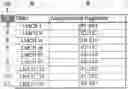
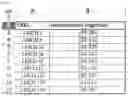
The Subtropical Fruit Crops Department at the university in Malaga, Spain completed a cultivar ID, or fingerprinting, for this Rincon variety. They used 9 loci of microsatellite markers (those that are routinely used for cherimoya fingerprinting) and the results show that the Rincon material is different from all the over 300 accessions they have in their collection.
See FIG. 1 for the alleles that were obtained for the 9 loci. SSR, labeled in FIG. 1 means Simple Sequence Repeat and refers to particular parts of the DNA that are useful to distinguish cherimoya accessions. In this case, each SSR is one region of the DNA. So, LMCH1 will be a region different from LMCH4 and so on. Then for each region, each cherimoya accession will have two fragments (one for each of the two copies of the chromosome, called alleles). The combination of all the alleles for all the SSRs provides a unique fingerprint for the accession. Once that information is obtained, results are compared with all the accessions in their database. The Rincon accession is closely related, for example, to some other California varieties, such as White or McPherson, however, even with it being closely related, is different for some of the alleles from all of them.
ASEXUAL REPRODUCTION OF THE VARIETY
The present new cherimoya variety was asexually propagated by the inventors during 2008 in our experimental orchard located near Carpinteria, Calif., by grafting, and the asexually propagated trees show that said characteristics of the original tree and its fruits are established and transmitted through succeeding propagations.
SUMMARY OF THE VARIETY
The new and distinct variety of cherimoya tree is of large size, vigorous, spreading growth, and a regular and productive bearer of large-sized fruits with firm white flesh with excellent flavor and eating quality. In comparison with conventional commercial cherimoyas grown under the same conditions, the new variety has flesh remaining in firm condition longer under storage, with superior texture, and high soluble solids (average 23.0 Brix).
PHOTOGRAPHS Of THE VARIETY
The accompanying color illustration by photographic reproduction, are of typical specimens of foliage and fruit of the new and distinct cherimoya tree. The upper and partial lower surface of the leaves are shown. The exterior and longitudinal section views of the fruit are shown to expose flesh and core coloration with seeds remaining in place. The illustrations were made shortly after collection of the specimens from the tree, the fruit at commercial maturity (firm ripe) and colors are as nearly true as reasonably possible in a color representation of this type.
DESCRIPTION OF THE VARIETY
The following is a botanically detailed description of the new and distinct variety of cherimoya tree, “Annona Cherimola,” based upon observations of specimens grown at Carpinteria, Calif.
All color code designations are by reference to The R.H.S. Color Chart (1966) of The Royal Horticultural Society, which utilizes Color Group numbers only and avoids use of vernacular color names. All vernacular names for colors not followed by the word “Group” are therefore intended in their common speech meaning only.
- Tree:
-
- Size, relative.—Medium.
- Vigor.—Robust.
- Form.—Spreading.
- Density.—Dense, branching well.
- Production.—Regular under artificial pollination.
- Disease resistance.—Typical for the species.
- Drought tolerance.—Above average for the species.
-
- Trunk:
-
- Size, relative.—Medium.
- Texture.—Smooth, not cracking into fissures, leaving rather smooth surface.
- Color.—Greyed-Orange Group 177A, reticulated with Greyed-Orange Group 164B.
- Lenticels.—Few or none, indistinct with age.
-
- Branches:
-
- Size, relative.—Small to medium, to 50 mm. diameter at five years of age; leafy portion of annual flush to 1.2 m. in length.
- Texture.—Smooth, obscurely reticulated in first year.
- Color.—Greyed-Orange Group 176B.
- Lenticel length.—5 mm.
- Lenticel width.—5 mm.
- Shoot color.—As for matured branch, Greyed-Orange Group 176B.
-
- Leaves:
-
- Size, relative.—Uniformly large along branch, excepting terminal 2-3 leaves, which are reduced.
- Form.13 Blade broad elliptical, slightly reflexed; invariably asymmetrical, the halves being of unequal width; apex obtuse.
- Ratio.—Length: Breadth=1.5.
- Width.—90 mm.
- Length.—140 mm, excluding petiole.
- Texture, upper.—Tomentose.
- Texture, lower.—Glabrous.
- Color, upper.—Green Group 137A.
- Color, lower.—Yellow-Green Group 146B.
- Venation.—Lateral ribs nearly parallel; veins slightly raised above, strongly raised below.
- Margin.—Entire.
- Thickness.—Average for the species.
- Petiole length.—Short, 12 mm.
- Petiole color.—Yellow-Green Group 147A.
-
- Flowers:
-
- Abundance.—At every node for basal two-thirds of branch.
- Self-fertility.—Self-compatible.
- Bloom date.—25 Mar. 2018 through 15 Sep. 2018 at Carpinteria, Calif.
- Bud pubescence.—Completely covered.
- Size, relative.—Large.
- Bud form.—Broad-conic.
- Buds per node.—1.
- Flower diameter.—22 mm.
- Petal size, rel..—Average for species.
- Exterior petal color.—Greyed-Green Group 194C.
- Interior petal color.—Green-White Group 157C.
- Petal length.—32 mm.
- Petal width.—5 mm.
- Pedicel color.—Greyed-Green Group 194C.
- Pedicel thickness.—4 mm.
- Pedicel length.—20 mm.
- Stamen.—Not exerted.
- Pollen production.—Fair.
- Pollen color.—White Group 158B (fresh).
-
- Fruits:
-
- Maturity.—As described, ripe for harvest and shipment approximately 24 December through 7 May 2018 under conditions generally prevailing at Carpinteria, Calif.
- Use.—Dessert; Eaten fresh.
- Quality.—Storage, excellent; Transport, excellent.
- Size.—Large, 400-600 gm. average weight.
- Axial diameter.—14 cm average.
- Transverse diameter.—11 cm average.
- Form.—Elliptic.
- Base.—Retuse.
- Stem cavity length.—Deep.
- Stem cavity color.—Scar tissue along line of dehiscence Orange-Brown Group 113B; Cavity interior Orange-Red 96C.
- Surface.—Imbricate; Carpels of basal third expressed on skin as distinct, mammillate processes; Carpels of mid-fruit expressed as raised lumps; Carpels of apical third expressed as flat, shield-shaped scales, with a raised medial line for half length of scale.
- Skin thickness.—Medium, tenacious to flesh.
- Skin texture.—Finely downy-pubescent.
- Skin color.—Yellow-Green Group 151A; edges of carpels Yellow-Green Group 148B.
-
- Flesh:
-
- Texture.—Firm, rendering juice freely.
- Aroma.—Intermediate.
- Flavor.—Distinct, mango-like.
- Soluble solids.—23.0 deg. Brix at 7 pounds pressure firmness.
- Color.—Greyed-Yellow Group 162D.
-
- Seeds:
-
- Type.—Free within aril, attached by fiber from central core.
- Shape.—Slightly curved.
- Length.—25 mm.
- Width.—12 mm.
- Base.—Laterally compressed, a single pit at point of fiber insertion.
- Apex.—Pointed, acute.
- Sides.—Unequal, slightly curved.
- Color.—Brown Group 200A. It should be noted that the tree, flowers, and fruit may vary in slight details due to variations in soil type, cultural practices and climatic conditions.
-
Claims
1. A new and distinct variety of cherimoya tree substantially as illustrated, described, and scientifically determined in a lab with genetic fingerprinting, characterized by its moderate size, broad growth and regular bearer of middle season, large sized, remarkably firm fleshed fruits with excellent mango-like flesh flavor and transport resistance.
Images & Drawings included:

Sources:
- United States Patent and Trademark Office - verify current appl. status at the USPTO↗
Recent applications in this class:
- » 20250261572 2025-08-14
Zoysia japonica PLANT NAMED '16-TZ-14114' - » 20250261571 2025-08-14
Dahlia 'LeeAnn's FD61A' - » 20250261570 2025-08-14
Dahlia plant named 'LeeAnn's FD47C' - » 20240292771 2024-08-29
Campanula plant named 'Twilight' - » 20240251691 2024-07-25
HYDRANGEA PLANT NAMED 'HYLV17520' - » 20240251690 2024-07-25
Vaccinium Plant Named 'BWPBLUE02' - » 20240251689 2024-07-25
BLUEBERRY PLANT NAMED 'FC13-113' - » 20240251688 2024-07-25
BLUEBERRY PLANT NAMED 'FCM14-057' - » 20240237567 2024-07-11
PONGAMIA VARIETIES - » 20240224827 2024-07-04
PELARGONIUM PLANT NAMED 'PEQZ0103'