Vertical decompression relaxation device
US20200214935A1
2020-07-09
16/628,661
2017-07-04
✅ Patent granted
US 11,642,277 B2
2023-05-09
WO; PCT/BR2017/050179; 20170704
WO; WO2019/006522; 20190110
Monzer R Chorbaji
D'Ambrosio & Menon, PLLC | Usha Menon
2039-01-20
Abstract:
Vertical decompression relaxation device with vertical tank, with access ladders, with handrail and stairs for internal access, and adjustable tie rods attached to tie rods. mainly in the treatment of muscle and fascia stiffness.
Inventors:
- Naudimar Eloy Aguilar 1 🇺🇸 Seattle, WA, United States
- Bruno Rodrigues Giannoccaro 4 🇧🇷 São Paulo, Brazil
- Bruno RODRIGUES GIANOCCARO 1 🇧🇷 Säo Paulo, Brazil
Assignee:
- FUNCTIONAL PATTERNS HOLDINGS, LLC 1 🇺🇸 Las Vegas, NV, United States
Applicant:
Interested in similar patents?
Get notified when new applications in this technology area are published.
Classification:
C02F1/325 » CPC further
Treatment of water, waste water, or sewage by irradiation with ultra-violet light Irradiation devices or lamp constructions
A61H2035/004 » CPC further
Baths for specific parts of the body for the whole body except the head
C02F2103/42 » CPC further
Nature of the water, waste water, sewage or sludge to be treated from bathing facilities, e.g. swimming pools
A61H33/0095 » CPC further
Bathing devices for special therapeutic or hygienic purposes Arrangements for varying the temperature of the liquid
A61H33/6005 » CPC further
Bathing devices for special therapeutic or hygienic purposes; Components specifically designed for the therapeutic baths of groups Special constructive structural details of the bathtub, e.g. of the walls or supporting structure
A61L2/202 » CPC further
Methods or apparatus for disinfecting or sterilising materials or objects other than foodstuffs or contact lenses; Accessories therefor using chemical substances; Gaseous substances, e.g. vapours Ozone
C02F1/32 IPC
Treatment of water, waste water, or sewage by irradiation with ultra-violet light
A61H2033/0037 » CPC further
Bathing devices for special therapeutic or hygienic purposes Arrangement for cleaning the fluid during use
A61H33/00 IPC
Bathing devices for special therapeutic or hygienic purposes
A61L2/20 IPC
Methods or apparatus for disinfecting or sterilising materials or objects other than foodstuffs or contact lenses; Accessories therefor using chemical substances Gaseous substances, e.g. vapours
A61L2202/24 » CPC further
Aspects relating to methods or apparatus for disinfecting or sterilising materials or objects; Targets to be treated Medical instruments, e.g. endoscopes, catheters, sharps
C02F2303/04 » CPC further
Specific treatment goals Disinfection
A61L2/00 IPC
Methods or apparatus for disinfecting or sterilising materials or objects other than foodstuffs or contact lenses; Accessories therefor
A61L2/00 IPC
Disinfection or sterilising
G01N21/01 IPC
Investigating or analysing materials by the use of optical means, i.e. using sub-millimetre waves, infrared, visible or ultraviolet light Arrangements or apparatus for facilitating the optical investigation
A61L2/10 » CPC further
Methods or apparatus for disinfecting or sterilising materials or objects other than foodstuffs or contact lenses; Accessories therefor using physical phenomena; Radiation Ultra-violet radiation
A61L2/26 » CPC further
Methods or apparatus for disinfecting or sterilising materials or objects other than foodstuffs or contact lenses; Accessories therefor Accessories or devices or components used for biocidal treatment
C02F1/78 » CPC further
Treatment of water, waste water, or sewage by oxidation with ozone
A61H35/00 » CPC main
Baths for specific parts of the body
Description
The innovation belongs to the field of human needs, specifically physiotherapy, Spas and relaxation, being a vertical decompression relaxation device.
Physiotherapy is a health science applied to the study, diagnosis, prevention and treatment of functional kinetic dysfunction of organs and systems. Its management requires an understanding of the structures and functions of the human body. It studies, diagnoses, prevents and treats, among others, kinetic-functional disorders (of biomechanics and human functionality) resulting from changes in human organs and systems. It may also have analgesic effects. In addition, physical therapy studies the beneficial effects of physical resources such as body movement, radiations and electromagnetic currents, ultrasound, among other features, on the human body.
The concept muscle-bone presented in the usual anatomical description results in a purely mechanical model of motion. It separates movement into discrete functions without giving a vision of the perfect integration seen in a living body. When a part moves, the body responds as a whole. Functionally, the only tissue to which such a response can be attributed is the connective tissue.
We have as an example of connective tissue the ligaments, joint capsules, tendons and the fasciae. The fascia is a plastic tissue that acts as an envelope for muscles that are elastic tissue. The muscle being stretched tends to return to its resting length, while the fascia if stretched slowly will deform plastically.
The fascia when placed in tension tends to orient the collagen cells along the tension lines that are generated in a given movement. Tension through the fascia stretches the bonds between the molecules. This creates an electrical flow known as a piezoelectric charge. This charge can be read by cells in the vicinity of the charge and connective tissue cells are able to respond by increasing, reducing, or changing intercellular elements in the area. The fascia transmits mechanical information—the interaction between tension and compression—through the collagen fibers of its fibrous network. This fibrous system has a simple form of “push and pull” communication transmitted along the fibers of the fascia and the fundamental substance.
Combined with the highly adaptive characteristic of connective tissue, when the fascia is regularly subjected to increased physiological stretching, the fibroblasts in that area adjust their matrix by remodeling the tissue architecture to better respond to the site's demand. Therefore, with the help of fibroblasts, tissues are slowly but constantly reacting to everyday stresses as well as specific training, reshaping the arrangement of their collagen fiber network. According to Neuberger et al., 1953 in a healthy body half of collagen fibers are replaced each year. Interestingly, the fascial tissues of young people show stronger ripples between their collagen fibers, resembling elastic springs, where in older people the fibers appear quite flat. A better quality of elastic movement in young people is associated with the bidirectional arrangement of their fascia net. In contrast, with aging and loss of flexibility in our gait, fascial architecture takes on an accidental and multidirectional arrangement of fibers.
Thus, a machine was created that helps to decrease the stresses generated in a single direction of the fascia lines, promoting a decrease in the compressions resulting from the unidirectional movement of the fascia lines. In order to get around such problems, the Float or Sensory Deprivation Chamber is presented in the technique, where the patient, in an environment under the deprivation of light and sound, is floated horizontally—lying down—for relaxation.
There is a gap in the art regarding devices that allow vertical fluctuation, thus enabling joint decompression and total relaxation of the individual through the submerged body except his head and neck.
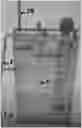
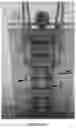
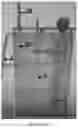
Faced with this gap, a vertical tank (1), preferably with a capacity of 1500 l, with access stairs (2) to the upper edge, with handrail (2B) and internal access stairs (2C), is arranged. preferably in the tank body itself, in its internal walls and adjustable tie rods (4)—which will come throughout the treatment to be fixed to the patient's ankles—attached to tie rods (3). It is further recirculated by means of pumps (5)—at least one—with flotation fluid heating system (6) (not shown) and fluid sterilization system (7), preferably by means of UV rays. and/or ozone.
The invention can be better understood by means of the figures.
FIG. 1 is a front view of the invention with a patient under treatment.
FIG. 2 shows a side view of the invention with a patient under treatment.
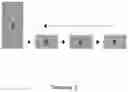
FIG. 3 shows a flow chart of the recirculation, heating and sterilization system of the invention.
Due to its innovative feature, it is efficient in the treatment of muscle and fascia stiffness.
In summary, the innovation is a vertical decompression relaxation device with vertical tank (1), with access stairs (2), with handrail (2B) and internal access stairs (2C), and tie rods (4) adjustable fasteners to tie rods (3) with a recirculation, heating and sterilization system, mainly used for the treatment of muscle and fascia stiffness.
This innovation is not limited to the representations commented upon or illustrated here but should be understood in its broad scope. Many modifications and other representations of the innovation will come to mind of one of skill in the art to which this innovation belongs, having the benefit of the teaching presented in the previous descriptions and accompanying drawings. Further, it is to be understood that innovation is not limited to the specific form disclosed, and that modifications and other forms are understood to be included within the scope of the appended claims. Although specific terms are used here, they are used only in a generic and descriptive manner and not for purposes of limitation.
Claims
1. Vertical decompression relaxation device characterized in that it is substantially a tank (1), preferably vertical, provided with access ladders (2), with handrail (2B) and internal access ladders (2C), adjustable tie rods (4) attached to tie rods (3) recirculated by means of at least one pump (5), with flotation fluid heating system (6) (not shown) and fluid sterilization system (7).
2. Device according to claim 1, characterized in that its fluid sterilization system (7) is preferably by means of UV rays, alternatively by ozone.
Images & Drawings included:
Sources:
- United States Patent and Trademark Office - verify current appl. status at the USPTO↗
Recent applications in this class:
- » 20240115459 2024-04-11
HYDROTHERAPY SOAKING CHAIR AND METHOD FOR USE - » 20240050310 2024-02-15
Bidet and Dispenser for Use in Tub or Shower - » 20220183927 2022-06-16
METHODS CIRCUITS DEVICES ASSEMBLIES AND SYSYEMS FOR TREATING A THERAPUTIC SOLUTION - » 20210346239 2021-11-11
Hydrotherapy soaking chair and method for use - » 20210077348 2021-03-18
Genital steaming assembly - » 20210022957 2021-01-28
Leg care apparatus and method for controlling the same - » 20200188228 2020-06-18
Equipment and Method for Buoyancy Assisted Psychotherapy - » 20190388299 2019-12-26
Wash Basin Being Transformable to be Particularly Adapted for Wound Irrigation - » 20170304148 2017-10-26
Wash basin being transformable to be particularly adapted for wound irrigation - » 20170290738 2017-10-12
Wearable soaking garment