Method to attribute expiration dates and quantities of a product to an SKU code for pricing purpose
US20200364759A1
2020-11-19
16/761,402
2018-11-05
✅ Patent granted
US 11,257,133 B2
2022-02-22
WO; PCT/IB2018/058679; 20181105
WO; WO2019/087159; 20190509
Asfand M Sheikh
Gearhart Law LLC | David Postolski
2038-11-05
Abstract:
A system and method to attribute expiration dates and quantities of a product to an SKU code for pricing purposes. This method applies dynamic pricing to perishable food items. Using bulk tagging capabilities, the supermarket can attribute expiration dates to items without the pain of actually tagging the items with stickers.
Assignee:
- WASTELESS LTD. 2 🇮🇱 Tel Aviv, Israel
Applicant:
Interested in similar patents?
Get notified when new applications in this technology area are published.
Classification:
G06Q30/0283 » CPC main
Commerce, e.g. shopping or e-commerce; Marketing, e.g. market research and analysis, surveying, promotions, advertising, buyer profiling, customer management or rewards; Price estimation or determination Price estimation or determination
G06Q20/201 » CPC further
Payment architectures, schemes or protocols; Payment architectures; Point-of-sale [POS] network systems Price look-up processing, e.g. updating
G06Q20/202 » CPC further
Payment architectures, schemes or protocols; Payment architectures; Point-of-sale [POS] network systems Interconnection or interaction of plural electronic cash registers [ECR] or to host computer, e.g. network details, transfer of information from host to ECR or from ECR to ECR
G06Q30/0625 » CPC further
Commerce, e.g. shopping or e-commerce; Buying, selling or leasing transactions; Electronic shopping; Item investigation Directed, with specific intent or strategy
G06Q30/02 IPC
Commerce, e.g. shopping or e-commerce Marketing, e.g. market research and analysis, surveying, promotions, advertising, buyer profiling, customer management or rewards; Price estimation or determination
G06Q20/20 IPC
Payment architectures, schemes or protocols; Payment architectures Point-of-sale [POS] network systems
G06Q30/06 IPC
Commerce, e.g. shopping or e-commerce Buying, selling or leasing transactions
Description
CLAIM OF PRIORITY
This application claims priority to U.S. provisional application No. 62/581,712 filed Nov. 5, 2017, the contents of which are incorporated by reference herein.
FIELD OF THE EMBODIMENTS
The present invention relates to the ability to attribute one expiration date to multiple products have the same Store Keeping Unit (SKU). The supermarket employee will use his smart-phone or any hand-held device to identify the product (SKU), identify and attribute items quantity, and finally, attribute expiration date to the product. The data generated with this portable device will then be transmitted to a local or remote server for further use of stock level management and in-store dynamic pricing application. A detailed flow and description can be found further on this application.
BACKGROUND OF THE EMBODIMENTS
The need for such method emerged from a real day-to-day problem exist in supermarket—product tagging. Basically, since existing barcodes usually carries no meta data beside product name and price, additional tagging is needed in many occurrences for the purpose of specific identification, for example, for discount, or waste tracking. When such occurrences happen, a supermarket employee needs to add additional tag or sticker carry more data and this is done manually.
SUMMARY OF THE EMBODIMENTS
The present application disclosed a system and a method for for avoiding food waste, comprising: a scanner, the scanner able to read data on a barcode on a plurality of consumer products; a portable device; a processor having a memory, the memory having computer readable instructions stored thereon that when executed by the processor, receiving the data received from the scanner; displaying the data on a screen of the portable device; determining, via a processor, an expiration date of the consumer product; calculating, via a processor, a dynamic price based on the expiration date and data received from the bar code of the consumer product; and approving, via a processor, the data displayed on the portable device screen.
The present application's system and method further comprises a scanner comprised of at least one of a smart phone or any portable device. The present application further comprises, wherein the data is comprised of at least one of a picture of the consumer product, quantity, price and expiration date of the consumer product. Data is transmitted from the portable device via Bluetooth, Wi-Fi or cellular communication. Data is stored on a local or remote server. The dynamic price is projected to in-store screens or electronic shelf labels (ESL). The dynamic price is communicated via a processor to a checkout cashier.
BRIEF DESCRIPTION OF THE DRAWINGS
The foregoing and other features of embodiments will become more apparent from the following detailed description of embodiments when read in conjunction with the accompanying drawings. In the drawings, like reference numerals refer to like elements.
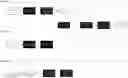
FIG. 1 illustrates the block diagrams of a system for a method to attribute expiration dates and quantities of a product to an SKU code for pricing purposes, in accordance with an embodiment of the invention.
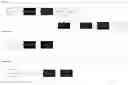
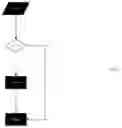
FIG. 2 illustrates a process flow of data in a system for a method to attribute expiration dates and quantities of a product to an SKU code for pricing purposes, in accordance with an embodiment of the invention.
DETAILED DESCRIPTION OF THE EMBODIMENTS
Reference will now be made in detail to the description of the present subject matter, one or more examples of which are shown in figures. Each example is provided to explain the subject matter and not a limitation. Various changes and modifications obvious to one skilled in the art to which the invention pertains are deemed to be within the spirit, scope and contemplation of the invention.
The suggested system contains a software that is being deployed on a smart phone or any portable computing device, the device herein must contain a barcode scanner or ability to scan barcode, a screen or touch screen and a communication module to send the data generated by the user via Bluetooth, Wi-Fi or mobile frequencies 3G/4G.
The assembly presented, is based on a novel approach to use a combination of supermarket employee's hand-held device, barcode reader, computing capabilities and wireless communication in order to attach expiration dates and quantity with stock that is being uploaded to store's shelves.
Use example: a supermarket employee just got a pallet full of products having the same SKU to the store. The employee uses the device to scan one of the products in the pallet, the barcode that was scanned retrieves product picture and typical quantity that should be included in this pallet. The employee approve the picture and quantity or has the ability to fix the data manually. Now, the employee enters product expiration date, this date will be applied to all of the products within the pallet and will be sent to the local/remote server.
Now, the server has stock level and stock expiration date, it will be used to dynamically change product prices according to their expiration dates. The suggested prices will be displayed using Electronic Shelf Label as it is commonly displayed today. The consumer then, can take a product that best match his/her willingness to pay and his/her needs.
While paying in a store cashier, every product that is applicable for a discount will send a popup message to the screen, presenting the optional 2 or 3 dates to choose from.
Reference is made to FIG. 1 and FIG. 2, wherein, FIG. 1 illustrates the System operational flow:
System Operational Flow Description
- 1. Single Item Scanning
- Using smart phone or any portable device having the capabilities mentioned above, the store's employee scan one item from a pallet of items received at the store.
- 2. Data is Being Sent to Server
- The barcode that was retrieved from the scanning is being sent automatically to local or remote server in to retrieve item's picture and pallet common products quantity.
- 3. Data is Being Retrieved
- The data that is being retrieved is displayed on portable device screen. For example the employee sees one pack of yogurt and suggested pallet quantity of 24 units.
- 4. Data Integrity Check
- The employee can now approve the data received on the screen or fix quantity manually by using the touch screen (as shown in FIG. 2 as process).
- 5. Expiration Date is Added
- Following steps #1 to #4 the expiration dates were now added to the every SKU that was part of the product pallet received at the store.
- 6. Data is Ready and Submitted
- The data is being transmitted from the portable device via Bluetooth, Wi-Fi or cellular communication to the local/remote server.
- 7. Data is Used for Dynamic Pricing
- The data that is now in the server, along with other key parameters, is used to dynamically pricing products according to their expiration dates (as shown in FIG. 2 as process).
- 8. Suggested Price is Being Displayed
- The suggested price for a product batch, having a specific expiration date, is being now projected to in-store screens or electronic shelf labels (ESL).
- 9. Consumer Choose Product
- The consumer now can choose a product according it's pricing and expiration date, according to what he/she needs. The consumer will possibly pay less and food waste will be reduced.
- 10. Checkout Process
- During the checkout, Item's potential discount is automatically checked. If product SKU carries a discount within any of the batches that are currently on the shelves, a window popups to the screen forcing the cashier employee to choose the right expiration batch.
- 11. Discount is Being Applied
- Following the on-screen selection of the expiration batch, a discount to the item is being applied.
FIG. 2 further illustrates the need for certain conditions prior to certain system processes to be run. Then system can predefine or users can define processes and conditions of the system and method of the present invention.
This method is the missing part that is needed to apply dynamic pricing to perishable food items. Using this bulk tagging capability the supermarket can attribute expiration dates to items without the pain of actually tagging the items with stickers.
When introducing elements of the present disclosure or the embodiment(s) thereof, the articles “a,” “an,” and “the” are intended to mean that there are one or more of the elements. Similarly, the adjective “another,” when used to introduce an element, is intended to mean one or more elements. The terms “including” and “having” are intended to be inclusive such that there may be additional elements other than the listed elements.
Although this invention has been described with a certain degree of particularity, it is to be understood that the present disclosure has been made only by way of illustration and that numerous changes in the details of construction and arrangement of parts may be resorted to without departing from the spirit and the scope of the invention.
Claims
What is claimed is:1. A system for avoiding food waste, comprising:
a scanner, the scanner able to read data on a barcode on a plurality of consumer products;
a portable device;
a processor having a memory, the memory having computer readable instructions stored thereon that when executed by the processor, receiving the data received from the scanner;
displaying the data on a screen of the portable device;
determining, via a processor, an expiration date of the consumer product;
calculating, via a processor, a dynamic price based on the expiration date and data received from the bar code of the consumer product;
approving, via a processor, the data displayed on the portable device screen.
2. The system of claim 1, wherein the scanner is comprised of at least one of a smart phone or any portable device.
3. The system of claim 1, wherein the data is comprised of at least one of a picture of the consumer product, quantity, price and expiration date of the consumer product.
4. The system of claim 1, wherein the data is transmitted from the portable device via Bluetooth, Wi-Fi or cellular communication.
5. The system of claim 1, wherein the data is stored on a local or remote server.
6. The system of claim 1, wherein the dynamic price is projected to in-store screens or electronic shelf labels (ESL).
7. The system of claim 1, wherein the dynamic price is communicated via a processor to a checkout cashier.
8. A system for avoiding food waste, comprising:
a scanner, the scanner able to read data on a barcode on a plurality of consumer products;
a portable device;
a processor having a memory, the memory having computer readable instructions stored thereon that when executed by the processor, receiving the data received from the scanner;
displaying the data on a screen of the portable device;
determining, via a processor, an expiration date of the consumer product;
calculating, via a processor, a dynamic price based on the expiration date and data received from the bar code of the consumer product;
approving, via a processor, the data displayed on the portable device screen.
9. The system of claim 8, wherein the scanner is comprised of at least one of a smart phone or any portable device.
10. The system of claim 8, wherein the data is comprised of at least one of a picture of the consumer product, quantity, price and expiration date of the consumer product.
11. The system of claim 8, wherein the data is transmitted from the portable device via Bluetooth, Wi-Fi or cellular communication.
12. The system of claim 8, wherein the data is stored on a local or remote server.
13. The system of claim 8, wherein the dynamic price is projected to in-store screens or electronic shelf labels (ESL).
14. The system of claim 8, wherein the dynamic price is communicated via a processor to a checkout cashier.
Images & Drawings included:
Sources:
- United States Patent and Trademark Office - verify current appl. status at the USPTO↗
Similar patent applications:
Recent applications in this class:
- » 20250292296 2025-09-18
Asset-Exchange Feedback In An Asset-Exchange Platform - » 20250292295 2025-09-18
SYSTEM AND METHOD FOR THERAPEUTIC EVENT MANAGEMENT AND VALUE ATTRIBUTION (PROOF OF VALUE) IN DECENTRALIZED HEALTH INFORMATION NETWORK - » 20250292294 2025-09-18
SYSTEM METHOD AND SYSTEM FOR ANOMALOUS PRICE VARIANCE BASED RECOMMENDATION OF ALTERNATE BUYING OPTIONS - » 20250292293 2025-09-18
MOVING COST ESTIMATOR - » 20250285150 2025-09-11
INFORMATION PROCESSING APPARATUS, METHOD AND NON-TRANSITORY COMPUTER READABLE MEDIUM - » 20250285149 2025-09-11
Real-Time, Current Utility Consumption Change Effects Isolation System - » 20250285148 2025-09-11
METHOD AND DEVICE FOR PROVIDING INFORMATION RELATED TO GRADE FOR MIXED IRON SCRAP - » 20250285147 2025-09-11
INFORMATION PROCESSING SYSTEM, NON-TRANSITORY COMPUTER READABLE MEDIUM STORING INFORMATION PROCESSING PROGRAM, AND INFORMATION PROCESSING METHOD - » 20250278765 2025-09-04
DYNAMIC REALLOCATION OF SUBSCRIBERS TO DATA PLANS TO MINIMIZE TOTAL COST IN A CELLULAR TELECOMMUNICATIONS NETWORK - » 20250278764 2025-09-04
JOB SUPPORT DEVICE AND JOB SUPPORT METHOD