Method and device for transmitting a coded light message, in particular for purposes of verifying the display of a content by an electronic screen
US20200403695A1
2020-12-24
16/978,487
2019-03-08
✅ Patent granted
US 11,177,883 B2
2021-11-16
WO; PCT/FR2019/050523; 20190308
WO; WO2019/171013; 20190912
Dalzid E Singh
von Briesen & Roper, s.c.
2039-03-08
Abstract:
Method for transmitting a coded light message, comprising:
-
- a step of the coded message being emitted by a light-emitting device, the coded message being emitted in the form of a series of colors emitted during regular consecutive time intervals, said message being coded by transitions between colors;
- a step of the coded message being received by a light sensor controlled to capture the colors emitted by the light emitter during consecutive time intervals and to thus determine the color transitions between consecutive time intervals, representative of the coded message.
Inventors:
- Philippe Ebersold 2 🇫🇷 Versailles, France
- Simon ROUSSEAU 1 🇫🇷 Vanves, France
- Valentin DESSERT 1 🇫🇷 Paris, France
Assignee:
- JCDecaux SA 24 🇫🇷 Neuilly Sur Seine, France
Applicant:
Interested in similar patents?
Get notified when new applications in this technology area are published.
Classification:
H04B10/1141 » CPC further
Transmission systems employing electromagnetic waves other than radio-waves, e.g. infrared, visible or ultraviolet light, or employing corpuscular radiation, e.g. quantum communication; Arrangements specific to free-space transmission, i.e. transmission through air or vacuum; Indoor or close-range type systems One-way transmission
H04B10/114 IPC
Transmission systems employing electromagnetic waves other than radio-waves, e.g. infrared, visible or ultraviolet light, or employing corpuscular radiation, e.g. quantum communication; Arrangements specific to free-space transmission, i.e. transmission through air or vacuum Indoor or close-range type systems
H04B10/116 » CPC main
Transmission systems employing electromagnetic waves other than radio-waves, e.g. infrared, visible or ultraviolet light, or employing corpuscular radiation, e.g. quantum communication; Arrangements specific to free-space transmission, i.e. transmission through air or vacuum; Indoor or close-range type systems Visible light communication
H04H60/48 » CPC further
Arrangements for broadcast applications with a direct linking to broadcast information or broadcast space-time; Broadcast-related systems; Arrangements for identifying or recognising characteristics with a direct linkage to broadcast information or to broadcast space-time, e.g. for identifying broadcast stations or for identifying users for recognising items expressed in broadcast information
H04H60/59 » CPC further
Arrangements for broadcast applications with a direct linking to broadcast information or broadcast space-time; Broadcast-related systems; Arrangements characterised by components specially adapted for monitoring, identification or recognition covered by groups - of video
Description
TECHNICAL FIELD
This description relates to methods and devices for transmitting a message coded in the form of light, in particular for the purpose of verifying the display of content by an electronic screen.
More particularly, the description relates to a method for transmitting a coded light message, comprising a step of the coded message being emitted by a light-emitting device and a step of the coded message being received by a light sensor.
TECHNOLOGICAL BACKGROUND
Document WO03052734 describes a method of transmitting a coded message via an electronic screen, in order to verify the content displayed by the screen. The message is representative of the content displayed. The message is coded in binary as a sequence of bits represented by two levels of light intensity. The bits of the coded message are displayed at a predetermined rate, within a coding region composed of a small set of pixels of the screen. A light sensor, arranged in correspondence with the coding region, measures the light levels in this coding region in sync with the time frame of the emitted signal.
OBJECTS
Methods of this type imply perfect synchronization between the emission of the signal and the measurement; otherwise the reading of the coded message may be incorrect.
The present description has the particular aim of overcoming this disadvantage.
To this end, a method is proposed for transmitting a coded light message, comprising:
-
- a step of the coded message being emitted by a light-emitting device capable of emitting a plurality of colors, the coded message being emitted in the form of a series of colors emitted by the light-emitting device during regular consecutive time intervals, said message being coded by transitions between different colors emitted over said consecutive time intervals, each transition between two consecutive predetermined colors representing a predetermined information item and said colors being chosen among N predetermined colors;
- a step of the coded message being received by a light sensor controlled to capture the colors emitted by the light emitter during consecutive time intervals and thus to determine the color transitions between consecutive time intervals, representative of the coded message.
With these arrangements, very low-cost, very inexpensive color sensors can be used for receiving the coded message, since there is only one color variation to be read.
In addition, the use of the transition between two colors and not of the absolute color eliminates the need for perfect synchronization between the display frequency and the sensor capture frequency. This asynchronous process also contributes to allowing the use of a low-cost, miniaturized device for receiving the light signal.
In various embodiments of the transmission method, one or more of the following arrangements may possibly be used:
-
- the respective information items represented by the transitions between two predetermined consecutive colors are binary codes;
- said binary codes are coded in 2 bits;
- said predetermined information items transmissible by the method are P in number, P being an integer less than N, and each of said predetermined information items can be represented by P different transitions between first and second colors, these P transitions respectively comprising P different first colors: in this manner, the coding of the information by the color transitions is very fast, since each information item is codable at all times, regardless of the color which has just been emitted by the light-emitting device;
- the number N of predetermined colors is equal to 6;
- the light sensor is chosen among a camera and a color sensor;
- the light-emitting device comprises a coding region that is part of a display surface of an electronic screen;
- the coding region comprises between 1 and 64 pixels;
- the light sensor is fixed on the display surface of the screen so as to completely cover the coding region;
- the screen is controlled by a local central control unit to show a content and the transmitted coded message is representative of said content;
- the content is displayed on a central portion of the screen display surface with the exception of a margin, and the coding region is included in said margin;
- the local central control unit receives the content from a server and said coded message is created by the server according to the content;
- the light sensor is associated with a central decoding unit which is capable of receiving signals from the light sensor that are indicative of the colors captured by said light sensor, and of determining the predetermined information items represented by the color transitions emitted by the light emitter;
- the decoded information items determined by the central decoding unit are transmitted to a centralized verification unit.
The present description also relates to a device for transmitting a coded light message, comprising:
-
- a local central control unit;
- a light-emitting device capable of emitting a plurality of colors and controlled by the local central control unit to emit the coded message in the form of a series of colors emitted during regular consecutive time intervals, said message being coded by transitions between different colors emitted over consecutive time intervals, each transition between two consecutive predetermined colors representing a predetermined information item and said colors being chosen among N predetermined colors;
- a central decoding unit;
- a light sensor connected to the central decoding unit in order to capture the colors emitted by the light emitter during consecutive time intervals, the central decoding unit being capable of determining the color transitions between consecutive time intervals, representative of the coded message.
In various embodiments of the transmission device, one or more of the following arrangements may possibly be used:
-
- the respective information items represented by the transitions between two consecutive predetermined colors, are binary codes;
- said binary codes are coded in 2 bits;
- said predetermined information items transmissible by the method are P in number, P being an integer less than N, and each of said predetermined information items can be represented by P different transitions between first and second colors, these P transitions respectively comprising P different first colors;
- the number N of predetermined colors is equal to 6;
- the light sensor is chosen among a camera and a color sensor;
- the light-emitting device comprises a coding region that is part of a display surface of an electronic screen;
- the coding region comprises between 1 and 64 pixels;
- the light sensor is fixed on the display surface of the screen so as to completely cover the coding region;
- the screen is controlled by the local central control unit to show a content and the transmitted coded message is representative of said content;
- the content is displayed on a central portion of the screen display surface with the exception of a margin, and the coding region is included in said margin;
- the device further comprises a server which is capable of transmitting the content to the local central control unit and said server is capable of creating the coded message according to the content;
- the device further comprises a centralized verification unit and the central decoding unit is capable of transmitting said decoded information items to said centralized verification unit.
BRIEF DESCRIPTION OF DRAWINGS
Other features and advantages will be apparent from the following description of one of its embodiments, given as a non-limiting example, with reference to the accompanying drawings.
In the drawings:
FIG. 1 is a partial schematic view of a network for broadcasting digital content, able to implement the method for transmitting coded light messages,
FIG. 2 is a partial front view of an electronic screen that is part of the network of FIG. 1,
FIG. 3 is a schematic exploded view of a portion of the electronic screen of FIG. 2,
FIG. 4 is a block diagram illustrating the main parts of the electronic screen of FIGS. 2 and 3 and the communication of this screen with a central server,
FIG. 5 is a partial front view of the screen of FIGS. 2 to 4,
FIG. 6 is a sectional view illustrating a variant of the screen of FIGS. 2 to 5,
FIG. 7 illustrates the coding of information by color transitions, usable in the screen of FIGS. 2 to 6,
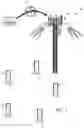
FIG. 8 illustrates a method for encoding a video in order to make use of the method for transmitting coded light messages,
FIG. 9 illustrates the decoding of the coded light message,
and FIG. 10 illustrates a stream of encoded videos as obtained by implementing the method of FIG. 8.
DETAILED DESCRIPTION
In the different figures, the same references designate identical or similar elements.
FIG. 1 shows a network 1 for broadcasting digital content, comprising a plurality of digital display devices 2 which each comprise a digital screen 3. The digital content in question may in particular include videos and still images, but also interactive games or other content.
This digital content may be transmitted to the digital display devices 2 from at least one remote server 4, via any wide area network (“WAN”), in particular by the Internet 5. The wide area network may possibly include one or more radio links 6 (for example using the LTE standard or other) to some or all of the digital display devices 2.
The digital display devices 2 may be arranged in particular in public places, in other words all places accessible to the public such as public thoroughfares, train and bus stations, airports, shopping centers, etc.
As represented in FIGS. 2 to 4, the screen 3 of each electronic display device 2 may include a display surface 3a in the center of a frame 7. A portion of the display surface 3a, preferably at or near the frame 7, may form a coding region 9 covered by a light sensor 8 (SENS).
The coding region 9 is capable of transmitting coded light messages. The coding region 9 may consist of a single pixel of the display surface 3a, or where appropriate 2*2 pixels or 3*3 pixels. More generally, the coding region can represent between 1 and 64 pixels.
The light sensor 8 may be fixed directly to the display surface 3a, preferably so as to completely cover the coding region 9.
The light sensor 8 may be a miniature camera or a color sensor.
When the light sensor is a color sensor, it is particularly inexpensive and compact. For example, the measurement area of the color sensor can have dimensions of l*l which may be, for example, on the order of 2 mm*2 mm. The total dimensions of the color sensor (with its PCB) may be less than 20 mm*20 mm. An example of a usable color sensor is the “SparkFun RGB Light Sensor—ISL29125”.
The light sensor 8 may be connected to an electronic decoding unit 11 (UC2), for example by a cable 10. An example of a usable electronic decoding unit 11 is the “Raspberry Pi Zero W” circuit board. The electronic decoding unit 11 can communicate with the central control unit 13 (or “player” PL, comprising in particular a processor UC1 and mass memory M) of the electronic display device 2 by radio or wire, for example via a USB connector 12 or some other type of connector. Alternatively, the electronic decoding unit 11 could communicate directly with the outside, for example with a remote server (server 4 or other), by radio (for example using Bluetooth® or WiFi) and via the Internet.
The central control unit 13 communicates with the remote server 4, particularly in order to receive content to be presented on the screen 3.
As shown in FIG. 5, the content may if necessary be presented on a central portion 3c of the display surface 3a, leaving a margin 3b free. The coding region 9 may be arranged within the margin 3b, so as not to interfere with the content displayed by the screen 3.
As shown in FIG. 6, the electronic display device 2 may comprise a housing 2a which forms a flange 2b on the front face of the electronic display panel 3, defining a window 2c which leaves visible at least the above-mentioned central portion 3c of the display surface 3a. The coding region 9 and the light sensor 8 may where appropriate be hidden by the flange 2b.
The coding region 9 is used to transmit a coded light message to the light sensor 8, according to a particular coding mode which will be explained in more detail below. More generally, this coding mode could be used to transmit a coded light message between any other light-emitting device and a light sensor. All the explanations given herein with the coding region 9 can therefore be transposed to another light-emitting device.
The coded light message is emitted by the coding region 9, as controlled by the central control unit 13, in the form of a series of colors chosen among N predetermined colors (the screen 3 is a color screen) emitted during regular consecutive time intervals. The light message is coded by transitions between different colors emitted over equal consecutive time intervals T, each transition between two consecutive predetermined colors representing a predetermined information item.
N may be for example equal to 6, the predetermined colors being for example red, green, blue, cyan, yellow, magenta.
Said predetermined information items transmissible by the method may be P in number, P being an integer less than N, and each of said predetermined information items can be represented by P different transitions between first and second colors, these P transitions respectively comprising P different first colors. Thus, whatever the color being displayed by the coding region 9, the following color can be chosen so that the transition between the two colors is representative of a desired information item among the P predetermined information items.
Advantageously, the respective information items represented by the transitions between two predetermined consecutive colors are binary codes. For example, said binary codes are coded in 2 bits, in which case P=4. In this case, when one of the N=6 colors is being displayed, the transitions to 4 of the 5 other colors are used to represent 4 information items coded in 2 bits each, and one of the transitions remains unused. The table below gives the 2-bit codes (00, 01, 10, 11) represented by the color transitions in one exemplary embodiment (the first color is indicated in the first column, the second color is indicated in the first row, XX denotes prohibited transitions with no color change, and YY denotes unused transitions):
| Red | Yellow | Green | Cyan | Blue | Magenta | |
| Red | XX | 00 | 01 | 10 | 11 | YY |
| Yellow | YY | XX | 00 | 01 | 10 | 11 |
| Green | 11 | YY | XX | 00 | 01 | 10 |
| Cyan | 10 | 11 | YY | XX | 00 | 01 |
| Blue | 01 | 10 | 11 | YY | XX | 00 |
| Magenta | 00 | 01 | 10 | 11 | YY | XX |
FIG. 7 illustrates the color transitions corresponding to the first row of the above table in the RGB color diagram, starting from red R 21 ([RGB coordinates [255, 0, 0]):
-
- a transition to yellow Y 22 ([RGB coordinates [255, 255, 0]) according to arrow 27 corresponds to the 2-bit code 00;
- a transition to green V 23 ([RGB coordinates [0, 255, 0]) according to arrow 28 corresponds to the 2-bit code 01;
- a transition to cyan C 24 ([RGB coordinates [0, 255, 255]) according to arrow 29 corresponds to the 2-bit code 10;
- a transition to blue B 25 ([RGB coordinates [0, 0, 255]) according to arrow 30 corresponds to the 2-bit code 11.
There is no transition from red to magenta 26 ([RGB coordinates [255, 0, 255]).
The coded messages formed by the color transitions emitted by the coding region 9 are captured by the light sensor 8 and decoded by the central decoding unit 11. This decoding is carried out very reliably even with inexpensive electronics, in particular because there is no need for perfect synchronization between the emission and reception of coded messages, due to the use of color transitions and not absolute colors (in the case of the use of absolute colors, the same color may be emitted during several consecutive emission periods, so it is necessary to pinpoint the beginning of each period very precisely in time in order to count the number of periods concerned).
This mode of transmitting information by optical coded message between a light-emitting device and a light sensor can be used in general to transmit information optically.
A particularly useful application of this mode of transmission relates to verifying that the content received from the server 4 is indeed displayed by the digital display devices 2.
To this end, the server 4 or another server may generate coded messages associated with the various content and send them to the central control unit 13 of each digital display device 2 at the same time as the content. More particularly, the optical coded messages can be integrated into the content by the server 4 or another server.
For example, as illustrated in FIG. 8, when the content is a video 101, the server 4 or another server can follow the following process:
-
- the video 101 is loaded by the server in step 100;
- in step 110, the video 101 is broken down into consecutive frames 111 (FR1-FR4 in this example, the number of frames obviously not being limited to 4);
- in step 120, the color transitions of the coding region 109 are encoded in the frames 111;
- in step 130, the encoded video 131 is reconstructed.
Each optical coded message may optionally be repeated in the encoded video 131 to avoid read errors, for example three times as represented in FIG. 10. In addition to the color transitions which are each representative of a code, for example 2 bits as previously explained (the colors are symbolized by R (red), G (green), B (blue), C (cyan), Y (yellow), M (magenta) in FIG. 10), each optical coded message can start with an initialization sequence S (for example a display of alternating black and white over several consecutive periods T). Each coded message can represent an identifier of the video 101 (554, 555, etc. in the example of FIG. 10).
When the contents are displayed by the screen 3, the optical coded message is emitted by the coding region 9 of the screen and received by the light sensor 8. The central decoding unit 11 then decodes the optical coded message. As illustrated in FIG. 9:
-
- in step 200, the optical coded message is read by the sensor 8 (which captures an RGB signal);
- in step 210, the central decoding unit 11 identifies the color transitions;
- in step 220, the central decoding unit 11 decodes the message and reconstructs the aforementioned identifiers (554, 555, etc.) and stores the times of the readings in order to timestamp these identifiers (see also FIG. 10);
- in step 230, the central decoding unit 11 sends the identifiers of the timestamped videos to the central control unit 13, which sends the information on to the server 4 or to any other centralized verification unit. Instead of sending the information to the central control unit 13, the central decoding unit 11 sends the identifiers of the timestamped videos to a controller board for the screen 3, which in turn sends the information to the server 4 or to any other centralized verification unit. In another variant, the central decoding unit 11 can send this information directly to the server 4 or to any other centralized verification unit, as explained above.
The server 4, or other centralized verification unit, thus collects proof that each content has indeed been displayed by the screen 3.
Claims
1. A method for transmitting a coded light message, comprising:
a step of the coded message being emitted by a light-emitting device capable of emitting a plurality of colors, the coded message being emitted in the form of a series of colors emitted by the light-emitting device during regular consecutive time intervals, said message being coded by transitions between different colors emitted over consecutive time intervals, each transition between two consecutive predetermined colors representing a predetermined information item and said colors being chosen among N predetermined colors;
a step of the coded message being received by a light sensor controlled to capture the colors emitted by the light emitter during consecutive time intervals and thus to determine the color transitions between consecutive time intervals, representative of the coded message.
2. The method according to claim 1, wherein the respective information items represented by the transitions between two predetermined consecutive colors are binary codes.
3. The method according to claim 2, wherein said binary codes are coded in 2 bits.
4. The method according to claim 1, wherein said predetermined information items transmissible by the method are P in number, P being an integer less than N, and each of said predetermined information items can be represented by P different transitions between first and second colors, these P transitions respectively comprising P different first colors.
5. The method according to claim 1, wherein the number N of predetermined colors is equal to 6.
6. The method according to claim 1, wherein the light sensor is chosen among a camera and a color sensor.
7. The method according to claim 1, wherein the light-emitting device comprises a coding region that is part of a display surface of an electronic screen.
8. The method according to claim 7, wherein the coding region comprises between 1 and 64 pixels.
9. The method according to claim 7, wherein the light sensor is fixed on the display surface of the screen so as to completely cover the coding region.
10. The method according to claim 7, wherein the screen is controlled by a local central control unit to show a content and the transmitted coded message is representative of said content.
11. The method according to claim 10, wherein the content is displayed on a central portion of the display surface of the screen with the exception of a margin, and the coding region is included in said margin.
12. The method according to claim 10, wherein the local central control unit receives the content from a server and said coded message is created by the server according to the content.
13. The method according to claim 1, wherein the light sensor is associated with a central decoding unit which is capable of receiving signals from the light sensor that are indicative of the colors captured by said light sensor, and of determining the predetermined information items represented by the color transitions emitted by the coding region.
14. The method according to claim 13, wherein the decoded information items determined by the central decoding unit are transmitted to a centralized verification unit.
15. A device for transmitting a coded light message, comprising:
a local central control unit;
a light-emitting device capable of emitting a plurality of colors and controlled by the local central control unit to emit the coded message in the form of a series of colors emitted during regular consecutive time intervals, said message being coded by transitions between different colors emitted over said consecutive time intervals, each transition between two consecutive predetermined colors representing a predetermined information item and said colors being chosen among N predetermined colors;
a central decoding unit;
a light sensor connected to the central decoding unit in order to capture the colors emitted by the light emitter during consecutive time intervals, the central decoding unit being capable of determining the color transitions between consecutive time intervals, representative of the coded message.
16. The device according to claim 15, wherein the light-emitting device comprises a coding region that is part of a display surface of an electronic screen.
17. The device according to claim 16, wherein the coding region comprises between 1 and 64 pixels.
18. The device according to claim 16, wherein the light sensor is fixed on the display surface of the screen so as to completely cover the coding region.
19. The device according to claim 16, wherein the screen is controlled by the local central control unit to show a content and the transmitted coded message is representative of said content.
20. The device according to claim 19, wherein the content is displayed on a central portion of the display surface of the screen with the exception of a margin, and the coding region is included in said margin.
21. The device according to claim 19, further comprising a server which is capable of transmitting the content to the local central control unit and said server is capable of creating the coded message according to the content.
22. The device according to claim 1, further comprising a centralized verification unit, and the central decoding unit is capable of transmitting said decoded information items to said centralized verification unit.
Images & Drawings included:



Sources:
- United States Patent and Trademark Office - verify current appl. status at the USPTO↗
Recent applications in this class:
- » 20250293776 2025-09-18
DETECTION AND/OR COMMUNICATION SYSTEM FOR A MOTOR VEHICLE COMPRISING A MODULE FOR RECEIVING A LIGHT BEAM - » 20250260489 2025-08-14
HIGH SPEED AND MULTI-CONTACT LEDS FOR DATA COMMUNICATION - » 20250247150 2025-07-31
SELF-FORMING COMMUNICATION AND CONTROL SYSTEM - » 20250240096 2025-07-24
DEVICE AND METHOD FOR INTEGRATED SENSING AND COMMUNICATION - » 20250202580 2025-06-19
LIGHT EMITTING DEVICE AND OPTICAL WIRELESS COMMUNICATION SYSTEM - » 20250175252 2025-05-29
METHOD AND DEVICE FOR DEMODULATING DATA MODULATED BY AMPLITUDE MODULATION OF A LIGHT SIGNAL EMITTED BY A LIGHT SOURCE OF A TRANSMITTER DEVICE - » 20250158710 2025-05-15
LIGHT BASED COMMUNICATIONS - » 20250119214 2025-04-10
LIGHT COMMUNICATION USING EVENT-BASED SENSORS AND NEUROMORPHIC PROCESSING - » 20250119213 2025-04-10
MIMO Processing with LED based Reception of Optical Communication Signals - » 20250105919 2025-03-27
RECEPTION DEVICE AND RECEPTION METHOD
Recent applications for this Assignee:
- » 20240201923 2024-06-20
Digital Display System and Method - » 20220224959 2022-07-14
Digital display method and system, digital display device and digital display server - » 20220125208 2022-04-28
Sunshade for outdoor public space and outdoor public space having such a sunshade - » 20220125170 2022-04-28
Sunshade for outdoor public space and outdoor public space having such a sunshade - » 20200195443 2020-06-18
Method for verifying the display of a content item by a digital display device, and digital display system - » 20190213631 2019-07-11
Local digital display assembly and digital content broadcast network comprising such assemblies - » 20180356383 2018-12-13
ENVIRONMENTAL MEASURING DEVICE AND INSTALLATION COMPRISING SUCH A DEVICE - » 20160107517 2016-04-21
Electrically powered cycles and automatic storage system for such cycles - » 20120196631 2012-08-02
Bicycle Rental System - » 20110148346 2011-06-23
Automatic Cycle Storage System, Cycle For Such a System and Docking Structure For Such a Cycle