Camera optical lens
US20200409072A1
2020-12-31
16/676,445
2019-11-07
✅ Patent granted
US 11,204,485 B2
2021-12-21
-
-
Darryl J Collins | Matthew Y Lee
W&G Law Group
2040-04-21
Abstract:
The present disclosure relates to the technical field of optical lens and discloses a camera optical lens. The camera optical lens includes, from an object side to an image side: a first lens, a second lens having a positive refractive power, a third lens having a negative refractive power, a fourth lens, a fifth lens and a sixth lens. The camera optical lens satisfies following conditions: 3.00≤f1/f≤7.00; and 4.00≤R9/d9≤50.00; f denotes a focal length of the camera optical lens; f1 denotes a focal length of the first lens; R9 denotes a curvature radius of an object-side surface of the fifth lens; and d9 denotes an on-axis thickness of the fifth lens. The camera optical lens can achieve a high imaging performance while obtaining a low TTL.
Assignee:
- AAC Optics Solutions Pte. Ltd. 361 🇸🇬 Singapore, Singapore
Applicant:
Interested in similar patents?
Get notified when new applications in this technology area are published.
Classification:
G02B13/0045 » CPC main
Optical objectives specially designed for the purposes specified below; Miniaturised objectives for electronic devices, e.g. portable telephones, webcams, PDAs, small digital cameras characterised by the lens design having at least one aspherical surface having five or more lenses
G02B7/10 IPC
Mountings, adjusting means, or light-tight connections, for optical elements for lenses with mechanism for focusing or varying magnification by relative axial movement of several lenses, e.g. of varifocal objective lens
G02B7/102 » CPC further
Mountings, adjusting means, or light-tight connections, for optical elements for lenses with mechanism for focusing or varying magnification by relative axial movement of several lenses, e.g. of varifocal objective lens controlled by a microcomputer
G02B15/142 » CPC further
Optical objectives with means for varying the magnification by axial movement of one or more lenses or groups of lenses relative to the image plane for continuously varying the equivalent focal length of the objective having two groups only
G02B13/00 IPC
Optical objectives specially designed for the purposes specified below
G02B15/14 IPC
Optical objectives with means for varying the magnification by axial movement of one or more lenses or groups of lenses relative to the image plane for continuously varying the equivalent focal length of the objective
G02B7/08 » CPC further
Mountings, adjusting means, or light-tight connections, for optical elements for lenses with mechanism for focusing or varying magnification adapted to co-operate with a remote control mechanism
G02B9/62 » CPC further
Optical objectives characterised both by the number of the components and their arrangements according to their sign, i.e. + or - having six components only
Description
TECHNICAL FIELD
The present disclosure relates to the field of optical lens, particular, to a camera optical lens suitable for handheld devices, such as smart phones and digital cameras, and imaging devices, such as monitors or PC lenses.
BACKGROUND
With the emergence of smart phones in recent years, the demand for miniature camera lens is increasing day by day, but in general the photosensitive devices of camera lens are nothing more than Charge Coupled Device (CCD) or Complementary Metal-Oxide Semiconductor Sensor (CMOS sensor), and as the progress of the semiconductor manufacturing technology makes the pixel size of the photosensitive devices become smaller, plus the current development trend of electronic products towards better functions and thinner and smaller dimensions, miniature camera lens with good imaging quality therefore have become a mainstream in the market. In order to obtain better imaging quality, the lens that is traditionally equipped in mobile phone cameras adopts a three-piece or four-piece lens structure. Also, with the development of technology and the increase of the diverse demands of users, and as the pixel area of photosensitive devices is becoming smaller and smaller and the requirement of the system on the imaging quality is improving constantly, the five-piece, six-piece and seven-piece lens structure gradually appear in lens designs. There is an urgent need for ultra-thin wide-angle camera lenses which with good optical characteristics and fully corrected aberration.
BRIEF DESCRIPTION OF DRAWINGS
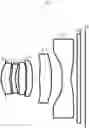
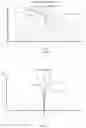
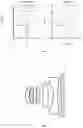
FIG. 1 is a schematic diagram of a structure of a camera optical lens according to Embodiment 1 of the present disclosure.
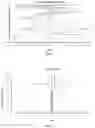
FIG. 2 is a schematic diagram of a longitudinal aberration of the camera optical lens shown in FIG. 1.
FIG. 3 is a schematic diagram of a lateral color of the camera optical lens shown in FIG. 1.
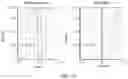
FIG. 4 is a schematic diagram of a field curvature and a distortion of the camera optical lens shown in FIG. 1.
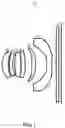
FIG. 5 is a schematic diagram of a structure of a camera optical lens according to Embodiment 2 of the present disclosure.
FIG. 6 is a schematic diagram of a longitudinal aberration of the camera optical lens shown in FIG. 5.
FIG. 7 is a schematic diagram of a lateral color of the camera optical lens shown in FIG. 5.
FIG. 8 is a schematic diagram of a field curvature and a distortion of the camera optical lens shown in FIG. 5.
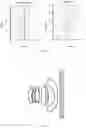
FIG. 9 is a schematic diagram of a structure of a camera optical lens according to Embodiment 3 of the present disclosure.
FIG. 10 is a schematic diagram of a longitudinal aberration of the camera optical lens shown in FIG. 9.
FIG. 11 is a schematic diagram of a lateral color of the camera optical lens shown in FIG. 9.
FIG. 12 is a schematic diagram of a field curvature and a distortion of the camera optical lens shown in FIG. 9.
DETAILED DESCRIPTION OF EMBODIMENTS
To make the objects, technical solutions, and advantages of the present disclosure clearer, embodiments of the present disclosure are described in detail with reference to accompanying drawings in the following. A person of ordinary skill in the art can understand that, in the embodiments of the present disclosure, many technical details are provided to make readers better understand the present disclosure. However, even without these technical details and any changes and modifications based on the following embodiments, technical solutions required to be protected by the present disclosure can be implemented.
Embodiment 1
Referring to the accompanying drawings, the present disclosure provides a camera optical lens 10. FIG. 1 shows the camera optical lens 10 of Embodiment 1 of the present disclosure, the camera optical lens 10 includes six lenses. Specifically, the camera optical lens 10 includes, from an object side to an image side: an aperture S1, a first lens L1, a second lens L2, a third lens L3, a fourth lens L4, a fifth lens L5 and a sixth lens L6. An optical element such as an optical filter GF can be arranged between the sixth lens L6 and an image surface Si.
The first lens L1, the second lens L2, the third lens L3, the fourth lens L4, the fifth lens L5, and the sixth lens L6 are all made of plastic material.
Here, a focal length of the camera optical lens 10 is defined as f, and a focal length of the first lens L1 is defined as f1. The camera optical lens 10 satisfies a condition of 3.00≤f1/f≤7.00, which specifies a ratio between a positive refractive power of the first lens L1 and a total focal length. Within the specified range, the first lens may have an appropriate positive refractive power, which is beneficial for reducing system's aberration, and beneficial for ultra-thin and wide-angle development of a lens.
A curvature radius of an object-side surface of the fifth lens L5 is defined as R9, an on-axis thickness of the fifth lens L5 is defined as d9, and the camera optical lens 10 satisfies a condition of 4.00≤R9/d9≤50.00. By controlling a refractive power of the fifth lens L5 within a reasonable range, correction of the aberration of the optical system can be facilitated. Preferably, the camera optical lens 10 further satisfies a condition of 4.01≤R9/d9≤49.72.
A total optical length from the object side surface of the first lens L1 to the image surface Si of the camera optical lens along an optical axis is defined as TTL.
When the focal length f of the camera optical lens 10, the focal length f1 of the first lens L1, the curvature radius R9 of the object-side surface of the fifth lens L5, and the on-axis thickness d9 of the fifth lens L5 all satisfy the above conditions, the camera optical lens 10 has an advantage of high performance and satisfies a design requirement of low TTL.
In an embodiment, an object-side surface of the first lens L1 is convex in the paraxial region, an image-side surface of the first lens L1 is concave in the paraxial region, and the first lens L1 has a positive refractive power.
A curvature radius R1 of an object side surface of the first lens L1 and a curvature radius R2 of an image side surface of the first lens L1 satisfy a condition of −205.78≤(R1+R2)/(R1−R2)≤−8.26, which reasonably controls a shape of the first lens, so that the first lens may effectively correct system spherical aberration. Preferably, the camera optical lens 10 further satisfies a condition of −128.61≤(R1+R2)/(R1−R2)≤−10.32.
An on-axis thickness of the first lens L1 is defined as d1, and the camera optical lens 10 further satisfies a condition of 0.05≤d1/TTL≤0.16. This can facilitate achieving ultra-thin lenses. Preferably, the camera optical lens 10 further satisfies a condition of 0.08≤d1/TTL≤0.13.
In an embodiment, an object-side surface of the second lens L2 is convex in the paraxial region, an image-side surface of the second lens L2 is concave in the paraxial region, and the second lens L2 has a negative refractive power.
The focal length of the second lens L2 is defined as f2, and the camera optical lens 10 further satisfies a condition of −3826.99≤f2/f≤−35.22. An appropriate distribution of the refractive power leads to a better imaging quality and a lower sensitivity. Preferably, the camera optical lens 10 further satisfies a condition of −2391.87≤f2/f≤−44.02.
A curvature radius of the object-side surface of the second lens L2 is defined as R3, a curvature radius of the image-side surface of the second lens L2 is defined as R4, and the camera optical lens 10 further satisfies a condition of 12.49≤(R3+R4)/(R3-R4)≤41.03, which specifies a shape of the second lens L2. Within this range, a development towards ultra-thin and wide-angle lenses would facilitate correcting the problem of an on-axis aberration. Preferably, the camera optical lens 10 further satisfies a condition of 19.99≤(R3+R4)/(R3-R4)≤32.83.
An on-axis thickness of the second lens L2 is defines as d3, and the camera optical lens 10 further satisfies a condition of 0.02≤d3/TTL≤0.08. This can facilitate achieving ultra-thin lenses. Preferably, the camera optical lens 10 further satisfies a condition of 0.04≤d3/TTL≤0.07.
In an embodiment, an object-side surface of the third lens L3 is convex in the paraxial region, an image-side surface of the third lens L3 is concave in the paraxial region, and the third lens L3 has a negative refractive power.
A focal length of the third lens L3 is defined as f3, and the camera optical lens 10 further satisfies a condition of f3/f≤−30.81. An appropriate distribution of the refractive power leads to a better imaging quality and a lower sensitivity. Preferably, the camera optical lens 10 further satisfies a condition of f3/f≤−38.52.
A curvature radius of the object-side surface of the third lens L3 is defined as R5, a curvature radius of the image-side surface of the third lens L3 is defined as R6, and the camera optical lens 10 further satisfies a condition of 12.34≤(R5+R6)/(R5−R6)≤80.75. This can effectively control a shape of the third lens L3, thereby facilitating shaping of the third lens and avoiding bad shaping and generation of stress due to an the overly large surface curvature of the third lens L3. Preferably, the camera optical lens 10 further satisfies a condition of 19.74≤(R5+R6)/(R5−R6)≤64.60.
An on-axis thickness of the third lensL3 is defined as d5, and the camera optical lens 10 further satisfies a condition of 0.04≤d5/TTL≤0.15. This can facilitate achieving ultra-thin lenses. Preferably, the camera optical lens 10 further satisfies a condition of 0.07≤d5/TTL≤0.12.
In an embodiment, an object-side surface of the fourth lens L4 is convex in the paraxial region, an image-side surface of the fourth lens L4 is convex in the paraxial region, and the fourth lens L4 has a positive refractive power.
A focal length of the fourth lens L4 is defined as f4, and the camera optical lens 10 further satisfies a condition of 0.64≤f4/f≤2.19. The appropriate distribution of refractive power makes it possible that the system has the better imaging quality and the lower sensitivity. Preferably, the camera optical lens 10 further satisfies a condition of 1.02≤f4/f≤1.75.
A curvature radius of the object-side surface of the fourth lens L4 is defined as R7, a curvature radius of the image-side surface of the fourth lens L4 is defined as R8, and the camera optical lens 10 further satisfies a condition of −1.83≤(R7+R8)/(R7−R8)≤−0.45, which specifies a shape of the fourth lens L4. Within this range, a development towards ultra-thin and wide-angle lens would facilitate correcting a problem like an off-axis aberration. Preferably, the camera optical lens 10 further satisfies a condition of −1.14≤(R7+R8)/(R7−R8)≤−0.57.
An on-axis thickness of the fourth lens L4 is defined as d7, and the camera optical lens 10 further satisfies a condition of 0.04≤d7/TTL≤0.11. This can facilitate achieving ultra-thin lenses. Preferably, the camera optical lens 10 further satisfies a condition of 0.06≤d7/TTL≤0.09.
In an embodiment, an object-side surface of the fifth lens L5 is convex in the paraxial region, an image-side surface of the fifth lens L5 is convex in the paraxial region, and the fifth lens L5 has a positive refractive power.
A focal length of the fifth lens L5 is defined as f5, and the camera optical lens 10 further satisfies a condition of 0.64≤f5/f≤2.37, which can effectively make a light angle of the camera lens gentle and reduce an tolerance sensitivity. Preferably, the camera optical lens 10 further satisfies a condition of 1.02≤f5/f≤1.90.
A curvature radius of the object-side surface of the fifth lens L5 is defined as R9, a curvature radius of the image-side surface of the fifth lens L5 is defined as R10, and the camera optical lens 10 further satisfies a condition of −1.59≤(R9+R10)/(R9−R10)≤0.82, which specifies a shape of the fifth lens L5. Within this range, a development towards ultra-thin and wide-angle lenses can facilitate correcting a problem of the off-axis aberration. Preferably, the camera optical lens 10 further satisfies a condition of −0.99≤(R9+R10)/(R9−R10)≤0.65.
An on-axis thickness of the fifth lens L5 is defined as d9, and the camera optical lens 10 further satisfies a condition of 0.03≤d9/TTL≤0.21. This can facilitate achieving ultra-thin lenses. Preferably, the camera optical lens 10 further satisfies a condition of 0.05≤d9/TTL≤0.17.
In an embodiment, an image-side surface of the sixth lens L6 is concave in the paraxial region, and the sixth lens L6 has a negative refractive power.
A focal length of the sixth lens L6 is defined as f6, and the camera optical lens 10 further satisfies a condition of −2.09≤f6/f≤−0.52. The appropriate distribution of refractive power makes it possible that the system has the better imaging quality and lower sensitivity. Preferably, the camera optical lens 10 further satisfies a condition of −1.31≤f6/f≤−0.65.
A curvature radius of the object-side surface of the sixth lens L6 is defined as R11, a curvature radius of the image-side surface of the sixth lens L6 is defined as R12, and the camera optical lens 10 further satisfies a condition of 0.01≤(R11+R12)/(R11−R12)≤2.27, which specifies a shape of the sixth lens L6. Within this range, a development towards ultra-thin and wide-angle lenses would facilitate correcting a problem like aberration of the off-axis aberration. Preferably, the camera optical lens 10 further satisfies a condition of 0.02≤(R11+R12)/(R11−R12)≤1.82.
An on-axis thickness of the sixth lens L6 is defined as d11, and the camera optical lens 10 further satisfies a condition of 0.04≤d11/TTL≤0.16. This can facilitate achieving ultra-thin lenses. Preferably, the camera optical lens 10 further satisfies a condition of 0.06≤d11/TTL≤0.13.
In an embodiment, a combined focal length of the first lens and of the second lens is defined as f12, and the camera optical lens 10 further satisfies a condition of 1.45≤f12/f≤11.10. This can eliminate the aberration and distortion of the camera optical lens and reduce a back focal length of the camera optical lens, thereby maintaining miniaturization of the camera optical lens. Preferably, the camera optical lens 10 further satisfies a condition of 2.31≤f12/f≤8.88.
In an embodiment, the total optical length TTL of the camera optical lens 10 is less than or equal to 5.86 mm, which is beneficial for achieving ultra-thin lenses. Preferably, the total optical length TTL of the camera optical lens 10 is less than or equal to 5.60 mm.
In an embodiment, an F number of the camera optical lens 10 is less than or equal to 2.06. The camera optical lens has a large aperture and a better imaging performance. Preferably, the F number of the camera optical lens 10 is less than or equal to 2.02.
With such designs, the total optical length TTL of the camera optical lens 10 can be made as short as possible, thus the miniaturization characteristics can be maintained.
In the following, examples will be used to describe the camera optical lens 10 of the present disclosure. The symbols recorded in each example will be described as follows. The focal length, on-axis distance, curvature radius, on-axis thickness, inflexion point position, and arrest point position are all in units of mm.
TTL: Optical length of the camera optical lens (the total optical length from the object side surface of the first lens to the image surface of the camera optical lens along the optical axis) in mm.
Preferably, inflexion points and/or arrest points can be arranged on the object-side surface and/or the image-side surface of the lens, so as to satisfy the demand for high quality imaging. The description below can be referred for specific implementations.
The design data of the camera optical lens 10 in Embodiment 1 of the present disclosure are shown in Table 1 and Table 2.
| TABLE 1 | ||||
| R | d | nd | νd | |
| S1 | ∞ | d0= | −0.381 | ||||
| R1 | 1.571 | d1= | 0.485 | nd1 | 1.5462 | ν1 | 55.95 |
| R2 | 1.847 | d2= | 0.070 | ||||
| R3 | 1.468 | d3= | 0.256 | nd2 | 1.6690 | ν2 | 20.41 |
| R4 | 1.355 | d4= | 0.188 | ||||
| R5 | 4.438 | d5= | 0.458 | nd3 | 1.5462 | ν3 | 55.95 |
| R6 | 4.272 | d6= | 0.021 | ||||
| R7 | 3.451 | d7= | 0.327 | nd4 | 1.5697 | ν4 | 37.71 |
| R8 | −19.837 | d8= | 0.521 | ||||
| R9 | 14.830 | d9= | 0.300 | nd5 | 1.5462 | ν5 | 55.95 |
| R10 | −4.380 | d10= | 0.886 | ||||
| R11 | −3.551 | d11= | 0.377 | nd6 | 1.5464 | ν6 | 56.04 |
| R12 | 3.347 | d12= | 0.350 | ||||
| R13 | ∞ | d13= | 0.210 | ndg | 1.5187 | νg | 64.17 |
| R14 | ∞ | d14= | 0.186 | ||||
In the table, meanings of various symbols will be described as follows.
S1: aperture;
R: curvature radius of an optical surface, a central curvature radius for a lens;
R1: curvature radius of the object-side surface of the first lens L1;
R2: curvature radius of the image-side surface of the first lens L1;
R3: curvature radius of the object-side surface of the second lens L2;
R4: curvature radius of the image-side surface of the second lens L2;
R5: curvature radius of the object-side surface of the third lens L3;
R6: curvature radius of the image-side surface of the third lens L3;
R7: curvature radius of the object-side surface of the fourth lens L4;
R8: curvature radius of the image-side surface of the fourth lens L4;
R9: curvature radius of the object-side surface of the fifth lens L5;
R10: curvature radius of the image-side surface of the fifth lens L5;
R11: curvature radius of the object-side surface of the sixth lens L6;
R12: curvature radius of the image-side surface of the sixth lens L6;
R13: curvature radius of an object-side surface of the optical filter GF;
R14: curvature radius of an image-side surface of the optical filter GF;
d: on-axis thickness of a lens and an on-axis distance between lens;
d0: on-axis distance from the aperture S1 to the object-side surface of the first lens L1;
d1: on-axis thickness of the first lens L1;
d2: on-axis distance from the image-side surface of the first lens L1 to the object-side surface of the second lens L2;
d3: on-axis thickness of the second lens L2;
d4: on-axis distance from the image-side surface of the second lens L2 to the object-side surface of the third lens L3;
d5: on-axis thickness of the third lens L3;
d6: on-axis distance from the image-side surface of the third lens L3 to the object-side surface of the fourth lens L4;
d7: on-axis thickness of the fourth lens L4;
d8: on-axis distance from the image-side surface of the fourth lens L4 to the object-side surface of the fifth lens L5;
d9: on-axis thickness of the fifth lens L5;
d10: on-axis distance from the image-side surface of the fifth lens L5 to the object-side surface of the sixth lens L6;
d11: on-axis thickness of the sixth lens L6;
d12: on-axis distance from the image-side surface of the sixth lens L6 to the object-side surface of the optical filter GF;
d13: on-axis thickness of the optical filter GF;
d14: on-axis distance from the image-side surface to the image surface of the optical filter GF;
nd: refractive index of the d line;
nd1: refractive index of the d line of the first lens L1;
nd2: refractive index of the d line of the second lens L2;
nd3: refractive index of the d line of the third lens L3;
nd4: refractive index of the d line of the fourth lens L4;
nd5: refractive index of the d line of the fifth lens L5;
nd6: refractive index of the d line of the sixth lens L6;
ndg: refractive index of the d line of the optical filter GF;
vd: abbe number;
v1: abbe number of the first lens L1;
v2: abbe number of the second lens L2;
v3: abbe number of the third lens L3;
v4: abbe number of the fourth lens L4;
v5: abbe number of the fifth lens L5;
v6: abbe number of the sixth lens L6;
vg: abbe number of the optical filter GF.
Table 2 shows aspherical surface data of the camera optical lens 10 in Embodiment 1 of the present disclosure.
| TABLE 2 | ||
| Conic | ||
| coefficient | Aspheric surface coefficients |
| k | A4 | A6 | A8 | A10 | A12 | A14 | A16 | |
| R1 | 6.2585E−01 | −1.0412E−02 | 3.1247E−02 | −1.4718E−01 | 3.0750E−01 | −2.9674E−01 | 1.7117E−01 | −3.6898E−02 |
| R2 | −2.0719E+01 | −7.5328E−02 | 3.4967E−01 | −4.7021E−01 | 5.5719E−01 | −1.0409E−01 | 4.0508E−01 | −5.4542E−01 |
| R3 | −5.8459E+00 | −3.9339E−01 | 7.0653E−01 | −6.3646E−01 | 3.1027E−01 | 1.9568E−01 | −2.5600E−02 | −3.3667E−01 |
| R4 | −3.4241E+00 | −1.5647E−01 | 4.0635E−01 | −4.8483E−01 | 8.3462E−01 | −1.1626E+00 | 9.0747E−01 | −4.3447E−01 |
| R5 | 1.0409E+01 | −2.0078E−02 | −2.7486E−02 | 4.7697E−01 | −1.2531E+00 | 1.4279E+00 | −6.9993E−01 | 2.1907E−02 |
| R6 | −1.6234E+02 | −4.1750E−01 | 4.8202E−02 | 1.7123E+00 | −3.1643E+00 | 2.4406E+00 | −9.4938E−01 | 1.7746E−01 |
| R7 | −3.1546E+01 | −7.2334E−01 | 7.8885E−01 | −1.1378E−01 | 4.0159E−01 | −1.7806E+00 | 1.9575E+00 | −6.7350E−01 |
| R8 | −7.0950E+02 | −2.5226E−01 | 6.5651E−02 | 3.4301E−01 | −5.4743E−01 | 3.3455E−01 | −2.3075E−02 | −9.5618E−03 |
| R9 | −6.4986E+03 | −3.3274E−02 | −1.3173E−01 | −5.6676E−02 | 2.9428E−01 | −3.0722E−01 | 1.3280E−01 | −1.9045E−02 |
| R10 | −3.4926E+01 | −8.2700E−02 | −1.1409E−02 | −7.9886E−02 | 1.2829E−01 | −7.5758E−02 | 1.7282E−02 | −7.3581E−04 |
| R11 | 1.7146E+00 | −3.1698E−01 | 1.2400E−01 | 3.3370E−03 | −1.4811E−02 | 3.9412E−03 | −5.2606E−04 | −4.3035E−05 |
| R12 | −6.8131E+01 | −2.1199E−01 | 1.2878E−01 | −5.3721E−02 | 1.5206E−02 | −2.7243E−03 | 2.5771E−04 | −9.0118E−06 |
Here, K is a conic coefficient, and A4, A6, A8, A10, A12, A14, and A16 are aspheric surface coefficients.
IH: Image height
y=(x2/R)/[1+{1−(k+1)(x2/R2)}1/2]+A4x4+A6x6+A8x8+A10x10+A12x12+A14x14+A16x16 (1)
For convenience, an aspheric surface of each lens surface uses the aspheric surfaces shown in the above formula (1). However, the present disclosure is not limited to the aspherical polynomials form shown in the formula (1).
Table 3 and Table 4 show design data of inflexion points and arrest points of the camera optical lens 10 according to Embodiment 1 of the present disclosure. P1R1 and P1R2 represent the object-side surface and the image-side surface of the first lens L1, P2R1 and P2R2 represent the object-side surface and the image-side surface of the second lens L2, P3R1 and P3R2 represent the object-side surface and the image-side surface of the third lens L3, P4R1 and P4R2 represent the object-side surface and the image-side surface of the fourth lens L4, P5R1 and P5R2 represent the object-side surface and the image-side surface of the fifth lens L5, P6R1 and P6R2 represent the object-side surface and the image-side surface of the sixth lens L6. The data in the column named “inflexion point position” refer to vertical distances from inflexion points arranged on each lens surface to the optic axis of the camera optical lens 10. The data in the column named “arrest point position” refer to vertical distances from arrest points arranged on each lens surface to the optical axis of the camera optical lens 10.
| TABLE 3 | |||
| Number(s) of | Inflexion point | Inflexion point | |
| inflexion points | position 1 | position 2 | |
| P1R1 | 0 | |||
| P1R2 | 0 | |||
| P2R1 | 0 | |||
| P2R2 | 0 | |||
| P3R1 | 0 | |||
| P3R2 | 1 | 0.335 | ||
| P4R1 | 2 | 0.325 | 0.905 | |
| P4R2 | 1 | 0.965 | ||
| P5R1 | 1 | 0.355 | ||
| P5R2 | 0 | |||
| P6R1 | 0 | |||
| P6R2 | 1 | 0.525 | ||
| TABLE 4 | |||
| Number(s) of | Arrest point | Arrest point | |
| arrest points | position 1 | position 2 | |
| P1R1 | 0 | |||
| P1R2 | 0 | |||
| P2R1 | 1 | 0.805 | ||
| P2R2 | 1 | 0.795 | ||
| P3R1 | 1 | 0.775 | ||
| P3R2 | 1 | 0.185 | ||
| P4R1 | 2 | 0.185 | 0.695 | |
| P4R2 | 1 | 0.805 | ||
| P5R1 | 2 | 0.205 | 1.175 | |
| P5R2 | 0 | |||
| P6R1 | 0 | |||
| P6R2 | 1 | 0.275 | ||
FIG. 2 and FIG. 3 illustrate a longitudinal aberration and a lateral color with wavelengths of 486.1 nm, 546.1 nm and 656.3 nm after passing the camera optical lens 10 according to Embodiment 1, respectively. FIG. 4 illustrates a field curvature and a distortion with a wavelength of 546.1 nm after passing the camera optical lens 10 according to Embodiment 1. A field curvature S in FIG. 4 is a field curvature in a sagittal direction, and T is a field curvature in a tangential direction.
Table 13 in the following shows various values of Embodiments 1, 2, 3 and values corresponding to parameters which are specified in the above conditions.
As shown in Table 13, Embodiment 1 satisfies the above conditions.
In this Embodiment, an entrance pupil diameter of the camera optical lens is 1.970 mm, an image height of 1.0H is 3.110 mm, a FOV (field of view) in a diagonal direction is 75.84°. Thus, the camera optical lens has a wide-angle and is ultra-thin. Its on-axis and off-axis aberrations are fully corrected, thereby achieving excellent optical characteristics.
Embodiment 2
Embodiment 2 is basically the same as Embodiment 1 and involves symbols having the same meanings as Embodiment 1, and only differences therebetween will be described in the following.
Table 5 and Table 6 show design data of a camera optical lens 20 in Embodiment 2 of the present disclosure.
| TABLE 5 | ||||
| R | d | nd | νd | |
| S1 | ∞ | d0= | −0.381 | ||||
| R1 | 1.588 | d1= | 0.471 | nd1 | 1.5462 | ν1 | 55.95 |
| R2 | 1.825 | d2= | 0.070 | ||||
| R3 | 1.432 | d3= | 0.251 | nd2 | 1.6690 | ν2 | 20.41 |
| R4 | 1.331 | d4= | 0.187 | ||||
| R5 | 4.414 | d5= | 0.453 | nd3 | 1.5462 | ν3 | 55.95 |
| R6 | 4.253 | d6= | 0.024 | ||||
| R7 | 3.404 | d7= | 0.334 | nd4 | 1.5697 | ν4 | 37.71 |
| R8 | −17.850 | d8= | 0.536 | ||||
| R9 | 9.994 | d9= | 0.305 | nd5 | 1.5462 | ν5 | 55.95 |
| R10 | −5.039 | d10= | 0.879 | ||||
| R11 | −3.542 | d11= | 0.337 | nd6 | 1.5464 | ν6 | 56.04 |
| R12 | 3.391 | d12= | 0.350 | ||||
| R13 | ∞ | d13= | 0.210 | ndg | 1.5187 | νg | 64.17 |
| R14 | ∞ | d14= | 0.228 | ||||
Table 6 shows aspherical surface data of each lens of the camera optical lens 20 in Embodiment 2 of the present disclosure.
| TABLE 6 | ||
| Conic | ||
| coefficient | Aspheric surface coefficients |
| k | A4 | A6 | A8 | A10 | A12 | A14 | A16 | |
| R1 | 6.7239E−01 | −9.2134E−03 | 2.5285E−02 | −1.4459E−01 | 3.2103E−01 | −3.0422E−01 | 1.6664E−01 | −3.4273E−02 |
| R2 | −1.9957E+01 | −7.7173E−02 | 3.7577E−01 | −4.5835E−01 | 5.2998E−01 | −1.3357E−01 | 4.2280E−01 | −4.4349E−01 |
| R3 | −5.7272E+00 | −3.8781E−01 | 7.2292E−01 | −6.3322E−01 | 3.0912E−01 | 1.8609E−01 | −3.4341E−02 | −3.0766E−01 |
| R4 | −3.3359E+00 | −1.5400E−01 | 4.1651E−01 | −4.7597E−01 | 8.4729E−01 | −1.1932E+00 | 9.2736E−01 | −4.9452E−01 |
| R5 | 1.0439E+01 | −2.0164E−02 | −3.2083E−02 | 4.8279E−01 | −1.2175E+00 | 1.4613E+00 | −7.2907E−01 | −4.9860E−02 |
| R6 | −1.6341E+02 | −4.1661E−01 | 4.6931E−02 | 1.7102E+00 | −3.1776E+00 | 2.4406E+00 | −9.2079E−01 | 1.4539E−01 |
| R7 | −3.0259E+01 | −7.2537E−01 | 7.9221E−01 | −1.0675E−01 | 3.9948E−01 | −1.8040E+00 | 1.9244E+00 | −6.3531E−01 |
| R8 | −6.8939E+02 | −2.5363E−01 | 6.2115E−02 | 3.4019E−01 | −5.4388E−01 | 3.3729E−01 | −1.6402E−02 | −1.9872E−02 |
| R9 | −1.2483E+03 | −3.4742E−02 | −1.3210E−01 | −5.5998E−02 | 2.9478E−01 | −3.0709E−01 | 1.3265E−01 | −1.9396E−02 |
| R10 | −3.5031E+01 | −8.2322E−02 | −1.2121E−02 | −8.0248E−02 | 1.2815E−01 | −7.5808E−02 | 1.7274E−02 | −7.1987E−04 |
| R11 | 1.6803E+00 | −3.1830E−01 | 1.2437E−01 | 3.3355E−03 | −1.4913E−02 | 3.8707E−03 | −5.4271E−04 | −4.8131E−05 |
| R12 | −2.7746E+01 | −2.1284E−01 | 1.2860E−01 | −5.3715E−02 | 1.5210E−02 | −2.7235E−03 | 2.5785E−04 | −9.0073E−06 |
Table 7 and table 8 show design data of inflexion points and arrest points of each lens of the camera optical lens 20 lens according to Embodiment 2 of the present disclosure.
| TABLE 7 | |||
| Number(s) of | Inflexion point | Inflexion point | |
| inflexion points | position 1 | position 2 | |
| P1R1 | 0 | |||
| P1R2 | 0 | |||
| P2R1 | 0 | |||
| P2R2 | 0 | |||
| P3R1 | 0 | |||
| P3R2 | 1 | 0.335 | ||
| P4R1 | 2 | 0.325 | 0.925 | |
| P4R2 | 1 | 0.975 | ||
| P5R1 | 1 | 0.435 | ||
| P5R2 | 0 | |||
| P6R1 | 0 | |||
| P6R2 | 1 | 0.595 | ||
| TABLE 8 | |||
| Number of | Arrest point | Arrest point | |
| arrest points | position 1 | position 2 | |
| P1R1 | 0 | |||
| P1R2 | 0 | |||
| P2R1 | 1 | 0.825 | ||
| P2R2 | 1 | 0.785 | ||
| P3R1 | 1 | 0.785 | ||
| P3R2 | 1 | 0.185 | ||
| P4R1 | 2 | 0.185 | 0.705 | |
| P4R2 | 1 | 0.815 | ||
| P5R1 | 2 | 0.255 | 1.195 | |
| P5R2 | 0 | |||
| P6R1 | 0 | |||
| P6R2 | 1 | 0.315 | ||
FIG. 6 and FIG. 7 illustrate a longitudinal aberration and a lateral color of light with wavelengths of 486.1 nm, 546.1 nm and 656.3 nm after passing the camera optical lens 20 according to Embodiment 2. FIG. 8 illustrates a field curvature and a distortion of light with a wavelength of 546.1 nm after passing the camera optical lens 20 according to Embodiment 2.
As shown in Table 13, Embodiment 2 satisfies the above conditions.
In an embodiment, an entrance pupil diameter of the camera optical lens is 1.973 mm, an image height of 1.0H is 3.110 mm, a FOV (field of view) in the diagonal direction is 75.81°. Thus, the camera optical lens has a wide-angle and is ultra-thin. Its on-axis and off-axis aberrations are fully corrected, thereby achieving excellent optical characteristics.
Embodiment 3
Embodiment 3 is basically the same as Embodiment 1 and involves symbols having the same meanings as Embodiment 1, and only differences therebetween will be described in the following.
Table 9 and Table 10 show design data of a camera optical lens 30 in Embodiment 3 of the present disclosure.
| TABLE 9 | ||||
| R | d | nd | νd | |
| S1 | ∞ | d0= | −0.284 | ||||
| R1 | 1.834 | d1= | 0.540 | nd1 | 1.5462 | ν1 | 55.95 |
| R2 | 1.870 | d2= | 0.103 | ||||
| R3 | 1.741 | d3= | 0.258 | nd2 | 1.6690 | ν2 | 20.41 |
| R4 | 1.618 | d4= | 0.196 | ||||
| R5 | 3.993 | d5= | 0.462 | nd3 | 1.5462 | ν3 | 55.95 |
| R6 | 3.682 | d6= | 0.025 | ||||
| R7 | 3.297 | d7= | 0.390 | nd4 | 1.5461 | ν4 | 56.03 |
| R8 | −72.895 | d8= | 0.449 | ||||
| R9 | 3.047 | d9= | 0.758 | nd5 | 1.5462 | ν5 | 55.95 |
| R10 | −26.386 | d10= | 0.670 | ||||
| R11 | 8.544 | d11= | 0.575 | nd6 | 1.5461 | ν6 | 56.03 |
| R12 | 1.749 | d12= | 0.389 | ||||
| R13 | ∞ | d13= | 0.210 | ndg | 1.5187 | νg | 64.17 |
| R14 | ∞ | d14= | 0.305 | ||||
Table 10 shows aspherical surface data of each lens of the camera optical lens 30 in Embodiment 3 of the present disclosure.
| TABLE 10 | ||
| Conic | ||
| coefficient | Aspheric surface coefficients |
| k | A4 | A6 | A8 | A10 | A12 | A14 | A16 | |
| R1 | 7.2311E−01 | −2.4136E−02 | 1.1349E−02 | −4.9336E−02 | 9.2822E−02 | −8.0464E−02 | 2.7977E−02 | 1.1769E−03 |
| R2 | −1.5682E+01 | −4.2303E−02 | 8.3209E−03 | −7.6312E−02 | 1.4395E−01 | −4.5613E−02 | −2.3996E−02 | 2.0885E−02 |
| R3 | −4.3604E+00 | −3.5244E−01 | 2.7665E−01 | −1.0535E−01 | −3.8359E−02 | 6.5831E−02 | 1.1340E−02 | −3.4421E−02 |
| R4 | −5.7165E+00 | −1.5436E−01 | 2.3538E−01 | −2.6274E−01 | 4.7932E−01 | −7.6479E−01 | 5.3077E−01 | −1.2383E−01 |
| R5 | −3.2693E+00 | −6.8872E−02 | −5.9979E−02 | 1.5428E−01 | −2.6907E−01 | 2.7656E−01 | −3.9318E−01 | 2.6780E−01 |
| R6 | −6.4866E+01 | −2.6221E−01 | −9.1128E−02 | 7.0766E−01 | −1.0091E+00 | 7.5336E−01 | −4.4755E−01 | 1.8828E−01 |
| R7 | 3.9643E+00 | −4.7411E−01 | 2.7925E−01 | 6.4829E−02 | 9.7681E−02 | −5.0886E−01 | 3.9950E−01 | −8.4399E−02 |
| R8 | 3.4085E+03 | −1.9415E−01 | 3.3180E−02 | 1.3062E−01 | −1.5340E−01 | 7.7638E−02 | −2.4055E−02 | 1.6059E−03 |
| R9 | −3.1938E+01 | −1.3558E−02 | −8.8118E−02 | −2.7579E−02 | 1.3276E−01 | −1.0161E−01 | 3.3948E−02 | −4.3582E−03 |
| R10 | −2.1730E+02 | −5.2098E−02 | −6.2090E−03 | −4.1677E−02 | 5.7107E−02 | −2.4215E−02 | 4.2620E−03 | −2.4642E−04 |
| R11 | −1.5568E+03 | −2.2353E−01 | 7.6195E−02 | 1.0064E−03 | −5.7818E−03 | 1.3065E−03 | −1.1152E−04 | 2.3064E−06 |
| R12 | −9.9502E+00 | −1.1708E−01 | 7.0021E−02 | −2.4387E−02 | 5.4328E−03 | −7.6312E−04 | 6.0975E−05 | −2.0991E−06 |
Table 11 and Table 12 show design data inflexion points and arrest points of the respective lenses in the camera optical lens 30 according to Embodiment 3 of the present disclosure.
| TABLE 11 | |||
| Number(s) of | Inflexion point | Inflexion point | |
| inflexion points | position 1 | position 2 | |
| P1R1 | 0 | |||
| P1R2 | 0 | |||
| P2R1 | 1 | 0.805 | ||
| P2R2 | 0 | |||
| P3R1 | 1 | 0.765 | ||
| P3R2 | 2 | 0.445 | 1.015 | |
| P4R1 | 1 | 0.455 | ||
| P4R2 | 0 | |||
| P5R1 | 1 | 0.795 | ||
| P5R2 | 1 | 1.515 | ||
| P6R1 | 1 | 0.285 | ||
| P6R2 | 1 | 1.995 | ||
| TABLE 12 | |||
| Number of | Arrest point | Arrest point | |
| arrest points | position 1 | position 2 | |
| P1R1 | 0 | |||
| P1R2 | 2 | 0.555 | 0.735 | |
| P2R1 | 1 | 0.385 | ||
| P2R2 | 1 | 0.735 | ||
| P3R1 | 2 | 0.485 | 0.915 | |
| P3R2 | 2 | 0.245 | 0.925 | |
| P4R1 | 2 | 0.255 | 0.955 | |
| P4R2 | 0 | |||
| P5R1 | 2 | 0.465 | 1.285 | |
| P5R2 | 1 | 1.165 | ||
| P6R1 | 2 | 0.155 | 1.325 | |
| P6R2 | 1 | 0.515 | ||
FIG. 10 and FIG. 11 illustrate a longitudinal aberration and a lateral color of light with wavelengths of 486.1 nm, 546.1 nm and 656.3 nm after passing the camera optical lens 30 according to Embodiment 3. FIG. 12 illustrates a field curvature and a distortion of light with a wavelength of 546.1 nm after passing the camera optical lens 30 according to Embodiment 3.
Table 13 in the following lists values corresponding to the respective conditions in an embodiment according to the above conditions. Obviously, the embodiment satisfies the above conditions.
In an embodiment, an entrance pupil diameter of the camera optical lens is 1.983 mm, an image height of 1.0H is 3.112 mm, a FOV (field of view) in the diagonal direction is 75.31°. Thus, the camera optical lens has a wide-angle and is ultra-thin. Its on-axis and off-axis aberrations are fully corrected, thereby achieving excellent optical characteristics.
| TABLE 13 | |||
| Parameters and | |||
| conditions | Embodiment 1 | Embodiment 2 | Embodiment 3 |
| f | 3.940 | 3.945 | 3.966 |
| f1 | 11.861 | 13.159 | 27.757 |
| f2 | −304.535 | −7548.742 | −209.520 |
| f3 | −7501.798 | −113328.167 | −183.302 |
| f4 | 5.187 | 5.047 | 5.786 |
| f5 | 6.224 | 6.177 | 5.046 |
| f6 | −3.093 | −3.117 | −4.150 |
| f12 | 11.390 | 12.250 | 29.349 |
| FNO | 2.00 | 2.00 | 2.00 |
| f1/f | 3.01 | 3.34 | 7.00 |
| R9/d9 | 49.43 | 32.77 | 4.02 |
It can be appreciated by one having ordinary skill in the art that the description above is only embodiments of the present disclosure. In practice, one having ordinary skill in the art can make various modifications to these embodiments in forms and details without departing from the scope of the present disclosure.
Claims
What is claimed is:1. A camera optical lens comprising, from an object side to an image side:
a first lens;
a second lens having a negative refractive power;
a third lens having a negative refractive power;
a fourth lens;
a fifth lens; and
a sixth lens;
wherein the camera optical lens satisfies following conditions:
3.00≤f1/f≤7.00; and
4.00≤R9/d9≤50.00;
where
f denotes a focal length of the camera optical lens;
f1 denotes a focal length of the first lens;
R9 denotes a curvature radius of an object-side surface of the fifth lens; and
d9 denotes an on-axis thickness of the fifth lens.
2. The camera optical lens according to claim 1 further satisfying following condition:
4.01≤R9/d9≤49.72.
3. The camera optical lens according to claim 1, wherein the first lens has a positive refractive power, and comprises an object-side surface being convex in the paraxial region and an image-side surface being concave in the paraxial region;
the camera optical lens further satisfies following conditions:
−205.78≤(R1+R2)/(R1−R2)≤−8.26; and
0.05≤d1/TTL≤0.16;
where
R1 denotes a curvature radius of the object-side surface of the first lens;
R2 denotes a curvature radius of the image-side surface of the first lens;
d1 denotes an on-axis thickness of the first lens; and
TTL denotes a total optical length from the object-side surface of the first lens to an image surface of the camera optical lens along an optical axis.
4. The camera optical lens according to claim 3 further satisfying following conditions:
−128.61≤(R1+R2)/(R1−R2)≤−10.32; and
0.08≤d1/TTL≤0.13.
5. The camera optical lens according to claim 1, wherein the second lens comprises an object-side surface being convex in a paraxial region and an image-side surface being concave in a paraxial region; and
the camera optical lens further satisfies following conditions:
−3826.99≤f2/f≤−350.22;
12.49≤(R3+R4)/(R3−R4)≤41.03; and
0.02≤d3/TTL≤0.08;
where
f2 denotes a focal length of the second lens;
R3 denotes a curvature radius of the object-side surface of the second lens;
R4 denotes a curvature radius of the image-side surface of the second lens;
d3 denotes an on-axis thickness of the second lens;
TTL denotes a total optical length from the object-side surface of the first lens to an image surface of the camera optical lens along an optical axis.
6. The camera optical lens according to claim 5 further satisfying following conditions:
−2391.87≤f2/f≤−44.02;
19.99≤(R3+R4)/(R3−R4)≤32.83; and
0.04≤d3/TTL≤0.07.
7. The camera optical lens according to claim 1, wherein the third lens comprises an object-side surface being convex in the paraxial region and an image-side surface being concave in the paraxial region, and
the camera optical lens further satisfies following conditions:
f3/f≤−30.81;
12.34≤(R5+R6)/(R5−R6)≤80.75; and
0.04≤d5/TTL≤0.15;
where
f3 denotes a focal length of the third lens;
R5 denotes a curvature radius of the object-side surface of the third lens;
R6 denotes a curvature radius of the image-side surface of the third lens;
d5 denotes an on-axis thickness of the third lens;
TTL denotes a total optical length from the object-side surface of the first lens to an image surface of the camera optical lens along an optical axis.
8. The camera optical lens according to claim 7 further satisfying following conditions:
f3/f≤−38.52;
19.74≤(R5+R6)/(R5−R6)≤64.60; and
0.07≤d5/TTL≤0.12.
9. The camera optical lens according to claim 1, wherein the fourth lens has a positive refractive power, and comprises an object-side surface being convex in a paraxial region and an image-side surface being convex in the paraxial region, and
the camera optical lens further satisfies following conditions:
0.64≤f4/f≤2.19;
−1.83≤(R7+R8)/(R7−R8)≤−0.45; and
0.04≤d7/TTL≤0.11;
where
f4 denotes a focal length of the fourth lens;
R7 denotes a curvature radius of the object-side surface of the fourth lens;
R8 denotes a curvature radius of the image-side surface of the fourth lens;
d7 denotes an on-axis thickness of the fourth lens;
TTL denotes a total optical length from the object-side surface of the first lens to an image surface of the camera optical lens along an optical axis.
10. The camera optical lens according to claim 9 further satisfying following conditions:
1.02≤f4/f≤1.75;
−1.14≤(R7+R8)/(R7−R8)≤−0.57; and
0.06≤d7/TTL≤0.09.
11. The camera optical lens according to claim 1, wherein the fifth lens has a positive refractive power, and comprises an object-side surface being convex in a paraxial region and an image-side surface being convex in the paraxial region, and
the camera optical lens further satisfies following conditions:
0.64≤f5/f≤2.37;
−1.59≤(R9+R10)/(R9−R10)≤0.82; and
0.03≤d9/TTL≤0.21;
where
f5 denotes a focal length of the fifth lens;
R10 denotes a curvature radius of the image-side surface of the fifth lens;
TTL denotes a total optical length from the object-side surface of the first lens to an image surface of the camera optical lens along an optical axis.
12. The camera optical lens according to claim 11 further satisfying following conditions:
1.02≤f5/f≤1.90;
−0.99≤(R9+R10)/(R9−R10)≤0.65; and
0.05≤d9/TTL≤0.17.
13. The camera optical lens according to claim 1, wherein the sixth lens has a negative refractive power, and comprises an image-side surface being concave in the paraxial region, and
the camera optical lens further satisfies following conditions:
−2.09≤f6/f≤−0.52;
0.01≤(R11+R12)/(R11−R12)≤2.27; and
0.04≤d11/TTL≤0.16;
where
f6 denotes a focal length of the sixth lens;
R11 denotes a curvature radius of an object-side surface of the sixth lens;
R12 denotes a curvature radius of the image-side surface of the sixth lens;
d11 denotes an on-axis thickness of the sixth lens;
TTL denotes a total optical length from the object-side surface of the first lens to an image surface of the camera optical lens along an optical axis.
14. The camera optical lens according to claim 13 further satisfying following conditions:
−1.31≤f6/f≤−0.65;
0.02≤(R11+R12)/(R11−R12)≤1.82; and
0.06≤d11/TTL≤0.13.
15. The camera optical lens according to claim 1 further satisfying following condition:
1.45≤f12/f≤11.10;
where
f12 denotes a combined focal length of the first lens and the second lens.
16. The camera optical lens according to claim 15 further satisfying following condition:
2.31≤f12/f≤8.88.
17. The camera optical lens according to claim 1, where a total optical length TTL from the object-side surface of the first lens to an image surface of the camera optical lens along an optical axis is less than or equal to 5.86 mm.
18. The camera optical lens according to claim 17, wherein the total optical length TTL of the camera optical lens is less than or equal to 5.60 mm.
19. The camera optical lens according to claim 1, wherein an F number of the camera optical lens is less than or equal to 2.06.
20. The camera optical lens according to claim 19, wherein the F number of the camera optical lens is less than or equal to 2.02.
Images & Drawings included:

Sources:
- United States Patent and Trademark Office - verify current appl. status at the USPTO↗
Similar patent applications:
- » 20200041751
OPTICAL LENS AND OPTICAL CAMERA LENS - » 20200041700
OPTICAL LENS AND OPTICAL CAMERA LENS - » 20210352196
INTEGRATED LENS BARREL, OPTICAL CAMERA LENS, CAMERA MODULE AND ASSEMBLY METHOD THEREOF - » 20220120937
Compound, resin precursor, cured object, optical element, optical system, interchangeable camera lens, optical device, cemented lens, and method for manufacturing cemented lens - » 20210395580
Compound, resin precursor, cured object, optical element, optical system, interchangeable camera lens, optical device, cemented lens, and method for manufacturing cemented lens - » 20230048981
COMPOUND, RESIN PRECURSOR, CURED OBJECT, OPTICAL ELEMENT, OPTICAL SYSTEM, INTERCHANGEABLE CAMERA LENS, OPTICAL DEVICE, CEMENTED LENS, AND METHOD FOR MANUFACTURING CEMENTED LENS - » 20220107480
Optical lens, camera module, and assembly method for the optical lens - » 20240244309
CAMERA LENS MODULE, CAMERA LENS OPTICAL AXIS ADJUSTING DEVICE, AND BINOCULAR CAMERA - » 20200223781
Compound, resin precursor, cured product, optical element, optical system, interchangeable lens for camera, optical device, cemented lens, and production method for cemented lens - » 15416457
Optical camera lens
Recent applications in this class:
- » 20250291158 2025-09-18
IMAGING OPTICAL LENS ASSEMBLY, IMAGING APPARATUS AND ELECTRONIC DEVICE - » 20250291157 2025-09-18
OPTICAL IMAGING LENS ASSEMBLY - » 20250284101 2025-09-11
OPTICAL SYSTEM AND IMAGE PICKUP APPARATUS - » 20250284100 2025-09-11
OPTICAL SYSTEM, IMAGING DEVICE, IN-VEHICLE SYSTEM, AND MOVABLE APPARATUS - » 20250284099 2025-09-11
OPTICAL IMAGING SYSTEM - » 20250284098 2025-09-11
LENS MODULE - » 20250284097 2025-09-11
OPTICAL SYSTEM, CAMERA MODULE, AND ELECTRONIC DEVICE - » 20250284096 2025-09-11
CAMERA OPTICAL LENS - » 20250284095 2025-09-11
CAMERA OPTICAL LENS - » 20250277961 2025-09-04
IMAGING LENS SYSTEM AND CAMERA MODULE
Recent applications for this Assignee:
- » 20250068035 2025-02-27
BLADE DRIVING DEVICE, CAMERA DEVICE AND PORTABLE ELECTRONIC DEVICE - » 20250013003 2025-01-09
IMAGING MODULE, CAMERA AND ELECTRONIC DEVICE - » 20230118394 2023-04-20
Method and device for correcting varying lateral chromatic aberration, storage medium, and computer equipment - » 20220155566 2022-05-19
Camera module - » 20220128793 2022-04-28
Camera lens - » 20220100051 2022-03-31
Optical assembly driving apparatus, imaging apparatus and portable electronic device - » 20220091375 2022-03-24
Camera lens including seven lenses of −++−+−− refractive powers - » 20220082820 2022-03-17
Lens module and system for producing image having lens module - » 20220011536 2022-01-13
Driver assembly, camera module and electronic device having image-capturing function - » 20220003966 2022-01-06
Camera optical lens