Method for preparing beta-lactam derivative
US20210276986A1
2021-09-09
17/256,088
2019-09-04
✅ Patent granted
US 11,976,060 B2
2024-05-07
WO; PCT/CN2019/104403; 20190904
WO; WO2020/114025; 20200611
Sun Jae Yoo
SZDC Law PC
2041-07-09
Abstract:
The present invention relates to a method for preparing a β-lactam derivative, wherein a substituted N-quinoline-3-butenamide derivative is used as a substrate to react with a toluene derivative or a heterocyclic derivative at 90-150° C. in the presence of DTBP and a copper salt catalyst, to prepare a β-lactam derivative. According to the method of the present invention, a variety of β-lactam derivatives can be obtained with a high yield. The reaction of the present invention has mild reaction conditions, and simple reaction operation and post-treatment process, and is suitable for large-scale production.
Inventors:
- Runsheng ZENG 1 🇨🇳 Suzhou, China
- Peng SHI 1 🇨🇳 Suzhou, China
- Yingsheng ZHAO 1 🇨🇳 Suzhou, China
Assignee:
- Soochow University 343 🇨🇳 Suzhou, China
Applicant:
Interested in similar patents?
Get notified when new applications in this technology area are published.
Classification:
B01J31/1805 » CPC further
Catalysts comprising hydrides, coordination complexes or organic compounds containing coordination complexes containing nitrogen, phosphorus, arsenic or antimony as complexing atoms, e.g. in pyridine ligands, or in resonance therewith, e.g. in isocyanide ligands C=N-R or as complexed central atoms the ligands containing nitrogen
C07D405/14 » CPC further
Heterocyclic compounds containing both one or more hetero rings having oxygen atoms as the only ring hetero atoms, and one or more rings having nitrogen as the only ring hetero atom containing three or more hetero rings
C07D409/14 » CPC main
Heterocyclic compounds containing two or more hetero rings, at least one ring having sulfur atoms as the only ring hetero atoms containing three or more hetero rings
B01J2531/16 » CPC further
Additional information regarding catalytic systems classified in; Complexes comprising metals of Group I (IA or IB) as the central metal Copper
B01J31/18 IPC
Catalysts comprising hydrides, coordination complexes or organic compounds containing coordination complexes containing nitrogen, phosphorus, arsenic or antimony as complexing atoms, e.g. in pyridine ligands, or in resonance therewith, e.g. in isocyanide ligands C=N-R or as complexed central atoms
G03F7/004 IPC
Photomechanical, e.g. photolithographic, production of textured or patterned surfaces, e.g. printing surfaces; Materials therefor, e.g. comprising photoresists; Apparatus specially adapted therefor Photosensitive materials
C08F212/08 IPC
Copolymers of compounds having one or more unsaturated aliphatic radicals, each having only one carbon-to-carbon double bond, and at least one being terminated by an aromatic carbocyclic ring; Monomers containing only one unsaturated aliphatic radical containing one ring; Hydrocarbons Styrene
C08F220/18 IPC
Copolymers of compounds having one or more unsaturated aliphatic radicals, each having only one carbon-to-carbon double bond, and only one being terminated by only one carboxyl radical or a salt, anhydride ester, amide, imide or nitrile thereof; Monocarboxylic acids having less than ten carbon atoms; Derivatives thereof; Esters of monohydric alcohols or phenols of phenols or of alcohols containing two or more carbon atoms with acrylic or methacrylic acids
C08F257/02 IPC
Macromolecular compounds obtained by polymerising monomers on to polymers of aromatic monomers as defined in group on to polymers of styrene or alkyl-substituted styrenes
C08K5/04 IPC
Use of organic ingredients Oxygen-containing compounds
C09D125/08 IPC
Coating compositions based on homopolymers or copolymers of compounds having one or more unsaturated aliphatic radicals, each having only one carbon-to-carbon double bond, and at least one being terminated by an aromatic carbocyclic ring; Coating compositions based on derivatives of such polymers; Homopolymers or copolymers of hydrocarbons; Homopolymers or copolymers of styrene Copolymers of styrene
C09D133/14 IPC
Coating compositions based on homopolymers or copolymers of compounds having one or more unsaturated aliphatic radicals, each having only one carbon-to-carbon double bond, and at least one being terminated by only one carboxyl radical, or of salts, anhydrides, esters, amides, imides, or nitriles thereof; Coating compositions based on derivatives of such polymers; Homopolymers or copolymers of esters of esters containing halogen, nitrogen, sulfur or oxygen atoms in addition to the carboxy oxygen
C09K19/24 IPC
Liquid crystal materials characterised by the chemical structure of the liquid crystal components, e.g. by a specific unit; Non-steroidal liquid crystal compounds containing at least two non-condensed rings containing at least two benzene rings linked by a chain containing nitrogen-to-nitrogen bonds
C07D401/10 » CPC further
Heterocyclic compounds containing two or more hetero rings, having nitrogen atoms as the only ring hetero atoms, at least one ring being a six-membered ring with only one nitrogen atom containing two hetero rings linked by a carbon chain containing aromatic rings
C08F220/38 IPC
Copolymers of compounds having one or more unsaturated aliphatic radicals, each having only one carbon-to-carbon double bond, and only one being terminated by only one carboxyl radical or a salt, anhydride ester, amide, imide or nitrile thereof; Monocarboxylic acids having less than ten carbon atoms; Derivatives thereof; Esters Esters containing sulfur
Description
FIELD OF THE INVENTION
The present invention relates to the technical field of preparation of organic compounds, and more particularly to a method for preparing a β-lactam derivative.
DESCRIPTION OF THE RELATED ART
β-lactam derivatives usually have significant biological and pharmacological activities, such as activities against viruses and Gram-negative bacilli. Therefore, the synthesis of β-lactam derivatives is of great importance.
So far, the synthesis of β-lactam derivatives is mainly involved in the following methods:
A method for preparing a β-lactam derivative through ring closing by oxidation is disclosed in J. Am. Chem. Soc, 1982, 104, 3233. A method for preparing a β-lactam derivative through ring closing by reduction is disclosed in J. Org. Chem. 1995, 60, 1276.
The methods for synthesizing β-lactam by C—H bond activation and metal catalysis are disclosed respectively in Angewandte Chemie, 2013, 52, 13588, Angewandte Chemie 2014, 53, 3496, and Chem. Eur. J, 2014, 20, 9530. However, the above methods have harsh reaction conditions, require the noble metal catalysts, and thus the cost is high. Moreover, the reaction with the activated group or the orienting group does not meet the requirements of atomic economy and environmental friendliness.
SUMMARY OF THE INVENTION
In order to overcome the shortcomings in the preparation of β-lactam derivatives in the prior art, such as low yield, expensive raw materials, harsh reaction conditions and environmental unfriendliness, the present invention provides a method for preparing a β-lactam derivative. The method has the advantages of readily available raw materials, high yield, mild reaction conditions, high generality as well as environmental friendliness.
The present invention provides a method for preparing a β-lactam derivative, which includes the following steps:
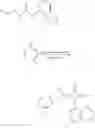
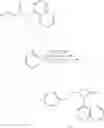
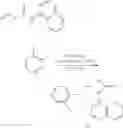
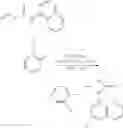
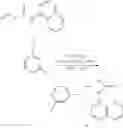
Reacting the substituted N-quinoline-3-butenamide derivative of Formula (1) and toluene or a toluene derivative of Formula (2) at 90-150° C. in the presence of di-tert-butyl peroxide (DTBP) and a copper salt catalyst, to give the β-lactam derivative of Formula (4), where the reaction route is as follows:
Or reacting the substituted N-quinoline-3-butenamide derivative of Formula (1) and a heterocyclic derivative of Formula (3) at 90-150° C. in the presence of di-tert-butyl peroxide and a copper salt catalyst, to give the β-lactam derivative of Formula (5), where the reaction route is as follows:
Wherein in Formulas (1)-(5), Y is an oxygen or sulfur atom;
R1, R2, and R3 are selected such that
R2 and R3 are hydrogen, and R1 is hydrogen, methyl, halo or trifluoromethyl;
or R1 and R2 are hydrogen, and R3 is C1-C6 alkyl or benzyl;
or R1 and R3 are hydrogen, and R2 is C1-C6 alkyl, allyl, benzyl, phenylethyl, cyclopropylmethyl, or cyclobutylmethyl.
In the above preparation method, the toluene derivative of Formula (2) and the heterocyclic derivative of Formula (3) act as a reaction substrate and a reaction solvent in the absence of other organic solvents.
In an embodiment, when the substituted N-quinoline-3-butenamide derivative of Formula (1) reacts with the heterocyclic derivative of Formula (3), R2 and R3 are hydrogen, and R1 is hydrogen, methyl, halo or trifluoromethyl. Preferably, R1 is hydrogen.
In an embodiment, the copper salt catalyst is selected from the group consisting of cuprous bromide (CuBr), copper acetate (Cu(OAc)2), cuprous chloride (CuCl), tetrakis(acetonitrile)copper hexafluorophosphate (Cu(CH3CN)4PF6), copper trifluoromethanesulfonate, copper oxide, copper bromide (CuBr2) and any combination thereof.
In an embodiment, the molar ratio of the substituted N-quinoline-3-butenamide derivative: di-tert-butyl peroxide:copper salt catalyst=1:1-3:0.05-0.2.
Preferably, the copper salt catalyst is tetrakis(acetonitrile)copper hexafluorophosphate.
Preferably, the molar ratio of the substituted N-quinoline-3-butenamide derivative: di-tert-butyl peroxide:copper salt catalyst=1:3:0.05-0.2. More preferably, the molar ratio of the substituted N-quinoline-3-butenamide derivative di-tert-butyl peroxide:copper salt catalyst=1:3:0.1.
In an embodiment, the reaction temperature is 130-150° C. Preferably, the reaction temperature is 130° C.
In an embodiment, the reaction system also comprises, in addition to toluene, the toluene derivative of Formula (2) or the heterocyclic derivative of Formula (3), an additional organic solvent.
Preferably, the organic solvent is selected from the group consisting of acetonitrile, tetrahydrofuran, N,N-dimethylformamide, isopropanol and any combination thereof.
Preferably, the reaction time is 8-10 h.
The present inventors found that the β-lactam derivative can be synthesized efficiently by initiating tandem radical cyclization. The present invention relates to a ring-forming reaction initiated by free radicals in presence of a copper salt catalyst. The reaction has mild reaction conditions and wide scope of application, and meets the requirements of green chemistry.
By means of the above solution, the present invention has the following advantages.
1. The present invention provides a novel system that utilizes the free radical reaction to synthesize a β-lactam derivative.
2. In the present invention, the substituted N-quinoline-3-butenamide derivative is used as a starting material, and a great variety of raw materials are easily available. In the method of the present invention, various products can be obtained, which can be used directly or used in further reactions.
3. The present invention provides a novel reaction with simple operations and post-treatment process and high yield, and thus is suitable for large-scale production.
The above description is only a summary of the technical solutions of the present invention. To make the technical means of the present invention clearer and implementable in accordance with the disclosure of the specification, the present invention will be described in detail hereinafter with reference to the preferred embodiments.
DETAILED DESCRIPTION OF THE PREFERRED EMBODIMENTS
The specific embodiments of the present invention will be described in further detail with reference to examples. The following examples are intended to illustrate the present invention, instead of limiting the scope of the present invention.
Example 1: Synthesis of 4-phenethyl-1-(quinolin-8-yl)azetidin-2-one
(1) N-(8-quinolyl)-3-butenamidela (0.042 g, 0.2 mmol), and Cu(CH3CN)4PF6 (0.008 g, 0.02 mmol) were weighed and dissolved in toluene (1 mL), and DTBP (0.088 g, 0.6 mmol) was added. The mixture was heated to 130° C. and reacted until the reaction was completed as indicated by TLC. After the reaction, the crude product was separated and purified by column chromatography on silica gel (petroleum ether:ethyl acetate=10:1) to obtain the compound 2a. The yield after separation was 92%.
(2) N-(8-quinolyl)-3-butenamide 1a (0.042 g, 0.2 mmol) and Cu(CH3CN)4PF6 (0.008 g, 0.02 mmol) were weighed and dissolved in toluene (1 mL), and DTBP (0.088 g, 0.6 mmol) was added. The mixture was heated to 110° C. and reacted until the reaction was completed as indicated by TLC. After the reaction, the crude product was separated and purified by column chromatography on silica gel (petroleum ether:ethyl acetate=10:1) to obtain the compound 2a. The yield after separation was 80%.
(3) N-(8-quinolyl)-3-butenamide 1a (0.042 g, 0.2 mmol) and Cu(CH3CN)4PF6 (0.008 g, 0.02 mmol) were weighed and dissolved in toluene (1 mL), and DTBP (0.088 g, 0.6 mmol) was added. The mixture was heated to 140° C. and reacted until the reaction was completed as indicated by TLC. After the reaction, the crude product was separated and purified by column chromatography on silica gel (petroleum ether:ethyl acetate=10:1) to obtain the compound 2a. The yield after separation was 90%.
(4) N-(8-quinolyl)-3-butenamide 1a (0.042 g, 0.2 mmol) and Cu(CH3CN)4PF6 (0.008 g, 0.02 mmol) were weighed and dissolved in toluene (1 mL), and DTBP (0.088 g, 0.6 mmol) was added. The mixture was heated to 90° C. and reacted until the reaction was completed as indicated by TLC. After the reaction, the crude product was separated and purified by column chromatography on silica gel (petroleum ether:ethyl acetate=10:1) to obtain the compound 2a. The yield after separation was 22%.
(5) N-(8-quinolyl)-3-butenamide 1a (0.042 g, 0.2 mmol) and CuBr2 (0.005 g, 0.02 mmol) were weighed and dissolved in toluene (1 mL), and DTBP (0.088 g, 0.6 mmol) was added. The mixture was heated to 130° C. and reacted until the reaction was completed as indicated by TLC. After the reaction, the crude product was separated and purified by column chromatography on silica gel (petroleum ether:ethyl acetate=10:1) to obtain the compound 2a. The yield after separation was 56%.
(6) N-(8-quinolyl)-3-butenamide 1a (0.042 g, 0.2 mmol) and Cu(OAc)2 (0.004 g, 0.02 mmol) were weighed and dissolved in toluene (1 mL), and DTBP (0.088 g, 0.6 mmol) was added. The mixture was heated to 130° C. and reacted until the reaction was completed as indicated by TLC. After the reaction, the crude product was separated and purified by column chromatography on silica gel (petroleum ether:ethyl acetate=10:1) to obtain the compound 2a. The yield after separation was 18%.
(7) N-(8-quinolyl)-3-butenamide 1a (0.042 g, 0.2 mmol) and CuBr (0.003 g, 0.02 mmol) were weighed and dissolved in toluene (1 mL), and DTBP (0.088 g, 0.6 mmol) was added. The mixture was heated to 130° C. and reacted until the reaction was completed as indicated by TLC. After the reaction, the crude product was separated and purified by column chromatography on silica gel (petroleum ether:ethyl acetate=10:1) to obtain the compound 2a. The yield after separation was 20%.
2a: 1H NMR (400 MHz, CDCl3) δ 8.78 (dd, J=4.1, 1.8 Hz, 1H), 8.27 (dd, J=7.5, 1.4 Hz, 1H), 8.11 (dd, J=8.3, 1.7 Hz, 1H), 7.57 (dd, J=8.2, 1.4 Hz, 1H), 7.54-7.47 (m, 1H), 7.39 (dd, J=8.3, 4.1 Hz, 1H), 7.29-7.21 (m, 2H), 7.20-7.15 (m, 1H), 7.14-7.10 (m, 2H), 5.20 (ddd, J=11.8, 5.6, 2.9 Hz, 1H), 3.32 (dd, J=15.0, 5.3 Hz, 1H), 2.82 (dd, J=15.0, 2.6 Hz, 1H), 2.74-2.62 (m, 2H), 2.37 (tdd, J=9.1, 7.2, 3.3 Hz, 1H), 1.84 (dtd, J=13.3, 8.7, 6.4 Hz, 1H); 13C NMR (101 MHz, CDCl3) δ 166.46 (s), 148.92 (s), 141.10 (s), 140.65 (s), 136.03 (s), 133.61 (s), 128.99 (s), 128.38 (s), 128.29 (s), 126.70 (s), 126.02 (s), 124.01 (s), 121.63 (s), 121.32 (s), 56.11 (s), 43.12 (s), 35.24 (s), 31.63 (s). HRMS(ESI-TOF) Calcd for C20H19N2O [M+H]+: 303.1497, found: 303.1512.
Example 2
Synthesis of 4-(3-methylphenethyl)-1-(quinolin-8-yl)azetidin-2-one
N-(8-quinolyl)-3-butenamide 1b (0.042 g, 0.2 mmol) and Cu(CH3CN)4PF6 (0.008 g, 0.02 mmol) were weighed and dissolved in m-xylene (1 mL), and DTBP (0.088 g, 0.6 mmol) was added. The mixture was heated to 130° C. and reacted until the reaction was completed as indicated by TLC. After the reaction, the crude product was separated and purified by column chromatography on silica gel (petroleum ether:ethyl acetate=10:1) to obtain the compound 2b. The yield after separation was 86%.
2b: 1H NMR (400 MHz, CDCl3) δ 8.80 (dd, J=4.1, 1.8 Hz, 1H), 8.28 (dd, J=7.5, 1.4 Hz, 1H), 8.11 (dd, J=8.3, 1.8 Hz, 1H), 7.57 (dd, J=8.2, 1.4 Hz, 1H), 7.54-7.46 (m, 1H), 7.39 (dd, J=8.3, 4.1 Hz, 1H), 7.18-7.12 (m, 1H), 7.00 (d, J=7.6 Hz, 1H), 6.93 (d, J=6.5 Hz, 2H), 5.21 (ddd, J=11.7, 5.7, 3.0 Hz, 1H), 3.33 (dd, J=15.0, 5.3 Hz, 1H), 2.84 (dd, J=15.0, 2.6 Hz, 1H), 2.69-2.63 (m, 2H), 2.41-2.34 (m, 1H), 2.31 (s, 2H), 1.93-1.78 (m, 1H); 13C NMR (101 MHz, CDCl3) δ 166.05 (s), 148.48 (s), 140.59 (s), 140.22 (s), 137.45 (s), 135.56 (s), 133.18 (s), 128.62 (s), 128.53 (s), 127.83 (s), 126.28 (s), 126.23 (s), 124.83 (s), 123.58 (s), 121.19 (s), 120.86 (s), 55.70 (s), 42.65 (s), 34.78 (s), 31.05 (s), 20.92 (s); HRMS Calcd for C21H21N2O [M+H]+: 317.1654, Found: 317.1669.
Example 3
Synthesis of 4-(4-methylphenethyl)-1-(quinolin-8-yl)azetidin-2-one
N-(8-quinolyl)-3-butenamide 1c (0.042 g, 0.2 mmol) and Cu(CH3CN)4PF6 (0.008 g, 0.02 mmol) were weighed and dissolved in p-xylene (1 mL), and DTBP (0.088 g, 0.6 mmol) was added. The mixture was heated to 130° C. and reacted until the reaction was completed as indicated by TLC. After the reaction, the crude product was separated and purified by column chromatography on silica gel (petroleum ether:ethyl acetate=10:1) to obtain the compound 2c. The yield after separation was 62%.
2c: 1H NMR (400 MHz, CDCl3) δ 8.80 (dd, J=4.1, 1.8 Hz, 1H), 8.26 (dd, J=7.5, 1.4 Hz, 1H), 8.12 (dd, J=8.3, 1.7 Hz, 1H), 7.58 (dd, J=8.2, 1.4 Hz, 1H), 7.54-7.47 (m, 1H), 7.39 (dd, J=8.3, 4.1 Hz, 1H), 7.07 (d, J=7.9 Hz, 2H), 7.01 (d, J=8.1 Hz, 2H), 5.19 (ddd, J=11.8, 5.7, 3.0 Hz, 1H), 3.32 (dd, J=15.0, 5.3 Hz, 1H), 2.82 (dd, J=15.0, 2.6 Hz, 1H), 2.69-2.60 (m, 2H), 2.45-2.32 (m, 1H), 2.30 (s, 3H), 1.90-1.76 (m, 1H); 13C NMR (101 MHz, CDCl3) δ 166.55 (s), 148.95 (s), 140.68 (s), 138.00 (s), 136.04 (s), 135.47 (s), 133.64 (s), 129.06 (s), 129.00 (s), 128.15 (s), 126.70 (s), 124.04 (s), 121.67 (s), 121.33 (s), 56.18 (s), 43.09 (s), 35.30 (s), 31.15 (s), 21.00 (s); HRMS Calcd for C21H21N2O [M+H]+: 317.1654, Found: 317.1668.
Example 4
Synthesis of 4-(2-methylphenethyl)-1-(quinolin-8-yl)azetidin-2-one
N-(8-quinolyl)-3-butenamide 1d (0.042 g, 0.2 mmol) and Cu(CH3CN)4PF6 (0.008 g, 0.02 mmol) were weighed and dissolved in o-xylene (1 mL), and DTBP (0.088 g, 0.6 mmol) was added. The mixture was heated to 130° C. and reacted until the reaction was completed as indicated by TLC. After the reaction, the crude product was separated and purified by column chromatography on silica gel (petroleum ether:ethyl acetate=10:1) to obtain the compound 2d. The yield after separation was 80%.
2d: 1H NMR (400 MHz, CDCl3) δ 8.79 (dd, J=4.1, 1.8 Hz, 1H), 8.30 (dd, J=7.5, 1.5 Hz, 1H), 8.11 (dd, J=8.3, 1.8 Hz, 1H), 7.57 (dd, J=8.2, 1.4 Hz, 1H), 7.54-7.49 (m, 1H), 7.39 (dd, J=8.3, 4.1 Hz, 1H), 7.11-7.05 (m, 4H), 5.25 (ddd, J=11.6, 5.7, 3.0 Hz, 1H), 3.37 (dd, J=15.0, 5.3 Hz, 1H), 2.88 (dd, J=15.0, 2.6 Hz, 1H), 2.66 (t, J=8.0 Hz, 2H), 2.36-2.28 (m, 1H), 2.17 (s, 3H), 1.85-1.75 (m, 1H). 13C NMR (101 MHz, CDCl3) δ 166.02 (s), 148.43 (s), 140.12 (s), 138.84 (s), 135.59 (s), 135.24 (s), 133.21 (s), 129.75 (s), 128.53 (s), 128.17 (s), 126.26 (s), 125.70 (s), 125.54 (s), 123.54 (s), 121.08 (s), 120.86 (s), 55.80 (s), 42.66 (s), 33.70 (s), 28.45 (s), 18.60 (s). 43.09 (s), 35.30 (s), 31.15 (s), 21.00 (s); HRMS Calcd for C21H21N2O [M+H]+: 317.1654, Found: 317.1693.
Example 5
Synthesis of 4-(2-chlorophenethyl)-1-(quinolin-8-yl)azetidin-2-one
N-(8-quinolyl)-3-butenamide 1e (0.042 g, 0.2 mmol) and Cu(CH3CN)4PF6 (0.008 g, 0.02 mmol) were weighed and dissolved in o-chlorotoluene (1 mL), and DTBP (0.088 g, 0.6 mmol) was added. The mixture was heated to 130° C. and reacted until the reaction was completed as indicated by TLC. After the reaction, the crude product was separated and purified by column chromatography on silica gel (petroleum ether:ethyl acetate=10:1) to obtain the compound 2e. The yield after separation was 83%.
2e: 1H NMR (400 MHz, CDCl3) δ 8.77 (dd, J=4.1, 1.8 Hz, 1H), 8.28 (dd, J=7.5, 1.4 Hz, 1H), 8.11 (dd, J=8.3, 1.7 Hz, 1H), 7.57 (dd, J=8.1, 1.4 Hz, 1H), 7.52-7.47 (m, 1H), 7.39 (dd, J=8.3, 4.1 Hz, 1H), 7.31-7.28 (m, 1H), 7.15-7.08 (m, 3H), 5.23 (ddd, J=11.8, 5.6, 2.9 Hz, 1H), 3.36 (dd, J=15.0, 5.3 Hz, 1H), 2.88 (dd, J=15.0, 2.6 Hz, 1H), 2.79 (dd, J=8.7, 6.8 Hz, 2H), 2.36 (dtd, J=11.0, 8.0, 3.3 Hz, 1H), 1.90-1.78 (m, 1H). 13C NMR (101 MHz, CDCl3) δ 165.94 (s), 148.42 (s), 140.08 (s), 138.30 (s), 135.52 (s), 133.36 (s), 133.18 (s), 129.78 (s), 129.02 (s), 128.50 (s), 127.07 (s), 126.33 (s), 126.22 (s), 123.46 (s), 120.99 (s), 120.83 (s), 55.58 (s), 42.68 (s), 33.30 (s), 28.99 (s); HRMS Calcd for C20H18ClN2O [M+H]+: 337.1108, Found: 317.1122.
Example 6
Synthesis of 4-(3-chlorophenethyl)-1-(quinolin-8-yl)azetidin-2-one
N-(8-quinolyl)-3-butenamide 1f (0.042 g, 0.2 mmol) and Cu(CH3CN)4PF6 (0.008 g, 0.02 mmol) were weighed and dissolved in m-chlorotoluene (1 mL), and DTBP (0.088 g, 0.6 mmol) was added. The mixture was heated to 130° C. and reacted until the reaction was completed as indicated by TLC. After the reaction, the crude product was separated and purified by column chromatography on silica gel (petroleum ether:ethyl acetate=10:1) to obtain the compound 2f. The yield after separation was 82%.
2f: 1H NMR (400 MHz, CDCl3) δ 8.79 (dd, J=4.1, 1.8 Hz, 1H), 8.26 (dd, J=7.5, 1.4 Hz, 1H), 8.13 (dd, J=8.3, 1.8 Hz, 1H), 7.58 (dd, J=8.2, 1.4 Hz, 1H), 7.54-7.47 (m, 1H), 7.41 (dd, J=8.3, 4.1 Hz, 1H), 7.17 (dd, J=12.3, 5.0 Hz, 2H), 7.12 (s, 1H), 7.01-6.97 (m, 1H), 5.19 (ddd, J=11.8, 5.7, 3.0 Hz, 1H), 3.33 (dd, J=15.0, 5.3 Hz, 1H), 2.82 (dd, J=15.0, 2.6 Hz, 1H), 2.75-2.59 (m, 2H), 2.42-2.31 (m, 1H), 1.84 (dtd, J=13.4, 8.8, 6.0 Hz, 1H). 13C NMR (101 MHz, CDCl3) δ 166.24 (s), 149.00 (s), 143.08 (s), 140.56 (s), 136.07 (s), 134.15 (s), 133.53 (s), 129.61 (s), 129.00 (s), 128.35 (s), 126.72 (s), 126.58 (s), 126.23 (s), 124.05 (s), 121.57 (s), 121.38 (s), 55.81 (s), 43.09 (s), 34.84 (s), 31.28 (s); HRMS Calcd for C20H17ClN2ONa [M+Na]+: 359.0927, Found: 359.0939.
Example 7
Synthesis of 4-(4-chlorophenethyl)-1-(quinolin-8-yl)azetidin-2-one
N-(8-quinolyl)-3-butenamide 1 g (0.042 g, 0.2 mmol) and Cu(CH3CN)4PF6 (0.008 g, 0.02 mmol) were weighed and dissolved in p-chlorotoluene (1 mL), and DTBP (0.088 g, 0.6 mmol) was added. The mixture was heated to 130° C. and reacted until the reaction was completed as indicated by TLC. After the reaction, the crude product was separated and purified by column chromatography on silica gel (petroleum ether:ethyl acetate=10:1) to obtain the compound 2g. The yield after separation was 83%.
2 g: 1H NMR (400 MHz, CDCl3) δ 8.76 (dd, J=4.1, 1.8 Hz, 1H), 8.24 (dd, J=7.5, 1.4 Hz, 1H), 8.12 (dd, J=8.3, 1.7 Hz, 1H), 7.58 (dd, J=8.2, 1.3 Hz, 1H), 7.52-7.47 (m, 1H), 7.40 (dd, J=8.3, 4.1 Hz, 1H), 7.22-7.18 (m, 2H), 7.03 (d, J=8.4 Hz, 2H), 5.18 (ddd, J=11.7, 5.7, 3.0 Hz, 1H), 3.32 (dd, J=15.0, 5.3 Hz, 1H), 2.81 (dd, J=15.0, 2.6 Hz, 1H), 2.69-2.58 (m, 2H), 2.33 (tdd, J=9.2, 7.3, 3.3 Hz, 1H), 1.83 (dtd, J=13.4, 8.7, 6.3 Hz, 2H). 13C NMR (101 MHz, CDCl3) δ 165.82 (s), 148.44 (s), 140.12 (s), 139.04 (s), 135.60 (s), 133.05 (s), 131.25 (s), 129.14 (s), 128.52 (s), 127.97 (s), 126.24 (s), 123.59 (s), 121.14 (s), 120.88 (s), 55.42 (s), 42.57 (s), 34.58 (s), 30.46 (s); HRMS Calcd for C20H18ClN2O[M+H]+: 337.1108, Found: 337.1118.
Example 8
Synthesis of 4-(2-(furan-2-yl)ethyl)-1-(quinolin-8-yl)azetidin-2-one
N-(8-quinolyl)-3-butenamide 1h (0.042 g, 0.2 mmol) and Cu(CH3CN)4PF6 (0.008 g, 0.02 mmol) were weighed and dissolved in 2-methylfuran (1 mL), and DTBP (0.088 g, 0.6 mmol) was added. The mixture was heated to 130° C. and reacted until the reaction was completed as indicated by TLC. After the reaction, the crude product was separated and purified by column chromatography on silica gel (petroleum ether:ethyl acetate=10:1) to obtain the compound 2h. The yield after separation was 80%.
2h: 1H NMR (400 MHz, CDCl3) δ 8.82 (dd, J=4.1, 1.8 Hz, 1H), 8.25 (dd, J=7.5, 1.4 Hz, 1H), 8.13 (dd, J=8.3, 1.8 Hz, 1H), 7.58 (dd, J=8.2, 1.4 Hz, 1H), 7.54-7.48 (m, 1H), 7.40 (dd, J=8.3, 4.1 Hz, 1H), 7.27 (dd, J=1.8, 0.7 Hz, 1H), 6.26 (dd, J=3.1, 1.9 Hz, 1H), 5.98 (dd, J=3.1, 0.8 Hz, 1H), 5.23 (ddd, J=11.7, 5.7, 3.0 Hz, 1H), 3.31 (dd, J=15.1, 5.3 Hz, 1H), 2.76 (dd, J=15.1, 2.6 Hz, 1H), 2.70 (t, J=7.5 Hz, 2H), 2.41-2.33 (m, 1H), 1.93-1.83 (m, 1H). 13C NMR (101 MHz, CDCl3) δ 165.89 (s), 154.26 (s), 148.50 (s), 140.48 (s), 140.18 (s), 135.56 (s), 133.08 (s), 128.53 (s), 126.22 (s), 123.57 (s), 121.15 (s), 120.86 (s), 109.73 (s), 104.73 (s), 55.47 (s), 42.56 (s), 31.62 (s), 23.51 (s); HRMS Calcd for C18H17N2O2 [M+H+]: 293.1290, Found: 293.1300.
Example 9
Synthesis of 1-(quinolin-8-yl)-4-(2-(thiophen-2-yl)ethyl)azetidin-2-one
N-(8-quinolyl)-3-butenamide 1i (0.042 g, 0.2 mmol) and Cu(CH3CN)4PF6 (0.008 g, 0.02 mmol) were weighed and dissolved in 2-methylthiophene (1 mL), and DTBP (0.088 g, 0.6 mmol) was added. The mixture was heated to 130° C. and reacted until the reaction was completed as indicated by TLC. After the reaction, the crude product was separated and purified by column chromatography on silica gel (petroleum ether:ethyl acetate=10:1) to obtain the compound 2i. The yield after separation was 65%.
2i: 1H NMR (400 MHz, CDCl3) δ 8.81 (dd, J=4.1, 1.7 Hz, 1H), 8.26 (dd, J=7.5, 1.4 Hz, 1H), 8.13 (dd, J=8.3, 1.7 Hz, 1H), 7.58 (dd, J=8.2, 1.3 Hz, 1H), 7.54-7.48 (m, 1H), 7.40 (dd, J=8.3, 4.1 Hz, 1H), 7.10 (dd, J=5.1, 1.1 Hz, 1H), 6.89 (dd, J=5.1, 3.4 Hz, 1H), 6.76 (dd, J=2.3, 1.0 Hz, 1H), 5.25 (ddd, J=11.7, 5.7, 3.0 Hz, 1H), 3.33 (dd, J=15.0, 5.3 Hz, 1H), 2.91 (t, J=7.6 Hz, 2H), 2.83 (dd, J=15.0, 2.6 Hz, 1H), 2.43 (dtd, J=11.5, 8.0, 3.4 Hz, 1H), 1.92 (ddt, J=13.4, 9.1, 7.3 Hz, 1H). 13C NMR (101 MHz, CDCl3) δ 8.81 (dd, J=4.1, 1.7 Hz, 1H), 8.26 (dd, J=7.5, 1.4 Hz, 1H), 8.13 (dd, J=8.3, 1.7 Hz, 1H), 7.58 (dd, J=8.2, 1.3 Hz, 1H), 7.54-7.48 (m, 1H), 7.40 (dd, J=8.3, 4.1 Hz, 1H), 7.10 (dd, J=5.1, 1.1 Hz, 1H), 6.89 (dd, J=5.1, 3.4 Hz, 1H), 6.76 (dd, J=2.3, 1.0 Hz, 1H), 5.25 (ddd, J=11.7, 5.7, 3.0 Hz, 1H), 3.33 (dd, J=15.0, 5.3 Hz, 1H), 2.91 (t, J=7.6 Hz, 2H), 2.83 (dd, J=15.0, 2.6 Hz, 1H), 2.43 (dtd, J=11.5, 8.0, 3.4 Hz, 1H), 1.92 (ddt, J=13.4, 9.1, 7.3 Hz, 1H). 23.51; HRMS Calcd for C18H17N2OS [M+H]+: 309.1062, Found: 309.1077.
Example 10
Synthesis of 4-(3-fluorophenethyl)-1-(quinolin-8-yl)azetidin-2-one
N-(8-quinolyl)-3-butenamide 1j (0.042 g, 0.2 mmol) and Cu(CH3CN)4PF6 (0.008 g, 0.02 mmol) were weighed and dissolved in m-fluorotoluene (1 mL), and DTBP (0.088 g, 0.6 mmol) was added. The mixture was heated to 130° C. and reacted until the reaction was completed as indicated by TLC. After the reaction, the crude product was separated and purified by column chromatography on silica gel (petroleum ether:ethyl acetate=10:1) to obtain the compound 2j. The yield after separation was 64%.
2j: 1H NMR (400 MHz, CDCl3) δ 8.79 (dd, J=4.1, 1.8 Hz, 1H), 8.26 (dd, J=7.5, 1.4 Hz, 1H), 8.12 (dd, J=8.4, 1.7 Hz, 1H), 7.58 (dd, J=8.2, 1.3 Hz, 1H), 7.53-7.47 (m, 1H), 7.40 (dd, J=8.3, 4.1 Hz, 1H), 7.20 (td, J=7.8, 6.2 Hz, 1H), 6.91-6.82 (m, 3H), 5.19 (ddd, J=11.8, 5.6, 3.0 Hz, 1H), 3.32 (dd, J=15.0, 5.3 Hz, 1H), 2.81 (dd, J=15.0, 2.6 Hz, 1H), 2.75-2.62 (m, 2H), 2.45-2.31 (m, 1H), 1.90-1.77 (m, 1H). 19F NMR (376 MHz, CDCl3) δ−113.64 (s). 13C NMR (101 MHz, CDCl3) δ 165.81 (s), 163.64 (s), 161.20 (s), 148.49 (s), 143.14 (d, J=7.2 Hz), 140.10 (s), 135.60 (s), 133.07 (s), 129.30 (d, J=8.4 Hz), 128.53 (s), 126.24 (s), 123.73-123.07 (m), 121.09 (s), 120.90 (s), 114.61 (d, J=21.0 Hz), 112.42 (d, J=20.9 Hz), 55.38 (s), 42.59 (s), 34.33 (s), 30.84 (s); HRMS Calcd for C20H18FN2O [M+H]+: 321.1403, Found: 321.1400.
Example 11
Synthesis of 4-(2-fluorophenethyl)-1-(quinolin-8-yl)azetidin-2-one
N-(8-quinolyl)-3-butenamide 1k (0.042 g, 0.2 mmol) and Cu(CH3CN)4PF6 (0.008 g, 0.02 mmol) were weighed and dissolved in o-fluorotoluene (1 mL), and DTBP (0.088 g, 0.6 mmol) was added. The mixture was heated to 130° C. and reacted until the reaction was completed as indicated by TLC. After the reaction, the crude product was separated and purified by column chromatography on silica gel (petroleum ether:ethyl acetate=10:1) to obtain the compound 2k. The yield after separation was 82%.
2k: 1H NMR (400 MHz, CDCl3) δ 8.73 (dd, J=4.1, 1.8 Hz, 1H), 8.27 (dd, J=7.5, 1.4 Hz, 1H), 8.10 (dd, J=8.3, 1.8 Hz, 1H), 7.55 (dd, J=8.2, 1.4 Hz, 1H), 7.52-7.45 (m, 1H), 7.37 (dd, J=8.3, 4.1 Hz, 1H), 7.19-7.08 (m, 2H), 7.04-6.92 (m, 2H), 5.19 (ddd, J=12.1, 5.5, 2.9 Hz, 1H), 3.33 (dd, J=15.0, 5.3 Hz, 1H), 2.83 (dd, J=15.1, 2.6 Hz, 1H), 2.71 (t, J=7.7 Hz, 2H), 2.37 (dtd, J=11.3, 8.0, 3.2 Hz, 1H), 1.89-1.73 (m, 2H). 19F NMR (376 MHz, CDCl3) δ−118.68 (s). 13C NMR (101 MHz, CDCl3) δ 165.94 (s), 161.79 (s), 159.36 (s), 148.40 (s), 140.07 (s), 135.52 (s), 133.13 (s), 129.98 (d, J=4.9 Hz), 128.49 (s), 127.60 (s), 127.45 (s), 127.32 (d, J=8.1 Hz), 126.20 (s), 123.50 (d, J=4.0 Hz), 120.92 (d, J=16.5 Hz), 114.74 (d, J=22.1 Hz), 55.56 (s), 42.67 (s), 33.57 (s), 24.46 (d, J=2.6 Hz); HRMS Calcd for C20H18FN2O [M+H]+: 321.1403, Found: 321.1398.
Example 12
Synthesis of 4-(2-bromophenethyl)-1-(quinolin-8-yl)azetidin-2-one
N-(8-quinolyl)-3-butenamide 11 (0.042 g, 0.2 mmol) and Cu(CH3CN)4PF6 (0.008 g, 0.02 mmol) were weighed and dissolved in o-bromotoluene (1 mL), and DTBP (0.088 g, 0.6 mmol) was added. The mixture was heated to 130° C. and reacted until the reaction was completed as indicated by TLC. After the reaction, the crude product was separated and purified by column chromatography on silica gel (petroleum ether:ethyl acetate=10:1) to obtain the compound 21. The yield after separation was 82%.
2l: 1H NMR (400 MHz, CDCl3) δ 8.77 (dd, J=4.1, 1.8 Hz, 1H), 8.28 (dd, J=7.5, 1.5 Hz, 1H), 8.10 (dd, J=8.3, 1.8 Hz, 1H), 7.56 (dd, J=8.2, 1.4 Hz, 1H), 7.52-7.45 (m, 2H), 7.38 (dd, J=8.3, 4.1 Hz, 1H), 7.15 (ddd, J=9.6, 7.4, 1.5 Hz, 2H), 7.05-6.99 (m, 1H), 5.24 (ddd, J=11.7, 5.6, 2.9 Hz, 1H), 3.36 (dd, J=15.0, 5.3 Hz, 1H), 2.90 (dd, J=15.0, 2.6 Hz, 1H), 2.78 (dd, J=9.1, 7.1 Hz, 2H), 2.34 (dtd, J=9.0, 7.9, 3.3 Hz, 1H), 1.87-1.80 (m, 1H). 13C NMR (101 MHz, CDCl3) δ 165.95 (s), 148.46 (s), 140.09 (s), 140.00 (s), 135.53 (s), 133.19 (s), 132.34 (s), 129.77 (s), 128.50 (s), 127.33 (s), 127.00 (s), 126.22 (s), 123.83 (s), 123.49 (s), 121.01 (s), 120.84 (s), 55.53 (s), 42.68 (s), 33.48 (s), 31.55 (s); HRMS Calcd for C20H18BrN2O [M+H]+: 381.0603, Found: 381.0607.
Example 13
Synthesis of 4-(2-iodophenethyl)-1-(quinolin-8-yl)azetidin-2-one
N-(8-quinolyl)-3-butenamide 1m (0.042 g, 0.2 mmol) and Cu(CH3CN)4PF6 (0.008 g, 0.02 mmol) were weighed and dissolved in o-iodotoluene (1 mL), and DTBP (0.088 g, 0.6 mmol) was added. The mixture was heated to 130° C. and reacted until the reaction was completed as indicated by TLC. After the reaction, the crude product was separated and purified by column chromatography on silica gel (petroleum ether:ethyl acetate=10:1) to obtain the compound 2m. The yield after separation was 80%.
2m: 1H NMR (400 MHz, CDCl3) δ 8.79 (dt, J=12.6, 6.3 Hz, 1H), 8.29 (dd, J=7.5, 1.4 Hz, 1H), 8.10 (dd, J=8.3, 1.7 Hz, 1H), 7.75 (dd, J=7.9, 1.1 Hz, 1H), 7.56 (dd, J=8.1, 1.4 Hz, 1H), 7.52-7.45 (m, 1H), 7.38 (dd, J=8.3, 4.1 Hz, 1H), 7.21 (td, J=7.5, 1.1 Hz, 1H), 7.12 (dd, J=7.6, 1.6 Hz, 1H), 6.84 (td, J=7.7, 1.7 Hz, 1H), 5.26 (ddd, J=11.6, 5.7, 3.0 Hz, 1H), 3.37 (dd, J=15.0, 5.3 Hz, 1H), 2.94 (dd, J=15.0, 2.6 Hz, 1H), 2.83-2.65 (m, 1H), 2.41-2.17 (m, 1H), 1.89-1.73 (m, 1H). 13C NMR (101 MHz, CDCl3) δ 165.93 (s), 148.53 (s), 143.25 (s), 140.13 (s), 139.03 (s), 135.54 (s), 133.21 (s), 128.82 (s), 128.53 (s), 127.92 (s), 127.46 (s), 126.24 (s), 123.50 (s), 121.05 (s), 120.85 (s), 99.84 (s), 55.46 (s), 42.71 (s), 36.20 (s), 33.83 (s); HRMS Calcd for C20H18BrN2O[M+H]+: 429.0464, Found: 429.0474.
Example 14
Synthesis of 4-(3-iodophenethyl)-1-(quinolin-8-yl)azetidin-2-one
N-(8-quinolyl)-3-butenamide in (0.042 g, 0.2 mmol) and Cu(CH3CN)4PF6 (0.008 g, 0.02 mmol) were weighed and dissolved in m-iodotoluene (1 mL), and DTBP (0.088 g, 0.6 mmol) was added. The mixture was heated to 130° C. and reacted until the reaction was completed as indicated by TLC. After the reaction, the crude product was separated and purified by column chromatography on silica gel (petroleum ether:ethyl acetate=10:1) to obtain the compound 2n. The yield after separation was 62%.
2n: 1H NMR (400 MHz, CDCl3) δ 8.79 (dd, J=4.1, 1.8 Hz, 1H), 8.24 (dd, J=7.5, 1.4 Hz, 1H), 8.13 (dd, J=8.4, 1.7 Hz, 1H), 7.58 (dd, J=8.2, 1.4 Hz, 1H), 7.54-7.46 (m, 3H), 7.41 (dd, J=8.3, 4.1 Hz, 1H), 7.07 (d, J=8.0 Hz, 1H), 6.98 (t, J=7.7 Hz, 1H), 5.18 (ddd, J=11.8, 5.7, 3.0 Hz, 1H), 3.32 (dd, J=15.0, 5.3 Hz, 1H), 2.81 (dd, J=15.0, 2.6 Hz, 1H), 2.70-2.52 (m, 2H), 2.34 (dddd, J=12.7, 9.2, 7.2, 3.3 Hz, 1H), 1.82 (dtd, J=13.4, 8.8, 5.9 Hz, 1H). 13C NMR (101 MHz, CDCl3) δ 166.26 (s), 149.06 (s), 143.53 (s), 140.57 (s), 137.23 (s), 136.08 (s), 135.13 (s), 133.50 (s), 130.11 (s), 129.00 (s), 127.68 (s), 126.71 (s), 124.09 (s), 121.59 (s), 121.40 (s), 94.51 (s), 55.82 (s), 43.09 (s), 34.91 (s), 31.17 (s); HRMS Calcd for C20H18BrN2O[M+H]+: 429.0464, Found: 429.0472.
Example 15
Synthesis of 4-(4-iodophenethyl)-1-(quinolin-8-yl)azetidin-2-one
N-(8-quinolyl)-3-butenamide to (0.042 g, 0.2 mmol) and Cu(CH3CN)4PF6 (0.008 g, 0.02 mmol) were weighed and dissolved in p-iodotoluene (1 mL), and DTBP (0.088 g, 0.6 mmol) was added. The mixture was heated to 130° C. and reacted until the reaction was completed as indicated by TLC. After the reaction, the crude product was separated and purified by column chromatography on silica gel (petroleum ether:ethyl acetate=10:1) to obtain the compound 2o. The yield after separation was 52%.
2o: 1H NMR (400 MHz, CDCl3) δ 8.76 (dd, J=4.1, 1.8 Hz, 1H), 8.23 (dd, J=7.5, 1.3 Hz, 1H), 8.12 (dd, J=8.3, 1.7 Hz, 1H), 7.58 (dd, J=8.2, 1.3 Hz, 1H), 7.56-7.52 (m, 2H), 7.50 (t, J=7.8 Hz, 1H), 7.40 (dd, J=8.3, 4.1 Hz, 1H), 6.85 (d, J=8.3 Hz, 2H), 5.18 (ddd, J=11.6, 5.6, 3.0 Hz, 1H), 3.32 (dd, J=15.0, 5.3 Hz, 1H), 2.81 (dd, J=15.0, 2.6 Hz, 1H), 2.68-2.54 (m, 2H), 2.32 (tdd, J=9.1, 7.2, 3.3 Hz, 1H), 1.83 (dtd, J=13.5, 8.7, 6.3 Hz, 1H). 13C NMR (101 MHz, CDCl3) δ 166.29 (s), 148.92 (s), 140.72 (s), 140.58 (s), 137.37 (s), 136.09 (s), 133.51 (s), 130.38 (s), 128.99 (s), 126.73 (s), 124.08 (s), 121.62 (s), 121.37 (s), 91.01 (s), 55.89 (s), 43.04 (s), 34.93 (s), 31.09 (s); HRMS Calcd for C20H18BrN2O [M+H]+: 429.0464, Found: 429.0472.
Example 16
Synthesis of 1-(quinolin-8-yl)-4-(2-(trifluoromethyl)phenethyl)azetidin-2-one
N-(8-quinolyl)-3-butenamide 1p (0.042 g, 0.2 mmol) and Cu(CH3CN)4PF6 (0.008 g, 0.02 mmol) were weighed and dissolved in o-trifluoromethyltoluene (1 mL), and DTBP (0.088 g, 0.6 mmol) was added. The mixture was heated to 130° C. and reacted until the reaction was completed as indicated by TLC. After the reaction, the crude product was separated and purified by column chromatography on silica gel (petroleum ether:ethyl acetate=10:1) to obtain the compound 2p. The yield after separation was 76%.
2p: 1H NMR (400 MHz, CDCl3) δ 8.81 (dd, J=4.1, 1.7 Hz, 1H), 8.28 (dd, J=7.5, 1.3 Hz, 1H), 8.11 (dd, J=8.3, 1.7 Hz, 1H), 7.60-7.54 (m, 2H), 7.50 (t, J=7.8 Hz, 1H), 7.40 (dd, J=8.3, 4.3 Hz, 2H), 7.23 (dd, J=13.9, 7.4 Hz, 2H), 5.26 (ddd, J=11.7, 5.6, 3.0 Hz, 1H), 3.38 (dd, J=15.0, 5.3 Hz, 1H), 2.88 (dd, J=15.0, 2.6 Hz, 1H), 2.86-2.75 (m, 2H), 2.44-2.30 (m, 1H), 1.92-1.76 (m, 1H). 19F NMR (376 MHz, CDCl3) δ−59.65 (s). 13C NMR (101 MHz, CDCl3) δ 166.33 (s), 148.93 (s), 140.54 (s), 140.01 (s), 136.03 (s), 133.58 (s), 131.73 (s), 130.90 (s), 128.99 (s), 128.29 (dd, J=50.2, 20.6 Hz), 126.69 (s), 126.12 (s), 125.96 (q, J=272.0 Hz), 125.96 (d, J=5.7 Hz), 123.99 (s), 121.49 (s), 121.34 (s), 56.12 (s), 43.15 (s), 35.93 (s), 28.44 (s); HRMS Calcd for C21H17F3N2ONa [M+Na]+: 393.1191, Found: 393.1196.
Example 17
Synthesis of 1-(quinolin-8-yl)-4-(3-(trifluoromethyl)phenethyl)azetidin-2-one
N-(8-quinolyl)-3-butenamide 1q (0.042 g, 0.2 mmol) and Cu(CH3CN)4PF6 (0.008 g, 0.02 mmol) were weighed and dissolved in m-trifluoromethyltoluene (1 mL), and DTBP (0.088 g, 0.6 mmol) was added. The mixture was heated to 130° C. and reacted until the reaction was completed as indicated by TLC. After the reaction, the crude product was separated and purified by column chromatography on silica gel (petroleum ether:ethyl acetate=10:1) to obtain the compound 2q. The yield after separation was 64%.
2q: 1H NMR (400 MHz, CDCl3) δ 8.75 (dd, J=4.1, 1.8 Hz, 1H), 8.25 (dd, J=7.5, 1.4 Hz, 1H), 8.12 (dd, J=8.4, 1.7 Hz, 1H), 7.58 (dd, J=8.2, 1.4 Hz, 1H), 7.54-7.47 (m, 1H), 7.43 (d, J=7.8 Hz, 1H), 7.40 (dd, J=8.4, 4.2 Hz, 1H), 7.35 (d, J=7.2 Hz, 2H), 7.29 (d, J=7.4 Hz, 1H), 5.21 (ddd, J=11.7, 5.7, 3.1 Hz, 1H), 3.34 (dd, J=15.0, 5.3 Hz, 1H), 2.83 (dd, J=15.0, 2.6 Hz, 1H), 2.78-2.67 (m, 2H), 2.45-2.33 (m, 1H), 1.89 (dtd, J=13.4, 8.8, 6.2 Hz, 1H). 19F NMR (376 MHz, CDCl3) δ−62.54 (s). 13C NMR (101 MHz, CDCl3) δ 166.22 (s), 148.95 (s), 141.98 (s), 140.57 (s), 136.10 (s), 133.47 (s), 131.74 (s), 130.70 (q, J=33.3 Hz), 129.01 (s), 128.80 (s), 126.71 (s), 125.35 (q, J=241.0 Hz), 124.92 (q, J=3.7 Hz), 124.13 (s), 122.94 (dd, J=7.5, 3.6 Hz), 121.64 (s), 121.39 (s), 55.81 (s), 43.07 (s), 34.98 (s), 31.44 (s); HRMS Calcd for C21H17F3N2ONa [M+Na+]: 393.1191, Found: 393.1198.
Example 18
Synthesis of 1-(quinolin-8-yl)-4-(4-(trifluoromethyl)phenethyl)azetidin-2-one
N-(8-quinolyl)-3-butenamide 1r (0.042 g, 0.2 mmol) and Cu(CH3CN)4PF6 (0.008 g, 0.02 mmol) were weighed and dissolved in p-trifluoromethyltoluene (1 mL), and DTBP (0.088 g, 0.6 mmol) was added. The mixture was heated to 130° C. and reacted until the reaction was completed as indicated by TLC. After the reaction, the crude product was separated and purified by column chromatography on silica gel (petroleum ether:ethyl acetate=10:1) to obtain the compound 2r. The yield after separation was 48%.
2r: 1H NMR (400 MHz, CDCl3) δ 8.75 (dd, J=4.1, 1.7 Hz, 1H), 8.24 (dd, J=7.5, 1.4 Hz, 1H), 8.12 (dd, J=8.3, 1.7 Hz, 1H), 7.58 (dd, J=8.1, 1.3 Hz, 1H), 7.50 (t, J=8.0 Hz, 3H), 7.40 (dd, J=8.3, 4.1 Hz, 1H), 7.21 (d, J=8.1 Hz, 2H), 5.21 (ddd, J=11.6, 5.6, 3.0 Hz, 1H), 3.34 (dd, J=15.0, 5.3 Hz, 1H), 2.84 (dd, J=15.0, 2.6 Hz, 1H), 2.74 (dt, J=14.0, 6.1 Hz, 2H), 2.43-2.32 (m, 1H), 1.90 (dtd, J=13.5, 8.8, 6.3 Hz, 1H). 19F NMR (376 MHz, CDCl3) δ−62.36 (s). 13C NMR (101 MHz, CDCl3) δ 166.21 (s), 148.89 (s), 145.24 (s), 140.56 (s), 136.12 (s), 133.48 (s), 129.00 (s), 128.59 (s), 126.73 (s), 125.58 (q, J=268.7 Hz), 125.41 (d, J=4.0 Hz), 125.27 (dd, J=7.6, 3.8 Hz), 124.11 (s), 121.61 (s), 121.37 (s), 55.83 (s), 43.02 (s), 34.88 (s), 31.40 (s); HRMS Calcd for C21H18F3N2O [M+H+]: 371.1371, Found: 371.1382.
Example 19
Synthesis of 3-methyl-4-phenethyl-1-(quinolin-8-yl)azetidin-2-one
N-(8-quinolyl)-2-methyl-3-butenamide 3a (0.045 g, 0.2 mmol) and Cu(CH3CN)4PF6 (0.008 g, 0.02 mmol) were weighed and dissolved in toluene (1 mL), and DTBP (0.088 g, 0.6 mmol) was added. The mixture was heated to 130° C. and reacted until the reaction was completed as indicated by TLC. After the reaction, the crude product was separated and purified by column chromatography on silica gel (petroleum ether:ethyl acetate=10:1) to obtain the compound 4a. The yield after separation was 85%.
4a: 1H NMR (400 MHz, CDCl3) δ 8.77 (dd, J=4.1, 1.7 Hz, 1H), 8.27 (dd, J=7.4, 1.4 Hz, 1H), 8.11 (dd, J=8.3, 1.7 Hz, 1H), 7.56 (dd, J=8.1, 1.3 Hz, 1H), 7.50 (t, J=7.8 Hz, 1H), 7.38 (dd, J=8.3, 4.1 Hz, 1H), 7.26 (dd, J=8.2, 6.6 Hz, 2H), 7.22-7.12 (m, 3H), 4.82 (dt, J=9.6, 2.7 Hz, 1H), 3.03 (qd, J=7.3, 2.2 Hz, 1H), 2.72 (t, J=7.7 Hz, 2H), 2.44-2.32 (m, 1H), 1.95-1.80 (m, 1H), 1.44 (d, J=7.4 Hz, 3H). 13C NMR (101 MHz, CDCl3) δ 169.54 (s), 148.37 (s), 140.71 (s), 140.15 (s), 135.50 (s), 133.09 (s), 128.53 (s), 127.90 (s), 127.85 (s), 126.23 (s), 125.55 (s), 123.33 (s), 121.20 (s), 120.78 (s), 63.98 (s), 50.68 (s), 34.45 (s), 31.33 (s), 13.26 (s); HRMS Calcd for C21H21N2O [M+H+]: 317.1654, Found: 317.1645.
Example 20
Synthesis of 3-ethyl-4-phenethyl-1-(quinolin-8-yl)azetidin-2-one
N-(8-quinolyl)-2-ethyl-3-butenamide 3b (0.048 g, 0.2 mmol) and Cu(CH3CN)4PF6 (0.008 g, 0.02 mmol) were weighed and dissolved in toluene (1 mL), and DTBP (0.088 g, 0.6 mmol) was added. The mixture was heated to 130° C. and reacted until the reaction was completed as indicated by TLC. After the reaction, the crude product was separated and purified by column chromatography on silica gel (petroleum ether:ethyl acetate=10:1) to obtain the compound 4b. The yield after separation was 82%.
4b: 1H NMR (400 MHz, CDCl3) δ 8.79 (dd, J=4.1, 1.6 Hz, 1H), 8.30 (dd, J=7.4, 0.8 Hz, 1H), 8.11 (dd, J=8.3, 1.5 Hz, 1H), 7.56 (d, J=7.9 Hz, 1H), 7.50 (t, J=7.8 Hz, 1H), 7.39 (dd, J=8.3, 4.1 Hz, 1H), 7.25 (dd, J=9.0, 5.9 Hz, 2H), 7.20-7.11 (m, 3H), 4.93 (dt, J=9.3, 2.6 Hz, 1H), 3.01 (ddd, J=8.2, 6.2, 2.1 Hz, 1H), 2.71 (dd, J=8.6, 5.9 Hz, 2H), 2.46-2.28 (m, 1H), 2.06-1.93 (m, 1H), 1.91-1.80 (m, 2H), 1.15 (t, J=7.4 Hz, 3H). 13C NMR (101 MHz, CDCl3) δ 169.52 (s), 148.88 (s), 141.26 (s), 140.65 (s), 135.98 (s), 133.59 (s), 129.01 (s), 128.36 (s), 128.25 (s), 126.71 (s), 125.98 (s), 123.80 (s), 121.62 (s), 121.26 (s), 62.46 (s), 58.00 (s), 35.01 (s), 31.78 (s), 22.23 (s), 11.97 (s); HRMS Calcd for C22H22N2ONa[M+Na]+:353.1630; Found: 353.1632.
Example 21
Synthesis of 4-phenethyl-3-propyl-1-(quinolin-8-yl)azetidin-2-one
N-(8-quinolyl)-2-propyl-3-butenamide 3c (0.051 g, 0.2 mmol) and Cu(CH3CN)4PF6 (0.008 g, 0.02 mmol) were weighed and dissolved in toluene (1 mL), and DTBP (0.088 g, 0.6 mmol) was added. The mixture was heated to 130° C. and reacted until the reaction was completed as indicated by TLC. After the reaction, the crude product was separated and purified by column chromatography on silica gel (petroleum ether:ethyl acetate=10:1) to obtain the compound 4c. The yield after separation was 75%.
4c: 1H NMR (400 MHz, CDCl3) δ 8.79 (dd, J=4.1, 1.8 Hz, 1H), 8.30 (dd, J=7.4, 1.1 Hz, 1H), 8.11 (dd, J=8.4, 1.7 Hz, 1H), 7.56 (dd, J=8.2, 1.5 Hz, 1H), 7.53-7.46 (m, 1H), 7.39 (dd, J=8.3, 4.1 Hz, 1H), 7.26-7.23 (m, 2H), 7.17 (d, J=7.3 Hz, 1H), 7.12 (d, J=7.1 Hz, 2H), 4.92 (dt, J=9.3, 2.7 Hz, 1H), 3.06 (ddd, J=8.4, 6.2, 2.2 Hz, 1H), 2.70 (t, J=8.0 Hz, 2H), 2.44-2.29 (m, 1H), 2.02-1.87 (m, 2H), 1.85-1.75 (m, 1H), 1.66-1.49 (m, 2H), 1.01 (t, J=7.3 Hz, 3H). 13C NMR (101 MHz, CDCl3) δ 169.65 (s), 148.86 (s), 141.28 (s), 140.66 (s), 135.98 (s), 133.62 (s), 129.01 (s), 128.36 (s), 128.24 (s), 126.72 (s), 125.97 (s), 123.78 (s), 121.62 (s), 121.25 (s), 62.96 (s), 56.44 (s), 35.04 (s), 31.74 (s), 31.33 (s), 20.86 (s), 14.16 (s); HRMS Calcd for C23H25N2O [M+H]+: 345.1967, Found: 345.1972.
Example 22
Synthesis of 3-isopropyl-4-phenethyl-1-(quinolin-8-yl)azetidin-2-one
N-(8-quinolyl)-2-isopropyl-3-butenamide 3d (0.051 g, 0.2 mmol) and Cu(CH3CN)4PF6 (0.008 g, 0.02 mmol) were weighed and dissolved in toluene (1 mL), and DTBP (0.088 g, 0.6 mmol) was added. The mixture was heated to 130° C. and reacted until the reaction was completed as indicated by TLC. After the reaction, the crude product was separated and purified by column chromatography on silica gel (petroleum ether:ethyl acetate=10:1) to obtain the compound 4d. The yield after separation was 73%.
4d: 1H NMR (400 MHz, CDCl3) δ 8.82 (dd, J=4.1, 1.7 Hz, 1H), 8.32 (dd, J=7.4, 1.4 Hz, 1H), 8.11 (dd, J=8.3, 1.7 Hz, 1H), 7.56 (dd, J=8.1, 1.4 Hz, 1H), 7.50 (t, J=7.8 Hz, 1H), 7.39 (dd, J=8.3, 4.1 Hz, 1H), 7.24 (t, J=7.4 Hz, 2H), 7.18-7.10 (m, 3H), 5.05-5.00 (m, 1H), 2.91 (dd, J=7.8, 2.2 Hz, 1H), 2.70 (t, J=8.2 Hz, 2H), 2.38-2.28 (m, 1H), 2.22 (dq, J=13.7, 6.8 Hz, 1H), 1.95-1.83 (m, 1H), 1.22 (d, J=6.7 Hz, 3H), 1.15 (d, J=6.7 Hz, 3H). 13C NMR (101 MHz, CDCl3) δ 169.03 (s), 148.91 (s), 141.36 (s), 140.76 (s), 135.98 (s), 133.59 (s), 129.02 (s), 128.35 (s), 128.19 (s), 126.71 (s), 125.94 (s), 123.82 (s), 121.64 (s), 121.26 (s), 63.29 (s), 60.70 (s), 35.13 (s), 31.75 (s), 28.48 (s), 20.97 (s), 20.45 (s); HRMS Calcd for C23H25N2O [M+H]+: 345.1967, Found: 345.1977.
Example 23
Synthesis of 3, 3-dimethyl-4-phenethyl-1-(quinolin-8-yl)azetidin-2-one
N-(8-quinolyl)-2,2′-dimethyl-3-butenamide 3e (0.048 g, 0.2 mmol) and Cu(CH3CN)4PF6 (0.008 g, 0.02 mmol) were weighed and dissolved in toluene (1 mL), and DTBP (0.088 g, 0.6 mmol) was added. The mixture was heated to 130° C. and reacted until the reaction was completed as indicated by TLC. After the reaction, the crude product was separated and purified by column chromatography on silica gel (petroleum ether:ethyl acetate=10:1) to obtain the compound 4e. The yield after separation was 52%.
4e: 1H NMR (400 MHz, CDCl3) δ 8.75 (dd, J=4.1, 1.8 Hz, 1H), 8.17 (dd, J=7.5, 1.4 Hz, 1H), 8.09 (dd, J=8.3, 1.7 Hz, 1H), 7.56 (dd, J=8.2, 1.4 Hz, 1H), 7.54-7.44 (m, 1H), 7.37 (dd, J=8.3, 4.1 Hz, 1H), 7.25 (td, J=6.9, 1.8 Hz, 2H), 7.22-7.16 (m, 1H), 7.13-7.06 (m, 2H), 4.91 (dd, J=9.8, 3.7 Hz, 1H), 2.74-2.55 (m, 2H), 2.33-2.14 (m, 1H), 1.98-1.80 (m, 1H), 1.52 (s, 3H), 1.38 (s, 3H). 13C NMR (101 MHz, CDCl3) δ 172.83 (s), 148.48 (s), 141.01 (s), 140.66 (s), 135.50 (s), 132.83 (s), 128.57 (s), 127.91 (s), 127.90 (s), 126.17 (s), 125.54 (s), 123.75 (s), 122.21 (s), 120.80 (s), 67.26 (s), 52.59 (s), 32.31 (s), 31.17 (s), 23.03 (s), 16.64 (s); HRMS Calcd for C22H22N2ONa [M+Na]+: 353.1630, Found: 353.1643.
Example 24
Synthesis of 3-allyl-4-phenethyl-1-(quinolin-8-yl)azetidin-2-one
N-(8-quinolyl)-2-allyl-3-butenamide 3f (0.051 g, 0.2 mmol) and Cu(CH3CN)4PF6 (0.008 g, 0.02 mmol) were weighed and dissolved in toluene (1 mL), and DTBP (0.088 g, 0.6 mmol) was added. The mixture was heated to 130° C. and reacted until the reaction was completed as indicated by TLC. After the reaction, the crude product was separated and purified by column chromatography on silica gel (petroleum ether:ethyl acetate=10:1) to obtain the compound 4f. The yield after separation was 79%.
4f: 1H NMR (400 MHz, CDCl3) δ 8.78 (dd, J=4.1, 1.7 Hz, 1H), 8.30 (dd, J=7.5, 1.4 Hz, 1H), 8.11 (dd, J=8.3, 1.7 Hz, 1H), 7.57 (dd, J=8.1, 1.4 Hz, 1H), 7.50 (t, J=7.8 Hz, 1H), 7.39 (dd, J=8.3, 4.1 Hz, 1H), 7.30-7.21 (m, 2H), 7.18 (d, J=7.3 Hz, 1H), 7.15-7.10 (m, 2H), 5.96 (ddt, J=17.1, 10.1, 7.0 Hz, 1H), 5.24 (dd, J=17.0, 1.5 Hz, 1H), 5.15 (d, J=10.1 Hz, 1H), 4.95 (dt, J=9.3, 2.8 Hz, 1H), 3.27-2.87 (m, 1H), 2.88-2.64 (m, 3H), 2.63-2.49 (m, 1H), 2.36 (tdd, J=9.3, 7.2, 3.2 Hz, 1H), 1.88 (dtd, J=13.4, 8.9, 6.7 Hz, 1H). 13C NMR (101 MHz, CDCl3) δ 168.75 (s), 148.93 (s), 141.26 (s), 140.63 (s), 135.98 (s), 134.99 (s), 133.52 (s), 129.01 (s), 128.36 (s), 128.29 (s), 126.69 (s), 125.99 (s), 123.92 (s), 121.65 (s), 121.29 (s), 117.38 (s), 62.41 (s), 56.00 (s), 34.91 (s), 33.31 (s), 31.78 (s); HRMS Calcd for C23H23N2O [M+H]+: 343.1810, Found: 343.1810.
Example 25
Synthesis of 3-benzyl-4-phenethyl-1-(quinolin-8-yl)azetidin-2-one
N-(8-quinolyl)-2-benzyl-3-butenamide 3 g (0.061 g, 0.2 mmol) and Cu(CH3CN)4PF6 (0.008 g, 0.02 mmol) were weighed and dissolved in toluene (1 mL), and DTBP (0.088 g, 0.6 mmol) was added. The mixture was heated to 130° C. and reacted until the reaction was completed as indicated by TLC. After the reaction, the crude product was separated and purified by column chromatography on silica gel (petroleum ether:ethyl acetate=10:1) to obtain the compound 4g. The yield after separation was 84%.
4 g: 1H NMR (400 MHz, CDCl3) δ 8.68 (dd, J=4.1, 1.8 Hz, 1H), 8.20 (dd, J=7.5, 1.5 Hz, 1H), 8.00 (dd, J=8.3, 1.7 Hz, 1H), 7.47 (dd, J=8.1, 1.3 Hz, 1H), 7.43-7.37 (m, 1H), 7.33-7.22 (m, 5H), 7.20-7.13 (m, 1H), 7.11-7.06 (m, 2H), 7.03 (dd, J=4.9, 3.5 Hz, 1H), 6.85-6.74 (m, 2H), 4.89 (dt, J=9.6, 2.4 Hz, 1H), 3.32-3.13 (m, 2H), 2.94 (dd, J=13.3, 9.4 Hz, 1H), 2.24-2.17 (m, 1H), 2.17-2.03 (m, 2H), 1.66 (ddt, J=10.5, 9.3, 8.0 Hz, 1H). 13C NMR (101 MHz, CDCl3) δ 168.74 (s), 148.98 (s), 141.29 (s), 140.68 (s), 139.20 (s), 136.00 (s), 133.47 (s), 129.02 (s), 128.71 (s), 128.26 (s), 128.15 (s), 126.70 (s), 126.65 (s), 125.85 (s), 124.05 (s), 121.79 (s), 121.32 (s), 62.93 (s), 58.37 (s), 35.35 (s), 34.79 (s), 31.20 (s); HRMS Calcd for C27H25N2O [M+H]+: 393.1967, Found: 393.1967.
Example 26
Synthesis of 3, 4-diphenethyl-1-(quinolin-8-yl)azetidin-2-one
N-(8-quinolyl)-2-phenylethyl-3-butenamide 3h (0.063 g, 0.2 mmol) and Cu(CH3CN)4PF6 (0.008 g, 0.02 mmol) were weighed and dissolved in toluene (1 mL), and DTBP (0.088 g, 0.6 mmol) was added. The mixture was heated to 130° C. and reacted until the reaction was completed as indicated by TLC. After the reaction, the crude product was separated and purified by column chromatography on silica gel (petroleum ether:ethyl acetate=10:1) to obtain the compound 4h. The yield after separation was 80%.
4h: 1H NMR (400 MHz, CDCl3) δ 8.76 (dd, J=4.1, 1.8 Hz, 1H), 8.24 (dd, J=7.5, 1.5 Hz, 1H), 8.07 (dd, J=8.3, 1.7 Hz, 1H), 7.53 (dd, J=8.2, 1.4 Hz, 1H), 7.50-7.42 (m, 1H), 7.35 (dd, J=8.3, 4.1 Hz, 1H), 7.26 (d, J=7.2 Hz, 2H), 7.23 (t, J=2.2 Hz, 2H), 7.21 (d, J=4.2 Hz, 2H), 7.18 (dd, J=4.5, 2.4 Hz, 1H), 7.13 (d, J=7.3 Hz, 1H), 7.08-7.04 (m, 2H), 4.99-4.89 (m, 1H), 3.03 (td, J=7.8, 2.2 Hz, 1H), 2.94-2.75 (m, 2H), 2.63 (t, J=7.9 Hz, 2H), 2.35-2.18 (m, 2H), 2.15-2.03 (m, 1H), 1.89-1.75 (m, 1H). 13C NMR (101 MHz, CDCl3) δ 169.27 (s), 148.92 (s), 141.44 (s), 141.15 (s), 140.71 (s), 136.00 (s), 133.52 (s), 129.02 (s), 128.59 (s), 128.49 (s), 128.46 (s), 128.38 (s), 128.26 (s), 126.72 (s), 126.02 (s), 123.92 (s), 121.72 (s), 121.29 (s), 62.90 (s), 55.84 (s), 34.83 (s), 33.58 (s), 31.70 (s), 30.92 (s); HRMS Calcd for C28H27N2O [M+H]+: 407.2123, Found: 407.2134.
Example 27
Synthesis of 3-(cyclopropylmethyl)-4-phenethyl-1-(quinolin-8-yl)azetidin-2-one
N-(8-quinolyl)-2-methylcyclopropane-3-butenamide 3i (0.053 g, 0.2 mmol) and Cu(CH3CN)4PF6 (0.008 g, 0.02 mmol) were weighed and dissolved in toluene (1 mL), and DTBP (0.088 g, 0.6 mmol) was added. The mixture was heated to 130° C. and reacted until the reaction was completed as indicated by TLC. After the reaction, the crude product was separated and purified by column chromatography on silica gel (petroleum ether:ethyl acetate=10:1) to obtain the compound 4i. The yield after separation was 78%.
4i: 1H NMR (400 MHz, CDCl3) δ 8.81 (dd, J=4.1, 1.8 Hz, 1H), 8.30 (dd, J=7.4, 1.4 Hz, 1H), 8.11 (dd, J=8.3, 1.8 Hz, 1H), 7.56 (dd, J=8.2, 1.5 Hz, 1H), 7.53-7.47 (m, 1H), 7.39 (dd, J=8.3, 4.1 Hz, 1H), 7.27-7.24 (m, 2H), 7.20-7.11 (m, 3H), 5.11-4.96 (m, 1H), 3.15 (ddd, J=8.4, 6.2, 2.2 Hz, 1H), 2.80-2.71 (m, 2H), 2.45-2.33 (m, 1H), 1.89 (ddd, J=13.1, 6.5, 3.3 Hz, 1H), 1.82-1.77 (m, 2H), 0.94 (tdd, J=7.6, 5.0, 2.6 Hz, 1H), 0.54 (dd, J=8.1, 1.4 Hz, 2H), 0.20 (ddd, J=16.1, 7.5, 3.1 Hz, 2H). 13C NMR (101 MHz, CDCl3) δ 169.47 (s), 148.89 (s), 141.34 (s), 140.68 (s), 135.99 (s), 133.62 (s), 129.03 (s), 128.37 (s), 128.23 (s), 126.72 (s), 125.98 (s), 123.82 (s), 121.65 (s), 121.27 (s), 62.77 (s), 56.96 (s), 35.10 (s), 34.00 (s), 31.79 (s), 9.25 (s), 5.11 (s), 4.55 (s); HRMS Calcd for C24H24N2ONa [M+H]+:379.1786, Found: 379.1769.
Example 28
Synthesis of 3-(cyclobutylmethyl)-4-phenethyl-1-(quinolin-8-yl)azetidin-2-one
N-(8-quinolyl)-2-methylcyclobutane-3-butenamide 3j (0.055 g, 0.2 mmol) and Cu(CH3CN)4PF6 (0.008 g, 0.02 mmol) were weighed and dissolved in toluene (1 mL), and DTBP (0.088 g, 0.6 mmol) was added. The mixture was heated to 130° C. and reacted until the reaction was completed as indicated by TLC. After the reaction, the crude product was separated and purified by column chromatography on silica gel (petroleum ether:ethyl acetate=10:1) to obtain the compound 4j. The yield after separation was 75%.
4j: 1H NMR (400 MHz, CDCl3) δ 8.80 (dd, J=4.1, 1.7 Hz, 1H), 8.28 (dd, J=7.4, 1.4 Hz, 1H), 8.11 (dd, J=8.3, 1.7 Hz, 1H), 7.56 (dd, J=8.1, 1.4 Hz, 1H), 7.53-7.47 (m, 1H), 7.39 (dd, J=8.3, 4.1 Hz, 1H), 7.25 (dd, J=9.0, 5.7 Hz, 2H), 7.19-7.11 (m, 3H), 4.97-4.88 (m, 1H), 2.97 (ddd, J=8.4, 6.0, 2.1 Hz, 1H), 2.68 (t, J=8.0 Hz, 2H), 2.57 (dt, J=15.4, 7.8 Hz, 1H), 2.33 (dtd, J=11.3, 8.2, 3.2 Hz, 1H), 2.15 (dtd, J=11.5, 7.6, 3.6 Hz, 2H), 2.05 (ddd, J=14.2, 8.4, 6.1 Hz, 1H), 1.96-1.90 (m, 2H), 1.89-1.83 (m, 2H), 1.76-1.68 (m, 2H). 13C NMR (101 MHz, CDCl3) δ 169.72 (s), 148.87 (s), 141.29 (s), 140.68 (s), 135.98 (s), 133.62 (s), 129.01 (s), 128.38 (s), 128.22 (s), 126.71 (s), 125.99 (s), 123.81 (s), 121.65 (s), 121.26 (s), 62.89 (s), 54.75 (s), 36.26 (s), 35.05 (s), 34.12 (s), 31.67 (s), 28.51 (s), 28.37 (s), 18.44 (s); HRMS Calcd for C25H27N2O [M+H]+: 371.2123, Found: 371.2125.
Example 29
Synthesis of 4-(1-phenylpropan-2-yl)-1-(quinolin-8-yl)azetidin-2-one
N-(8-quinolyl)-3-pentenamide 3k (0.045 g, 0.2 mmol) and Cu(CH3CN)4PF6 (0.008 g, 0.02 mmol) were weighed and dissolved in toluene (1 mL), and DTBP (0.088 g, 0.6 mmol) was added. The mixture was heated to 130° C. and reacted until the reaction was completed as indicated by TLC. After the reaction, the crude product was separated and purified by column chromatography on silica gel (petroleum ether:ethyl acetate=10:1) to obtain the compound 4k. The yield after separation was 40%. 4k: 1H NMR (400 MHz, CDCl3) δ 8.86 (dd, J=4.1, 1.7 Hz, 1H), 8.14 (ddd, J=8.7, 7.9, 1.5 Hz, 2H), 7.64 (dd, J=8.2, 1.2 Hz, 1H), 7.53 (t, J=7.8 Hz, 1H), 7.42 (dd, J=8.3, 4.2 Hz, 1H), 7.08 (t, J=4.9 Hz, 3H), 6.81-6.75 (m, 2H), 5.24 (td, J=5.2, 2.7 Hz, 1H), 3.25 (dd, J=15.2, 5.6 Hz, 1H), 2.96 (dd, J=15.2, 2.7 Hz, 1H), 2.80 (dd, J=12.9, 3.4 Hz, 1H), 2.35-2.27 (m, 1H), 2.22 (dd, J=12.9, 10.3 Hz, 1H), 0.82 (d, J=6.6 Hz, 3H). 13C NMR (101 MHz, CDCl3) δ 166.69 (s), 149.18 (s), 141.52 (s), 140.25 (s), 136.09 (s), 133.92 (s), 129.03 (s), 128.83 (s), 128.13 (s), 126.71 (s), 125.81 (s), 124.68 (s), 122.84 (s), 121.40 (s), 60.38 (s), 39.40 (s), 37.52 (s), 36.87 (s), 15.66 (s); HRMS Calcd for C21H20N2ONa [M+Na]+: 339.1473, Found: 339.1468.
Example 30
Synthesis of 4-(1-phenylbutan-2-yl)-1-(quinolin-8-yl)azetidin-2-one
N-(8-quinolyl)-3-hexenamide 31 (0.048 g, 0.2 mmol) and Cu(CH3CN)4PF6 (0.008 g, 0.02 mmol) were weighed and dissolved in toluene (1 mL), and DTBP (0.088 g, 0.6 mmol) was added. The mixture was heated to 130° C. and reacted until the reaction was completed as indicated by TLC. After the reaction, the crude product was separated and purified by column chromatography on silica gel (petroleum ether:ethyl acetate=10:1) to obtain the compound 41. The yield after separation was 20%.
4l: 1H NMR (400 MHz, CDCl3) δ 8.84 (dd, J=4.1, 1.8 Hz, 1H), 8.17-8.12 (m, 2H), 7.62 (dd, J=8.2, 1.3 Hz, 1H), 7.50 (dd, J=10.3, 5.4 Hz, 1H), 7.42 (dd, J=8.3, 4.1 Hz, 1H), 7.05-7.00 (m, 3H), 6.71-6.67 (m, 2H), 5.45 (td, J=5.7, 3.0 Hz, 1H), 3.21 (dd, J=15.2, 5.6 Hz, 1H), 3.00 (dd, J=15.2, 2.8 Hz, 1H), 2.76 (dd, J=13.4, 4.0 Hz, 1H), 2.35 (dd, J=13.4, 9.7 Hz, 1H), 2.22 (ddt, J=12.3, 8.4, 4.1 Hz, 1H), 1.42 (dtd, J=12.2, 7.5, 4.7 Hz, 1H), 1.24-1.18 (m, 1H), 0.93 (t, J=7.5 Hz, 3H). 13C NMR (101 MHz, CDCl3) δ 166.19 (s), 148.55 (s), 140.65 (s), 140.10 (s), 135.60 (s), 133.25 (s), 128.48 (s), 128.31 (s), 127.59 (s), 126.30 (s), 125.19 (s), 123.82 (s), 121.87 (s), 120.90 (s), 57.72 (s), 41.94 (s), 38.23 (s), 33.56 (s), 23.04 (s), 11.03 (s); HRMS Calcd for C22H23N2O [M+H+]:331.1810, Found: 331.1813.
Example 31
Synthesis of 4-(1,3-diphenylpropan-2-yl)-1-(quinolin-8-yl)azetidin-2-one
Compound 3m (0.060 g, 0.2 mmol) and Cu(CH3CN)4PF6 (0.008 g, 0.02 mmol) were weighed and dissolved in toluene (1 mL), and DTBP (0.088 g, 0.6 mmol) was added. The mixture was heated to 130° C. and reacted until the reaction was completed as indicated by TLC. After the reaction, the crude product was separated and purified by column chromatography on silica gel (petroleum ether:ethyl acetate=10:1) to obtain the compound 4m. The yield after separation was 20%.
4m: 1H NMR (400 MHz, CDCl3) δ 8.54 (dd, J=4.1, 1.8 Hz, 1H), 8.12 (ddd, J=5.1, 3.1, 1.6 Hz, 2H), 7.57 (dd, J=8.2, 1.3 Hz, 1H), 7.49-7.44 (m, 1H), 7.37 (dd, J=8.3, 4.1 Hz, 1H), 7.33-7.28 (m, 2H), 7.22 (dd, J=5.9, 3.5 Hz, 1H), 7.10 (d, J=6.9 Hz, 2H), 7.06-7.00 (m, 3H), 6.71 (dd, J=7.0, 2.4 Hz, 2H), 5.27 (dt, J=5.7, 3.0 Hz, 1H), 3.15 (dd, J=15.2, 5.6 Hz, 1H), 3.01 (dd, J=15.2, 2.9 Hz, 1H), 2.87-2.79 (m, 2H), 2.77 (d, J=4.1 Hz, 1H), 2.45-2.36 (m, 2H). 13C NMR (101 MHz, CDCl3) δ 166.30 (s), 148.74 (s), 140.65 (s), 140.13 (s), 139.82 (s), 135.96 (s), 133.72 (s), 129.01 (s), 128.83 (s), 128.74 (s), 128.29 (s), 128.20 (s), 126.79 (s), 126.15 (s), 125.84 (s), 123.95 (s), 121.67 (s), 121.27 (s), 57.88 (s), 42.61 (s), 38.28 (s), 37.34 (s), 34.08 (s); HRMS Calcd for C27H25N2O [M+H+]:393.1967, Found: 393.1972.
In summary, the present invention discloses a method for preparing a β-lactam derivative, in which a substituted N-quinoline-3-butenamide derivative is used as a substrate to react with toluene, a toluene derivative or a heterocyclic derivative at 90-150° C. in the presence of DTBP and a copper salt, to prepare a variety of β-lactam derivatives with a high yield.
While preferred embodiments of the present invention have been described above, the present invention is not limited thereto. It should be appreciated that some improvements and variations can be made by those skilled in the art without departing from the technical principles of the present invention, which are also contemplated to be within the scope of the present invention.
Claims
1. A method for preparing a β-lactam derivative, comprising the steps of:
reacting a substituted N-quinoline-3-butenamide derivative of Formula (1) and a toluene derivative of Formula (2) at 90-150° C. in the presence of di-tert-butyl peroxide and a copper salt catalyst, to give a β-lactam derivative of Formula (4), where the reaction route is as follows:
or reacting a substituted N-quinoline-3-butenamide derivative of Formula (1) and a heterocyclic derivative of Formula (3) at 90-150° C. in the presence of di-tert-butyl peroxide and a copper salt catalyst, to give a β-lactam derivative of Formula (5), where the reaction route is as follows:
wherein in Formulas (1)-(5), Y is an oxygen or sulfur atom; and
R2 and R3 are hydrogen, and R1 is hydrogen, methyl, halo or trifluoromethyl;
or R1 and R2 are hydrogen, and R3 is C1-C6 alkyl or benzyl;
or R1 and R3 are hydrogen, and R2 is C1-C6 alkyl, allyl, benzyl, phenylethyl, cyclopropylmethyl, or cyclobutylmethyl.
2. The method according to claim 1, wherein the copper salt catalyst is selected from the group consisting of cuprous bromide, copper acetate, cuprous chloride, tetrakis(acetonitrile)copper hexafluorophosphate, copper trifluoromethanesulfonate, copper oxide, copper bromide and any combination thereof.
3. The method according to claim 1, wherein the molar ratio of the substituted N-quinoline-3-butenamide derivative: di-tert-butyl peroxide:copper salt catalyst=1:1-3:0.05-0.2.
4. The method according to claim 1, wherein the copper salt catalyst is tetrakis(acetonitrile)copper hexafluorophosphate.
5. The method according to claim 1, wherein the molar ratio of the substituted N-quinoline-3-butenamide derivative: di-tert-butyl peroxide:copper salt catalyst=1:3:0.05-0.2.
6. The method according to claim 1, wherein the reaction temperature is 130 to 150° C.
7. The method according to claim 1, wherein the reaction system also comprises, in addition to the toluene derivative of Formula (2) or the heterocyclic derivative of Formula (3), an additional organic solvent.
8. The method according to claim 7, wherein the organic solvent is selected from the group consisting of acetonitrile, tetrahydrofuran, N,N-dimethylformamide, isopropanol and any combination thereof.
Images & Drawings included:









Sources:
- United States Patent and Trademark Office - verify current appl. status at the USPTO↗
Recent applications in this class:
- » 20250282766 2025-09-11
PTPN2/PTP1B Degrader and Therapeutic Method Thereof - » 20250270197 2025-08-28
RIBOCIL C ANTIBIOTICS EFFECTIVE FOR GRAM-NEGATIVE PATHOGENS - » 20250257057 2025-08-14
BICYCLIC CX3CR1 RECEPTOR AGONISTS - » 20250250262 2025-08-07
ORGANIC COMPOUND, OPTO-ELECTRONIC DEVICE INCLUDING THE SAME, AND ELECTRONIC DEVICE AND ELECTRONIC APPARATUS INCLUDING THE OPTO-ELECTRONIC DEVICE - » 20250243189 2025-07-31
HERBICIDAL IMIDAZOLE-CONTAINING COMPOUNDS - » 20250243188 2025-07-31
METHIONINE ADENOSYLTRANSERASE 2A INHIBITORS - » 20250230148 2025-07-17
CRYSTAL OF FUSED TRICYCLIC DERIVATIVE OR PHARMACEUTICALLY ACCEPTABLE SALT THEREOF - » 20250197384 2025-06-19
AZOLE COMPOUND AND ANTIFUNGAL AGENT - » 20250197383 2025-06-19
SMALL MOLECULE INHIBITORS OF ENPP1 - » 20250179058 2025-06-05
THIOPHENE CONFIGURABLE AMORPHOUS SMALL MOLECULAR HOLE TRANSPORTING MATERIAL FOR EFFICIENT AND STABLE PEROVSKITE SOLAR CELL
Recent applications for this Assignee:
- » 20250251539 2025-08-07
POLARIZING FILMS AND MANUFACTURING METHODS THEREOF, OPTICAL WAVEGUIDE LENSES, AND DISPLAY DEVICES - » 20250251538 2025-08-07
POLARIZING FILMS AND METHODS FOR PREPARING THEREOF, OPTICAL WAVEGUIDE LENSES, AND DISPLAY DEVICES - » 20250163499 2025-05-22
PRIMER AND PROBE COMPOSITION FOR CAT BLOOD TYPE DETECTION, DETECTION METHOD, AND USE - » 20250102861 2025-03-27
Method for preparing nanosized mixed crystal of cyanuric acid coated halide perovskite and use thereof - » 20240353829 2024-10-24
UNSUPERVISED FAULT DIAGNOSIS METHOD FOR MECHANICAL EQUIPMENT BASED ON ADVERSARIAL FLOW MODEL - » 20240353433 2024-10-24
AMINO-SUBSTITUTED CHROMENOQUINOLINE-BASED FLUORESCENT MARKER, AND PREPARATION AND USE THEREOF - » 20240305373 2024-09-12
Multi-source wireless optical communication spectrum sensing system and method - » 20240304729 2024-09-12
Field Effect Transistor Device - » 20240261548 2024-08-08
LONG-ACTING ANTIBACTERIAL ANTI-STENOSIS FUNCTIONAL URETHRAL STENT AND PREPARATION METHOD THEREOF - » 20240231131 2024-07-11
METHOD AND SYSTEM FOR GENERATING A ROBUST HIGHER-ORDER POINCARÉ SPHERE POLARIZATION STATE