Fracturing fluid composition and method for in situ generation of geomimetic crystal network proppants
US20210277301A1
2021-09-09
17/190,307
2021-03-02
✅ Patent granted
US 11,473,008 B2
2022-10-18
-
-
Zakiya W Bates
Muncy, Geissler, Olds & Lowe, P.C.
2041-03-02
Abstract:
A composition for fracking an unconventional reservoir comprising hard water and liquid carbon dioxide that allows in-situ generation of proppant particles, thereby keeping open a larger volume of fractures, as well as increasing hydraulic fracture conductivity, thereby enhancing well production. The composition can act as a triple agent a fracture agent, a carrier agent and a proppant agent. A method for fracturing a rock formation in an unconventional reservoir at high temperature and pressure conditions.
Inventors:
- Augusto Nicolás VARELA 1 🇦🇷 City Bell, Argentina
- Remigio RUIZ 1 🇦🇷 Ciudad Autonoma de Buenos Aires, Argentina
- Paula Cecilia DOS SANTOS CLARO 2 🇦🇷 Villa Elisa, Argentina
Assignee:
- YPF TECNOLOGIA S.A. 14 🇦🇷 Ciudad Autonoma de Buenos Aires, Argentina
Applicant:
Interested in similar patents?
Get notified when new applications in this technology area are published.
Classification:
C09K8/703 » CPC main
Compositions for drilling of boreholes or wells; Compositions for treating boreholes or wells, e.g. for completion or for remedial operations; Compositions for stimulating production by acting on the underground formation; Compositions for forming crevices or fractures characterised by their form or by the form of their components, e.g. foams Foams
C09K8/665 » CPC further
Compositions for drilling of boreholes or wells; Compositions for treating boreholes or wells, e.g. for completion or for remedial operations; Compositions for stimulating production by acting on the underground formation; Compositions for forming crevices or fractures; Compositions based on water or polar solvents containing inorganic compounds
C09K8/66 IPC
Compositions for drilling of boreholes or wells; Compositions for treating boreholes or wells, e.g. for completion or for remedial operations; Compositions for stimulating production by acting on the underground formation; Compositions for forming crevices or fractures Compositions based on water or polar solvents
C09K8/68 » CPC further
Compositions for drilling of boreholes or wells; Compositions for treating boreholes or wells, e.g. for completion or for remedial operations; Compositions for stimulating production by acting on the underground formation; Compositions for forming crevices or fractures; Compositions based on water or polar solvents containing organic compounds
E21B43/26 » CPC further
Methods or apparatus for obtaining oil, gas, water, soluble or meltable materials or a slurry of minerals from wells; Methods for stimulating production by forming crevices or fractures
C09K8/70 IPC
Compositions for drilling of boreholes or wells; Compositions for treating boreholes or wells, e.g. for completion or for remedial operations; Compositions for stimulating production by acting on the underground formation; Compositions for forming crevices or fractures characterised by their form or by the form of their components, e.g. foams
E21B43/267 IPC
Methods or apparatus for obtaining oil, gas, water, soluble or meltable materials or a slurry of minerals from wells; Methods for stimulating production by forming crevices or fractures reinforcing fractures by propping
Description
TECHNICAL FIELD
The present invention relates to the field of methods and compositions suitable for hydraulic fracture propping in shale reservoirs. In particular, the present invention relates to a composition and a method for generation of geomimetic crystal network proppant particles within a rock formation.
BACKGROUND
The development of unconventional oil and gas reservoirs has been largely carried out by fracking technology developed for conventional reservoirs. Techniques for hydraulic stimulation using sand as proppant particles have been widely applied to shale reservoirs.
Sand proppant particles have been conceived for a conventional reservoir. Natural and industrial sand proppants have been widely used also in unconventional reservoirs, generating several operational and technical challenges, such as a low ratio of stimulated volume to propped up volume, sand proppant embedded in the fracture walls (i.e. embedment), proppant flowback, supply and logistics problems, etc.
Several unconventional reservoirs around the world have natural fractures filled with diagenetic CaCO3 (mainly calcite and aragonite) with a characteristic “dog tooth” texture, which confers high fracture conductivity, as well as mechanical resistance and no proppant flowback. The reservoirs associated to natural fracture systems filled with these carbonates have a high production rate due to the good secondary porosity and permeability (i.e. high fracture conductivity).
Geomimetics is a technique based on the imitation of natural geological processes. In this case, geomimetic has been applied to generate in situ crystal network proppants during hydraulic fracturing of shale reservoirs from the fluid fracture. This is a geological solution for a geological problem, taking nature as a source of inspiration.
Therefore, there is a need to provide compositions and methods based on geomimetics, that allow keeping open a larger volume of fractures, as well as increasing hydraulic fracture conductivity, thereby enhancing well production. In addition, there is a need for a fracturing fluid composition that can act as a triple agent: a fracture agent, a carrier agent and a proppant agent.
SUMMARY
In order to advantageously overcome the drawbacks of the prior art, a geological solution is provided based on geomimetics.
As a first object, the present invention provides a composition for fracking an unconventional reservoir, wherein the composition comprises hard water and liquid carbon dioxide.
In an embodiment, the composition further comprises a carboxamide. Preferably, the carboxamide is selected from urea, formamide, acetamide, benzamide and N,N-dimethylformamide. More preferably, the carboxamide is urea.
In preferred embodiments, the ratio of hard water to carbon dioxide is of 7:3 to 9.5:0.5 in volume. Preferably, the ratio of hard water to carbon dioxide is of about 8:2 in volume.
In a particularly preferred embodiment, the composition comprises hard water, liquid carbon dioxide with a ratio of hard water to carbon dioxide is of 7:3 to 9.5:0.5 in volume, and a carboxamide selected from urea, formamide, acetamide, benzamide and N,N-dimethylformamide at a concentration of about 30 g/L to 80 g/L in the composition.
As a second object, the invention provides a method for fracturing a rock formation in an unconventional reservoir, wherein the method comprises pumping a composition provided by the invention into the rock formation.
In preferred embodiments, the composition is pumped at a temperature between 20 and 120° C. More preferably, the composition is pumped at a temperature between 80 and 120° C. Even More preferably, the composition is pumped at a temperature of 110° C.
In other embodiments, the composition is pumped at a pressure between 300 and 750 bar.
BRIEF DESCRIPTION OF THE FIGURES
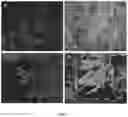
FIG. 1 shows acicular calcite and aragonite crystals network obtained at high temperatures and low pressures using the method provided by the invention.
FIG. 2 shows the RAMAN spectrum of the crystals synthesized in the method provided by the invention (bottom) and reference spectrums of aragonite (top) and calcite (middle) according to an embodiment at high temperatures and low pressures.
FIG. 3 shows acicular calcite and aragonite crystals networks obtained at reservoir conditions (high temperatures and pressures) using the method provided by the invention.
FIG. 4 shows the RAMAN spectrum of the synthesized crystals in the method provided by the invention (bottom) and reference spectrums of aragonite (top) and calcite (middle) according to an embodiment at high temperatures and high pressures.
FIG. 5 shows acicular aragonite crystals networks obtained at high temperatures and low pressures using the method provided by the invention, filling and propping shale-rock fractures.
FIG. 6 shows prismatic aragonite crystals network obtained at reservoirs condition (high temperatures and high pressures) using the method provided by the invention, filling and propping shale-rock fractures.
DETAILED DESCRIPTION
The invention will be described in further detailed below, with reference to the accompanying figures and non-limiting examples of preferred embodiments.
The method provided by the invention involves the hydraulic fracturing or fracking using a mixture of hard water, a carboxamide and liquid carbon dioxide (CO2), with a composition of about 70-90% hard water and 10-30% CO2 by volume (% v/v). Liquid carbon dioxide is commercially available and might be obtained from highly compressed and cooled gaseous carbon dioxide using methods well known in the art.
As used herein, the term “hard water” refers to water comprising divalent cations, such as Ca2+ Mg2+, Ba2+ and Sr2+ and monovalent cations such as Na+, K+ and Li+, as well as anions such as Cl−, SO42−, CO3H−, CO3−2 and NO3−.
The term “carboxamide” as used herein refers to chemical compounds of general formula RC(═O)NR′R″, where R, R′, and R″ represent organic groups, amines or hydrogen atoms. Non-limiting examples of carboxamides as used herein are the compounds of formulas CO(NH2)2, H3C—CONH2, C6H5—CONH2 and HCON(—CH3)2. The carboxamide compound acts as pH buffer when present in the fracture fluid composition at a concentration of about 10 to about 100 g/L, more preferably from about 30 to about 80 g/L.
The fracture fluid provided by the invention is pumped into the reservoirs at well conditions, i.e. temperatures between 80 and 110° C. and pressure ranges between 300 and 750 bar. At these conditions, CO2 is past its critical point and behaves as a supercritical fluid.
Once the pumping is stopped, a slight pressure drop is produced, and the equilibrium of the following reaction is shifted to the right:
CO2+H2O+Ca2+→CaCO3+2H+
Surprisingly, it was found that the obtained aragonite and calcite crystal network particles act as proppant agents, due to their tridimensional characteristic crystalline structure. The fluid generating the fracture also keeps the fracture open, as occurs in nature at the same pressure and temperature conditions.
Since the fluid fracture is being pumped into the reservoir, the carbonate crystal network is generated in situ, propping up the hydraulic fracture that is produced, i.e. the fluid fracture acts as a triple agent: a fracture agent, a carrier agent and proppant agent, advantageously both increasing the propped volume and enhancing fracture conductivity of the reservoir, which results in higher reservoir productivity.
The composition of the invention is particularly suited for unconventional reservoirs, such as shale-gas and shale-oil reservoirs.
The advantageous features of the inventions further include:
-
- Economic: lower operating costs, less supplies required in operating procedures and higher oil and gas production.
- Technical operating procedures: greater propped volume in relation to stimulated volume, no use of sand proppants, less logistics supply, the fracture fluid performs as a triple agent (i.e. fracture, carrier and proppant agent).
- Reservoir production: improve hydraulic fracture conductivity (i.e. porosity and permeability conditions in the hydraulic fracture).
- Environmentally friendly: CO2 sequestration by carbonate crystal network precipitation reduces the carbon footprint with less supply transport and logistics (sand proppant, carrier, etc).
EXAMPLES
Example 1 (High Temperatures, Low Pressures)
Several synthesis reactions were carried out using the different fluid compositions shown in Table 1. Laboratory experiments were performed at temperatures of 60, 80, 100 and 110° C. In all cases, CO2 gas was bubbled reaching pressures up to 150 psi. The reaction proceeded between 60 and 120 min.
Calcite and aragonite crystals were obtained, as can be seen in FIGS. 1 and 2. FIG. 1 shows the crystals as obtained by: a) petrographic cross-light; b) binocular microscope; c) petrographic parallel-light; d) scanning electron microscopy (SEM).
The crystals show acicular and prismatic crystalline morphologies, creating a tridimensional crystal network. The crystals reached a size between 500 μm and 1.5 mm, as shown in FIG. 1 and FIG. 2.
| TABLE 1 | |
| Concentration (g/l) |
| Reagents | Solution 1 | Solution 2 | Solution 3 | Solution 4 | Solution 5 | Solution 6 | Solution 7 | Solution 8 |
| CaCl2•2H2O | 44 | 44 | 44 | 44 | 44 | 44 | 22 | 22 |
| Ca(OH)2 | 22 | 22 | 22 | 22 | 0 | 0 | 0 | 0 |
| MgCl2•6H2O | 18 | 18 | 152 | 152 | 18 | 18 | 18 | 18 |
| Na2SO4 | 1 | 1 | 1 | 1 | 1 | 1 | 15 | 15 |
| NaHCO3 | 1 | 1 | 1 | 1 | 1 | 1 | 3 | 3 |
| KCl | 0 | 0 | 0 | 0 | 10 | 10 | 20 | 20 |
| NaCl | 50 | 50 | 50 | 50 | 50 | 50 | 40 | 40 |
| CO(NH2)2 | 36 | 72 | 36 | 72 | 36 | 72 | 32 | 72 |
Example 2 (Reservoir Conditions: High Temperatures and High Pressures)
Further synthesis reactions were carried out with the fluid compositions of Table 1. Reactions were carried out at 110° C., using liquid CO2 in relative proportions to the hard water solution (5 to 30% CO2 and 70 to 95% of hard water solution); and pressures of 300, 500, 600 and 750 bar. These reactions were carried out for 4, 6, 12 and 24 h, corresponding to the time employed on the field fracking operation.
Crystal networks of aragonite and calcite were obtained. The present acicular and prismatic crystalline structures create a tridimensional crystal network. The crystals size reached up to 500 μm, as shown in FIG. 3 and FIG. 4.
Example 3 (Shale-Rock at High Temperatures and Low Pressures)
Several synthesis reactions were carried out using the different fluid compositions of Table 1. Laboratory experiments were performed at 110° C. In all cases, CO2 gas was bubbled reaching pressures up to 150 psi. The reaction proceeded for 2, 4, 6, 12 and 24 h. Calcite and aragonite crystals were obtained, as seen in FIG. 5. The crystal network shows acicular crystalline morphologies, creating a tridimensional crystal network. The crystals reached a size between 500 μm and 1.5 mm, as shown in FIG. 5.
In FIG. 5, a) and d) are microscope views of in-situ geomimetic crystal network proppants generated in a shale-rock fracture. b) to c) are a detailed view of the crystal network growing from both sides of fracture, and d) shows a detailed view showing the effective connection between shale-rock reservoir and the interior of the fracture.
Example 4 (Shale-Rock Under Reservoirs Conditions: High Temperatures and High Pressures)
Further synthesis reactions were carried out with the different fluid compositions of Table 1 for in situ generation of geomimetic crystal network proppants in shale-rock samples. Reactions were carried out at 60, 80, 100 and 110° C., using liquid CO2 in relative proportions to water solution (5 to 30% CO2 and 70 to 95% of hard water solution); and pressures of 300, 500, 600 and 750 bar. These reactions were carried out for 4, 6, 12 and 24 h, corresponding to the times employed on the field fracking operation.
Crystal networks of aragonite and calcite were obtained. The present robust prismatic crystalline structures create a tridimensional crystal network. The crystals size reached up to more than 1 mm, as seen in FIG. 6.
In FIG. 6, a) and b) show a microscope view of in-situ geomimetic crystal network proppants generated in a shale-rock fracture, c) to h) show detailed SEM photographs, c) is a general view of fractal crystal network behavior, d) shows a detailed prismatic aragonite crystal habit, e) shows the crystal network growing from both sides of fracture, f) is a detailed view showing the effective connection between shale-rock reservoir and the interior of the fracture, g) is a detailed view of a prismatic crystal network intergrowing from both sides of the fracture, and h) is a detailed view of the interconnected poral network.
Claims
1. A composition for fracking an unconventional reservoir, wherein the composition comprises hard water and liquid carbon dioxide.
2. The composition according to claim 1, wherein the composition further comprises a carboxamide.
3. The composition according to claim 2, wherein the carboxamide is selected from urea, formamide, acetamide, benzamide and N,N-dimethylformamide.
4. The composition according to claim 3, wherein the carboxamide is urea.
5. The composition according to claim 1, wherein the ratio of hard water to carbon dioxide is of 7:3 to 9.5:0.5 in volume.
6. The composition according to claim 1, wherein the carboxamide is at a concentration of about 30 g/L to 80 g/L in the composition.
7. A method for fracturing a rock formation in an unconventional reservoir, wherein the method comprises pumping a composition according to claim 1 into the rock formation.
8. The method according to claim 7, wherein the composition is pumped at a temperature between 80 and 120° C.
9. The method according to claim 8, wherein the composition is pumped at a temperature of 110° C.
10. The method according to claim 9, wherein the composition is pumped at a pressure between 300 and 750 bar.
Images & Drawings included:



Sources:
- United States Patent and Trademark Office - verify current appl. status at the USPTO↗
Recent applications in this class:
- » 20250243401 2025-07-31
FOAMED ACID SYSTEM STABILIZED BY TWO DIMENSIONAL-GRAPHENE AND SURFACTANT COMPOSITE FOR FRACTURING APPLICATION - » 20240400889 2024-12-05
FOAMED ACID SYSTEM STABILIZED BY TWO DIMENSIONAL-GRAPHENE AND SURFACTANT COMPOSITE FOR FRACTURING APPLICATION - » 20240384160 2024-11-21
STABILIZED CO2 FOAM COMPOSITIONS FOR SUBTERANEAN FRACTURING APPLICATIONS AND COMPOSITIONS RELATED THERETO - » 20230323194 2023-10-12
FOAM STABILIZATION USING NANOPARTICLES - » 20210207021 2021-07-08
Foamed treatment fluids comprising nanoparticles - » 20210189224 2021-06-24
Omniphobic emulsions for mitigating gas condensate banking and methods of making and using same - » 20210024814 2021-01-28
Oxidizers for carbon dioxide-based fracturing fluids - » 20210024813 2021-01-28
Compositions for treating a subterranean formation with a foamed system and corresponding methods - » 20200392399 2020-12-17
Omniphobic emulsions for mitigating gas condensate banking and methods of making and using same - » 20190249076 2019-08-15
Methods and systems incorporating N-(phosphonoalkyl)iminodiacetic acid particulates
Recent applications for this Assignee:
- » 20230080114 2023-03-16
Dissolvable magnesium alloy - » 20220186018 2022-06-16
Friction reducing copolymers and method of preparation thereof - » 20210277300 2021-09-09
Hydraulic fracking fluid for generating proppants in situ and fracking method with proppant generation in situ - » 20210123874 2021-04-29
Detection of solid organic material and fluids in a shale rock by means of low field NMR - » 20210054734 2021-02-25
Nanotracer for oil recovery comprising an occluded polynucleotide and method of preparation thereof - » 20210039049 2021-02-11
Method of preparation of new super-hydrophobic membranes and membranes obtained by said method - » 20210039018 2021-02-11
Oil and aqueous phase separator - » 20200215459 2020-07-09
Phase separator device for hydrocarbon-contaminated aquifers - » 20200207927 2020-07-02
Hydrogels derived from acrylamide for controlling circulation losses and methods of fabrication thereof - » 20200048157 2020-02-13
Biological inoculant having enhanced fertilizing and fungicidal activity