FURNITURE ASSEMBLY HAVING A PLASTIC BASE AND A METHOD FOR PRODUCING THE SAME
US20210289945A1
2021-09-23
16/328,630
2016-08-26
Abstract:
Invention relates to a furniture assembly comprising a base configured to support a soft seat member. The base is formed in one piece by a rotational molding process.
Inventors:
- Mert TEPE 1 🇹🇷 Izmir, Turkey
- Can ORAN 1 🇹🇷 Izmir, Turkey
- Murat YAVUZ 1 🇹🇷 Izmir, Turkey
- Ismet TASGIRAN 1 🇹🇷 Izmir, Turkey
Interested in similar patents?
Get notified when new applications in this technology area are published.
Classification:
A47C19/022 » CPC main
Bedsteads; Parts or details of bedsteads not fully covered in a single one of the following subgroups, e.g. bed rails, post rails; Bedstead frames Head or foot boards
A47C19/005 » CPC further
Bedsteads dismountable
A47C4/028 » CPC further
Foldable, collapsible or dismountable chairs; Dismountable chairs Upholstered chairs, e.g. metal, plastic or wooden chairs
A47C19/025 » CPC further
Bedsteads; Parts or details of bedsteads not fully covered in a single one of the following subgroups, e.g. bed rails, post rails; Bedstead frames Direct mattress support frames, Cross-bars
A47C19/02 IPC
Bedsteads Parts or details of bedsteads not fully covered in a single one of the following subgroups, e.g. bed rails, post rails
A47C19/00 IPC
Bedsteads
A47C4/02 IPC
Foldable, collapsible or dismountable chairs Dismountable chairs
A47C7/42 » CPC further
Parts, details, or accessories of chairs or stools; Support for the head or the back for the back of detachable or loose type
Description
TECHNICAL FIELD
Invention relates to a furniture assembly, particularly sofa, bed or the like, comprising a plastic base and a production method for such a furniture assembly.
PRIOR ART
A furniture assembly comprises a base and decorative elements mounted to the base in a secure manner. In order to provide a comfortable use area, a foam or other type of a soft elastic member is inserted between the base and decorative element.
The base is typically made of wood or metal panels which are fastened to each other. Decorative element is usually a textile sheet comprising canvas or colors to attract users. In order to obtain the furniture assembly, a qualified artisan should connect each panel end to end to form a frame.
Additionally, a decorative element should be filled with the soft elastic member and secure to the base using various attachment tools. Usually, nuts and bolts are used to fasten side panels, headers or any other additional part to the base.
U.S. Pat. No. 7,988,236 discloses a sofa which includes a furniture base assembly that is easily assembled without the need of a jig or fixture, provides for a reduced number of component parts, and provides for aesthetically pleasing base assembly joints. In one embodiment, the front rail member and the back rail member are integrally formed with the corner block members, side rails are connected thus forming an integrated rail member and thereby dispensing with a base joint exposed on the front of the furniture product.
The base is affixed to the sofa frame and upholstery is attached to the frame for providing a finished sofa with a showood base.
BRIEF SUMMARY OF THE INVENTION
The object of the invention is providing a ready to use furniture assembly.
In order to achieve above objective, invention is a furniture assembly comprising a base configured to support a soft seat member. The base is formed in one piece by a rotational molding process. The base can be a large base of to support the soft seat member such as a mattress or a relatively small base to support cushion of a sofa. Additional support elements like bars, frames or ribs can be arranged on the base to further support the soft seat member. Rotomolded base will be lightweight and rigit which are important mechanical properties for a furniture assembly.
In a further aspect, a coupling element is formed on the base adapted to attach a header integrally formed as a whole by a rotational molding process to the base. A modular furniture is provided by means of an integrally formed coupling element to attach the header.
In a further aspect, the header is having a foam element formed in situ facing towards the base. Securing the foam to the header is possible without any need to a glue or fixing bracket.
In a further aspect, a textile member is surrounding the foam element. This will provide application of various decorative elements to the header such as canvases, different colors or fabric with a variety of textures. Additionally, the textile element will protect the foam element from dirt or dust.
In a further aspect, the header is in a hollow panel form. Header will be lightweight and a user can easily mount the header to the base by lifting and aligning to the base.
In a further aspect, the coupling element is in a dovetail form. Easy coupling of the hollow header to the base will be provided by holding two parts, the base and the header still after the mounting is complete.
In a further aspect, the base is comprising a front wall, two opposite side wall and a rear wall forming a closed geometry. Such a geometry is rigid and can be easily formed by rotomolding process.
In a further aspect, the side wall is having a number of subsequent ribs spaced apart from each other. Ribs support the base against external loads from the soft seat member.
In a further aspect, the soft seat member is a mattress. Therefore, the furniture assembly forms a bed which is easily produced without any need for fastening elements. Base can be made of plastics material which allow producing a recylcable furniture.
In order to achieve above objective, invention is a furniture assembly production method comprising the steps of rotational molding plastics material to obtain a one-piece base suitable for supporting a soft seat member and a header having guide part removably attach the header to the base by means of the guide part received by a corresponding coupling element of the base.
In a further aspect, method further comprising the steps of inserting a foam element to an outer wall of the header and covering the foam element with a textile member.
An embodiment of the control device will now be described in detail with reference to the accompanying drawings which are;
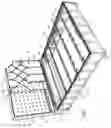
FIG. 1 is a perspective view of a furniture assembly according to an exemplary embodiment of the invention in the form of a bed.
FIG. 2 is a perspective view of the furniture assembly as shown in FIG. 1 in a disassembled position.
FIG. 3 is cross-sectional view of the header according to the invention.
FIG. 4 is perspective view of another embodiment of a furniture assembly according to the invention in the form of a sofa.
REFERENCE NUMBERS
-
- 10 Base
- 11 Front wall
- 12 Side wall
- 13 Bottom plate
- 14 Rib
- 15 Foot
- 16 Coupling element
- 18 Rear wall
- 19 Separator
- 20 Header
- 21 Lower section
- 22 Upper section
- 23 Opening
- 24 Support plate
- 25 Top edge
- 26 Guide part
- 30 Support frame
- 32 Beam
- 34 Lift element
- 36 Hinge
- 40 Textile member
- 42 Bottom edge
- 50 Bracket
- 52 Holding part
- 53 Pin
- 54 Tip
- 55 Cap
- 60 Foam element
- 62 Through hole
- 64 Foam filler
- 70 Soft seat member
In this detailed description, the subject matter improvement is explained with references to examples without forming any restrictive effect only in order to make the subject more understandable.
With reference to the drawings, a furniture assembly is shown in FIG. 1 from a perspective view.
FIG. 1 illustrates a bed as a furniture assembly according to an example of the invention comprising a rectangular base (10) and a hollow header (20) aligned vertically from a rear wall (18) of the base (10). The base (10) is made by a rotational molding (rotomolding) from HDPE (high-density polyethylene) material. Rotational molding (also called as rotomolding) is explained in U.S. Pat. No. 6,083,434A patent publication herewith incorporated by reference. The base (10) is having two walls, namely a front wall (11), two opposite side walls (12) and the rear wall (18) each form a vertical integrated rectangular panel. Each one of the walls (11, 12, 18) comprises a number of spaced ribs (14) in the form of a groove vertically extends between upper and lower edge of each wall (11, 12, 18). A flat foot (15) is formed at the bottom edge of each adjacent wall (11, 12, 18) with an L shaped cross-section. A bottom plate (13) is provided at the lower peripheral edge of the base (10) forming a cavity inside the base (10) which can be used to store household items. The bottom plate (13) is a flat panel with a number of holes arranged in columns. At the upper edge of the periphery of the base (10) a support frame (30) made of a metallic material is pivoted from one end to uplift the support frame (30). Two opposite hinges (36) are fixed to the upper edge of the rear wall (18). Support frame (30) comprises a number of horizontal beams (32) extending opposite ends of the support frame (32). A lift element (34), e.g. a gas spring, is mounted inside the base (10) and configured to assist a user to lift support frame (30) from the free end thereof.
The header (20) is in a monolithic hollow form is made of a plastic material by rotomolding process is aligned with the base (10) and attached to the base (10) from the rear wall (18). Width of the header (20) is substantially equal to the width of the base (10). The header (20) is comprising a lower section (21) configured to have same height of the rear wall (18) and an upper section (22) extending above the top of the base (10). Front wall of the header (20) facing towards the base (20) is a flat support plate (24) having plurality of openings (23). A foam element (60), in the form of sponge, is secured to the front wall of the header (20) covering the front wall. The foam element (60) having a number of through holes (62) coaxially aligned with the openings (23) of the header (20). A textile member (40), such as a fabric is attached on the foam element (60) by means of brackets (50) arranged at the corresponding holes at the textile member (40).
As shown in FIG. 2, a coupling element (16) in the form of a cavity between two protrusions is formed in the mold. The header (20) is comprising a guide part (26) in the dovetail fits inside the cavity of the coupling element (16). In order to attach the header (20) to the base (10) the guide part (26) vertically aligned over the coupling element (16) and slided down so that the guide part (26) retained inside the coupling element (16) except for the moving upwards by lifting the header (20). A mattress used as a soft seat member (70) can be seen above the base (20). Lower face of the soft seat member (70) is supported by the horizontal beams (32) so that loads on the soft seat member (70) stands over the base (10).
In FIG. 3, a cross-section of the header (20) is shown. The bracket (50) holding the textile member (40) over the foam element (60) has a holding part (52) extending radially and having a diameter larger than the through-hole (62) to stop the bracket (50). A pin (52) is extending inside the through-hole (62) and a tip (54) of the pin (53) extend outside the textile member (40). A cap (55) is inserted to the tip (54) so that preventing pin (53) to move backwards. The gap between the foam element (60) and the textile member (60) is filled by a sponge filler (64). Sponge filler (64) is made of a resin providing self-adhesive properties to the sponge filler (64).
In order to produce such a furniture assembly, HDPE material is casted inside a mold and the base (10) is made of a rotomolding process as a whole. When the base (10) is removed from the mold sponge filler (64) is applied to the selected surfaces, such as to the front wall of the header (20) in situ. The textile member (60) is covered onto the sponge filler (64) and fixed by means of the brackets (50). Afterwards, the header (20) is inserted into the coupling element (16) to fix the header (20) to the base (10). Then the support frame (30) is adapted on the upper edges of the base (10).
In FIG. 4, a sofa type furniture assembly is shown. The base (10) is rotomoulded in a cabinet form. The base (10) is having a number of parallel separator (19) extending transverse direction and dividing inner space of the base (10) into smaller sections. Outer faces of the side walls (12) and rear wall (18) is integrated with the coupling element (16) extending outside to the base (10). Each one of the coupling element (16) has a T-shaped cross-section and a hollow form. The headers (20) extend from upper side of the base (10) providing a vertical support for the soft seat members (70) or textile members (40). Each one of the headers (20) is having a guide part (26) in the form of a slot suitable for receiving the guiding member (26) to fit in and secure the header (20).
A plate (not shown) fits on the upper periphery of the base (10) so that provide a vertical support for the soft seat members (70) and cover the sections inside the base (10) divided by separators (19). Upper edge of the base (10) and the separators (19) are aligned in the same horizontal plane.
Claims
1. A furniture assembly comprising a base configured to support a soft seat member characterized in that the base is formed in one piece by a rotational molding process.
2. The furniture assembly according to claim 1, wherein a coupling element is formed on the base adapted to attach a header integrally formed as a whole by a rotational molding process to the base.
3. The furniture assembly according to claim 2, wherein the header is having a foam element formed in situ facing towards the base
4. The furniture assembly according to claim 3, wherein a textile member is surrounding the foam element.
5. The furniture assembly according to claim 2 wherein the header is in a hollow panel form.
6. The furniture assembly according to claim 5, wherein the coupling element is in a dovetail form.
7. The furniture assembly according to claim 1, wherein the base further comprises a front wall, two opposite side wall and a rear wall forming a closed geometry.
8. The furniture assembly according to claim 7, wherein the side walls have a number of subsequent ribs spaced apart from each other.
9. The furniture assembly according to the claim 1, wherein the soft seat member is a mattress.
10. A furniture assembly production method comprising:
rotational molding plastics material to obtain a one-piece base suitable for supporting a soft seat member and a header having guide part; and
removably attaching the header to the base by means of the guide part received by a corresponding coupling element of the base.
11. The furniture assembly production method according to claim 10, further comprising:
inserting a foam element to an outer wall of the header; and
covering the foam element with a textile member.
Images & Drawings included:



Sources:
- United States Patent and Trademark Office - verify current appl. status at the USPTO↗
Recent applications in this class:
- » 20250040722 2025-02-06
Hexagonal Bed Structure - » 20240206632 2024-06-27
HEADBOARD WITH ANGLE ADJUSTABLE HEADRESTS - » 20240206631 2024-06-27
HEADBOARD - » 20240099471 2024-03-28
HEADBOARD STRUCTURE - » 20230190004 2023-06-22
Method for packaging bed - » 20230190003 2023-06-22
Headboard - » 20230042530 2023-02-09
HEADBOARD - » 20220265055 2022-08-25
BED ASSEMBLY WITH FOAM-BASED HEADBOARD HAVING READILY INTERCHANGEABLE OUTER COVERINGS - » 20220104628 2022-04-07
Headboard assembly for modular bed frame - » 20220095801 2022-03-31
Magnetic headboards and automotive floor liners