Polymorphs
US20210323964A1
2021-10-21
17/363,441
2021-06-30
✅ Patent granted
US 11,919,903 B2
2024-03-05
-
-
John S Kenyon
David L. Kershner
2041-07-16
Abstract:
The invention relates to polymorphous crystal modifications of a DPP-IV inhibitor, the preparation thereof and the use thereof for preparing a medicament.
Inventors:
- Peter SIEGER 64 🇩🇪 Mittelbiberach, Germany
- Dirk KEMMER 7 🇩🇪 Windesheim, Germany
- Peter KOHLBAUER 8 🇩🇪 Biberach an der Riss, Germany
- Martin RENZ 10 🇩🇪 Eberhardzell-Dietenwengen, Germany
- Thomas NICOLA 8 🇩🇪 Mainz, Germany
Assignee:
- BOEHRINGER INGELHEIM INTERNATIONAL GMBH 1,537 🇩🇪 Ingelheim am Rhein, Germany
Applicant:
Interested in similar patents?
Get notified when new applications in this technology area are published.
Classification:
C07D473/04 » CPC further
Heterocyclic compounds containing purine ring systems with oxygen, sulphur, or nitrogen atoms directly attached in positions 2 and 6 two oxygen atoms
C07B2200/13 » CPC further
Indexing scheme relating to specific properties of organic compounds Crystalline forms, e.g. polymorphs
C07D473/06 » CPC main
Heterocyclic compounds containing purine ring systems with oxygen, sulphur, or nitrogen atoms directly attached in positions 2 and 6 two oxygen atoms with radicals containing only hydrogen and carbon atoms, attached in position 1 or 3
Description
BACKGROUND OF THE INVENTION
This application claims priority of EP 06 009 202, which is hereby incorporated by reference in its entirety.
1. FIELD OF THE INVENTION
The invention relates to polymorphous crystal modifications of a DPP-IV inhibitor, the preparation thereof and the use thereof for preparing a medicament.
2. DESCRIPTION OF THE PRIOR ART
The enzyme DPP-IV, also known by the name CD26, is a serine protease which promotes the cleaving of dipeptides in proteins with a proline or alanine group at the N-terminal end. DPP-IV inhibitors thereby influence the plasma level of bioactive peptides including the peptide GLP-1. Compounds of this type are useful for the prevention or treatment of illnesses or conditions which are associated with an increased DPP-IV activity or which can be prevented or alleviated by reducing the DPP-IV activity, particularly type I or type II diabetes mellitus, prediabetes, or reduced glucose tolerance.
WO 2004/018468 describes DPP-IV inhibitors with valuable pharmacological properties. One example of the inhibitors disclosed therein is 1-[(4-methyl-quinazolin-2-yl)methyl]-3-methyl-7-(2-butyn-1-yl)-8-(3-(R)-amino-piperidin-1-yl)-xanthine.
BRIEF DESCRIPTION OF THE DRAWINGS
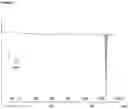
FIG. 1 shows the thermoanalysis of the anhydrous form A/B.
FIG. 2 shows a cyclic DSC diagram, in which the phase transition from −40° C. to 120° C. and vice versa has been run through a total of 3 times.
FIG. 3 shows an X-ray powder diagram of the anhydrous form A.
FIG. 4 shows an X-ray powder diagram of the anhydrous form B.
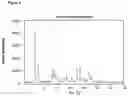
FIG. 5 shows an X-ray powder diagram of polymorph C.
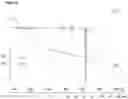
FIG. 6 shows the thermoanalysis of form C.
DETAILED DESCRIPTION OF THE INVENTION
Within the scope of the present invention it has been found that 1-[(4-methyl-quinazolin-2-yl)methyl]-3-methyl-7-(2-butyn-1-yl)-8-(3-(R)-amino-piperidin-1-yl)-xanthine may take on various polymorphous crystal modifications and that the compound prepared in WO 2004/018468 is present at ambient temperature as a mixture of two enantiotropic polymorphs. The temperature at which the two polymorphs transform into one another is 25±15° C. (see FIGS. 1 and 2).
The pure high temperature form (polymorph A), which can be obtained by heating the mixture to temperatures >40° C., melts at 206±3° C. In the X-ray powder diagram (see FIG. 3) this form shows characteristic reflections at the following d values: 11.49 Å, 7.60 Å, 7.15 Å, 3.86 Å, 3.54 Å and 3.47 Å (cf. also Table 1 and 2).
Anhydrous polymorph A may be prepared by
- (a) refluxing 1-[(4-methyl-quinazolin-2-yl)methyl]-3-methyl-7-(2-butyn-1-yl)-8-(3-(R)-amino-piperidin-1-yl)-xanthine in absolute ethanol and optionally filtering the mixture,
- (b) cooling the hot solution or the hot filtrate until crystallisation sets in,
- (c) diluting with a solvent such as tert.-butylmethylether,
- (d) suction filtering the solvent mixture and
- (e) drying the polymorph A at 45° C. in vacuo.
The low temperature form (polymorph B) is obtained by cooling to temperatures <10° C. In the X-ray powder diagram (see FIG. 4) this form shows characteristic reflections at the following d values: 11.25 Å, 9.32 Å, 7.46 Å, 6.98 Å and 3.77 Å (cf. also Table 3 and 4).
Anhydrous polymorph B may be prepared by
- (a) dissolving 1-[(4-methyl-quinazolin-211)methyl]-3-methyl-7-(2-butyn-1-yl)-8-(3-(R)-amino-piperidin-1-yl)-xanthine in absolute ethanol and refluxing and optionally filtering the mixture,
- (b) cooling the hot solution or the hot filtrate for crystallisation to a temperature below 10° C.,
- (c) diluting with a solvent such as tert.-butylmethylether,
- (d) suction filtering the solvent mixture and
- (e) drying the polymorph at a temperature below 10° C. in vacuo.
Another polymorph (polymorph C) shows characteristic reflections in the X-ray powder diagram (see FIG. 5) at the following d values: 12.90 Å, 11.10 Å, 6.44 Å, 3.93 Å and 3.74 Å (cf. also Table 5).
Polymorph C is obtained if
- (a) 1-[(4-methyl-quinazolin-2-yl)methyl]-3-methyl-7-(2-butyn-1-yl)-8-(3-(R)-amino-piperidin-1-yl)-xanthine is dissolved in methanol and refluxed and optionally filtered in the presence of activated charcoal,
- (b) the methanolic solution is cooled to a temperature of 40-60° C.,
- (c) a solvent such as tert.-butylmethylether or diisopropylether is added,
- (d) the resulting suspension is first of all cooled slowly to 15-25° C. and then later to 0-5° C.,
- (e) the crystals formed are suction filtered and washed again with tert.-butylmethylether or diisopropylether and
- (f) the crystals thus obtained are dried at a temperature of 70° C. in the vacuum dryer.
Another polymorph (polymorph D) melts at 150±3° C. This polymorph is obtained if polymorph C is heated to a temperature of 30-100° C. or dried at this temperature.
Finally, there is also polymorph E, which melts at a temperature of 175±3° C. Anhydrous polymorph E is formed if polymorph D is melted. On further heating, polymorph E crystallises out of the melt.
The polymorphs thus obtained may be used in the same way as the mixture of the two polymorphs A and B described in WO 2004/018468 for preparing a pharmaceutical composition which is suitable for treating patients with type I and type II diabetes mellitus, prediabetes or reduced glucose tolerance, with rheumatoid arthritis, obesity, or calcitonin-induced osteoporosis, as well as patients in whom an allograft transplant has been carried out. These medicaments contain in addition to one or more inert carriers at least 0.1% to 0.5%, preferably at least 0.5% to 1.5% and particularly preferably at least 1% to 3% of one of the polymorphs A, B, or C.
The following Examples are intended to illustrate the invention in more detail.
Example 1: Crystallisation of Polymorph A
Crude 1-[(4-methyl-quinazolin-2-yl)methyl]-3-methyl-7-(2-butyn-1-yl)-8-(3-(R)-amino-piperidin-1-yl)-xanthine is refluxed with 5 times as much absolute ethanol and the hot solution is filtered clear through activated charcoal. After the filtrate has been cooled to 20° C. and crystallisation has set in, the solution is diluted to double the volume with tert.-butylmethylether. Then the suspension is cooled to 2° C., stirred for 2 hours, suction filtered and dried in the vacuum dryer at 45° C.
FIG. 1 shows the thermoanalysis of the anhydrous form A/B.
Polymorph A melts at 206±3° C. In the DSC diagram another slightly endothermic signal can be seen at approx. 25° C. This is a fully reversible solid-solid phase transition between the two enantiotropic crystal modifications A and B. The form A is the thermodynamically stable modification above this transformation temperature, w| form B is the thermodynamically stable modification below this transformation temperature.
FIG. 2 shows a cyclic DSC diagram, in which the phase transition from −40° C. to 120° C. and vice versa has been run through a total of 3 times. During heating, the phase transition is observed as an endothermic signal and, correspondingly, during cooling it is observed as an exothermic signal. During the first heating cycle the phase transition may also be observed as an endothermic double signal or as a very broad signal while in all the other cycles the signal occurs as a very sharp endothermic or exothermic signal, depending on whether heating or cooling is taking place.
FIG. 3 shows an X-ray powder diagram of the anhydrous form A
| TABLE 1 |
| Labelled X-ray reflections up to 30° 2 Θ with intensities |
| (standardised) for the anhydrous polymorph A |
| 2 Θ | intensity | dhkl | labelling | dexp-calc |
| [°] | I/Io [%] | [Å] | h | k | l | [Å] |
| 5.56 | 1 | 15.89 | 1 | 0 | 0 | −0.008 |
| 7.18 | 32 | 12.31 | 0 | 1 | 1 | 0.005 |
| 7.62 | 100 | 11.59 | 1 | 1 | 0 | 0.007 |
| 8.49 | 20 | 10.41 | −1 | 1 | 1 | 0.002 |
| 9.91 | 24 | 8.92 | 0 | 0 | 2 | 0.003 |
| 10.41 | 18 | 8.49 | 0 | 2 | 0 | 0.024 |
| 11.18 | 24 | 7.91 | 2 | 0 | 0 | 0.038 |
| 11.63 | 41 | 7.60 | −1 | 1 | 2 | 0.003 |
| 12.37 | 59 | 7.15 | −1 | 2 | 1 | −0.003 |
| 13.19 | 6 | 6.71 | 1 | 2 | 1 | −0.014 |
| 13.45 | 3 | 6.58 | −2 | 0 | 2 | 0.007 |
| 14.05 | 6 | 6.30 | 2 | 1 | 1 | 0.011 |
| 14.38 | 6 | 6.16 | 0 | 2 | 2 | 0.003 |
| 14.71 | 10 | 6.02 | −1 | 2 | 2 | −0.008 |
| 15.26 | 13 | 5.80 | 2 | 2 | 0 | 0.001 |
| 15.76 | 10 | 5.62 | −1 | 1 | 3 | 0.008 |
| 16.09 | 1 | 5.51 | 1 | 2 | 2 | −0.010 |
| 16.32 | 1 | 5.43 | 2 | 0 | 2 | 0.035 |
| 16.69 | 4 | 5.31 | 2 | 2 | 1 | −0.007 |
| 17.03 | 3 | 5.20 | −1 | 3 | 1 | 0.026 |
| 17.63 | 6 | 5.03 | 1 | 3 | 1 | 0.006 |
| 18.17 | 5 | 4.88 | −1 | 2 | 3 | −0.004 |
| 18.78 | 7 | 4.72 | −1 | 3 | 2 | −0.014 |
| 19.30 | 1 | 4.60 | −2 | 3 | 1 | −0.019 |
| 19.61 | 2 | 4.52 | −3 | 2 | 1 | 0.036 |
| 19.86 | 20 | 4.47 | −2 | 2 | 3 | 0.040 |
| 20.29 | 10 | 4.37 | 2 | 0 | 3 | 0.019 |
| 20.57 | 4 | 4.31 | 0 | 1 | 4 | 0.006 |
| 21.12 | 1 | 4.20 | 3 | 0 | 2 | 0.048 |
| 21.57 | 12 | 4.12 | −2 | 1 | 4 | 0.028 |
| 22.46 | 10 | 3.96 | 1 | 4 | 1 | 0.035 |
| 23.03 | 35 | 3.86 | 4 | 1 | 0 | 0.022 |
| 23.39 | 21 | 3.80 | −1 | 4 | 2 | 0.019 |
| 24.08 | 2 | 3.69 | −3 | 1 | 4 | −0.006 |
| 24.51 | 1 | 3.63 | −4 | 0 | 3 | 0.036 |
| 24.91 | 10 | 3.57 | −2 | 4 | 2 | 0.003 |
| 25.14 | 39 | 3.54 | 3 | 1 | 3 | 0.043 |
| 25.69 | 36 | 3.47 | −3 | 3 | 3 | 0.041 |
| 26.68 | 3 | 3.34 | 0 | 5 | 1 | 0.035 |
| 26.90 | 2 | 3.31 | 3 | 4 | 0 | 0.027 |
| 27.10 | 2 | 3.29 | 0 | 2 | 5 | 0.030 |
| 27.42 | 3 | 3.25 | 4 | 3 | 0 | 0.006 |
| 28.19 | 2 | 3.16 | −1 | 5 | 2 | −0.035 |
| 28.54 | 2 | 3.12 | 3 | 0 | 4 | 0.047 |
| 28.94 | 11 | 3.08 | 0 | 4 | 4 | −0.036 |
| 29.18 | 5 | 3.06 | −4 | 3 | 3 | 0.017 |
| 29.50 | 4 | 3.03 | −1 | 0 | 6 | 0.041 |
| 30.18 | 7 | 2.96 | −1 | 5 | 3 | −0.042 |
| TABLE 2 |
| Lattice metrics of the anhydrous form A |
| Symmetry: | monoclinic | |
| space group: | P | |
| a: | 16.16(2) Å | |
| b: | 17.02(1) Å | |
| c: | 18.18(2) Å | |
| β: | 100.95(6) ° | |
| cell volume: | 4907(11) Å3 | |
Example 2: Crystallisation of Polymorph B
Polymorph B is obtained by cooling form A from Example 1 to temperatures <10° C.
FIG. 4 shows an X-ray powder diagram of the anhydrous form B
| TABLE 3 |
| Labelled X-ray reflections up to 30° 2 Θ with intensities |
| (standardised) for the anhydrous form B |
| 2 Θ | intensity | dhkl | labelling | dexp-calc |
| [°] | I/Io [%] | [Å] | h | k | l | [Å] |
| 5.82 | 3 | 15.17 | 1 | 0 | 0 | −0.007 |
| 7.04 | 33 | 12.55 | 0 | 1 | 1 | 0.001 |
| 7.82 | 100 | 11.3 | 1 | 1 | 0 | −0.004 |
| 8.84 | 11 | 10 | −1 | 1 | 1 | 0.001 |
| 9.44 | 40 | 9.36 | 1 | 1 | 1 | 0.011 |
| 10.62 | 14 | 8.32 | −1 | 0 | 2 | 0.013 |
| 10.79 | 24 | 8.19 | 0 | 1 | 2 | −0.005 |
| 11.82 | 39 | 7.48 | −1 | 1 | 2 | −0.003 |
| 12.64 | 53 | 7 | −1 | 2 | 1 | −0.009 |
| 13.07 | 11 | 6.77 | 1 | 2 | 1 | −0.006 |
| 13.24 | 6 | 6.68 | −2 | 1 | 1 | 0.004 |
| 14.04 | 16 | 6.3 | 2 | 1 | 1 | 0.003 |
| 15.23 | 17 | 5.81 | −2 | 1 | 2 | 0.003 |
| 15.70 | 22 | 5.64 | 2 | 2 | 0 | 0.016 |
| 16.38 | 2 | 5.41 | 0 | 3 | 1 | −0.010 |
| 16.73 | 6 | 5.3 | 2 | 2 | 1 | 0.008 |
| 17.67 | 8 | 5.02 | 0 | 2 | 3 | 0.014 |
| 18.16 | 3 | 4.88 | −1 | 2 | 3 | 0.005 |
| 18.33 | 9 | 4.84 | 3 | 1 | 0 | 0.016 |
| 18.48 | 10 | 4.8 | −3 | 1 | 1 | −0.003 |
| 18.97 | 15 | 4.68 | 0 | 0 | 4 | −0.001 |
| 19.56 | 6 | 4.54 | 1 | 3 | 2 | 0.013 |
| 20.00 | 17 | 4.44 | 2 | 1 | 3 | 0.000 |
| 20.42 | 9 | 4.35 | 1 | 0 | 4 | 0.009 |
| 20.76 | 4 | 4.27 | 3 | 0 | 2 | −0.014 |
| 20.97 | 4 | 4.23 | 0 | 4 | 0 | 0.010 |
| 21.07 | 5 | 4.21 | 1 | 1 | 4 | −0.009 |
| 21.22 | 12 | 4.18 | 0 | 3 | 3 | 0.001 |
| 21.40 | 7 | 4.15 | 3 | 2 | 1 | 0.004 |
| 21.66 | 4 | 4.1 | −1 | 3 | 3 | 0.018 |
| 21.98 | 7 | 4.04 | 2 | 2 | 3 | −0.003 |
| 22.16 | 10 | 4.01 | −3 | 1 | 3 | 0.008 |
| 22.97 | 3 | 3.87 | 1 | 2 | 4 | −0.006 |
| 23.58 | 43 | 3.77 | −2 | 3 | 3 | −0.003 |
| 23.78 | 15 | 3.74 | −2 | 2 | 4 | −0.004 |
| 24.05 | 6 | 3.7 | 4 | 1 | 0 | −0.002 |
| 24.29 | 8 | 3.66 | −2 | 4 | 1 | −0.008 |
| 24.46 | 5 | 3.64 | 3 | 3 | 1 | 0.018 |
| 24.71 | 7 | 3.6 | 0 | 3 | 4 | 0.001 |
| 24.96 | 23 | 3.56 | 2 | 3 | 3 | −0.001 |
| 25.45 | 12 | 3.5 | −2 | 4 | 2 | −0.010 |
| 25.75 | 35 | 3.46 | 4 | 2 | 0 | 0.011 |
| 25.99 | 4 | 3.43 | 3 | 2 | 3 | 0.014 |
| 26.15 | 6 | 3.41 | 3 | 3 | 2 | 0.010 |
| 26.57 | 12 | 3.35 | −2 | 3 | 4 | −0.001 |
| 26.82 | 4 | 3.32 | −3 | 2 | 4 | 0.011 |
| 27.20 | 6 | 3.28 | 1 | 2 | 5 | −0.010 |
| 27.43 | 4 | 3.25 | −2 | 4 | 3 | −0.003 |
| 27.60 | 3 | 3.23 | −2 | 2 | 5 | −0.005 |
| 28.19 | 4 | 3.16 | 3 | 4 | 1 | 0.010 |
| 28.40 | 15 | 3.14 | 0 | 4 | 4 | −0.013 |
| 28.64 | 12 | 3.11 | 0 | 0 | 6 | 0.016 |
| 29.18 | 6 | 3.06 | −4 | 3 | 2 | 0.004 |
| 29.42 | 2 | 3.03 | 1 | 4 | 4 | 0.002 |
| 29.99 | 10 | 2.98 | 0 | 5 | 3 | −0.008 |
| 30.77 | 3 | 2.9 | −4 | 3 | 3 | 0.018 |
| TABLE 4 |
| Lattice metrics of the anhydrous form B |
| Symmetry: | monoclinic | |
| space group: | P21/c (# 14) | |
| a: | 15.23(1) Å | |
| b: | 16.94(1) Å | |
| c: | 18.79(1) Å | |
| β: | 95.6(2) ° | |
| cell volume: | 4823(3) Å3 | |
Example 3: Crystallisation of Polymorph C
Crude 1-[(4-methyl-quinazolin-2-yl)methyl]-3-methyl-7-(2-butyn-1-yl)-8-(3-(R)-amino-piperidin-1-yl)-xanthine (26 kg) is refluxed with 157 l methanol, combined with 1.3 kg of activated charcoal and after 30 minutes' stirring the mixture is filtered and rinsed with 26 l methanol. 122 l of methanol are distilled off from the filtrate, then the residue is cooled to 45-55° C. 52 l of tert.-butylmethylether are added to the residue over 30 minutes. Then the mixture is stirred for another 60 minutes at 45-55° C. Crystallisation takes place within this time. A further 78 l tert. butylmethylether are added to the suspension over 30 minutes and then it is stirred again for a further 60 minutes at 45-55° C. It is diluted to four times the volume. The suspension is slowly cooled to 15-25° C. and stirred overnight at this temperature. After the suspension has been cooled to 0-5° C. the crystals are suction filtered, washed with 2 batches tert.-butylmethylether and dried at 70° C. in the vacuum dryer.
FIG. 5 shows an X-ray powder diagram of polymorph C
| TABLE 5 |
| X-ray reflections up to 30° 2 Θ with intensities |
| (standardised) for the anhydrous form C |
| 2 Θ | dhkl | intensity |
| [°] | [Å] | I/Io [%] |
| 3.38 | 26.16 | 4 |
| 6.85 | 12.90 | 100 |
| 7.18 | 12.31 | 11 |
| 7.52 | 11.74 | 14 |
| 7.96 | 11.10 | 36 |
| 9.80 | 9.02 | 3 |
| 11.11 | 7.96 | 2 |
| 11.58 | 7.64 | 3 |
| 12.30 | 7.19 | 5 |
| 13.30 | 6.65 | 16 |
| 13.75 | 6.44 | 26 |
| 14.38 | 6.16 | 17 |
| 14.74 | 6.01 | 11 |
| 14.95 | 5.92 | 10 |
| 15.63 | 5.66 | 6 |
| 16.28 | 5.44 | 5 |
| 17.81 | 4.98 | 10 |
| 18.33 | 4.83 | 6 |
| 18.75 | 4.73 | 15 |
| 20.51 | 4.33 | 8 |
| 20.77 | 4.27 | 8 |
| 21.47 | 4.14 | 3 |
| 21.96 | 4.05 | 4 |
| 22.59 | 3.93 | 26 |
| 23.76 | 3.74 | 29 |
| 24.68 | 3.60 | 6 |
| 25.01 | 3.56 | 7 |
| 25.57 | 3.48 | 4 |
| 25.96 | 3.43 | 4 |
| 26.93 | 3.31 | 18 |
| 27.22 | 3.27 | 13 |
| 27.92 | 3.19 | 10 |
Example 4: Crystallisation of Polymorph D
Polymorph D is obtained if polymorph C from Example 3 is heated to a temperature of 30-100° C. or dried at this temperature.
Example 5: Crystallisation of Polymorph E
Anhydrous polymorph E is obtained if polymorph D is melted. On further heating, polymorph E crystallises out of the melt.
FIG. 6 shows a thermoanalysis of form C
In the DSC diagram of form C a whole range of signals can be observed. The strongest signal is the melting point of the anhydrous form A at approx. 206° C., which is produced in the DSC experiment. Before the melting point a number of other endothermic and exothermic signals can be observed. Thus, for example, a very broad and weak endothermic signal can be seen between 30 and 100° C., which correlates with the main loss of weight in thermogravimetry (TR). A TG/IR coupling experiment provides the information that only water escapes from the sample in this temperature range.
An X-ray powder diagram taken of a sample maintained at a temperature of 100° C. shows different X-ray reflections from the starting material, suggesting that form C is a hydrate phase with stoichiometry somewhere in the region of a hemihydrate or monohydrate. The temperature-controlled sample is another anhydrous modification D, which only stable under anhydrous conditions. The D form melts at approx. 150° C. Another anhydrous crystal modification E crystallises from the melt, and when heated further melts at approx. 175° C. Finally, form A crystallises from the melt of form E. Form E is also a metastable crystal modification which occurs only at high temperatures.
Claims
1-10. (canceled)
11. A method for the treatment of patients with type II diabetes mellitus, the method comprising the step of administering a pharmaceutical composition comprising at least one of anhydrous polymorph A, anhydrous polymorph B, and polymorph C of 1-[(4-methyl-quinazolin-2-yl)methyl]-3-methyl-7-(2-butyn-1-yl)-8-(3-(R)-amino-piperidin-1-yl)-xanthine, and one or more inert carriers.
12. (canceled)
13. (canceled)
14. The method of claim 11, wherein the anhydrous polymorph A melts at 206±3° C.
15. The method of claim 14, wherein the anhydrous polymorph A has an X-ray powder diagram with characteristic reflections at the following d values: 11.59 Å, 7.60 Å, 7.15 Å, 3.86 Å, 3.54 Å and 3.47 Å.
16. The method of claim 11, wherein the anhydrous polymorph B transforms reversibly into the polymorph A at a temperature of 10-40° C.
17. The method of claim 16, wherein the anhydrous polymorph B has an X-ray powder diagram with characteristic reflections at the following d values: 11.3 Å, 9.36 Å, 7.48 Å, 7.0 Å and 3.77 Å.
18. The method of claim 11, wherein the polymorph C loses water at a temperature of 30-100° C., and wherein the differential scanning calorimetry diagram further exhibits thermal effects at approx. 150° C. and 175° C.
19. The method of claim 18, wherein polymorph C has an X-ray powder diagram with characteristic reflections at the following d values: 12.90 Å, 11.10 Å, 6.44 Å, 3.93 Å and 3.74 Å.
20. The method of claim 11, wherein the pharmaceutical composition comprises 0.1% to 0.5%, or 0.5% to 1.5%, or 1% to 3% of anhydrous polymorph A, anhydrous polymorph B, or polymorph C.
Images & Drawings included:


Sources:
- United States Patent and Trademark Office - verify current appl. status at the USPTO↗
Similar patent applications:
- » 20140349284
SAMPLE NUCLEIC ACID FOR SINGLE NUCLEOTIDE POLYMORPHISM DETECTION PURPOSES, PCR PRIMER FOR PREPARING SAMPLE FOR SINGLE NUCLEOTIDE POLYMORPHISM DETECTION PURPOSES, AND METHOD FOR PREPARING SAMPLE FOR SINGLE NUCLEOTIDE POLYMORPHISM DETECTION PURPOSES WHICH CAN BE USED IN ION EXCHANGE CHROMATOGRAPHIC ANALYSIS - » 20070173496
Polymorph E of Olanzapine and preparation of anhydrous non-solvated crystalline polymorphic Form I of 2-methyl-4(4-methyl-1-piperazinyl)-10H-thieno[2,3-b][1,5] benzodiazepine (Olanzapine Form I) from the polymorphic Olanzapine Form E - » 20120035064
Polymorph, polymorph screening system, and polymorph preparing and screening method - » 20120270215
Probe for detecting polymorphism in CYP3A gene, method of detecting polymorphism, method of evaluating drug efficacy, and reagent kit for detecting polymorphism - » 20120107815
Polymorphism Detection Probe, Polymorphism Detection Method, Evaluation of Drug Efficacy, and Polymorphism Detection Kit - » 20100305320
Polymorph, polymorph screening system, and polymorph preparing and screening method - » 20080194497
Macrolide polymorphs, compositions comprising such polymorphs, and methods of use and manufacture thereof - » 20080194418
Methods of mapping polymorphisms and polymorphism microarrays - » 20080206775
Method of amplifying nucleic acids, reagent kit for amplifying nucleic acids, method of detecting single nucleotide polymorphism, and reagent kit for detecting single nucleotide polymorphism - » 20050260631
Method of amplifying nucleic acids, reagent kit for amplifying nucleic acids, method of detecting single nucleotide polymorphism, and reagent kit for detecting single nucleotide polymorphism
Recent applications in this class:
- » 20240425508 2024-12-26
COMPOUNDS USEFUL IN PREVENTION AND/OR TREATMENT OF SENESCENT CELL-RELATED PATHOLOGIES AND DISEASES - » 20240317750 2024-09-26
An Efficient Process for the Synthesis of Methylliberine and Polymorphs Thereof - » 20230365564 2023-11-16
COCRYSTALS OF AN ADENOSINE A2B RECEPTOR ANTAGONIST - » 20230322782 2023-10-12
SMALL MOLECULES FOR THE TREATMENT OF PRIMARY CANCER AND CANCER METASTASIS - » 20230174533 2023-06-08
PURINE DIONES AS WNT PATHWAY MODULATORS - » 20230144283 2023-05-11
8-SUBSTITUTED DIARYL XANTHINES AS DUAL A2A-A2B ANTAGONISTS - » 20220340575 2022-10-27
Use of a DPP-4 inhibitor in SIRS and/or sepsis - » 20220056033 2022-02-24
ADENOSINE RECEPTOR ANTAGONISTS AND USES THEREOF - » 20220056032 2022-02-24
Substituted xanthines as modulators of TRPC5 activity - » 20210206769 2021-07-08
Small molecules for the treatment of primary cancer and cancer metastasis
Recent applications for this Assignee:
- » 20250130222 2025-04-24
IDENTIFICATION OF COMMON TUMOR-SPECIFIC T CELL RECEPTORS AND ANTIGENS - » 20250101093 2025-03-27
ANTI-IL-23 ANTIBODIES - » 20250092126 2025-03-20
TREATMENT AND PREVENTION OF ALCOHOLIC LIVER DISEASE - » 20250051759 2025-02-13
METHODS AND MOLECULES FOR RNA INTERFERENCE (RNAi) - » 20240417394 2024-12-19
NOVEL SUBSTITUTED PYRAZINE-CARBOXAMIDE DERIVATIVES - » 20240401057 2024-12-05
ADAMTS14 INHIBITION - » 20240385113 2024-11-21
METHOD OF DETERMINING A FUTURE COLOR VALUE OR CORRESPONDING PROPERTY AND ARRANGEMENT THEREFOR - » 20240317875 2024-09-26
USE OF ANTI-CD40 ANTIBODIES FOR TREATMENT OF INFLAMMATORY CONDITIONS - » 20240309105 2024-09-19
ANTI-CD40 ANTIBODIES FOR USE IN TREATING AUTOIMMUNE DISEASE - » 20240301363 2024-09-12
METHODS FOR CONTINUOUSLY INACTIVATING A VIRUS DURING MANUFACTURE OF A PROTEIN