Woven irrigation tubing, apparatus and method of making same
US20220080685A1
2022-03-17
17/536,030
2021-11-28
✅ Patent granted
US 11,441,706 B2
2022-09-13
-
-
Jeffrey M Wollschlager
David A. Belasco | Belasco Jacobs & Townsley, PC
2041-11-28
Abstract:
Woven irrigation tubing comprising a woven, extrusion coated & laminated tube formed of a high density polyethylene (HDPE) outer layer, a low density polyethylene (LDPE) middle layer and a linear low density polyethylene (LLDPE) inner layer. The finished tubing is treated for ultraviolet resistance. The tubing is tied off at a distal end with a proximal end connected to a pressurized irrigation source. Watering holes are created in the tubing at spaced intervals and the resulting water streams are directed into parallel plowed furrows. The tubing is completely recyclable. The tubing is formed by manufacturing tape for the woven outer tubing cover, stretching the tape along its length to strengthen it, weaving the outer layer from the tape, flattening the woven outer layer, extrusion coating each surface of the outer layer with LDPE, laminating the LLDPE inner layer to the LDPE, reversing and winding the tubing for storage and distribution.
Assignee:
- Delta Plastics of the South 3 🇺🇸 Little Rock, AR, United States
Applicant:
Interested in similar patents?
Get notified when new applications in this technology area are published.
Classification:
F16L11/087 » CPC main
Hoses, i.e. flexible pipes made of rubber or flexible plastics with reinforcements embedded in the wall comprising one or more braided layers three or more layers
B29C48/0018 » CPC further
Extrusion moulding, i.e. expressing the moulding material through a die or nozzle which imparts the desired form; Apparatus therefor; Combinations of extrusion moulding with other shaping operations combined with shaping by orienting, stretching or shrinking, e.g. film blowing
B29C48/0019 » CPC further
Extrusion moulding, i.e. expressing the moulding material through a die or nozzle which imparts the desired form; Apparatus therefor; Combinations of extrusion moulding with other shaping operations combined with shaping by flattening, folding or bending
B29C48/0021 » CPC further
Extrusion moulding, i.e. expressing the moulding material through a die or nozzle which imparts the desired form; Apparatus therefor; Combinations of extrusion moulding with other shaping operations combined with joining, lining or laminating
B29C48/0022 » CPC further
Extrusion moulding, i.e. expressing the moulding material through a die or nozzle which imparts the desired form; Apparatus therefor; Combinations of extrusion moulding with other shaping operations combined with cutting
B29K2023/065 » CPC further
Use of polyalkenes or derivatives thereof as moulding material; Polymers of ethylene; PE, i.e. polyethylene characterised by its density HDPE, i.e. high density polyethylene
B29K2023/0633 » CPC further
Use of polyalkenes or derivatives thereof as moulding material; Polymers of ethylene; PE, i.e. polyethylene characterised by its density LDPE, i.e. low density polyethylene
B29L2023/00 » CPC further
Tubular articles
B32B5/024 » CPC further
Layered products characterised by the non- homogeneity or physical structure, i.e. comprising a fibrous, filamentary, particulate or foam layer; Layered products characterised by having a layer differing constitutionally or physically in different parts characterised by structural features of a layer Woven fabric
B32B2250/03 » CPC further
Layers arrangement 3 layers
B32B2250/242 » CPC further
Layers arrangement; All layers being polymeric All polymers belonging to those covered by group
B32B2262/0253 » CPC further
Composition or structural features of fibres which form a fibrous or filamentary layer or are present as additives; Synthetic macromolecular fibres Polyolefin fibres
B32B2307/72 » CPC further
Properties of the layers or laminate; Other properties Density
B32B2597/00 » CPC further
Tubular articles, e.g. hoses, pipes
F16L11/08 IPC
Hoses, i.e. flexible pipes made of rubber or flexible plastics with reinforcements embedded in the wall
B32B27/08 » CPC further
Layered products comprising synthetic resin as the main or only constituent of a layer, next to another layer of a of synthetic resin
B32B27/12 » CPC further
Layered products comprising synthetic resin next to a fibrous or filamentary layer
B32B27/32 » CPC further
Layered products comprising synthetic resin comprising polyolefins
B29C48/00 IPC
Extrusion moulding, i.e. expressing the moulding material through a die or nozzle which imparts the desired form; Apparatus therefor
B29C48/08 » CPC further
Extrusion moulding, i.e. expressing the moulding material through a die or nozzle which imparts the desired form; Apparatus therefor characterised by the shape of the extruded material at extrusion; Flat, e.g. panels flexible, e.g. films
B29C48/28 » CPC further
Extrusion moulding, i.e. expressing the moulding material through a die or nozzle which imparts the desired form; Apparatus therefor; Component parts, details or accessories; Auxiliary operations Storing of extruded material, e.g. by winding up or stacking
D03D15/46 » CPC further
Woven fabrics characterised by the material, structure or properties of the fibres, filaments, yarns, threads or other warp or weft elements used characterised by the structure of the yarns or threads with specific cross-section or surface shape Flat yarns, e.g. tapes or films
B29D23/00 » CPC main
Producing tubular articles
D03D3/02 » CPC further
Woven fabrics characterised by their shape Tubular fabrics
D03D11/00 » CPC further
Double or multi-ply fabrics not otherwise provided for
B32B1/08 » CPC further
Layered products having a general shape other than plane Tubular products
B32B5/02 IPC
Layered products characterised by the non- homogeneity or physical structure, i.e. comprising a fibrous, filamentary, particulate or foam layer; Layered products characterised by having a layer differing constitutionally or physically in different parts characterised by structural features of a layer
F16L11/12 » CPC further
Hoses, i.e. flexible pipes made of rubber or flexible plastics with arrangements for particular purposes, e.g. specially profiled, with protecting layer, heated, electrically conducting
F16L11/02 » CPC further
Hoses, i.e. flexible pipes made of fibres or threads, e.g. of textile which may or may not be impregnated, or provided with an impermeable layer, e.g. fire-hoses
F16L11/10 » CPC further
Hoses, i.e. flexible pipes made of rubber or flexible plastics with reinforcements not embedded in the wall
Description
RELATED APPLICATIONS
The instant application is a continuation of Application No. PCT/US19/50714, filed Sep. 12, 2019 and currently pending, which takes priority from U.S. Provisional Application No. 62/854,555, filed May 30, 2019 and now expired.
FIELD OF INVENTION
This invention relates to the field of crop irrigation and more specifically to recyclable woven plastic irrigation tubing.
BACKGROUND OF THE INVENTION
Various methods have been developed for crop irrigation. Many of these methods involve aerial spraying of water. Spraying irrigation systems have been found to lose as much as 40% of the water sprayed due to evaporation. Drip style irrigation systems have been developed which work with an inclined and furrowed field in which an irrigation tube with spaced drip openings is disposed orthogonally to the furrows and water is pumped into the tube. The amount of pressure which the tubing can accommodate relates to the size of the field that can be irrigated by a single tube. Early irrigation tubing systems were limited to pressures of approximately one foot of head. As this type of irrigation tubing has a finite life, it is desirable that the tubing material be recyclable. While the early tubing systems used polyethylene plastic that is recyclable, later designs the can accommodate higher pressures have been made with polyethylene plastic which is not recyclable. The present invention addresses these problems by providing an irrigation tubing system that can accommodate substantially higher pressures while being manufactured of completely recyclable materials.
It is an objective of the present invention to provide an irrigation tubing system that can accommodate higher operating pressures than presently available systems. It is a further objective to provide a system that has a longer useful life than presently available systems. It is a still further objective of the invention to provide tubing that is easily and economically recyclable. Finally, it is an objective of the present invention to provide an irrigation tubing system is inexpensive to manufacture and easily packaged and shipped.
While some of the objectives of the present invention are disclosed in the prior art, none of the inventions found include all of the requirements identified.
SUMMARY OF THE INVENTION
The present invention addresses all of the deficiencies of prior art woven irrigation tubing inventions and satisfies all of the objectives described above.
PRODUCT SPECIFICATION
A typical embodiment of the Woven Irrigation Tubing is described below:
Diamond pipe is a woven, extrusion coated & laminated tube made of LLDPE, HDPE and LDPE.
It is used to move water at 2000 GPM.
-
- Finished diameter 15″ (381 mm)+/−⅛″
- Lay-flat 23.5″ (599 mm), wound on a 3″ ID, ¼″ thick, 25″ wide PVC Core.
- Length of wound roll 2640′ (805 m+5/−0)+5/−0 meters
- Three Layer Structure with UV protection.
- Inside layer 20 gsm white LLDPE+/−2 gsm
- Middle layer 20 gsm White LDPE+/−2 gsm
- Outside layer 86 gsm 10 thread/inch, oriented HDPE woven seamless fabric+/−2 gsm
These present specifications are not meant to limit the configuration or make-up of the Woven Irrigation Tubing. Similar tubing of a 10″ diameter is currently under development and other sizes are contemplated.
Manufacturing Steps
1) Manufacturing tape for woven outer tubing cover
-
- a) Melting High Density Polyethylene (HDPE) resin
- b) Monitoring pressure and flow with an extruder
- c) Extruding the melted resin through a flat die to form a sheet
- d) Cooling the extruded sheet in a quenching tank
- e) Slitting the cooled sheet with a slitter to form the tape
- f) Stretching the tape along its length using a tentering frame machine to increase longitudinal tape strength
- g) Winding the stretched tape onto storage bobbins with a first winding machine
2) Weaving of outer tubing cover - a) Loading filled storage bobbins onto loom unwind stations
- b) Threading each tape on the storage bobbins through a circular loom
- c) Using the circular loom to weave the tape from the storage bobbins into a continuous woven seamless tube
- d) Flattening the woven tube with a tubing flattener
- e) Winding the woven tube onto a master storage roll with a second winding machine
3) Extrusion coating/laminating - a) Using an extrusion coating lamination apparatus to coat a molten middle layer of Low Density Polyethylene (LDPE) resin on the upper and lower surfaces of the flattened, woven tube and laminating an inside layer of Linear Low Density Polyethylene (LLDPE) film onto said middle layer of LDPE, forming upper and lower LLDPE layers
- b) Winding the coated and laminated woven tube onto a roll with a third winding machine
- c) Optionally unwinding tube from the roll, printing a logo or other information on at least one of the upper and lower LLDPE layers
- d) Winding the printed tube onto rolls with a fifth winding machine
4) Reversing and winding of the printed tube - a) Unwinding the coated and laminated woven printed or unprinted tube from the roll and folding into linked stacks of a first predetermined size
- b) Positioning the linked stacks on a series of support cradles
- c) Opening a distal end of the tube and turning the tube back on itself
- d) Pulling the opened end of the tube over the stacks and the cradles supporting them, turning the tube inside out
- e) Winding the reversed tube onto a roll with a fourth winding machine
- f) Covering the roll with a protective layer for storage and transport
An appreciation of the other aims and objectives of the present invention and an understanding of it may be achieved by referring to the accompanying drawings and the detailed description of a preferred embodiment.
DESCRIPTION OF THE DRAWINGS
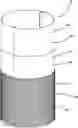
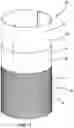
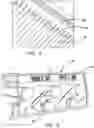
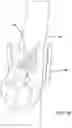
FIG. 1 is a cutaway perspective view of the preferred embodiment of the invention illustrating inner, middle and outer woven layers of the irrigation tubing;
FIG. 2 is a perspective view of an extruder and quenching tank used for fabrication of HDPE tape;
FIG. 3 is a close-up perspective view of the quenching tank and cooled extruded sheet;
FIG. 4 is a perspective view of a slitting machine for fabrication of the tape from the extruded sheet;
FIG. 5 is a perspective view of a tentering frame used to stretch the tape along its length;
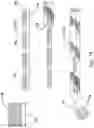
FIG. 6 is a perspective view of the tape being wound on storage bobbins;
FIG. 7 is perspective view of the bobbins loaded on a storage cart;
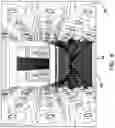
FIG. 8 is a perspective view of the bobbins loaded on loom unwind stations and threaded through a circular loom;
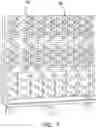
FIG. 9 is a perspective view of the circular loom weaving an outer covering for the irrigation tubing from the HDPE tape;
FIG. 10 is perspective view of a winder creating a master roll of flattened tubing for lamination;
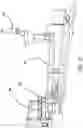
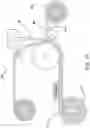
FIG. 11 is a side elevational schematic illustrating lamination of the woven tubing with molten LDPE and a LLDPE layer;
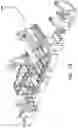
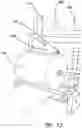
FIG. 12 is a perspective view of the extrusion coating lamination line;
FIG. 13 is a perspective view of equipment for unwinding, printing and rewinding the laminated tubing;
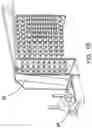
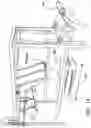
FIG. 14 is a perspective view of equipment for unwinding, folding and stacking the laminated tubing;
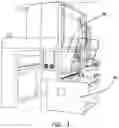
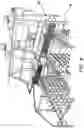
FIG. 15 is schematic side elevational view of the process of turning the tubing inside out over itself and the stacked tubing; and
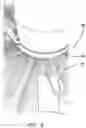
FIG. 16 is a perspective view of the process shown in FIG. 15.
DETAILED DESCRIPTION OF THE PREFERRED EMBODIMENT
(1) FIG. 1 illustrates a typical embodiment of the woven irrigation tubing 10 of the present invention. The tubing 10 is a woven, extrusion coated & laminated tube made of HDPE 14, LDPE 18 and LLDPE 22. It is used to move water at 2000 GPM. The tubing 10 has a finished diameter 15″ (381 mm)+/−⅛″. The tubing 10 has a lay-flat width 22 of 23.5″ (599 mm) and is wound on a 3″ ID, ¼″ thick, 25″ wide PVC Core 26. The typical length of a wound roll 26 is 2640′ (805 m+5/−0)+5/−0 meters. The tubing 10 has a three layer structure with UV protection 30. The inside layer 34 is 20 gsm white LLDPE 22+/−2 gsm. The middle layer 38 is 20 gsm White LDPE 18+/−2 gsm. The outside layer 42 is 86 gsm, 10 thread/inch, oriented HDPE 14 woven seamless fabric+/−2 gsm.
(2) FIGS. 2-16 illustrate the steps for manufacturing the woven irrigation tubing 10. As illustrated in FIGS. 2-7, Manufacturing tape 46 for outside layer 42 includes the following: Melting High Density Polyethylene (HDPE) resin 14. Using instruments 48 to monitor pressure and flow with an extruder 50. Extruding the melted resin 14 through a flat die 54 to form a sheet 58 of HDPE resin 14. Cooling the extruded sheet 58 in a quenching tank 62. Slitting the cooled sheet 58 with a slitter 66 to form the tape 46. Stretching the tape 46 along its length 70 using a tentering frame machine 74 to increase longitudinal tape strength. Winding the stretched tape 46 onto storage bobbins 78 using a first winding machine 52.
As illustrated in FIGS. 8-10, Weaving of outer tubing cover includes the following: Loading filled storage bobbins 78 onto loom unwind stations 82. Threading each tape 46 on the storage bobbins 78 through a circular loom 86. Using the circular loom 86 to weave the tape 46 from the storage bobbins 78 into a continuous woven seamless tube 90. Flattening the woven tube 90 using a tubing flattener 88. Winding the woven tube 90 onto a master storage roll 94 using a second winding machine 92.
(4) As illustrated in FIGS. 11-13, Extrusion coating/laminating of the woven tube 90 includes the following: Coating upper 98 and lower 102 surfaces of the flattened, woven tube 90 with molten Low Density Polyethylene (LDPE) resin 18. Laminating a layer of Linear Low Density Polyethylene (LLDPE) film 22 onto the molten LDPE resin 18 on each of the upper 98 and lower 102 surfaces of the woven tube 90 using an extrusion coating lamination apparatus 106. Winding the coated and laminated woven tube 110 onto a roll 114 using a third winding machine 116. Optionally unwinding tube 110 from the roll 114, printing a logo or other information 118 on at least one of the upper 122 and lower 126 LLDPE layers. Winding the printed tube 130 onto rolls 134 using a fifth winding machine 132.
(5) As illustrated in FIGS. 14-16, Reversing and winding of the tube 110 or printed tube 130 includes the following: Unwinding the coated and laminated woven tube 110, 130 from the roll 134 and folding it into linked stacks 138 of a first predetermined size 142.
Positioning the linked stacks 138 on a series of support cradles 146. Opening a distal end 150 of the tube 110, 130 and turning the tube 110, 130 back on itself. Pulling the opened distal end 150 of the tube 110, 130 over the stacks 138 and the cradles 146 supporting them. Winding the reversed tube 154 onto a roll 158 using a fourth winding machine (not shown). Covering the roll 158 with a protective layer (not shown) for storage and transport.
The woven irrigation tubing 10, apparatus and method of making same have been described with reference to particular embodiments. Other modifications and enhancements can be made without departing from the spirit and scope of the invention.
Claims
1. An apparatus for making woven irrigation tubing, comprising:
HDPE resin;
an extruder for said HDPE resin;
instruments to monitor pressure and flow rates for said extruder;
a flat die for said extruder suitable for forming extruded sheets of HDPE resin;
a quenching tank for cooling said extruded sheets of HDPE resin;
a slitter for slitting said extruded sheets of HDPE resin into tape;
a tentering frame machine for stretching said tape along its length to increase longitudinal tape strength of said tape;
a first winding machine and storage bobbins for winding said tape onto said storage bobbins for further processing;
loom unwind stations for positioning said wound storage bobbins prior to weaving;
a circular loom for weaving said tape stored on said storage bobbins into a continuous woven seamless tube;
a tubing flattener for flattening said woven seamless tube;
a second winding machine for winding said flattened woven seamless tube onto a master storage roll;
LDPE resin;
LLDPE film;
an extrusion coating laminating apparatus for coating a middle layer of LDPE onto upper and lower surfaces of said flattened woven seamless tube, forming upper and lower LDPE layers and for laminating an inside layer of LLDPE film onto said middle layer of LDPE, forming upper and lower LLDPE layers;
a third winding machine for winding said coated and laminated woven tubing onto a roll;
a series of support cradles for supporting linked stacks of said coated and laminated woven tube from an unwound roll that have been folded into said linked stacks of a first predetermined size so that the tube may be pulled over itself and turned inside out, forming a reversed tube; and
a fourth winding machine for winding said reversed tube onto a roll.
2. The apparatus for making woven irrigation tubing, as described in claim 7, further comprising:
a printer for printing a logo or other information on at least one of said upper and lower LLDPE layers, forming a printed tube; and
a fifth winding machine for winding the printed tube onto a roll.
3. A method of making woven irrigation tubing, comprising the steps of:
providing HDPE resin;
providing an extruder with a flat die;
melting said HDPE resin in said extruder, forming a melted resin;
monitoring pressure and flow of said melted resin in said extruder;
extruding said melted resin through said flat die to form an extruded sheet;
providing a quenching tank:
cooling said extruded sheet in said quenching tank;
providing a slitter;
slitting said extruded sheet in said slitter to form a tape;
providing a tentering frame machine;
stretching said tape using said tentering frame machine to increase longitudinal strength of said tape, forming a stretched tape;
providing at least one storage bobbin and a first winding machine;
winding said stretched tape onto said at least one storage bobbin;
providing at least one loom unwind station;
loading said at least one storage bobbin onto said at least one loom unwind station;
providing a circular loom;
threading said stretched tape on said at least one storage bobbin through said circular loom;
weaving said stretched tape into a continuous woven seamless tube using said circular loom;
providing a tubing flattener;
flattening said continuous woven seamless tube;
providing a second winding machine for winding said flattened woven seamless tube onto a master storage roll;
providing LDPE resin;
providing LLDPE film;
providing an extrusion coating laminating machine;
laminating a middle layer of LDPE onto upper and lower surfaces of said flattened woven seamless tube, forming upper and lower LDPE layers and laminating an inside layer of LLDPE film onto said middle layer of LDPE, forming upper and lower LLDPE layers;
providing a third winding machine;
winding said coated and laminated woven tubing onto a roll;
providing a series of support cradles;
supporting linked stacks of said coated and laminated woven tube from an unwound roll that have been folded into said linked stacks of a first predetermined size so that the tube may be pulled over itself and turned inside out, forming a reversed tube;
providing a fourth winding machine; and
winding said reversed tube onto a roll.
4. The method of making woven irrigation tubing, as described in claim 9, further comprising the steps of:
providing a printer;
printing a logo or other information on at least one of said upper and lower LLDPE layers, forming a printed tube;
providing a fifth winding machine;
winding said printed tube onto a roll.
Images & Drawings included:
Sources:
- United States Patent and Trademark Office - verify current appl. status at the USPTO↗
Similar patent applications:
Recent applications in this class:
- » 20220410513 2022-12-29
Patient specific system and method to repair aortic aneurysms - » 20210362447 2021-11-25
Bio-degradable means for use as drinking straw, stirrer and chop stick and a method thereof - » 20210197508 2021-07-01
Environmentally friendly straw and manufacturing method thereof - » 20200384711 2020-12-10
HASHISH CIGARETTE PRODUCT AND METHOD OF MANUFACTURE - » 20200114604 2020-04-16
APPARATUS AND METHOD FOR MAKING A SILICONE ARTICLE - » 20190105859 2019-04-11
Hashish cigarette product and method of manufacture - » 20170001393 2017-01-05
Method and apparatus for forming high strength products - » 20160214339 2016-07-28
Method of hose construction - » 20140352873 2014-12-04
WINDING METHOD FOR THE PRODUCTION OF A ROTATIONALLY SYMMETRIC, TUBE-LIKE HOLLOW BODY PREFORM, DEVICE AND METHOD FOR THE PRODUCTION OF A DEVICE FOR PRODUCING THE SAME - » 20140335213 2014-11-13
Calibration device for calibrating an extruded film tube
Recent applications for this Assignee:
- » 20220372674 2022-11-24
Woven irrigation tubing, apparatus and method of making same - » 20220082187 2022-03-17
Woven irrigation tubing