Swim Trainer
US20220096912A1
2022-03-31
17/472,451
2021-09-10
Abstract:
The ability for a non-swimmer or unskilled swimmer to float horizontally in the water can be lifesaving and can reduce the incidence of drowning deaths. Swim training devices to facilitate teaching of basic flotation techniques to non-swimmers, unskilled swimmers, and for use in rehabilitation therapy and general aqua therapy are disclosed herein. The devices and methods are designed to encourage, facilitate, and increase psychological comfort with floating in a horizontal position, versus a vertical position. The swim trainer device includes a body and a float which may be mounted coplanar with the body, and may be adjustable. Multiple uses and configurations are discussed for use by swim instructors and others working with infants, toddlers, children, and adults.
Interested in similar patents?
Get notified when new applications in this technology area are published.
Classification:
A63B2225/605 » CPC further
Miscellaneous features of sport apparatus, devices or equipment; Apparatus used in water Floating
A63B2208/03 » CPC further
Characteristics or parameters related to the user or player the user being in water
A63B2208/0257 » CPC further
Characteristics or parameters related to the user or player posture; Lying down prone
A63B2208/0252 » CPC further
Characteristics or parameters related to the user or player posture; Lying down supine
A63B2214/00 » CPC further
Training methods
A63B69/14 » CPC main
Training appliances or apparatus for special sports; Arrangements in swimming pools for teaching swimming or for training Teaching frames for swimming ; Swimming boards
Description
BACKGROUND OF THE INVENTION
The present invention is in the technical field of athletics and aqua-therapy training devices. More particularly, the present invention is in the technical field of swim training for youths and adults, aqua-therapy aids for youths and adults, and water safety training devices for youths and adults.
Existing devices in the same technical field (referred to “swim trainers” for this document) have distinct design flaws in terms of adjustability for different student/client body types or skill levels, positioning of the student or client during training which negatively affects the efficacy of training and leads to results which may not enable the trainee to properly swim on their own, ability for some students or clients to grip and manipulate the swim trainer while training, and geometry to support a student or client as they progress in skill or recovery.
SUMMARY OF THE INVENTION
The present invention is a device to be used in swim training, exercise, and aqua-therapy by a wide variety of body types and sizes, irrespective of age or gender. It is designed to have various sizes within the same general design (ex. “Small” for children, “Large” for adults), and to be adjustable by design within each specific size. It consists of a molded, extruded, or inflatable cross member, with two pass-through holes to allow a standard foam float tube (known in the market as a “pool noodle”) to be inserted, completing the assembly. In essence, this invention may be seen as an accessory to the “pool noodle,” assembling to create a much more useful device. The cross member may have features to allow for a trainee to lay more comfortably face up or face down, and will include features to allow for hand holds on either end. Additionally, as a trainee progresses, or for different exercises during aqua-therapy, the crossmember may be used without a standard foam float tube as a light kick board or saddle seat style float.
BRIEF DESCRIPTION OF THE DRAWING
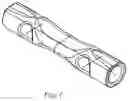
FIG. 1 is ¾ view of the device of the present invention. (10)
FIG. 2 is a front view of the device of FIG. 1 (10).
FIG. 3 is a top view of the device of FIG. 1 (10).
FIG. 4 is a ¾ view of the device of FIG. 1, shown with standard foam float tube inserted, in dashed lines (10).
FIG. 5 is a top view of the device of FIG. 1, shown with standard foam float tube (20) inserted, in dashed lines (10).
FIG. 6 is a side view of the inflatable device of FIG. 1, shown with pool float standard foam float tube (20) inserted, in dashed lines (10).
FIG. 7 is a ¾ view of the inflatable device of FIG. 1 (10), shown with standard foam float tube (20) inserted, in dashed lines, and face-up in-use human figure (30) shaded, for reference.
FIG. 8 is a ¾ view of the inflatable device of FIG. 1 (10), shown with standard foam float tube (20) inserted, in dashed lines, and face-down in-use human figure (30) shaded for reference.
DETAILED DESCRIPTION OF THE INVENTION
Referring now to the invention in more detail, in FIG. 1 there is shown a cross member (10) consisting of buoyant physical material, such as foam, wood, etc., or buoyant construction, such as inflatable membrane or hollow shell filled with air or other buoyant physical material, such that the crossmember will float in water and maintain sufficient buoyancy to support a human being appropriate to the size of the design.
In further detail, now referring to the invention of FIG. 1 and now FIG. 2 and FIG. 3, the crossmember has two symmetrically positioned through holes of an appropriate size to accommodate a standard foam pool float tube.
Referring now to FIG. 4, the crossmember (10) is shown from a ¾ view with a standard foam float tube (20) inserted into the through holes, forming the complete assembly, with the positioning of the hand grips in the crossmember, relative to the standard foam float tube.
Referring now to FIG. 5, the crossmember (10) is shown from a top view with a standard foam float tube (20) inserted into the through holes, further detailing the positioning required, forming the complete assembly, with the positioning of the hand grips in the crossmember, relative to the standard foam float tube.
Referring now to FIG. 6, the crossmember (10) is shown from a top view with a standard foam float tube (20) inserted into the through holes, further detailing the positioning required, forming the complete assembly, with the positioning of the hand grips in the crossmember, relative to the standard foam float tube.
Referring now to FIG. 7, the crossmember (10) and standard foam float tube (20) inserted into the through holes forming the complete assembly, with positioning of a human figure (30) detailing the manner of use for a trainee in a face-down (prone) position, further detailing the positioning required, forming the complete assembly, with the positioning of the hand grips in the crossmember, relative to the standard foam float tube.
Referring now to FIG. 8, the crossmember (10) and standard foam float tube (20) inserted into the through holes forming the complete assembly, with positioning of a human figure (30) detailing the manner of use for a trainee in a face-up (supine) position, further detailing the positioning required, forming the complete assembly, with the positioning of the hand grips in the crossmember, relative to the standard foam float tube.
Claims
What is claimed is:1. A swim trainer comprising:
an elongated cylindrical body having two ends and two float mounts penetrating through the body; and
an elongated float coupled to the body at each of the two float mounts,
wherein the float penetrates the body at each of the two float mounts, wherein the body constrains the float in a “U”-shaped configuration coplanar with the body, and wherein the body separates the float into a head section and two flank sections.
2. The swim trainer of claim 1, wherein the two float mounts are oriented perpendicular to a long axis of the body.
3. The swim trainer of claim 1, wherein the float is removably coupled to the body.
4. The swim trainer of claim 3, wherein the float is adjustably positioned with respect to the body such that a head section length and a flank section length are adjustable.
5. The swim trainer of claim 1, wherein the body comprises a central support surface disposed between the two float mounts.
6. The swim trainer of claim 1, wherein the body comprises an arm support surface formed between each of the float mounts and the ends.
7. The swim trainer of claim 1, further comprising a grip formed at each end of the body.
8. The swim trainer of claim 7, wherein each grip comprises a step.
9. The swim trainer of claim 8, wherein each grip comprises a plurality of steps.
10. A swim trainer comprising:
an elongated cylindrical body having a long axis;
two float mounts, each float mount comprising a hole penetrating through the body in a direction perpendicular to the long axis of the body; wherein each of the two float mounts is configured to receive a float, and wherein the float is retained by the float mounts in a configuration coplanar with the body.
11. The swim trainer of claim 10, further comprising a float adjustably coupled to the body.
12. A method of using a swim trainer having a body and a float comprising: entering a body of water holding a swim trainer; grasping the swim trainer; and rolling onto the swim trainer wherein the buoyancy of the swim trainer facilitates support of the user in a horizontal position with respect to a surface of the body of water.
13. The method of claim 12, wherein the grasping step comprises grasping each of two flank sections of the float with a body of the swim trainer against the back of the shoulders; and the rolling step comprises lying supine on the swim trainer to float face-upward.
14. The method of claim 13, further comprising resting the head on a central support surface disposed on a body of the swim trainer.
15. The method of claim 12, wherein the horizontal position is a prone position.
16. The method of claim 15, further comprising a step resting the forehead on a central support surface disposed on a body of the swim trainer.
Images & Drawings included:



Sources:
- United States Patent and Trademark Office - verify current appl. status at the USPTO↗
Similar patent applications:
- » 20250153027
SWIM TRAINER - » 20050170936
Swim trainer - » 20130017521
Swim trainer vest - » 20150104989
Safety belt swim trainer - » 20050164842
Swim trainer - » 20150038029
Safety Belt Swim Trainer - » 20140005004
Swimming resistance trainer - » 20150141210
Swimming resistance trainer
Recent applications in this class:
- » 20250025760 2025-01-23
SWIM TRAINING DEVICE AND METHOD OF TRAINING - » 20240335721 2024-10-10
RESISTANCE BUOY FOR SWIMMING - » 20240216773 2024-07-04
MODIFIED KICKBOARD FLOATATION DEVICE - » 20240009539 2024-01-11
Aquatic strengthening device - » 20220274000 2022-09-01
Aquatic learning station and methods therefor - » 20220176220 2022-06-09
Bilateral kicking boards for non-swimmers to the elite level swimmer - » 20190232140 2019-08-01
Body alignment tool for swimmers - » 20180326279 2018-11-15
Flotation device - » 20180311558 2018-11-01
SWIM TRAINING POOL AND METHOD OF USE - » 20180133574 2018-05-17
Kickboard training device