Preparation and application of a 5-bromoquinazoline derivative
US20220135578A1
2022-05-05
17/488,317
2021-09-29
✅ Patent granted
US 11,840,537 B2
2023-12-12
-
-
Susanna Moore
2041-09-29
Abstract:
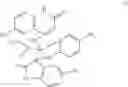
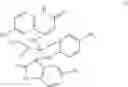
A 5-bromoquinazoline derivative (I), structural formula thereof is as follows:
the synthesis method thereof comprises weighing 1.18 g of 5-bromoisatin, 2.5503 g of ammonium formate and 100 ml of absolute methanol in a 250 mL round-bottom flask, heating, stirring and refluxing for 48 h, stopping reaction, rotating to obtain 1.6033 g of filter residue crude product, carrying out column chromatography separation by using dichloromethane and absolute methanol according to a volume ratio of 1:1, and obtaining a target crystal compound I; the application of the 5-bromoquinazoline derivative compound crystal (I), as a catalyst has a good catalytic effect in nitrile silicification reaction of benzaldehyde and auto-polymerization reaction of benzophenone hydrazone, the conversion rates thereof respectively reach 39% and 76%, and the crystal (I) can be used as an anti-cancer reagent which has certain anti-cancer activity of breast cancer, liver cancer and lung cancer.
Assignee:
- HEFEI UNIVERSITY OF TECHNOLOGY 32 🇨🇳 Anhui, China
Applicant:
Interested in similar patents?
Get notified when new applications in this technology area are published.
Classification:
C07B2200/13 » CPC further
Indexing scheme relating to specific properties of organic compounds Crystalline forms, e.g. polymorphs
C07D487/10 » CPC main
Heterocyclic compounds containing nitrogen atoms as the only ring hetero atoms in the condensed system, not provided for by groups - in which the condensed system contains two hetero rings Spiro-condensed systems
C07B41/04 » CPC further
Formation or introduction of functional groups containing oxygen of ether, acetal or ketal groups
Description
TECHNICAL FIELD
The invention relates to a new chemical compound and application thereof, in particular to a preparation method of a quinazoline, definitely preparation and application of a 5-bromoquinazoline derivative.
BACKGROUND ART
The 5-bromoquinazoline derivative is a heterocyclic compound. The synthesis method of compound thereof has been reported in similar literature. [1] Because it is a Lewis base, the application thereof can be developed as an organic catalyst and anti-cancer reagent:
REFERENCES
- 1. Synthesis and pharmacological properties of 4-phenylquinazolin-2-ones, Voronina, T. A.; Gordiichuk, G. N.; Andronati, S. A.; Garibova, T. L.; Zhilina, Z. I. Khimiko-Farmatsevticheskii Zhurnal (1981), 15(7), 55-7.
SUMMARY OF THE INVENTION
The invention aims to provide a quinazoline derivative and a preparation method thereof, and the technical problem to be solved is to synthesize the target product in one step.
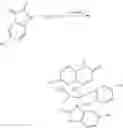
The quinazoline and preparation method thereof referred to in the invention are compounds represented by the following chemical formula prepared from 5-bromoisatin and ammonium formate in absolute methanol solution:
Chemical name: 3-[5, 5′-dibromo-3-((6-bromo-2-oxo-1, 2-dihydroquinazoline-4-amino)-2′-oxo (2,3′-spirobisindole)] methyl formate, be called compound (I) for short. The compound has a good catalytic effect in nitrile silicification reaction of benzaldehyde and auto-polymerization reaction of benzophenone hydrazone, the conversion rates thereof respectively reach 39% and 76%, also and the can be used as an anti-cancer reagent which has certain anti-cancer activity of breast cancer, liver cancer and lung cancer.
The synthesis method comprises synthesis and separation, the synthesis comprises weighing 1.18 g of 5-bromoisatin, 2.5503 g of ammonium formate and 100 ml of absolute methanol in a 250 mL round-bottom flask, heating, stirring and refluxing for 48 h, stopping reaction, rotating to obtain 1.6033 g of filter residue crude product, carrying out column chromatography separation by using dichloromethane and absolute methanol according to a volume ratio of 1:1, and obtaining a target crystal compound I.
The synthesis method in the invention can obtain the target product in one step, has simple process and convenient operation.
The reaction mechanism of the reaction is complicated, 6-bromoisatin and ammonium formate react with 1 mol % palladium complex in methanol solution, and the carbonyl group reacts with ammonium formate to convert to amino group. After condensation and reaction of methanol, compound I is obtained in one step.
DESCRIPTION OF ACCOMPANYING DRAWINGS
FIG. 1 is the X-ray diffraction analysis of compound I.
SPECIFIC EMBODIMENTS OF THE INVENTION
1. Preparation of Chiral Palladium Complexes
(1) Preparation of [1,4-(4R)-diisopropyl-2-oxazolinyl] benzene
In a 100 mL two-neck flask, under conditions which exclude water and oxygen, add 1.4054 g of anhydrous ZnCl2 (10.64 mmol), 40 ml of chlorobenzene, 5.0236 g of 1,4-dicyanobenzene (39.2 mmol), 16.2075 g of L-Valinol, the mixture was refluxed at high temperature for 60 h, stopping the reaction, the solvent was removed under reduced pressure, the residue was dissolved in water, and extracted with CHCl3 (20 mL×2), the organic phase was dried with anhydrous sodium sulfate, the solvent was removed by rotating, and column chromatography was carried out on the crude product by using petroleum ether/dichloromethane (4:1), a light green viscous liquid was obtained, yield 52%; white crystals, fusion point: 48-50° C., [a]5D=+111.9° (c=0.429, CHCl3); 1HNMR (500 MHz, CDCl3, 27° C.), δ (ppm)=7.97 (s, 4H), 4.39˜4.43 (t, 3.18 Hz, 1H), 4.09˜4.15 (m, 2H), 1.85˜1.86 (m, 1H), (d, J=6.24 Hz, 6H), 0.86˜0.96 (d, J=6.24 Hz, 6H). 13CNMR 18.13, 19.03, 32.85, 70.26, 72.76, 128.10, 128.16, 130.32, 162.82.IR: 3273, 2976, 2960, 2932, 2889, 2869, 1643, 1512, 1469, 1408, 1382, 1366, 1350, 1320, 1296, 1276, 1214, 1180, 1108, 1077, 1047, 1014, 971, 955, 900, 891, 838, 726, 698, 675, 659, 540.HRMS (EI): m/z (%): calcd for C18H24N2O2: 300.1838; found: 300.1833.
(2) Preparation of Complex of Bis{[1,4-(4S)-diisopropyl-2-oxazoline benzene] palladium chloride}
In a 100 mL two-neck flask, under conditions which exclude water and oxygen, add 1.5603 g of palladium chloride (4.92 mmol), 1.0435 g of 1,4-(4R)-diisopropyl-2-oxazoline benzene (3.48 mmol), 30 ml of chlorobenzene, the mixture was refluxed at high temperature for 48 h, stopping the reaction, the solvent was removed under reduced pressure, the residue was dissolved in chloroform and ethanol, and naturally volatilized to obtain a red-brown complex to obtain crystals, yield 92%; m.p.: >200° C., [a]5D=+512.8° (c 0.0564, CH3OH); 1H NMR (600 MHz, CDCl3), δ′ ppm 8.81 (s, 8H, ArH), 4.61-4.63 (m, 4H, CH×4), 4.53 (t, J=9.6 Hz, 4H, CH×4), 4.44 (t, J=8.5 Hz, 4H, CH×4), 3.07-3.10 (m, 4H), 1.18 and 1.15 (dd, J=6.7, 7.2 Hz, 24H, CH3×4); 13C NMR (150 MHz, CDCl3) ppm 166.8, 130.1 (×2), 129.3, 72.0, 69.1, 30.7, 19.0, 15.6; vmax (cm-1) 3487, 3049, 2957, 2929, 2872, 1642, 1609, 1572, 1509, 1480, 1464, 1416, 1379, 1331, 1288, 1246, 1178, 1141, 1123, 1099, 1045, 1018, 959, 933, 899, 854, 804, 770, 722, 693, 438; elemental analysis C36H48N4Cl4O4Pd2, test value C, 45.26%, H, 5.06%, N, 5.86%; theoretical value: C, 45.32%, H, 5.24%, N, 5.48%;
2. Preparation of Complex I
weighing 1.18 g of 5-bromoisatin, 2.5503 g of ammonium formate and 100 ml of absolute methanol in a 250 mL round-bottom flask, heating, stirring and refluxing for 48 h, stopping reaction, rotating to obtain 1.6033 g of filter residue crude product, carrying out column chromatography (petroleum ether/dichloromethane, 1/1) separation, and obtaining 0.8365 g of crystal compound, yield: 23.2%; fusion point: >250° C.; elemental analysis data: theoretical value: C: 43.51%; H: 2.34%; N: 10.15%; measured value: C: 43.69%; H: 2.65%; N: 9.98%; ERMS (C25H16Br3N5O4, m/e): theoretical value: 686.8752; measured value: 686.8969; 1H NMR (600 MHz, CDCl3), δ ppm 11.40 (s, 1H), 11.08 (s, 1H), 9.59 (s, 1H), 8.15 (s, 1H), 8.07 (d, J=2.1 Hz, 1H), 7.76 (d, J=1.9 Hz, 1H), 7.68, 7.66 (dd, J=1.9 Hz, 1.8 Hz, 1H), 7.44, 7.43 (dd, J=2.0 Hz, 2.0 Hz, 1H), 7.30, 7.28 (dd, J=2.1 Hz, 2.1 Hz, 1H), 7.15 (d, J=8.7 Hz, 1H), 6.88-6.92 (m, 2H), 6.71 (d, J=8.4 Hz, 1H), 3.23 (s, 3H); 13C NMR (150 Mhz, CDCl3) ppm 176.1, 166.9, 157.1, 154.5, 149.6, 141.7, 140.4, 136.5, 132.8, 132.3, 131.7, 129.9, 128.2, 126.9, 124.6, 117.7, 113.7, 113.0, 112.5, 111.8, 109.7, 109.4, 71.5, 71.2, 52.2; IR Spectroscopy data: (KBr; v, cm-1): 3423, 2924, 1698, 1636, 1438, 1384, 1337, 1164, 1111, 1061, 899, 823, 785; Crystal data of compounds:
| empirical formula | C25H16Br3N5O4 |
| molecular weight | 690.16 |
| temperature | 293.4(2) K |
| wave length | 0.71073 A |
| crystal system, space groups | triclinic system, P −1 |
| cell parameters | a = 8.7881(5) Å alpha = 98.254(2) deg. |
| b = 9.9375(5) Å beta = 97.014(2) deg. | |
| c = 17.8389(9) Å gamma = 112.154 deg. | |
| volume | 1401.29 (13) Å{circumflex over ( )}3 |
| electric density | 2, 1.636Mg/m{circumflex over ( )}3 |
| absorption/correction parameter | 4.357 mm{circumflex over ( )} − 1 |
| number of electrons in a cell | 676 |
| crystal size | 0.15 × 0.12 × 0.1 mm |
| range of angle (Theta) | 2.351 to 27.540 |
| collection range of HKL indicators | −10 <= h < 11, −12 <= k < 12, −23 <= l <= 23 |
| collect/independent diffraction data | 23227/6418 [r(int) = 0.0400] |
| data integrity when theta = 30.5 | 99.8% |
| absorption/correction method | milt-slice scan |
| maximum/minimum transmittance | 0.7456 and 0.5613 |
| refinement method | F{circumflex over ( )}2 matrix least square method |
| data number/restrict number of use/parameter number | 6418/0/339 |
| refinement method | 0.982 |
| consistency factor of the diffraction point | R1 = 0.0432, wR2 = 0.1357 |
| anastomosis factor of diffraction can be observed | R1 = 0.0702, wR2 = 0.1534 |
| maximum peak and peak valley on the difference Fourier diagram | 0.516 and −0.570e · A{circumflex over ( )} − 3 |
| Typical bond length data for crystals: | |
| Br(1)—C(4) | 1.901(4) | |
| Br(2)—C(12) | 1.896(4) | |
| Br(3)—C(21) | 1.891(4) | |
| O(1)—C(8) | 1.226(4) | |
| O(2)—C(25) | 1.245(4) | |
| O(3)—C(16) | 1.194(4) | |
| O(4)—C(16) | 1.328(4) | |
| O(4)—C(17) | 1.459(5) | |
| N(1)—H(1) | 0.8600 | |
| N(1)—C(1) | 1.402(5) | |
| N(1)—C(8) | 1.334(5) | |
| N(2)—C(7) | 1.473(5) | |
| N(2)—C(9) | 1.398(5) | |
| N(2)—H(2) | 0.89(5) | |
| N(6)—H(6) | 0.8600 | |
| N(6)—C(15) | 1.454(4) | |
| N(6)—C(18) | 1.338(4) | |
| N(4)—C(18) | 1.319(4) | |
| N(4)—C(25) | 1.364(4) | |
| N(5)—H(5) | 0.8600 | |
| N(5)—C(24) | 1.375(5) | |
| N(5)—C(25) | 1.366(5) | |
| C(1)—C(2) | 1.390(5) | |
| C(1)—C(6) | 1.377(5) | |
| C(2)—H(2A) | 0.9300 | |
| C(2)—C(3) | 1.384(6) | |
| C(3)—H(3) | 0.9300 | |
| C(3)—C(4) | 1.376(6) | |
| C(4)—C(5) | 1.379(5) | |
| C(5)—H(5A) | 0.9300 | |
| C(5)—C(6) | 1.385(5) | |
| C(6)—C(7) | 1.516(5) | |
| C(7)—C(8) | 1.554(5) | |
| C(7)—C(15) | 1.593(4) | |
| C(9)—C(10) | 1.379(5) | |
| C(9)—C(14) | 1.390(5) | |
| C(10)—H(10) | 0.9300 | |
| C(10)—C(11) | 1.394(6) | |
| C(11)—H(11) | 0.9300 | |
| C(11)—C(12) | 1.381(6) | |
| C(12)—C(13) | 1.395(5) | |
| C(13)—H(13) | 0.9300 | |
| C(13)—C(14) | 1.374(4) | |
| C(14)—C(15) | 1.532(4) | |
| C(15)—C(16) | 1.524(5) | |
| C(17)—H(17A) | 0.9600 | |
| C(17)—H(17B) | 0.9600 | |
| C(17)—H(17C) | 0.9600 | |
| C(18)—C(19) | 1.454(5) | |
| C(19)—C(20) | 1.408(5) | |
| C(19)—C(24) | 1.382(5) | |
| C(20)—H(20) | 0.9300 | |
| C(20)—C(21) | 1.374(5) | |
| C(21)—C(22) | 1.385(6) | |
| C(22)—H(22) | 0.9300 | |
| C(22)—C(23) | 1.380(6) | |
| C(23)—H(23) | 0.9300 | |
| C(23)—C(24) | 1.395(5) | |
| bond angle data of crystals C(16)-O(4)-C(17) | |
| C(1)—N(1)—H(1) | 124.1 | |
| C(8)—N(1)—H(1) | 124.1 | |
| C(8)—N(1)—C(1) | 111.8(3) | |
| C(7)—N(2)—H(2) | 118(3) | |
| C(9)—N(2)—C(7) | 106.1(3) | |
| C(9)—N(2)—H(2) | 110(3) | |
| C(15)—N(6)—H(6) | 116.8 | |
| C(18)—N(6)—H(6) | 116.8 | |
| C(18)—N(6)—C(15) | 126.4(3) | |
| C(18)—N(4)—C(25) | 119.3(3) | |
| C(24)—N(5)—H(5) | 118.2 | |
| C(25)—N(5)—H(5) | 118.2 | |
| C(25)—N(5)—C(24) | 123.6(3) | |
| C(2)—C(1)—N(1) | 127.6(4) | |
| C(6)—C(1)—N(1) | 110.5(3) | |
| C(6)—C(1)—C(2) | 121.9(4) | |
| C(1)—C(2)—H(2A) | 121.5 | |
| C(3)—C(2)—C(1) | 116.9(4) | |
| C(3)—C(2)—H(2A) | 121.5 | |
| C(2)—C(3)—H(3) | 119.5 | |
| C(4)—C(3)—C(2) | 120.9(4) | |
| C(4)—C(3)—H(3) | 119.5 | |
| C(3)—C(4)—Br(1) | 118.8(3) | |
| C(3)—C(4)—C(5) | 122.2(4) | |
| C(5)—C(4)—Br(1) | 119.0(3) | |
| C(4)—C(5)—H(5A) | 121.4 | |
| C(4)—C(5)—C(6) | 117.2(4) | |
| C(6)—C(5)—H(5A) | 121.4 | |
| C(1)—C(6)—C(5) | 120.9(3) | |
| C(1)—C(6)—C(7) | 107.9(3) | |
| C(5)—C(6)—C(7) | 131.2(3) | |
| N(2)—C(7)—C(6) | 115.5(3) | |
| N(2)—C(7)—C(8) | 113.0(3) | |
| N(2)—C(7)—C(15) | 101.4(3) | |
| C(6)—C(7)—C(8) | 101.7(3) | |
| C(6)—C(7)—C(15) | 112.5(3) | |
| C(8)—C(7)—C(15) | 113.3(3) | |
| O(1)—C(8)—N(1) | 127.1(3) | |
| O(1)—C(8)—C(7) | 124.9(3) | |
| N(1)—C(8)—C(7) | 107.9(3) | |
| C(10)—C(9)—N(2) | 127.2(3) | |
| C(10)—C(9)—C(14) | 121.0(3) | |
| C(14)—C(9)—N(2) | 111.8(3) | |
| C(9)—C(10)—H(10) | 121.3 | |
| C(9)—C(10)—C(11) | 117.4(3) | |
| C(11)—C(10)—H(10) | 121.3 | |
| C(10)—C(11)—H(11) | 119.6 | |
| C(12)—C(11)—C(10) | 120.7(4) | |
| C(12)—C(11)—H(11) | 119.6 | |
| C(11)—C(12)—Br(2) | 119.1(3) | |
| C(11)—C(12)—C(13) | 122.2(3) | |
| C(13)—C(12)—Br(2) | 118.6(3) | |
| C(12)—C(13)—H(13) | 121.9 | |
| C(14)—C(13)—C(12) | 116.2(3) | |
| C(14)—C(13)—H(13) | 121.9 | |
| C(9)—C(14)—C(15) | 107.4(3) | |
| C(13)—C(14)—C(9) | 122.4(3) | |
| C(13)—C(14)—C(15) | 130.2(3) | |
| N(6)—C(15)—C(7) | 107.2(2) | |
| N(6)—C(15)—C(14) | 112.1(3) | |
| N(6)—C(15)—C(16) | 113.0(3) | |
| C(14)—C(15)—C(7) | 99.6(2) | |
| C(16)—C(15)—C(7) | 108.9(3) | |
| C(16)—C(15)—C(14) | 115.0(3) | |
| O(3)—C(16)—O(4) | 125.3(3) | |
| O(3)—C(16)—C(15) | 125.3(3) | |
| O(4)—C(16)—C(15) | 109.1(3) | |
| O(4)—C(17)—H(17A) | 109.5 | |
| O(4)—C(17)—H(17B) | 109.5 | |
| O(4)—C(17)—H(17C) | 109.5 | |
| H(17A)—C(17)—H(17B) | 109.5 | |
| H(17A)—C(17)—H(17C) | 109.5 | |
| H(17B)—C(17)—H(17C) | 109.5 | |
| N(6)—C(18)—C(19) | 117.9(3) | |
| N(4)—C(18)—N(6) | 118.9(3) | |
| N(4)—C(18)—C(19) | 123.2(3) | |
| C(20)—C(19)—C(18) | 124.4(3) | |
| C(24)—C(19)—C(18) | 116.5(3) | |
| C(24)—C(19)—C(20) | 119.0(3) | |
| C(19)—C(20)—H(20) | 120.2 | |
| C(21)—C(20)—C(19) | 119.6(3) | |
| C(21)—C(20)—H(20) | 120.2 | |
| C(20)—C(21)—Br(3) | 119.9(3) | |
| C(20)—C(21)—C(22) | 121.0(4) | |
| C(22)—C(21)—Br(3) | 119.1(3) | |
| C(21)—C(22)—H(22) | 120.0 | |
| C(23)—C(22)—C(21) | 119.9(4) | |
| C(23)—C(22)—H(22) | 120.0 | |
| C(22)—C(23)—H(23) | 120.2 | |
| C(22)—C(23)—C(24) | 119.5(3) | |
| C(24)—C(23)—H(23) | 120.2 | |
| N(5)—C(24)—C(19) | 118.0(3) | |
| N(5)—C(24)—C(23) | 121.1(3) | |
| C(19)—C(24)—C(23) | 120.9(3) | |
| O(2)—C(25)—N(4) | 121.6(3) | |
| O(2)—C(25)—N(5) | 119.2(3) | |
| N(4)—C(25)—N(5) | 119.2(3). | |
3. Application of Nitrile Silicification Reaction
0.01 g compound I, 0.1 mL of benzaldehyde, 0.3 ml of TMSCN, 1 mL of THF solution, successively added at 20˜30° C., 3 days later, quenched by adding water, after passing through the column (petroleum ether/dichloromethane: 5/1), a colorless oily liquid, conversion rate: 39%; 1H NMR (300 MHz, CDCl3) 7.56-7.59 (m, 0.9 Hz, 2H), 7.31-7.34 (m, 3H), 5.43 (s, 1H), 0.16 (s, 9H). 13C NMR (75 MHz, CDCl3) 136.1, 128.8 (×2), 126.2 (×2), 119.1, 63.5, −0.39 (×3)
4. Application of Polymerization Reaction of Benzophenone Hydrazone
Weighing 0.2 g of benzophenone hydrazone and 0.069 g compound I in a 25 mL round-bottom flask, adding 2.0 mL of anhydrous methanol as a solvent to the above flask, stirring to dissolve, heating and refluxing for 48 h, stopping reaction, and detecting with 1HNMR. The conversion rate thereof is: 76%; 1 H NMR (400 MHz, CDCl3) δ 7.50-7.44 (m, 4H), 7.43-7.36 (m, 6H), 7.36-7.25 (m, 10H).
5. Application of Anti-Cancer Activity
The compound (I) designed and synthesized according to the objective of the invention has been shown strong inhibitory activity (ED50<10.0 μg/mL) in tests of a variety of cancer cells such as leukemia (HL-60), liver cancer (SMMC-7721), colon cancer (SW480), and breast cancer cells (MCF-7). Therefore, it is expected that the compounds of the invention can be used to treat a variety of cancers, such as lung cancer, breast cancer, and breast cancer cells. The test results of some anti-cancer activities of the compounds of the invention are shown in Table 1:
| TABLE 1 |
| Anti-cancer activity data (IC50 value) of quinazoline derivative (I) |
| cell line |
| hepatoma |
| leukemia | carcinoma cell | colon cancer | breast cancer | |
| HL-60 | SMMC-7721 | SW480 | cell MCF-7 |
| average | standard | average | standard | average | standard | average | standard | |
| sample | value | deviation | value | deviation | value | deviation | value | deviation |
| quinazoline | 17.35 | ±0.17 | 31.43 | ±0.78 | 36.06 | ±0.15 | 20.02 | ±0.52 |
| derivative (I) | ||||||||
Claims
1. A 5-bromoquinazoline derivative (I), structural formula thereof is as follows:
2. The 5-bromoquinazoline derivative crystal (I) of claim 1, at the temperature of 293 (2) K, and on the Oxford X-ray single crystal diffractometer, diffraction data is collected by ω-θ scanning mode with MoKα rays (λ=0.71073 Å) monochromatized by a graphite monochromator, wherein the crystal belongs to the triclinic system, P −1, cell parameters: a=8.7881 (5) Å alpha=98.254 (2) deg; b=9.9375 (5) Å beta=97.014 (2) deg; c=17.8389 (9) Å gamma=112.154 deg.
3. A synthesis method of the 5-bromoquinazoline derivative compound (I) of claim 1, comprising synthesis and separation, the synthesis comprises weighing 1.18 g of 5-bromoisatin, 2.5503 g of ammonium formate and 100 ml of absolute methanol in a 250 mL round-bottom flask, heating, stirring and refluxing for 48 h, stopping reaction, rotating to obtain 1.6033 g of filter residue crude product, carrying out column chromatography separation by using dichloromethane and absolute methanol according to a volume ratio of 1:1, and obtaining a target crystal compound I.
4. The application of the 5-bromoquinazoline derivative compound crystal (I) of claim 1, as a catalyst has a good catalytic effect in nitrile silicification reaction of benzaldehyde and auto-polymerization reaction of benzophenone hydrazone, the conversion rates thereof respectively reach 39% and 76%, and the crystal (I) can be used as an anti-cancer reagent which has certain anti-cancer activity of breast cancer, liver cancer and lung cancer.
Images & Drawings included:
Sources:
- United States Patent and Trademark Office - verify current appl. status at the USPTO↗
Recent applications in this class:
- » 20250276976 2025-09-04
CARDIAC SARCOMERE INHIBITORS - » 20250270225 2025-08-28
COMPOSITIONS AND METHODS FOR INHIBITION OF RAS - » 20250243211 2025-07-31
PROCESSES AND INTERMEDIATES FOR PRODUCING DIAZASPIRO LACTAM COMPOUNDS - » 20250215011 2025-07-03
T-TYPE CALCIUM CHANNEL MODULATORS COMPRISING A DIAZASPIROHEPTANE CORE AND METHODS OF USE THEREOF - » 20250163070 2025-05-22
SPIRO COMPOUND AND APPLICATION THEREOF - » 20250136609 2025-05-01
HETEROCYCLIC SPIRO COMPOUNDS AND METHODS OF USE THEREOF FOR THE TREATMENT OF CANCER - » 20250129086 2025-04-24
COMPOUND FOR DEGRADING EGFR PROTEIN AND USE THEREOF - » 20250051344 2025-02-13
BIFUNCTIONAL SELECTIVE DEGRADERS OF SMARCA2 AND THERAPEUTIC USES THEREOF - » 20250026763 2025-01-23
EGFR INHIBITORS AND METHODS OF USE THEREOF - » 20240417405 2024-12-19
Substituted Spiro Derivatives
Recent applications for this Assignee:
- » 20250235889 2025-07-24
RIGID-FLEXIBLE COUPLED MULTI-HOLE SPRAY GUN DEVICE WITH VARIABLE SIZE FOR SPRAYING ROBOT - » 20250132381 2025-04-24
MIXED-ANION SOLID ELECTROLYTE AND PREPARATION METHOD AND USE THEREOF - » 20240396738 2024-11-28
DYNAMICALLY TRACEABLE PRIVACY-PRESERVING DISTRIBUTED THRESHOLD SIGNATURE SYSTEM AND METHOD - » 20240167812 2024-05-23
MEASUREMENT SYSTEM FOR DETECTING DEEP-HOLE SURFACE TOPOGRAPHY BASED ON LOW-COHERENCE INTERFEROMETRY - » 20240151558 2024-05-09
Micro-displacement measurement system having picometer scale resolution and measurement method - » 20240139767 2024-05-02
Movable electro-hydraulic composite drive spraying robot with large working space - » 20240043383 2024-02-08
Method of preparing indolin-2-one compound and method of using indolin-2-one - » 20230008562 2023-01-12
ELECTROMAGNETIC STAMPING METHOD AND DEVICE - » 20220380880 2022-12-01
Device and method for fabricating ceramic reinforced composite coating based on plasma remelting and injection - » 20220326314 2022-10-13
Method for monitoring online state of bonding wire of IGBT module